
China's Space Industry Ecosystem in 2026: From CASC and CASIC to Commercial Launch, Satellite Internet, and Critical Components
A map of China's state and commercial space ecosystem, from launch and satellite manufacturing to critical components, capital, regulation, and overseas expansion.
Method & disclosure
Confidence: Medium to high (based on public sources and cross-checking; some timelines, figures, and judgments may change as new disclosures emerge)
Review mode: Human + AI cross-check
Writing support: AI assisted
Singapore Space Agency
On this page · 15
- 01Executive Summary
- 02I. Why China's Space Industry Must Be Read as an Ecosystem
- 03II. State Champions: CASC and CASIC Still Provide the Industrial Base
- 04III. From State-Led Development to Commercial Layers
- 05IV. The Launch Market: From Small Solids to Medium Reusable Vehicles
- 06V. The Satellite Market: From Manufacturing to Constellations and Data Services
- 07VI. Components and Subsystems: The Real Ceiling of the Industry
- 08VII. Beyond Rockets: Why Satellites, Ground Systems, and Applications Are Closer to Long-Term Value
- 09VIII. Industrial Geography: Beijing, Shanghai, Xi'an, Chengdu, Hainan, and the Coastal Launch Belt
- 10IX. The EV Analogy Helps Explain China's Commercial Space Sector
- 11X. Capital, Policy, and Real Orders Are Reshaping the Sector Together
- 12XI. Internationalization: Real Opportunity Exists, but Insurance, Compliance, and Geopolitics Set the Ceiling
- 13XII. Deeper Variables: Geopolitics, Talent, Sustainability, Narrative, Frontier Technology, and Law
- 14XIII. Timeline, Stakeholder Table, and 2030 Roadmap
- 15XIV. Conclusion
Key findings
The argument in brief
- China's space sector is best read as a layered industrial ecosystem, not as a shortlist of launch startups.
- State-backed groups still provide the engineering base, while commercial firms add speed, specialization, and market shaping.
- The biggest long-duration value pools are likely to sit in satellites, constellation operations, data services, and critical subsystems, not launch alone.
- After 2026, competitiveness depends less on storytelling and more on manufacturing discipline, cadence, supply-chain control, and durable demand.
The most common mistake in reading China's space industry is to focus too narrowly on a small number of launch startups or on the most visible mission headlines. The real story is not a sequence of isolated rocket milestones. It is the gradual formation of a layered industrial ecosystem in which state-led engineering institutions, commercial capital, provincial governments, launch infrastructure, satellite demand, subsystem suppliers, and downstream data businesses all reinforce one another. In that sense, China has not moved from a purely state system into a purely private one. It has built a more market-shaped industrial structure on top of a pre-existing national capability base.
That is why the analytical lens for 2026 has to change. A few years ago, the key questions were whether China could produce credible private launch companies and whether a domestic version of the SpaceX narrative could emerge. Those questions are no longer central. The more important questions now are these: how state-backed institutions and private firms divide labor rather than replace one another; how launch, satellites, ground systems, and data services connect into a full value chain; and how less glamorous layers such as engines, structures, avionics, payloads, test capability, and mission software set the real limits on cost, cadence, and reliability.
Methodologically, this report treats China's space sector as a large industrial system rather than a list of famous companies. It therefore covers the state-owned core, the commercial launch layer, the satellite and application layer, components and manufacturing, capital and local-government support, and the external constraints imposed by regulation, insurance, and geopolitics. The main public references behind this synthesis include the official sites of CASC, CASIC, the China National Space Administration, the International Telecommunication Union, and broader market framing such as the McKinsey / World Economic Forum report on the global space economy.
Executive Summary
- China's space industry still follows a basic pattern in which state-backed groups provide the capability base, commercial firms add incremental efficiency, and provincial governments plus capital markets amplify scale.
- Launch vehicles remain the most visible segment, but satellites, constellation operations, data services, and subsystem localization are rising in strategic importance.
- Commercialization does not imply a retreat of the state. National missions, launch-site access, frequency and orbit governance, and decades of dual-use engineering accumulation still shape the opportunity set for private firms.
CASCandCASICremain the basic organizing frame for understanding China's aerospace system: the former is more deeply tied to large launch systems, spacecraft, and major national programs, while the latter retains stronger roots in defense systems, solid propulsion, and rapid-response launch capabilities.- The commercial launch field has already moved beyond narrative competition into an execution filter in which reliability, reuse, manufacturing discipline, and order visibility matter more than branding alone.
- In economic terms, the longer-duration profit pools are likely to sit not only in launch but in satellite manufacturing, constellation operations, remote-sensing data, terminals, and downstream applications.
- The true ceiling of the industry is determined less by headline vehicles than by engines, materials, structures, avionics, payloads, test infrastructure, software, and quality systems.
- Read through the lens of industrial history, China's commercial space sector resembles the Chinese EV industry around 2018-2019: capital-rich, politically supported, structurally promising, but increasingly close to a filtering phase.
- After 2026, competition is likely to depend less on fundraising narratives and more on manufacturing discipline, mission cadence, financing endurance, supply-chain control, regulatory clarity, and real customer demand.
I. Why China's Space Industry Must Be Read as an Ecosystem
Space is not a sector that can be explained through a single product category. A rocket does not constitute an industry on its own, and satellite manufacturing has little meaning if separated from launch access, mission control, frequency coordination, data distribution, and terminal applications. Unlike consumer internet businesses, space activity is structurally long-cycle, capital intensive, regulation-heavy, safety sensitive, and deeply dependent on systems engineering. Any interpretation of China that stops at who raised the most money, who reached first flight, or who looks most like a foreign benchmark only captures the surface.
Viewed more completely, China's space industry contains at least five nested layers.
The first is the national engineering system: major state programs, deep-space missions, research institutes, launch centers, tracking and control networks, and strategic satellite infrastructure. The second is the commercial layer of launch and satellite firms, many of which draw talent, testing practices, and supply networks from the first layer. The third is the subsystem and manufacturing layer, including engines, valves, pumps, composite materials, structures, inertial units, star trackers, antennas, solar arrays, batteries, and thermal-control hardware. The fourth is the ground and test layer, from assembly halls and static-fire stands to thermal-vacuum chambers, vibration tables, commercial spaceports, and mission software. The fifth is the application layer, where remote sensing, navigation augmentation, connectivity, maritime monitoring, and industry-specific data services are turned into paying demand.
Only by putting these layers together does China's space sector become legible as what it really is: a large industrial system moving through a phase of accelerated marketization.
II. State Champions: CASC and CASIC Still Provide the Industrial Base
Historical evolution and institutional division of labor
China's modern aerospace bureaucracy is usually traced back to the Fifth Academy established in 1956. That institutional lineage passed through a series of ministerial restructurings before the creation of a national aerospace corporation in 1993, and then the split into CASC and CASIC in 1999. Since then, China's space system has been organized around one national industrial base, two core state groups, and a broader set of academies, listed entities, and affiliated production platforms.
In simplified terms, CASC is more deeply embedded in major national missions, launch vehicles, spacecraft platforms, deep-space exploration, and strategic satellite infrastructure. CASIC, by contrast, retains stronger depth in defense systems, missile-adjacent technologies, solid propulsion, and parts of the rapid-response launch landscape. The two are not isolated silos. They divide labor, overlap at the margin, and remain connected through personnel circulation, supply chains, and dual-use technical capabilities.
Their importance is not only a matter of scale. It is a matter of accumulated method and infrastructure. For commercial firms, this means talent pools, engineering norms, test access, and many baseline technical pathways do not emerge from nowhere. The distinctive feature of Chinese commercial space is not that it exists outside the state system. It is that many startups grow at the edge of a mature national aerospace architecture.
Major academies and capability distribution
The following table is one of the most useful ways to map the state-owned capability base:
These institutes collectively span launch vehicles, spacecraft, engines, electronics, and test capability. Their geography also matters. Beijing concentrates headquarters functions, system design, electronics, guidance, and strategic programs. Xi'an and Chengdu retain propulsion and solid-launch depth. Shanghai and the Yangtze River Delta connect more directly to satellite manufacturing and commercial-space industrialization.
Listed platforms and capital-market interfaces
State capability is not expressed only through academies. It is also channeled through listed entities such as China Spacesat, Aerospace Electronics, China Satcom, and Aerospace Propulsion-type platforms that connect engineering capability to capital markets. In industrial terms, these platforms do more than raise money. They set supplier standards, organize procurement logic, and create partial interfaces between the traditional state system and a more open commercial ecosystem.
III. From State-Led Development to Commercial Layers
China's commercial space sector can be understood in three broad phases. The first was policy opening and concept formation, when more social capital was allowed into launch, satellite, and application businesses. The second was rapid startup proliferation, during which technical routes diverged quickly and provincial governments began backing manufacturing sites, industrial parks, and launch-related infrastructure. The third phase is the current filtering stage, in which the question is no longer whether a company can tell a space story, but whether it can deliver hardware, maintain cash flow, manage test discipline, and win durable orders.
It is important to emphasize that commercialization does not mean de-statization. Chinese commercial space still depends heavily on policy permissions, launch access, test infrastructure, local industrial policy, and the outward spillover of capabilities from state-owned systems. As in electric vehicles, semiconductors, and advanced equipment, the more accurate description is not "free-market transition" but "higher capital and organizational efficiency within a strategically guided framework."
For that reason, the simple contrast between "state firms as conservative" and "private firms as innovative" is misleading. A better reading is that state groups preserve the frontier of capability and major mission assurance, while private firms experiment with faster iteration, more flexible organization, and narrower but clearer commercial goals.
IV. The Launch Market: From Small Solids to Medium Reusable Vehicles
Launch remains the most visible segment of Chinese commercial space because it is the easiest to narrate and the most natural center of valuation stories. But by 2026 the field is already more stratified than many outside observers assume.
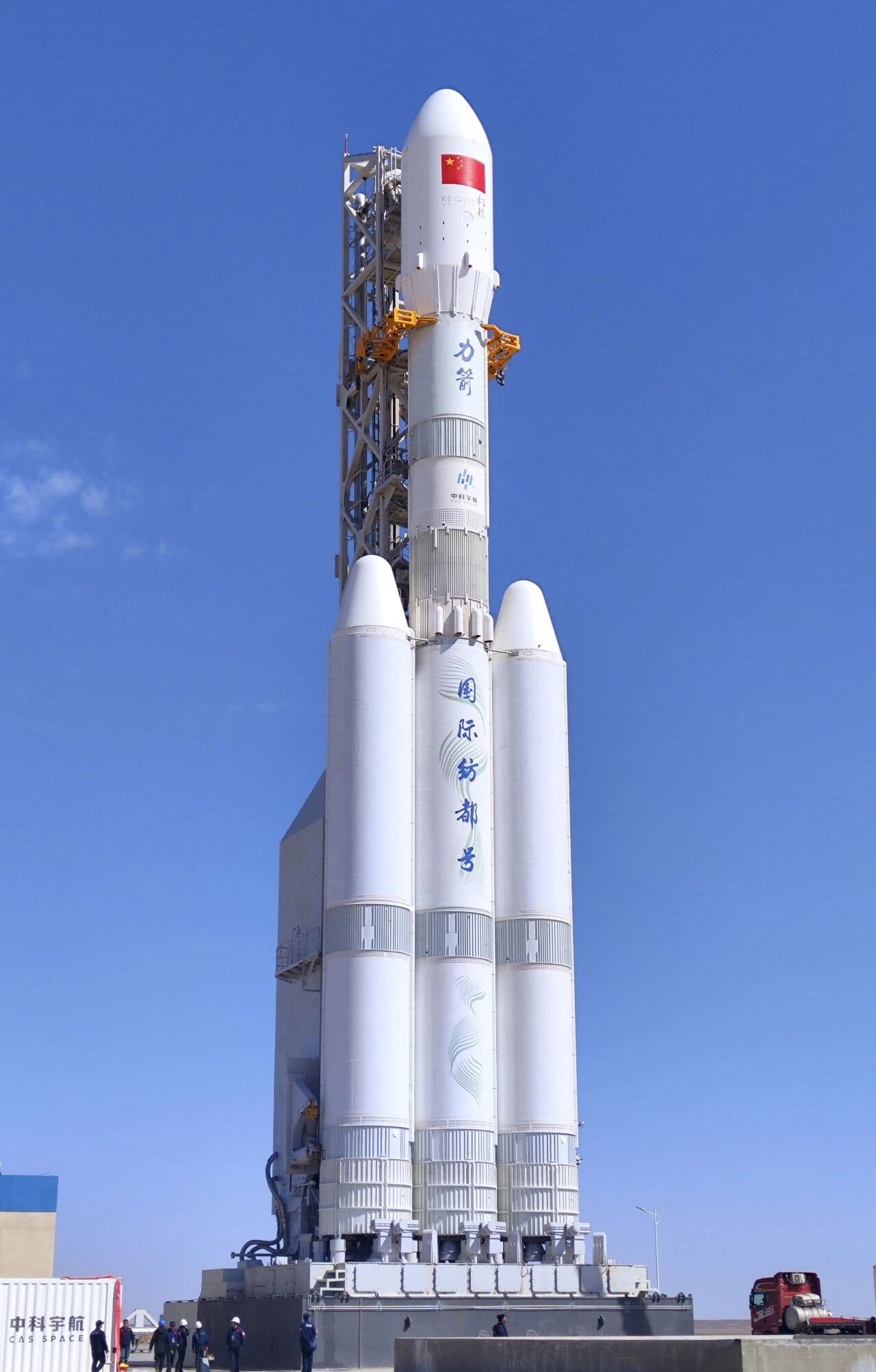
One group of companies has used small or medium-small launchers to establish mission records and prove basic execution. A second group is building medium-lift liquid vehicles aimed at larger constellation demand. A third group derives much of its long-term valuation logic from reusable systems and the promise of future cost reduction.
Profiles of the leading commercial launch firms
These firms are often discussed together, but they do not occupy the same strategic position. Some prioritize reliability first and larger lift later. Others establish a strong technical identity and then try to scale manufacturing. Still others differentiate through sea launch, solid-motor responsiveness, or early reusability testing. What looks like a single launch race is actually a set of parallel competitions shaped by mission type, capital tolerance, and infrastructure access.
Publicly visible moves across the field, such as methane-LOX engine development, sea launch, recovery ships, dedicated launch pads, larger integration facilities, engine batch production, and reusable-stage testing, all suggest that the real competition has moved from "Can you build a prototype?" to "Can you build cadence, capacity, and cost discipline?"
Why reusability and medium lift are becoming the center of gravity
The force changing the launch market is not abstract prestige. It is demand structure. As low Earth orbit communications, remote sensing, and Internet of Things constellations expand, the market places more weight on medium lift, batch deployment, cost per kilogram, and cadence. Small launchers will remain useful for replenishment, rideshare, testing, and rapid-response missions. But the center of gravity is shifting toward larger lift, stronger reuse potential, and more complete ground-support capability.
This is why a launch company cannot be judged by engine specifications or first-flight outcomes alone. The more consequential variables are often whether the company has sustainable test capability, stable launch access, meaningful supply-chain control, the ability to convert technical plans into customer schedules, and the organizational discipline required to turn a rocket into a platform business.
The second tier and the reserve layer
Beyond the most visible names, China also has a broad layer of companies still focused on engine development, suborbital validation, micro-launch, reusable experiments, sea-launch concepts, specialty payload services, or enabling technologies. This layer matters because it determines how many technical branches survive into the next cycle. It also signals high attrition ahead. By analogy with the EV sector, the launch industry is now approaching the period before a visible shakeout.
V. The Satellite Market: From Manufacturing to Constellations and Data Services
If launch determines what can reach orbit, satellites determine whether orbit can be turned into long-duration economic value. Over the past several years, China's satellite segment has moved steadily from single-satellite engineering logic toward batch manufacturing, constellation deployment, data operations, and closer alignment with downstream terminals and services.
At the state-led level, communications, navigation, remote sensing, and strategic space infrastructure remain dominated by large national systems. At the commercial level, however, several distinct categories have emerged. One consists of satellite manufacturers and constellation operators such as GalaxySpace, MinoSpace, ADA Space, and Geespace, all of which aim to make satellites more repeatable industrial products rather than one-off engineering projects. A second category consists of remote-sensing and geospatial firms such as Chang Guang Satellite Technology, PIESAT, and GEOVIS, where the focus is less on owning the most spacecraft and more on converting space assets into usable services. A third category includes terminals, communications links, and vertical-industry solution providers that may sit closer to paying customers than the spacecraft operators themselves.
The three layers of the satellite value chain
Compared with launch, the satellite industry has a much longer value chain. Manufacturing a spacecraft is only the beginning. The more durable profit pools often sit in operations, mission management, data subscription, terminals, and vertical applications. That is why concepts such as satellite internet, remote-sensing data monetization, and direct-to-device connectivity matter more with each passing year. In the next several years, the degree of commercialization in China's space industry will depend not only on launch counts, but on how many satellite systems achieve real operational continuity.

From an industrial-organization perspective, the satellite segment is undergoing a critical shift: project logic is slowly giving way to manufacturing logic and platform logic. Standardized buses, batch procurement, modular payloads, software-defined functions, and denser ground operations are all signs of that transition. For analysts, this means a satellite company should be judged not only by how many spacecraft it launches, but by whether it can scale production, sustain operations, and close the loop between orbit and application.
VI. Components and Subsystems: The Real Ceiling of the Industry
Compared with first flights and orbital milestones, components rarely attract the spotlight. Yet they are the most important determinants of the sector's upper bound. One of the most consequential developments in China's space industry over the past decade has been the widening of high-difficulty, high-value, long-qualification subsystem work beyond a single institute-based structure and into a broader supplier network.
1. Engines and propulsion
Propulsion remains one of the hardest core segments. Liquid engines define thrust class, specific impulse, reusability potential, and therefore launch economics. Solid motors remain important for rapid response, storage, and mission simplification. State-backed institutions still hold the deepest experience, while commercial firms increasingly pursue in-house engine work or joint development. Methane-liquid oxygen attracts attention not only because it sounds advanced, but because it is tightly tied to maintenance, turnaround, and the long-term economics of reuse.
2. Structures, materials, and manufacturing processes
Propellant tanks, fairings, composite casings, titanium and high-temperature alloy parts, and additive-manufactured components may appear secondary, but they directly shape mass efficiency, production rhythm, and quality control. As commercialization deepens, Chinese space manufacturing is moving away from single-item craftsmanship toward higher consistency and more repeatable process control. Materials systems, welding, 3D printing, automated assembly, and non-destructive testing are all central to this transition.
3. Avionics, guidance, and attitude control
Flight computers, inertial units, star trackers, sensors, telemetry and telecommand links, and control actuators form the nervous system of launch vehicles and spacecraft. Avionics are not peripheral modules. They are a core determinant of reliability, mission precision, and maintainability. A major Chinese trend in this layer is stronger localization combined with higher integration, alongside a gradual effort to convert engineering-grade capabilities into product families better suited to commercial volume.
4. Payloads and communications chains
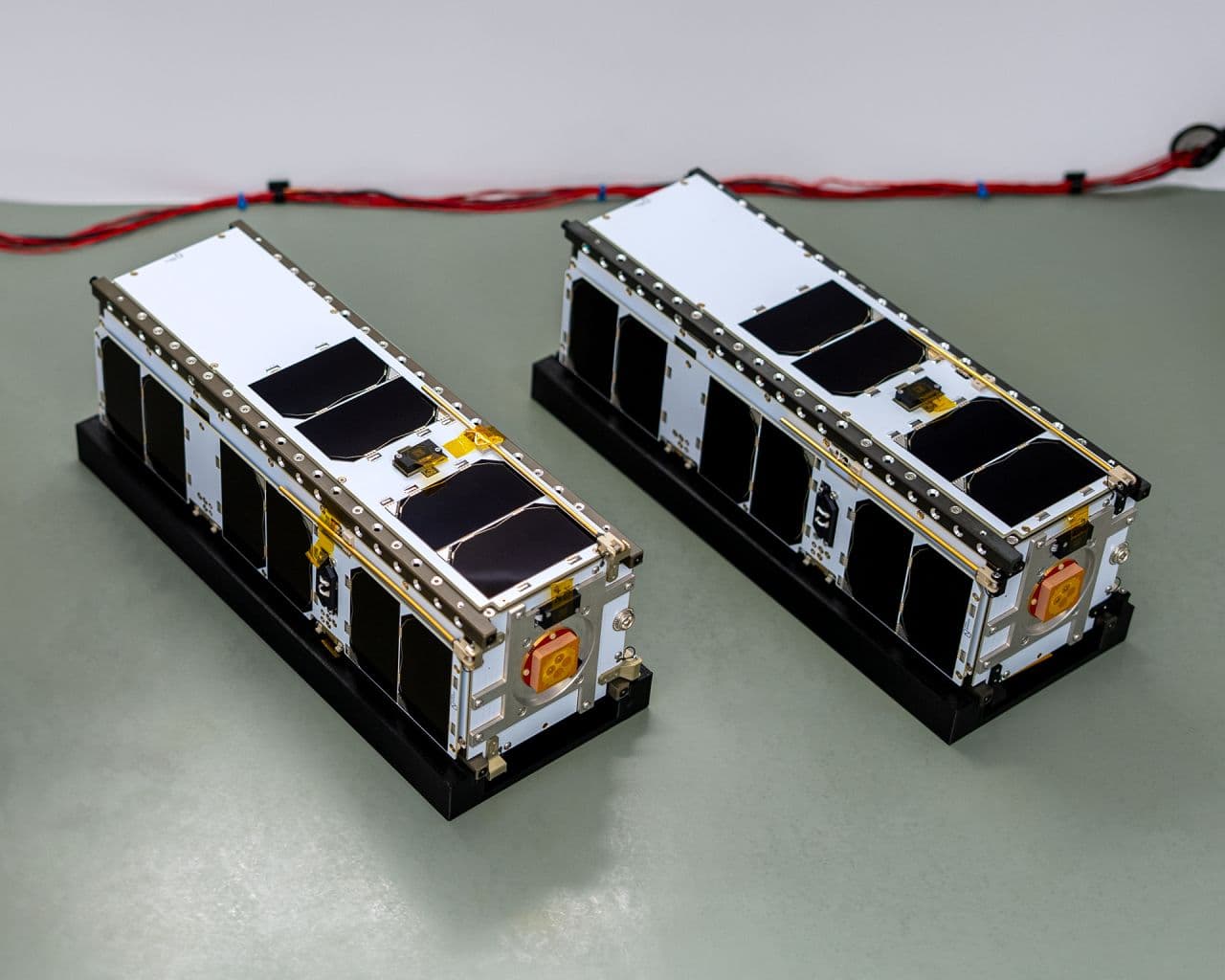
In commercial terms, the payload often determines the real value of the spacecraft. Optical remote sensing, synthetic aperture radar, communications transponders, navigation augmentation, AIS maritime tracking, and IoT communications modules each map onto different markets. The industry once treated launch as the finish line. In reality, many of the most durable barriers sit in payload performance, data quality, on-orbit stability, and the coordination between the payload and the application chain on the ground.
5. Power, thermal control, and lifetime management
Solar arrays, batteries, power management units, thermal coatings, and heat-dissipation design are critical to satellite lifetime and stability. As constellations scale, unit costs must fall, but not through excessive sacrifice of lifespan and reliability. That makes power and thermal control classic examples of segments that are visually unexciting yet industrially decisive.
6. Ground systems, test infrastructure, and software
Space is often misread as a purely in-orbit hardware business. In practice, many decisive capabilities sit on the ground. Static-fire stands, thermal-vacuum chambers, vibration testing, wind tunnels, assembly and integration halls, tracking stations, commercial spaceports, sea-launch assets, mission-planning software, and data systems all shape launch cadence and on-orbit efficiency. The firms and regions with stronger validation chains are more likely to convert prototypes into stable products.
7. Why the supplier layer sets the industry's ceiling
If the EV analogy is pushed further, engines, star trackers, satellite buses, optical assemblies, mission software, and space-ground terminals are the aerospace equivalents of batteries, domain controllers, sensors, and Tier-1 suppliers. China still lacks a single universally dominant "space CATL" or "space Bosch." Many high-value components remain concentrated among a small number of state-linked and top-tier industrial players. That does not mean the ecosystem is weak. It means that a large share of future value capture may settle not in the best-known vehicle brands, but in the suppliers that can achieve quality barriers and repeatable industrial scale.
For industrial analysis, the importance of components lies in what they reveal about the sector's maturity. An industry only enters true ecosystem competition when engines, star trackers, composites, valves, pumps, electronic units, ground software, and test services all begin to form a supplier network that is selectable, improvable, and verifiable.
VII. Beyond Rockets: Why Satellites, Ground Systems, and Applications Are Closer to Long-Term Value
Chinese space is often read through launch alone, but the layers closer to durable revenue are frequently on the ground. Remote-sensing services, maritime monitoring, agricultural and climate services, vehicle connectivity, low-orbit communications terminals, navigation augmentation, and vertical data products are all more likely to generate long-duration contracts than launch events by themselves.
In this sense, the industry's real maturity will be measured not only by launch counts but by whether launch success can be converted into operating success and application success. The firms that can connect satellites to ports, shipping, agriculture, energy, logistics, insurance, and city-scale decision systems are more likely to remain resilient through cycles.
VIII. Industrial Geography: Beijing, Shanghai, Xi'an, Chengdu, Hainan, and the Coastal Launch Belt
China's space industry is not evenly distributed. It is concentrated in a small number of regions with deep historical accumulation and strong policy support. Beijing remains the center of headquarters functions, research institutes, systems design, satellite platforms, and major engineering programs. Shanghai is especially important in satellite manufacturing, aerospace electronics, integration, and selected commercial programs. Xi'an and Chengdu retain major roles in propulsion, solid launch systems, testing, and related defense-industrial capabilities. Cities such as Wuhan and Changchun have developed recognizable strengths in satellite applications, geospatial processing, and optical chains.
At the same time, Hainan, Jiuquan, Taiyuan, Xichang, and sea-launch nodes such as Haiyang matter in another way: they are becoming industrial clusters because launch access itself is now a strategic resource for commercial firms. In the commercial era, a launch site is not merely a national asset. It is a determinant of scheduling power, customer delivery capability, and industrial execution. Proximity to launch infrastructure can connect financing, manufacturing, and orders into a more coherent growth path.
IX. The EV Analogy Helps Explain China's Commercial Space Sector
Comparing Chinese commercial space with the Chinese EV industry is not a gimmick. The two sectors share a recognizable pattern: policy opening, intense capital inflow, regional-government competition, domestic supply-chain formation, and an eventual filtering of winners and losers.
Stage comparison
More intuitively, EV range anxiety resembles customer anxiety over launch success rate; charging networks resemble launch sites, tracking networks, and test infrastructure; battery cost curves resemble cost-per-kilogram launch curves; and business-model innovation such as battery swapping, direct sales, and overseas factories has rough analogues in stage reuse, direct launch contracting, and foreign deployment.
Why this analogy is useful
- It explains why Chinese commercial space is both policy-shaped and market-filtered.
- It explains why local governments are willing to compete over industrial parks, launch nodes, and test infrastructure.
- It explains why the real inflection point is not early fundraising but entry into volume production, delivery discipline, and durable orders.
- It also warns that, like EVs, commercial space is likely to experience visible consolidation.
X. Capital, Policy, and Real Orders Are Reshaping the Sector Together
Chinese commercial space passed through a period of intense narrative inflation in which fundraising, valuation, and the search for the next unicorn dominated public discussion. By 2026, however, capital is visibly more selective. Investors increasingly care about three things: whether a company has a record of repeatable engineering delivery, whether it possesses a believable path toward lower cost and higher cadence, and whether it is moving closer to real demand rather than staying in the demonstration stage.
Policy and local government still matter greatly. Spaceport construction, industrial parks, fund matching, tax incentives, talent programs, and access to test facilities can all change a company's growth curve. But policy alone is not enough. What will move the industry into its next phase is stable demand from national constellations, commercial remote sensing, navigation augmentation, satellite internet, low-orbit connectivity terminals, and industry-specific data services. Without those demand anchors, manufacturing expansion and rocket iteration cannot become a healthy sector.
Capital also brings a second-order risk: duplication and bubbles. Aggressive local funds and industrial capital have accelerated factory construction and company scaling, but they also create the possibility of too many similar technical routes, too many bases, and valuations that outpace economic fundamentals.
XI. Internationalization: Real Opportunity Exists, but Insurance, Compliance, and Geopolitics Set the Ceiling
Chinese space firms do have meaningful international opportunities, especially across parts of Southeast Asia, the Middle East, Africa, Latin America, and among smaller spacefaring states that may prefer to accelerate through partnership rather than build everything domestically. These opportunities are not limited to launch. They also include satellite turnkey projects, ground stations, constellation services, remote sensing, communications terminals, technology licensing, and local assembly or joint manufacturing.
But internationalization is not simply a matter of exporting rockets. The real constraints often arise from four sources: first, export-control regimes such as ITAR and broader technology restrictions; second, launch insurance, liability allocation, and reinsurance costs; third, currency, payment, and political risks; and fourth, the local regulatory and protectionist environment of the destination market. As a result, the more durable model is often not single-event launch export, but a composite offering that combines launch, ground systems, operations, and local partnership.
XII. Deeper Variables: Geopolitics, Talent, Sustainability, Narrative, Frontier Technology, and Law
Geopolitics and techno-nationalism
Space has become a frontier of great-power competition. The military significance of large commercial constellations has made governments more aware of the overlap between commercial infrastructure and security capability. For China, domestic substitution continues to deepen, but access to top-end components, international rules, and collaboration channels remains exposed to geopolitical shocks.
Talent and organization
The movement of engineers and managers from CASC and CASIC into private firms is one reason China's commercial space sector has scaled as quickly as it has. Over time, however, talent structure, university expansion, industrial matching, international hiring, and technology-security controls may matter more than fundraising itself.
Environment and sustainability
As launch cadence rises, emissions, drop-zone governance, residential relocation, launch-site ecology, and orbital debris management will attract more attention. Methane is attractive not only as a performance route but also because it fits more comfortably within a future sustainability narrative. A higher-frequency launch economy requires environmental governance to be treated as part of infrastructure rather than as an afterthought.
Narrative and brand
Chinese space has long carried a strong national-development narrative, while commercial firms increasingly experiment with more market-facing branding and public communication. This is not just a media issue. It shapes recruiting, fundraising, public legitimacy, and international perception.
Frontier technologies
Nuclear thermal propulsion, solar sails, quantum satellites, AI-enabled mission operations, 3D-printed engines, micro-propulsion, in-orbit servicing, and space manufacturing are steadily moving from laboratory topics into the set of technologies serious analysts monitor. They may not transform the market immediately, but they do shape who is positioned for the next cycle.
Law and governance
The more commercial the sector becomes, the more important legal structure becomes. Launch licensing, liability allocation, insurance design, data governance, orbit-spectrum administration, debris responsibility, remote-sensing boundaries, and future resource rules will all affect operating cost and international depth. China's engineering capability is advancing quickly. Its legal, insurance, and governance frameworks will determine how deep that capability can travel internationally.
XIII. Timeline, Stakeholder Table, and 2030 Roadmap
Key timeline
Stakeholder role map
2026-2030 roadmap
XIV. Conclusion
The most important feature of China's space industry in 2026 is not simple scale expansion but increasing ecosystem completeness. State champions still provide the technical base, engineering standards, and strategic pull. Private firms are increasing iteration speed, capital efficiency, and market responsiveness. Satellites and data services are beginning to convert launch success into sustained operations. Components and test systems, meanwhile, determine whether the industry can move from a limited set of projects toward large-scale industrialization.
From a research perspective, this means China should no longer be described only through a rocket story or only through a policy story. It is better understood as a multi-layered, infrastructure-heavy, engineering-intensive industrial system moving through an accelerated marketization phase. In the years ahead, the best indicators of maturity will not be the loudest slogans, but the most stable supply chains, the clearest application loops, and the most verifiable delivery capability.
All analysis is based on the public sources listed below. Interpretations are the author's independent views and do not represent any institution.
Sources9 entries with source notes and links
- China Aerospace Science and Technology Corporation(spacechina.com)
- China Aerospace Science and Industry Corporation(casic.com.cn)
- China National Space Administration(cnsa.gov.cn)
- LandSpace(landspace.com)
- Galactic Energy(galacticenergy.cn)
- Orienspace(orienspace.com)
- Deep Blue Aerospace(deepblueaerospace.com)
Continue reading
12 Jul 2026 · 56 min read
The Long March Paradox: China Is Selling Launch Capacity Abroad While Guowang and Qianfan Starve for It
China's exportable launch surplus and its megaconstellation bottleneck sit on different production lines; the real constraint is non-fungible medium lift and missing vertical integration.
28 Aug 2026 · 48 min read
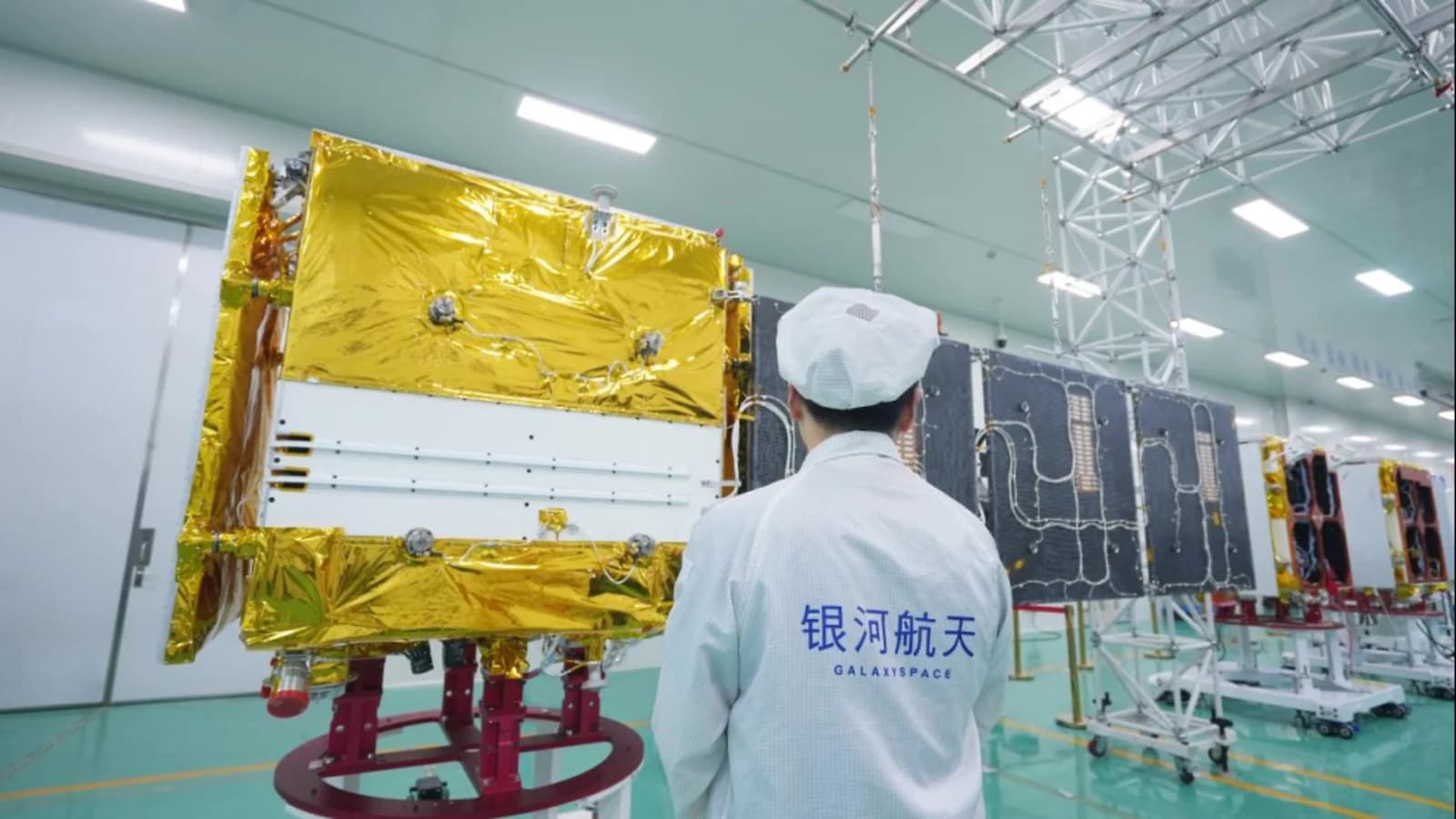
China's Satellite Industry 2026: The Factories Are Real, the Revenue Is Not — Yet
China has built real satellite factories, but GW, Qianfan, and Honghu-3 still must convert state-backed capacity into launch cadence, revenue, and repeat exports.
17 Dec 2024 · 9 min read
Why Chinese Space Companies Are Going Global in 2025
Chinese space companies are going global not as a branding exercise, but because growth now depends on regional customers, partners, and commercial trust.