
China's Commercial Launch Sector in 2025: Capacity Is No Longer the Constraint
China's launch market enters 2025 with more rockets, more capital, and harder questions about cadence, reliability, and commercial demand.
Method & disclosure
Confidence: Medium to high (based on public sources and cross-checking; some timelines, figures, and judgments may change as new disclosures emerge)
Review mode: Human + AI cross-check
Writing support: AI assisted
Singapore Space Agency
On this page · 7
- 01The field has split into three strategic tiers
- 02LandSpace has moved from pioneer status to systems player
- 03Space Pioneer, Orienspace, and Galactic Energy show three different business models
- 04Deep Blue Aerospace and iSpace represent the reusable upside case
- 05The real driver is not prestige. It is constellation logistics.
- 06What international customers should watch
- 07The 2025 conclusion
Key findings
The argument in brief
- By 2025 China's launch market is no longer constrained by ambition alone; the real filter is cadence, reliability, and conversion into paying demand.
- The field has split into repeat-launch operators, medium-lift scale-up challengers, and reusable-upside players with larger but riskier future markets.
- Constellation deployment, not prestige, is the main force pushing the market toward medium-lift liquid vehicles and reusability roadmaps.
- The future leaders are likely to be the companies that combine safe launches, repeat launches, and a credible path from launch capability to infrastructure business.
China's commercial launch market entered 2025 with a very different posture from the one it had even eighteen months ago. The conversation is no longer about whether China can produce private launch companies with credible vehicles, serious capital backing, and meaningful state support. That threshold has already been crossed. The real question now is which companies can turn engineering momentum into dependable launch cadence, repeat customers, and eventually an international business model that works outside a policy-driven domestic market.
That distinction matters because 2024 changed the shape of competition. The market saw new fundraising, more explicit support from provincial and municipal capital, a broader set of launch pads coming online, and a clearer connection between launch demand and China's large broadband and Earth observation constellation plans. By early 2025, the sector had enough vehicles in development that the bottleneck moved away from raw ambition and toward execution discipline.
The field has split into three strategic tiers
The first tier is made up of companies already proving that they can launch repeatedly. Galactic Energy sits in this group because Ceres-1 has become the most operationally visible private launcher in China. By March 2025, SpaceNews reported that Galactic Energy had completed its 18th Ceres-1 mission with 17 successes, giving the company a record that few domestic private peers can match. Ceres-1 is still a small launcher at roughly 400 kilograms to LEO or 300 kilograms to a 500-kilometer sun-synchronous orbit, but reliability and repeatability have made it commercially relevant well beyond its lift class.
The second tier includes companies with strong technical promise but limited tolerance for execution mistakes. Space Pioneer belongs here. Tianlong-2 made history in April 2023 as China's first privately developed liquid-propellant rocket to reach orbit on its first attempt, but the company's next chapter depends on Tianlong-3. That rocket, benchmarked against Falcon 9, is designed to deliver roughly 17,000 kilograms to LEO or 14,000 kilograms to 500-kilometer SSO. The opportunity is large, but so is the risk. After the June 2024 static-fire accident in Gongyi, the company's recovery became a test not only of engineering resilience but also of governance, quality control, and customer confidence.
The third tier consists of firms whose valuation is built on the promise of medium-lift reusable vehicles rather than current launch cadence. LandSpace, Deep Blue Aerospace, Orienspace, and iSpace all fit here in different ways. Their future addressable market is much larger than the small-satellite segment, but the path to recurring revenue is also much more capital intensive.
LandSpace has moved from pioneer status to systems player
LandSpace remains the most important company in this tier because it has already done something globally significant: Zhuque-2 became the first methane-liquid oxygen rocket in the world to reach orbit in 2023. That single achievement gave LandSpace technical credibility far beyond China. The company's 2024 progress turned that credibility into scale. SpaceNews reported in December 2024 that LandSpace had raised 900 million yuan in fresh financing to accelerate Zhuque-3 and support mass production.
Why does Zhuque-3 matter so much? Because it is designed for the market that domestic constellations will actually need. According to SpaceNews, the stainless-steel, nine-engine vehicle is expected to carry around 21,000 kilograms to LEO in expendable mode, 18,300 kilograms with downrange recovery, or 12,500 kilograms with return-to-launch-site recovery. Those are not demonstration-level numbers. They are the kinds of numbers that can compete for megaconstellation deployment, cargo logistics, and high-volume institutional work.
LandSpace is also strategically interesting because it sits at the intersection of policy relevance and commercial ambition. The company is not simply building a rocket. It is building a manufacturing and operations system intended to serve recurring launches. In a market where many startups still optimize for milestone announcements, that matters.
Space Pioneer, Orienspace, and Galactic Energy show three different business models
Space Pioneer is pursuing a scale-up model. Its logic is simple: move from the proof point of Tianlong-2 to the addressable economics of Tianlong-3. If the company restores confidence after the 2024 test accident, it could still become one of the most important domestic launch providers because medium-lift kerolox rockets align directly with the requirements of national constellation programs.
Orienspace is taking a different route. Gravity-1, which successfully debuted from a sea platform in January 2024, showed that a private Chinese company could field a very large solid launcher for rapid deployment missions. Publicly cited figures place Gravity-1 at around 6,500 kilograms to LEO or 4,200 kilograms to 500-kilometer SSO. That is a meaningful niche: less operational complexity than a reusable liquid vehicle, but much more lift than traditional small launchers. The company also raised 600 million yuan in early 2024, according to multiple industry reports, reinforcing the idea that solid-launch capacity still has institutional demand.
Galactic Energy, by contrast, is monetizing credibility first and scale second. Ceres-1 gives it a launch record, customer relationships, and operational muscle memory. Pallas-1, expected to debut in 2025, is the bridge to the medium-lift segment with around 8,000 kilograms to LEO. That sequencing is strategically smart. Customers generally trust the next rocket more when the company has already shown it can launch the current one repeatedly.
Deep Blue Aerospace and iSpace represent the reusable upside case
Deep Blue Aerospace is one of the clearest examples of where investor appetite is moving. SpaceNews reported in March 2025 that the company had raised fresh funding and was targeting a mid-year orbital launch of its Nebula-1 reusable launcher. Industry reporting places Nebula-1 at roughly 2,000 kilograms to LEO, with the company positioning reusability and rapid iteration as its differentiator. In other words, Deep Blue is not trying to dominate today's launch manifest. It is trying to be relevant in tomorrow's lower-cost launch environment.
iSpace tells a similar but more complicated story. It was the first Chinese private company to reach orbit, yet Hyperbola-1's later failures weakened its commercial standing. The company has since shifted attention toward Hyperbola-3, a methane-liquid oxygen reusable rocket. Reports in 2024 indicated around 700 million yuan in new financing tied to Hyperbola-3 development and associated manufacturing capacity. The lesson is important: first-mover advantage in Chinese commercial launch is not enough on its own. Reliability, financing continuity, and a believable transition to reusable medium-lift are now more important than legacy branding.
The real driver is not prestige. It is constellation logistics.
Many outside observers still frame China's commercial launch market as a prestige race. That misses the economics. The most important demand signal is not symbolic competition with SpaceX. It is the need to place large numbers of satellites into orbit for broadband, remote sensing, weather, navigation augmentation, and data services.
Projects such as Guowang and the Thousand Sails constellation are changing the demand profile for launch providers. Small launchers will remain useful for technology demonstration missions, replacement launches, and rideshare flexibility. But the center of gravity is moving toward vehicles that can deploy heavier batches at lower per-kilogram cost. That is why nearly every serious company is converging on medium-lift liquid launchers, reusability roadmaps, or both.
This is also why launch sites matter more than many company profiles suggest. Hainan commercial spaceport, expanded infrastructure at Jiuquan, and growing sea-launch capabilities are not side notes. They are the physical prerequisites for cadence. A company can raise capital and publish payload charts, but if it cannot secure integration flow, range access, and reliable ground operations, it will not become a platform business.
What international customers should watch
For overseas customers and partners, the headline is straightforward: China now has enough credible commercial launch actors to create real procurement optionality, but the market is still uneven. The strongest opportunities are likely to emerge in four areas.
First, dedicated launch for small and medium constellations will become more competitive as more vehicles reach first flight. Second, foreign satellite owners from the Middle East, Southeast Asia, and Latin America will increasingly test Chinese launch providers when timing, price, or geopolitical alignment make Western options harder to access. Third, component and subsystem partnerships will deepen because launch vehicle growth is pulling through demand in tanks, engines, valves, avionics, structures, and test infrastructure. Fourth, Singapore becomes more useful as a commercial coordination point precisely because the underlying launch market is becoming more crowded and harder to interpret.
For Chinese launch companies evaluating APAC expansion, the challenge is no longer just "Can we launch?" It is "Can we translate launch capability into regional business development, financing access, channel partnerships, regulatory positioning, and trusted regional execution?" That is why Singapore becomes more important as an observation point rather than just a market label.
The 2025 conclusion
China's commercial launch sector is entering the year with more capacity than at any time in its history. But capacity alone does not create a market leader. The winners of 2025 will be the companies that prove three things at the same time: they can launch safely, they can launch repeatedly, and they can connect launch supply to actual constellation and international customer demand.
That is why the sector feels more mature now. The future leaders are no longer the companies with the most dramatic pitch decks. They are the ones learning how to become infrastructure businesses.
This article is based on the public sources listed below. Analysis and forward-looking judgments are the author's independent views and are not investment, legal, or procurement advice.
Sources7 entries with source notes and links
Continue reading
12 Jul 2026 · 56 min read
The Long March Paradox: China Is Selling Launch Capacity Abroad While Guowang and Qianfan Starve for It
China's exportable launch surplus and its megaconstellation bottleneck sit on different production lines; the real constraint is non-fungible medium lift and missing vertical integration.
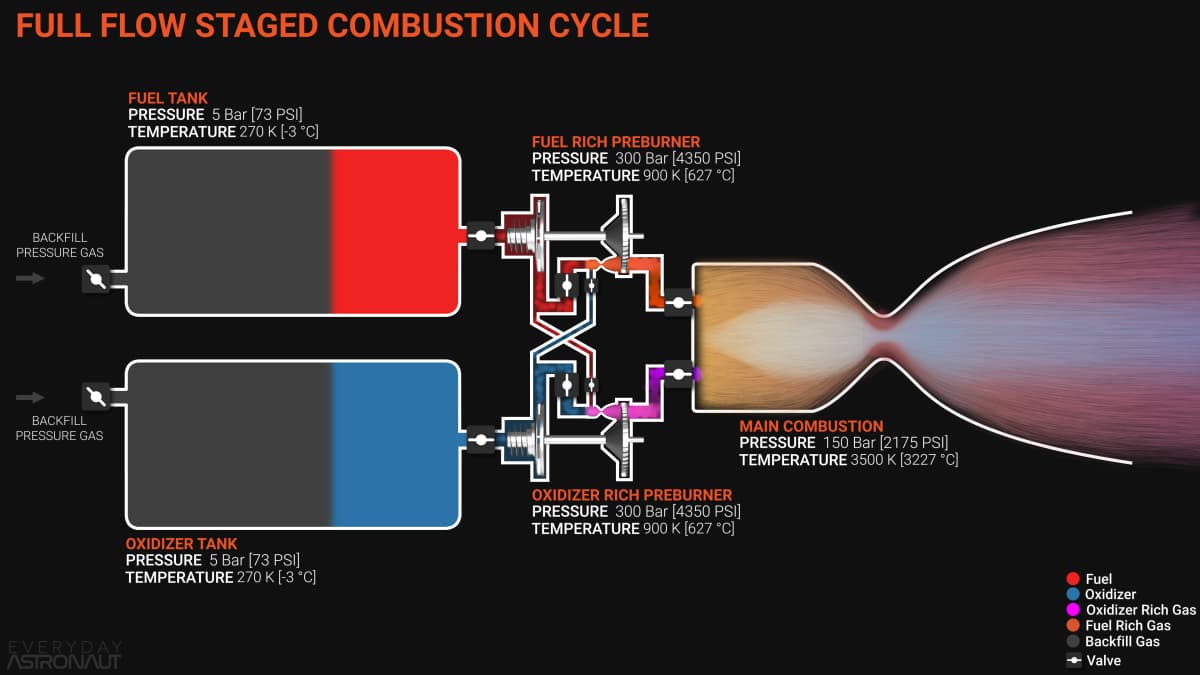
19 Apr 2026 · 38 min read
Full-Flow Staged Combustion: Why FFSC Is the Everest of Rocket Engines, and Who Is Actually Climbing It
A practical map of rocket-engine cycles, Raptor V1–V3, and the 2026 full-flow staged-combustion race — where reflight economics matter more than test-stand claims.
13 Jul 2026 · 55 min read
The Global Reusable Rocket Census, Mid-2026: Landings Are Now Common. Reflights Are Still Rare.
A global census of reusable launch systems shows that booster recovery is spreading, while propulsion-grade reflight and cadence economics remain overwhelmingly concentrated at SpaceX.