
Full-Flow Staged Combustion: Why FFSC Is the Everest of Rocket Engines, and Who Is Actually Climbing It
A practical map of rocket-engine cycles, Raptor V1–V3, and the 2026 full-flow staged-combustion race — where reflight economics matter more than test-stand claims.
Method & disclosure
Confidence: High (core engine data cross-checked against manufacturer disclosures, NASA NTRS, MIT Technology Roadmaps, and industry research; some Chinese commercial-space figures remain public-estimate ranges)
Review mode: Human + AI cross-check
Writing support: AI assisted
Singapore Space Agency
On this page · 10
- 01Executive Summary
- 021. Rocket Engines Need A Better Classification Framework
- 032. Why Commercial Launch Is Converging On Methane And Advanced Cycles
- 043. Raptor Is Not Just Getting Stronger. It Is Being Rewritten For Manufacturability.
- 05The One Thing That Matters
- 064. The Global FFSC Landscape: Raptor Is Not Alone, But It Is Still Ahead
- 075. China's Engine Landscape Is Broader Than One Commercial FFSC Story
- 086. Matching Engine Cycle To Rocket Class
- 097. Why This Matters For APAC
- 10Conclusion
Key findings
The argument in brief
- FFSC is best understood as the minimum viable propulsion architecture for very large reusable rockets, not as a prestige upgrade for engine designers.
- Raptor matters because it turns FFSC from a laboratory concept into a manufacturable, iterated, and increasingly low-maintenance industrial product.
- LandSpace's Lanyan is important not because it is already equivalent to Raptor, but because it shows a Chinese private company has reached a serious FFSC ground-test threshold.
- The real competitive filter is not headline thrust. It is the combination of iteration speed, vertical integration, and capital density behind the engine program.
Executive Summary
In March 2026, LandSpace announced that its 220-ton-class methane-fueled full-flow staged combustion engine, Lanyan, had completed a long-duration full-system hot-fire campaign with more than 100 ignitions. Around the same period, SpaceX was preparing Booster 19 static-fire work with Raptor 3 ahead of the first Starship V3 flight attempt.
Those two updates intersect at one technology: full-flow staged combustion, or FFSC. In practical terms, only two large methane FFSC engines have reached this level of visible integrated-system maturity so far: SpaceX's Raptor, which has already flown, and LandSpace's Lanyan, which is still in the ground-test phase. That does not mean the field contains only two programs. China's state-developed YF-215, Jiuzhou Yunjian's FY-100 and Yuchen Exploration's DP-1, India's Astrobase engine, and New Frontier Aerospace's compact Mjölnir now form a much wider second line — but they sit at very different rungs of the evidence ladder.
July 2026 update: This article's original argument and structure are preserved. The global landscape and comparison tables have been expanded to incorporate newly disclosed programs and test milestones. A preburner firing, a powerhead test, an integrated engine hot fire, and flight experience are treated as four different levels of evidence.
The core argument of this article is simple:
FFSC is not just a "better engine cycle." It is the minimum viable propulsion architecture for very large reusable rockets. Without FFSC, 100-ton-class reusable launch becomes extremely difficult to sustain in engineering and operational terms. With FFSC, the move from roughly
$1,500/kgtoward$200/kgstarts to become plausible.
The real contest is therefore not "whose engine has the best brochure numbers." The real contest is whose architecture can support high-frequency reuse, and whose cannot.
This article answers three questions:
- Why is FFSC so difficult? Because every step from gas-generator to staged combustion to full-flow sharply raises the burden on fluids, turbomachinery, controls, materials, and manufacturing.
- Why did SpaceX choose FFSC? Because the Raptor story is not only about higher thrust. It is about turning a high-performance engine into a manufacturable and eventually low-maintenance industrial device.
- Who is actually chasing? LandSpace, Stoke Space, Blue Origin, Rocket Lab, and several Chinese commercial players are not solving the same problem in the same way. Their engine choices reveal their rocket economics.
1. Rocket Engines Need A Better Classification Framework
Before discussing FFSC, it helps to classify rocket engines along three dimensions: propellant choice, power cycle, and thrust-environment optimization.
1.1 Propellant Type
Table 1: Practical propellant comparison for major liquid and solid rocket categories. Figures are representative ranges, not absolute limits.
Propellant choice sets the broad physical envelope of the vehicle.
- Solid motors are cheap, robust, and useful for boosters, but they do not offer fine throttle control or easy reuse.
- Kerolox is dense and proven, but soot and coking create a maintenance burden that works against rapid reflight.
- Hydrolox delivers the best specific impulse, but liquid hydrogen is difficult to store, leaks easily, and drives large tank volumes.
- Methalox sits in the middle and matters because it combines decent performance with clean combustion. That makes it the most attractive chemistry for reusable heavy-lift systems.
1.2 Power Cycle
Power cycle is the real dividing line because it determines how turbopumps are driven, where turbine exhaust goes, and how much of the propellant flow ends up doing useful work.
Table 2: Simplified comparison of rocket-engine power cycles. Relative Isp uses gas-generator performance as the baseline.
Three distinctions matter most.
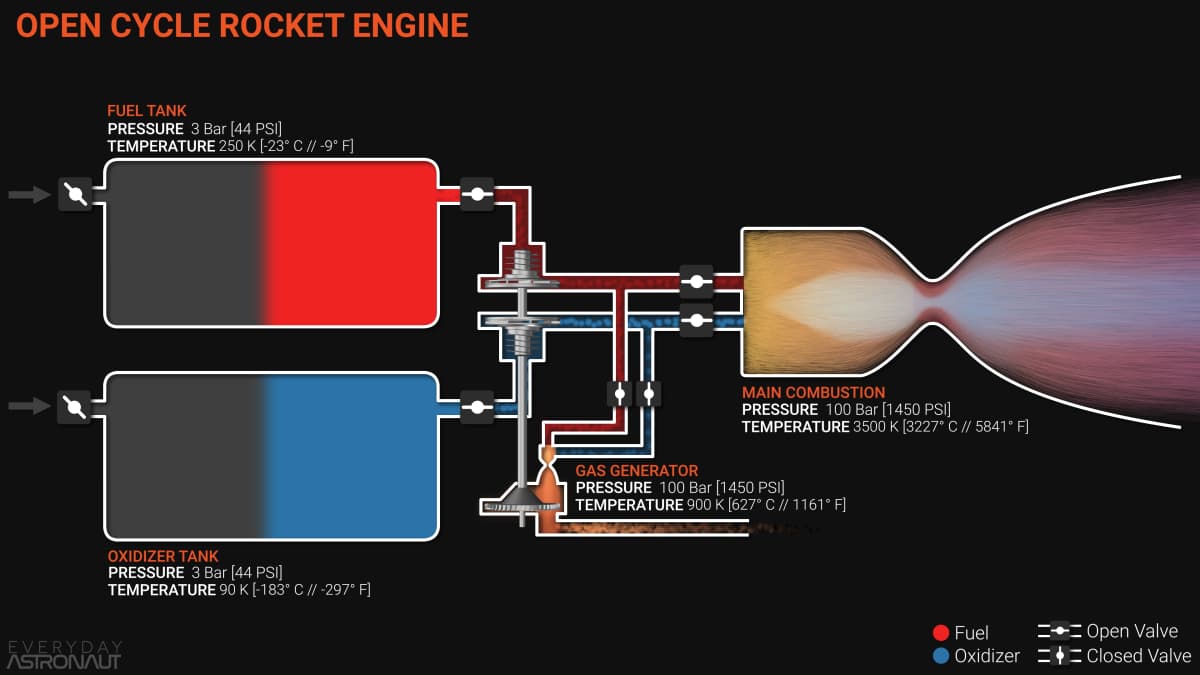
- Gas-generator engines are simpler and easier to industrialize, but they throw away some propellant energy.
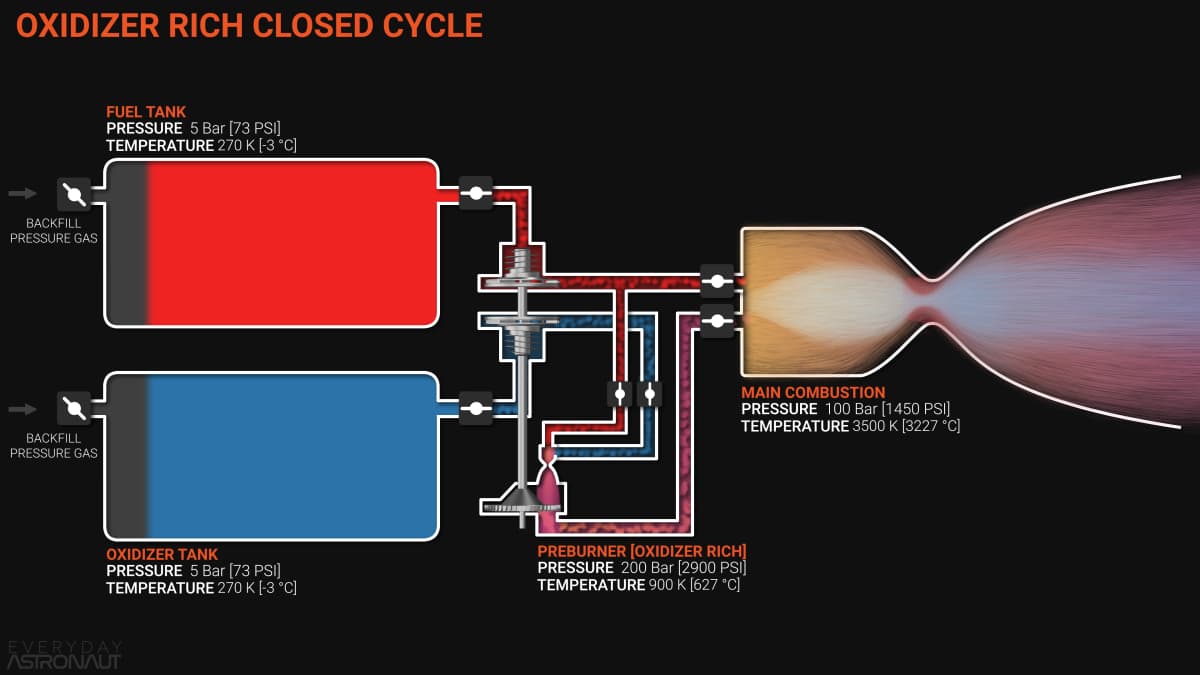
- Staged-combustion engines keep turbine exhaust inside the combustion process, improving efficiency at the cost of much harsher operating conditions.
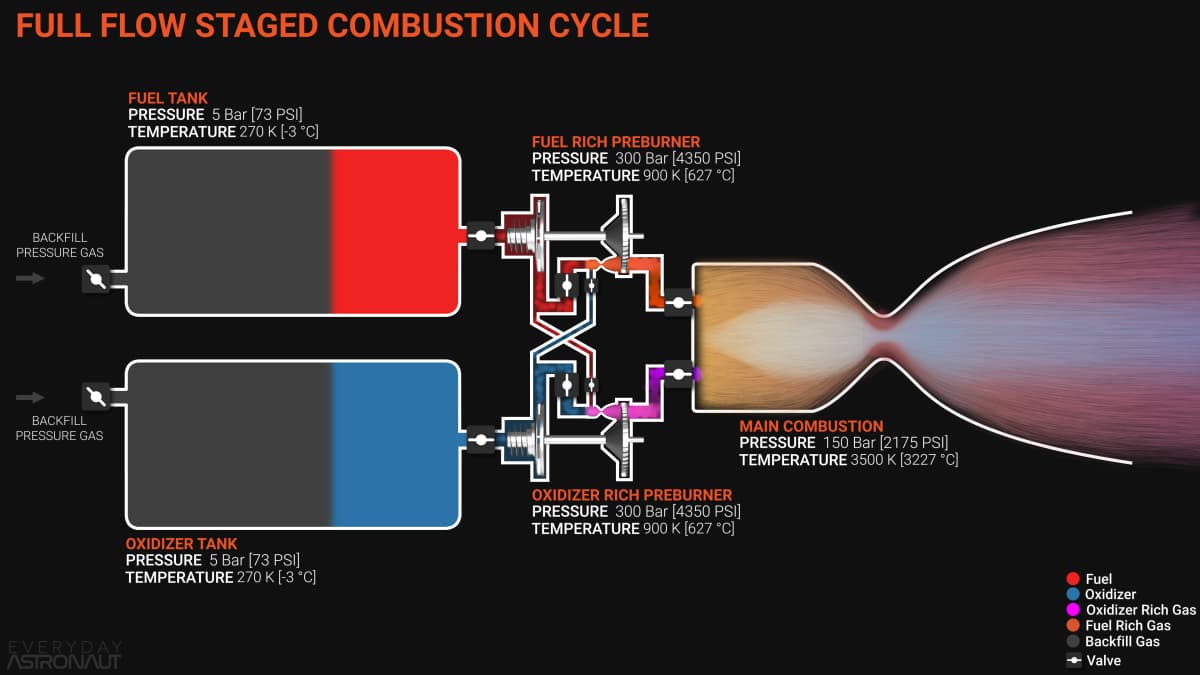
- FFSC splits the preburner work across both propellant sides. In exchange for severe system complexity, it lowers turbine temperature, keeps all propellant in the cycle, and creates the best path toward both high chamber pressure and long life.
That is why FFSC is often described as the Everest of rocket propulsion. It is not only high-performance. It is high-performance plus reuse-oriented durability under extreme pressure.
1.3 Sea-Level Versus Vacuum Optimization
The same engine family often comes in both forms. A vacuum nozzle can dramatically improve performance in space, but it becomes unstable in dense atmosphere. That distinction matters when comparing brochure numbers across engines.
2. Why Commercial Launch Is Converging On Methane And Advanced Cycles
The 2020s have made one pattern clear: if a company is serious about a reusable medium- or heavy-lift rocket, it is increasingly likely to choose methane and then decide how much cycle complexity it can afford.
2.1 Methane Solves A Reuse Problem Before It Solves A Performance Problem
The true economics of reuse are not "recover the stage." They are recover the stage and fly it again quickly.
That is where methane matters. Kerosene leaves carbon deposits that increase inspection and refurbishment work. Methane burns more cleanly, helping combustion chambers, cooling channels, and turbine-related systems retain their condition over repeated flights.
Raptor's long-term ambition is not simply high thrust. It is an engine that can fly again with minimal or eventually no major teardown between flights. That objective makes far more sense with methane than with kerosene.
2.2 From Merlin 1D To Raptor 3: The Economics Shift
Table 3: The practical shift from Merlin-class economics to Raptor-class economics.
FFSC helps push chamber pressure higher because the turbine work is shared across separate propellant paths, lowering the thermal burden on each turbine stream. In practice, that is one of the reasons Raptor can combine very high pressure with a reuse-driven architecture.
2.3 The 2026 Engine-Choice Matrix
Table 4: Representative commercial engine choices in 2026. The important point is not exact thrust alone, but the implied reuse and cost logic behind each choice.
This table shows a three-tier logic.
- Tier one pursues FFSC because it wants the deepest reusable upside.
- Tier two chooses ORSC or high-pressure GG as a compromise between performance and development pain.
- Tier three stays with GG because it is faster to ship and easier to finance.
That is not technological conservatism. It is capital allocation.
3. Raptor Is Not Just Getting Stronger. It Is Being Rewritten For Manufacturability.
3.1 Raptor V1 To V3
Table 5: Raptor's evolution is as much about industrial design as propulsion performance.
3.2 Raptor 1 To Raptor 2: From "It Works" To "It Can Be Built"
Raptor 1 solved the hardest conceptual problem: proving that a methane FFSC engine could actually operate in an integrated flight system. But it was still extremely difficult to manufacture, with complex plumbing, shielding, and many externally visible subsystems.
Raptor 2 was the manufacturability step. SpaceX internalized more flow paths, reduced part complexity, stripped mass, and drove up thrust at the same time. The point of Raptor 2 was not elegance. It was throughput.
3.3 Raptor 2 To Raptor 3: From Manufacturable To Low-Maintenance
Raptor 3 is more radical than a normal version bump.
- It eliminates the external heat shield by extending regenerative cooling coverage.
- It eliminates dedicated fire suppression hardware because the thermal architecture changes the exposure profile.
- It consolidates plumbing and sensors into a more integrated engine package.
- It raises thrust while cutting system mass, which is what turns a good engine into a scaling engine.
The crucial point is operational, not aesthetic. Every external subsystem that disappears is also one less thing to inspect, replace, or protect after flight.
3.4 What Comes After Raptor 3?
Public commentary around Raptor 3.x and a possible Raptor 4 points toward even higher thrust, lower cost, and more integration. The deeper pattern is already visible: SpaceX is treating the engine as a serially improvable industrial product, not as a sacred aerospace artifact.
That cultural difference matters as much as the cycle itself.
The One Thing That Matters
If all the tables and acronyms are stripped away, FFSC matters for one reason:
It shortens the post-flight checklist.
That is the line dividing expendable launch economics from high-frequency transportation economics.
Without that shift, weekly or near-weekly super-heavy operations are unrealistic. Without that shift, launch cost does not collapse. Without that shift, rockets remain precision hardware built around scarcity rather than transport systems built around cadence.
The celebrated FFSC advantages, higher chamber pressure, better propellant utilization, and stronger performance, matter because they support this deeper outcome. The race is not ultimately about peak thrust. It is about how little work an engine needs after it lands.
4. The Global FFSC Landscape: Raptor Is Not Alone, But It Is Still Ahead
4.1 Flight-Mature Or Flight-Proven
SpaceX Raptor
- Cycle: FFSC, LOX / methane
- Thrust: 280 tf sea-level in current Raptor 3 state, with higher future targets discussed
- Chamber pressure: 330 bar
- Status: Only FFSC family that has completed the full loop of design, testing, flight, failure, and iteration at scale
- Target vehicle: Starship / Super Heavy
The defining lesson of Raptor is not only that it works. It is that quantity becomes a form of quality. Massive test cadence, rapid scrap-and-rebuild cycles, and direct ownership of test infrastructure let SpaceX turn propulsion development into a fast feedback system.
4.2 Ground-Test Phase
LandSpace Lanyan
- Cycle: FFSC, LOX / methane
- Thrust: 220 tf sea-level, with vacuum estimates around 236 tf
- Chamber pressure: not public, commonly estimated in the 250-300 bar range
- Status: 100+ ignition campaign disclosed by March 2026
- Target vehicle: Zhuque-X, a heavy reusable launcher concept
Lanyan matters because it is the first Chinese commercial engine that clearly aims at the same broad architectural destination as Raptor. It is also the second visible FFSC program globally to reach this kind of ignition-count maturity.
Table 6: Lanyan is not equal to Raptor in maturity, but it is no longer fair to dismiss it as merely conceptual.
The gap between a hundred ignitions and real flight reliability remains enormous. Still, the important update is that China now has a private company visibly standing at the FFSC threshold.
4.3 Early Test Or Hot-Fire Demonstration Stage
Stoke Space Zenith
- Cycle: FFSC, methane / oxygen
- Thrust: around 100,000+ lbf class in disclosed testing
- Status: successful hot-fire milestone achieved
- Target vehicle: Nova reusable rocket
Stoke is important because it uses FFSC in a different strategic frame. Its objective is not only first-stage reuse. It is full-vehicle reusability, including a radically different upper-stage approach.
Relativity Space Aeon R
- Cycle: high-pressure gas generator, not FFSC
- Propellant: LOX / methane
- Thrust: around 110 tf class
- Status: qualification testing
- Target vehicle: Terran R
Aeon R belongs here because it shows the alternative thesis. Relativity is chasing lower cost through additive manufacturing and design simplification rather than through maximum cycle sophistication.
4.4 The 2026 Second Line: Real Programs, Unequal Evidence
The field widened sharply in 2025–26, but counting logos is a poor way to measure it. The useful question is what hardware has actually crossed the test stand.
YF-215 is the most important omission from the original version. It is the state counterpart to China's private FFSC push: a reusable, deeply throttleable 200-ton-class methalox engine associated publicly with evolving Long March 9 architectures. Its significance is strategic, not yet operational. Public technical papers and program disclosures show sustained component and subsystem work; they do not justify describing it as a flight-ready or fully hot-fired engine.
Astrobase deserves inclusion for a different reason. It is attempting India's first privately developed high-thrust FFSC engine and pairing it with a seven-engine reusable booster. The 800 kN figure is vacuum thrust, not sea-level thrust, and remains a company specification. As of this update, “undergoing hot-fire testing” should be read literally: the company has entered the campaign, not publicly completed a clean, full-duration qualification burn.
This maturity separation protects the article's original thesis. Raptor and Lanyan remain the visible leaders in large integrated FFSC systems; the new cohort shows that the design choice is diffusing, not that the execution gap has closed.
4.5 Historical Precedents
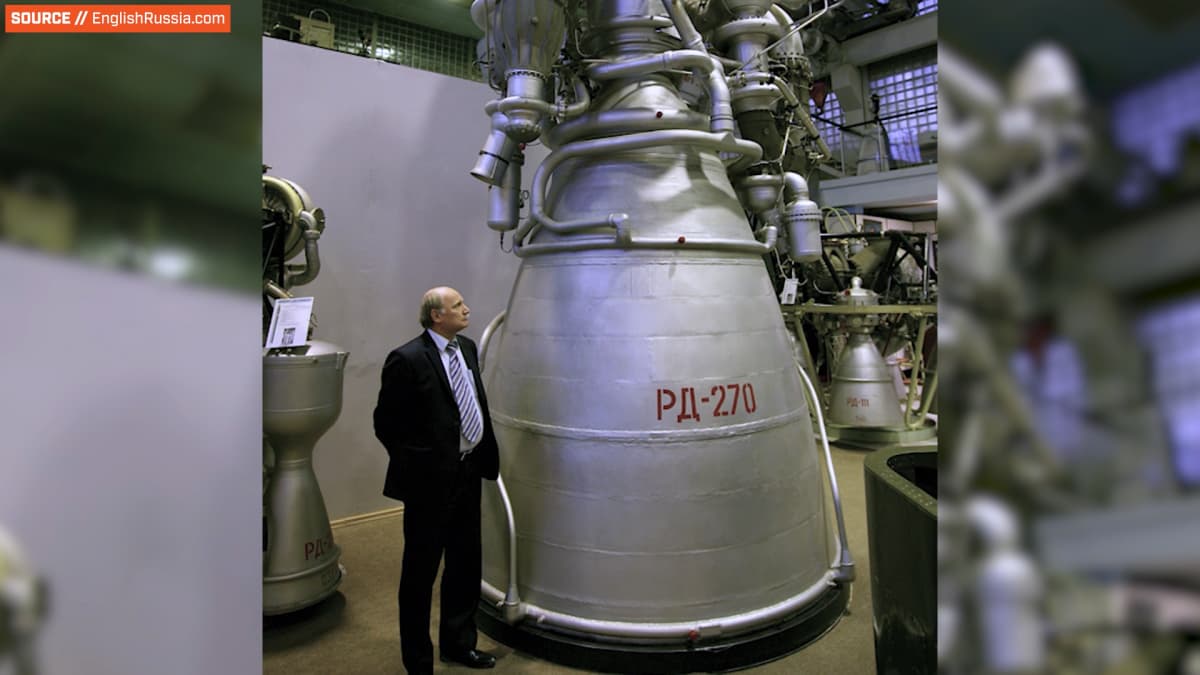
RD-270 is especially important because it proves the idea itself is not new. What is new is the attempt to make FFSC manufacturable, reliable, and eventually cheap enough for repeated use.
4.6 Important Engines That Are Not FFSC
Blue Origin BE-4
- Cycle: ORSC, not FFSC
- Thrust: about 240 tf
- Propellant: LOX / methane
- Status: Flying on Vulcan and New Glenn-related architecture
BE-4 matters because it represents the more pragmatic middle road: high performance, methane, and staged combustion without going all the way to FFSC.
Rocket Lab Archimedes
Archimedes is not FFSC either, but it shows how a company can step up from a tiny electric-pump engine to a serious medium-lift methane engine through ORSC.
JAXA LE-9
LE-9 is an expander-bleed hydrogen engine, which makes it a useful reminder that there are still alternative ways to solve first-stage propulsion if the mission profile is different.
5. China's Engine Landscape Is Broader Than One Commercial FFSC Story
LandSpace gets most of the attention, but China's state and commercial engine programmes together form a landscape far more layered than a simple "China versus SpaceX" narrative.
5.1 The Real Distribution
Table 7: China's commercial-engine field remains diverse because companies are solving different financing and mission problems.
5.2 Why Most Companies Still Use Gas Generators
The answer is simple: GG is easier to fund, easier to certify, and faster to ship.
That does not mean those teams lack ambition. It means they are matching cycle choice to rocket class, customer need, and available capital. A company building an 8-ton reusable launcher does not automatically need FFSC. It may need a reliable engine that can actually get to the pad first.
5.3 2026 Is An Engine Year
Several Chinese commercial rockets are aiming for important milestones around 2026. Across many of them, propulsion is still the real bottleneck. Rockets can be redesigned. Engines set the physical and operational ceiling.
That is why the industry should be read as a technology gradient, not as a single race with one winner.
6. Matching Engine Cycle To Rocket Class
FFSC is not universally superior. It is optimal for a specific part of the launch market.
6.1 Positioning Map
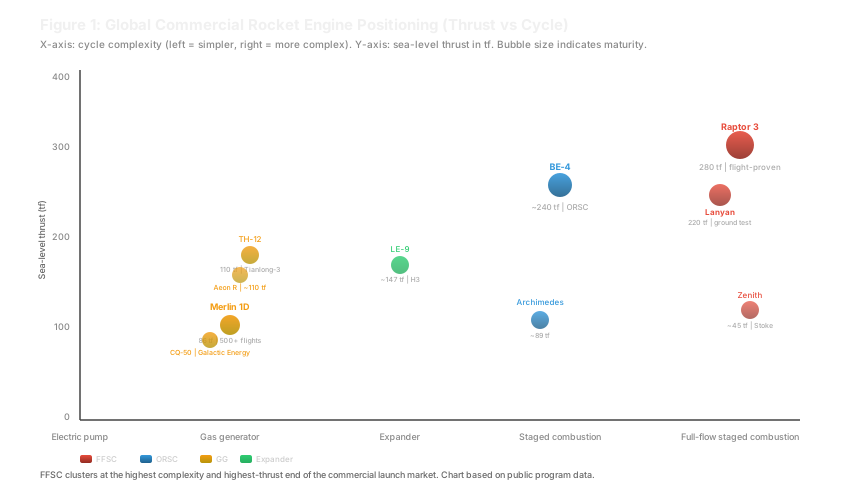
6.2 Vehicle Class Determines Engine Logic
Table 8: Engine selection only makes sense when read against lift class, reuse goals, and cadence ambition.
The key conclusion is straightforward: FFSC is not "the best engine." It is the best answer to a very specific heavy reusable transport problem.
7. Why This Matters For APAC
7.1 Singapore Will Not Build FFSC Engines, But It Can Still Matter
Singapore does not need to manufacture rocket engines to participate in this layer of the space economy. The more realistic opportunity sits in the enabling stack.
- Precision manufacturing and materials for valves, liners, turbine-adjacent components, and electronics.
- Testing and validation services for subsystems and thermal-management elements.
- Thermal-management know-how that can translate from advanced electronics and aerospace systems into propulsion-adjacent problems.
7.2 China's FFSC Progress Could Reshape Regional Supply Chains
If Lanyan or other Chinese methane engines move from test maturity to flight maturity over the next few years, they will require wider supply chains in high-temperature alloys, controls, sensors, seals, and industrial validation. Southeast Asia could become a secondary supplier layer if policy and trust barriers allow it.
7.3 The Winner Will Not Be The Team With The Nicest Spec Sheet
Raptor's advantage is not simply its cycle. It is the combination of three capabilities:
- Iteration speed
- Vertical integration
- Capital density
That same framework is the best way to judge every FFSC program. Thrust numbers matter less than whether the team can keep learning faster than the engine breaks.
Conclusion
Full-flow staged combustion is the Everest of rocket engines not because the concept is new, but because it is the most demanding architecture that still makes sense for the future of reusable heavy launch.
Without FFSC, very large reusable rockets remain constrained by thermal burden, maintenance load, or performance ceiling. With FFSC, a different transport logic becomes possible: high chamber pressure, lower turbine temperatures, clean methane combustion, and eventually shorter turnaround between flights.
SpaceX has spent years, hundreds of engines, and repeated failures proving that FFSC can leave the laboratory and survive iteration. LandSpace has shown that a Chinese private company can at least reach the serious ground-test threshold. Stoke Space has shown that even smaller reusable ambitions may eventually require similar cycle sophistication. Blue Origin and Rocket Lab show that there are credible intermediate paths.
The real battleground is therefore not the headline table of thrust values. It is this: who can build the most reliable engine, at the lowest practical cost, on the shortest iteration loop, and then fly it often enough for the rest of the architecture to matter.
For decades, rocket engines were designed above all for peak performance. Now they are being redesigned for reuse. FFSC is not the finish line of engine design. It is the entry ticket to a different launch economy.
(Prepared using public information available through 2026-07-13. Engine figures are drawn from manufacturer disclosures, government and agency material, technical papers, MIT Technology Roadmaps, NASA NTRS, and industry research. Company targets are identified as claims; component tests are not treated as full-engine validation. Some Chinese commercial-space figures remain estimate ranges because full program detail is not public.)
Sources27 entries with source notes and links
- MIT Technology Roadmaps - Rocket Engines(roadmaps.mit.edu)
- NASA NTRS - Rocket Propulsion Fundamentals(ntrs.nasa.gov)
- NASA NTRS - JTEC Panel Report on Propulsion Technology(ntrs.nasa.gov)
- Everyday Astronaut - Rocket Engine Cycles(everydayastronaut.com)
- Everyday Astronaut - Soviet Rocket Engines(everydayastronaut.com)
- SpaceX Raptor Engine Wiki(starship-spacex.fandom.com)
- Basenor - Raptor 3 and Starship V3 updates(basenor.com)
- LandSpace news release on Lanyan long-duration test(landspace.com)
- 3D Science Valley report on China's FFSC programs(3dsciencevalley.com)
- Stoke Space FFSC hot-fire announcement(stokespace.com)
- Rocket Lab Neutron / Archimedes development update(nasaspaceflight.com)
- Relativity Terran R update(nasaspaceflight.com)
- Blue Origin BE-4(blueorigin.com)
- Ars Technica on Vulcan booster issue and BE-4 compensation behavior(arstechnica.com)
- JAXA H3 / LE-9(global.jaxa.jp)
- IN-SPACe - Indian space-industry delegation profile: Astrobase(inspace.gov.in)
- NASA TechPort - Mjölnir-powered transfer-stage project(techport.nasa.gov)
- Jiuzhou Yunjian - company propulsion programme(jzyjspace.com)
Continue reading
12 Jul 2026 · 49 min read
India's Launch-Startup Tier: Real Rockets, a Missing Manifest—and a $1.1 Billion Bet That Demand Shows Up
India's private launch engineering is real, but the domestic manifest is roughly one Vikram-1 flight a year; Skyroot's unicorn valuation already assumes the demand gap closes.
22 Apr 2026 · 34 min read
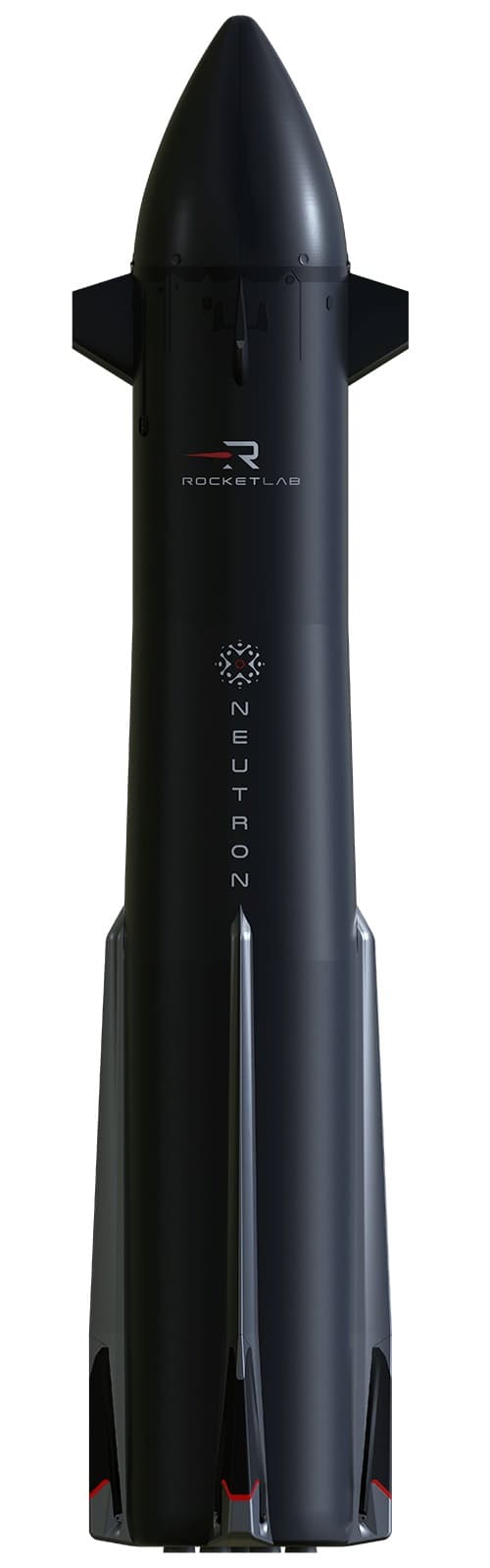
Rocket Lab in 2026, Part II: The Scarcity Machine, Industrial Tempo, and Why Neutron Is Really a Management Test
Rocket Lab is a scarcity-forged industrial operating system, not a mini-SpaceX; Neutron tests whether founder-driven execution can scale into a medium-lift institution.
2 Apr 2025 · 9 min read
China's Commercial Launch Sector in 2025: Capacity Is No Longer the Constraint
China's launch market enters 2025 with more rockets, more capital, and harder questions about cadence, reliability, and commercial demand.