
SpaceX 2026: Structural Shift, IPO Logic, and Five Real Constraints on APAC Commercial Execution
SpaceX is compressing launch, networks, data, and AI into one entity; its IPO and Starship V3 reshape APAC market access, infrastructure, and partner strategy.
Method & disclosure
Confidence: High (core facts cross-checked across major financial media; valuation and launch date remain company/market targets and may change)
Review mode: Human + AI cross-check
Writing support: AI assisted
Singapore Space Agency
On this page · 10
- 01Executive Summary
- 021. Why Now? The Real Sequence of Four Transactions
- 032. X + xAI Inside SpaceX: Not Synergy, but Friction Removal
- 043. IPO Valuation Logic: Markets Are Pricing Structural Control
- 054. Starship V3: Resetting Cost Structure and the APAC Price Benchmark
- 065. APAC Rollout: Five Real Constraints
- 076. The Real Position of Competitors: Not Catching Up, but Playing Different Games
- 087. Singapore Commercial Space Companies: Finding a Position in the Gaps of the SpaceX Loop
- 098. Three Structural Risks That Remain Underpriced
- 10Conclusion
Key findings
The argument in brief
- SpaceX in 2026 is best understood as a four-layer closed-loop system combining launch, network, data, and AI inference under one legal entity.
- The IPO valuation is not anchored mainly in current cash flow; it is pricing future control over orbital infrastructure, information flows, and AI-enabled distribution.
- If Starship V3 reaches reusable 100-ton-class LEO economics, APAC broadband pricing benchmarks and rural connectivity models will be reset.
- Singapore space companies are unlikely to compete with SpaceX directly and instead need to occupy the sovereignty, mission-integration, and trusted-partner gaps that SpaceX does not fully serve.
Executive Summary
SpaceX's key moves in 2026, absorbing xAI on February 2, submitting a confidential IPO draft on April 1, and targeting a late-May first flight for Starship V3 (Flight 12), are often reduced to a simple line: the biggest space company in history is about to go public. That framing hides the deeper change.
The core argument of this article is simple:
SpaceX is shifting from a vertically integrated space company into a cross-layer closed-loop system, with launch, network, data, and AI inference controlled by the same entity. There is no real precedent for that structure in space, and its commercial consequences go far beyond scale alone.
This shift produces three observable effects:
- A reset in cost structure: if Starship V3 reaches reusable 100-ton-class LEO capability, it pushes launch cost from roughly $1,500/kg on Falcon 9 toward $200/kg. That would directly reset broadband pricing benchmarks in APAC and put pressure on both GEO operators and rural mobile network economics.
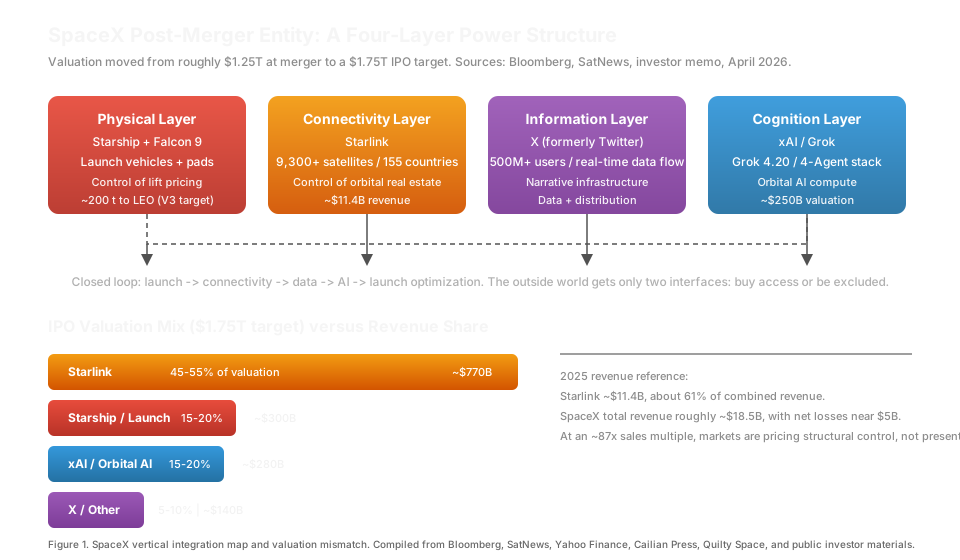
- A mismatch in valuation logic: a $1.75 trillion IPO target implies roughly 87x sales. Starlink may contribute 61% of revenue while representing only 45-55% of valuation. Markets are not pricing cash flow alone. They are pricing a future option on structural control.
- Regional constraints becoming explicit: APAC is not one market. Indonesian demand is driven by enterprise and state contracts, Vietnam depends on regulatory pilot structures, the Philippines is testing the D2C business model, Japan is seeing split bets from its main MNOs, and China's Guowang and Qianfan are building a fully separate orbital layer.
For Singapore and Southeast Asia more broadly, the real question is not whether to use Starlink. The real question is this: when orbital infrastructure is controlled by a cross-layer closed-loop system, how do regional economies find an executable balance between access, dependency, and autonomy?
1. Why Now? The Real Sequence of Four Transactions
To understand SpaceX in 2026, it is more useful to examine the sequence of four key transactions over 18 months than to treat them as separate events.
Table 1: The sequencing of key SpaceX transactions in 2025-2026. Sources: Bloomberg, Yahoo Finance, Tech Insider, SatNews.
That sequence is not accidental. It follows a clear capital logic.
Step one was to merge X and xAI, solving the familiar problem of an AI company without proprietary data and a social platform without a strong monetization layer. X's 500 million users generate real-time data flows that are far more useful for Grok training than open-web scraping, while Grok adds differentiation to X's search, recommendation, and advertising systems.
Step two was an independent xAI financing round, bringing in strategic investors including Nvidia, Cisco, and the Qatar Investment Authority. The point was not money alone. Musk does not lack financing channels. The point was price discovery. A $250B Series E valuation gave later exchange ratios a "fair value" anchor for xAI shareholders, including Musk himself.
Step three was SpaceX absorbing xAI in stock. This was not just an acquisition. It was the removal of boundaries. Before the deal, any data sharing, service integration, or revenue split between Starlink and Grok, Grok and X, or X and Starlink was a related-party transaction that required formal negotiation. After the deal, those flows moved inside the entity, without outside audit, independent board review, or the same level of cross-company scrutiny.
Step four was to file for IPO as a unified structure. A $1.75T "space + AI + communications" story is easier to sell in a roadshow than three standalone companies asking investors for attention separately. Underwriters led by Morgan Stanley and Goldman Sachs need only market one story. Investors need only run diligence once. Regulators need only review one set of accounts.
The net effect of the sequence is structural efficiency. Not technical efficiency, but governance efficiency. Over 18 months, Musk compressed assets, data flows, and control that had been spread across SpaceX, xAI, and X into one legal shell. Public investors will own the economic rights to that shell, while Musk will retain roughly 79% of voting power through dual-class control.
2. X + xAI Inside SpaceX: Not Synergy, but Friction Removal
Most commentary describes the combination of X and xAI inside SpaceX as a matter of "synergies": AI can optimize trajectories, Starlink can provide edge nodes for Grok, and X can market Starlink.
The weakness of that explanation is that it assumes the businesses merely had room to collaborate but had not yet done so. The more realistic interpretation may be the opposite: they were already capable of collaborating, and separate legal structures were the main source of friction.
2.1 The Data Loop: Why X Data Is Irreplaceable for Grok
xAI's Grok 4.20 has already moved into a four-agent parallel architecture. Training that kind of system requires more than open internet text. It requires real-time, structured, high-value human interaction data. X produces hundreds of millions of posts, replies, queries, and clickstream events every day. That data matters to Grok in at least three ways:
- Timeliness: when a news event breaks, discussion on X forms semantic clusters within minutes. That is natural training material for real-time inference.
- Multilingual coverage: X has meaningful local-language activity across APAC, especially in markets such as Japan, India, and Indonesia, where lower-resource languages make platform-native data more valuable.
- Intent signaling: posts are not anonymous webpages. They carry explicit signals of agreement, disagreement, curiosity, and purchase intent, all of which matter to recommendation and advertising systems.
Before the merger, xAI needed a licensing arrangement to access that data. X, as a separate entity, could in theory price it aggressively or refuse access. After the merger, the data flow becomes internal.
2.2 The Distribution Loop: X as a Channel for Starlink and Grok
X has more than 500 million active users globally. After the merger, that audience becomes a near-zero-cost distribution layer:
- New Starlink products, such as D2C, can be pushed directly through X without relying entirely on traditional telco channels.
- Grok APIs and subscription products can ride on X's account system, lowering customer acquisition cost.
- Political lobbying and regulatory signaling can move through X's influence layer, reducing reliance on traditional media and legacy government-relations structures.
What does that mean in APAC? In the Philippines, Globe Telecom's D2C pilot with Starlink began in March 2026, with users completing GCash transfers in Rizal and Batangas. A meaningful share of customer education for a pilot like that can be absorbed through X's local network effects. In Japan, NTT Docomo's Starlink D2D service is scheduled for April 27, while SoftBank has also signed. Those MNO channels stack on top of an X audience of more than 50 million active users in Japan.
2.3 The Financial Loop: One IPO Replacing Three Fundraising Stories
Before consolidation, a public-market path for SpaceX, xAI, and X would require three separate equity stories:
- SpaceX: a launch company funded by Starlink cash flow
- xAI: an AI lab monetizing via Grok APIs and subscriptions
- X: a social platform monetizing via advertising
That means three stories, three models, and three different comparable-company pools: SpaceX versus ULA or Blue Origin, xAI versus OpenAI or Anthropic, X versus Meta or TikTok. Capital and attention would fragment.
After consolidation, there is only one story: a single entity controlling the full chain from launch to AI inference. There is no real direct comp set. The absence of precedent increases pricing freedom. Underwriters can triangulate valuation using AI infrastructure, communications infrastructure, and space infrastructure lenses, then add them together. That is why the post-merger valuation can move quickly from $1.25T toward $1.75T. The operating fundamentals did not change overnight. The valuation frame did.
2.4 What This Means for APAC: The Real Data-Sovereignty Challenge
The merger has one underappreciated consequence for APAC states: the internalization of data flows. Before consolidation, an Indonesian user on Starlink might have traffic handled through a local ground station, with a relatively clearer sovereignty boundary. After consolidation, the same user's X activity, Grok queries, and Starlink usage data can all circulate across layers inside the same entity.
If that entity decides to process data in orbital data centers, using solar power, vacuum cooling, and optical inter-satellite routing, then the data may never land on any national territory at all. That presents a direct problem for data-localization laws in Indonesia, Vietnam, the Philippines, and elsewhere: if the law requires domestic storage, how is it enforced when processing happens in orbit?
3. IPO Valuation Logic: Markets Are Pricing Structural Control
SpaceX's IPO target, a $1.75 trillion valuation with a $75 billion raise, already sits outside the usual boundaries of conventional financial analysis. To make sense of it, the parts have to be separated.
3.1 Revenue and Valuation Are Misaligned
Table 2: The mismatch between SpaceX revenue share and valuation contribution. Starlink provides 61% of revenue but perhaps only 44% of value; xAI/X provides 11% of revenue but roughly 26% of value. Sources: Cailian Press, Quilty Space, public investor memos, author estimates.
The implication is straightforward: markets are not pricing current cash flow alone. They are pricing control over key layers.
Starlink revenue is relatively legible. Add a subscriber, charge $80-120 a month. But Starlink's structural control, its position as the largest LEO constellation in the world, is far harder to replicate than its cash flow. With more than 9,300 satellites, it controls over 65% of active satellites in orbit. That kind of orbital real-estate scarcity matters more than subscription math alone.
xAI and X contribute comparatively little revenue today, but their control value is high. X sits on a major global information gateway. xAI sits on an inference system that could eventually operate in orbit. Combined, they create the possibility that SpaceX could one day offer content distribution plus AI inference without depending on terrestrial networks. That is a strategic asset for any actor interested in bypassing legacy telecom and media control points.
3.2 The Real Meaning of Dual-Class Shares
SpaceX is expected to use a dual-class A/B structure, broadly similar to Meta or Alphabet. Public reporting suggests Musk will hold around 42% of economic ownership but roughly 79% of voting power.
What does that mean for institutional investors?
- Governance cannot be market-corrected: regardless of how much stock institutions own, they cannot meaningfully redirect strategy through board voting.
- Exit mechanisms are weak: if Musk takes a decision that damages minority investors, such as moving assets on non-market terms, legal remedies are limited.
- Liquidity premium and governance discount can coexist: dual-class structures are accepted in tech, but long-duration investors and sovereign funds may still demand a higher risk premium because governance risk cannot be diversified away.
For APAC sovereign funds such as GIC or CIC, the real diligence question becomes concrete: when you buy SpaceX, are you buying a stream of cash flows, or a leveraged bet on Musk's judgment?
3.3 What Could $75 Billion Actually Be Used For?
A planned $75B raise would be 2.5 times the size of Saudi Aramco's 2019 record IPO. What requires that scale of capital?
Publicly signaled priorities include:
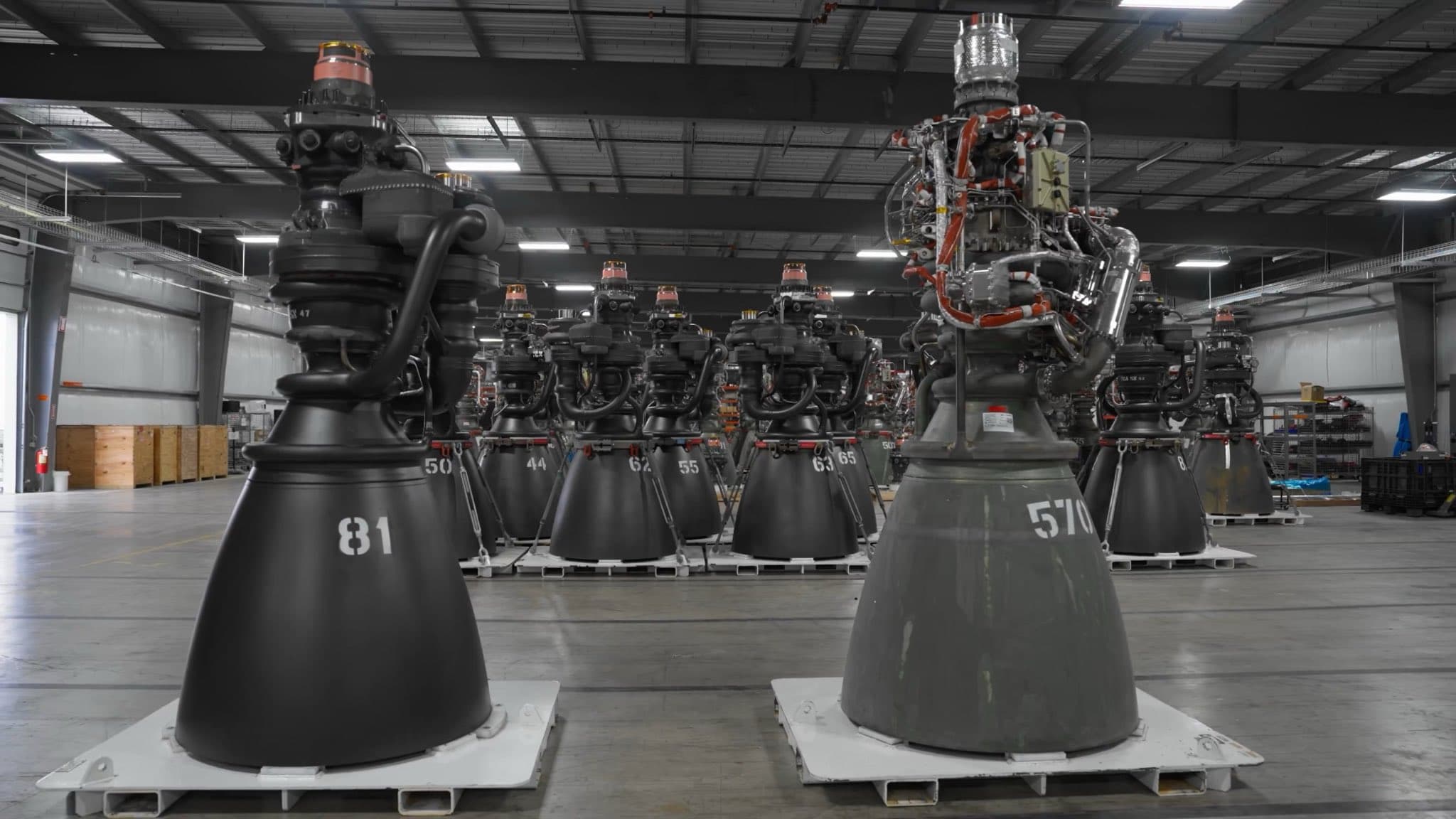
- Starship manufacturing expansion: the target is weekly launches in 2026, which requires more V3 vehicles and many more Raptor 3 engines.
- Starlink V3 manufacturing: each V3 satellite is expected to deliver around 1 Tbps, roughly 10x V2 Mini capacity, at about 1.5 tons each. A single Starship launch could carry about 60.
- Orbital data centers: Musk has repeatedly referenced orbiting data-center concepts that use space-based solar energy and vacuum cooling for AI workloads.
- Global ground-station expansion: especially in APAC and Africa, where gateway density remains a real bottleneck.
All of these uses share a common logic: they expand structural control rather than near-term shareholder return. Starship and Starlink V3 further compress competitors' pricing room. Orbital data centers, if realized, would redraw the outer boundary of data sovereignty.
4. Starship V3: Resetting Cost Structure and the APAC Price Benchmark
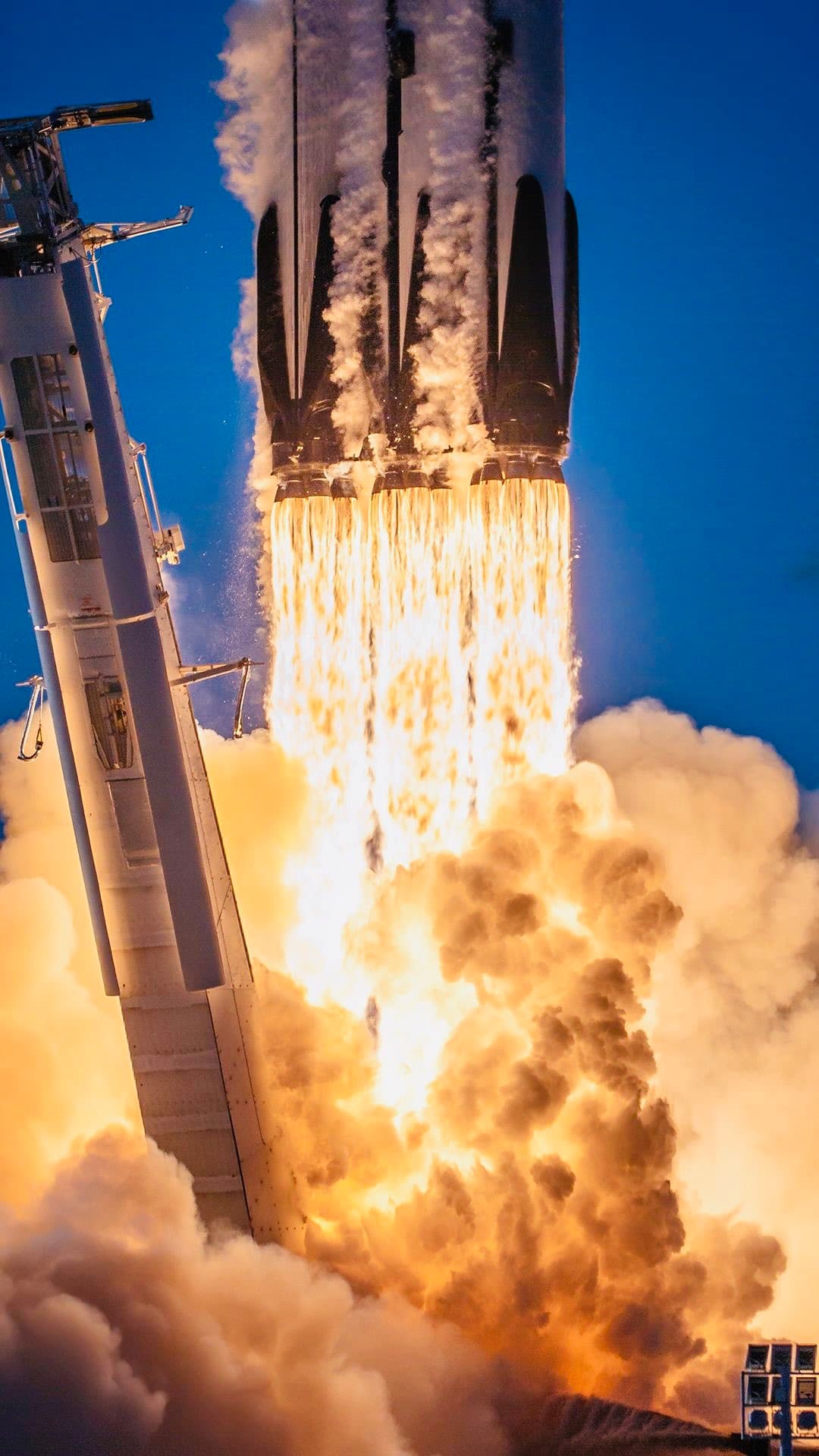
Starship Flight 12 (IFT-12) is currently targeted for May 31, 2026, NET, though further delays remain possible. This mission would be the first flight of Starship V3 (Block 3), the first flight of Raptor 3, and the first use of Starbase pad 2. Three firsts are concentrated into one attempt, which means risk concentration is unusually high.
4.1 What the Technical Parameters Actually Mean
Table 3: Generational comparison for Starship V3. Sources: SpaceX public technical updates, independent tracking by Basenor and NASASpaceflight, FCC licensing records.
The commercial meaning matters more than the technical meaning.
A move from 35 tons to 100+ tons radically changes Starlink V3 deployment cost. Falcon 9 currently carries about 23 V2 Mini satellites. Starship V3 could carry roughly 60 V3 satellites. If each V3 delivers 1 Tbps instead of 100 Gbps, then one launch adds 60 Tbps of capacity. At weekly cadence, Starlink alone could add more than 3,000 Tbps of orbital capacity within a year.
A 75% drop in engine cost would push Starship's reusable operating economics much closer to Falcon 9. Musk's long-term target is $200/kg to orbit, versus roughly $1,500/kg on Falcon 9 today. If realized, that is an 87% decline in launch cost.
4.2 What This Does to APAC Satellite Broadband Pricing
APAC's satellite broadband market currently sits across three pricing layers:
- GEO satellite: monthly fees of $200-500, terminals at $500-2,000, latency above 600 ms. Primarily government, enterprise, maritime, and aviation.
- LEO / Starlink: monthly fees of $80-120, terminals at $349, or as low as $175 in promotions, with 35-50 ms latency. Primarily consumer, SME, and rural coverage.
- Terrestrial MNOs: monthly fees of $5-30, but large rural coverage gaps remain.
If Starship pushes launch cost to $200/kg, Starlink terminal manufacturing could move below $100 per unit, versus roughly $200-250 today, and monthly pricing could fall to $30-50 while still sustaining EBITDA margins above 60%. That puts immediate pressure on both the GEO and terrestrial layers:
- GEO operators such as SES, Intelsat, and Eutelsat would face rural and enterprise price competition from a lower-latency, lower-cost alternative.
- Terrestrial MNOs in Indonesia, the Philippines, and Vietnam would struggle to justify rural tower deployment if Starlink monthly pricing falls into the $30-50 range.
For Southeast Asian governments, that implies a shift in public-procurement logic: away from "subsidize MNO tower buildout" and toward "subsidize user purchase of Starlink terminals." Indonesia is already moving in that direction, with 33.9% device growth in 2025 driven mainly by enterprise and government contracts.
4.3 An Underrated Detail: D2C Is Changing the MNO Business Model
Starlink's D2C service produced two important signals in April 2026:
- Japan: NTT Docomo's Starlink D2D launch is scheduled for April 27, initially free to enterprise users and supporting maps, weather, and messaging apps.
- Philippines: Globe Telecom's pilot has already connected standard LTE phones in Rizal, Batangas, and Bataan, with users completing GCash transfers without new hardware.
The business model is not "replace the MNO." It is "parasitize the MNO":
- The MNO keeps the customer relationship, billing stack, and spectrum rights.
- Starlink fills coverage gaps and earns wholesale revenue.
- The consumer pays an MNO bill plus a Starlink D2C surcharge, such as Spark NZ's roughly NZD 10 add-on.
The appeal to the MNO is obvious: it monetizes remote users without new tower CAPEX. The appeal to Starlink is also obvious: it does not need a retail telecom license if it operates through wholesale partnerships. For governments, however, the object of regulation changes. Spectrum and license economics begin to involve a combined MNO-plus-satellite operator structure rather than a terrestrial operator alone.
5. APAC Rollout: Five Real Constraints
APAC is not a single market. By April 2026, Starlink is active in 155 countries, with roughly 430,000 direct subscribers in APAC by the end of 2025, but the local demand drivers and execution constraints differ sharply by market.
5.1 Indonesia: Demand Is Running Ahead of Ground Infrastructure
Indonesia is Starlink's largest single market in APAC by subscriber count. Device growth reached 33.9% in 2025, driven mainly by enterprise segments such as mining, plantations, maritime, and state contracts. Yet Ookla data shows median download speed falling from 45.16 Mbps in 2024 to 40.69 Mbps in 2025.
That speed decline does not necessarily mean the network is deteriorating. It suggests demand is growing faster than gateway expansion. In Indonesia, Starlink's ground buildout is constrained by regulatory approvals and power infrastructure. In other words, the bottleneck is not in orbit. It is on the ground.
The policy implication is practical: Starlink rollout is not a free leap over terrestrial investment. It still requires continuing investment in gateways, electricity, and fiber backhaul. If policymakers believe satellite internet can eliminate the need for those investments, current data already suggests otherwise.
5.2 Philippines: D2C as a Business-Model Proof
Globe Telecom's pilot in the Philippines is Southeast Asia's first real "no-new-terminal" satellite internet case. Users with standard LTE phones completed real commercial transactions in remote provinces. The significance is not the underlying technology, which T-Mobile has already helped validate in the United States. The significance is commercial viability in a lower-income market with high mobile-payment penetration.
The constraint is spectrum coordination. Globe must align LTE spectrum use with Starlink to avoid interference with terrestrial infrastructure, and the National Telecommunications Commission has to play a hands-on role. If coordination does not hold, D2C may remain limited to no-coverage zones rather than scaling into broader service layers.
5.3 Vietnam: An Experimental Regulatory Framework
Vietnam approved Starlink entry in February 2026, with plans for four gateways and initial capacity for 600,000 users. But the approval came with an important condition: Starlink is framed as a supplement to terrestrial networks, not a replacement.
That means:
- Viettel and VNPT retain core customer ownership.
- Starlink is confined mainly to remote areas and islands.
- Foreign ownership restrictions are relaxed under a five-year pilot approved in 2025 and running through 2030.
Vietnam's constraint is fundamentally political. The state wants foreign technology without weakening domestic telecom incumbents. That balance can persist only if Starlink stays inside the "supplementary" role. If pricing falls low enough to attract urban users, the political response may be tighter restrictions.
5.4 Japan: Diverging MNO Strategies
Japan is unusual because its two major MNOs are taking different approaches:
- NTT Docomo is launching Starlink D2D on April 27, initially free to enterprise customers and focused on disaster response and remote coverage. It is a defensive strategy, meant to prevent rivals from establishing a satellite edge first.
- SoftBank has signed for Starlink D2D but has not announced launch timing, while also holding an equity position in AST SpaceMobile. It is a hedged strategy, backing multiple paths until one proves commercially stronger.
Japan's main constraint is market saturation. Terrestrial 4G and 5G coverage already exceeds 99%. The real satellite market is not everyday consumer access. It is disaster backup. In a country with regular earthquakes and typhoons, resilience matters more than daily convenience.
5.5 China: Two Constellations, Two Logics
China's LEO constellations are not simple Starlink replicas. They are systems designed for different goals.
Table 4: The difference between China's two major LEO constellations. Source: China-in-Space.com tracking database.
Guowang prioritizes military resilience. Its distributed architecture makes anti-satellite attacks economically less attractive. Qianfan is more overtly commercial, with a flat-pack satellite design around 300 kg and stacked launch optimization intended to improve export competitiveness.
For Southeast Asian states, the presence of China's constellations creates a procurement dilemma: choose Starlink and rely on a US private company, or wait for Qianfan and rely on Chinese supply chains. The most realistic long-run answer may be dual sourcing: sovereign and critical-government communications through Guowang or Qianfan, civilian and commercial usage through Starlink. But that requires spectrum coordination and terminal compatibility that do not yet exist at scale.
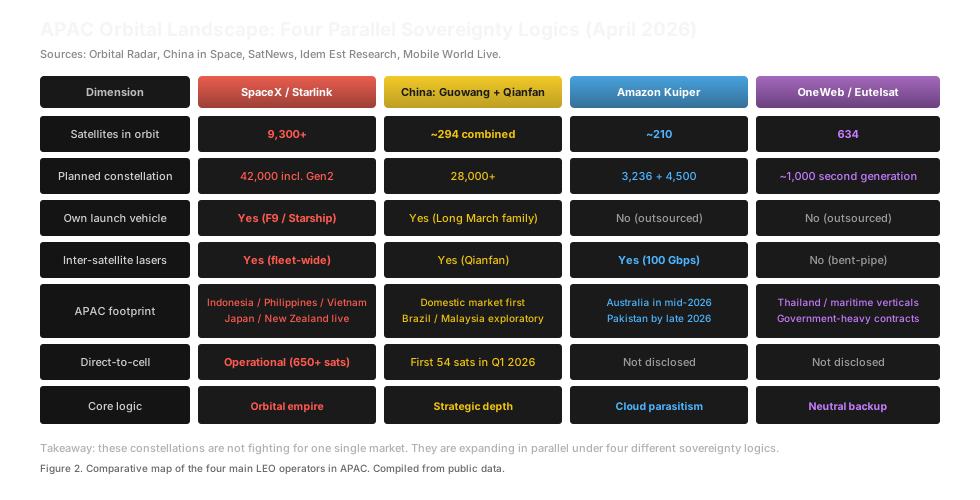
6. The Real Position of Competitors: Not Catching Up, but Playing Different Games
6.1 Amazon Leo: The Cost of a Parasitic Strategy
Amazon Leo, formerly Project Kuiper in the draft framing used here, had roughly 210 satellites in orbit by early 2026. It has one advantage Starlink does not: AWS's terrestrial cloud footprint. It also has one structural weakness: no owned launch system.
Leo depends on a portfolio of launch providers including ULA Atlas V, Ariane 6, Blue Origin New Glenn, and even SpaceX Falcon 9. That lowers capital intensity, but it also creates supply bottlenecks. Ariane 6's February 2026 mission carrying 32 satellites marked Leo's first non-US launch, yet FCC rules still require 50% deployment, 1,618 satellites, by July 2026, a deadline for which Amazon has sought relief.
In APAC, Leo has already signaled partnerships in:
- Australia: a deal with NBN Co targeting coverage for 300,000 rural customers by mid-2026
- Vietnam: a reported $570M investment commitment, though progress remains unclear
- Pakistan: a late-2026 target following minister-level engagement
Leo's real enterprise attraction in APAC is the AWS hybrid-cloud proposition. If an enterprise already runs its IT stack on AWS, Leo can offer seamless terrestrial-orbital routing between cloud workloads and satellite connectivity. SpaceX lacks an equivalent terrestrial cloud platform.
The problem is time. If Leo cannot reach enough deployed capacity by 2027-2028 to deliver continuous coverage, Starlink may already have locked in most price-sensitive users through scale and pricing pressure.
6.2 OneWeb / Eutelsat: The Government and Maritime B Plan
OneWeb, now under Eutelsat, has roughly 634 satellites in orbit and has completed its first-generation constellation. Its bent-pipe architecture depends on line-of-sight gateways and lacks optical inter-satellite links, which limits oceanic and very remote coverage relative to Starlink.
Yet OneWeb has a clear niche in APAC: government and maritime contracts. Singapore's Can Marine has signed to deploy Eutelsat OneWeb for maritime connectivity in APAC, and Thailand's NT launched its OneWeb gateway at Sirindhorn station on March 25, 2026.
OneWeb's wholesale-to-integrator model likely delivers lower margins than direct retail, but its political value is high. For governments that do not want to choose directly between Starlink and Chinese constellations, OneWeb offers a more neutral fallback.
7. Singapore Commercial Space Companies: Finding a Position in the Gaps of the SpaceX Loop
The first six sections operate at the level of industry structure: what SpaceX is doing, how APAC markets react, and where competitors sit. But structure alone is not enough. Singapore has around 70 space-related companies employing about 2,000 professionals. Most will never appear in headlines, yet their commercial decisions will determine Singapore's real position in the orbital economy.
This chapter takes a company and practitioner perspective rather than a state-agency perspective. The question is simple: against a four-layer SpaceX system, what can a Singapore-headquartered space company with no rocket, no constellation, and perhaps less than $10 million in annual revenue actually do?
7.1 The Landscape: How the 70 Companies Really Spread Across the Value Chain
Singapore's roughly 70 space companies are far from homogeneous. Their distribution across the value chain is highly uneven:
Table 5: Distribution of Singapore commercial space companies. Sources: SGInnovate, EDB, MTI / NSAS press materials, company disclosures, author synthesis.
The distribution reveals a basic fact: no Singapore company can directly compete with any SpaceX layer in scale or vertical depth. ST Engineering is the largest regional systems integrator, but its annual space revenue is tiny relative to SpaceX. Transcelestial has real optical differentiation but not yet large-scale commercial contracts. SpeQtral has frontier technology, but the immediate addressable market remains small.
That means the strategic answer for Singapore cannot be "catch SpaceX." It has to be "find positions inside the gaps of the SpaceX loop that remain commercially unavoidable."
7.2 Addvalue Technologies: A Quiet but Real Gap-Filler
Addvalue Technologies (SGX: A31) may be Singapore's most underappreciated space company. It is not the flashiest. Market capitalization is roughly S$160M, or about US$120M, the share price has spent long periods below S$0.02, it has 74 employees, and annual revenue is around US$15M. But the business model reveals a real market gap.
Product: IDRS, the Inter-satellite Data Relay System, a terminal weighing under 1 kg and roughly the size of two Rubik's cubes. It uses Inmarsat / Viasat GEO infrastructure to give LEO satellites near-continuous data relay.
Pain point solved: a traditional LEO satellite may only communicate with the ground during roughly 4% of its orbital cycle when passing over a ground station. IDRS pushes that toward 99%. For Earth observation, disaster monitoring, and military reconnaissance, that changes the value proposition from "get the data in a few hours" to "get it now."
Customers: Capella Space, with its SAR constellation; Vast's Haven-1 station; and multiple undisclosed US and European LEO operators. New orders in 2025 were about US$3.6M, with backlog around US$18M.
Business model: hardware sales upfront plus recurring airtime subscription revenue. CEO Tan Khai Pang's analogy is simple: sell the phone, then sell the data plan.
Relationship to SpaceX: Addvalue is neither a SpaceX supplier nor a direct competitor. Its customers are often customers or partners of SpaceX. Capella launches on Falcon 9. Vast Haven-1 is also planned on Falcon 9. Addvalue occupies a parasitic but necessary position inside the broader SpaceX ecosystem: it makes satellites launched by SpaceX more valuable.
Risk: what if SpaceX fills this gap itself? Starlink V3 is rolling out 100 Gbps optical crosslinks. If SpaceX ever opens part of that network to third-party LEO operators, in an AWS-like infrastructure model, Addvalue's core value proposition would compress quickly. That is a real business risk, and the timeline is uncertain. SpaceX has shown no strong desire to open its network yet, but IPO-era capital logic could change that.
7.3 Transcelestial: The Window for Laser Communications
Transcelestial was founded in 2016. Its core product, CENTAURI, is a shoebox-sized laser communications terminal that enables fiber-like data throughput between satellites or between satellites and the ground.
Differentiation: Starlink uses its own optical links, but those are closed internal infrastructure. Transcelestial sells open-market optical terminals that any satellite operator can buy and integrate. For now, that is a meaningful distinction.
Strategic window: 2026-2028. Why? Because several non-SpaceX constellations are scaling at the same time:
- Amazon Leo needs inter-satellite links for wider-area coverage.
- China's Qianfan needs fast orbital-ground data exchange as it expands internationally.
- OneWeb's next-generation plans point toward optical links.
- Many EO and SAR smallsat operators need high-rate downlink and relay.
These operators are unlikely to use Starlink's infrastructure, and many cannot justify building their own. CENTAURI is therefore a buy-now solution.
But the window is narrowing. If Starlink's optical network continues expanding and SpaceX later opens any part of it commercially, Transcelestial's differentiation weakens. If European players such as Mynaric or TESAT become more aggressive on price, margins also come under pressure.
Domestic support: OSTIn, now folded into NSAS, and ST Engineering SatSys have backed Transcelestial's 2026 in-orbit laser demonstration. That matters for fundraising and credibility, but it does not change the commercial fact: Transcelestial likely needs two or three meaningful constellation-scale contracts by 2026-2027, or the opportunity window begins to close.
7.4 SpeQtral: The Sovereignty Premium in Quantum Communications
SpeQtral is one of the few Singapore space companies with meaningful exclusive government-linked contracts. Its SpeQtre CubeSat launched in November 2025 as Singapore's first quantum communications satellite, carrying an entangled photon source developed with the UK's RAL Space.
Business model: not consumer, but government and defense. The current QKD market is still small, perhaps only $100-200M globally, but growth is fast and customer price sensitivity is low. For intelligence and defense buyers, secure communications cannot be assessed through ordinary cost-benefit logic alone.
Relationship to SpaceX: almost no direct competition. SpaceX does not presently offer quantum-secure communications and is unlikely to move into that highly specialized, security-cleared category in the near term.
The deeper issue is export control. Quantum communications are sensitive technologies in Singapore, the United States, and Europe. Selling into China, Russia, or other restricted jurisdictions requires state approval. That naturally limits SpeQtral's addressable market. Government contracts can anchor the company in Singapore, but overseas scale still requires case-by-case clearance.
Synergy with Addvalue: in January 2026, SpeQtral and Addvalue signed an MoU to combine IDRS's real-time relay capability with QKD security into a "quantum-secure plus always-on" satellite service. It is a compelling combination. Addvalue solves when you can communicate. SpeQtral solves how secure that communication is. If the combined offering reaches a Singapore defense user or another Southeast Asian government in 2026, it could become a template for how Singapore companies go regional together.
7.5 ST Engineering: The Largest Player with the Most Complex Trade-Off
ST Engineering is the largest actor in Singapore's space ecosystem, but also the most complex to evaluate. It is not a pure-play space company. Space is one part of a wider defense, electronics, and engineering group. To understand ST Engineering in a SpaceX era, its main programs need to be separated.
TeLEOS-1/2: Singapore's first commercial Earth observation constellation in near-equatorial orbit with roughly 1-meter resolution. It is a mature but limited business. Two satellites with 12-16 hour revisit cannot compete head-on with dense constellations such as Planet or BlackSky.
NeuSAR-2: a planned four-satellite SAR constellation, with first launch expected in 2027 and full deployment by 2030. It includes collaboration with Airbus on a next-generation system and a 3D SAR multi-static architecture aimed at generating 3D surface models, with a target of 16 revisits a day in equatorial regions.
NEBULA: a second-half 2026 optical inter-satellite communications demonstrator intended to validate gigabit-class transfer between LEO satellites.
POLARIS: an electro-optical satellite with onboard AI processing designed to reduce downlink volume by performing real-time image analysis in orbit.
MiNERVA HUB: a space situational awareness platform that tracks space objects, collision risk, and space weather.
Taken together, these projects describe ST Engineering's strategic path: not consumer broadband and not direct competition with Starlink, but mission-customized satellites for governments and enterprises in maritime surveillance, disaster response, border security, and climate monitoring. Those customers are not buying cheap connectivity. They are buying specific data, in a specific place, at a specific time, in a specific format.
The relationship with SpaceX is double-sided:
- Competitive pressure: if Starlink V3 eventually carries optical or SAR payloads, which is technically plausible given the platform's power and mass margin, and if SpaceX decides to sell satellite-as-a-service directly to government buyers, then ST Engineering's customized mission business would face price pressure.
- Complementarity: ST Engineering's customers may still use Starlink as a communications layer while relying on ST payloads for mission-specific sensing. In that case ST Engineering becomes something like an application developer on top of SpaceX infrastructure.
The key judgment is that ST Engineering's moat is not pure technology, because technology can be bought. It is customer access and government-contract trust. As long as Southeast Asian governments continue to treat satellite data as a sovereignty and security tool, and continue preferring trusted local partners to foreign giants, ST Engineering retains commercial room.
7.6 Aliena and HEX20: Custom Components in a Mass-Production Era
Aliena, an NTU spinout, builds micro electric propulsion suited to VLEO, roughly 200-400 km. HEX20 builds smallsat platforms from 3U to 27U.
What they share is this: they do not serve mass constellation markets. They serve missions that need specific capabilities in one or a few satellites.
Aliena's propulsion allows operation in VLEO, where atmospheric drag is higher but imaging resolution can be better because the orbit is lower. That is attractive for defense and intelligence customers. The problem is scale. The global VLEO market may be only 10-20 satellites a year.
HEX20 sells a turnkey smallsat model, from design through integration, testing, and launch procurement. Its customers include universities, research institutes, first-satellite programs in smaller countries, and commercial users validating payloads quickly. It is a crowded market, with peers such as Kongsberg NanoAvionics, ICEYE, and Pumpkin competing for similar demand pools.
Relationship to SpaceX: neither company is a SpaceX supplier. SpaceX builds almost everything in-house. But both can become downstream customers of SpaceX launch services. If a user buys a HEX20 platform, Falcon 9 or Starship may still be the preferred launch option. In that relationship, SpaceX is infrastructure and Aliena / HEX20 sit at the application layer.
7.7 The Collective Constraint on Singapore's Space Sector: Scale and Capital
When the above companies are viewed together, the structural problem becomes clear: each one has real differentiation in its niche, but none of them has yet reached the scale needed to expand regionally on its own.
Table 6: Estimated scale of major Singapore space companies. Sources: company disclosures, SGInnovate, industry estimates. Note: ST Engineering does not separately disclose full space revenue, so the figure is an author estimate based on public programs.
What does that imply?
- No single company can independently fund a constellation, even a small 10-satellite network that could require $50-100M.
- No single company can realistically become a SpaceX Tier 1 supplier, where the supplier set looks more like STMicroelectronics, Broadcom, or Honeywell.
- No single company can win on price alone against Chinese or Indian satellite manufacturers.
That means the strategic answer cannot be solo expansion. It has to be alliance, complementarity, and differentiated focus: a combined "Singapore space solutions package" made up of platforms, communications terminals, data relay, and quantum security, sold into Southeast Asian governments as a trusted local package.
Whether that works depends on how far NSAS can act as a matcher and standards-setter, not necessarily as a capital provider. Singapore's public space R&D budget, around S$200M or US$150M, is too small to fund a large constellation path. But NSAS can still align customers, qualification pathways, and procurement frameworks. If it can insert Singapore company offerings into ASEAN satellite procurement structures, for example a regional disaster-response network or maritime surveillance architecture, then Singapore firms gain market access that none of them could create alone.
7.8 A Concrete Commercial Scenario: An ASEAN Maritime Surveillance Network
A hypothetical but executable scenario helps make the opportunity more tangible.
Scenario: ASEAN states including Indonesia, the Philippines, Vietnam, Malaysia, and Singapore need a joint maritime surveillance network covering the South China Sea and the Strait of Malacca. Core requirements would include:
- Real-time AIS vessel tracking data
- SAR imagery for night and all-weather monitoring
- AI detection of illegal fishing and smuggling
- Quantum-secure communications for military-grade data links
Possible role allocation across Singapore companies:
- ST Engineering: NeuSAR-2 SAR satellites plus MiNERVA HUB for SSA and collision-risk analysis
- Addvalue: IDRS terminals for near-continuous satellite communications
- SpeQtral: QKD-encrypted links for secure data transfer
- Transcelestial: laser terminals for high-speed inter-satellite exchange
- Aliena: micro-propulsion allowing operation in lower orbits for better imaging resolution
Key assumptions:
- ASEAN states are willing to fund a joint network, possibly through shared capital pools or state burden-sharing.
- The governments involved are willing to accept Singapore as technical integrator and operations manager, which is politically sensitive.
- Cost remains fiscally manageable. A 10-satellite smallsat surveillance network could cost roughly $150-200M over life cycle, or $30-40M per country if split across five states.
Feasibility assessment:
- Technical feasibility: high. The required components already exist or should be validated by 2026-2027.
- Political feasibility: medium-low. Sovereignty sensitivity and procurement preference remain the biggest barriers.
- Commercial feasibility: medium. If successful, the model creates stable recurring government revenue. If not, it shows the "Singapore space alliance" thesis breaks against regional politics.
8. Three Structural Risks That Remain Underpriced
8.1 Orbital Data Centers and Data Sovereignty
SpaceX has publicly referenced orbital data-center concepts more than once: AI compute modules in orbit powered by solar energy and cooled by vacuum.
What is the practical challenge for APAC governments? Take Singapore's PDPA. It requires organizations to ensure personal data transferred overseas receives comparable protection. But if data is processed in orbit, without landing in Singapore or any other country, how does the cross-border transfer logic apply?
The same question appears in China's data-security regime, the EU's GDPR, and emerging localization rules in Indonesia and Vietnam. If orbital data centers become real, they create a legal vacuum: data exists in a physical domain without clear territorial jurisdiction. Governments may need three to five years simply to rewrite law around that reality.
8.2 The Chain Risk of Single-Supplier Dependency
If a state's critical communications stack becomes heavily dependent on Starlink, three linked risks follow:
- Pricing risk: Starlink's monthly fee is currently around $80-120, but if Starship pushes cost down, SpaceX could cut pricing to $30-50 to lock in the market and raise it later once competitors weaken.
- Continuity risk: Starlink service terms allow coverage and prioritization changes. The debates around military use during the Ukraine conflict showed that service conditions can quickly become strategic issues.
- Technology lock-in: terminals, protocols, and interfaces remain proprietary. Once deployment is large, migration costs are high.
For Southeast Asian governments, the only plausible mitigation is multi-constellation access, meaning contracts with Starlink plus at least one alternative such as OneWeb, a future Leo service, or a Chinese constellation. But that increases spectrum-management and terminal-complexity burdens.
8.3 Debris Liability and Insurance Cost
Current orbital debris frameworks, including IADC guidelines, are largely voluntary and do not impose mandatory insurance. As Starlink, Guowang, Qianfan, and Leo push satellite counts from roughly 10,000 today to perhaps 50,000+ by 2030, collision risk rises sharply.
For a smaller space state such as Singapore, the issue is especially acute. If foreign debris hits a Singapore satellite, whether ST Engineering's assets or future systems, the practical path to compensation is weak. NSAS should push for a regional mandatory debris-insurance mechanism, requiring constellation operators active in APAC to carry third-party debris-clearing coverage, with premiums linked to constellation density.
Conclusion
What changed at SpaceX in 2026 is not mainly a scale story. It is a structure story. The sequence, xAI merging with X, xAI raising Series E, SpaceX absorbing xAI, then filing for IPO, reveals a clear capital logic: compress launch, network, data, and AI inference into one legal entity, remove internal friction, and then fund the system through one public-market narrative.
If Starship V3 flies successfully, likely no later than the end of May, LEO lift could rise by 3-5x and launch cost could move from roughly $1,500/kg toward $200/kg. That would reset the pricing benchmark for APAC satellite broadband and directly pressure GEO operators and rural terrestrial MNO economics.
The IPO's $1.75T valuation target cannot be explained by conventional financial modeling alone. Starlink may deliver 61% of revenue while accounting for only 44% of value; xAI and X may deliver 11% of revenue while driving 26% of value. Markets are not buying cash flow alone. They are buying structural control over a four-layer closed loop, a system that can expand from within and reduce dependence on external market actors.
For APAC, the constraints are already visible. Indonesia's speed deterioration shows that gateways and ground systems remain bottlenecks. The Philippines validates the D2C business case while exposing spectrum-coordination friction. Vietnam is trying to walk a line between imported capability and domestic MNO protection. Japan shows that the market in a mature economy is less about daily consumer usage than resilience. China's dual-constellation strategy offers an orbital layer outside Starlink, but its external commercial reach is still uncertain.
For Singapore commercial space companies, SpaceX's four-layer loop is both threat and market-defining force. The threat is obvious: vertical integration leaves very little room for outside suppliers, and Singapore has no company likely to break into the SpaceX Tier 1 stack. The opportunity is also real: SpaceX's loop is optimized for large-scale systems and mass-market logic, while APAC still contains significant non-consumer demand in government security, maritime surveillance, disaster response, and quantum-secure communications.
Addvalue fills a real-time relay gap, but that gap could shrink if SpaceX ever opens its optical network. Transcelestial has a strategic window in 2026-2028, but the window is narrowing. SpeQtral has a sovereignty premium in government markets, but export controls limit scale. ST Engineering has a moat in trusted customer relationships, but could still face price pressure if SpaceX moves up the stack into mission services.
The collective answer for these firms is not to become a SpaceX supplier, because SpaceX does not need them, and not to compete with SpaceX, because the scale difference is too large. The real answer is to become the indispensable partner for customers SpaceX cannot fully serve: governments, military institutions, and buyers whose procurement logic is shaped by sovereignty and trust rather than lowest-cost bandwidth alone.
(This article is based on public information available up to April 26, 2026. The launch date of Starship Flight 12 remains NET and may slip further. SpaceX's IPO valuation, terms, and timeline can also change before the roadshow. Valuation breakdowns, revenue-share estimates, and company-scale estimates in this article reflect the author's independent synthesis of public information and do not constitute investment advice.)
Sources50 entries with source notes and links
- SpaceX Absorbed xAI at Combined $1.25 Trillion Valuation(finance.yahoo.com)
Yahoo Finance / Bloomberg confirmation of all-stock merger, Feb 2, 2026
- SpaceX IPO Tracker – Confidential SEC Filing April 1, 2026(newmarketpitch.com)
Bloomberg, CNBC, Reuters, WSJ cross-confirmed filing details
SEC filing details, retail allocation, dual-class structure
- Starlink Revenue $11.4 Billion in 2025, 61% of SpaceX Total(en.wedoany.com)
Cailian Press financial data via analyst circles
Independent launch tracking, FAA licensing status
- Starship Flight 12 Slipped to May 2026(basenor.com)
Elon Musk X post confirmation, static fire status
- Starship V3 First Flight With Raptor 3 Debut(basenor.com)
V3 specifications, 124.4m height, >100t LEO payload
- What to Expect from Starship V3(payloadspace.com)
Payload Space technical analysis of V3 architecture
- National Space Agency of Singapore Established April 1, 2026(humanresourcesonline.net)
NSAS mandate, functions, MTI oversight
- Our History – NSAS / OSTIn(space.gov.sg)
Official Singapore government timeline
NEBULA, NeuSAR-2, POLARIS announcements
- ST Engineering iDirect 5G NR-NTN Demonstration(prnewswire.com)
Native 5G satellite integration
- Vietnam Clears Starlink for Satellite Internet Rollout(developingtelecoms.com)
4 gateway stations, 600,000 initial capacity
- Globe Telecom Starlink D2C Pilot – Philippines(mobileworldlive.com)
March 17, 2026 live pilot, GCash transfers via standard LTE
Spark NZ, NTT Docomo, SoftBank agreements
- NTT Docomo Starlink D2D Launch: April 27, 2026(mobileworldlive.com)
Business unit free access initial phase
- China's Mega-Constellations – Guowang and Qianfan(china-in-space.com)
168 Guowang, 126 Qianfan satellites as of April 2026
- Qianfan's Seventh Satellite Group Deployed April 7, 2026(china-in-space.com)
Long March 8 launch, 18 satellites, flat-pack design
- Amazon Leo Tracker – Satellite Constellation Map(orbitalradar.com)
~210 satellites in orbit, FCC deadlines
- Amazon Leo Five-Market Launch Target(telecoms.com)
Q1 2026 US/UK/France/Germany/Canada target
- Amazon Leo in Australia – NBN Co Partnership(lightreading.com)
Mid-2026 coverage target, 300,000 regional customers
- Amazon Project Kuiper in Pakistan by 2026(pakistantoday.com.pk)
Minister-level meeting confirmation
- Thailand NT and Eutelsat OneWeb Gateway at Sirindhorn Station(bangkokpost.com)
March 25, 2026 launch
- Can Marine to Deploy Eutelsat OneWeb for APAC Maritime(satellitetoday.com)
Singapore-based maritime integrator
- Starlink Company Profile – APAC Subscriber Mix(idemest.com)
Regional subscriber estimates, regulatory status by market
- SpaceX Starlink Direct-to-Cell & T-Satellite Guide 2026(satelliteinternet.com)
650+ DTC satellites, FCC expansion approval
- Elon Musk Net Worth 2026: Tesla, xAI, SpaceX Portfolio(self.name.ng)
xAI Series E investors, valuation timeline
- SpaceX–xAI Merger – Leadership Restructuring(kersai.com)
Founder exodus, division into Grok / Imagine / Code / Macrohard
- SpaceX Confidential Filing and Roadshow Details(satnews.com)
21-bank syndicate, June 2026 debut, $75B raise target
$8B profit figure, Starlink 50-80% revenue share
Indonesia speed decline, NZ latency 35ms, Australia 162.47 Mbps median
- SpaceX 2025 Dominance: Reusable Rockets and Starlink(xmarketspace.com)
165+ launches in 2025, 9,300+ active satellites, $1,500/kg cost estimate
xAI restructuring, 1-million-GPU training cluster
- Elon Musk Targets $1.5T IPO Following SpaceX-xAI Merger(aidevdayindia.org)
Mega-merger math, orbital data centers, 100-gigawatt solar power concept
- Starlink Subscribers by Country Data Tracker – 2026(idemest.com)
Regional subscriber estimates, quarterly updates
- SGInnovate: Singapore Space Sector Pushing New Frontiers(sginnovate.com)
70 space companies, 2,000 professionals, Transcelestial, SpeQtral
- EDB Singapore Aerospace Industry(edb.gov.sg)
Space ecosystem, ~70 companies, ~2,000 professionals
- Singapore Plans New Earth-Observation Satellite Deployments(megaproject.com)
NeuSAR-2, POLARIS, NEBULA, Airbus partnership
- Transcelestial: Singapore's First Inter-Satellite Laser Communications Mission(transcelestial.com)
CENTAURI, 2026 in-orbit test, OSTIn + ST Engineering support
- SpeQtral and Addvalue Sign MoU for Quantum-Secure Satellite Services(speqtralquantum.com)
Quantum + IDRS combination, Jan 2026
IDRS orders, $22.8m order book, Nov 2025
- Addvalue Investor Relations – SGX:A31(alphaspread.com)
Revenue ~US$15.5m, 74 employees, market cap S$157.6m
- STMicroelectronics and SpaceX Celebrate Decade-Long Partnership(newsroom.st.com)
5 billion RF chips, BiCMOS, PLP packaging, Starlink terminal co-design
Inferred supplier list, STMicro, Broadcom, Honeywell, etc.
- Singapore Inc: Advanced Manufacturing and Space Tech(singaporeinc.gov.sg)
Aliena, Transcelestial, Singapore manufacturing edge
- Light Reading: Singapore Enters Commercial Space Race(lightreading.com)
NSAS functions, $200m+ space R&D funding, component manufacturing ecosystem
- Fortune: Singapore Launches First Space Agency(fortune.com)
NSAS leadership, $1.8T space economy by 2035, global partnerships
- Space Insider: Top 10 QKD Players(spaceinsider.tech)
SpeQtral ranked #4 globally, SpeQtre CubeSat Nov 2025 launch
- Addvalue and Capella Space IDRS Delivery(addvaluetech.com)
Capella 36-satellite constellation, first flight model delivered
- Vast Selects Addvalue for Haven-1 Space Station Connectivity(addvaluetech.com)
Haven-1 LEO space station, IDRS for crewed mission, Feb 2024
Continue reading
22 Jun 2026 · 42 min read
AI1 and SpaceX's $1.77 Trillion IPO: What the Orbital-Compute Option Is Actually Worth
AI1 is a credible engineering option, not a proven business: the gap between Musk's unveiling and SpaceX's own S-1 risk language is the investment case.

20 May 2026 · 42 min read
SpaceX Is Apple. Now Someone Needs to Build Android.
SpaceX has built a closed, vertically integrated orbital stack; the opening is an interoperable “Space Android” spanning launch, satellites, networks, and compute.
30 Apr 2026 · 41 min read
April 2026 and the Structural Shift in LEO Constellations: Spectrum Now Matters More Than Satellite Count
BlueBird 7, Starlink's 10 million users, Amazon Leo, and China's buildup show that LEO competition has shifted from satellite count to spectrum, MNO access, and monetization.