
Rocket Lab in 2026: Vertical Integration, Defense Scale, and the Neutron Inflection Point
Rocket Lab is now a vertically integrated space-systems prime; its upside depends on defense execution, satellite scale, and whether Neutron converts promise into cadence.
Method & disclosure
Confidence: Medium to high (based on public sources and cross-checking; some timelines, figures, and judgments may change as new disclosures emerge)
Review mode: Human + AI cross-check
Writing support: AI assisted
Singapore Space Agency
On this page · 12
- 01Executive Summary
- 02I. Why Rocket Lab Matters Differently in 2026
- 03II. The Business Model: Launch as Wedge, Space Systems as Scale
- 04III. 2025 Was the Operational Proof Year
- 05IV. Defense Is Now Core to the Rocket Lab Story
- 06V. Geost and Mynaric Are Strategic, Not Cosmetic
- 07VI. Neutron Is the Hinge Variable
- 08VII. Civil and Exploration Work Still Matters
- 09VIII. Competitive Position: Stronger Than a Launcher, Smaller Than a Prime
- 10IX. APAC Relevance: Why This Matters Beyond the U.S.
- 11X. The Real Risks
- 12Conclusion
Key findings
The argument in brief
- Rocket Lab in 2026 is best read as a vertically integrated space systems company, not merely a small-launch provider.
- The business mix matters: Space Systems has become the larger revenue engine, while Electron and HASTE provide operational credibility and customer access.
- National security work is now core to the thesis, especially after the SDA Tranche 2 and Tranche 3 prime awards.
- Neutron is the pivotal variable because it determines whether Rocket Lab can extend its launch-plus-spacecraft model into the medium-lift market.
The laziest way to describe Rocket Lab is to call it a "mini-SpaceX." That framing is no longer useful. In 2026, Rocket Lab matters because it has moved beyond the narrow economics of small launch and built something structurally different: a vertically integrated space company with meaningful revenue from launch, spacecraft, payloads, software, solar power, separation systems, and now optical laser communications.
That distinction matters for strategy, valuation, and competitive analysis. A pure small-launch company lives or dies by launch price, cadence, and utilization. Rocket Lab now has a broader model. Electron and HASTE give it recurring flight heritage and a frequent operational interface with customers. Space Systems gives it a larger revenue base, deeper customer lock-in, and a way to win work even when launch alone becomes more competitive. The key question for 2026 is therefore not whether Electron is a good rocket. It is whether Rocket Lab can turn vertical integration into durable scale while carrying the execution burden of Neutron, national security contracts, and acquired businesses.
Rocket Lab's own disclosures make the shift visible. In its 2025 Annual Report and third-quarter 2025 results, the company presents itself not as a launch startup but as an end-to-end space company serving commercial, civil, and national security customers. That is the correct analytical lens.
Executive Summary
- Rocket Lab's core identity in 2026 is a vertically integrated space systems company, not just an Electron launch provider.
- The strongest evidence for that shift is financial: 2025 revenue reached
$602 million, with Space Systems materially larger than Launch Services in the company's own segment reporting. - The single biggest upside variable is
Neutron. If Neutron reaches service with credible schedule discipline, Rocket Lab enters a much larger medium-lift and constellation deployment market. - The single biggest downside variable is also
Neutron, because repeated delays would leave Rocket Lab exposed to launch mix limits while it keeps spending against an ambitious manufacturing and defense roadmap. - National security work is now central, not peripheral. The company has accumulated more than
$1.3 billionof SDA prime contract value, including an$816 millionTracking Layer Tranche 3 award. - Acquisitions such as
GeostandMynaricare not random dealmaking. They close capability gaps in payloads and optical communications that matter for missile-warning, tracking, and proliferated constellation architectures. - For APAC observers, Rocket Lab is also a case study in how launch can become a customer-acquisition engine for a broader space-industrial platform.
I. Why Rocket Lab Matters Differently in 2026
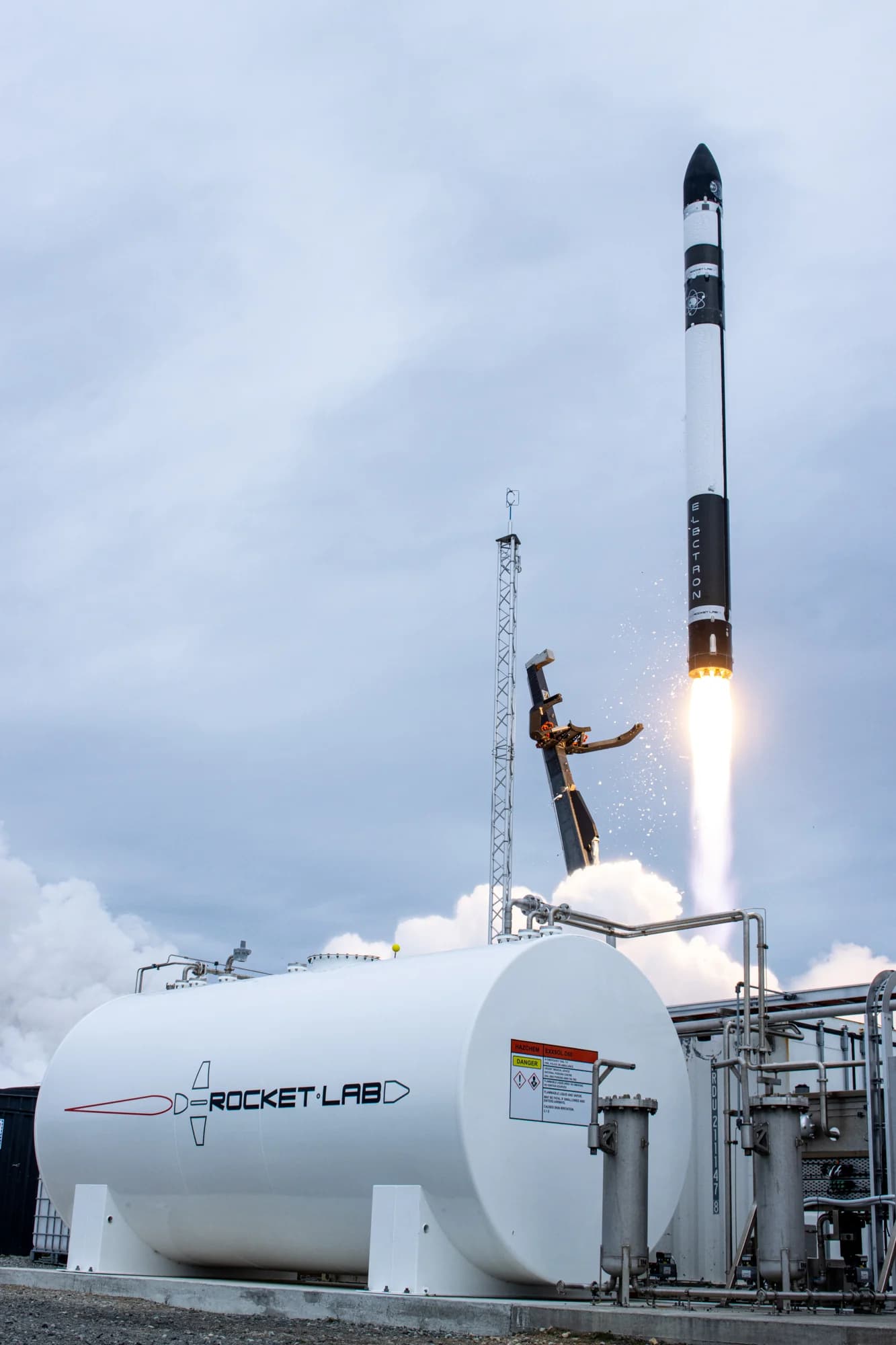
Rocket Lab began with a simple proposition: dedicated, repeatable launch access for small satellites. That problem still matters, and Electron remains an important asset. The company has now flown dozens of missions, established launch operations in New Zealand and the United States, and built a reputation for executing responsive small-launch missions. In May 2025, for example, Rocket Lab completed the tenth Electron launch for BlackSky and soon after highlighted a record launch turnaround from Launch Complex 1.
But the company is no longer priced, discussed, or strategically important because of Electron alone.
The more consequential development is the way Rocket Lab has assembled control over a growing list of subsystems that many peers still buy from outside suppliers. The company already had flight software through Advanced Solutions, Inc., separation systems through Planetary Systems Corporation, and solar capability through SolAero. In 2025-2026 it pushed further by adding payloads through Geost and optical communications through Mynaric.
This is why Rocket Lab is better compared with an emerging aerospace prime than with a niche launcher.
II. The Business Model: Launch as Wedge, Space Systems as Scale
Rocket Lab's segment mix explains much of the company better than launch headlines do.
According to the 2025 Annual Report, Rocket Lab generated record annual revenue of $602 million, up 38% year on year, and ended the year with a record backlog of about $1.85 billion. The company also reported a new annual launch record, flying 21 Electron and HASTE missions in 2025 with 100% mission success for the year. Just as important, its reported segment mix shows that Space Systems contributes the larger share of revenue while Launch Services remains strategically important but smaller.
That matters because it changes how to read both risk and resilience:
- Launch gives Rocket Lab mission visibility, customer relationships, and an in-house route to orbit for dedicated payloads.
- Space Systems gives Rocket Lab larger program value, higher switching costs, and exposure to satellite production rather than launch demand alone.
- Vertical integration lowers dependence on bottleneck suppliers in areas such as power, software, separation, payloads, and optical links.
This is also why management keeps emphasizing end-to-end capability. On national security programs in particular, Rocket Lab is trying to sell schedule control and manufacturing discipline, not only hardware. The more subsystem layers it owns, the stronger that pitch becomes.
III. 2025 Was the Operational Proof Year
Rocket Lab's 2025 matters because it showed that the company can scale operations while growing into a larger defense and spacecraft role.
The company ended the year with:
- record quarterly revenue of
$180 millionin the fourth quarter, according to the 2025 Annual Report; - record annual revenue of
$602 million; - a backlog of roughly
$1.85 billion; 21launches across Electron and HASTE;- material growth in government and national security exposure.
The operational side of the story is not only cadence. It is credibility. Frequent Electron missions, repeat customers, and a demonstrated launch infrastructure base give Rocket Lab something many newer launch companies still lack: real operating rhythm. That rhythm matters when pitching medium-lift development, responsive launch, and spacecraft manufacturing to defense buyers.
It also helps explain why the company can keep winning repeat business. Rocket Lab's relationship with iQPS, BlackSky, Kinéis, Synspective, and government missions is evidence that Electron has become more than a one-off demonstrator. It is a working customer machine.
IV. Defense Is Now Core to the Rocket Lab Story
The most important change in Rocket Lab's market position is its rise inside U.S. national security space.
In December 2025, the Space Development Agency awarded Rocket Lab a Tracking Layer Tranche 3 agreement with a total potential value of $805 million to provide 18 missile warning, tracking, and defense space vehicles. Rocket Lab's own release described the same win as an $816 million prime contract, consisting of a $806 million base plus options, and said total capture value could approach $1 billion when subsystem supply to other primes is included.
That award builds on the company's earlier $515 million SDA Transport Layer-Beta Tranche 2 prime contract for 18 satellites. Together these wins moved Rocket Lab into a different category. It is no longer simply selling components into defense space. It is acting as a prime contractor on large proliferated-constellation programs.
The same pattern appears in launch-related defense work. Rocket Lab said in June 2025 that Neutron had been on-ramped to the U.S. Space Force's NSSL Phase 3 Lane 1 program, with a $5 million task order for a capabilities assessment. The U.S. military's interest is not theoretical: HASTE has also become part of the U.S. hypersonic test ecosystem, including Rocket Lab's $190 million selection for MACH-TB 2.0 and a series of hypersonic test launches from Wallops.
This defense momentum helps explain why Rocket Lab keeps emphasizing vertical integration. Defense customers care about schedule confidence, supply-chain security, and manufacturability at least as much as about PowerPoint architecture. Rocket Lab is trying to position itself as the non-legacy prime that can deliver those attributes faster.
V. Geost and Mynaric Are Strategic, Not Cosmetic
Two transactions in particular clarify Rocket Lab's direction.
First, Rocket Lab signed an agreement in May 2025 to acquire Geost, then formally closed the acquisition in August 2025. The company said the deal closed for $275 million before closing adjustments, with an additional earnout opportunity. Geost adds electro-optical and infrared payload capability that is directly relevant to missile warning, missile tracking, tactical ISR, and sovereign spacecraft architectures.
Second, Rocket Lab completed its acquisition of Mynaric on April 14, 2026, paying aggregate consideration value of $155.3 million consisting of a nominal cash payment and Rocket Lab shares. Mynaric matters because optical inter-satellite links are one of the hardest production bottlenecks in proliferated constellations. Rocket Lab's own disclosures explicitly tied the acquisition to the SDA architecture, where Mynaric's CONDOR Mk3 terminals were already part of program execution.
Read together, these deals are coherent:
Geostbrings mission payloads in-house.Mynaricbrings laser crosslinks in-house.- Existing Rocket Lab assets already cover buses, power, software, avionics, guidance, separation, and launch interfaces.
The company is building toward a world in which it can deliver not just a satellite platform, but a much larger percentage of the full mission stack.
VI. Neutron Is the Hinge Variable
Electron built the franchise. Neutron determines whether Rocket Lab can graduate into a much larger launch and constellation market.
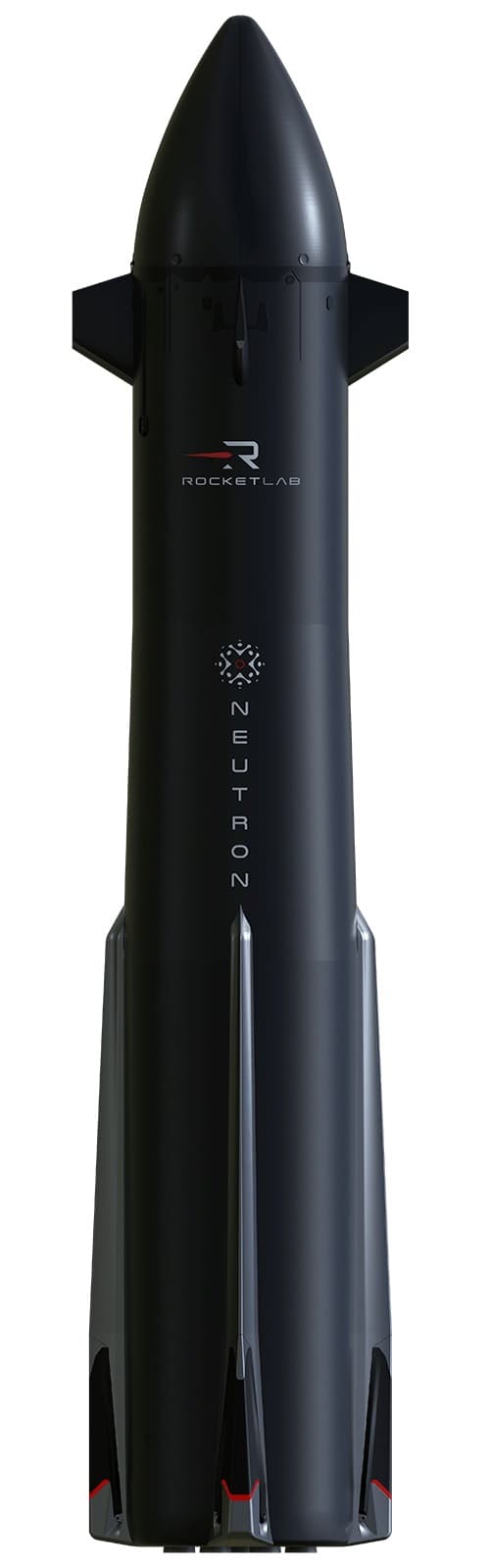
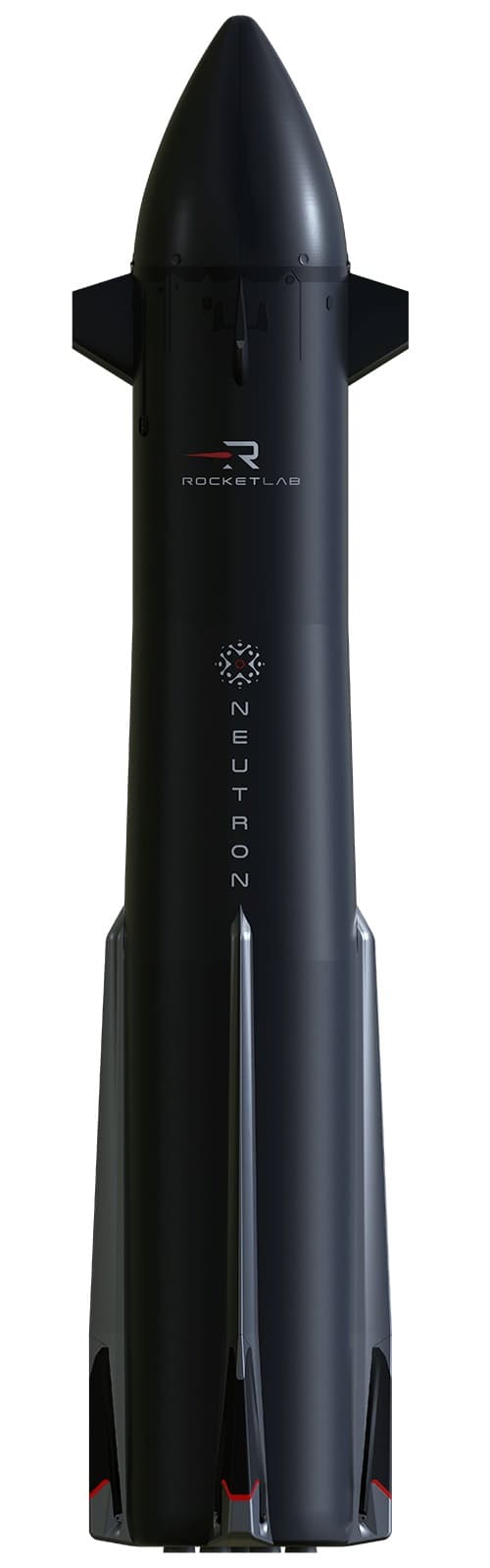
Rocket Lab describes Neutron as a medium-lift, reusable launch vehicle designed for constellation deployment, national security missions, civil space missions, and eventually human spaceflight support. Strategically, Neutron matters for three reasons.
First, it gives Rocket Lab a path into higher-value launch classes where constellation operators, defense agencies, and science missions need more mass and more deployment flexibility than Electron can offer.
Second, it gives Rocket Lab a tighter link between launch and spacecraft manufacturing. A company that builds both the satellites and the medium-lift vehicle that deploys them can pitch schedule control in a way that pure-play manufacturers cannot.
Third, it matters for narrative credibility with the Pentagon and larger institutional buyers. Winning on-ramp status for NSSL Phase 3 Lane 1 is strategically useful, but long-term value still depends on flight-proven execution.
That is also why Neutron is the biggest risk variable in the whole Rocket Lab story. If first flight slips materially or early operations disappoint, Rocket Lab remains a strong space systems company but loses some of the integrated logic investors are paying for. If Neutron works, the addressable market changes quickly.
VII. Civil and Exploration Work Still Matters
It would be a mistake to read Rocket Lab as becoming defense-only.
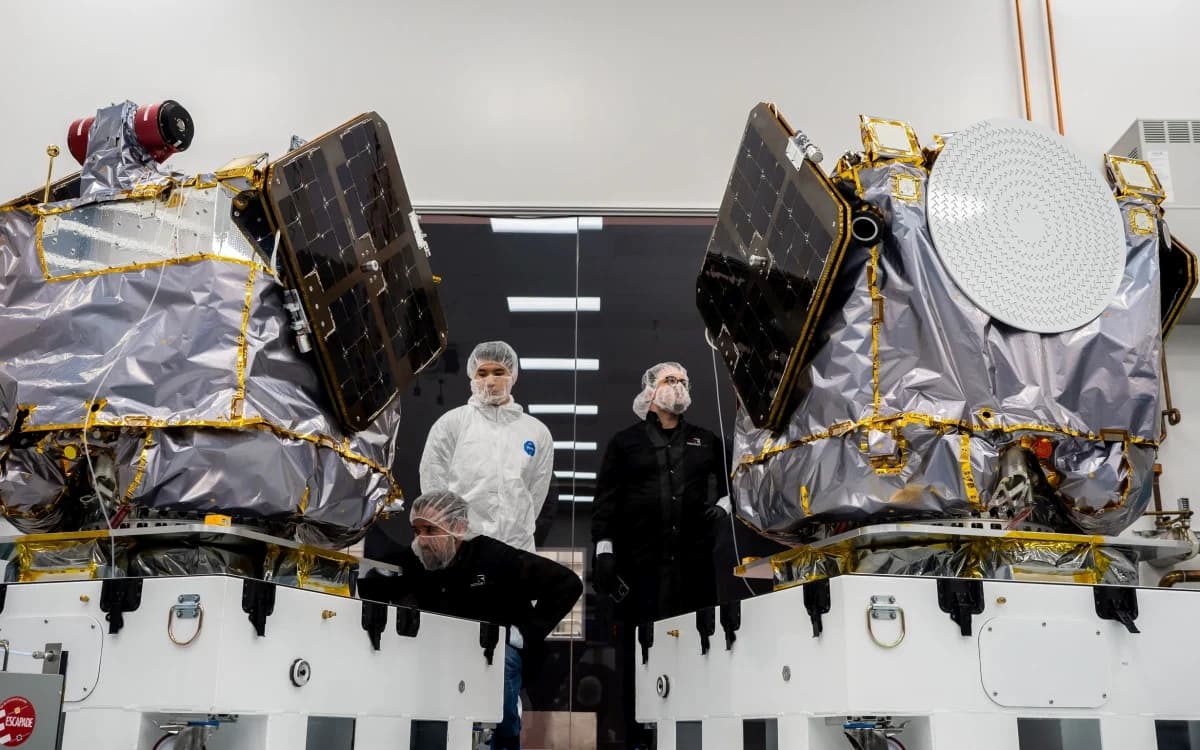
Rocket Lab's civil and exploration work still plays an important strategic role because it demonstrates spacecraft maturity beyond military payloads. The company's Photon platform and deep-space mission heritage help support the claim that Rocket Lab can build not only commodity buses, but mission-grade spacecraft.
Examples include:
- the CAPSTONE mission support for NASA and cislunar operations;
- Rocket Lab's work to build the twin ESCAPADE Mars spacecraft;
- NASA's confirmation that ESCAPADE launched on November 13, 2025.
For customers, the implication is simple: Rocket Lab's spacecraft business is not only a defense bid machine. It has civil-mission legitimacy as well.
VIII. Competitive Position: Stronger Than a Launcher, Smaller Than a Prime
Rocket Lab's competitive position in 2026 is unusually strong for a company of its size, but it should not be romanticized.
Against small-launch peers, Rocket Lab has obvious advantages: more flight heritage, more repeat customers, broader manufacturing capability, and greater strategic relevance to defense buyers.
Against the largest incumbents, it still faces major constraints:
SpaceXremains far stronger in launch economics and cadence.- legacy defense primes still have deeper program history on the largest classified and missile-defense architectures.
- emerging launch competitors such as
Fireflyand other medium-lift players are also pursuing defense credibility and constellation work.
Rocket Lab's best defense is therefore not price leadership. It is a specific operating position: credible launch heritage, a growing catalog of proprietary subsystems, spacecraft prime capability, and faster industrial iteration than traditional primes.
In that sense, Rocket Lab's moat is not any single rocket. It is the combination of launch operations, subsystem ownership, and program execution.
IX. APAC Relevance: Why This Matters Beyond the U.S.
Rocket Lab is especially relevant in the APAC context for two reasons.
First, its origin story is transpacific. A company that began in New Zealand and scaled heavily through the United States is a reminder that meaningful space companies do not have to start inside the largest defense budgets if they can eventually plug into them.
Second, Rocket Lab shows how regional commercial relationships can compound into strategic positioning. Its repeat launch work with Japanese customer iQPS, its civil spacecraft work, and its U.S. defense expansion together show a company using a broad geography as an advantage rather than a distraction.
For Singapore and wider APAC stakeholders, Rocket Lab is therefore a useful benchmark for three questions:
- how much value can be created by owning more of the space-system stack;
- how much launch capability is needed to unlock adjacent manufacturing revenue;
- and how a regional company can translate operational credibility into national-security relevance.
X. The Real Risks
Rocket Lab's strengths are real, but so are the risks.
1. Neutron execution risk
The company still has to prove that it can develop, qualify, and ramp a reusable medium-lift vehicle without losing schedule discipline or burning too much capital.
2. Fixed-price defense execution risk
Big defense wins improve visibility, but they also transfer schedule and cost risk onto Rocket Lab. Large prime contracts can raise reputation quickly and compress margins just as quickly if execution slips.
3. Integration risk from acquisitions
Geost and Mynaric make strategic sense, but integrating payload and optical-link businesses into a fast-scaling industrial structure is non-trivial.
4. Competition and pricing pressure
If launch prices continue to compress or if medium-lift competition intensifies before Neutron matures, Rocket Lab may have to rely even more heavily on Space Systems for profitability.
5. Valuation risk
Rocket Lab now attracts expectations that assume successful multi-line execution. When a company is valued for future category expansion, disappointment in any one pillar can have outsized effects.
Conclusion
Rocket Lab in 2026 is best understood as a company trying to do three things at once: preserve the credibility of a proven small-launch franchise, scale into a serious defense and spacecraft prime, and open a much larger medium-lift market through Neutron.
That combination is why the company is strategically interesting. Electron alone would not justify the attention. Defense contracts alone would not explain the upside. Acquisitions alone would not create a moat. But together they form a plausible industrial thesis: launch generates trust, vertical integration deepens control, spacecraft scale expands revenue, and Neutron could connect the pieces into a much larger operating platform.
The thesis is credible. It is not yet fully proven. In 2026, Rocket Lab looks less like a speculative launch startup and more like a maturing space-industrial company whose next level depends on execution discipline rather than storytelling.
This article is based on the public sources listed below. Analysis and forward-looking judgments are the author's independent views and are not investment, legal, or procurement advice.
Sources28 entries with source notes and links
- Rocket Lab 2025 Annual Report / Form 10-K(investors.rocketlabcorp.com)
- Rocket Lab third quarter 2025 financial results(investors.rocketlabcorp.com)
- Rocket Lab awarded $515M prime contract for 18 SDA Transport Layer satellites(rocketlabcorp.gcs-web.com)
- Rocket Lab's Neutron on-ramped to U.S. Space Force NSSL Phase 3 Lane 1(rocketlabusa.com)
- Rocket Lab selected for $190M MACH-TB 2.0 hypersonic test vehicle program(rocketlabcorp.gcs-web.com)
- Rocket Lab successfully launches HASTE hypersonic test vehicle from Wallops(rocketlabcorp.gcs-web.com)
- Rocket Lab closes acquisition of Geost(rocketlabcorp.gcs-web.com)
- Rocket Lab enters payload market with agreement to acquire Geost(rocketlabcorp.gcs-web.com)
- Rocket Lab completes acquisition of Mynaric - SEC Form 8-K(stocktitan.net)
- Rocket Lab announces intention to acquire Mynaric(rocketlabcorp.gcs-web.com)
- Rocket Lab completes 10th launch for BlackSky(rocketlabcorp.gcs-web.com)
- Rocket Lab completes record launch turnaround from Launch Complex 1(rocketlabcorp.gcs-web.com)
- Rocket Lab signs second multi-launch deal with iQPS(rocketlabcorp.gcs-web.com)
- Rocket Lab launches final five satellites for Kinéis constellation(rocketlabcorp.gcs-web.com)
- Rocket Lab selected to launch Synspective's StriX constellation satellites(rocketlabcorp.gcs-web.com)
- Rocket Lab successfully completes twin spacecraft for NASA's ESCAPADE mission(rocketlabcorp.gcs-web.com)
- Rocket Lab launches CAPSTONE for NASA's mission to the Moon(rocketlabcorp.gcs-web.com)
- Rocket Lab acquires Advanced Solutions, Inc.(rocketlabcorp.gcs-web.com)
- Rocket Lab acquires Planetary Systems Corporation(rocketlabcorp.gcs-web.com)
- Rocket Lab acquires SolAero Holdings(rocketlabcorp.gcs-web.com)
- Rocket Lab wins VICTUS HAZE tactically responsive space mission(rocketlabcorp.gcs-web.com)
- Rocket Lab launches PREFIRE and advances climate-science mission support(rocketlabcorp.gcs-web.com)
- Rocket Lab launches first mission from U.S. soil for the National Reconnaissance Office(rocketlabcorp.gcs-web.com)
- Rocket Lab mission services and vehicle overview(rocketlabusa.com)
Continue reading
22 Apr 2026 · 34 min read
Rocket Lab in 2026, Part II: The Scarcity Machine, Industrial Tempo, and Why Neutron Is Really a Management Test
Rocket Lab is a scarcity-forged industrial operating system, not a mini-SpaceX; Neutron tests whether founder-driven execution can scale into a medium-lift institution.
26 Apr 2026 · 48 min read
SpaceX 2026: Structural Shift, IPO Logic, and Five Real Constraints on APAC Commercial Execution
SpaceX is compressing launch, networks, data, and AI into one entity; its IPO and Starship V3 reshape APAC market access, infrastructure, and partner strategy.

13 Jul 2026 · 55 min read
The Global Reusable Rocket Census, Mid-2026: Landings Are Now Common. Reflights Are Still Rare.
A global census of reusable launch systems shows that booster recovery is spreading, while propulsion-grade reflight and cadence economics remain overwhelmingly concentrated at SpaceX.