
Indonesia Satellite Internet: Starlink's 17,000-Island Opportunity and Three Structural Constraints
Indonesia's 17,000-island opportunity is constrained by regulation, ground infrastructure, and Telkom's dual role; Starlink leads, while Qianfan remains an option.
Method & disclosure
Confidence: High (primary-source data from Ookla, Telkom annual report, ITU filings; scenario forecasts and strategic interpretation are analytical)
Review mode: Human + AI cross-check
Writing support: AI assisted
Singapore Space Agency

On this page · 16
- 01Executive Summary
- 021. Analytical Framework
- 032. Country Context: Why Indonesia Is LEO's Perfect Stress Test
- 043. Starlink Market Analysis: Performance Data and What It Reveals
- 054. Ground-Level Reality: What Actually Happens in the Jakarta Office
- 065. Political Economy: Suharto's Legacy and Prabowo's Strategic Ambiguity
- 076. Historical Structure: PSN's Failure and Telkom's Dual Role
- 087. The MNO Backhaul Market: The Most Undervalued LEO Opportunity
- 098. Competitive Landscape
- 109. Market Segmentation Analysis
- 1110. Regional and Global Comparisons
- 1211. Technology Comparison: LEO vs. GEO vs. Fiber
- 1312. Spectrum: ITU Coordination and the WRC-27 Stakes
- 1413. Scenario Analysis and Market Forecast (2026–2031)
- 1514. Three Counterintuitive Conclusions
- 1615. Forward View: Five Signals to Watch Over 24 Months
This is the first article in the "APAC From the Ground Up: A Market-by-Market Guide to LEO Connectivity" series (MGT-01), focused on Indonesia — Southeast Asia's largest, most geographically dispersed, and most regulatory-complex satellite internet market. The series will subsequently cover the Philippines, India, Australia/New Zealand, Japan/Korea, Vietnam, Malaysia, and a regional synthesis.
Executive Summary
Indonesia ranks as Starlink's fourth-largest speed-test sample market globally, behind only the United States, Australia, and Brazil.^[1] That ranking tells a story before we read a single paragraph: in a country built from 17,000 islands, where 57 million people remain offline and 33% of villages have no fiber coverage, LEO satellite internet is not a luxury. It is infrastructure's substitute.^[5]^[22]
But Starlink's commercial reality in Indonesia is far more complex than "technology filling a gap." The honest picture is one of three structural constraints:
First, regulatory dynamism. Komdigi (the Ministry of Communication and Digital Affairs) approved Starlink's combined VSAT+ISP license in May 2024 — but in 2025, KPPU (Indonesia's Business Competition Supervisory Commission) recommended restricting Starlink's operations in Frontier/Outermost/Disadvantaged (3T) regions.^[6] In February 2026, Komdigi launched the Jelajah Dekat Rakyat (JDN) low-cost roaming plan — without Starlink.^[2] These signals do not add up to a welcome or a rejection. They describe a dynamic equilibrium: the Indonesian government walking a tightrope between digital inclusion goals and domestic market protection.
Second, Telkom's dual-role trap. Indonesia's largest telecom, Telkom, became a Starlink distributor in 2024 — generating network revenue (including VSAT and Starlink distribution) of Rp 3,179 billion ($198M, up 28.1% year-on-year).^[4] Telkom is simultaneously Starlink's distribution channel (taking a margin on each subscription) and its potential competitor (owning Telkomsat and the Merah Putih-2 satellite). This relationship defines Starlink's ceiling in Indonesia: it cannot reach government and defense contracts without Telkom for the foreseeable future.
Third, the spectrum and customer race with Chinese constellations. Qianfan (SpaceSail, operated by Shanghai Spacecom Satellite Technology) has signed agreements with Malaysia's MEASAT, Brazil's TELEBRAS, and Thailand's National Telecom.^[17] Indonesia appears on Qianfan's potential market list. Its commercial logic is not "better performance than Starlink" — it is "if Starlink becomes a problem, you can use me instead." That Plan B positioning carries unusual political attraction in Indonesia, where Brazil's 2024 X platform ban has already demonstrated, to a watching Southeast Asia, that single-vendor dependency is a real and quantifiable risk.
The core finding of this analysis: Starlink's question in Indonesia is not "can we enter" — it already has. The question is "how deep can commercialization go." Residential is the base. The profit pool sits in enterprise (mining, plantations, maritime), and the most undervalued opportunity is MNO backhaul — rural base stations currently running on GEO VSAT that could switch to LEO. But capturing that pool requires a three-way negotiation with Telkom and Chinese constellations, and the arbiters are spectrum licenses and MNO revenue alignment, not technology.
1. Analytical Framework
This article uses four concurrent perspectives throughout — not as separate sections, but as overlapping lenses applied to the same data:
- [Researcher] Data-driven, sourced to primary documents, focused on quantifiable facts
- [Banker] Capital structure, return on investment, market pricing, the time window of structural advantage
- [Country Head] You are in a Jakarta office, facing regulators, MNO counterparts, and a quarterly earnings call. What does the ground look like from here?
- [Geopolitics] The decade-long chess game above commercial logic. Who is actually winning, and what does Indonesia's satellite infrastructure map look like in ten years?
These four voices are in the room simultaneously throughout the analysis.
2. Country Context: Why Indonesia Is LEO's Perfect Stress Test
2.1 Geography: The Infrastructure Curse of 17,000 Islands
Indonesia is the world's largest archipelagic nation — 17,508 islands (roughly 6,000 inhabited), spanning three time zones across more than 5,100 kilometers east to west, roughly equivalent to London to Tehran. The geographic dispersal creates a fundamental problem in infrastructure economics: laying fiber to every inhabited island is not financially viable under any reasonable return assumption.^[5]
[Researcher] Between 2014 and 2019, BAKTI (the Agency for Telecommunication and Information Accessibility) built 35,000 kilometers of Palapa Ring fiber backbone connecting provincial capitals on major islands.^[5] But backbone is not last mile. As of 2024, approximately 28,000 villages — 33% of the national total — have no fiber coverage. These villages sit in inland Sumatra, Borneo's rainforests, Papua's highlands, and the Sulawesi archipelago: high terrain cost ($10,000–$50,000 per kilometer to build), sparse population, payback periods exceeding twenty years.
[Researcher] The more important number: Java — 7% of national land area — holds 151 million people, about 57% of the population.^[5] The remaining 127 million are distributed across the outer islands: Sumatra, Kalimantan, Sulawesi, Papua, and Maluku. This distribution defines satellite internet's position in Indonesia: it is not a luxury for urban Java. It is the only viable broadband option for the outer island population.
[Banker] In this geography, LEO's advantage over fiber is not "faster." It is "no trenching required." Deployment cost is independent of distance; it scales only with terminal count. Starlink's 10,300+ satellites mean any point in Indonesia has at least one satellite in view at all times. When a technology's marginal cost curve is structurally different from the incumbent's, the competitive logic is different too — this is not substitution warfare in an existing market. This is expansion into an incremental one.
2.2 Population and the Digital Economy: What 57 Million Unconnected People Actually Means
Indonesia's 278 million people (2024) have an internet penetration rate of 79.5% — roughly 221 million users.^[18] But "connected" in Indonesia is a loose definition. Many rural users access 2G and 3G on connections that offer minimal actual throughput. The share of the population with genuine broadband experience (download speeds above 25 Mbps) is significantly lower than the headline figure.
[Researcher] The World Bank's December 2025 Indonesia Economic Prospects report documents the depth of the digital divide: only 24% of clinics in remote areas have reliable internet, and 30% of schools have no connectivity at all.^[5] In this dimension, satellite internet is not a consumer convenience problem. It is infrastructure gap-filling for public services.
[Banker] 57 million unconnected people is a number that excites forecasters — but it needs to be adjusted for purchasing power. At approximately $4,900 GDP per capita (2024), and significantly lower in rural areas, Starlink's current IDR 750,000/month (~$46) pricing translates to an annual cost of roughly $1,490 including hardware amortization.^[5] For a rural low-income household earning $100–$200 per month, that is 23–46% of monthly income. The residential TAM is not 57 million people. It is the population with both the purchasing capacity and the location gap: conservatively 3–5 million households.^[3]
2.3 Historical Context: Fifty Years from Palapa to Starlink
Indonesia's satellite communication history begins on July 8, 1976, when NASA launched Palapa A1 on behalf of the Indonesian government, making Indonesia the ninth country globally, and the first in the developing world, to operate a domestic satellite communications system.^[9] The Palapa name is Sanskrit, carrying the political idea of Wawasan Nusantara — archipelago unity — that defined the Sukarno era. That "satellite as national unification" narrative has been the spiritual foundation of Indonesian satellite policy for five decades.
Understanding this starting point is essential for reading Starlink's current regulatory friction. Indonesia is not a satellite services consumer. It is a country with a fifty-year narrative of satellite sovereignty. Allowing an American private company's constellation to cover Indonesia's most remote frontier regions touches a deep political nerve.
Palapa B2 deployed from Space Shuttle Challenger during mission STS-41-B in February 1984. Indonesia became the first developing nation to operate its own domestic satellite communications network. Five decades later, that "satellite sovereignty" narrative still shapes how Jakarta regulates Starlink. (Image: NASA)
Table 1: Indonesian GEO Satellite History (1976–2023)
Note: The Telkom 3 launch failure in August 2012 (Proton-M upper stage malfunction) cost approximately $250M in insurance claims — the largest single satellite asset loss in Indonesian history — and substantially shaped Telkom's subsequent risk tolerance toward satellite capital investment.^[4]
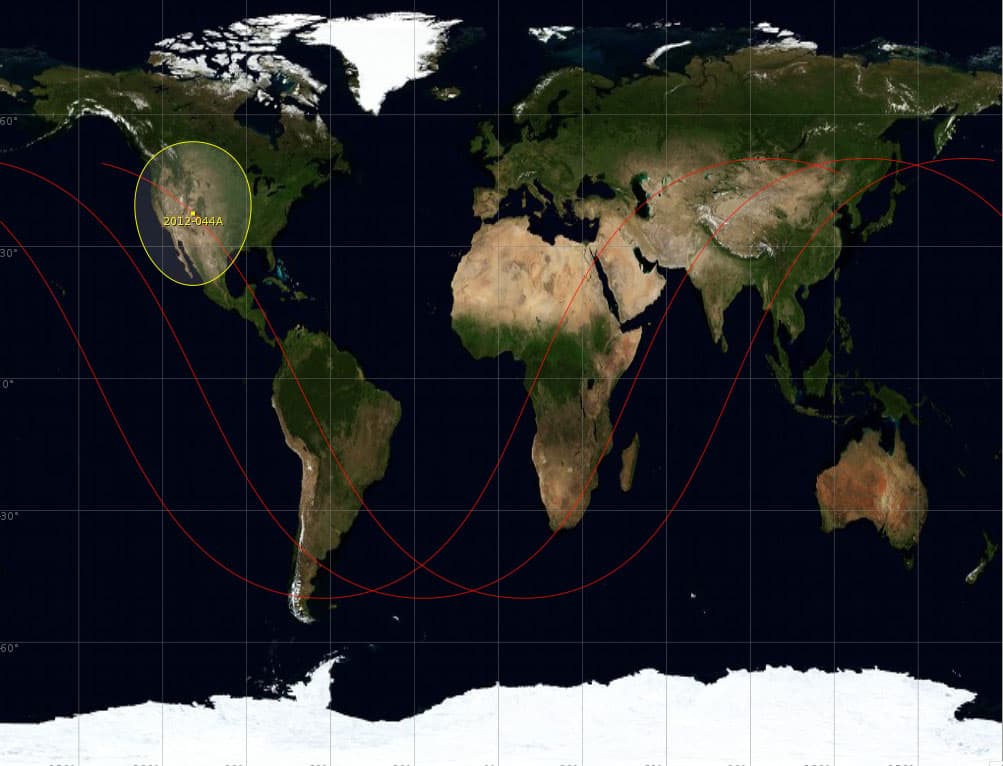
Telkom 3 ground track in the months following its August 2012 Proton-M launch failure. The satellite reached an unintended low elliptical transfer orbit, where it remained for months before reentry. The $250M loss profoundly shaped Indonesian satellite investment posture for the following decade. (Image: Telkom/orbital tracking data)
3. Starlink Market Analysis: Performance Data and What It Reveals
3.1 Speed and Performance: Globally Fourth, But the Signal Is Degrading
According to Ookla's 2025 Global Satellite Broadband Performance Report, Starlink's median download speed in Indonesia is 40.69 Mbps (Q4 2025).^[1] The absolute value is not the story. The direction is.
Table 2: Starlink Indonesia Quarterly Performance Tracker (2023–2025)
Note: 2023 Q1–2024 Q2 figures are trend-based estimates derived from Ookla's documented trajectory; 2024 Q3 and 2025 Q3–Q4 are Ookla-recorded official data points. Trend direction confirmed by Ookla report narrative.^[1]
The table tells a clear story: every quarter, subscriber count rises. Speed falls. This is not a satellite problem. It is a ground problem — specifically, a ground station approval problem.
Three structural hypotheses for the speed decline:
Hypothesis 1 (primary cause): Gateway capacity bottleneck. Four known Gateways (Jakarta, Batam, Bandung, Makassar) serve the entire country.^[6] In Starlink's architecture, user data must route through a ground Gateway to reach the internet backbone. With subscriber growth running at 33.9% annually and no significant Gateway additions, each Gateway serves more users than its design load, forcing data to route to more distant Gateways — adding latency and reducing per-user throughput. This is the most direct explanation with the clearest technical grounding.
Hypothesis 2 (secondary cause): Beam spectrum reuse pressure. Java Island — 151 million people, Indonesia's densest Starlink user region — faces increasing frequency competition within individual satellite beams. Starlink uses dynamic beam hopping to allocate spectrum, but above a density threshold, per-user allocated bandwidth falls.
Hypothesis 3 (present but unconfirmable): Administrative speed cap. Whether Komdigi administratively constrains Starlink's Gateway expansion as competitive protection has circumstantial support — other markets in the same period expanded Gateways more rapidly, and SpaceX's internal teams have described the Indonesian approval process as "complex" in multiple public contexts. This cannot be confirmed from public records.
Table 3: Starlink Indonesia vs. Southeast Asia and Global Markets (Q4 2025)
[Researcher] At 40.69 Mbps, Indonesia offers enough for 4K video and multi-device use — but far below what Starlink can technically deliver. A 50ms latency is a qualitative leap over legacy VSAT's 600–700ms;^[1] but in other markets served by the same constellation, 30–37ms is standard. Indonesia's 50ms is a technical disadvantage manufactured by regulatory conditions, not by the constellation itself.
3.2 Pricing and Affordability
Table 4: Starlink Indonesia Pricing Structure (Q1 2026)
Source: Starlink Indonesia official pricing page; Opensignal Indonesia Report 2024–2025.^[2]
[Banker] The $1,490 annual cost in Indonesian context: traditional VSAT runs $372–$1,488 annually, so Starlink is not dramatically cheaper — but the speed and latency experience is a generational difference. Fiber in covered areas costs $222–$744 annually and remains cheaper, but 28,000 villages will never receive fiber. The residential ceiling is set by economic reach, not geographic coverage. The true mass-market price point is $20–$30/month — a threshold contingent on Starship's launch cost trajectory.
3.3 User Composition: Enterprise Is the Profit Pool, Residential Is the Base, Backhaul Is the Missed Opportunity
[Researcher] Estimated Starlink Indonesia user composition (end-2025):
Note: Figures are estimates derived from Ookla active sample growth rates, Telkom distribution revenue, and comparables (Australia, Brazil). Range is wide because maritime and enterprise ARPU varies significantly. Not official data.
Government users: the political sensitivity ceiling. BAKTI's Satria-1 project targets 12,000 remote government service points.^[10] Starlink could theoretically fill Satria-1's coverage gaps — but KPPU's 3T restriction recommendation signals that the government does not want a foreign company to visibly "rescue" remote areas. This is a sovereignty narrative constraint, not a technical one. The [Country Head] note: government procurement in Indonesia requires relationships built over years, local NOC compliance, data localization architecture, and — most critically — Komdigi's blessing on each contract. None of those conditions are currently satisfied for independent Starlink-to-government sales.
4. Ground-Level Reality: What Actually Happens in the Jakarta Office
[Country Head perspective]
Wednesday, March 2026, 3:30 PM, Jakarta's Sudirman business district.
Two windows are open on your screen. Left: the Ookla dashboard — Starlink Indonesia median download speed, 40.69 Mbps. Right: Outlook — an email from the CFO, subject line "Indonesia Q4 Update."
"Active device growth up 33.9% year-on-year, revenue in line with projections — but speed metrics continue declining. Please explain the root cause of network quality pressure and your remediation plan."
You have typed three lines in the reply box. Then deleted all of them.
What you want to write: we need a new Gateway in Sulawesi and one in Maluku. Technical assessment completed August 2024. Site selection report submitted to Komdigi October 2024. Komdigi's response: supplemental spectrum compatibility assessment required, to be certified by an independent body. Independent certification cycle: 90 days. After certification, Komdigi routes the application through the Telecommunications Infrastructure Committee, which meets quarterly. Then the Ministry of Defence needs to issue a no-objection letter, because eastern Sulawesi is adjacent to a restricted military zone. Defence says this isn't in their standard approval workflow. Needs a special directive.
All of the above, optimistically: 18 months.
What you actually write: Network utilization in high-demand corridors approaching optimal threshold. Additional ground infrastructure deployment pending regulatory coordination. Expected timeline: H2 2026.
Then you hang up before the CFO calls, and tell your assistant to schedule a Komdigi visit for next week.
This execution-level tension is Indonesia's LEO market reality, not a headline. The macro narrative says "Indonesia is Starlink's fourth-largest market." The execution reality is: this fourth-largest market's service quality is systematically deteriorating because ground-station approvals lag demand growth, and the main thing you can do is keep waiting, keep visiting, keep submitting supplemental materials.
What makes it sharper: word came in this month that Qianfan's commercial team visited PT Pertamina's IT procurement office. Pertamina is Indonesia's state oil company and your highest-ARPU enterprise client category. No agreement was signed. They were "gathering information." But in a B2B sale, the act of gathering information is where negotiating leverage begins.
Your Q1 target includes: Pertamina headquarters 5-year enterprise contract, $1.2M annual contract value. That contract is now hanging in the air.
5. Political Economy: Suharto's Legacy and Prabowo's Strategic Ambiguity
5.1 The Prabowo Government's Digital Inclusion Agenda
[Macro] The Prabowo Subianto government, which took office in October 2024, has elevated "digital inclusion" as a core agenda item. Prabowo's economic nationalism tendency means: foreign technology companies in Indonesia must demonstrate that they serve national interests, not merely extract revenue.
This is not new. From Sukarno's "economic independence" through Suharto's Pribumi preferences to Joko Widodo's downstream processing policy, Indonesia's posture toward foreign investment has consistently combined pragmatism and nationalism — welcoming investment while demanding localization, knowledge transfer, and profit sharing. Prabowo's stance is historically continuous; his execution style may be more flexible.
[Geopolitics] Elon Musk's 2024 visit to Indonesia and meeting with President Prabowo has been underread by most analysts. The visit produced not a contract but a political signal — that the Prabowo government is more open to Starlink than its predecessors. Musk appeared in traditional Indonesian batik at the presidential palace, a visual deliberately constructed for domestic political consumption: this is a foreign company that respects local culture and national priorities.

Elon Musk wearing traditional Indonesian batik during his 2024 visit to meet President Prabowo. The symbolic gesture was calculated political theater — but the administrative apparatus that actually controls Gateway licenses moves on its own timeline, regardless of presidential signals. (Image: Starlink/government handout)
But the signal from the political layer and execution at the administrative level are structurally disconnected. Komdigi's bureaucracy moves at its own pace, protects its domestic stakeholders, and is not accelerated by a presidential meeting. The distance between a presidential signal and a Gateway approval is measured in months, not weeks.
5.2 Specific Regulatory Constraints on Starlink
[Country Head] Each row in this table is a live project. The data localization line alone means Starlink needs to establish or co-locate a compliant data center within Indonesia — partnering with AWS Jakarta, GCP Jakarta, or a local facility. But Starlink's global encrypted network architecture raises a deeper engineering question: does it technically support Komdigi's "lawful interception" requirements for sensitive sectors? This is a real, unresolved engineering dispute. No public solution has been announced. Every government enterprise contract sits behind this unresolved question.
5.3 Sovereign Narrative vs. Policy Cost
[Geopolitics] Indonesia's current position can be read as: using regulatory complexity to buy negotiation time, while preserving flexibility to move between suppliers. This is not policy confusion. It is the rational behavior of a middle power in a great-power contest — making each LEO operator believe that the Indonesian market matters more to them than to their competitor, thereby maximizing bargaining leverage.
The cost is borne by Indonesian rural users, not by Komdigi. Each month the regulatory negotiation continues is another month of digital divide cost paid by the population, not by the ministry.
5.4 Qianfan (SpaceSail): The Geopolitical Long Game — and Why Indonesia Is a Blank
[Researcher] A necessary clarification on naming: "Sailspace" is the ITU filing name used by Shanghai Spacecom Satellite Technology Co. (English brand: SpaceSail) for its SAILSPACE-1 network (1,296 satellites declared).^[23] Some earlier reports confused this with an unrelated Beijing IT company — those references are incorrect. This analysis uses "Qianfan/SpaceSail/SSST" throughout.
Qianfan's launch timeline (as of April 2026):
Note: Some sources report higher counts citing new Jiuquan launches in late 2025 and early 2026; the publicly verifiable confirmed count at this writing is 126. Reports in the 500+ range reflect different orbital cohort accounting and remain unverified. This article uses the conservative confirmed figure.
Two technical incidents that have been misread:
Incident 1: Long March 6A upper stage breakup (August 6, 2024). After the Polar Orbit 01 launch, the rocket's retained upper stage broke apart. The US Space Force confirmed over 300 fragments; LeoLabs radar data identified at least 700, possibly exceeding 900, at approximately 800km altitude — the same orbital plane as Qianfan satellites.^[24] This is the same rocket variant that broke apart after two previous launches (November 2022, July 2024), making this the third such incident. Debris may remain in orbit for decades.
Incident 2: Propulsion system failure on Batch 02 (October–December 2024). Amateur analysis of public Satcat orbital data showed that roughly 16 of the 18 satellites in Polar Orbit 02 exhibited propulsion anomalies: six failing entirely, six propelling then stopping, four achieving only marginal altitude gains.^[25] SSST has never publicly acknowledged this event.
Rocket capacity bottleneck — the 2025 constraint that mattered more than satellites:
In 2025, Qianfan's binding constraint was not satellite technology. It was launch vehicle supply. Public procurement records reveal the structural problem:
- February 10, 2025: First tender for nine "18-satellite" launches — failed, fewer than three bidders
- March 4, 2025: Second identical tender — failed again
- July 21, 2025: New ¥1.336B tender (seven launches, 94 satellites, including 10-satellite configurations) — partial failures again^[26]
SSST Chairman Zhang Qi stated publicly: "Large-capacity, high-reliability, reusable, low-cost launch vehicles are still in the experimental phase; launch resources and tracking capabilities cannot yet fully support the rapid network formation needs of a mega-constellation."^[27]
Result: an approximately seven-month launch gap in 2025 (March–October), followed by a further six-month gap (October 2025–April 2026). Qianfan's original target was 648 satellites in orbit by end-2025. Actual: 126. Completion rate: 16.7%.
Technical gap vs. Starlink:
Source: OFCA (Hong Kong) Qianfan demonstration test report TR202509_02 (2025); Ookla global data; industry technical reports.^[28]
[Geopolitics] Qianfan's international expansion sequence — Indonesia is absent:
This is among the most important findings of this research. Qianfan's overseas commercial development follows a clear geographic sequence:
Comprehensive search of "Qianfan Indonesia," "SSST Indonesia," "Sailspace Indonesia," and related terms yields no substantive results. The only indirect connection: Tongyu Communication, a Qianfan supply chain partner, attended the Indonesia INAMARINE maritime exhibition in July 2025 — but Qianfan/SpaceSail itself was not present and had no documented client contact.^[32]
[Banker] Recalibrating the competitive threat:
The accurate framing is: Qianfan is a 5–7 year geopolitical risk, not a 12–24 month commercial competitive threat.
Substantive Qianfan commercial service in Indonesia, at optimistic assumptions, requires: constellation deployment to at least 400–600 satellites; Indonesian regulatory filing and approval (comparable to Starlink's ~24–30 month process); and a signed distribution agreement with a local operator. All three simultaneously: earliest 2028–2029.
But Qianfan has already established a MEASAT agreement in Indonesia's most important neighbor market. Once Qianfan validates commercial operations in Malaysia, Indonesia becomes the natural next step in its Southeast Asian expansion. This is precisely why Indonesia has not shut the door on Starlink completely while maintaining regulatory complexity — it needs to preserve the option of bringing in Qianfan as a negotiating chip.
[Geopolitics] Why Qianfan chose this international sequence:
Brazil: Starlink had already invested heavily in market education (45.9% market share); Brazil's telecoms ministry was actively seeking alternatives to break market concentration. Qianfan's position was "cheaper Plan B," not "better alternative."
Malaysia (MEASAT): MEASAT is a GEO operator hedging into multi-orbit; ideal for B2B wholesale. Malaysia's non-aligned political posture means no significant Washington pressure for signing with a Chinese satellite company.
Indonesia: why not yet. Indonesia's regulatory complexity challenges Starlink — it would challenge Qianfan even more. Qianfan lacks Starlink's presidential-meeting diplomatic opener, has no existing ground station infrastructure, and has no local distribution partner. The most likely trigger for an Indonesian move: Malaysian MEASAT operations achieving stable commercial service (2027?) → using MEASAT's coverage footprint to serve some Indonesian border areas de facto → then formally initiating Indonesian regulatory filing. Gradual flank penetration, not frontal breakthrough.
6. Historical Structure: PSN's Failure and Telkom's Dual Role
6.1 PSN: A Structural Warning
PT Pasifik Satelit Nusantara (PSN), founded in 1991, was Indonesia's first private satellite operator. In the 1997 Asian financial crisis, PSN collapsed financially — its nine-month 2000 financials showed revenue of just $6.6M against a net loss of $29.4M.^[8] After launching Garuda-1 in 2008, PSN attempted an IPO in 2019, failed, and faded from the market.
[Banker] PSN's story is a structural cautionary tale. A private Indonesian company took on dollar-denominated project financing to build a GEO satellite, then suffered currency collapse (the rupiah fell roughly 70% in 1997–98) — tripling the local-currency cost of its dollar debt. This pattern is high-risk in any emerging market with a vulnerable currency; Indonesia is not an exception.
The policy conclusion Indonesia's government drew after 1997: satellite infrastructure is too important to be left entirely to the market. That conclusion, codified into a preference for state enterprise control and spectrum allocation management, persists today. The regulatory system Starlink navigates is, in part, a legacy of 1997.
6.2 Telkom/Telkomsat: The Embrace-and-Control Play
Telkom's role has evolved through three phases:
- 1996–2020: Monopolist in satellite communications, dominating via the Indosat acquisition and Telkomsat's establishment
- 2020–2023: Potential Starlink competitor, using Telkom 3S and Merah Putih GEO satellites to anchor VSAT business
- 2024 onward: Starlink distributor, taking margin on each subscription while using Starlink to fill its own coverage gaps
In 2024, Telkom's network revenue including VSAT and Starlink distribution reached Rp 3,179B ($198M, up 28.1% year-on-year), with satellite capacity of 485 TPE (Transponder Equivalents).^[4]
[Banker] The commercial logic is clear: rather than burning cash to compete with Starlink, extract margin from Starlink's growth. Telkom owns ground infrastructure, government relationships, and enterprise client channels. Starlink owns satellite technology and brand momentum. Combined, Telkom can offer "LEO+GEO hybrid" services to enterprise clients without additional satellite capital expenditure, while maintaining exclusive access to government contracts.
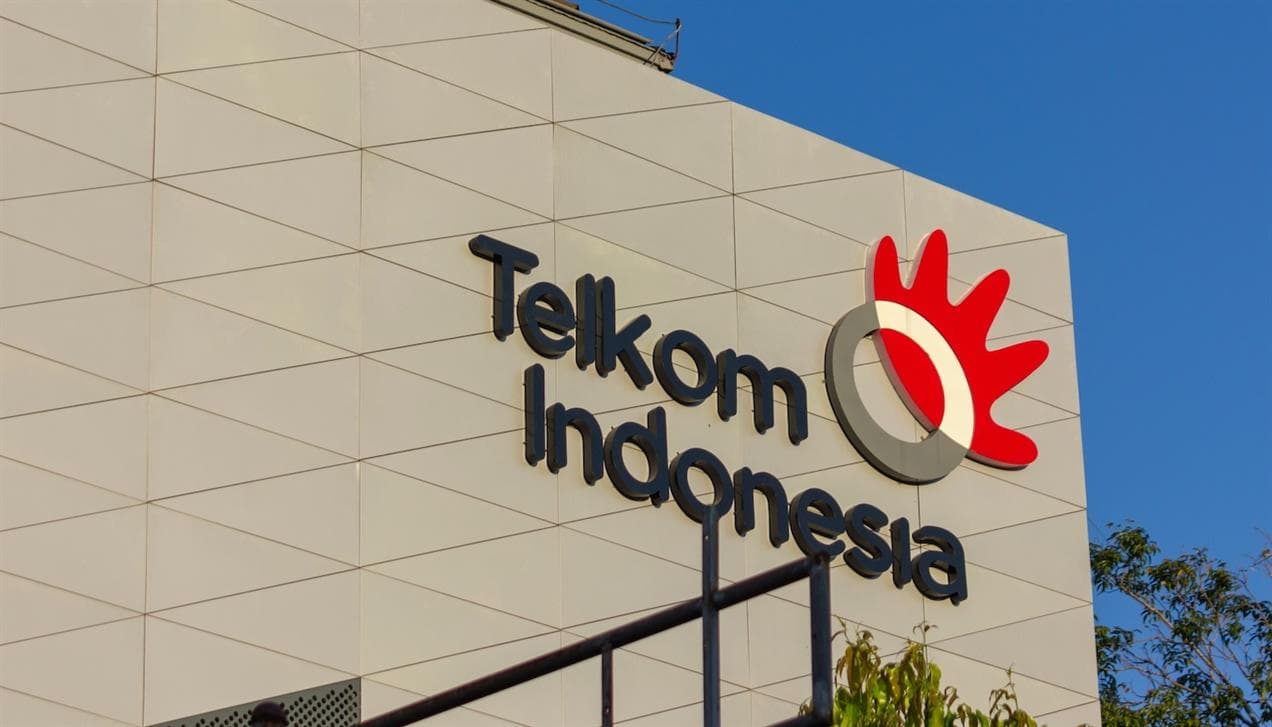
Telkom Indonesia headquarters in Jakarta. Telkom's 2024 pivot from Starlink competitor to Starlink distributor — while simultaneously owning Telkomsat and planning Satria-2 — creates an inherently unstable partnership. Starlink gains distribution channels; Telkom gains ARPU. But the moment Telkom's own satellite interests diverge, the distribution relationship becomes a leverage mechanism rather than a partnership. (Image: Telkom Indonesia)
[Country Head] Telkom as distributor is a double-edged sword. You gain distribution. You lose pricing autonomy, direct access to government contracts, and any negotiating leverage in future conflicts of interest. Every client won through Telkom's channel strengthens Telkom's last-mile control. The moment Telkom decides to advance its own next-generation satellite (Satria-2 is planned at 300+ Gbps capacity), your sales funnel could have a large hole in it overnight.
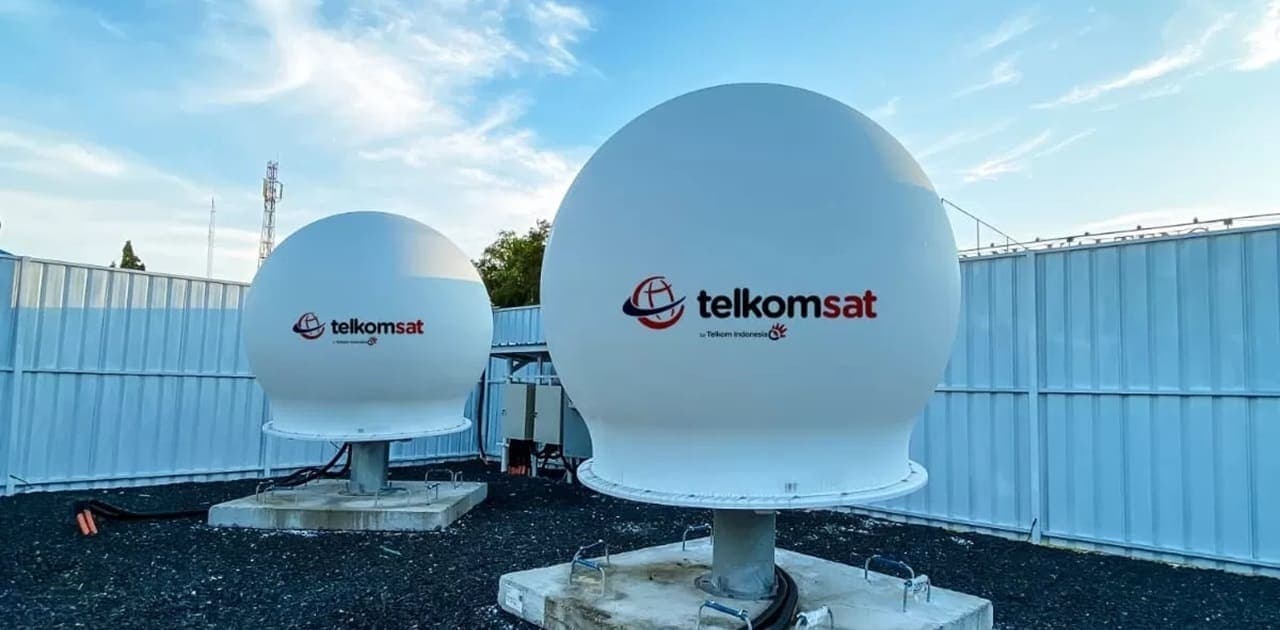
Telkomsat and Starlink joint ground infrastructure deployment in Indonesia, part of the 2024 distribution partnership. The combined setup illustrates both the opportunity (Telkom's existing ground infrastructure) and the constraint (Starlink's dependence on a partner that is simultaneously a competitor). (Image: Telkomsat/Starlink)
6.3 Satria-1: Sovereign Proof or Sunk Cost?
Satria-1 was launched in June 2023, built by Thales Alenia Space in France, deployed on a Falcon 9.^[10] Total investment approximately $550M (build, launch, insurance), partially financed by a China Exim Bank sovereign loan. Ka-band HTS design capacity: 150 Gbps. Target: 12,000 remote government service points (Nusantara Centers).
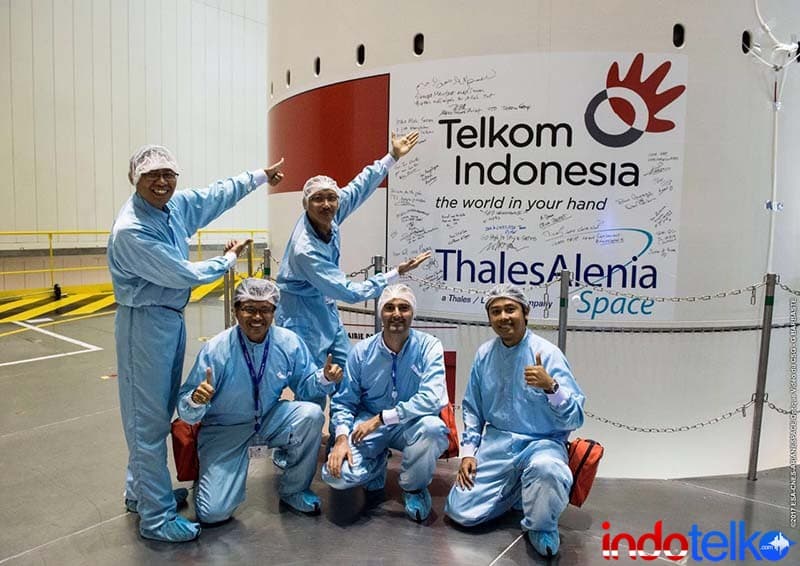
Satria-1 during integration at Thales Alenia Space in Cannes, France, prior to its June 2023 launch. The $550M HTS satellite was conceived in 2019 when LEO constellations had not yet demonstrated commercial viability. By the time it reached orbit, Starlink was operational in 55+ countries with performance that comprehensively outclassed any GEO design. (Image: BAKTI/Thales)
[Banker] The Satria-1 paradox is a timing mismatch. The contract was signed in 2019, when LEO constellations had not yet demonstrated commercial viability. The satellite launched in 2023, by which time Starlink was operational in 55+ countries with performance metrics that comprehensively outclass GEO HTS. What is the actual market value of a $550M GEO satellite in the LEO era? This is the question BAKTI and Telkom will not discuss publicly — but it determines the underlying economics of Indonesia's next satellite policy move.
7. The MNO Backhaul Market: The Most Undervalued LEO Opportunity
This section is overlooked in nearly every analysis of the Indonesian satellite market. It may be the largest near-term opportunity in the entire stack.
7.1 The Scale of the Problem
[Researcher] Indonesia has approximately 400,000 4G base stations (2024 estimate).^[21] Fiber backhaul penetration is roughly 60–70% in Java and only 20–30% in outer islands (Sumatra, Kalimantan, Sulawesi, Papua). This means approximately 150,000–200,000 rural and remote base stations currently rely on non-fiber backhaul: GEO VSAT, microwave, or hybrid solutions.
These base stations run on GEO VSAT backhaul at $200–$800/month per site, 2–10 Mbps, 600–700ms latency. That backhaul quality directly limits rural 4G user experience — even if a phone shows 4G signal, satellite-backhauled towers deliver something closer to 3G in practice.
7.2 The Economics of LEO Backhaul
[Banker] If Starlink offers LEO backhaul at $300–$500/month per site (50–100 Mbps, 40–50ms latency):
For Telkomsel (158 million subscribers, ~55% market share), converting 50,000 rural base stations from GEO to LEO backhaul — with the ARPU impact of genuinely improved rural 4G experience — may produce a network quality investment ROI that justifies the switching cost even at parity pricing.
[Country Head] The strategic value of MNO backhaul contracts is not just revenue. When you become infrastructure supplier to Indonesia's three largest mobile operators, your regulatory negotiating position improves substantially. A regulator must weigh the cost of penalizing a foreign company that is now embedded in the national mobile network. Pulling Starlink out no longer costs just "one foreign company loses access." It costs "the rural networks of the three largest MNOs degrade sharply."
7.3 MNO Backhaul Market Size Estimate
This is larger than Starlink Indonesia's current residential revenue, less politically sensitive, and with longer contract cycles (MNO infrastructure contracts typically 3–5 years). This is where Starlink's priority should be — and where it is currently most under-penetrated.
8. Competitive Landscape
8.1 Starlink: Scale Advantage Meets Localization Deficit
Starlink's global scale advantage is real and widening: 10,300+ satellites, adding 20–25 per month, annual terminal production capacity of 4,000+ units.^[1] In Indonesia, that means 100% geographic coverage — including the most remote Papua villages.
But scale advantage in Indonesia is offset by localization shortfalls. Only four Gateways, an NOC whose Komdigi compliance remains opaque, and incomplete integration with Indonesian payment systems (GoPay, OVO) and local-language support.^[6] The structural weakness: "globally strong, locally thin" is a competitive liability in a market that rewards deep local presence.
8.2 Qianfan/SpaceSail: The Geopolitical Long Game
[Geopolitics] Qianfan is not yet commercially active in Indonesia, but its strategic position demands analysis in the same framework as commercial competition.
Qianfan's commercial path is systematic. Its Sailspace brand has an MoU with MEASAT covering LEO broadband, D2D, IoT, and earth observation across MEASAT's Southeast and South Asian footprint.^[30] The TELEBRAS agreement in Brazil^[29] and the Thailand NT framework^[31] establish a geographic expansion sequence in which Indonesia is the obvious next Southeast Asian anchor.
[Banker] Qianfan's pricing strategy is undisclosed, but its Shanghai municipal government and Chinese Academy of Sciences backing means it does not need to turn a profit in its first contract cycle. Sovereign capital underwrites a long-term positioning play. Price can be a function of political calculation, not just cost. This is a competitive threat that cannot be managed with traditional price-matching logic.
8.3 OneWeb/Eutelsat: The B2B Neutral Path
OneWeb (Eutelsat subsidiary) operates 654 satellites at ~1,200km altitude, offering 50–195 Mbps at 30–70ms latency.^[14] Unlike Starlink and Qianfan, OneWeb does not sell to consumers — it is exclusively B2B and government-focused.
Its "political neutral" positioning — European origin, outside the US-China contest — has specific appeal in Indonesia: it is a third path that depends on neither Washington nor Beijing. The Thai Ubon Ratchathani Gateway (operated by National Telecom) already provides partial coverage of western Indonesia.^[15] Eutelsat's March 2026 $5.8B debt restructuring completion is a financial constraint on Indonesian expansion investment, but OneWeb's B2B revenue grew ~80% in 2025, validating the commercial thesis.^[14]
8.4 AST SpaceMobile: The D2D Wildcard
AST SpaceMobile uses a fundamentally different technology: direct connection to standard LTE handsets, no additional terminal required.^[10] Commercial logic: MNOs pay for satellite coverage extension; users need no extra hardware.
[Researcher] AST's Indonesian structural potential comes from scale difference:
- Telkomsel: 158 million subscribers
- Indosat Ooredoo Hutchison: 106 million subscribers
- XL Axiata: 58 million subscribers
- Combined: ~344 million mobile subscribers^[21]
If AST reaches an agreement with any Indonesian MNO, its potential coverage population would be roughly 3,000 times Starlink's current subscriber count. Indonesia has approximately 62,000 administrative villages without 4G coverage — the structural match between AST's D2D model and Indonesia's geography is theoretically better than any other competitor.^[5]
[Researcher] TAM qualifier — tropical canopy attenuation. The 62,000-village figure represents administrative coverage gaps, not a directly serviceable TAM. Papua and Kalimantan — which account for a disproportionate share of uncovered villages — are among the world's densest tropical rainforest biomes. Tropical forest canopy attenuates L/S-band satellite signals by 10–20 dB depending on canopy density and elevation angle; at low satellite elevation angles typical of LEO passes at 8°S latitude, effective signal margins are further compressed. This means a meaningful subset of the structurally "uncovered" villages in primary forest zones may be technically unserviceable by D2D without supplemental ground infrastructure — reducing the realistic serviceable TAM below the headline village count. AST's actual TAM in Indonesia is best estimated after accounting for: (1) forest canopy distribution in each uncovered village, (2) the fraction of potential users in open or semi-open terrain (fields, coastal areas, road corridors), and (3) constellation elevation angles at Indonesian latitudes during commercial-grade service passes.
With only about five commercial satellites in orbit as of end-2025, AST is a 3–5 year opportunity window — not a current competitive threat. CK Hutchison's partnership with AST provides a potential Indosat pathway, but constellation density requirements for Indonesia's latitude band (8°S) make meaningful D2D service realistic no earlier than 2028–2029.
8.5 Competitive Overview
9. Market Segmentation Analysis
9.1 Residential Market
[Banker] Revised residential TAM, with timing and policy risk:
The key market ceiling variable is the KPPU 3T restriction — if formalized, the outer island residential segment is administratively closed until a policy reversal. If rejected, it reopens the largest residential TAM in Southeast Asia.
9.2 Enterprise: Three High-ARPU Verticals
Mining: Indonesia is the world's largest nickel exporter and second-largest coal exporter. Freeport-McMoRan's Grasberg mine in Papua (the world's largest gold mine and third-largest copper mine) requires 24/7 high-reliability communications. Satellite contracts for this class of mining operation run $500,000–$2,000,000 per year; once selected, operators rarely switch for 5–10 years.
Plantations: Sinar Mas, Wilmar, and other palm oil groups operate millions of hectares across Sumatra and Kalimantan. Precision agriculture, crop monitoring, and supply chain digitization are expanding material needs, and with palm oil prices at historical highs in 2024–2025, these clients are in a capex expansion cycle.
Maritime: Indonesia is the world's second-largest fishing nation; its commercial fishing fleet numbers roughly 700,000 registered vessels, with approximately 50,000 deep-sea vessels with real satellite communication needs. The Malacca Strait sees roughly 84,000 commercial ship transits annually, largely in Indonesian waters. This is a severely underestimated LEO maritime opportunity.
9.3 Government and Disaster Response
[Researcher] Indonesia is among the world's most disaster-prone countries (leading globally in earthquake frequency, volcanic activity, tsunamis, and flooding). During the 2018 Sulawesi earthquake and tsunami, all conventional communications infrastructure failed; satellite was the primary rescue coordination medium. Disaster response is the one scenario in which "a foreign company saves Indonesia" is politically acceptable, because in a disaster, the sovereignty narrative yields to practical rescue effectiveness. This is Starlink's most viable entry point into the Indonesian government market.
10. Regional and Global Comparisons
10.1 Southeast Asia Regulatory Comparison
Table 5: LEO Regulatory Framework Across Southeast Asia
[Geopolitics] Markets with high openness scores (Singapore, Malaysia, Philippines, Bangladesh) also tend to be markets with closer alignment to the United States in technology and security postures. Markets with lower scores (Indonesia, Thailand, Vietnam) have deliberately retained flexibility. This is not coincidence. It is calibrated policy design.
10.2 Global Structure Comparison: Brazil and Australia
Two structural comparables illuminate Indonesia's position:
Brazil: Starlink's largest emerging market outside the US, with 45.9% market share and roughly 4 million subscribers (end-2025).^[1] Brazil's digital divide is structurally similar — vast interior Amazon region, ~25% rural unconnected population. But Brazil's regulatory environment is significantly more permissive: ANATEL issued Starlink's license in under 12 months, and Brazil's government has not proposed 3T-equivalent restrictions. Qianfan's Brazil MoU (TELEBRAS, November 2024) demonstrates the dual-track dynamic: Brazil also preserves a Chinese alternative while using Starlink. Indonesia's trajectory, if regulatory complexity resolves, could converge toward Brazil's market structure — but Brazil's more mature capital markets and lower political complexity make direct comparison optimistic.
Australia: Starlink's second-largest market globally, 162 Mbps median speed, dense Gateway coverage, no significant regulatory friction.^[1] Australia's example shows what Indonesia's performance floor would look like with equivalent regulatory conditions: the constellation is technically capable, the question is purely administrative. Indonesia and Australia have comparable geography challenges — both archipelagic or vast interiors — but Australia's open regulatory posture translates directly to 4× better network performance. The gap between 162 Mbps and 40 Mbps is a regulatory gap, not a technology gap.
10.3 Singapore vs. Indonesia: Two Forms of the Sovereign Interface Layer
In a related piece in this series, I analyzed Singapore's pattern of selecting European partners in AI (Singtel + Mistral)^[11] and satellite (Can Marine + OneWeb)^[15] as a "sovereign interface layer" strategy — systematically inserting European technology in politically sensitive areas as a third option outside the US-China binary.^[12]^[13]
Singapore's $72,000 per capita GDP gives it the capacity to pay a technology premium for political safety. Indonesia's $4,900 per capita GDP means it must maximize coverage for every dollar of deployment cost. Starlink is not chosen because it is the most politically safe option. It is chosen because it is the most technically capable and the most price-accessible.^[5]
This difference reveals a broader Southeast Asian pattern: small states (Singapore) use European technology as sovereign insurance; large states (Indonesia) use domestic projects as sovereign proof; middle states (Malaysia, Thailand) oscillate between the two. Long-term evolution of this pattern is not determined by technology. It is determined by political economy.
The implication for Starlink: Singapore is a reference market for brand and regulatory ease, but not a revenue target. Indonesia, with 70× Singapore's population, is where the economic thesis of LEO internet in Southeast Asia either proves out or fails. If Starlink's Indonesian commercialization stalls at 100,000 subscribers due to regulatory friction, the Asia-Pacific growth narrative collapses. If it scales toward 1 million subscribers by 2029, it demonstrates that a middle-income archipelagic mega-market can absorb LEO at scale.
11. Technology Comparison: LEO vs. GEO vs. Fiber
Table 6: Three Broadband Technologies in Indonesia's Geographic Conditions
Rain fade and tropical weather: Indonesia sits within 8° of the equator — one of the world's highest tropical rainfall intensity zones. Ku-band and Ka-band satellite signals experience rain attenuation of 5–30+ dB during heavy convective events, which are daily occurrences in coastal Java, Sumatra, and Kalimantan from November to March. Starlink's Gen-2 terminals use adaptive coding and modulation (ACM) to dynamically lower throughput rather than lose connection entirely — in practice, speeds drop 30–60% during heavy downpours rather than cutting out completely. GEO VSAT operates on similar bands with much less signal margin, meaning outages rather than degradation. Fiber is unaffected. For enterprise users in critical applications (oil and gas, mining), this weather variability is a material reliability concern that Starlink's service team addresses with hybrid GEO backup recommendations. For residential users, the experience is intermittent slowdown, not outage — acceptable for streaming, problematic for real-time applications.
Starlink V3 trajectory: Starlink's planned Gen-3 satellites introduce enhanced inter-satellite laser links, reducing dependence on ground Gateways — data can route between satellites to a Gateway farther away. If V3 deploys at scale in 2026–2027, Indonesia's speed and latency situation should improve somewhat even without new Gateway approvals. This is a meaningful positive variable in the technical trajectory that may partially decouple Indonesia's performance from its Gateway bottleneck.
12. Spectrum: ITU Coordination and the WRC-27 Stakes
[Researcher] Indonesian satellite spectrum management follows ITU's first-come, first-served principle. Starlink began Ku-band filing in 2016 and holds coordination priority. Qianfan's entry into Indonesia would require three-way ITU spectrum coordination with both Starlink and Telkomsat — a process that could take 1–2 years minimum, and in which Komdigi, as the national administration, has the power to influence outcomes.^[7]
[Geopolitics] WRC-27 (the 2027 World Radiocommunication Conference) is a key inflection point. Agenda Item 1.13 (D2D satellite spectrum allocation) and Agenda Item 1.5 (non-GSO earth station authorization) will directly affect LEO constellation spectrum availability in Indonesia.^[7] Indonesia, with 344 million mobile subscribers, has material influence on Asia-Pacific spectrum allocation outcomes. Its WRC-27 voting posture will be watched closely.
A secondary development: the FCC's April 2026 EPFD rule reform, which updates non-GSO Fixed Satellite Service power flux density limits, expands the regulatory space for LEO operators in US-spectrum coordinated bands.^[19] While directly binding only on US licensees, this creates precedent that ITU members including Indonesia will cite in WRC-27 negotiations.
13. Scenario Analysis and Market Forecast (2026–2031)
13.1 Methodology
This forecast uses five primary inputs: (1) Ookla quarterly device count proxy (active sample growth rate of 33.9% as of 2025 Q3–Q4, used as subscriber growth floor);^[1] (2) Telkom distribution revenue trajectory as a check on residential subscriber estimates;^[4] (3) Australia and Brazil ARPU comparables adjusted for Indonesian purchasing power;^[1] (4) regulatory scenario trees calibrated against Komdigi's documented approval timeline for analogous applications (VSAT+ISP: ~24 months; Gateway: ~18 months best case);^[16] and (5) global Starlink revenue estimates used only as an upper-bound sanity check, not as a direct Indonesia allocation model.^[20] The three scenarios model regulatory unlocks, status quo continuation, and Chinese competitor entry as independent regime variables, not gradient outcomes. Revenue figures use blended ARPU across residential, enterprise, maritime, and MNO backhaul, weighting each segment by estimated share. Confidence interval on 2031 estimates: ±40%.
Table 7: Indonesia LEO Satellite Broadband — Three-Scenario User and Revenue Forecast (Starlink)
Note: ARPU assumptions — Scenario A: $46/month (unchanged); B: $45; C: $40/month (competition-driven erosion). Revenue includes residential, enterprise, maritime, and MNO backhaul on blended ARPU.
Scenario A: Regulatory Acceleration (probability: 20–25%)
Trigger: Prabowo government completes Komdigi reform by end-2026, introducing a fast-track framework for foreign satellite services; KPPU's 3T restriction recommendation formally rejected; Starlink opens two new Gateways (Sulawesi and Maluku) by end of year.
Outcome: Speed recovers to 70–80 Mbps; residential market reignites; enterprise market accelerates; MNO backhaul contracts begin closing. Amazon Kuiper's expected 2028 entry creates pricing pressure, but the overall market grows.
Scenario B: Status Quo Continuation (probability: 50–55%)
Trigger: Regulatory reform advances slowly; each Gateway approval still takes 12–18 months; 3T restriction held in limbo (neither formally adopted nor rejected); Starlink focuses on enterprise and government pipelines, deferring residential scale.
Outcome: Speed holds at 38–45 Mbps; enterprise becomes the primary revenue engine (ARPU 5–8× residential); MNO backhaul in small-scale pilots. Qianfan produces psychological impact before 2029 but no substantive commercial service in Indonesia.
[Country Head] In Scenario B, your quarterly report title is permanently "Regulatory Update: Limited Progress." Your best sales director, unable to see a promotion path after 18 months, resigns. Their replacement takes six months to become effective. This is the most likely outcome and the most organizationally draining one.
Scenario C: Chinese Competitor Rises Early (probability: 20–25%)
Trigger: Qianfan achieves basic coverage over Indonesia by 2027–2028; China Exim Bank provides sovereign financing for Indonesian ground infrastructure; 3T regions are officially covered by a Chinese-backed constellation alternative.
Outcome: Indonesia develops a dual-track satellite ecosystem — US-aligned (Starlink/Amazon Kuiper) in enterprise and residential; China-aligned (Qianfan/Sailspace) in government, 3T regions, and defense-sensitive applications. Starlink faces pricing pressure; overall market may grow larger.
[Country Head] Scenario C is the one that keeps you up at night. Not because the business is threatened — enterprise and maritime have deep enough moats. It's because you get a call from headquarters' legal team asking: if Qianfan's ground stations are near Indonesian strategic facilities, what reporting obligations do we have to relevant US agencies? Your Country Head role now includes a new line item: geopolitical risk management.
14. Three Counterintuitive Conclusions
Conclusion 1: Indonesia Is Not LEO's "Underdeveloped Market" — It Is LEO's Regulatory Stress Test
Every success playbook any LEO operator has proven in another market needs to be re-verified in Indonesia. Consumer direct-to-customer hits a political ceiling here. Government contracts require Telkom endorsement here. Gateway expansion is a standalone regulatory negotiation here.
The real logic: Indonesia will make every LEO operator better — if it can survive the process. The compliance expertise built in Indonesia becomes a structural competitive advantage when entering comparable-complexity markets (India, Nigeria, Ethiopia). Indonesia is the endurance test for global LEO expansion. Passing means the company actually has the operating capability for emerging markets.
Conclusion 2: Speed Data Is the Most Honest Proxy for Regulatory Quality
You do not need to read every Komdigi regulatory document. You need to watch Ookla's quarterly trend.
When a market's Starlink speed falls from 45 Mbps to 40 Mbps while subscriber count grows 33.9%, the signal is more precise than any government white paper: regulatory conditions are preventing infrastructure investment from keeping up with demand growth. This is a quantifiable, cross-market-comparable, real-time indicator of regulatory quality. Ookla's satellite speed data is, de facto, one of Southeast Asia's best regulatory quality dashboards.
Conclusion 3: The Biggest Winner May Not Be Starlink — It May Be the Local Integrators Who Understand the Complexity
In a market with high regulatory barriers and multiple foreign operators simultaneously seeking footholds, local system integrators who can maintain distribution relationships with Starlink, OneWeb, and eventually Qianfan will accumulate negotiating leverage far beyond what normal market positions would suggest.
Indonesian satellite system integrators, enterprise VSAT providers, and maritime connectivity operators are the real market pivots: government relationships, enterprise clients, compliance experience, local-language support. Any foreign LEO operator that wants to go deep in Indonesia will ultimately have to work through this local ecosystem.
[Banker] This is an interesting structural investment thesis: rather than betting on the outcome of individual LEO operator competition in Indonesia, finding the Indonesian local companies positioned as multi-operator distribution hubs may be the higher-certainty return path.
15. Forward View: Five Signals to Watch Over 24 Months
Signal 1: Gateway approval progress. The most direct leading indicator. If Starlink adds 2+ Gateways in 2026 and speed recovers to 60+ Mbps, Scenario A probability rises. If speed continues declining, Scenario B is confirmed.
Signal 2: Final legal status of the KPPU 3T restriction. The gap between a "recommendation" and a "regulation" is consequential. Formalization of the KPPU restriction closes the residential market ceiling definitively.
Signal 3: Qianfan's first Indonesian MoU. After Brazil (TELEBRAS) and Malaysia (MEASAT), an Indonesian partnership is the next Southeast Asian anchor. That moment marks the transition of the Chinese competitive threat from theoretical to tangible.
Signal 4: Telkomsat's Satria-2 investment decision. If Telkom announces a Satria-2 build contract in 2026–2027, it signals a commitment to continued GEO investment rather than pivoting to LEO wholesale — strengthening Telkom's role as competitor rather than pure distributor.
Signal 5: Indonesian MNO LEO backhaul pilot. If Telkomsel or XL Axiata launches a LEO satellite backhaul pilot in 2026, the MNO backhaul market launch timeline advances ahead of Scenario B projections.
This article is based on the public sources listed below. Analysis and forward-looking judgments are the author's independent views and are not investment, legal, or procurement advice.
Sources32 entries with source notes and links
Ookla Speedtest Intelligence. Retrieved 2026-04-15.
- Opensignal. (2025). Indonesia Mobile Network Experience Report 2024–2025. Opensignal Ltd. Retrieved 2026-03-20. (Includes Starlink Indonesia residential pricing data from the official Starlink Indonesia page.)
- Archive Market Research. (2025). Indonesia Satellite Internet Market Size, Share & Forecast 2025–2033. Retrieved 2026-04-10.
Retrieved 2026-04-20.
- World Bank — Indonesia Economic Prospects: Digital Infrastructure and Connectivity (December 2025)(worldbank.org)
World Bank Group. Retrieved 2026-04-15.
- Kementerian Komunikasi dan Digital (Komdigi) Republik Indonesia. (2024). Regulatory Decisions on VSAT+ISP Licensing for Starlink Operations. Komdigi. Retrieved 2026-04-10.
ITU-R. Retrieved 2026-04-20.
- PT Pasifik Satelit Nusantara — Form 20-F Annual Report (9-month period ending September 2000)(sec.gov)
SEC EDGAR. Retrieved 2026-04-15.
- Gunawan, I., & Prasetya, R. (2020). "Five Decades of Indonesian Satellite Communications: From Palapa A to Satria." Journal of Telecommunications and Information Technology, 3, 12–24. DOI: 10.26636/jtit.2020.147219
- BAKTI Kominfo. (2023). Satria-1 Satellite Project: Technical Specifications and Deployment Plan. Badan Aksesibilitas Telekomunikasi dan Informasi. Retrieved 2026-04-15.
- Singtel. (2026, April). RE:AI Partnership Announcement with Mistral AI. Singtel Investor Relations. Retrieved 2026-04-25.
- Balakrishnan, V. (2026, February). Parliamentary Statement on International Order. Parliament of Singapore Official Reports (Hansard). Retrieved 2026-04-20.
- Wong, L. (2025, April). Parliamentary Statement on US-China Trade Tensions. Prime Minister's Office Singapore. Retrieved 2026-04-20.
- Eutelsat — Press Releases 2025–2026(eutelsat.com)
Includes OneWeb satellite expansion contract and 2025 annual results. Retrieved 2026-04-15.
- Can Marine International. (2026, February). Can Marine and Eutelsat OneWeb Partner for APAC Maritime LEO Connectivity. Press Release. Retrieved 2026-04-20.
- SpaceX / Starlink. (2024). Starlink Indonesia VSAT+ISP Regulatory Filing and Service Launch. Komdigi Filing Reference. Retrieved 2026-04-10.
- Shanghai Spacecom Satellite Technology (SSST) / Sailspace. (2025). Qianfan Constellation International Partnership Updates: MEASAT MoU and TELEBRAS Agreement. Retrieved 2026-04-20. Sources verified via C114 Communications and Shanghai SASAC official announcements.
- APJII — Survei Pengguna Internet Indonesia 2024(apjii.or.id)
Asosiasi Penyelenggara Jasa Internet Indonesia. Retrieved 2026-03-15.
FCC International Bureau. Retrieved 2026-04-25.
- Quilty Space / Cailian Press. (2025). Starlink Global Revenue Estimate 2025: $11.4B. Quilty Space Analytics. Retrieved 2026-04-15.
- GSMA Intelligence — Indonesia Mobile Economy Report 2024(gsmaintelligence.com)
GSMA. Retrieved 2026-04-10.
- DataReportal — Digital 2026: Indonesia(datareportal.com)
Kepios / DataReportal. Retrieved 2026-04-15.
- ITU. (2025). SAILSPACE-1 Non-GSO Satellite Network Filing Record. International Telecommunication Union Radio Communication Bureau. Retrieved 2026-04-20.
LeoLabs Space Operations. See also: US Space Force SSN tracking confirmation.
- Amateur satellite analysis community (Satcat/NORAD public orbital data). (2024-12-23). Qianfan Polar Orbit 02 Propulsion Anomaly Analysis. Credibility: Medium — third-party analysis of public NORAD orbital data, not officially confirmed.
China Public Resources Trading Platform, confirmed via C114 Communications reporting.
- C114 Communications — Qianfan Constellation: Launch Progress and Capacity Bottleneck Analysis (April 2026)(c114.com.cn)
Includes direct quotation from SSST Chairman Zhang Qi.
- OFCA (Hong Kong) — Qianfan Constellation Demonstration Test Technical Report TR202509_02 (2025)(ofca.gov.hk)
Office of the Communications Authority, Hong Kong.
- Xinhua / Sina Finance — SSST Signs MoU with Brazil's TELEBRAS (2024-11-20)(finance.sina.com.cn)
Confirmed via Minsheng Securities research report (2024-11-25).
- Shanghai SASAC — Sailspace Signs Strategic Cooperation Framework with Thailand's National Telecom (2025-04-27)(gzw.sh.gov.cn)
Shanghai State-Owned Assets Supervision and Administration Commission.
- EastMoney Creative — Qianfan Constellation International Expansion Analysis (2025-05-12)(emcreative.eastmoney.com)
Note: References to Indonesia as a potential Qianfan market represent analyst speculation with no factual basis for imminent commercial contact. Credibility: Low for Indonesia-specific claims.
Continue reading

24 Jun 2026 · 50 min read
Malaysia Satellite Internet 2026: Three Orbits, Two Powers, and the APAC LEO Laboratory
Malaysia is Southeast Asia's clearest multi-orbit market: Starlink is live, MEASAT anchors GEO, and SpaceSail remains a strategic option rather than a proven rival.

1 Jul 2026 · 88 min read
Vietnam Satellite Internet 2026: The Leashed Aperture
Vietnam has admitted Starlink through a controlled aperture: full foreign ownership on paper, but domestic gateways, a hard terminal cap, a 2031 sunset and security-ministry oversight in practice.
1 Jul 2026 · 82 min read
Philippines Satellite Internet 2026: The Alliance Market
The Philippines is ASEAN's most geopolitically advantaged LEO market, but enterprise continuity and broad mid-tier demand—not mass residential adoption—make the economics work.