
Strategic Autonomy Needs a Third Pole in LEO
Ukraine’s Starshield restrictions show why an independent LEO operator needs protected customer access, usable alternatives and control over critical assets.
Method & disclosure
Confidence: High for dated public records; the initiating authority behind the restriction remains contested. Operator economics are illustrative procurement ceilings, not supplier quotes or a revenue forecast.
Review mode: Human + AI cross-check
Writing support: AI assisted
Singapore Space Agency
On this page · 10
- 011. The 90-Second Summary
- 022. Jaishankar Named the Problem: Chokepoints
- 033. Ten Days Exposed the Chain of Control
- 044. Public Authority Also Depends on Connectivity
- 055. The Alternatives Have Their Own Sovereigns
- 066. Independence Has to Survive the Supply Chain
- 077. Capacity Must Be Available Where the Crisis Happens
- 088. Singapore's Business Must Earn More Than a Reseller's Margin
- 099. Orbital AI Extends the Same Design Question
- 1010. The Next Proof Is Operational
Key findings
The argument in brief
- LEO is strategic infrastructure: critical users need control over the service decisions on which their missions depend.
- Ukraine's October disruption exposed an opaque authority chain; the public record still does not settle who initiated the Starshield restriction.
- Independence requires functions that survive a supplier's withdrawal, with operating rights and a legally usable alternate path.
- Singapore should build from paid continuity services to independent assets; at the modelled $1,000 monthly fee, 1,000 vessels leave at most $5.6m a year for capacity under the stated assumptions.
A country can reject the middle-power label and still need somebody else's permission to use its communications. Ukraine's October Starshield restrictions expose that gap. Low Earth orbit networks now carry military operations, public administration and commerce whose continuity has sovereign consequences. Countries with strategic ambitions need alternatives they can actually operate. A third pole in LEO is worth building: an independent business with protected customer access, funded capacity and authority over the assets its promises depend on.
Event chronology: October 13–26, 2026. Regulatory and commercial sources checked October 27, 2026.
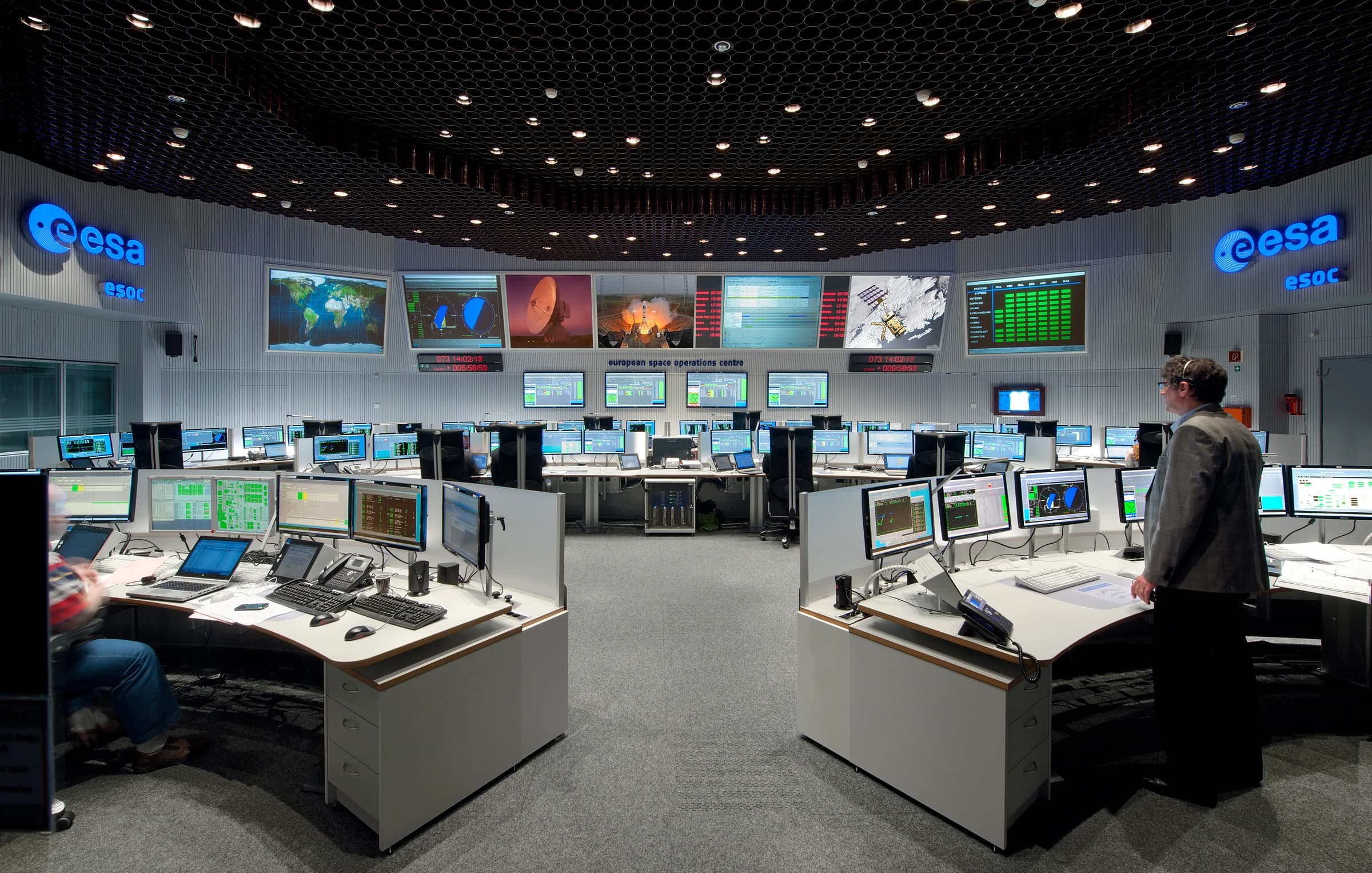
Cover: ESA’s main control room in Darmstadt, Germany, in an archival photograph published in 2012. Operational authority depends on control systems and teams as well as spacecraft. Source: ESA / J. Mai; CC BY-SA 3.0 igo.
This essay extends Singapore's Quiet Criterion for Technology Partnerships and The Third Pole in Orbit: OneWeb's Soul, DayOne's Method. The first examined sovereign deployability; the second proposed a Singapore-headquartered orbital-compute business with multinational capital and independent operating control. October's events show what service that enterprise would have to sell.
Singapore Space Agency is an independent research platform, not a government agency. The infrastructure and venture proposals below are the author's analysis.
1. The 90-Second Summary
LEO connectivity has become strategic infrastructure. Once essential missions depend on it, price and coverage cease to be sufficient purchasing criteria. A country needs to know who can change the service, which government can compel that change, and what remains usable afterwards.
On October 14, S. Jaishankar resisted describing India as a middle power. His broader warning concerned a world organised around chokepoints. Ukraine is the operational test: restrictions associated with terminal movement disrupted military missions even while other connectivity remained available.^[1]^[2]^[3]
Ukraine's defence ministry reported restored connections above 400 km/h on October 24. The initiating authority behind the restriction remains contested. Ukraine was using the service and still could not see who had ordered the limit, or control the decision.^[4]^[5]
A third pole means an independently governed source of infrastructure alongside systems directed by major national powers. It describes operating independence, rather than the third supplier in a market that already includes European and other networks. A country can build its own system, share an independently operated one, or diversify commercial purchases. Independent infrastructure adds operating authority; diversified subscriptions improve continuity where the alternatives remain usable.
Singapore should organise regional demand around such an operating company. Its first customers would buy continuity for specified lawful missions; its expansion would buy control over bottlenecks that ordinary capacity contracts cannot remove. The commercial test is demanding: customers must value those added capabilities enough to fund them. The earlier orbital-compute proposal faces the same test before its architecture hardens.
2. Jaishankar Named the Problem: Chokepoints
The October 14 exchange came from a Bloomberg New Economy Forum panel in New Delhi with Rishi Sunak, Anita Anand and Kevin Rudd. Jaishankar called India a power in the middle and argued that the middle-power label constrained its potential. He then turned to independent policies and arrangements among countries pursuing their own interests.^[1]^[6]
For satellites, the line that matters is his “world of choke points.” Rare earths were an obvious example, he said, but finance, sanctions and control over the dollar also created leverage. Sunak argued for making a country indispensable through its capabilities. Sunak is describing the supplier's advantage. Jaishankar is describing the customer's exposure.^[2]^[6]
A network's ability to authorise terminals, set geographic boundaries and change movement limits can determine which national choices are practicable. Jaishankar did not propose a satellite policy on that stage. His account of chokepoints fits Ukraine: access to an indispensable system can stay conditional after the equipment has been bought.
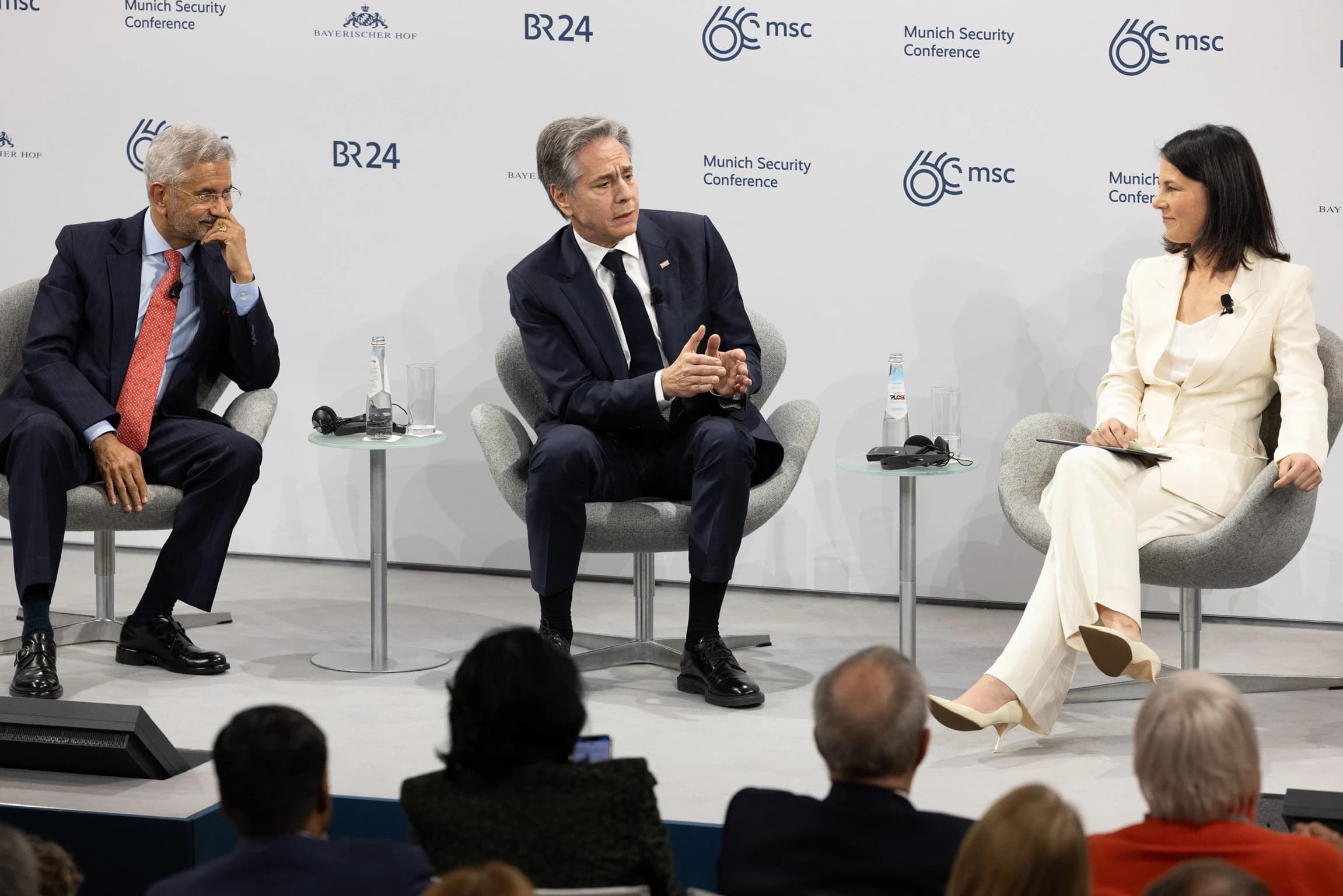
Source: Chuck Kennedy / U.S. Department of State; Public domain.
3. Ten Days Exposed the Chain of Control
Starshield is SpaceX's government and national-security offering, encompassing communications, Earth observation and hosted payloads. Its secure communications can draw on Starlink infrastructure. The product name does not imply that each Ukrainian terminal uses an entirely separate satellite fleet.^[7]^[8]
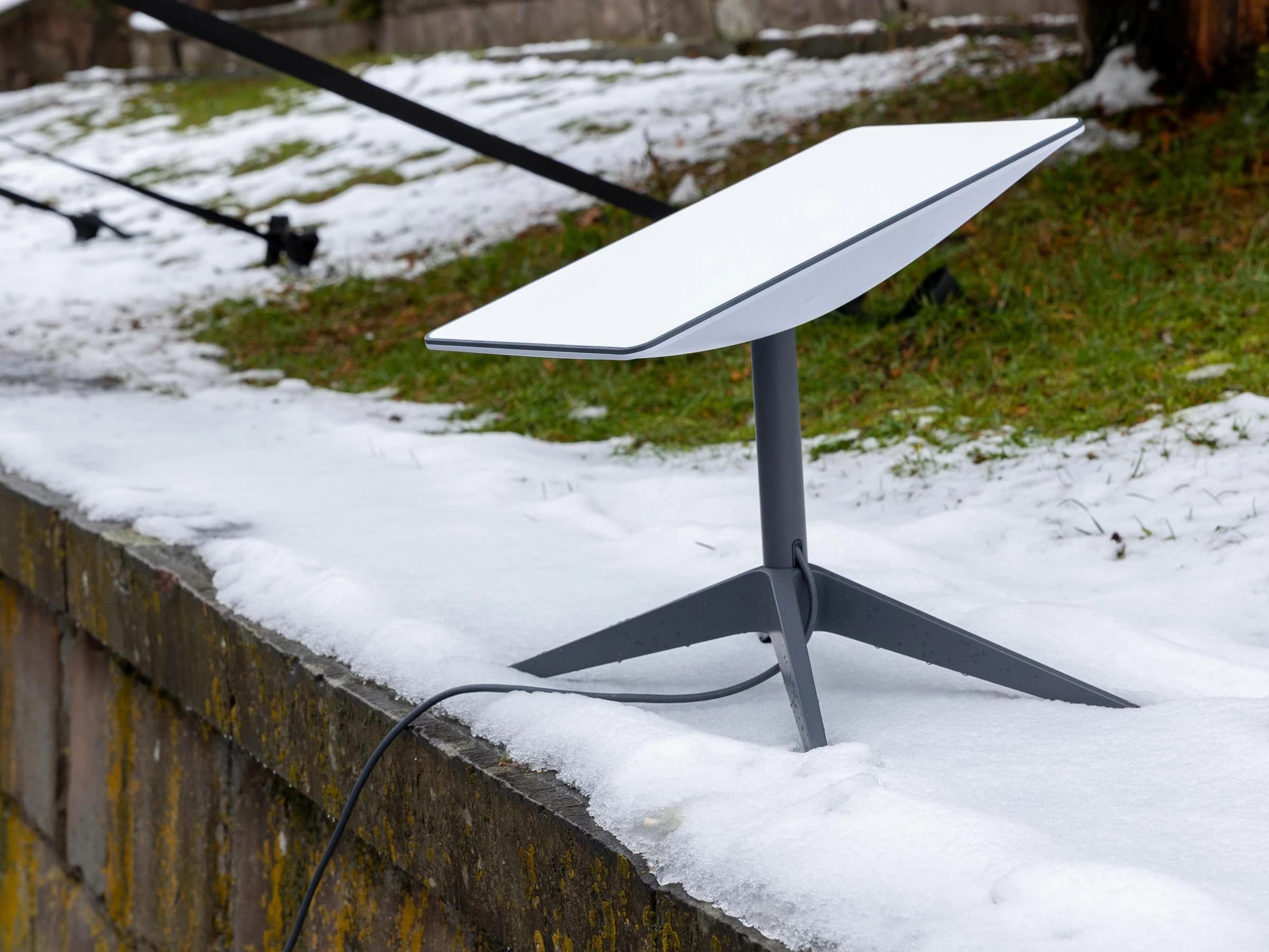
Source: Odapresste; CC BY-SA 4.0.
The effect was selective but serious. A connection available to a stationary command post could fail on a fast interceptor or supply drone. Preserving ordinary internet access did not preserve every military use.
The public explanations did not converge. Reuters' October 15 report, citing two US officials and a Western official, located the order inside the White House; a senior US official denied a presidential request. The Wall Street Journal subsequently attributed the decision to Musk, citing US officials and people familiar with the matter.^[14]^[15]
On October 21, Marco Rubio denied an administration directive or foreknowledge. His remarks distinguished private commercial contracts from Starshield's US military procurement relationship, even as he assigned responsibility to the company. That distinction leaves the central question open: what authority did the government retain, and what could the contractor change?^[16]
In his October 24 X post, Musk alleged that Ukraine had used civilian Starlink for prohibited offensive drone strikes and said a loophole had been closed. He continued to assign Starshield control to the US government. Ukrainian technical advisers disputed the commercial-use explanation. His statement about Starlink therefore does not settle responsibility for the Starshield restriction.^[17]
Poland's foreign minister Radosław Sikorski challenged Musk publicly as a supplier to European customers. The issue had spread beyond an individual customer's technical complaint to trust in an infrastructure provider.^[18] Russian refinery strikes formed part of the political backdrop, but Reuters reported that Starshield did not operate over Russia. Those strikes cannot simply be treated as demonstrated uses of the restricted service.^[8]
SpaceX supplied and operated the infrastructure. The US government procured the relevant military service. European partners supported access. Ukraine depended on it in combat. Paying for a service, contracting for it and operating it are distinct powers. The beneficiary may hold none of the decisive permissions. The congressional letters are valuable because they ask for that authority to be traced; they are requests for evidence, not completed findings.
Suppliers have legitimate reasons to enforce authorised uses, prevent hostile access and comply with binding restrictions. Offensive and defensive missions may require different permissions. Those boundaries belong in the procurement specification, with change authority and emergency procedures identified before a mission depends on the service. Musk's stated rationale does not by itself establish what happened to the separately procured Starshield service.
Earlier episodes show why the answer cannot be to remove network controls. In February, Ukraine and SpaceX used verification and whitelisting to block unauthorised Russian terminals. Centralised exclusion helped Ukraine.^[19]^[20] The 2022 Crimea operation, publicly debated in 2023, concerned a separate dispute about coverage and authorised uses.^[21] October concerns restrictions on authorised Ukrainian military access.
Ukraine shows what opaque dependence costs. A third pole still has to prove it would do better, through its contracts, operating authority and performance under disruption.
4. Public Authority Also Depends on Connectivity
Military demand makes the consequences acute, but civilian institutions already depend on the same infrastructure. Before the Philippines' May 2025 elections, COMELEC deployed Starlink transmission kits in the Davao region. The equipment transmitted results; separate machines read ballots and counted votes.^[22]

Source: Wide Awake!; CC BY 4.0.
The kits show a civilian public function running on a commercial network. They are not evidence that the provider interfered in that election. Ukraine shows how far the authority problem can run in a war. An Asian civilian buyer still has to judge how likely a similar failure is, and what it is worth paying to avoid.
Election results moved over a commercial network. Authentication, service availability and an alternative transmission route matter even when the provider has no role in counting. A delayed connection can obstruct administration and weaken confidence without changing a single ballot.
Public discourse involves a different mechanism. An access network governs whether and how users connect; a platform governs recommendations, moderation and distribution within its service. Musk's interests in both SpaceX and X put those forms of influence close together, but shared ownership is not evidence that satellite controls manipulated an election. Each mechanism needs its own evidence.
Policy here has to keep institutions functioning and leave citizens able to communicate. Domestic ownership without accountable restrictions can reproduce arbitrary shutdowns at home. Sovereignty requires legitimate authority over the infrastructure, including limits on how that authority is exercised.
5. The Alternatives Have Their Own Sovereigns
SpaceX reported more than 11,000 Starlink satellites in LEO on October 6. Eutelsat describes a OneWeb constellation of more than 650. OneWeb is already a non-US option, but spacecraft counts alone cannot measure regional capacity, terminal support or high-speed military authorisation.^[23]^[24]
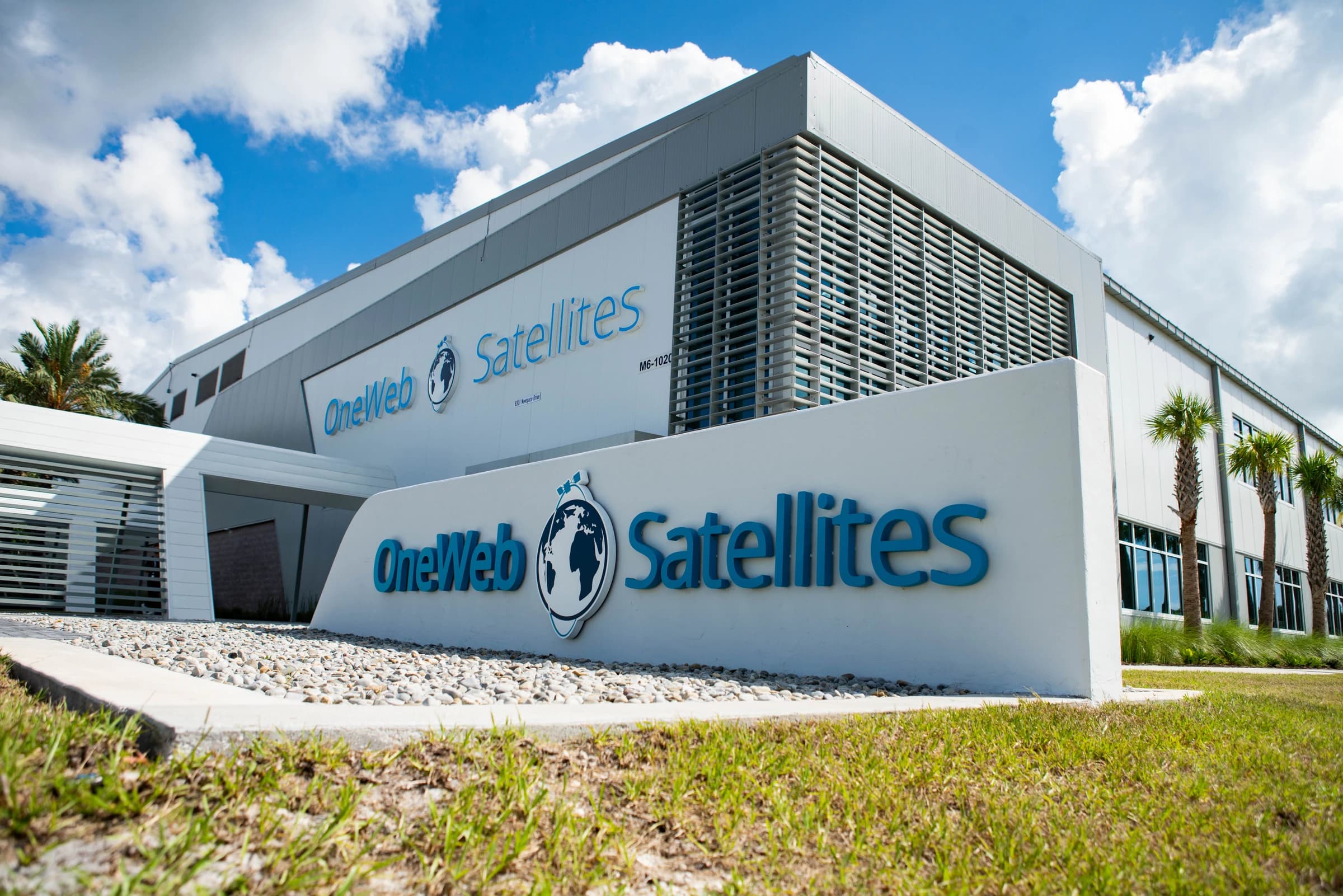
Source: Anthony Quintano; CC BY 2.0.
Europe's IRIS² remains future capacity. The Commission's August implementation agreement specified 348 satellites, comprising 330 in higher LEO and 18 in MEO, with first launches in 2029. Its defence and security emphasis expresses Europe's demand for autonomy. An Asian customer would still need its own access rights.^[25]
OneWeb's shareholders do not make the network neutral. Eutelsat's post-recapitalisation prospectus records the French state at 29.65%, Bharti Space at 17.88% and the UK government at 10.89%. Eutelsat tells the UK Parliament that OneWeb is UK-licensed and UK-operated under UK jurisdiction. A foreign customer's rights cannot be read from that shareholder register.^[26]^[24]
The choice extends beyond Europe. Amazon reported an Army demonstration in October, adding another US supplier rather than another home jurisdiction.^[27] China's Qianfan and Guowang programmes are expanding the potential supply base: MIIT reported Qianfan had launched 256 satellites by September 16, and Xinhua reported a further satellite-internet batch in October.^[28]^[29] Those launch counts are not yet an equivalent service for an overseas mission. Choosing a Chinese network also relocates sovereign dependence; it does not abolish it.
Ukraine's own interest in an alternative is concrete. Nokia and ICEYE signed an October 22 letter of intent with its defence ministry to explore sovereign satellite communications, with an intended architecture covering national ownership and control of satellites, ground systems and terminals. The announcement establishes a development proposal, without a deployed replacement or demonstrated delivery economics.^[30]
The market already has competing architectures, political relationships and different stages of readiness. An off-the-shelf neutral equivalent for every Starshield mission is not among them. Another usable option still has to be built.
6. Independence Has to Survive the Supply Chain
A contract cannot make prohibited service lawful. Applicable mandatory rules can override private arrangements; the UNIDROIT Principles expressly preserve them. The operator's licences, export restrictions, sanctions exposure and emergency powers sit alongside its governing-law clause.^[31]

Source: Bernt Rostad; CC BY 2.0.
Singapore adds its own jurisdiction to that assessment. BIS states that US-origin items subject to the Export Administration Regulations remain subject wherever located; certain foreign-made items can also fall within the rules through controlled content or specified direct-product tests. The classification, destination, end user and end use matter. American components do not make every service automatically prohibited, but a Singapore address does not erase applicable US controls.^[39]
Singapore Customs separately controls listed strategic goods and related technology transfers. Singapore's 2022 measures against Russia included export and financial restrictions. A Singapore company would therefore operate within a state that makes its own security decisions. No customer can be offered immunity from those decisions.^[40]^[41]
A credible service needs a dependency map for each mission: the network and terminal authorisations, software and key-management powers, equipment and spare-parts sources, gateways, backhaul and relevant restrictions. Two suppliers may share a licensing dependency or essential component. More jurisdictions can add veto points unless an alternate path remains legally and technically usable when one fails. These are engineering and procurement questions to resolve before calling the service independent.
These are proposed procurement requirements, not disclosed terms of Ukraine's contracts. For a civilian buyer, the promise might be that shore-to-vessel reporting continues after one commercial provider withdraws. A military buyer needs separately agreed uses, geography and government authorisations. Neither product should promise service in defiance of binding law. Where a government or reseller signs, the ultimate user needs defined beneficiary rights and a way to invoke them.
The earlier third-pole essay proposed capped, non-controlling sovereign and strategic capital, competitive procurement and professional management. Each customer would protect its own contracted capacity; a state investor would gain no unilateral right to interrupt another customer's service.^[32] That design addresses investor interference. It cannot neutralise the investor's state or the laws governing a supplier.
Founders and management must also be bound by documented authority over contracted mission permissions. Emergency restrictions need review deadlines and retained records. Collective vetoes should be narrow enough to preserve operating speed; access to sensitive mission information should remain restricted. Replacement funding must survive a change in the founding coalition.
Independence should be measured by the functions the company can keep running after a supplier or participant withdraws its cooperation. Customer-owned keys, a local gateway and a diversified shareholder register each help with a particular risk. None establishes that result on its own.
7. Capacity Must Be Available Where the Crisis Happens
A smaller country cannot reproduce a leading constellation's factories, launches and user base simply by declaring connectivity strategic. It should first specify which essential functions must survive, where, and for how long.
An illustrative civilian programme with 10,000 endpoints, 25% simultaneous use and 2 Mbps per active endpoint needs 10,000 × 25% × 2 Mbps = 5 Gbps. A regional emergency can correlate demand; all endpoints using the same rate together would need 20 Gbps. These are workload assumptions, not a capacity order. Each procurement must also specify locations, traffic types, peak demand, latency, acceptable interruption and restoration time.
Retail subscriptions provide a useful price reference, but a poor proxy for assured capacity. Starlink's US maritime page, checked on October 27, listed Global Priority starting at $250 a month for 50 GB and $1,150 for 1 TB. It also warned that maximum speeds were not guaranteed and would fall during congestion.^[45] Monthly data allowances do not reserve 5 Gbps over a particular crisis region. Neither price establishes what an independent operator would pay for wholesale capacity or lawful continuity commitments.
An exercise should disable the primary provider, load the alternate path with representative crisis traffic and measure essential services. It should remove a gateway or terrestrial backhaul route as well. Fibre, radio, GEO and MEO may carry different parts of the workload. Messaging that survives on a higher-latency path is useful even when a time-sensitive mission does not.
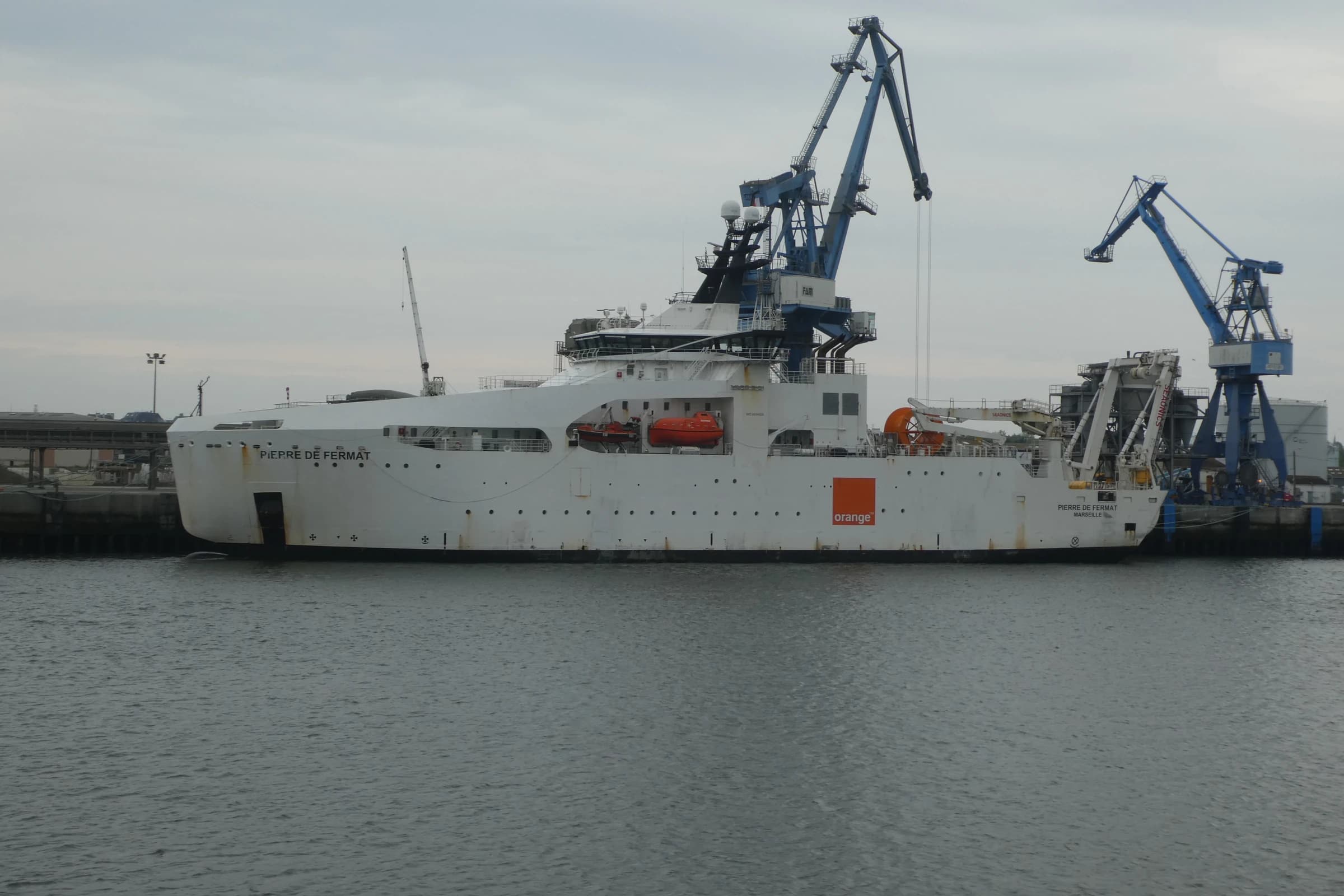
Source: Pmau; CC BY-SA 4.0.
A local gateway provides routing, resilience or security functions. It does not confer authority over satellite scheduling, terminal authorisation or the upstream operator's software; laser-linked constellations can route to other gateways.^[33] The specification must distinguish loss of a physical gateway from revocation of service permission. Passing the first test says nothing about the second.
Eutelsat reported €297 million of LEO revenue for the year to June 2026, up 69.5% like for like.^[34] A growing alternative business makes additional procurement possible. Its global revenue says little about spare capacity over a particular customer. Reserved regional capacity, simultaneous crisis demand and the restrictions on each path have to be quoted together. That quote belongs on the operator's cost side.
8. Singapore's Business Must Earn More Than a Reseller's Margin
India has the market and industrial scale to build domestic capability while buying useful foreign services. Its communications minister named Starlink, Jio Satellite Communications and Eutelsat OneWeb as licensees on October 9, with commencement subject to security and regulatory requirements.^[35] Market admission and control over essential services remain separate decisions.
Singapore's opportunity is to assemble customers, operating expertise and capital across a fragmented region. Existing businesses already do much of the integration. Can Marine's February agreement buys OneWeb capacity for maritime customers, including merchant shipping and offshore energy. SES markets managed services integrating GEO, MEO, LEO access and terrestrial networks.^[36]^[43] A new company must improve on those offers; network aggregation and an SLA alone do not create a new category.
PIL's 2024 Sustainability Report says it completed a fleetwide Starlink rollout for crew use and planned further shipboard operational integration in 2025.^[44] Fleet operators of that kind are candidates for an operations-continuity product. The disclosure establishes spending on connectivity, not a commitment to buy this proposal. Can Marine could be a delivery partner or competitor. COMELEC's transmission deployments point to a different public buyer, purchasing a fixed election-period service rather than a vessel subscription.^[22]
The initial product should protect a small set of valuable functions: ship-to-shore operational messages, essential remote-site backhaul or public-agency reporting. The budget owner must identify the interruption it is paying to avoid and the restoration time it needs. Crew entertainment and ordinary broadband are poor places to hide a sovereignty surcharge. Military missions require a separately authorised product; public standby capacity requires a public availability payment rather than an assumed commercial cross-subsidy.
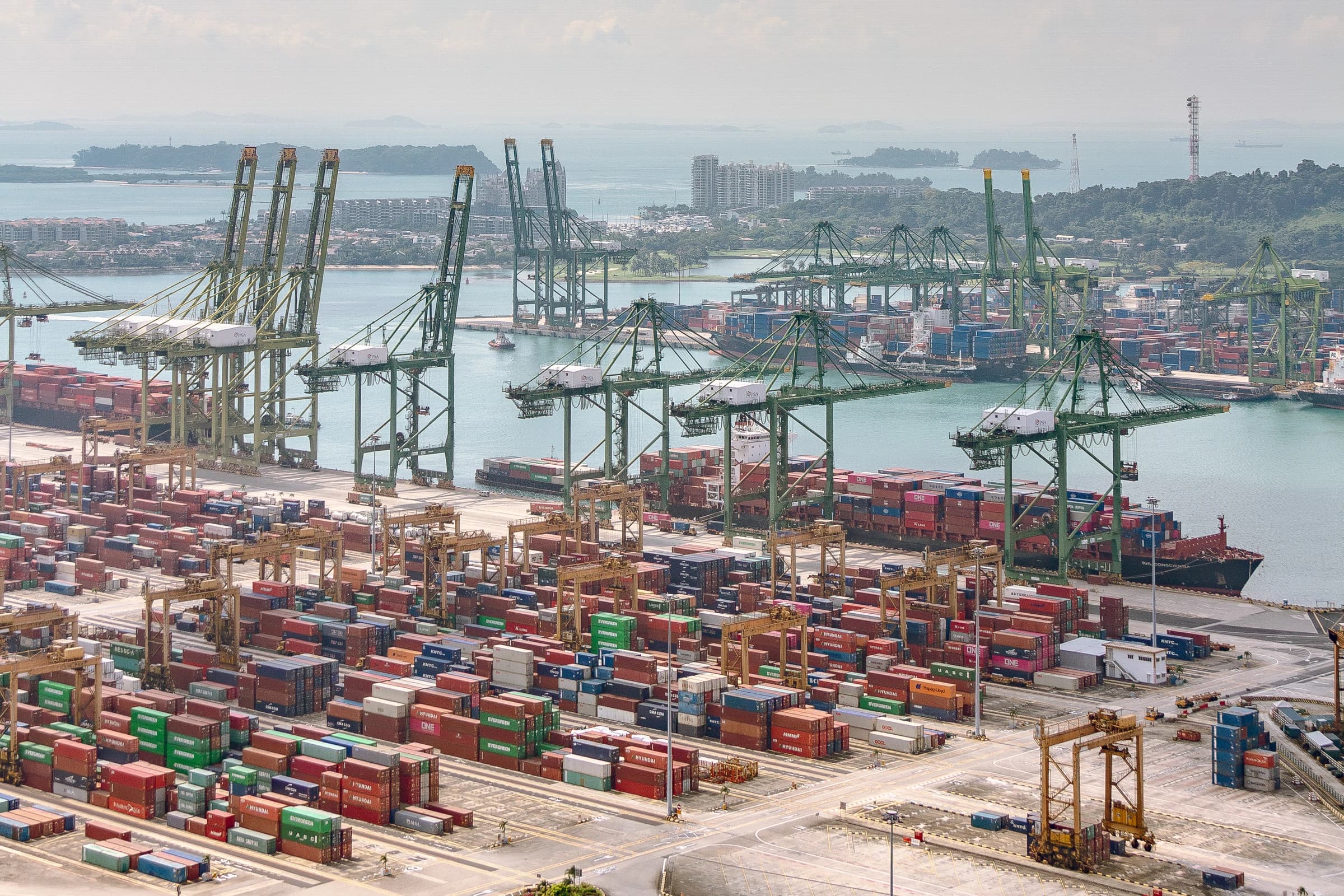
Source: Aatu Dorochenko / Aaaatu; CC BY-SA 4.0.
The service has a credible premium only where it adds a capability the buyer cannot obtain on acceptable terms elsewhere: reserved capacity under simultaneous demand, customer protections over mission changes, or a usable route after one supplier withdraws. Each claim needs a contractual right, an operating procedure and a demonstration. If existing providers can meet the requirement more cheaply, buying their service is the better answer.
No wholesale quote is public. The following author-designed annual feasibility test, denominated in US dollars, uses an assumed fee instead. The company charges $1,000 per vessel per month for an additional continuity service; customers retain their ordinary primary connections and pay separately for installation and terminals. The $4 million operating budget and 20% contribution target are management assumptions. The $1,000 fee is a price to take to buyers. No one has agreed to pay it. This maritime business is separate from the hypothetical 10,000-endpoint civilian workload above.
The residual is a procurement ceiling, not an estimate of capacity cost. The contribution must still support corporate overhead, financing, taxes and reinvestment; it is not net profit or a funded constellation. At 250 vessels, the same fee generates only $3 million, below the assumed operating budget before buying any capacity. At 1,000, quoted network commitments above $5.6 million would miss the target unless fees rise or other costs fall. Regional concentration and common crisis demand can make capacity costs rise unevenly with customer numbers.
This is a demanding sale: a $1,000 incremental fee can be substantial beside the retail prices above. A buyer must value protected operational continuity, not merely another internet connection. Signed multi-year minimum payments should cover committed operating and supplier obligations before expansion. One-off installation revenue should not be presented as recurring demand. A service with no acceptable capacity quote or no paying commitments has not passed this test.
There are three steps from that business towards independent infrastructure. First, the company can operate routing, customer equipment and support while purchasing authorised upstream services. This can deliver useful resilience, with upstream vetoes disclosed. Second, it can acquire mission-specific reserved capacity and enforceable operating rights; reservation alone still leaves the constellation's control elsewhere. Third, owned or jointly financed payloads, satellites and control systems can remove identified upstream dependencies. That stage needs sufficient coverage for the contracted mission, terminal and software authority, spectrum and market access, replenishment finance and a supply chain that supports continued operation. The operational threshold is whether the company can authorise its supported terminals, schedule contracted capacity and route essential traffic without the withdrawn supplier's control system. A hosted payload still depends on its host wherever the host retains those powers.
The asset stage also runs through Singapore's own licensing. IMDA's orbital-slot guidance considers the technical, financial and legal ability to construct, launch and operate the proposed system. Singapore filings also do not grant access in every customer market.^[42] The investment decision should compare an owned or shared system with long-term purchased capacity on the same missions and the same failure conditions. A cheaper contract that fails under the withdrawal it is meant to survive is not a substitute. A new satellite that leaves the same bottleneck in place earns no sovereignty premium.
The earlier third-pole proposal was the same bet. Singapore can organise a company accountable for delivery while regional partners supply customers, capital and competitively procured technology. Its moat would be operating rights, demonstrated continuity and commitments to pay. Demand aggregation is the route to financing those capabilities; it is not itself control over orbit.
9. Orbital AI Extends the Same Design Question
Orbital computing would extend dependence from carrying a task to executing it: who allocates processors, changes priorities, updates software and releases the result? Customer-held keys do not answer those questions. The earlier orbital-compute proposal has to be tested on those questions.

Source: Oleg Alexandrov; CC BY-SA 4.0.
Google's September Suncatcher update and Planet's subsequent launch announcement describe experimental work, not proof of a competitive orbital cloud. Radiation, power, heat rejection, interconnection and launch economics still have to be solved.^[37]^[38]
A paid demonstration should therefore test useful computation and customer control together: scheduling rights, capacity allocation, data and model portability, updates and exit. The communications record is a reason to design those rights early. Buyers still have to show that the orbital workload is worth paying for. Governance has to be in the first payload design. Scale should follow paid workloads that justify the engineering.
10. The Next Proof Is Operational
Congress has requested Starshield's instruction chain, contractual powers and notification record. The October 15 letter sought an initial briefing by November 1.^[9] Those records may settle responsibility for this episode; they will not transfer operating authority to Ukraine.
The alternatives have concrete tests. Nokia and ICEYE need a funded programme and delivery specification. IRIS² needs to meet its revised deployment plan. A Singapore-led company needs multi-year paying commitments, a capacity quote inside its revenue envelope, and a demonstration in which one supplier's withdrawal leaves the promised functions running on a legally usable path. Asset investment must then show which remaining external control it removes and how renewal will be funded.
If buyers decline the continuity fee, or existing providers can supply equivalent rights and performance at lower cost, the case for a new operating business weakens. A public mission may still justify capacity that commercial customers cannot fund. Its sponsoring agency would then need an explicit procurement decision and budget.
Countries with strategic ambitions should invest in the ability to keep essential choices practicable. For those unable to sustain a full national system, a commercially disciplined third pole deserves customers, capital and institutional support. The company must progressively turn purchased access into capabilities it can operate and sustain. Singapore should begin assembling that business now, releasing investment as paying commitments and operating rights become executable contracts.
All information comes from public sources, including official records, company disclosures and attributed reporting. The proposals and cost scenarios represent the author's independent views and are not investment, legal or procurement advice.
Sources45 entries with source notes and links
- Bloomberg — India Is a Power in the Middle: Jaishankar, recorded excerpt and transcript(finance.yahoo.com)
October 14, 2026. Primary recording syndicated by Yahoo; title objection and subsequent autonomy discussion. A-grade source for the speaker's statements.
- The Indian Express — World of chokepoints: Countries weaponising finance, resources, says Jaishankar(indianexpress.com)
October 14, 2026. Divya A; contemporaneous account of the Bloomberg panel and remarks on finance, sanctions and rare earths. B-grade reporting of the speech.
October 14, 2026. Frontline accounts, movement threshold and interrupted missions. B-grade reporting.
October 24, 2026. Official report of connectivity above 400 km/h. A-grade source for the ministry's monitoring claim.
- Senator Richard Blumenthal — Congressional inquiry into Starlink and Starshield(blumenthal.senate.gov)
October 22, 2026. Documentary requests and summary of conflicting accounts. A-grade source for the inquiry.
October 14, 2026, syndicated by Swissinfo. Forum context and Sunak/Anand positions. B-grade source.
- SpaceX — Starshield(new.spacex.com)
Company description of government services, communications, Earth observation and hosted payloads. A-grade source for product positioning; performance assertions are company claims.
October 23, 2026. Movement thresholds, military applications, geographic limit and continued restrictions. B-grade source.
- US Senate Foreign Relations Committee — Shaheen and Tillis request an inspector-general investigation(foreign.senate.gov)
October 15, 2026. Primary inquiry; operational allegations remain attributed reports. A-grade source for the request and questions.
- US Senate Foreign Relations Committee — Senators demand answers from SpaceX(foreign.senate.gov)
October 19, 2026. Primary oversight request. A-grade source for the inquiry, not proof of its allegations.
- Senator Elissa Slotkin — Bipartisan request to restore Ukrainian Starshield capability(slotkin.senate.gov)
October 23, 2026. Contract renewal and federal-authority questions. A-grade source for the request.
October 24, 2026. Official account of restoration and military uses. A-grade source for the president's statements.
October 26, 2026. Ukrainian state-affiliated outlet's account of General Staff testing; underlying logs not independently inspected. B-grade attributed report.
- Reuters — Order to limit Starshield for Ukraine came from inside White House, sources say(reuters.com)
October 15, 2026. Accessible Reuters syndication. Erin Banco and Gram Slattery; anonymous-source attribution and an official denial. B-grade reporting.
Corroborating linksAccessible Reuters syndication
October 21, 2026. Alexander Ward, Natalie Andrews and Josh Dawsey; attribution to US officials and people familiar with the matter. B-grade reporting, not a disclosed order or completed finding.
October 21, 2026. Accessible reproduction of the transcript. Denial of a directive and distinction between commercial contracts and military procurement. A-grade primary statement; the denial is not independently established by the transcript.
Corroborating linksAccessible reproduction of the transcript
- Reuters — Ukraine reports restored operation; Musk alleges breach of commercial terms(au.marketscreener.com)
October 24, updated October 25, 2026. Reports Musk's original October 24 post and the Ukrainian rebuttal. B-grade reporting; original post is an A-grade primary statement of his position.
Corroborating linksMusk's original October 24 post
- Polskie Radio — Sikorski addresses Musk over service restrictions(polskieradio.pl)
October 14, 2026. Reproduces the minister's X statement. B-grade source for reporting; primary embedded statement for his position.
February 5, 2026. Official verification programme. A-grade source.
- Starlink — Ukraine terminal verification instructions(starlink.com)
Provider instructions for verified access. A-grade source for service policy.
- RAND — Lessons from the War in Ukraine for Space(nllp.jallc.nato.int)
Provider discretion, early arrangements and offensive-use disputes. B-grade research synthesis hosted by NATO's lessons-learned portal.
- Philippine Information Agency — Comelec Delivers Satellite Transmission Kits Across Davao Region(pia.gov.ph)
April 11, 2025. Deployment and distinction between transmission and counting. A-grade official account.
- Starlink — Space Safety: The Need for Improved Data Sharing Between Operators in Low-Earth Orbit(starlink.com)
October 6, 2026. Company reports more than 11,000 Starlink satellites in LEO; count is attributed and dated. A-grade company disclosure.
- Eutelsat — Written evidence to the UK Joint Committee on the National Security Strategy(committees.parliament.uk)
2026. Company's description of OneWeb's UK licence, operations and jurisdiction. A-grade source for corporate evidence.
- European Commission — The European Union Is Accelerating and Reinforcing IRIS²(defence-industry-space.ec.europa.eu)
August 7, 2026. Revised 348-satellite architecture and 2029 first launches. A-grade source for programme plans.
- Eutelsat — UK prospectus(investir.eutelsat.com)
Post-recapitalisation shareholding. A-grade corporate disclosure.
- Amazon — US Army C5ISR completes demonstration of Amazon Leo(press.aboutamazon.com)
October 13, 2026. Company report of a demonstration, not validation of equivalence to Ukraine's operational requirements. A-grade company disclosure.
- China Ministry of Industry and Information Technology — Qianfan constellation satellite launches bring total to 256(wap.miit.gov.cn)
September 16, 2026. Cumulative satellites launched, not a count of operational foreign-service capacity. A-grade official account.
October 10, 2026. Launch announcement; SAMR's July 3 statement identifies Guowang and Qianfan as satellite-internet projects covered by the new spacecraft interfaces standard. A-grade official accounts.
Corroborating linksSAMR's July 3 statement
October 22, 2026. Letter of intent and intended customer ownership/control. A-grade source for the announcement; capability is prospective.
Primary principles text preserving applicable mandatory rules; not legislation or a determination of the law governing any undisclosed satellite contract. A-grade source.
July 12, updated August 28, 2026. Prior analytical venture design: capital-control separation, customer protections, competitive procurement and demand-gated deployment. Author's earlier analysis, not independent primary evidence or an announced company.
- Starlink — Progress Report 2025, Network Resilience(starlink.com)
Optical inter-satellite links, multiple gateways and internet points of presence. A-grade company technical disclosure; the distinction between local gateway presence and network control is author analysis.
- Eutelsat — Full Year 2025–26 Results(eutelsat.com)
August 7, 2026. LEO revenue and like-for-like growth for the year ended June 30. A-grade corporate disclosure.
October 9, 2026. Officially reported ministerial position; licence and operational clearance distinguished. A-grade source for the government's account.
February 23, 2026. Commercial distribution agreement. A-grade company announcement.
September 24, 2026. Experimental purpose and thermal, radiation and interconnection challenges. A-grade source for Google's research plans.
October 1, 2026. Company announcement distributed by Business Wire; prototype launch, initial contact and commissioning. A-grade source for the company's mission report.
Checked October 27, 2026. Scope of EAR jurisdiction over US-origin and certain foreign-made items; classification and transaction-specific requirements remain necessary. A-grade official guidance.
Updated September 1, 2026; checked October 27. Controls over listed goods and related technology transfers. A-grade official guidance.
March 5, 2022. Historical example of Singapore's own export and financial restrictions, not a claim that all Russia-related activity is prohibited. A-grade official statement.
Version 2, September 23, 2025, section 2.2; satellite communication station licensing. Technical, financial and legal credentials; separate station authorisation. A-grade official guidance.
Corroborating linkssatellite communication station licensing
Checked October 27, 2026. Company offers managed GEO/MEO/LEO and terrestrial integration; no independent validation of every advertised performance claim. A-grade company description.
p. 43. Company reports completed fleetwide crew Starlink rollout and planned 2025 operational integration; not evidence of an order for the proposed continuity service. A-grade company disclosure.
- Starlink — US maritime service plans(starlink.com)
Live US page checked October 27, 2026: Global Priority starting at $250/month for 50 GB and $1,150/month for 1 TB; maximum speeds not guaranteed and congestion warning displayed. Regional retail reference only, not wholesale capacity or crisis availability pricing. A-grade provider offer.
Continue reading
1 May 2026 · 13 min read
The Vendor Nobody Talks About: Singapore's Quiet Criterion for Technology Partnerships in 2026
OneWeb, Mistral AI, and Thales reveal Singapore's hidden procurement test: sovereign-sensitive technology must remain governable, deployable, and operationally durable.

12 Jul 2026 · 98 min read
The Third Pole in Orbit: OneWeb's Soul, DayOne's Method
A Singapore-founded Indo-Pacific orbital-compute venture is buildable only as a phased, demand-anchored operating company whose multi-sovereign capital cannot control it.
13 Oct 2026 · 34 min read
India's LEO Race: Jio's Sovereign Bet Needs Buyers, Starlink Needs a Decision
Musk’s Ambani feud exposes an unfinished access decision. Jio’s proposed sovereign constellation has financing capacity, but affordable household broadband alone is a weak return case.