
India's LEO Race: Jio's Sovereign Bet Needs Buyers, Starlink Needs a Decision
Musk’s Ambani feud exposes an unfinished access decision. Jio’s proposed sovereign constellation has financing capacity, but affordable household broadband alone is a weak return case.
Method & disclosure
Confidence: High for public regulatory and financial records; medium for reported constellation plans. Demand, price and capacity-load calculations are explicit sensitivities.
Review mode: Codex + Claude Code independent review
Writing support: AI assisted
Singapore Space Agency
On this page · 10
- 011. The 90-Second Summary
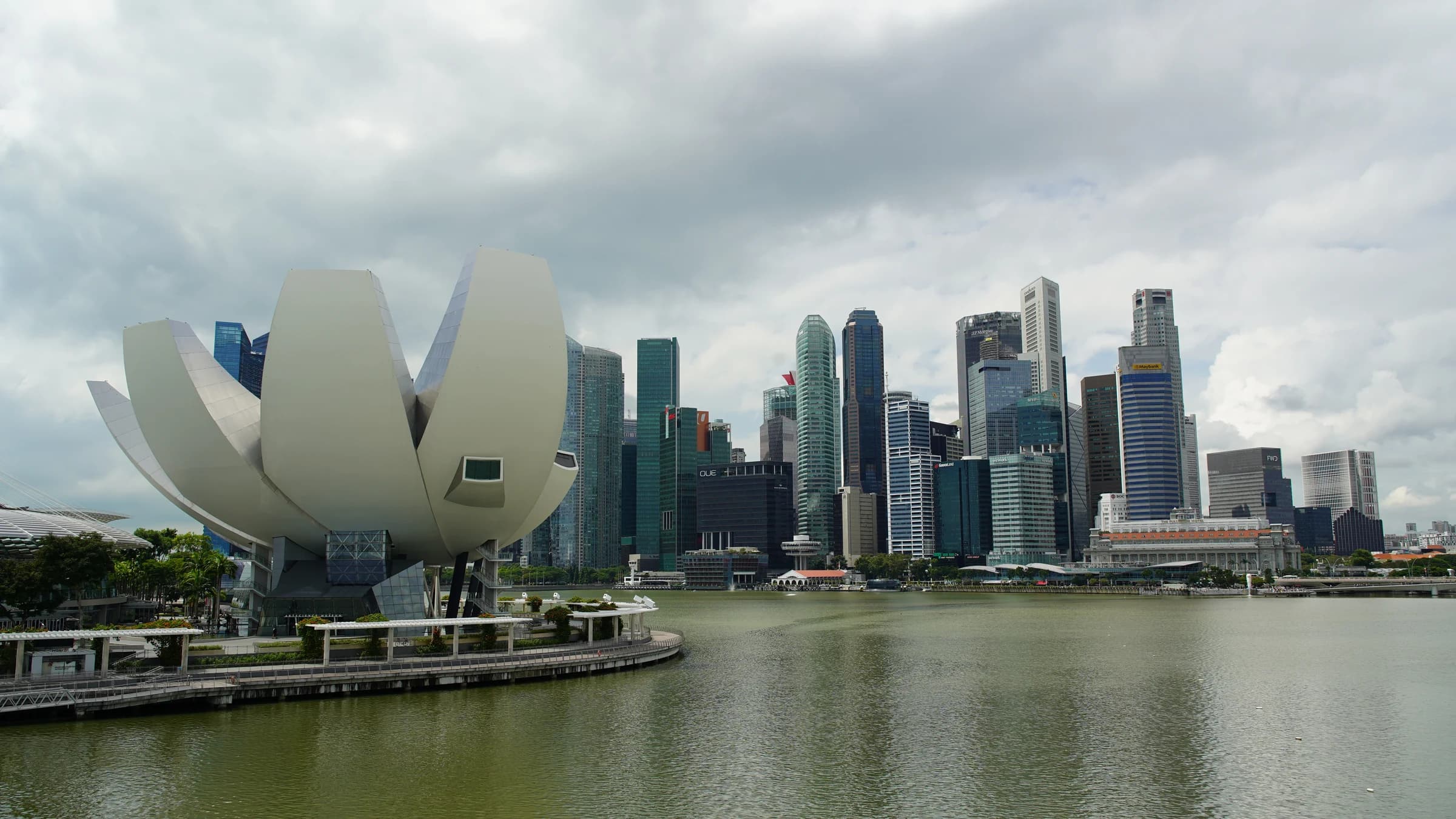
- 022. Five Days of Posts, Two Different Arguments
- 033. The Indian Replies Are Arguing About the Product, Too
- 044. India's Security Gate Changes the Network
- 055. The Customer and the Spacecraft Have Different Owners
- 066. Who Pays for the Sovereign Ambition?
- 077. Which Rocket Gets the 1,600-Satellite Order?
- 088. Security Is a Real Constraint. So Is Administrative Delay.
- 099. Singapore Is Already Inside This Contest
- 1010. The Five Events That Would Change the Assessment
Key findings
The argument in brief
- Starlink leads in delivered global service; Jio leads in Indian customer access, and both Jio and Airtel can distribute its rival.
- Technical security tests need a timetable; residual foreign-control risk needs stated conditions or a reasoned access decision.
- At assumed 5–10 Mbps loads, full-fleet capital recovery needs 1.5–5.2 times the terminal mix’s gross revenue per Tbps; lower loads and overseas capacity change the result.
- Jio can fund a strategic build, but signed customer commitments and heavy-launch procurement must turn its 1,600-satellite proposal into a business and a manifest.
India needs to price sovereign control and finish deciding foreign access. Musk has the operating network; Jio has the Indian customer and the balance sheet for a proposed 1,600-satellite fleet. Cheap household broadband is a weak standalone return case. Starlink's technical tests need a timetable, and the government's separate judgment about foreign control needs stated conditions or a reasoned refusal. Security cannot be solved by a calendar. It also cannot justify an unfinished decision indefinitely.
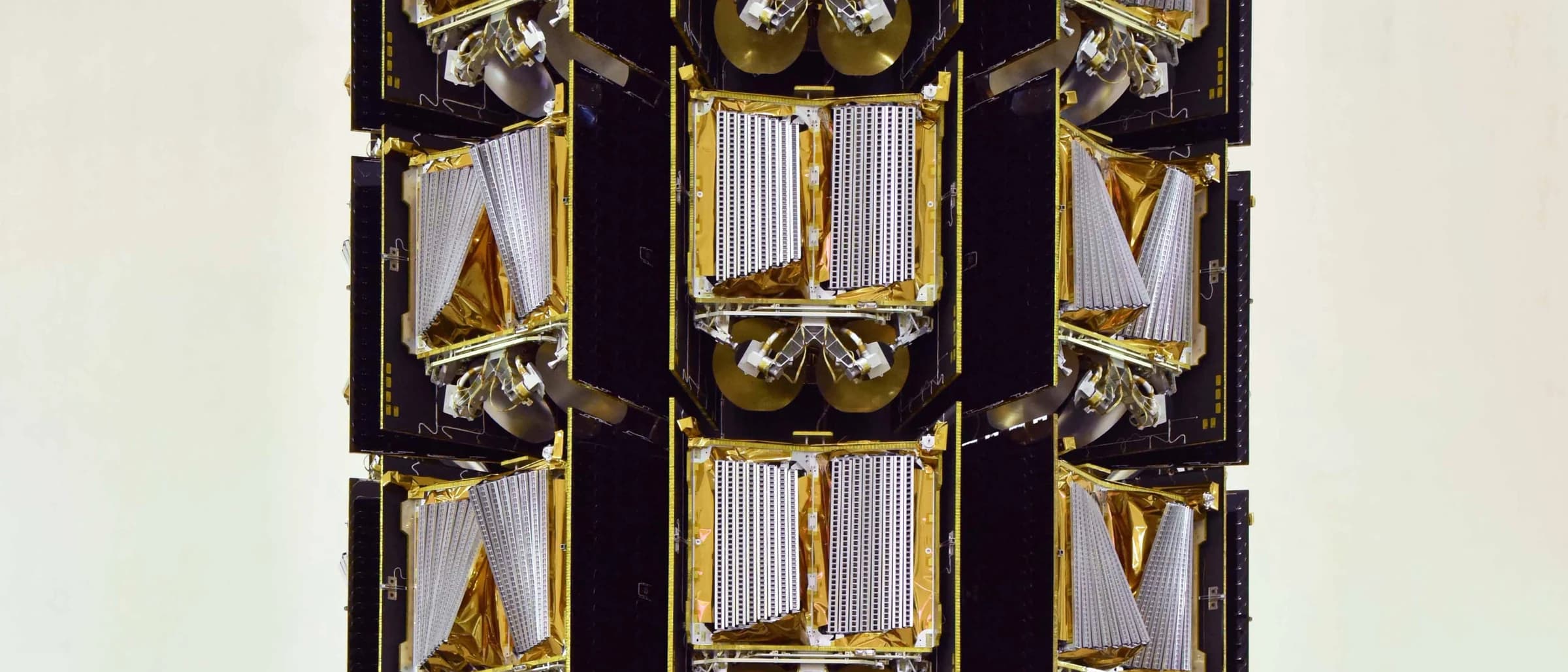
Cover photograph: OneWeb satellites stacked for the October 2022 LVM3 M2 mission. ISRO, source, ISRO Copyright Policy; cropped.
On October 7, Musk blamed unnamed Indian “oligarchs” for obstructing Starlink. The next day he named Mukesh Ambani. On October 9 he addressed the Reliance chairman as “Prime Minister Ambani”. Just after midnight on October 11 in India, he attacked Ambani's online defenders and said prices would have to become affordable if Indians would not buy the service.^[1]^[2]^[3]^[4]
The insult travels faster than the licence. Reliance Jio and Bharti Airtel have both agreed to distribute Starlink. Jio is simultaneously preparing its own sovereign LEO network. Its rival can become its supplier before becoming its competitor.^[5]^[6]^[7]
The exchange also lands immediately before Jio Platforms' planned IPO. October reporting targets an October 21 opening; the filed offer is a fresh issue of up to 270 million shares. Its proceeds primarily repay telecom debt and support general corporate purposes. The listing creates a capital-allocation question for a company already generating substantial cash, rather than a disclosed $10–15 billion satellite financing package.^[8]^[9]
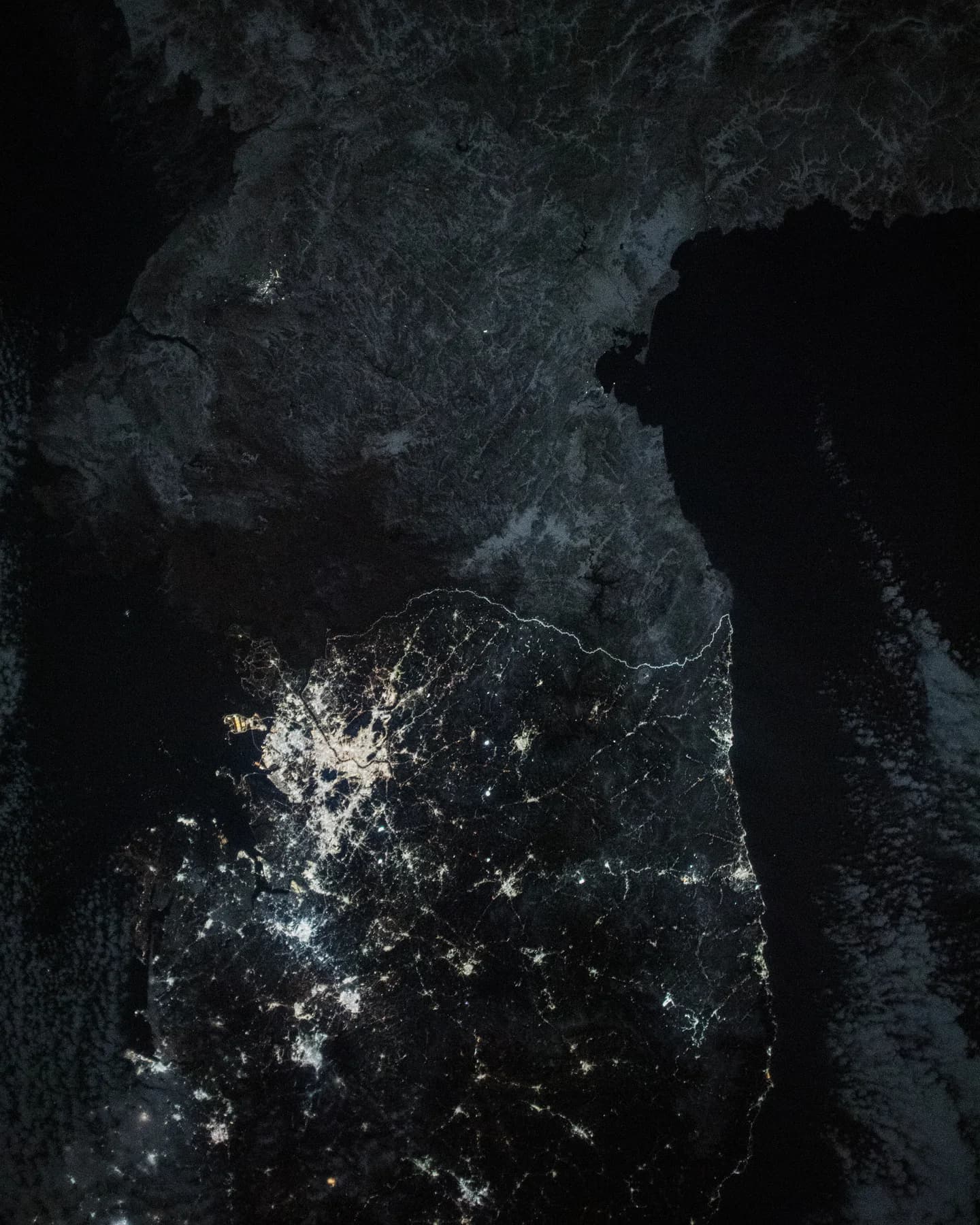
This is MGT-08 in “APAC From the Ground Up: A Market-by-Market Guide to LEO Connectivity”, following Korea and the earlier studies of Indonesia, Australia, Malaysia, Vietnam and the Philippines. It also continues the India work in India's Launch-Startup Tier and India's Launch Privatization, Audited. The missing variable in those articles was repeat payload demand. Jio now supplies a plausible source of that demand, with a large distance still separating a constellation proposal from a launch order.
Disclaimer: Singapore Space Agency is an independent private research platform, not a government body. This article draws on public records and represents the author's independent views. It endorses no operator or political party and is not investment advice. Figures identified as scenarios are analytical assumptions, not company guidance or market forecasts.
1. The 90-Second Summary
Starlink leads in delivered global service; Jio leads in access to Indian customers. Eutelsat OneWeb supplies an existing LEO alternative. Jio–SES uses foreign MEO/GEO capacity while Jio evaluates its own LEO fleet. Amazon Leo and Ananth's GEO project widen future supply. Indian commercial entry remains gated by security and spectrum decisions.^[5]^[6]^[10]^[11]^[12]^[13]
The government says all three licensed applicants are at broadly the same stage. Scindia identifies the Home Ministry as the security decision-maker. September's reported DCC decision advanced a 5% AGR spectrum charge, with a one-point concession for notified difficult areas; final Cabinet approval remained pending in October 12 reporting.^[14]^[13]^[15]^[16]
After admission, the constraint is paying demand. India's latest wireless monthly ARPU is ₹187.12. A hypothetical ₹2,000 satellite plan is 10.7 times that figure, although a household connection can serve several people. Institutions, backhaul buyers and enterprises are more promising than a mass household replacement story.^[17]
The terminal sensitivity model produces ₹1,176–6,600 crore of annual ecosystem billings. A separate backhaul scenario adds ₹240–1,800 crore. The totals use assumed connection counts and prices; they are not forecasts. At assumed 5–10 Mbps loads, the full-fleet capital yardstick needs 1.5–5.2 times the terminal mix's gross revenue per Tbps; lower loads can change that finding. Jio's existing cash generation makes a strategic fleet financially conceivable. The question is which satellite contracts earn a return and which expenditure buys control.^[18]^[8]
Technical assessment needs a deadline, residual foreign-control risk needs a decision, and sovereign capability needs explicit funding commitments. A 1,600-satellite proposal updates India's industrial ambition. Contracts will decide whether it updates India's launch manifest.
2. Five Days of Posts, Two Different Arguments
Across these five days, Musk moved from a personal accusation to a stronger argument about competition and price.
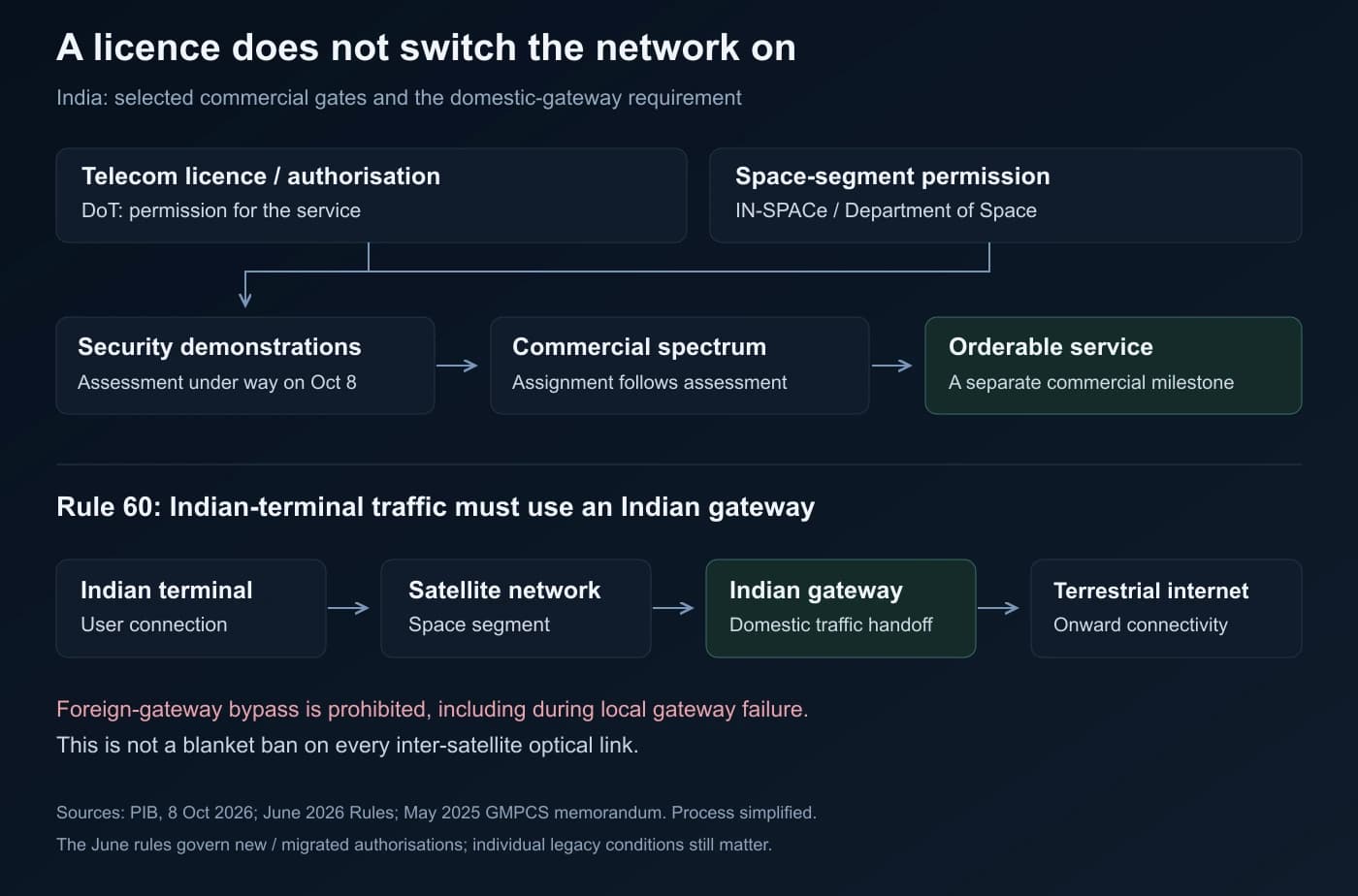
The October 8 question contains a factual error. Parliament had already named Starlink Satellite Communications Private Limited among the three holders of a Unified Licence with GMPCS authorisation in January 2026. The other two were OneWeb India Communications Private Limited and JIO Satellite Communications Limited. A licence and permission to commence commercial service are separate milestones.^[23]
The approvals have a history. DoT stopped Starlink's unlicensed pre-sales in November 2021. A government account dates its telecom licence to June 6, 2025, and its five-year Gen1 space-capacity authorisation to July 8, 2025. Starlink received provisional trial spectrum in September 2025.^[24] By October 2026 the remaining security and commercial-spectrum steps still prevented an orderable service.^[25]^[26]
That is roughly sixteen months from the telecom licence to the current dispute. Musk's claim about five years of compliance compresses different stages into one period; his reference to 165 foreign markets supplies no evidence that an Indian security test has been passed. The appropriate question is why the remaining decisions are taking this long.
Scindia's October 9 assertion that India does not allow monopolies is a policy statement; it does not answer the market-concentration question. TRAI's June-quarter data show Jio with 48.54% and Airtel with 36.31% of wireless internet subscriptions, a combined 84.85%. The measure is subscriptions, not unique people or the entire fixed-and-mobile market. It demonstrates concentration without proving that either company controls a regulator.^[17]^[27]
Musk has supplied no public evidence tying Ambani to a particular withheld clearance. A concentrated market still benefits from another source of supply.
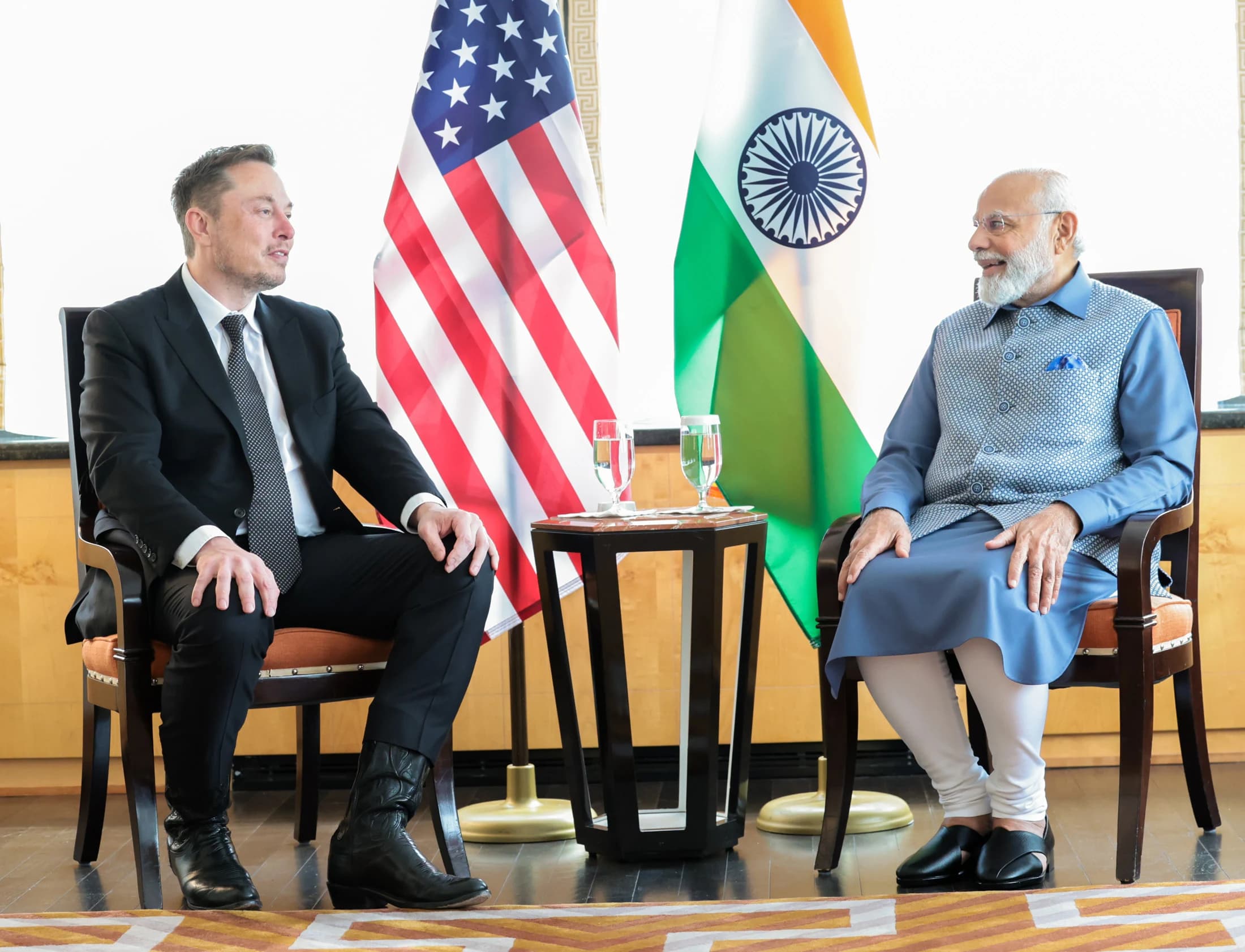
Photograph and licence · GODL-India · PIB original
3. The Indian Replies Are Arguing About the Product, Too
Two replies in this sample turn Musk's “Prime Minister Ambani” device back on him as “President Musk”. Beneath the joke are three objections: affordability, selective free-market principles and India's right to set its own rules. The pro-entry argument is that underserved users need another source of supply.
These are selected public posts in the Indian debate, not a representative sentiment sample; account nationality is unverified. Contemporary coverage also identifies the four replies to the October 9 letter.^[28]
The BYD comparison has a real policy basis: the US imposed a 100% Section 301 tariff on Chinese EVs in 2024. But the replies' leap from American restrictions to a Tesla monopoly or Musk personally controlling access is unsupported. Governments can protect industries for multiple reasons; one company's benefit does not establish a private veto.^[33]
Musk's pricing answer deserves more credit than his personal allegation. Yet a service can be too expensive for most households and still compete effectively for lucrative enterprise contracts, remote affluent customers or government tenders. The two claims are compatible across different segments. The likely size of a niche is also a poor reason to exclude a compliant product.
Saini asks who can afford the product. The jurisdiction replies ask who sets the rules. The pro-entry posts ask who loses while approval is pending. Operational control during a crisis is a further question raised in the security record below, separate from these replies.
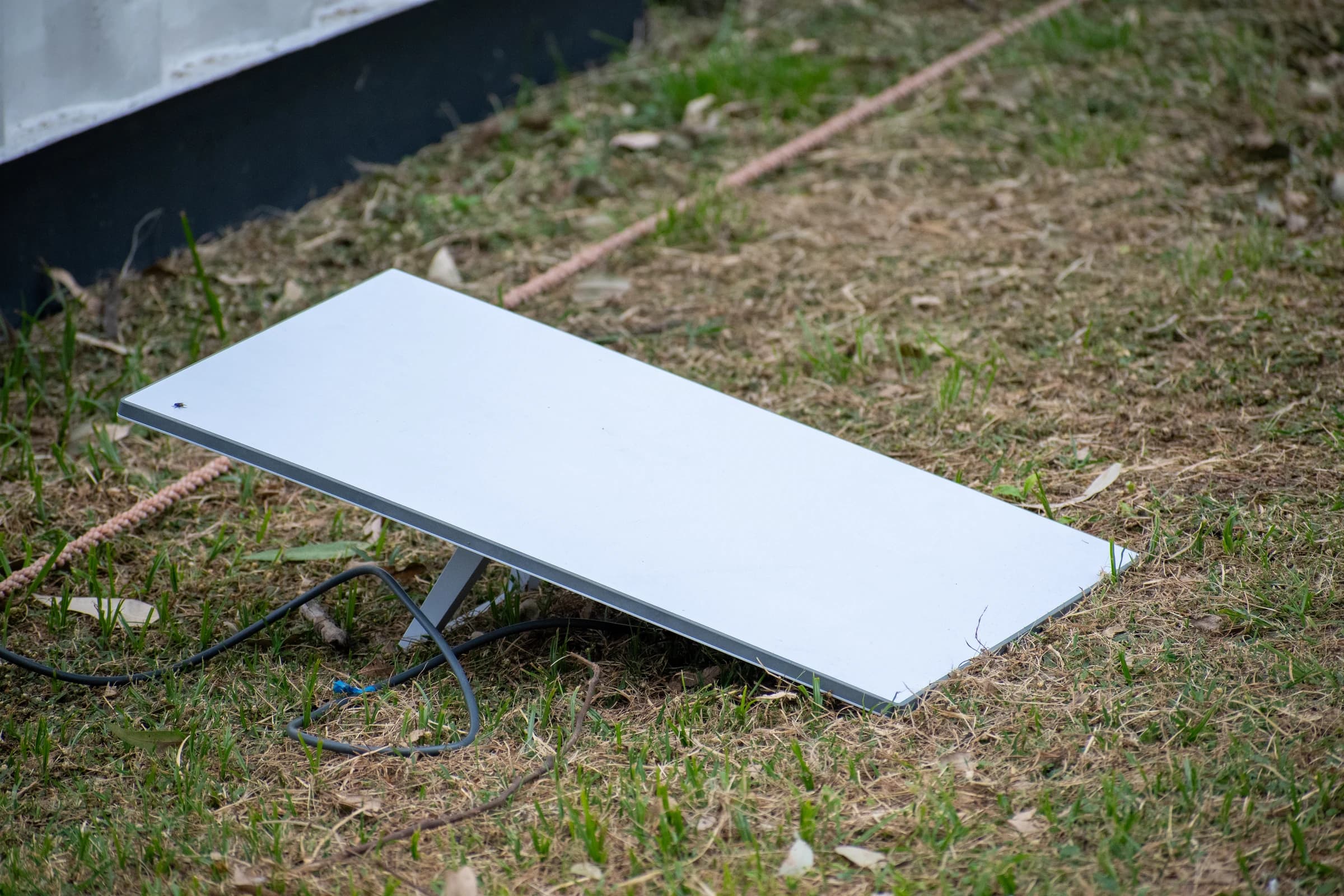
Photograph and licence · CC BY-SA 4.0
4. India's Security Gate Changes the Network
India is asking for more than a local sales subsidiary. The operational bargain brings satellite connectivity back inside domestic jurisdiction.
DoT's May 5, 2025 GMPCS security memorandum already requires domestic handling, terminal registration and separate security clearances for voice/data and fixed/mobility services. Clause 19 prohibits foreign-gateway bypass via inter-satellite links during Indian-gateway failure or optimisation; clause 23 bars direct terminal-to-terminal communication through satellites and requires traffic to use the Indian gateway. The memorandum is reproduced in TRAI's April 2026 consultation, Annexure 2.2, printed pages 252–253.^[34]
The June 2026 successor rules preserve that domestic-gateway requirement in Rule 60 and require lawful-interception demonstrations under Rules 34 and 62. They govern new or migrated authorisations. Rule 61 starts a twelve-month network rollout clock after spectrum assignment; it leaves the preceding security-review period without that deadline.^[35]
Both texts prohibit foreign-gateway bypass. Neither quoted provision is a blanket ban on every optical hop. A packet crossing an optical link and returning through an Indian gateway is a different route from a packet exiting abroad. Additional operator-specific conditions and tested implementation still determine the permitted path.
The commercial consequence is substantial. A global constellation can normally use distant ground infrastructure to extend coverage and recover from local failure. A domestic-gateway requirement makes Indian gateways, their terrestrial connections and their failover design part of the national service's critical path. More satellites do not fix a shared terrestrial bottleneck.
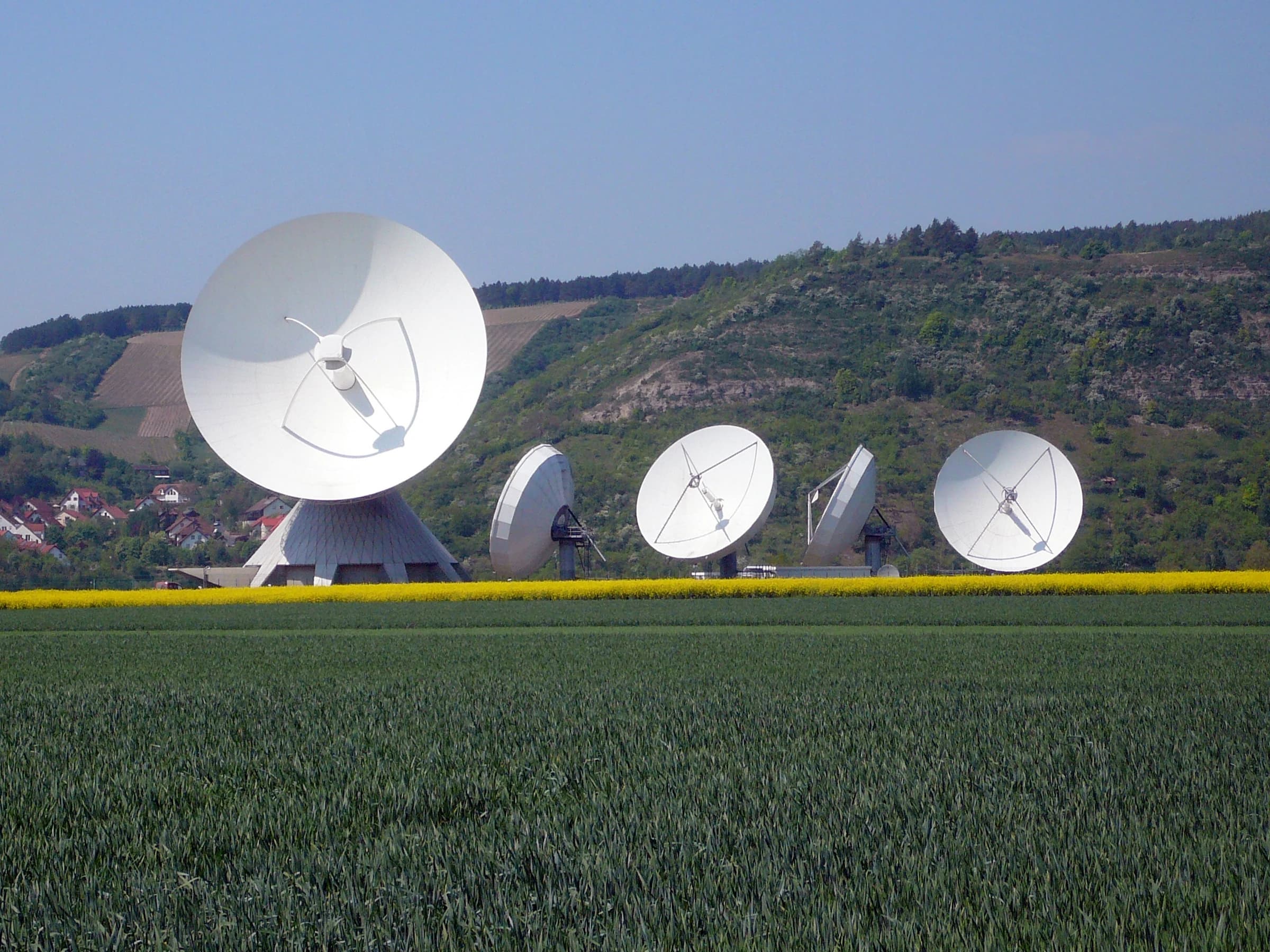
Photograph and licence · Public domain
On October 7, SpaceX's Lauren Dreyer said Starlink had built 20 Indian gateway sites, with hundreds of antennas and India-specific controls. That is a named executive's readiness claim, not certification that the security assessment has passed.^[36] It is nevertheless evidence of a local infrastructure commitment that Musk's broader suggestion of a simple political veto leaves out.
The government has a strong case for testing routing, lawful interception and geofencing. Scindia says the Ministry of Home Affairs decides security clearance and that applicants may start individually after compliance and charging decisions are complete.^[16] October 8 reporting also identified Starlink's FDI approval as pending, alongside earlier questions about its ownership structure.^[37]
A disputed June report illustrates one reported concern about foreign control. Bloomberg, recounted by Inc42 on June 10, attributed an effective MHA approval freeze to unnamed sources after reports of unlicensed Starlink terminals in Iran. Officials reportedly feared conflicting foreign-government demands during a crisis. Starlink rejected the account as misleading and said discussions remained active and productive. Neither a formal freeze order nor an official finding that the company failed India's tests was published in that account.^[38]
The primary rules show why technical compliance and residual control risk are different decisions. The May memorandum expressly reserves changes for national-security requirements and prevails over conflicting Unified Licence terms. Rule 62(3) prohibits satellite-network use that prejudices India's sovereignty and security.^[34]^[35] Routing, interception and geofencing can be demonstrated; acceptable foreign-operator risk remains a policy judgment when governments disagree.
Existing levers already include domestic gateway/terminal control facilities under Rule 62(2), real-time traffic monitoring under Rule 60(1)(d), regulated foreign remote access under memorandum clause 15 and prior approval for architecture changes under clause 20. Clause 27 requires a phased programme targeting at least 20% ground-segment indigenisation five years after commercial launch.^[35]^[34] Those controls matter. They still do not transfer spacecraft command authority or eliminate the foreign owner's exposure to another government's demands. An Indian gateway cannot compel that owner to maintain or replace spacecraft; a test calendar cannot settle the residual risk.
The technical track should have non-sensitive completion status and review windows, with confidential critical deficiencies documented to the applicant and an oversight body. The policy track needs a reasoned decision: identify enforceable local-control and audit conditions, accept the residual risk under those conditions, or refuse on a stated legal ground. Classified details can stay confidential. There is no obligation to certify a risk the state considers unacceptable; there should be an obligation to decide which conditions could make entry acceptable.
This turns the government's existing promise of individual admission into an accountable process. Sixteen months after the telecom licence, neither a company nor a prospective school customer can tell from a generic “security pending” statement whether the remaining problem is a failed demonstration, an ownership clearance or an unresolved policy judgment.
The spectrum debate has moved beyond TRAI's May 2025 recommendation of 4% AGR, a ₹3,500-per-MHz annual minimum and ₹500 per urban subscriber per year.^[39] September reporting says the DCC approved 5% AGR, a one-point concession for notified difficult areas and five-year administrative assignment extendable by two years. It rejected the ₹500 urban levy. October 12 reporting still described a Cabinet note in preparation.^[15]^[14]
The spectrum charge is only part of the levy. Unified Licence clause 18.2.1 requires an 8% AGR annual licence fee, inclusive of the USO levy, confirmed by DoT's GMPCS service page; spectrum charges are additional under clause 18.3. Clause 18.2.1 also sets a minimum annual licence fee of 10% of the relevant entry fee from the second authorisation year.^[40] The proposed combined burden is therefore 13% AGR, or 12% in qualifying difficult areas. Treating the middle terminal model's ₹3,060 crore billings as AGR for comparison gives ₹397.8 crore at 13% and ₹367.2 crore at 12%. The spectrum portion alone is ₹153 crore at 5%, against ₹122.4 crore at 4%. Actual AGR definitions and eligibility determine the invoice. These charges materially reduce service margins; administrative assignment still carries a price.
5. The Customer and the Spacecraft Have Different Owners
India's satellite market is often compressed into Starlink versus Jio versus OneWeb. That frame confuses companies selling connectivity with companies controlling spacecraft.
OneWeb should not be erased because Musk is louder. Eutelsat has a functioning LEO constellation and committed renewal procurement: 440 replacement satellites ordered from Airbus, with approximately €1 billion of export-credit financing announced in February 2026. That is the kind of supplier-and-financing evidence a new Indian constellation must eventually produce. Bharti's backing supplies a route into India's ecosystem; it does not turn the whole network into an Indian-owned sovereign fleet.^[41]^[43]
The Jio–SES arrangement contains a useful commercial precedent too. Its 2022 announcement identified Jio as an anchor customer in a milestone-dependent capacity and equipment agreement of roughly $100 million, and described access to up to 100 Gbps.^[10] Reuters subsequently reported Orbit Connect India's space approvals in 2024.^[42] JIO Satellite Communications, Parliament's named telecom licensee, and the capacity JV occupy different contractual roles. Partner capacity does not let Jio bypass the same pending Indian commercial gate or sell Starlink before SpaceX is cleared.
India also already owns commercial orbital capacity. GSAT-N2, funded and operated by NSIL, reached GEO after a Falcon 9 launch in November 2024 and supplies 48 Gbps for Indian broadband and other services. NSIL's demand-driven model secured capacity with Indian service providers before launch.^[44]^[45] Sovereign ownership and foreign launch procurement already coexist. A national LEO fleet must add low latency, resilience or control worth paying for above this GEO baseline.
On the ground, Hughes Communications India has a six-year OneWeb distribution agreement, and Nelco participated in NSIL's GSAT-N2 network demonstration.^[46]^[47] Their enterprise and integration roles remain relevant even though the argument on X centres on Jio and Airtel. D2D has its own actors: Vodafone Idea–AST SpaceMobile announced a partnership in June 2025, while BSNL–Viasat demonstrated satellite-powered two-way messaging in October 2024.^[48]^[49] A messaging trial, dedicated-terminal broadband and a future high-capacity phone network carry different revenues and approvals.
Jio's domestic LEO proposal is the important new development. Reliance's own AGM transcript says the company is evaluating a sovereign constellation while leasing capacity from leading global providers. At India Mobile Congress, Jio displayed a roughly 1,600-satellite, 23-ground-station plan. July reporting said the proposal had been judged technically sound by IN-SPACe, ISRO and DoT's WPC wing. September reporting put a test flight in September 2027, mass deployment from early 2028, roughly 400–450 satellites by 2030, and completion around 2035.^[7]^[50]^[51]^[52]
The detailed timetable comes from attributed reporting. Jio's June prospectus says it is developing satellite-constellation solutions, while acknowledging uncertainty over deployment, competitiveness and approvals. A full-fleet manufacturing contract and funded launch manifest have yet to appear in these disclosures.^[8]
For now, Starlink has an existing global network ready for an admitted market. Jio intends to use partner capacity while developing its own supply. Once the relevant services clear the gate, its retail outlets, enterprise relationships and terrestrial integration can make a supplier transition less disruptive for buyers. Distribution is an advantage that survives a change of constellation.
There is an obvious tension: incumbents can welcome Starlink as a wholesale complement while resisting a direct retail offering that takes customers or reprices premium connectivity. The 2025 distribution agreements show that cooperation and competition coexist. They neither prove Musk's obstruction allegation nor invalidate his concern about incentives.
Domestic ownership can improve control over scheduling, service policy, software and replenishment. It does not make imported chips, specialised payloads, foreign launch access or terminal technology automatically domestic. Each dependency needs a procurement plan. An Indian brand on a foreign-capacity product and an Indian-owned operational constellation offer different degrees of control.
Photograph and licence · CC BY-SA 4.0
6. Who Pays for the Sovereign Ambition?
The pricing argument should begin with an error that has survived for ten months. ₹8,600 per month and ₹34,000 for equipment were not confirmed Indian Starlink prices. SpaceX said the December 2025 website display was dummy test data. Musk's October 10 promise of affordable pricing supplied no replacement tariff.^[53]^[4]
There is a real affordability problem without using that false price. TRAI records 1,114.17 million internet subscriptions, including 448.08 million rural subscriptions. Rural density was 49.07 subscriptions per 100 people, against 129.03 in urban India. Wired access accounted for 47.73 million. Multiple subscriptions explain why urban density exceeds 100; these figures cannot be subtracted from population to count unconnected people.^[17]
Satellite can close a geographic gap. It cannot, by itself, close an income gap. A household lacking money for terrestrial data does not become a viable satellite buyer because a beam reaches its roof.
Photograph and licence · CC BY-SA 4.0
Bangladesh had 5,389 Starlink customers in May 2026, according to BTRC data reported by Ajker Patrika, with substantial corporate usage. Its reported monthly plans were Tk4,200 Lite / Tk6,000 Residential, plus Tk47,000 equipment.^[54] Population scaling would ignore different terrain, fibre competition and procurement. The useful comparison is that technically successful service has produced a small paying base.
Jio's commissioned industry study, included in its prospectus, cites February 2026 African entry prices of roughly ₹2,500–4,500 per month and expects Indian FWA to limit mainstream satellite adoption.^[8] That is an issuer-sponsored competitive assessment. A ₹2,000 residential input sits below that range and therefore assumes an aggressive improvement in affordability. The 2030 cases below test a successful rollout requiring years of adoption, cheaper terminals or organised procurement. All connection counts, prices, hardware costs, loads and margins are analytical sensitivities, not forecasts, company guidance or booked orders.
The terminal model counts one billable service per active site across all suppliers. Prices exclude hardware and taxes. Fixed enterprise sites are separate from mobile backhaul, D2D, aircraft and ships; those pools are considered below. The ₹6,000 institutional and ₹18,000 enterprise inputs test willingness to pay for shared access and managed service.
Annual billings = active connections × monthly service price × 12. One crore = ₹10 million.
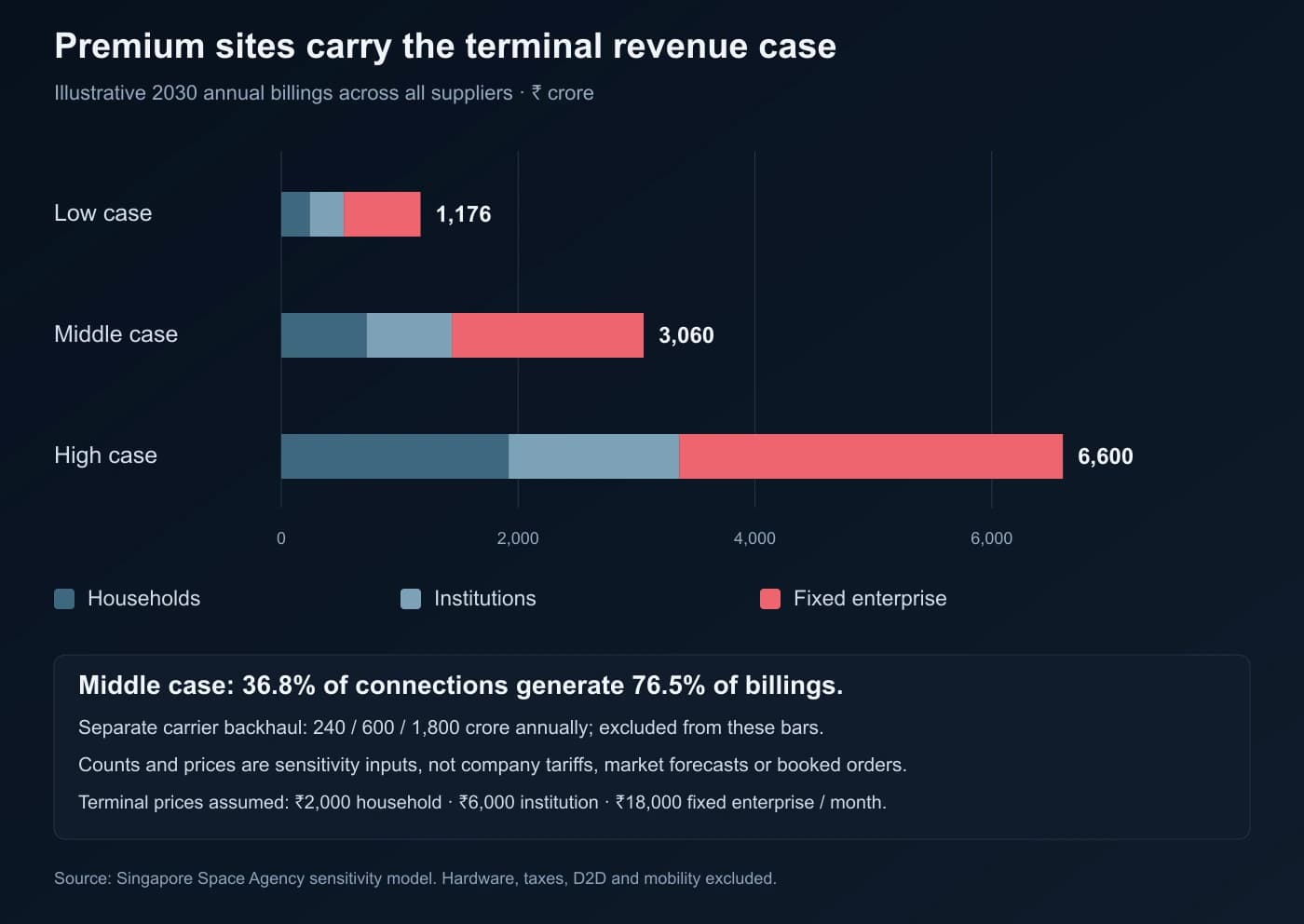
The middle case's institutional and enterprise customers provide 76.5% of billings from 36.8% of connections. At the same connection counts, raising residential price from ₹2,000 to ₹4,000 would lift total annual billings from ₹3,060 crore to ₹3,780 crore, assuming no demand loss. Procurement quality and price elasticity matter more than a population denominator.
A 100,000-site institutional programme at the assumed ₹6,000 tariff costs ₹720 crore annually, before terminals, installation, power and local Wi-Fi. At a hypothetical ₹30,000 installed terminal cost, its initial equipment bill would add ₹300 crore. Shared access can make connectivity useful to more people, but it does not remove the institution's recurring budget obligation or guarantee useful per-user throughput.
Backhaul needs a separate calculation because the payer is a mobile operator, public network or infrastructure customer. The following sites are additional carrier links, excluded from the terminal table. A school using a community connection and a tower carrying that community's traffic must not both be counted as the same satellite contract.
The 5,000–25,000-site range is an order-of-magnitude placeholder for separately procured carrier links, rather than a count inferred from unconnected villages. A village does not necessarily require its own satellite backhaul contract. The middle terminal-plus-backhaul case is ₹3,660 crore, and the high case ₹8,400 crore. Jio's own backhaul can also save terrestrial extension costs or sell more mobile service; those benefits belong in a corporate investment case even where they produce no external satellite invoice.
The proposed network’s capacity also limits how many connections it can serve. September reporting puts the completed Jio network at 4–4.8 Tbps over India, supplied by 30–32 overhead satellites; earlier July reporting used 4.5–5 Tbps. These are evolving design claims, not measured sellable capacity.^[52]^[51] If Jio carried all 475,000 connections in the all-supplier middle case, an assumed busy-hour average of 5–10 Mbps per provisioned connection would consume 2.375–4.75 Tbps in aggregate. This average incorporates contention; it is not a 100-Mbps plan rate multiplied by every customer. Backhaul needs additional capacity, and geographical beam loading can bind before the national total. At an illustrative 25–30% terminal share, Jio would use only roughly 0.59–1.43 Tbps for that mix, leaving room for other uses. This compares a full-network design with a 2030 market sensitivity; it does not establish actual oversizing or unused capacity. Beam geography and service quality still decide how much can be sold.
D2D changes the terminal cost barrier, but its wholesale price still matters. At an assumed ₹10 per active user per month received by the satellite provider, 10 million users generate ₹120 crore annually; 100 million generate ₹1,200 crore. At ₹30, those outcomes triple. These stand separately from the terminal and backhaul tables. Device compatibility, spectrum, actual usage and capacity determine whether a large mobile denominator produces those payments.
The reported $10–15 billion full-fleet cost remains a planning range.^[18] Spreading it over ten years gives an annual capital-recovery yardstick of ₹9,000–13,500 crore at the model's fixed ₹90/$ assumption. It excludes interest, operations and renewal. The reported 2030 deployment is only 400–450 satellites, so that full-fleet yardstick is not a 2030 funding shortfall. Phase costs and fixed ground investments have not been disclosed well enough to construct a reliable phase payback.
Instead, ask what the mature fleet would need. The middle terminal mix bills roughly ₹64,421 per connection per year. Recovering ₹9,000–13,500 crore annually would require 1.40–2.10 million such connections if the operator retained every rupee of billings. At an assumed 50% contribution margin after service costs, it would require 2.79–4.19 million. Competing suppliers, distribution payments and financing costs increase the requirement further. Wholesale contracts, government resilience payments, export sales and corporate savings can reduce how much retail must carry. The model exposes the required inputs; it cannot establish an absolute ceiling on Indian demand.
For Jio alone, financing the full-fleet yardstick from the model's terminal mix would require 1.40–4.19 million connections across the two retention/margin cases. At 5–10 Mbps, these imply roughly 7–42 Tbps, against September's 4–4.8 Tbps India design. In revenue-density terms, the yardstick needs ₹1,875–3,375 crore per India-visible Tbps-year before costs; the assumed terminal mix bills roughly ₹644–1,288 crore per Tbps-year. That is approximately a 1.5–5.2-fold gross density gap, doubling at a 50% contribution margin.
Load changes the result. At 2 Mbps, the 100%-retention case needs 2.8–4.2 Tbps, broadly within the reported design; the 50%-margin case still needs 5.6–8.4 Tbps. At 1 Mbps, the latter falls to 2.8–4.2 Tbps. These are busy-hour averages, so the lower-load case must still deliver a service worth the assumed price. Full-fleet returns depend on revenue, load and service cost together.
Higher billings per unit of India-visible capacity, more capacity, public payments for control and reserve availability, or corporate savings can improve the case. Wholesale volume consumes capacity too. Export customers can use capacity over other regions, subject to landing rights and gateway permissions, and therefore need not draw on the same India-visible pool. A new customer category helps when it pays more per unit of constrained capacity or uses a different regional pool.
Jio can fund strategic infrastructure beyond the satellite segment's revenue, but the history matters. Its filings show:^[8]^[55]
Falling capex after the 5G build improves financing room. It also makes FY2026's EBITDA-less-cash-capex figure the three-year peak, rather than a normal-year allowance. The ₹9,000–13,500 crore yardstick is 21–32% of that peak, 45–68% of FY2025's measure and several times FY2024's. Against operating cash flow, it ranges from roughly 12–23% across the three years, before existing capex and other commitments. EBITDA less cash capex is non-GAAP and cannot be treated as distributable free cash. Debt, taxes, future investment and performance still compete for funds. The balance sheet supports a credible strategic build, not effortless spending.
The prospectus earmarks up to ₹27,500 crore for prepaying debt at its telecom operating subsidiary, Reliance Jio Infocomm (RJIL), with general corporate purposes capped at 25% of gross proceeds.^[8] Debt reduction can create future financing room. It does not identify which satellite manufacturing and launch invoices will be paid. The distinction is decisive: Jio has credible financing capacity; a standalone Indian household-broadband return case remains unproven. Shareholders may fund sovereign insurance, defend premium customers or capture overseas demand. Each is a different reason to build.
7. Which Rocket Gets the 1,600-Satellite Order?
The proposed fleet is also the first development that could materially challenge the demand constraint in the earlier India launch articles. Unlike another spaceport or another rocket factory, a broadband constellation consumes repeated launches.
ISRO's October 2022 LVM3 OneWeb mission carried 36 satellites with a combined payload mass of 5,796 kg, injecting them near 601 km. They subsequently operated in OneWeb's 1,200-km architecture.^[56]^[57] The July launch article's roughly 8-tonne LEO capacity figure is a generic vehicle comparison; 5,796 kg is an actual deployed batch. Using the latter gives a conservative flown-mass benchmark without promising that it is LVM3's maximum or Jio's payload capacity. LVM3 subsequently flew the roughly 6,100-kg BlueBird Block-2 in December 2025; a single larger payload is still a different packing problem from a multi-satellite batch.^[58]
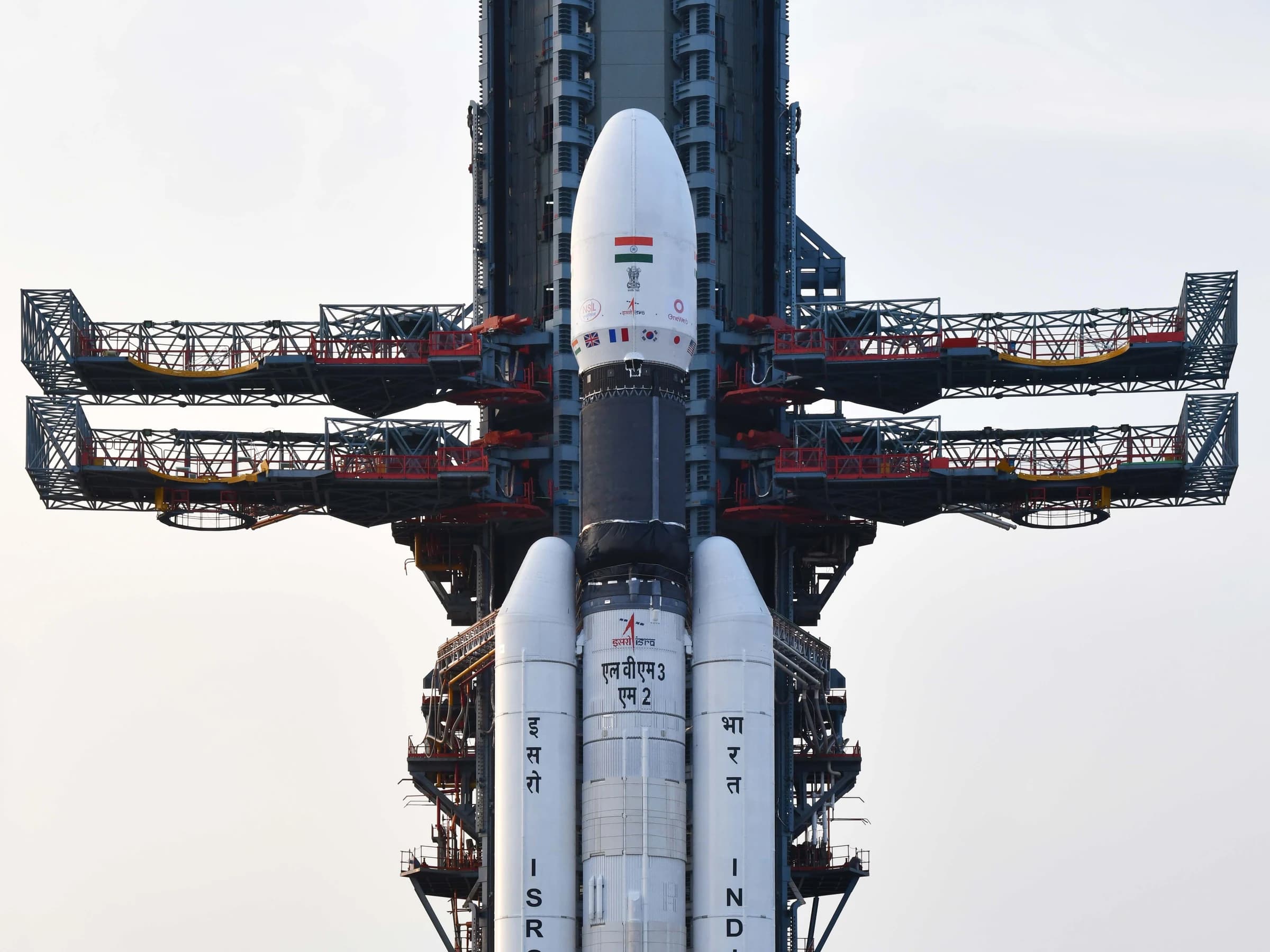
Photograph · ISRO Copyright Policy
Using that flown mass as a simple comparison:
These payload equivalents exclude Jio dispensers and spares and carry no vehicle-performance guarantee. The roughly 601-km OneWeb injection and reported 650-km Jio design are closer than their different operating orbits suggest, but inclination, fairing volume and plane deployment remain material.^[57]^[52]
The reported 400–450-satellite 2030 milestone is still substantial. At assumed masses of 300–500 kg, it corresponds to roughly 21–39 such payload equivalents. Spread across 2028–2030, that is 7–13 equivalents a year. Under a separate hypothetical five-to-seven-year satellite lifetime, a completed 1,600-satellite fleet would require replacing roughly 229–320 satellites annually. Lifetime, mass and launcher selection remain scenario inputs.
The cadence denominator is much smaller. ISRO's official LVM3 list records two launches in 2025 and its latest listed launch on December 24, 2025. NSIL's published industrial plan envisaged 60-plus LVM3 vehicles over 12–14 years, roughly four to five a year on average, for all customers.^[59]^[60] Seven to thirteen flown-mass equivalents annually for Jio alone would require a different supply cadence, larger batches or other launchers. Future upgrades and NGLV cannot be counted as available capacity today.
The bulk opportunity therefore favours LVM3-class production and larger future vehicles. At the July article's ~300–480 kg small-launch envelope, a 150–500 kg spacecraft allows only a handful of satellites per mission, sometimes none at the assumed upper mass. Small vehicles could still earn dedicated plane insertion or urgent replacement work; a 1,600-satellite headline does not award them that niche.
The earlier article named a programme of record above roughly 100 satellites with competitive launch procurement as a condition that could change its demand thesis. Jio exceeds the numerical threshold in ambition. A funded procurement and flight contract must complete the condition. Until then, neither Skyroot nor an LVM3 production partner has earned this proposed manifest.
8. Security Is a Real Constraint. So Is Administrative Delay.
The case for an Indian-owned network is strongest in defence, crisis communications and infrastructure whose continuity cannot depend on a foreign operator's policy. A domestic gateway places traffic handling under Indian jurisdiction; it does not transfer control of spacecraft, software updates or satellite replacement to India.
That is a genuine limitation of importing LEO capacity. It survives even perfect compliance at the gateway. A sovereign buyer can rationally pay a premium for operational control, just as it may pay for redundant routes that look uneconomic during normal operation.
There is no public official instruction in this record to hold foreign services until Jio's indigenous fleet arrives. Scindia's stated rule is individual admission after compliance. Claims that the state is waiting for Jio should be treated as interpretations of the delay, not an established policy.
The strongest defence of the present sequence is the government's inability to prove a foreign operator's future conduct through a successful gateway test. Classified vulnerabilities and jurisdictional conflict can warrant conditions, further testing or refusal. The June rules and unfinished spectrum charges also add real administrative work. A deadline that automatically grants permission would put timing above control.
These risks require a separate policy decision; the technical timetable cannot settle it. The state should tell each applicant whether it is correcting a technical deficiency or facing a residual-risk decision. If foreign control is unacceptable despite compliance, state the condition or ground for refusal. Leaving the application formally alive does not resolve that concern.
The market arithmetic also tests the alleged profit-defence motive. Jio's FY2026 revenue is ₹146,885.3 crore.^[55] The model's entire future middle terminal market equals 2.1% of that current revenue; terminal plus backhaul equals 2.5%, shared among multiple suppliers. The niche can matter to premium margins, but its scale supplies a weak basis for assuming a large near-term threat to Jio's overall earnings.
Musk's latest post is more restrained than the surrounding rhetoric: “Ambani's profits will be lower, but he is not going out of business.”^[4] That is consistent with competition at the lucrative edge. Jio's own risk disclosure recognises satellite competition. An incentive to protect those accounts is plausible; an act of regulatory obstruction still needs evidence. Musk's case for more choice is stronger than his unsupported attribution of the delay to Ambani.
Sovereign procurement can proceed separately. NSIL's demand-driven GEO model already connects national ownership to committed capacity buyers. For LEO, a public buyer can specify domestic control, minimum availability, replenishment and the price of reserve capacity. Jio can also choose to fund a private strategic build. The cost belongs in those decisions, where buyers and shareholders can judge it.
These objections do not justify leaving the decision unfinished. The government should complete technical testing against a timetable and decide the residual-control question on stated conditions. Sovereign capacity must earn explicit payment. A legitimate security concern deserves a decision, not a permanent queue.
9. Singapore Is Already Inside This Contest
Singapore's closest exposure is an incumbent holding, not a prospective gateway contract. Singtel reported a 26.9% effective interest in Airtel at June 30, 2026, combining its direct and indirect exposure, alongside 49.4% of Bharti Telecom.^[61] This does not make Singtel an owner of the whole OneWeb network. It places Singapore capital inside an Indian operator that can distribute both OneWeb and Starlink while defending its terrestrial customers.
Satellite entry can therefore both create a wholesale product for an Airtel enterprise account and put pressure on its existing premium service. The effect on Singapore's exposure depends on who retains the customer and the margin. Counting every foreign satellite sale as a loss to Indian incumbents misses that distribution economics.
The launch exposure is different. The August India article documented repeat GIC and Temasek investment in Skyroot. A Jio deployment contract awarded to a heavy-launch production line would strengthen India's industrial base without automatically strengthening that portfolio company. The customer, rocket class and contracting party decide which investment benefits.
India’s approach differs from the earlier markets in this series:
These comparisons use the findings and dates of the linked country studies. The common question is how permission, local capital and customer access convert orbital capacity into revenue.
Rule 60(2) creates a specific regional possibility: an Indian gateway may serve users outside India with prior government permission and the destination country's required clearances.^[35] Capacity exports could improve Jio's return case, but every new market adds its own landing rights and contracts. The reverse shortcut fails: a Singapore hub cannot replace the required Indian gateway for Indian-terminal traffic.
Value in the ground layer accrues to the party that retains the enterprise contract, controls integration and bears restoration obligations. Two satellite brands sharing power, gateway dependency or terrestrial backhaul may offer less diversity than their logos imply. A cheap backup that cannot restore the workload is an accounting entry, not resilience.
Industrial participation has more room above the launch layer. India's published space FDI policy permits automatic foreign investment up to 74% for satellite manufacturing and operation, data products, ground and user segments; 49% for launch vehicles and spaceports; and 100% for manufacturing satellite, ground and user-segment components and subsystems. Higher investment in the first two categories uses the government route. These space-sector thresholds do not replace telecom permissions or security review.^[62]
A Singapore investor can thus have very different rights in a component manufacturer, a satellite operator and a launch company. The automatic-route percentages describe entry procedure, not guaranteed security approval or assured demand. Jio's specifications and signed procurement would convert supplier pipeline into a commercial exposure worth measuring.
The decisive questions are who signs the minimum payment, who controls the service during a crisis, and which regulator can interrupt delivery. For Singapore investors and operators, existing capital exposure, ownership rights and contracts matter more than a general invitation to enter India.
Photograph and licence · Public domain
10. The Five Events That Would Change the Assessment
- An operator completes the security assessment and receives commercial spectrum. A dated test-completion record, decision on residual control risk, commercial assignment and an orderable service would move India from licence discussion to market evidence. A further generic assurance would not.
- A real Indian tariff replaces the promises. Hardware, installation, recurring charges, data priority and service guarantees must be published together. A household price close to terrestrial alternatives would enlarge the residential case; a premium tariff would reinforce the institutional-and-enterprise model.
- Jio names a manufacturer, finances a deployment phase and books its reported September 2027 test. A signed launch contract would update the earlier India manifest thesis. A flight would validate hardware, with repeat deployment still ahead.
- A buyer underwrites domestic-control capacity. A budgeted government contract, minimum wholesale payment or named foreign customer would narrow the financing gap. The full-fleet economics improve if actual capex is materially below the reported range, but that needs disclosed scope and costs.
- D2D receives its own Indian commercial path and measurable economics. Phone compatibility, spectrum rights, network partners, delivered capacity and wholesale payment rates must align. Dedicated-terminal approval does not establish those conditions.
The important post in this story will eventually be a tariff, a test result or a purchase order. Until then, Musk leads in delivered global connectivity and Jio leads in local customer access. A sovereign Indian constellation deserves a serious procurement case. Indian users deserve a completed access decision, with its security conditions stated.
All data come from public sources, including X posts, Indian government and TRAI records, company disclosures and attributed reporting. Analysis represents the author's independent views and is not investment advice.
Sources62 entries with source notes and links
October 7, 2026. A-grade primary record of the allegation.
October 8, 2026. A-grade source for the statement; its licensing claim is tested against government records.
October 9, 2026. A-grade source for the statement.
October 10, 2026 UTC / October 11 IST. No numerical Indian tariff. A-grade primary record of the statement.
March 12, 2025. Conditional distribution, retail and support arrangement. A-grade source.
March 11, 2025. Conditional partnership alongside OneWeb alliance. A-grade source.
- Reliance — 49th AGM Transcript(rilstaticasset.akamaized.net)
June 19, 2026, satellite-communications passage. Evaluating a sovereign LEO constellation while leasing partner capacity. A-grade corporate statement.
- SEBI — Jio Platforms Draft Red Herring Prospectus(sebi.gov.in)
June 19, 2026. Satellite risk disclosure, offer structure and debt repayment; printed pages 31, 106 and 153. Analysys Mason industry assessment commissioned by the issuer. A-grade filing; sponsored market analysis is not independent research.
- ET Now — Jio IPO set to open on October 21(etnownews.com)
October 9, 2026. Reported offer timetable remains prospective. B-grade.
February 14, 2022. 51/49 ownership, GEO/MEO architecture, up to 100 Gbps and approximately $100 million milestone-dependent anchor agreement. A-grade source.
- Amazon — From zero to 1,000: How Amazon Leo built one of the world's largest satellite production lines(aboutamazon.com)
October 8, 2026. Manufacturing milestone and expected initial service rollout; not an Indian authorisation. A-grade source for company disclosure.
- Ananth Technologies — Satellite Broadband / AnanthSat-1(ananthtech.com)
Company roadmap: GEO, 89°E, over 100 Gbps, 2028 target. Retrieved October 13, 2026. A-grade source for company claims.
October 8, 2026. Assessment and spectrum sequence; stated comparable stage for three licensees. A-grade source for the government position.
- Communications Today — Satcom spectrum pricing heads to Cabinet(communicationstoday.co.in)
October 12, 2026. Reports Cabinet note preparation and proposed 5% charge. Used for policy status, not its indicative retail prices or gateway count. B-grade.
September 8, 2026. Reported DCC decision, geographic concession, five-plus-two-year assignment and rejection of the urban levy; final Cabinet decision outstanding. B-grade.
October 9, 2026. Named minister statement: individual admission after security and pricing clearance. B-grade.
released October 12, 2026. Internet subscriptions, rural/urban density, wired access, wireless market shares and ARPU; especially printed pages 44–55 and 69–70. A-grade source.
- The Economic Times — $15 billion game-changer: Reliance Jio readies for a big bang in space(m.economictimes.com)
June 18, 2026. Reported 1,600–1,650-satellite proposal and $10–15 billion planning range; not a disclosed approved budget. B-grade reporting, provisional planning figures.
October 7, 2026. A-grade source for the post.
- Rahul Gandhi — reply to Musk(x.com)
October 8, 2026. A-grade source for the political intervention.
October 8, 2026. Crony-capitalism accusation. A-grade record of the statement.
October 9, 2026. A-grade source for the statement.
January 29, 2026. Names three GMPCS licensees and Amazon's application under examination; distinguishes telecom authorisation from service launch. A-grade source.
- The New Indian Express — Starlink receives provisional spectrum for trial(newindianexpress.com)
September 4, 2025. Trial assignment and need to demonstrate security compliance; not commercial spectrum. B-grade.
November 26, 2021. Public advised not to subscribe pending authorisation. A-grade.
July 2025. Records June 6 telecom licence and July 8 five-year Gen1 authorisation. A-grade government account.
- Reuters via Investing.com — India rejects monopoly claim after Musk accuses Ambani of blocking Starlink launch(investing.com)
October 9, 2026. Scindia's response and remaining launch requirements. B-grade source.
- Business Upturn — public replies to Musk's Ambani post(businessupturn.com)
October 10, 2026. Contemporary identification of the named replies. B-grade corroboration; no engagement-based sentiment estimate is used.
October 9, 2026. A-grade source for the user's argument.
October 9, 2026. A-grade source for the argument, not verification of its monopoly claim.
October 9, 2026. A-grade source for the argument.
October 9, 2026. A-grade source for the post only.
September 2024. Documents the 100% Chinese-EV tariff action, not a private Tesla veto. A-grade source.
- TRAI — Consultation on Satellite Communication Network Authorisation and Spectrum Assignment(trai.gov.in)
April 8, 2026. Annexure 2.2 reproduces the May 5, 2025 GMPCS security memorandum: clauses 19 and 23, clause 27 and the closing national-security reservation on printed pages 252–254 (PDF pages 255–257); pages 159–160 record spectrum back references. Also examines network authorisation and D2D. A-grade source for consultation status.
June 23, 2026. Rules 3, 34 and 59–62: new/migrated authorisations, interception demonstrations, separate spectrum eligibility and domestic gateways. A-grade source.
- ANI via The Tribune — Starlink sets up 20 India gateway sites, to keep user data within country: VP Lauren Dreyer(tribuneindia.com)
October 7, 2026. Named executive statement; readiness is a company claim. B-grade reporting.
- Business Standard — Why Starlink’s India launch is stalled(business-standard.com)
October 8, 2026. Reports pending FDI approval separately from security and spectrum clearance. B-grade.
- Inc42 — Starlink says it remains in active discussions, with original Bloomberg freeze report(inc42.com)
June 10, 2026. Anonymous-source account of MHA concern over Iran usage and conflicting foreign demands, explicitly disputed by Starlink. B-grade reporting; no formal freeze order established.
May 9, 2025. Spectrum-charge recommendations, particularly paragraphs 3.149–3.152. A-grade source; recommendations are not treated as final charges.
- DoT — Unified Licence Agreement, clause 18.2.1(eservices.dot.gov.in)
updated March 31, 2024, printed page 19. 8% AGR licence fee inclusive of USO levy, second-year minimum of 10% of entry fee; spectrum charges additional under 18.3; also confirmed on DoT's current GMPCS service page. A-grade primary terms.
January 12, 2026. Total 440 renewal satellites ordered; existing 600-plus LEO network at 1,200 km. A-grade source.
June 13, 2024. Orbit Connect India space approvals and remaining telecom requirements. B-grade.
- Eutelsat — Completion of comprehensive refinancing plan(eutelsat.com)
March 2026. Approximately €1 billion ECA financing signed in February to support 440 Airbus satellites. A-grade source.
- ISRO — GSAT-N2 Mission(isro.gov.in)
November 2024. NSIL-owned 48-Gbps GEO spacecraft, Falcon 9 launch. A-grade.
- NSIL — GSAT-20 launch-services agreement and demand-driven mission(nsilindia.co.in)
January 2, 2024. NSIL funds, owns and operates the satellite; Indian providers secured bulk capacity before launch. Actual launch date from [44] supersedes this announcement’s target. A-grade.
January 20, 2022. Six-year enterprise/government distribution agreement with Hughes Communications India. A-grade company record.
- NSIL — GSAT-N2 demonstration to Assam officials(nsilindia.co.in)
Names Nelco, Gilat and Sumeru among collaborators. A-grade demonstration record.
June 18, 2025. Separates AST’s space network from Vi’s integration and spectrum role. A-grade announcement.
- Viasat — BSNL direct-to-device messaging demonstration(investors.viasat.com)
October 2024. Two-way messaging trial, not commercial broadband service. A-grade.
- Moneycontrol — Jio plans 1,600 satellites, 23 ground stations(moneycontrol.com)
October 8, 2026. IMC display and attributed infrastructure plan. B-grade source for company plans.
- The Economic Times — Jio's 1,600-LEO satellite plan gets IN-SPACe technical nod(m.economictimes.com)
July 17, 2026. Technical assessment reported through unnamed officials; not treated as completed operational authorisation. B-grade reporting, provisional assessment status.
- ETGeoSpatial — Jio sets September 2027 test flight for planned satellite broadband network(geospatial.economictimes.indiatimes.com)
September 10, 2026. Attributed timetable, 400–450 satellites by 2030, completion around 2035, approximately 650-km orbit, and completed-network India capacity of 4–4.8 Tbps from 30–32 overhead satellites. B-grade reporting; milestones remain targets.
- The Economic Times — Starlink says India pricing not announced after website glitch shows dummy data(economictimes.indiatimes.com)
December 8, 2025. Correction of ₹8,600/₹34,000 placeholder figures. B-grade source.
- Ajker Patrika — Bangladesh Starlink adoption and tariffs(ajkerpatrika.com)
July 2026 reporting of BTRC’s May count: 5,389 customers; Tk4,200 / Tk6,000 monthly plans and Tk47,000 equipment. B-grade regional comparator.
- SEBI — Jio Platforms Abridged Prospectus(sebi.gov.in)
June 2026, financial-information table: FY2026 revenue, operating cash flow and non-GAAP EBITDA less cash capex; amounts originally in ₹ million. A-grade filing.
- ISRO — LVM3 M2 / OneWeb India-1 Mission(isro.gov.in)
October 23, 2022. 36 satellites, 5,796-kg combined payload and OneWeb orbital architecture. A-grade source.
- ISRO — LVM3 M2 Mission Landing Page(isro.gov.in)
October 23, 2022. Actual injection altitude near 601 km; not OneWeb’s final operating altitude. A-grade.
- ISRO — foreign satellites launched(isro.gov.in)
BlueBird Block-2 entry, December 24, 2025. Approximately 6,100 kg, LVM3. A-grade flight record.
- ISRO — LVM3 launches(isro.gov.in)
Official flight list: two LVM3 launches in 2025, latest listed flight December 24, 2025. A-grade historical record.
- NSIL — Annual Report 2023–24(nsilindia.co.in)
Published industrial plan for 60-plus LVM3 vehicles over 12–14 years; a programme objective, not demonstrated current cadence or a permanent capacity ceiling. A-grade.
- Singtel — Q1 FY2027 Business Update(cdn2.singteldigital.com)
Quarter ended June 30, 2026. Effective Airtel interest 26.9%; Bharti Telecom holding 49.4%. A-grade.
March 12, 2025. Confirms amended 74% / 49% / 100% automatic-route thresholds and government-route distinction. A-grade source.
Continue reading
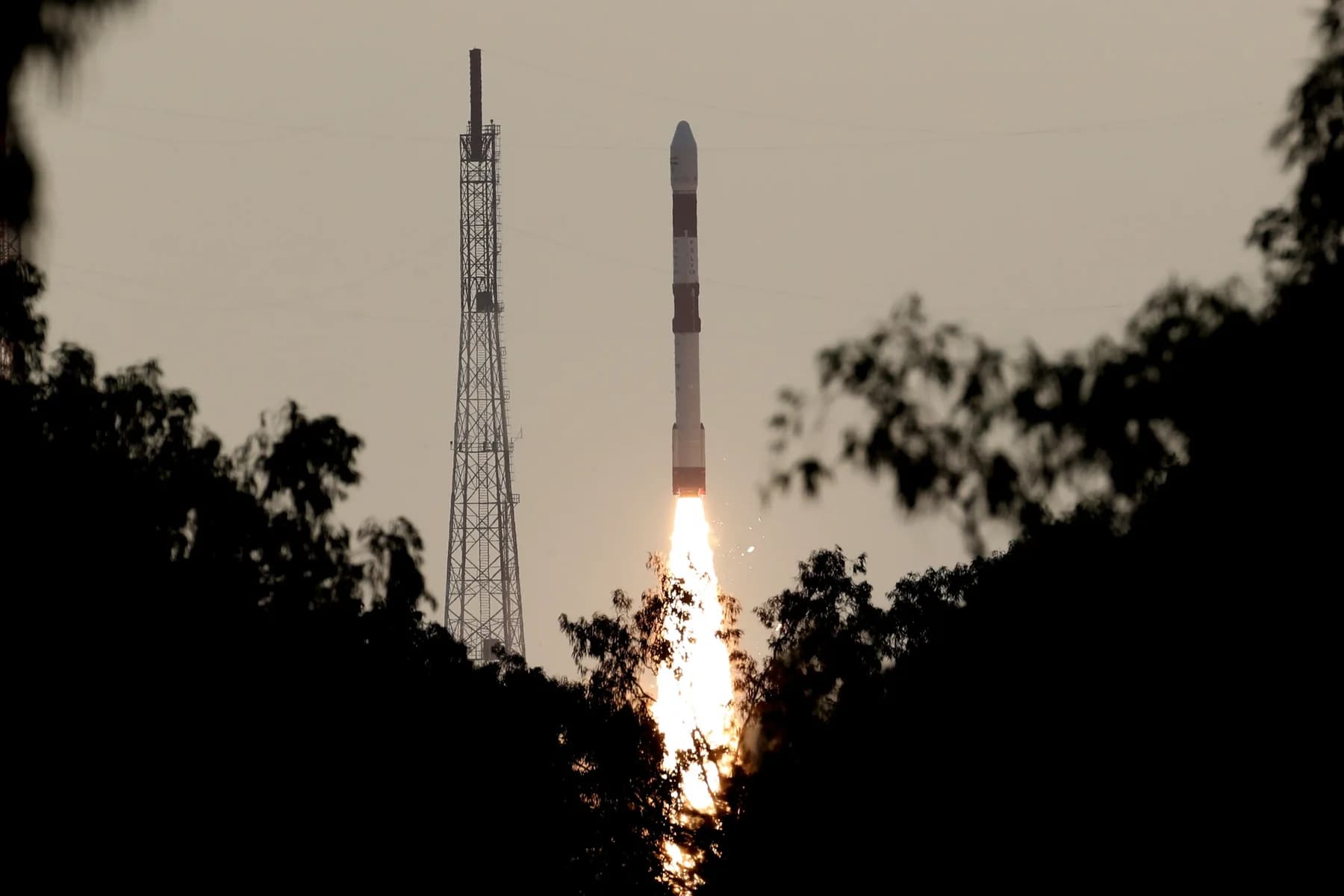
12 Jul 2026 · 49 min read
India's Launch-Startup Tier: Real Rockets, a Missing Manifest—and a $1.1 Billion Bet That Demand Shows Up
India's private launch engineering is real, but the domestic manifest is roughly one Vikram-1 flight a year; Skyroot's unicorn valuation already assumes the demand gap closes.
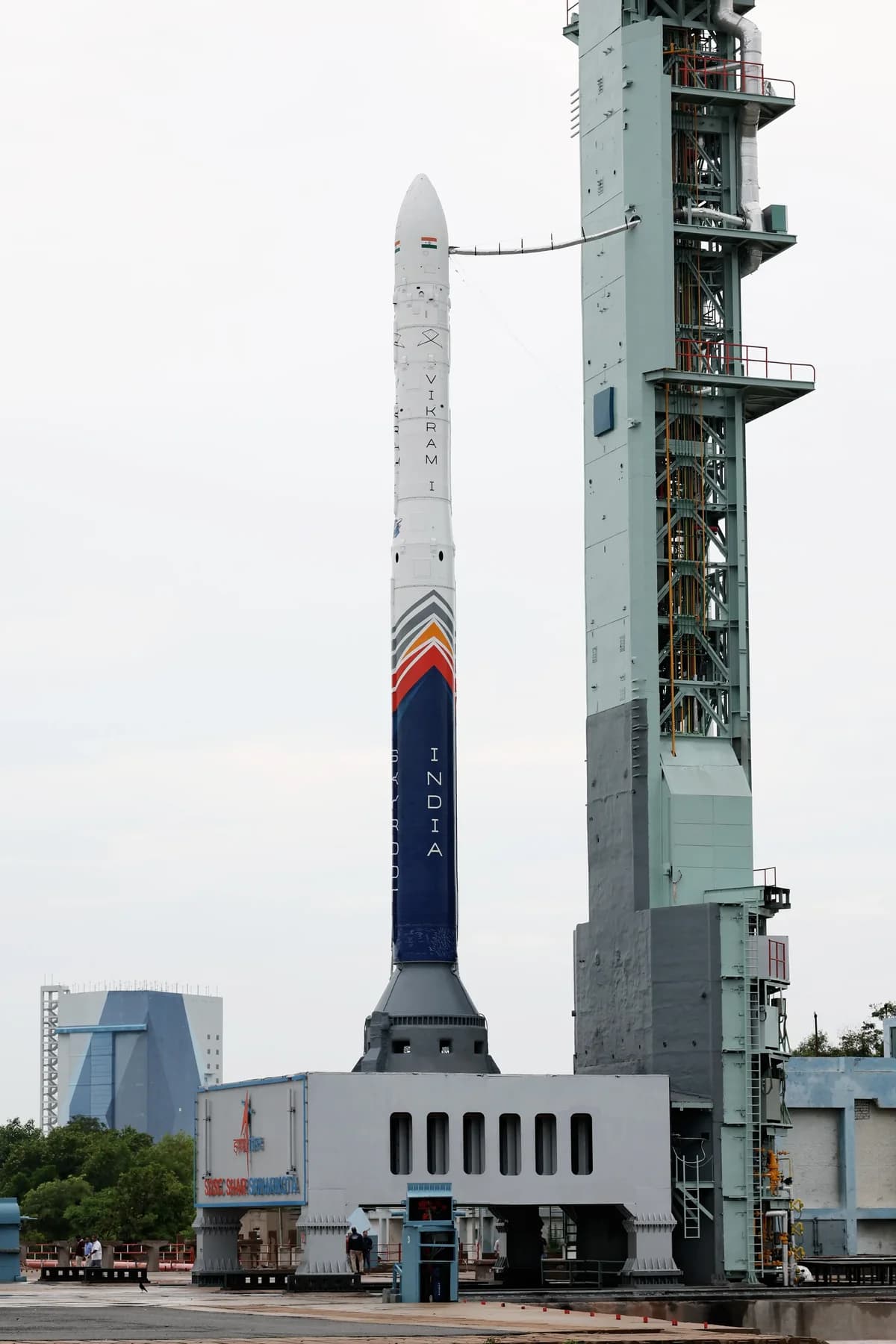
22 Aug 2026 · 49 min read
India's Launch Privatization, Audited: Two Flights, Then More Than Six
Vikram-1 proved India's private launch engineering; Parliament's own two-then-six planning figure shows that the missing manifest remains the business test.
23 Aug 2026 · 59 min read
South Korea LEO 2026: Open Now, Build Later
Korea opened the market to Starlink and OneWeb, then committed to a sovereign constellation whose defense case is far stronger than its commercial one.