
Philippines Satellite Internet 2026: The Alliance Market
The Philippines is ASEAN's most geopolitically advantaged LEO market, but enterprise continuity and broad mid-tier demand—not mass residential adoption—make the economics work.
Method & disclosure
Confidence: High on the regulatory and alliance architecture, public pricing, operator partnerships and disaster-connectivity role. Medium on terminal counts, segment penetration, revenue forecasts and D2D economics because operators disclose no country-level commercial data.
Review mode: Human + AI cross-check
Writing support: AI assisted
Singapore Space Agency
On this page · 16
- 011. The 90-Second Summary
- 022. Analytical Framework: The Four Lenses in the Philippines Context
- 033. Country Context: Geography, Telecoms Baseline, and the OFW Economy
- 044. The Geopolitical Architecture: Why the Alliance Closes the Chinese LEO Option
- 055. The Regulatory Architecture: ASEAN's Most Permissive Framework
- 066. The BPO Complex: The Commercial Proof Point
- 077. The Disaster Economy: "Communication Is Aid"
- 088. The OFW Circuit: The Demand Driver No Other ASEAN Market Has
- 099. The D2D Bet: Globe's No-Hardware Mass-Market Play
- 1010. Operators and Competitive Landscape
- 1111. Maritime and Fisheries: The South China Sea Dimension
- 1212. Bottom-Up TAM Model: The Full Segment Build
- 1313. Infrastructure Comparison: Philippines vs. Series Peers
- 1414. What This Means for APAC and Singapore
- 1515. What to Watch: The Signals That Confirm or Break the Thesis
- 16Synthesis: The Gift-Wrapped Market and Its Real Price
Key findings
The argument in brief
- The US alliance makes Chinese LEO entry institutionally improbable through 2030, giving Starlink a protected first-mover position rather than a permanently closed market.
- All non-residential segments generate about 77% of modeled hardware revenue from 43% of terminals; the premium and mid-tier bands generate 74% from 38%.
- BPO is the clearest high-value proof point, but SME, government, maritime, tourism and healthcare supply the modeled revenue scale.
- D2D removes the hardware barrier, yet its low entry price makes coverage, retention and disaster resilience more important than near-term margin.
The Philippines is the most geopolitically advantaged LEO satellite market in ASEAN — not by design but by default. The logic runs in four layers: the US treaty alliance determines who can supply it, making Chinese LEO entry institutionally improbable before 2030; twenty-plus annual typhoons and the June 2026 Mindanao M7.8 earthquake determine why it gets funded, creating a government procurement mandate with geological permanence; a $40 billion BPO complex provides the clearest high-value enterprise use case, while broader non-residential mid-tier demand supplies the volume; and household purchasing power determines where growth stops — at ₱4,099 per month, Starlink residential costs roughly 27% of the NCR minimum monthly wage, a ceiling that limits the mass residential market without OFW remittances or subsidy. The June 2026 Direct-to-Device commercial launch — first in Southeast Asia — opens a no-hardware channel that bypasses the affordability problem entirely. By 2030, Starlink reaches approximately 135,000–145,000 hardware terminals (base ~140,000) generating $260M–$295M in modeled annual hardware revenue. Non-residential segments — BPO, SME, government, maritime, tourism, mining, education, and healthcare — generate approximately 77% of hardware revenue from 43% of terminals. BPO proves the economics; the mid-tier supplies the volume.
This is the fifth article in the "APAC From the Ground Up: A Market-by-Market Guide to LEO Connectivity" series (MGT-05). Earlier installments: Indonesia (MGT-01) — binding constraint: regulatory friction and the Telkom dual-role trap; Australia (MGT-02) — binding constraint: market clarity and the world's clearest LEO environment; Malaysia (MGT-03) — binding constraint: multi-orbit hedging and the three-player US-China-GEO equilibrium; Vietnam (MGT-04) — binding constraint: the controlled aperture and Party-state data-control doctrine.
Disclaimer. Singapore Space Agency is an independent research platform (UEN 53448796C). It is not a government body and does not represent official policy. This analysis draws only on public sources and represents the author's independent views. It is not investment, legal, or procurement advice. SpaceX discloses no country-level subscriber, revenue, or terminal data for the Philippines; every such figure in this article is explicitly labeled as modeled, estimated, or scenario-dependent. Market figures should be treated as analytical frameworks for reasoning, not point forecasts.
1. The 90-Second Summary
The Philippines slots into this series at MGT-05 as a structural outlier on every axis that mattered in the four prior markets.
On geopolitics: Indonesia navigated a tightrope between Washington and Beijing. Malaysia engineered a deliberate portfolio hedge between LEO operators. Vietnam granted a controlled aperture with security-ministry oversight. Australia operated as an unrestricted dual-LEO market. The Philippines does none of these things. The Mutual Defense Treaty (1951) and Enhanced Defense Cooperation Agreement (EDCA, 2014, now nine sites) have already made the geopolitical determination: this is US treaty space. Chinese LEO operators face not merely commercial disadvantage but institutional and legislative barriers that make near-term market entry improbable under any plausible political scenario before 2030. No administration can license Qianfan or Guowang without navigating AFP institutional resistance, RA 11659's reciprocity requirement, and data-sovereignty concerns at the intersection of national security and commercial regulation. The Chinese LEO question is effectively closed through 2030 under the current alliance architecture, leaving Starlink with a uniquely protected first-mover position rather than a permanently settled market.^[1]
On demand: The Philippines does not need to be convinced that satellite connectivity is critical infrastructure. Typhoon Haiyan (2013) destroyed telecommunications in Leyte-Samar for weeks and cost an estimated 6,300 lives in part because the death toll could not be communicated fast enough for rescue response. Every subsequent administration has operated under the doctrine that "communication is aid" — that satellite connectivity during and after disasters saves lives in a way no other infrastructure substitute can. Twenty to twenty-five typhoons annually create a recurring, government-funded procurement mandate with few close parallels in ASEAN. The June 8, 2026 Mindanao M7.8 earthquake — which had caused 78 reported deaths and 1,339 injuries by June 18 — activated both PLDT Enterprise and Globe's Starlink terminal networks, and marked the Philippines' first real-world deployment of Direct-to-Device satellite connectivity for disaster response.^[2]^[3]^[46]
On enterprise economics: The Philippines' $40 billion IT-BPM (Information Technology and Business Process Management) industry — the largest in ASEAN and among the top three globally — sets the floor for satellite ROI in the country. A 500-seat BPO contact center generates approximately $6,000 in billable revenue per hour. A four-hour terrestrial outage puts roughly $24,000 of gross billable revenue at risk — before contract-specific SLA credits and operational recovery costs. Annual Starlink backup connectivity for that facility (two to four business-grade terminals) costs an estimated $10,800–$21,600 per year. For mid-sized facilities with weak terrestrial path diversity and high-value client SLA exposure, the avoidance case is commercially compelling once expected annual outage frequency and contract-specific penalties are included — though it is not universal and depends on each facility's specific connectivity risk and SLA architecture. This arithmetic nonetheless drives enterprise adoption ahead of any government incentive.^[4]^[5]
On purchasing power: The ceiling is real. At ₱4,099/month for the residential plan and ₱28,000 for hardware, Starlink is a luxury appliance for most Filipino households. An NCR minimum-wage earner (₱695/day, ₱15,290/month assuming 22 working days) would spend 27% of monthly income on the subscription alone. A provincial worker at ₱450/day spends 41%. The mass residential market cannot close without either a price reduction, a subsidy mechanism, or remittance-funded demand from OFW households.^[6]
The call: By 2030, the Philippines reaches approximately 135,000–145,000 Starlink hardware terminals (base ~140,000) and approximately 2–4 million D2D-connected subscribers via Globe. Modeled hardware revenue runs $260M–$295M (base ~$278M) plus $12–60M in D2D wholesale revenue depending on SpaceX revenue-share structure (modeled at 20–50%). Revenue concentration is structurally extreme: all non-residential segments — BPO, SME, government, maritime, tourism, mining, education, and healthcare — generate approximately 77% of hardware revenue from 43% of terminals. Separately, the premium and mid-tier bands generate approximately 74% of revenue from 38% of terminals; the premium tier alone (BPO, maritime commercial, mining — ~7% of terminals) accounts for 26% of revenue. The residential base grows but is structurally price-capped until either prices fall materially or subsidy programs scale. Astranis/Orbits "Agila" — the only domestic microGEO alternative, launched December 2024 with limited commercial data on utilization as of mid-2026 — addresses government-subsidized rural schools and barangay connectivity, not BPO backup, not maritime commercial, not D2D mass-market. OneWeb via Now Telecom remains commercially marginal: enterprise-only, limited coverage, no D2D capability. Amazon Leo, formerly Project Kuiper, requires substantially more satellites for equatorial coverage than its initial deployment targets; ASEAN market entry before 2027–2028 is unlikely.
2. Analytical Framework: The Four Lenses in the Philippines Context
The four-lens framework introduced in MGT-01 (Indonesia) applies here, but the Philippines reshapes each lens.
[Researcher] The standard connectivity-gap framing understates the Philippines' complexity. This is not "17,000 islands with poor coverage" — that's Indonesia. The Philippines is 7,641 islands with an active disaster cycle, an institutional memory of catastrophic telecoms failure, a sophisticated enterprise sector demanding carrier-grade SLAs, and a diaspora-financed rural consumer class. Research here must distinguish four discrete markets (enterprise, government, maritime, residential) that have different economics, different regulatory treatment, and different adoption curves. Aggregating them into a single TAM number obscures more than it reveals.
[Banker] The investable thesis in the Philippines is enterprise-first, not residential-first — the inverse of a consumer internet play. The BPO complex ($40 billion in 2025 revenues, 1.9 million direct employees) generates ARPU that makes satellite economics work without subsidy, without price reduction, and without regulatory coercion. The government disaster procurement channel is the second pillar: it is funded (disaster response is a constitutional mandate), recurring (the typhoon cycle is geological), and politically durable — post-Haiyan doctrine and post-Mindanao-earthquake operational evidence have established satellite connectivity as recognized emergency infrastructure in every administration's procurement logic. The OFW circuit is the third pillar: $35.6 billion in annual cash remittances fund household purchases with dollar-denominated income that moves satellite pricing from "impossible" to "expensive but achievable."^[7] The D2D channel — no hardware, ₱99/30-day prepaid pricing — is the potential fourth pillar, but its 2026 commercial launch is too recent to size reliably.
[Country Head] On the ground, the Philippine satellite market executes through a reseller architecture that Indonesia never built cleanly and Vietnam was prohibited from building entirely. Converge ICT Solutions became Starlink's first official dealer in March 2025. PLDT Enterprise became the first and only telco-authorized Starlink reseller in August 2025. Globe Telecom holds the D2D partnership (NTC commercial approval June 29, 2026). Each operator addresses a distinct segment: Converge reaches enterprise in its fiber footprint gaps; PLDT Enterprise anchors BPO and government; Globe D2D targets zero-coverage populations and disaster response. The regulatory architecture under EO 127 (2021), RA 11659 (2022), and RA 12234 (the Konektadong Pinoy Act, lapsed into law August 24, 2025) is among the most permissive satellite frameworks in ASEAN.^[8]^[9]^[10]
[Geopolitics] The geopolitical architecture is not a variable in this market — it is a constant. The US-Philippines security relationship is deeper now than at any point since the 1990s Clark and Subic closure. Nine EDCA sites, the Task Force Ayungin maritime operation, Starlink terminals on the BRP Sierra Madre at Second Thomas Shoal, and a Mindanao earthquake that demonstrated D2D's live operational value: the connectivity and defense conversations in Manila are not parallel; they are the same conversation.^[11] That constancy is what makes the Philippines structurally different from every other market in this series.
3. Country Context: Geography, Telecoms Baseline, and the OFW Economy
3.1 The Geography of Isolation
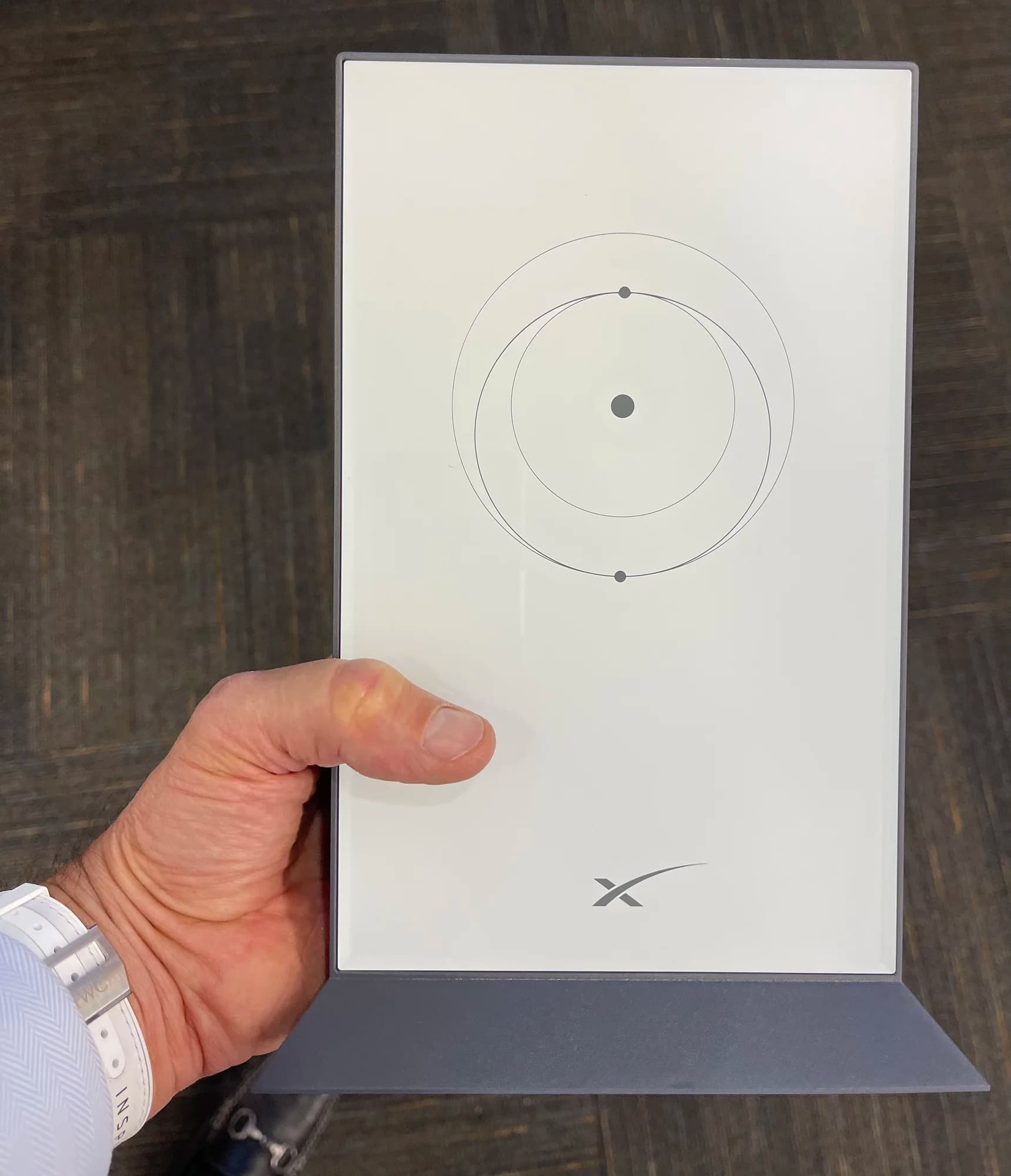
The Philippine archipelago spans 7,641 islands, of which approximately 2,000 are inhabited.^[12] Total land area is 300,000 km². The coastline is 36,289 km — the fifth-longest in the world. The exclusive economic zone covers 2.27 million km². The distance from Itbayat (Batanes, northernmost) to Sitangkai (Tawi-Tawi, southernmost) is approximately 1,850 km. Within that distance, 42,000+ barangays (the smallest administrative unit) require individual last-mile connectivity solutions.
The geography creates several distinct connectivity challenges:
- Island isolation: Barangays on small islands cannot receive fiber or microwave economically. The cost of a dedicated subsea fiber cable to a small island typically exceeds ₱5–50 million depending on distance.
- Mountainous terrain: Cordillera Central, Sierra Madre, and Mindanao highlands create microwave dead zones.
- Typhoon corridor: The Philippine Area of Responsibility receives approximately 20–25 named tropical cyclones annually, with 8–10 making landfall. These events physically destroy towers, cut power to equipment, and flood relay stations.
The Philippine Domestic Submarine Cable Network (PDSCN) — jointly owned by Globe, ETPI (Eastern Communications), and InfiniVAN — activated its first segment in February 2024, covering 2,500 km with 33 landing points linking Luzon, Visayas, and Mindanao at a total investment of approximately US$150 million.^[13] This addresses inter-island backhaul but does not solve the last-mile problem in the 42,000+ barangays. Satellite is the only economically viable last-mile solution for the most isolated communities.
3.2 Telecoms Baseline
[Researcher] The Ookla data flags something important: Starlink's median download in the Philippines (~55 Mbps) is dramatically lower than Australia's 162 Mbps from the same constellation.^[14] This gap likely reflects a combination of subscriber density relative to ground-segment capacity, the number of Starlink gateway stations in each market (Australia operates substantially more, though exact figures are not public), spectrum allocation, terminal mix, and traffic engineering. The same constellation and broadly similar terminal architecture serve both markets, so the gap is more likely to reflect market-specific network loading, ground capacity, spectrum, geography, weather, plan mix, and measurement composition than a fundamental difference in the satellite platform itself. SpaceX does not disclose gateway locations or counts. What matters for BPO enterprise SLAs is whether Philippine Starlink reaches the throughput levels that make it viable as a primary or near-primary enterprise link, not just a failover — and gateway expansion is one of the most actionable variables to monitor.
The 108.3 Mbps national fixed broadband average masks a bimodal distribution.^[40] Metro Manila and Metro Cebu, where Converge fiber and PLDT fiber compete aggressively, see average fixed broadband speeds exceeding 150 Mbps. In SpeedGeo's Q1 2026 ranking, covering tests from April 1, 2025 to March 31, 2026, Converge led Philippine fixed broadband with a 129.7 Mbps average download speed.^[47] Outside these corridors, provincial speeds are considerably lower, with many rural areas effectively unserved by commercial fiber. The "108.3 Mbps national average" is a metro-density-weighted figure that tells you almost nothing about what connectivity looks like in Catanduanes, Tawi-Tawi, or the interior of Mindanao.
The mobile picture is similarly bifurcated. DITO Telecommunity (the third major MNO, founded 2021) brought genuine competition to Globe and Smart, improving speeds in urban areas where all three networks compete. In the same Q1 2026 SpeedGeo ranking, DITO delivered the Philippines' fastest mobile internet, with an average download speed of 70.5 Mbps — but DITO's network rollout remains concentrated in urban areas and its rural coverage is thinner than Globe or Smart.^[47] Mobile data at 45 Mbps national average is adequate for casual consumer use but insufficient for BPO voice/video applications, which require sustained low-latency throughput that mobile networks struggle to guarantee during peak hours.
3.2a The 5G Situation
5G deployment in the Philippines has been slower than regional peers. Globe and Smart/PLDT both hold 5G licenses and have deployed 5G in Metro Manila, Metro Cebu, and select urban centers. But nationwide 5G population coverage remains below 30%, and 5G's last-mile economics in rural areas are no better than 4G — the tower density required for 5G mmWave makes rural deployment economically non-viable at Philippine income levels. Sub-6GHz 5G can improve rural mobile data speeds and complement satellite, but it does not remove the hardest rural coverage economics or match satellite's immediate geographic deployment advantage. This is a key framing distinction from Malaysia, where JENDELA reached 99.71% populated-area coverage — the Philippines' terrestrial network simply has not achieved Malaysia's density, which means satellite's addressable market is larger and more durable.
3.3 The OFW Economy
Approximately 10–12 million Filipinos work abroad; in 2025 they sent home $35.63 billion in cash remittances — 7.3% of GDP.^[7] This creates a residential satellite demand dynamic that does not exist in any other ASEAN market. An OFW earning $1,200/month in Singapore faces ₱4,099/month Starlink pricing as a US$67 purchase — roughly 6–8% of monthly income, not the 27–41% that prices out domestic minimum-wage earners. OFW-source provinces (Ilocos, Eastern Visayas, Bicol, BARMM) also happen to be the Philippines' most underserved by terrestrial broadband, concentrating purchasing power precisely where satellite has no fiber competitor.
See §8 for the full OFW demand mechanics, geographic breakdown, and terminal forecast.
4. The Geopolitical Architecture: Why the Alliance Closes the Chinese LEO Option
4.1 The Treaty Architecture
The US-Philippines defense relationship is governed by three interlocking instruments:
- The Mutual Defense Treaty (MDT, 1951) commits the US to treat an armed attack on Philippine armed forces as an attack on the US, and vice versa.
- The Visiting Forces Agreement (VFA, 1998/restored 2021) governs the legal status of US military personnel in the Philippines.
- The Enhanced Defense Cooperation Agreement (EDCA, 2014) permits the US to construct and access agreed locations on Philippine military bases.
The EDCA now covers nine sites. Five were designated in 2016 (Basa Air Base, Fort Magsaysay, Lumbia Air Base, Antonio Bautista Air Base, Mactan-Benito Ebuen Air Base). On April 3, 2023, four additional sites were announced: Naval Base Camilo Osias (Santa Ana, Cagayan), Lal-lo Airport (Cagayan), Camp Melchor Dela Cruz (Gamu, Isabela), and Balabac Island (Palawan).^[11] The Cagayan sites provide depth for Taiwan contingencies; Balabac-Palawan addresses South China Sea access. US investment in these facilities — including hardened communications infrastructure — is ongoing.
[Geopolitics] The satellite geopolitical significance is direct. Starlink has been integrated into Philippine military operations at the most sensitive points of the South China Sea confrontation. Philippine Navy sailors and Marines aboard the BRP Sierra Madre (the deliberately grounded vessel at Second Thomas Shoal that houses the garrison defending Philippine claims at Ayungin Shoal) use Starlink for communications, and critically for the Philippine Coast Guard's transparency initiative — the practice of live-broadcasting incidents with China on social media, which has proven more effective at generating international political pressure than any diplomatic communiqué.^[15] Starlink USVs (Unmanned Surface Vessels) deployed by the Philippine Navy's USV Unit (established 2024 and based in Subic Bay) rely on Starlink terminals for real-time data transfer.^[16]
China has responded by jamming Starlink connectivity near Scarborough Shoal, where Philippine government vessels have lost connectivity when approaching within approximately 24 nautical miles.^[17] This military-adjacent confrontation means that from Beijing's perspective, Starlink in the Philippines is not a commercial service — it is a US intelligence and surveillance asset operating in China's claimed waters. Any Chinese LEO operator seeking a Philippine license would be seeking to operate in the same strategic environment with the opposite political valence.
4.2 Why Chinese LEO Entry Is Institutionally Improbable
[Geopolitics] The arguments against Chinese LEO entry in the Philippines are not primarily regulatory (Vietnam's approach) or commercial (China's inferior LEO constellation performance relative to Starlink). They are structural:
-
Military-intelligence institutional resistance. The Armed Forces of the Philippines (AFP) and the Philippine intelligence community have deep institutional ties to US counterparts. Any administration that licensed a Chinese LEO constellation would face immediate and significant AFP institutional resistance, even if the President ordered it. The institutional ties — officer training at West Point and NDU, intelligence-sharing under the MDT framework, joint exercises — run deeper than any elected government's term horizon.
-
Franchise and critical infrastructure gatekeeping. RA 11659 (2022) treats telecommunications as "critical infrastructure," imposing a 50% cap on foreign ownership for entities owned by nationals of countries that do not accord reciprocity to Philippine nationals. China's telecoms sector does not allow Philippine majority ownership. This creates a statutory barrier even without an explicit political veto.^[9]
-
Network security and data routing. The Konektadong Pinoy Act (RA 12234, August 2025) empowers the NTC to impose security-of-communications requirements on satellite operators. Routing Philippine government, military, and BPO traffic through Chinese-controlled orbital infrastructure would face severe institutional resistance in any national security review, given the ongoing South China Sea confrontation and the explicit integration of Starlink into the Philippine coast guard's transparency operation at Second Thomas Shoal.
Steelman: Could a Duterte-aligned government (if Sara Duterte wins in 2028) reconsider? At 46% polling versus 35% for Robredo in the May 2026 OCTA survey, Sara Duterte is the frontrunner.^[18] Her father's legacy includes a "pivot to China" rhetorical posture (2016–2019) that alarmed Washington but produced limited durable structural change in the security relationship. The institutional barriers to Chinese LEO entry — AFP institutional resistance, RA 11659's reciprocity requirement, data-routing sovereignty concerns — are legislation and institutional practice, not presidential decrees. A Duterte 2028 victory would change the diplomatic register but would face the same structural constraints, making near-term Chinese LEO market entry unlikely without a fundamental realignment of the US-Philippine security relationship — which no plausible election outcome requires.
The DITO counterpoint — properly framed: The Philippines is not a blanket excluder of Chinese technology. DITO Telecommunity, the country's third MNO (launched 2021), operates with a 40% equity stake held by China Telecommunications Corporation. This shows Manila can tolerate Chinese capital in terrestrial commercial telecom. The distinction the security establishment draws is between terrestrial commercial competition (acceptable) and satellite or military-adjacent orbital infrastructure (a different category). The practical result: the same institutional and legislative framework that allows DITO to operate with Chinese equity makes it institutionally difficult for DITO to pursue a satellite strategy using Chinese or US constellation partners — it occupies an awkward middle position that explains, without requiring conspiracy, why DITO has no announced satellite strategy despite its scale of 16+ million subscribers. Chinese LEO entry in the Philippines is not legally impossible; it is institutionally improbable in the current US-Philippine security environment.
4.3 What the South China Sea Confrontation Means for the Satellite Market
The Second Thomas Shoal confrontation created a live testing environment for the specific use case where satellite communications is most valuable: communications under physical interdiction. The Philippine Coast Guard's transparency initiative — publicizing water-cannoning, laser attacks, and physical ramming by Chinese Coast Guard vessels in real time — has been possible only because of Starlink connectivity on the vessels.^[15] This is not marketing; it is operational evidence.
The practical market implication: Philippine government satellite procurement has a national-security rationale that overrides normal procurement cost constraints. Every disaster response terminal is also a resilient communications node in a maritime dispute environment. This dual-use reality accelerates government adoption and makes it politically durable across administrations.
5. The Regulatory Architecture: ASEAN's Most Permissive Framework
5.1 The Three-Layer Stack
Philippine satellite internet regulation operates through three intersecting agencies with distinct but overlapping mandates:
-
NTC (National Telecommunications Commission): Principal regulator. Issues VSAT licenses, type-approves terminals, and under RA 12234, is now the principal regulatory body for the data transmission sector. Historically the bottleneck for satellite entry (license processing times of 6–18 months were common); recent reforms have accelerated this.
-
DICT (Department of Information and Communications Technology): Policy architect. Manages the NDCP (National Digital Connectivity Plan), oversees PhilSA, and sets broadband subsidies (Free WiFi Act). The DICT's INCENTIVISE project deploys Starlink terminals in GIDAs.
-
PhilSA (Philippine Space Agency): Created by RA 11363 (2019) as the country's central space agency.^[19] Manages spectrum coordination, satellite licensing at the international level, and the INCENTIVISE program. PhilSA holds the coordination with ITU on Philippine satellite slots.
5.2 The Legislative Stack
EO 127 (March 10, 2021): The foundational liberalization act. Executive Order 127 amended EO 467 (1998) to expand access to satellite-based internet services and effectively enabled Starlink's entry by removing the requirement for a prior congressional franchise for satellite internet providers.^[20] This single executive order cleared the path that Indonesia still has not fully cleared.
RA 11659 (March 21, 2022) — Amended Public Service Act: Removed the 40% foreign equity cap for public service companies (including telecommunications), reclassifying telco as no longer a "public utility" subject to constitutional foreign ownership restrictions. The critical nuance: telco is designated "critical infrastructure," which imposes a 50% foreign ownership cap unless the investor's home country grants reciprocity to Filipinos. US-based SpaceX benefits from the implied reciprocity presumption in the US-Philippines bilateral framework.^[9]
RA 12234 (August 24, 2025) — Konektadong Pinoy Act: Lapsed into law without the President's signature. Key provisions:
- Replaces the congressional franchise requirement for data transmission industry participants (DTIPs) — including satellite operators — with a streamlined administrative registration.
- Designates NTC as the principal regulatory body for the data transmission sector.
- Instructs NTC to issue regulations on satellite-based technology in consultation with DICT.
- Creates a "Data Transmission Infrastructure Fund" for rural connectivity subsidies.
This is the most significant single piece of Philippine telecoms legislation in a decade, and the assignment brief's citation of "RA 11973" is an error — the actual law is RA 12234.^[10] The correct law removes the franchise barrier that historically made satellite operating licenses contingent on legislative action in Manila.
[Researcher] Comparison across the series: Indonesia requires a joint ISP+VSAT license with domestic partner obligations and active KPPU scrutiny of Starlink in rural areas. Vietnam imposed a 600,000-terminal cap, four mandatory domestic gateways, and joint supervision by three ministries. Malaysia requires operating through licensed domestic partners. The Philippines under RA 12234 requires administrative registration with NTC plus type approval of terminals — the thinnest regulatory burden in the series.
5.3a The Historical Context: From Palapa-watching to RA 12234
The Philippines' satellite regulatory evolution spans five decades. The country's first experience with satellite communications was as a neighbor of Indonesia's Palapa domestic satellite program (1976), which covered Philippine territory as a side effect of its orbital geometry. By the 1980s, the Philippines had positioned itself as a regional satellite communications hub through the Mabuhay Satellite Corporation and the Agila satellite system.
The Agila 1 satellite (1996) and Agila 2 (1997) were the Philippines' early attempt at sovereign satellite capability. Agila 2 entered commercial operations in 1998, but was subsequently sold and rebranded as ABS-3, continuing operations under foreign ownership until 2017 — leaving the Philippines without a domestically controlled communications satellite for most of the 2000s and 2010s. This experience bred institutional caution about domestic satellite investment that persisted until RA 11363 created PhilSA in 2019 and the Orbits/Astranis "Agila" microGEO program revived the sovereign satellite aspiration under a different model (foreign-built, Philippine-dedicated).
The domestic satellite history is relevant because it explains why Philippine regulators instinctively preferred foreign satellite operators (more reliable, proven technology) over domestic options after 1998, and why EO 127 (2021) liberalized foreign satellite access rather than protecting a domestic incumbent. There was no domestic satellite incumbent left to protect.
5.3b NTC Type Approval as the Last Mile of Regulatory Friction
[Country Head] While RA 12234 removes the franchise barrier, NTC type approval of satellite terminals remains a real friction point. Every new Starlink terminal hardware version — Standard (Gen 3), Mini, Flat High Performance — requires separate NTC type approval before it can be sold commercially in the Philippines. The process historically takes 3–6 months.
For Starlink, which releases hardware updates frequently (the Gen 3 Standard dish launched in late 2023), NTC approval lag means that new hardware versions hit the Philippine market 6–12 months after US/Australia launch. This creates a hardware generation gap that affects performance benchmarks: Philippine Starlink performance data reflects an installed base that is partially on older hardware than the frontier markets. As NTC streamlines type approval under the RA 12234 framework, this gap should narrow — but it is a concrete ground-level execution challenge that the regulatory liberalization narrative can obscure.
[Banker] For investors evaluating Philippine satellite infrastructure, the NTC type approval timeline is the single most important regulatory friction point to monitor in 2026–2027. The RA 12234 IRR is now in effect; the question is whether NTC processing capacity can absorb the new framework's intent without administrative lag. Philippine Starlink hardware generation gap closes as type approval accelerates — with meaningful impact on BPO enterprise adoption (enterprise buyers want the latest hardware) and D2D expansion (new handset models require type approval to be certified for D2D use).
5.3 Remaining Friction Points
The Philippine regulatory framework is among the most permissive in ASEAN, but friction remains:
-
LGU (Local Government Unit) permits: Deploying Starlink ground infrastructure (gateway relay stations) requires separate permits from each LGU. The Philippines has 81 provinces, 146 cities, and 1,488 municipalities. LGU permitting has delayed infrastructure deployment by 3–12 months in documented cases.
-
NTC type approval delays: New terminal models require type approval, which has historically taken 3–6 months. RA 12234's Implementing Rules and Regulations (IRR) were signed in November 2025 and published in December 2025 — the streamlined framework is now in effect, though NTC processing capacity constraints may still create lag in practice.^[10]
-
No NDCP 2025–2028 satellite-specific budget line: The National Digital Connectivity Plan allocates connectivity targets by coverage area but does not specify satellite terminal procurement volumes or budgets at the national level. INCENTIVISE funding runs through PhilSA/DICT annual appropriations and is subject to congressional budget cycles.
6. The BPO Complex: The Commercial Proof Point
6.1 Industry Profile
The Philippine IT-BPM (Information Technology and Business Process Management) sector is the single most important demand driver for enterprise satellite connectivity in ASEAN. The sector generated an estimated $40 billion in export revenues in 2025 and employed approximately 1.9 million Filipinos directly.^[5] The IBPAP (IT-BPM Association of the Philippines) roadmap targets $59 billion in revenues and 2.5 million employees by 2028.^[21] Even assuming AI-driven headcount moderation materializes (IBPAP itself is revising the roadmap upward given AI's pace of change), the industry's scale creates an enterprise connectivity demand base with no peer in ASEAN.
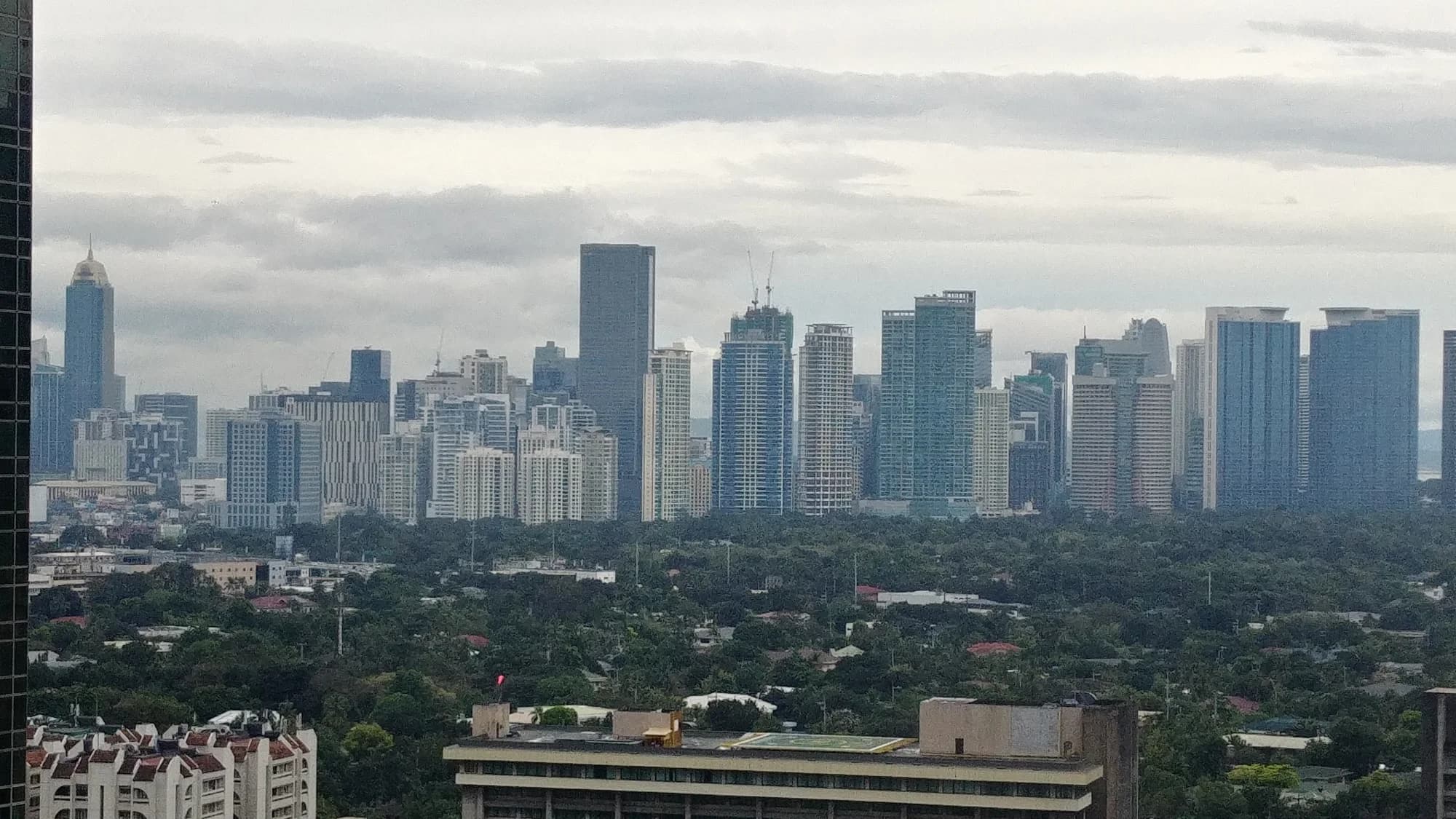
The industry operates across approximately 1,000+ PEZA-registered IT parks and buildings, primarily in Metro Manila (BGC, Ortigas, Makati, MOA Complex), Cebu City, Davao City, Clark Pampanga, and Iloilo. A growing remote/hybrid BPO segment — approximately 20–25% of the workforce operates from provincial locations following COVID-19 normalization — creates satellite demand outside traditional IT park zones.^[22] (This remote BPO worker segment is an inference based on industry reports; SpaceX discloses no segment-specific adoption data.)
6.2 The SLA and ROI Architecture
[Banker] BPO satellite ROI rests on three pillars: avoided downtime revenue, SLA penalty avoidance, and client retention. The math is straightforward enough to show explicitly.
Annual Starlink backup cost (2 business-grade terminals via PLDT Enterprise):
- Hardware: 2 × ₱28,000 = ₱56,000 ($918) amortized over 3 years = ₱18,667/year
- Monthly service (estimated enterprise plan): 2 × $300 = $600/month = $7,200/year
- Total annual backup cost (2 terminals): ~$7,500–10,000/year (modeled)
Downtime revenue exposure vs. annual backup cost:
- Small BPO (100 agents, 1 four-hour outage): $4,800 gross revenue at risk vs. $7,500–9,000/year backup cost — marginal case; the ROI hinges on whether outage frequency exceeds once per year and what SLA exposure applies
- Mid BPO (500 agents, 1 four-hour outage): $24,000 gross revenue at risk vs. $9,000–12,000/year — compelling once annual outage probability exceeds ~50%
- Large BPO (2,000 agents, 1 four-hour outage): $120,000 vs. $15,000–20,000/year — strongly positive under virtually any outage probability assumption
Two important caveats on this model:
- SLA penalty structures vary significantly by contract. Some use per-incident credits calculated from monthly invoice percentages; others use multipliers on downtime value; some cap penalties at a monthly service fee ceiling. The table shows gross revenue at risk, not a universal SLA exposure. The actual financial consequence of an outage depends on the specific contract, the affected process, recovery time, and the client's SLA credit application. Treating 3× gross revenue as a universal penalty (a common simplification in market materials) overstates the financial case.
- Satellite backup prevents an outage only if power remains available, the dish survives the event, and failover orchestration is properly configured. These are real operational prerequisites, particularly for weather events that can damage roof-mounted terminals directly. The ROI case is strongest for financial/cyber failures (where satellite provides clean path diversity) rather than direct physical destruction events.
The mid-BPO case can be commercially compelling once expected annual outage probability and contract-specific SLA exposure are included: at a 500-seat facility with at least one four-hour fiber outage per year and a meaningful SLA credit clause, the gross revenue at risk alone justifies the backup cost. The enterprise satellite case does not depend on extreme assumptions — but it is also not universal, and the specific outage history and SLA terms for each facility determine whether the ROI is compelling or marginal.
6.2a The SLA Architecture in Practice
The BPO SLA structure deserves more detailed treatment because it drives the satellite backup ROI beyond the simple downtime revenue calculation.
Philippine BPO contracts with US and European multinational clients (Concentrix, Teleperformance, Accenture, IBM, Conduent — collectively operating thousands of seats in the Philippines) are governed by Master Service Agreements with detailed uptime SLAs. Standard tier-1 client SLAs require:
- Uptime: 99.9%+ (maximum 8.76 hours annual downtime)
- Recovery Time Objective (RTO): 15–30 minutes for primary connectivity failure
- Recovery Point Objective (RPO): Zero data loss for transaction-critical processes
- SLA penalties: Structures vary significantly by contract — some use per-hour credits, others use monthly invoice percentage caps, others apply multipliers to affected process revenue. Generalizing to a single penalty rate across all BPO contracts overstates precision; the actual financial consequence depends on the specific agreement.
- Disaster Recovery Plan (DRP) requirement: Multinational clients require a documented, tested DRP that explicitly includes connectivity backup. Enterprise clients increasingly require demonstrable diverse-path connectivity in DRP documentation; satellite is one implementation that satisfies this requirement alongside microwave links and multi-ISP diversity. Whether satellite is the required solution or one of several acceptable options varies by client and contract.
The DRP requirement is the compliance-driven demand driver that the "disaster avoidance ROI" framing understates. A facility that cannot demonstrate independently diverse, tested backup connectivity may lose the bid to a competitor that can. Satellite increasingly strengthens that qualification case, especially in secondary cities where terrestrial path diversity is weak. The procurement conversation is shifting from "is this ROI-positive?" toward "is this a minimum viable qualification?" — and that shift, where it occurs, accelerates adoption non-linearly.
[Country Head] The practical ground truth: BPO facilities in BGC Taguig (the highest-end IT park), where PLDT fiber is redundant and SPOF (single point of failure) risk is genuinely low, may deprioritize satellite backup even with positive ROI. The accelerating satellite adoption is in the second-tier BPO hubs — Clark, Davao, Iloilo, Cebu City locations outside the main IT parks — where the compliance requirement from US clients is the same but the terrestrial redundancy is materially lower. The PLDT Enterprise reseller relationship serves these second-tier hubs exactly: it bundles Starlink backup with the existing PLDT Enterprise managed connectivity service that these facilities already purchase.
6.3 The PLDT Enterprise Architecture
PLDT Enterprise became the first and only telco-authorized Starlink reseller in the Philippines on August 13, 2025, positioning itself to bundle Starlink with its existing fiber, wireless, and managed services.^[4]^[39] The bundling logic is important: PLDT Enterprise is not reselling Starlink as a primary connectivity product (where it would cannibalize fiber). It is selling a "managed connectivity resilience" service where fiber is primary and Starlink is automatic failover — exactly the BPO operational requirement.
PLDT's enterprise sales force already covers the major IT parks and PEZA zones. Adding Starlink failover to an existing PLDT Enterprise fiber account requires no new procurement process, no new vendor relationship, and no new LGU permit (since the terminal goes on the customer's roof, not on new tower infrastructure). This frictionless upsell is why the PLDT Enterprise partnership is commercially important: it embeds satellite backup into the existing enterprise telecom workflow rather than requiring a separate buying decision.
6.4 2026 Penetration and 2030 Forecast
[Researcher] No public data on BPO satellite terminal penetration exists. The following estimates are modeled, not surveyed.
The Philippines has approximately 1,000+ PEZA-registered IT parks and buildings. Assuming an average of 3–5 discrete tenant BPO facilities per IT park, the addressable enterprise universe is roughly 3,000–5,000 facilities. As of mid-2026 (roughly 10 months after the PLDT Enterprise partnership and 16 months after the Converge ICT dealer relationship), we estimate:
- Penetration: 5–10% of large facilities (>200 seats), 2–5% of small/mid facilities
- Total enterprise BPO terminals: 2,000–4,500 (modeled)
- 2030 target penetration: 30–45% of large facilities, 10–20% of smaller facilities
- 2030 enterprise BPO terminals: 12,000–20,000
The remote BPO worker segment (20–25% of workforce working from provincial locations) creates additional demand that the PLDT Enterprise model does not reach efficiently. This is where Converge ICT's dealer relationship and Globe's D2D strategy address a real gap — but D2D's current text-only capability is insufficient for voice/video BPO work, limiting its utility for that specific use case.
6.5 The AI Disruption Factor: Demand Shift, Not Demand Destruction
Generative AI is displacing low-complexity voice and data-entry functions — but IBPAP's revised 2026 target of $42 billion assumes 1.97 million workers (above the 2025 base), implying AI is expanding revenue per worker rather than collapsing headcount.^[22] The functions AI is automating fastest (simple voice support) concentrate in urban IT parks where fiber is reliable; the functions growing fastest (healthcare analytics, financial compliance, cybersecurity) require strict uptime guarantees and are more satellite-dependent, not less. The emerging remote/provincial BPO segment — high-value workers operating from provinces under hybrid models — is exactly where satellite is primary or backup connectivity. Net effect: AI is a demand diversifier for satellite, not a demand destroyer.
6.6 BPO Industry Geography and the Satellite Connectivity Whitespace
The IT-BPM industry's geographic concentration matters for satellite market topology:
-
Metro Manila (Makati, BGC, Ortigas, Pasig, Quezon City, Alabang): The dominant BPO geography. Excellent PLDT and Globe fiber coverage. Satellite is backup-only; primary fiber works well. Enterprise satellite penetration here is easiest (IT-mature buyers) but also least urgent (terrestrial connectivity is reliable).
-
Metro Cebu (IT Park, Asiatown IT Park): Second-largest BPO cluster. Good fiber coverage. Same dynamics as Metro Manila — backup priority, not primary.
-
Clark Pampanga (Clark Freeport Zone): Significant BPO presence in a PEZA zone. Mixed fiber/mobile coverage. Satellite backup case is stronger than Makati due to Pampanga province's occasional flooding and power outage frequency.
-
Davao City and General Santos City: Growing BPO hub in Mindanao. The June 2026 Mindanao earthquake highlighted the terrestrial infrastructure vulnerability in this geography. A Davao City BPO facility with satellite backup that maintained operations during the earthquake has a case study argument that no marketing material can match.
-
Iloilo City and Bacolod: Mid-tier Visayas hubs. Fiber coverage improving but not at Metro Manila density. More exposed to typhoon infrastructure disruption than Luzon centers.
-
Provincial remote workers: The most satellite-dependent BPO geography. A customer service representative working from Cagayan de Oro, Zamboanga, or Tacloban under a hybrid arrangement has fiber or mobile as primary but satellite as the only viable backup. PLDT Enterprise's fiber-plus-Starlink bundle is the right product for this segment; reaching it requires territory coverage beyond the IT park PEZA zone.
The synthesis: The easiest BPO enterprise sales are in the provinces, where terrestrial connectivity is least reliable and the enterprise satellite backup ROI is highest. The highest-volume BPO enterprise sales are in Metro Manila, where the organizational decision-making is centralized and the deal size is larger. Both markets are necessary for the 2030 forecast to hold.
7. The Disaster Economy: "Communication Is Aid"
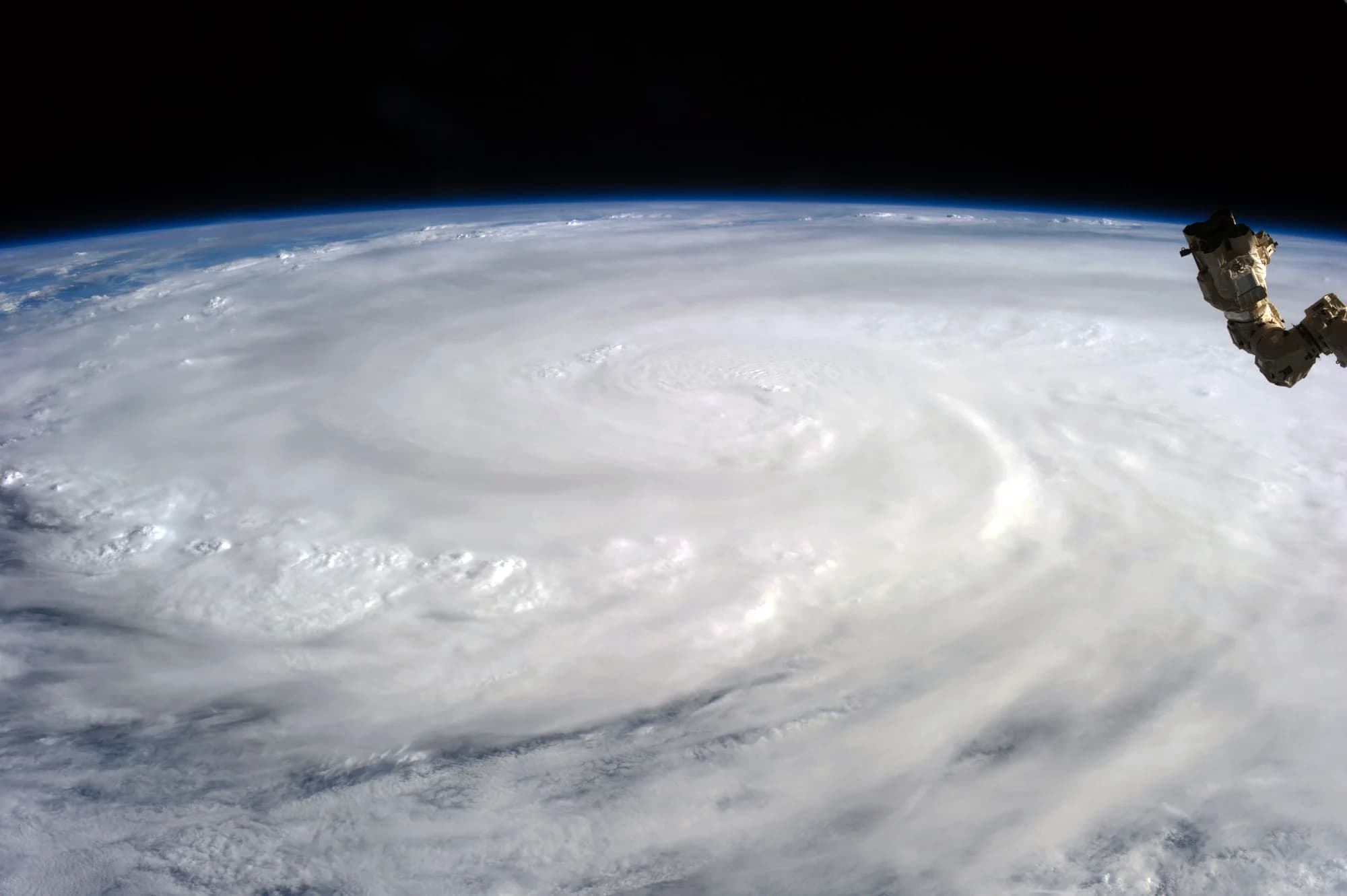
7.1 The Annual Cycle
The Philippines sits at the intersection of three geological and meteorological hazard zones: the Pacific typhoon basin, the Philippine Trench seismic zone, and the Pacific Ring of Fire volcanic arc. No other ASEAN market faces this combination. The statistics are relentless.
World Bank estimates the annual macroeconomic impact of typhoons alone at approximately 1.2% of GDP — roughly $5.6 billion at 2024 GDP levels.^[23] Telecom infrastructure damage is typically reported at 5–15% of total typhoon infrastructure damage based on post-disaster needs assessments, implying annual telecoms destruction costs in the range of $280–840 million per year — a range wide enough to treat as directional rather than precise, and labeled accordingly.
7.2 Typhoon Haiyan to Mindanao Earthquake: The Doctrine Evolution
[Country Head] Typhoon Haiyan (2013) is the watershed. The storm killed 6,300 people and caused $5.8 billion in damage. The DSWD (Department of Social Welfare and Development), NDRRMC (National Disaster Risk Reduction and Management Council), and international aid organizations documented that communication blackouts in the first 72 hours materially slowed rescue response in Leyte and Samar. The lesson encoded into every subsequent disaster response plan: maintaining communications infrastructure during and after a disaster is not a convenience; it is a condition for effective response. The "communication is aid" doctrine emerged from Haiyan.
The institutional expression of this doctrine is the PhilSA INCENTIVISE project (Introducing Non-Geostationary Satellite Constellations Test Deployments to Improve Internet Service) — a joint DICT-PhilSA initiative deploying Starlink terminals in GIDAs (Geographically Isolated and Disadvantaged Areas):
- Batanes (September 2023): First deployment; Basco Provincial Government Office.^[24]
- Kalayaan, Palawan (November 2023): One of the westernmost points of the Philippines, adjacent to the disputed Spratly Islands.^[25]
- Jolo, Sulu and Taganak, Turtle Islands, Tawi-Tawi (January 2024): Southernmost deployments.^[26]
Note that Kalayaan (Palawan) sits within the Philippine claim area in the South China Sea — making INCENTIVISE deployments simultaneously connectivity projects and geopolitical assertions, whether or not they were designed as such.
7.3 The June 2026 Mindanao Earthquake: The Doctrine in Action
The June 8, 2026 magnitude 7.8 earthquake (offshore Sarangani, epicenter 32 km west of Maasim) was the most significant geological event in the Philippines in a decade. By June 18, government reporting listed 78 deaths and 1,339 injuries; the event disrupted terrestrial communications across South Cotabato, Sultan Kudarat, and Sarangani provinces.^[2]^[46]
The operator response was the fastest and most coordinated in post-disaster telecom history in the Philippines:
-
Globe Telecom deployed Starlink terminals across all three affected provinces and restored services in 31 of 32 affected municipalities. Most critically, the D2D pilot infrastructure provided emergency connectivity to more than 150,000 customers before the nationwide commercial launch on June 29, 2026.^[27]^[28] This was the Philippines' — and Southeast Asia's — first real-world D2D satellite disaster deployment.
-
PLDT/Smart set up free Wi-Fi and charging stations in General Santos City and configured Starlink connections at Malungon Sarangani Provincial Hospital and Alabel Sarangani Provincial Hospital through the PLDT Enterprise network.^[3]
-
DICT deployed free Wi-Fi units in the affected municipalities under the National Free Wi-Fi Program.
[Banker] The earthquake response makes an important procurement argument: the PLDT Enterprise hospital connectivity was not pre-positioned (it was configured post-earthquake). This illustrates both the rapid-deployment advantage of satellite and the gap in pre-deployment. A hospital that already had PLDT Enterprise Starlink failover pre-installed would have maintained connectivity through the event rather than requiring post-event configuration. The gap between "could be deployed in hours" and "should have been deployed already" is the procurement opportunity for both enterprise and government customers.
Why satellite goes in the government budget as capex, not opex: The "communication is aid" doctrine means that NDRRMC, DSWD, and LGU disaster offices budget satellite terminal procurement as emergency infrastructure — the same budget line as generators, water tanks, and radio equipment. This is classified capital expenditure, recurring (replacement of destroyed equipment), and politically durable — the post-Haiyan doctrine has made emergency communications investment a politically safe line item. This procurement pathway operates largely outside the normal consumer price sensitivity calculus.
7.4 The Post-Haiyan Policy Architecture in Detail
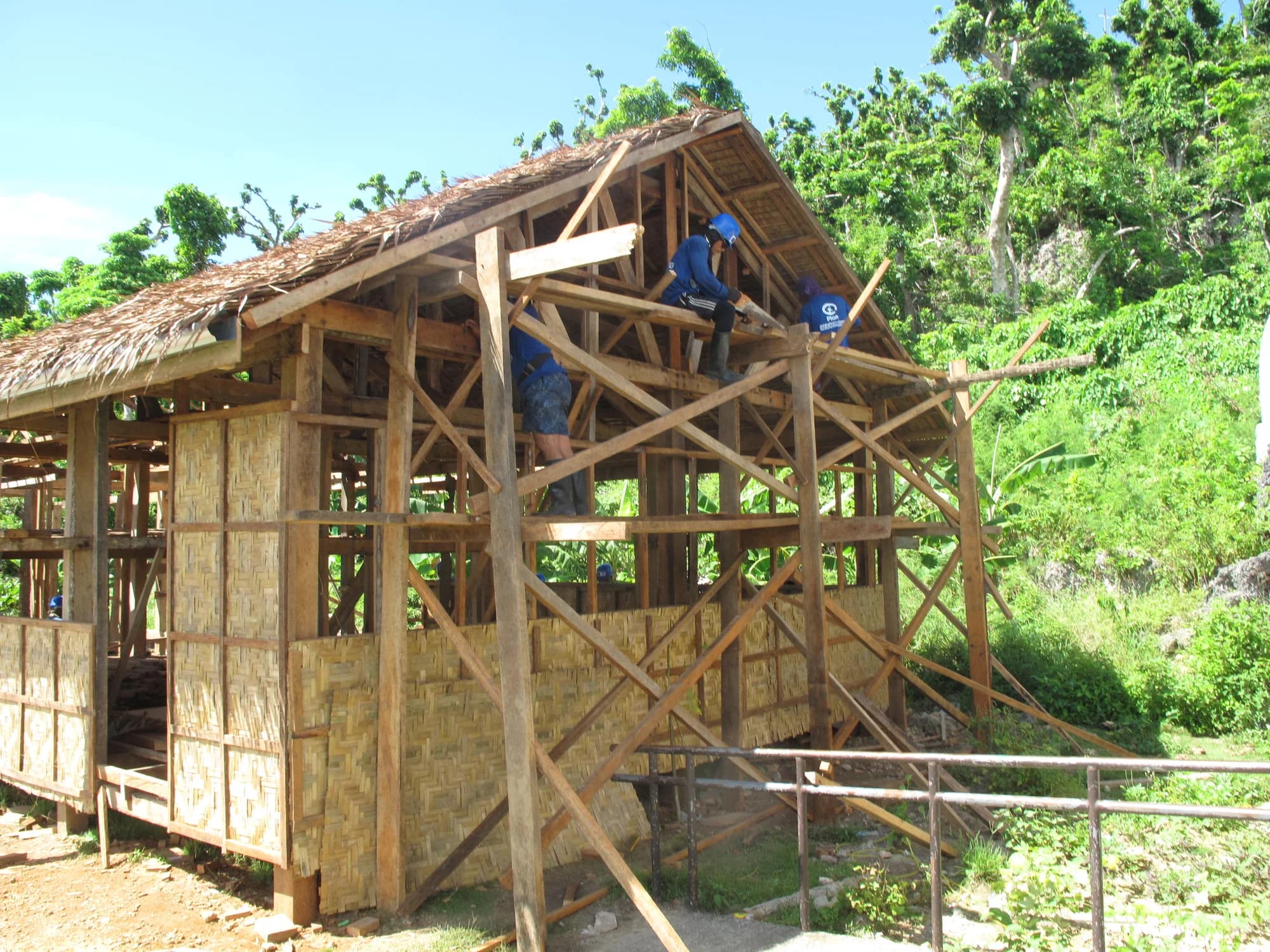
[Country Head] The institutional learning from Typhoon Haiyan (local name: Yolanda) produced specific policy artifacts that directly shape the satellite market:
NDRRMC Cluster System: Post-Haiyan, the National Disaster Risk Reduction and Management Council reorganized disaster response into functional clusters: food, health, shelter, search and rescue, early recovery, and — critically — emergency telecommunications (ETEL). The ETEL cluster, co-led by DICT and DOST, is specifically mandated to maintain communications infrastructure during and after disasters. Satellite terminals are among the assets used by the ETEL cluster.
DICT Free WiFi for Emergency Communications: The DICT's National Free WiFi Program, which originally targeted connectivity in public places, was explicitly extended post-Haiyan to include "emergency connectivity nodes" — locations where free Wi-Fi must be maintained even when commercial telecom services fail. These nodes often require non-terrestrial or independently diverse backup where terrestrial infrastructure is unavailable.
LGU Disaster Communication Mandates: Post-Haiyan legislation (and subsequent disaster risk reduction regulations) mandated that local government units (LGUs) in typhoon-prone areas maintain emergency communication capability. Satellite is an increasingly adopted implementation — especially for LGUs where terrestrial infrastructure was destroyed and has not been fully rebuilt — but the mandate specifies communications capability, not a specific technology. With 42,000+ barangays and 1,634 municipalities/cities, this represents a large but diffuse procurement market, with adoption determined by LGU budget, geography, and local procurement capacity.
The "1,000 Barangays" Priority: The DICT's NDCP (National Digital Connectivity Plan) identifies approximately 1,000+ priority GIDAs (Geographically Isolated and Disadvantaged Areas) — the most remote and disaster-exposed barangays — for satellite-based connectivity under government programs. PhilSA's INCENTIVISE project operationalizes this for Starlink terminals. The total cost at ₱28,000 hardware + $300/month connectivity for 1,000 barangays: roughly ₱28M ($459K) capital + ₱3.6M/month ($59K/month) operating costs. This is a tractable government procurement budget, not a transformative infrastructure investment.
The Recurring Procurement Cycle: Typhoons can damage exposed terminals and power systems, creating a replacement and hardening requirement that may recur independently of net subscriber growth. Typhoon Rai (Odette, December 2021) damaged satellite infrastructure across Visayas and southern Luzon. In a country with 8–10 annual typhoon landfalls, terminal replacement and hardening costs are a recurring budget consideration — not an exceptional event — though aggregate procurement volumes are not publicly reported by any operator or government agency.
8. The OFW Circuit: The Demand Driver No Other ASEAN Market Has
8.1 Scale and Geography
The OFW phenomenon is the most distinctive feature of Philippine consumer satellite economics. Approximately 10–12 million Filipinos work abroad; official BSP data shows $35.63 billion in cash remittances in 2025 (a new record, up 3.3% YoY) and $39.6 billion in personal remittances.^[7] Cash remittances alone equated to 7.3% of GDP in 2025.
The geographic concentration of OFW households maps onto the connectivity gap with uncomfortable precision:
This table is illustrative/modeled based on published OFW remittance geography (BSP) and DICT connectivity data. The inverse correlation between OFW density and terrestrial coverage is not a coincidence — provinces with fewer employment opportunities domestically generate more OFW emigrants and also received less commercial telecoms investment.
8.2 The OFW Demand Mechanics
[Banker] Three distinct demand mechanics drive OFW-household satellite adoption:
Mechanism 1 — Dollar income, peso price. An OFW earning $1,200/month (a common salary range for domestic workers in Singapore or Hong Kong) faces a ₱4,099 monthly subscription as $67 — 5.6% of monthly income. That same subscription costs a provincial minimum-wage worker 41% of monthly income. The identical product has an entirely different purchase calculus depending on whether the income is dollar-denominated.
Mechanism 2 — Video call quality as family infrastructure. OFW families communicate by video call. Low-bandwidth, high-latency connections over a 4G signal that drops during rain degrade what is often the only meaningful family contact for months. Starlink's 55 Mbps median and 20–50 ms latency at home provides video call quality on par with what the OFW experiences at their workplace in Singapore or Qatar. This is not a "nice to have" — it is the primary communications infrastructure for a family structure defined by physical separation.
Mechanism 3 — Status and visible investment. A Starlink dish on the roof of a concrete block house in a small Ilocos barrio is an unmistakable signal of OFW family success — the same function that the Honda CRV and the second-floor addition served in the 1990s. Consumer studies on OFW expenditure patterns consistently show a premium on visible household technology. Satellite internet fits this pattern precisely.
8.3 The OFW Digital Divide Within the Digital Divide
[Researcher] A nuance that aggregate OFW statistics obscure: the OFW population itself is stratified by income and by destination country. Gulf Cooperation Council (Saudi Arabia, UAE, Qatar, Kuwait) domestic workers — the largest single OFW category by headcount — earn $400–$800/month, with limited savings after remittances. Japan, Korea, and Singapore OFWs in skilled trades or professional categories earn $1,500–$4,000/month. The satellite demand from OFW households is concentrated in the higher-income OFW families, specifically:
- Japan/Korea/Singapore skilled workers: Dollar/yen/won-denominated salaries with meaningful discretionary income. These OFW families are the core Starlink residential TAM.
- US/Canada/UK professional diaspora: Many are not OFWs under the Philippine government's technical definition (they hold foreign citizenship or permanent residency), but they remit to maintain family connectivity and often return to provincial homes for extended periods. This group has the highest income and the highest propensity to fund satellite connectivity for the family home.
- Gulf domestic workers: Lower remittance capacity, more price-sensitive. D2D at ₱99/30 days is more appropriate for the rural family members they support than a ₱4,099/month residential subscription.
The implication for market segmentation: the residential satellite premium tier (₱4,099/month terminal subscribers) is funded primarily by Japan/Korea/Singapore and US/UK/Canada diaspora remittances, while D2D (₱99/30 days) serves Gulf worker families and domestic rural households. Both markets are real; they are different markets and require different approaches.
8.4 OFW Remittance Corridors and Infrastructure Investment
BSP data on OFW remittance geography (province-level data available through PSA surveys) shows the following high-remittance regions that correlate with satellite connectivity opportunity:
Note: Remittance share figures are approximate, based on BSP provincial remittance data patterns. Terrestrial BB penetration is illustrative, modeled from DICT data.
CALABARZON's high remittance share reflects its large population, not a connectivity gap — the region is Metro Manila's suburban ring, with good fiber coverage. Eastern Visayas' 6% share in a region that is both high-OFW and low-coverage is the clearest satellite opportunity: high dollar income coming in, poor terrestrial connectivity, and one of the Philippines' most typhoon-exposed geographies (Tacloban/Leyte, ground zero of Typhoon Haiyan 2013).
8.5 OFW Terminal Forecast
We model 30,000–50,000 OFW-funded residential satellite terminals by 2028, concentrated in:
- Ilocos (La Union, Ilocos Norte, Ilocos Sur): 8,000–12,000 terminals
- Eastern Visayas (Leyte, Samar, Eastern Samar): 7,000–10,000 terminals
- Bicol Region (Camarines Norte, Catanduanes, Masbate): 5,000–8,000 terminals
- BARMM and Mindanao OFW provinces: 5,000–8,000 terminals
- Other provinces: 5,000–12,000 terminals
This is a modeled estimate based on OFW remittance geography (BSP) and Starlink terminal economics, not a surveyed figure. The lower bound (30,000) assumes conservative 3% penetration of OFW-density provinces with poor terrestrial coverage. The upper bound (50,000) assumes 5% penetration and faster price normalization. The actual number depends heavily on whether Starlink hardware prices fall (the ₱28,000 Standard Kit hardware cost is the larger barrier than the monthly fee for many OFW families who prioritize lump-sum capital spending).
9. The D2D Bet: Globe's No-Hardware Mass-Market Play

9.1 The Architecture
Globe Telecom's Direct-to-Device (D2D) partnership with Starlink is the single most strategically novel development in Philippine satellite connectivity. The MoU was signed in January 2026. The Philippine National Telecommunications Commission granted nationwide commercial approval and Globe launched the service on June 29, 2026 — making the Philippines the first country in Southeast Asia to commercially deploy Starlink D2D.^[28]^[29]^[43]
D2D technical mechanics:
- Starlink's network of 650+ low-Earth orbit satellites functions as cell towers in space, directly transmitting to standard LTE-compatible Android handsets.
- No specialized hardware required beyond the handset the user already owns.
- Requires a clear line of sight to the sky and an active Globe or TM SIM.
- Current capability (June 2026): The service provides a constrained-bandwidth satellite data connection over which subscribers can use SMS, chat apps, navigation, and IP-based voice and messaging applications (e.g. data calling through messaging apps; not circuit-switched voice). iOS is not yet supported. The 2GB data allowance per 30-day pass frames the monthly capacity envelope; this is not a general-purpose broadband service and does not support sustained high-bandwidth browsing or streaming.
Pricing: Prepaid from PHP 99 (approximately US$1.60) for 30 days (100 texts + 2GB data); PHP 299 for 90 days. Globe/TM customers only.^[30]
9.2 The TAM Logic
[Researcher] NTC's approval framing is precise: Globe's D2D service "aims to reach the remaining 4 percent of Filipinos still outside the coverage of terrestrial mobile networks."^[29] Four percent of 115.84 million = 4.6 million people.^[41] Adding populations in poor-coverage (not zero-coverage) areas that would benefit from satellite overlay: the realistic addressable universe is 10–15 million people.
The D2D economic model is fundamentally different from the terminal-based model:
- No ₱28,000 hardware purchase
- No installation
- No monthly commitment (prepaid)
- Entry price: ₱99/30 days — roughly ₱99/month at minimum usage (one pass per month), or roughly 1% of provincial minimum monthly wage. Even at ₱299/quarter (₱100/month effective), the affordability gap compared to residential Starlink (₱4,099/month) is an order of magnitude
This is not a mass-market product at ₱4,099/month. At ₱99–299/quarter, it is plausibly mass-market for Filipinos in underserved areas who have handsets but no coverage. The commercial question is whether Filipinos in true zero-coverage areas have LTE handsets — a requirement the service cannot overcome.
9.3 The Earthquake Proof of Concept
The June 8 Mindanao earthquake provided Southeast Asia's first documented real-world D2D satellite connectivity disaster response. Globe activated its D2D pilot infrastructure in South Cotabato, Sarangani, and Sultan Kudarat — the three most heavily affected provinces — and made emergency satellite-to-mobile connectivity available across areas representing approximately 150,000 residents where terrestrial mobile networks had failed; the 150,000 figure represents coverage population, not confirmed active users, per secondary reporting.^[27]
[Country Head] The 150,000 figure represents a D2D pilot, not a full commercial deployment. The commercial service launched three weeks later. But the operational proof-of-concept matters: the system worked under the exact stress scenario for which it was designed. Philippine disaster response officials, who have spent a decade trying to maintain communications in post-typhoon environments, have now seen D2D work at province scale. That is the most effective government procurement case any satellite technology can make.
9.4 D2D Revenue Model and 2030 Outlook
D2D economics differ fundamentally from terminal-based satellite: revenue is per-subscriber at very low ARPU (₱99–430/month prepaid), Globe takes a distribution share, and scale — not ARPU — is the driver.
The corrected D2D pricing (₱99/30 days, not ₱99/week) sets entry-level monthly revenue at approximately $1.60 per purchasing subscriber. Users purchasing more frequently or choosing higher service tiers could produce higher ARPU; the blended effective ARPU across active and lapsed subscribers is modeled at $1.50–2.00/month. SpaceX wholesale revenue share with Globe is not disclosed; the range below uses three scenarios (20%/35%/50%) to frame the uncertainty.
D2D revenue projections are more uncertain than terminal-based projections. The 2026 end-year subscriber count is too early to estimate reliably; Globe has provided no public targets. The 2030 range depends on network effect, pricing evolution, whether iOS support and broadband-class data capability arrive, and SpaceX's actual revenue-share terms with Globe (which are structurally determined by who holds spectrum, billing, and customer support cost — factors that typically advantage the MNO). The base-case SpaceX wholesale at 35% share would produce $18.4M in D2D revenue by 2030 — real but secondary to the $260M–$295M hardware base.
The eventual commercial upside depends on whether D2D evolves from limited-bandwidth satellite data to sustained-throughput data delivery, which requires both technology maturation and continued Philippine gateway investment by SpaceX.
9.5 D2D Technical Constraints and the Roadmap to Broadband
The Starlink D2D service supports selected IP-based voice and messaging applications through a constrained-bandwidth satellite data link. It does not support circuit-switched voice (standard phone calls), sustained high-bandwidth streaming, or general-purpose web browsing — the data envelope (2GB/30 days) and per-link throughput ceiling are the binding constraints. iOS devices are not yet supported at launch.
The roadmap to genuine broadband D2D — where a user could access sustained internet-speed data through their existing handset — requires satellite antenna aperture increases beyond current capability, and likely next-generation Starlink satellite hardware. SpaceX has not committed to a public timeline.
[Researcher] The comparison point is Telstra's D2D launch in Australia (February 2026) — the world's first commercial D2D satellite connectivity service, preceding the Philippines by four months.^[45] Telstra's Australian D2D reached 120,000 daily satellite connections within the first month of commercial service, primarily for emergency messaging and location sharing in Australia's vast 5G-dead zones. The Australian experience is directionally informative for the Philippines: D2D adoption is rapid where users clearly understand the value proposition (emergency/remote areas), and slow where the additional capability versus terrestrial mobile is marginal.
The Philippines has a larger zero-coverage population than Australia (4.6 million vs approximately 2 million in equivalent remote areas), a more disaster-prone environment, and a lower handset upgrade cost (4G Android phones are widely available in the Philippines at ₱2,000–₱5,000). The structural conditions for D2D adoption are stronger in the Philippines than in Australia, suggesting the 120,000-daily-connections benchmark could be reached faster — if NTC regulatory processing does not create delays for new handset models requiring approval.
9.6 Globe's D2D Network Effect and the Churn Prevention Thesis
[Banker] The D2D commercial case for Globe is not primarily near-term revenue maximization. At ₱99/30 days, D2D is a low-ARPU incremental service whose undisclosed wholesale and operating costs make any margin claim premature. The commercial case is:
-
Churn prevention: A Globe subscriber who can use their Globe SIM to send messages during a typhoon evacuation, earthquake, or power outage will not switch to Smart when coverage is restored. The satellite connectivity experience during the crisis creates carrier loyalty that persists after terrestrial service is restored. In a market where Globe and Smart compete primarily on coverage claims, D2D gives Globe a coverage advantage that is literally orbital — no terrestrial tower rollout can match its geographic reach on the same timetable.
-
Subscriber acquisition in zero-coverage zones: Previously, Globe had no commercial reason to sell SIMs in zero-coverage barangays — there was no product to sell. D2D creates a Globe product for the 4% of Filipinos in no-coverage areas. These SIM registrations create a Globe relationship that can be monetized when terrestrial coverage eventually reaches those areas.
-
Enterprise D2D: Globe has not publicly announced enterprise D2D pricing, but the enterprise angle is apparent: a BPO company with 2,000 employees working from hybrid/remote provincial locations could provide enterprise D2D SIM cards as a company benefit. During a typhoon event that takes down local mobile towers, those employees can still communicate via D2D. This is a Globe enterprise product that complements (rather than competes with) PLDT Enterprise's Starlink terminal backup offering.
The strategic picture: by end-2026, Globe will have the only commercial D2D satellite service in Southeast Asia. If the service achieves even 300,000 active users by end-2026 — a plausible but unverified target, given that the Mindanao earthquake response made service available across areas representing roughly 150,000 residents (coverage population, not confirmed active users) — it establishes Globe as the dominant "connectivity in the last 4%" operator, a moat that no terrestrial rollout can close.
10. Operators and Competitive Landscape
10.1 Operator Overview
10.2 Globe Telecom: The D2D First-Mover
Globe is the most strategically positioned Philippine operator for the D2D era. Its network coverage (85%+ of the population) provides the base layer. D2D Starlink fills the gap (4% zero-coverage) and augments the weak-coverage zone. The moat is the existing subscriber relationship: 90 million Globe and TM mobile subscribers who automatically gain D2D access when NTC-approved, without downloading an app or buying hardware.^[28]
[Banker] Globe's D2D revenue is initially small — ₱99/30 days is a thin margin service. The strategic value is network retention: subscribers who stay connected through a typhoon or earthquake are less likely to churn. In a market where Globe and PLDT/Smart battle for market share on coverage metrics, D2D is Globe's asymmetric advantage — it can claim coverage in areas where Smart has no terrestrial signal either, because coverage is now defined by Starlink's orbital geometry rather than either company's tower footprint.
10.3 PLDT/Smart: Enterprise Anchoring
PLDT Enterprise's August 2025 partnership positioned it as the definitive enterprise Starlink reseller.^[4] This is the right positioning: PLDT Enterprise's 60,000+ corporate clients and deeply embedded IT Park relationships give it access to the BPO decision-makers who control satellite backup purchasing. The limit of this strategy is that PLDT Enterprise does not address the consumer residential or D2D market, and does not compete with Globe on zero-coverage rural populations.
10.4 Converge ICT: The Fiber-Gap Filler
Converge ICT's March 2025 dealer agreement positioned it as a Starlink reseller for enterprise customers in geographies where Converge fiber does not yet reach.^[31] The logic is complementary: Converge fiber covers Metro Manila, Calabarzon, Central Luzon and parts of the Visayas, but its fiber rollout has not matched its ambition. For construction sites, mining camps, tourism resorts, and agricultural enterprises in the fiber gap, Converge can now offer a Starlink-based managed service. The revenue forecast ($4 million in initial Starlink kit sales per the company's PSE disclosure) is modest but established a template.
10.4a DITO Telecommunity: The Absence That Matters
[Country Head] DITO Telecommunity deserves specific attention not for what it does in the satellite market but for what it has chosen not to do. DITO, the Philippines' third major MNO (launched February 2021, backed by Udenna Corporation and China Telecommunications Corporation), had the scale — 16 million subscribers as of 2024, growing fast — to pursue a satellite partnership. It did not.
The reason is structural, not strategic: DITO's Chinese shareholder (China Telecom holds 40% of DITO's international holding company) creates the same political-institutional barrier that Chinese LEO operators face directly. A DITO-Starlink partnership is commercially conceivable; a DITO-Chinese satellite partnership is institutionally impossible in the post-2023 South China Sea escalation environment; and a DITO-Starlink partnership would face AFP institutional resistance precisely because DITO's Chinese equity structure makes every DITO network element a potential intelligence concern under US-Philippine security protocols.
The result: DITO competes with Globe and Smart on mobile coverage but has no announced satellite strategy. This absence is consistent with the geopolitical thesis — the same institutional environment that makes Chinese LEO entry difficult would make a DITO satellite strategy (whether via Chinese or US constellation partners) politically awkward. DITO's absence may also reflect capital constraints, terrestrial rollout priority, and the lack of a viable structural path to a D2D or VSAT partnership under the current alliance architecture. The fact that DITO has not pursued satellite is consistent with the geopolitical thesis, though it is not, by itself, proof of it.
10.5 Now Telecom / OneWeb: The Stranded Asset
[Researcher] The OneWeb-Now Corp MoU (May 3, 2023) created an enterprise LEO partnership targeting critical infrastructure: banks, hospitals, schools, mining sites, power plants, government.^[32] Three years on, it has not translated into a commercially significant Starlink competitor. OneWeb (now Eutelsat OneWeb) faces three structural disadvantages in the Philippines:
- Coverage: OneWeb's constellation covers higher-latitude zones preferentially. Equatorial performance lags Starlink. The Philippines at 4°–21° N is marginal for OneWeb orbital geometry.
- No D2D: OneWeb has no smartphone direct-to-device capability. In a market where the D2D narrative is now dominant, a terminal-only LEO service is positioned in the past.
- Scale: With ~650 satellites versus Starlink's 7,000+, OneWeb cannot match per-terminal throughput in a high-density market.
Now Telecom will retain a niche in government and critical infrastructure procurement where "non-Starlink" is explicitly required in the tender specification, but it will not become a mass-market or BPO-scale competitor.
10.6 Astranis / Orbits "Agila": The Domestic Microsat Alternative
[Researcher] Astranis Space Technologies and Philippines-based Orbits Corporation announced their partnership in November 2023 to deploy at least two microGEO satellites named "Agila" dedicated exclusively to the Philippine market. The first Agila satellite launched on December 29, 2024; as of mid-2026, limited public information is available on orbit-raising completion, payload commissioning status, and commercial service activation.^[33] A second satellite order has been placed.^[34] The program claims potential to reach 10 million Filipinos in 30,000 barangays.^[44] The Maharlika Investment Fund (Philippines' sovereign wealth fund) was reported in June 2025 to be considering an equity investment in the Agila program.^[35]
Astranis (the manufacturer) secured a total of $450 million in equity and debt financing in May 2026 — a $300 million Series E co-led by Snowpoint Ventures and Franklin Templeton, with participation from a16z, BlackRock funds, Baillie Gifford, and FMR, plus a $155 million delayed-draw credit facility from Trinity Capital.^[36] KKR was not identified as an investor in the Astranis Series E per SpaceNews reporting; any reference to KKR funding in this context is unverified.
Agila's competitive positioning is specific and narrow:
Where Agila wins:
- Government-subsidized rural schools: The DepEd (Department of Education) and LGU deployment of connectivity to GIDA schools is a funded government mandate. Agila's GEO economics (no gateway investment beyond the satellite itself for initial service areas) fit this procurement model.
- Barangay-level government connectivity: NDCP/DICT barangay connectivity targets work with any satellite technology that meets minimum standards.
- Politically symbolic domestic infrastructure: A Philippine-flagged satellite named after the Philippine eagle carries political resonance that a foreign LEO service cannot match.
Where Agila loses:
- BPO enterprise: Latency. GEO satellites operate at ~35,786 km altitude, producing approximately 600 ms round-trip latency. BPO voice and video calls require <100 ms. No amount of political preference or pricing can close this physics gap.
- Maritime commercial and maritime fishing: Latency again, plus the tracking overhead required for GEO terminals on moving vessels.
- D2D mass-market: GEO satellites cannot do smartphone Direct-to-Device. The orbital geometry and power budget do not allow it.
- Disaster first-response: GEO terminals require proper installation and alignment. A post-earthquake quick deployment favors Starlink's portable dish over GEO ground equipment.
The steelman case for Agila: If the Philippine government deploys Agila at 30,000 barangays under NDCP targets, the program succeeds on its own terms and generates a sustainable revenue stream from DICT/PhilSA budget allocations, regardless of whether it competes with Starlink in the BPO or maritime segment. That is a legitimate outcome, not a failure — it is a different product for a different market.
The risk: The Agila program's execution history includes a launch abort on December 21, 2024 (resolved with the December 29 successful launch). Government rollout of 30,000 terminals across barangays is a logistical operation that has never been accomplished at that scale in the Philippines for any technology. The timeline slippage risk is real and should be treated as a scenario variable, not an assumed delivery.
11. Maritime and Fisheries: The South China Sea Dimension

11.1 The Fleet
The Philippines has approximately 220,000 registered municipal and commercial fishing vessels per BFAR (Bureau of Fisheries and Aquatic Resources) registry data.^[37] The fleet divides into two tiers with radically different satellite economics:
-
Municipal fishing boats (<3.1 GT): The majority of the fleet. Small, often unpowered or paddle-canoe class. Crew of 1–5 fishermen. Revenue insufficient to justify $300–600/month satellite connectivity. These are not target Starlink customers.
-
Commercial fishing vessels (>3.1 GT): A smaller but significant portion. Multi-day deep-sea operations in the Sulu Sea, South China Sea, and Philippine EEZ. Crew of 10–50+. Eligible for BFAR vessel monitoring requirements. These are viable satellite customers for safety, navigation, and market-price monitoring.
The distinction matters because the brief's "220,000 registered vessels" figure, without segmentation, overstates the addressable market substantially. The addressable universe for satellite is the commercial fleet, which numbers in the thousands, not hundreds of thousands.
11.2 The South China Sea Strategic Dimension
[Geopolitics] The maritime satellite story in the Philippines is inseparable from the South China Sea confrontation. Several specific developments:
-
BRP Sierra Madre: The deliberately grounded Philippine Navy vessel at Second Thomas Shoal (Ayungin Shoal) is the most contested maritime outpost in Asia. Philippine Navy Marines and sailors use Starlink for communications. The Coast Guard's transparency initiative — broadcasting Chinese Coast Guard incidents in real time — is operationally dependent on Starlink connectivity.^[15]
-
Unmanned Surface Vessels (USVs): The Philippine Navy's USV Unit (established 2024, Subic Bay) deploys autonomous surface vessels with Starlink terminals for ISR (intelligence, surveillance, reconnaissance) operations in the Philippine EEZ.^[16]
-
Starlink jamming near Scarborough Shoal: China has been identified as the source of Starlink signal jamming within approximately 24 nautical miles of Scarborough Shoal. This is the world's clearest documented case of a great power actively countermeasuring a commercial satellite internet system in a territorial dispute context.^[17]
-
Philippine Coast Guard Starlink terminals: The PCG has deployed Starlink aboard its vessels as part of the maritime domain awareness expansion funded under US bilateral security assistance.
Commercial implication: The government maritime sector (PCG, Navy, fisheries monitoring) is a guaranteed early adopter at above-market terms. The commercial fishing sector follows on safety and market-price economics. The strategic dimension — that every maritime Starlink terminal is a resilient node in a maritime surveillance network — accelerates procurement and insulates it from budget scrutiny.
11.2a The 2025–2026 Escalation Cycle and Its Satellite Market Implications
The South China Sea confrontation intensified materially in 2024–2026. The June 17, 2024 incident at Second Thomas Shoal — in which Chinese Coast Guard vessels rammed Philippine resupply boats and a Filipino sailor lost his finger — marked the sharpest physical confrontation since the Mischief Reef construction standoff of the 1990s. In the following 18 months, incidents involving water cannons, laser dazzling, and physical blocking of Philippine vessels occurred at Second Thomas Shoal, Scarborough Shoal, and multiple Spratly Island locations.
Each incident, broadcast in real time via Starlink from Philippine Coast Guard vessels, produced international diplomatic pressure on Beijing that no formal diplomatic note could generate at equivalent speed. The PCG's transparency initiative — where video footage of incidents is uploaded to social media within hours and shared with foreign embassies — has become a central tool of Philippine diplomatic strategy.
[Geopolitics] The Starlink-South China Sea nexus has produced two specific satellite market effects:
-
Government satellite procurement at non-price-sensitive urgency. The AFP, PCG, and DICT have all accelerated satellite connectivity procurement since 2023, driven not by standard procurement planning cycles but by operational necessity. When the cost of not having connectivity is measured in diplomatic leverage and physical safety of personnel, procurement urgency overrides normal budget constraints.
-
Chinese satellite exclusion reinforced, not relaxed. In 2019–2020, there was genuine debate in Manila about whether Chinese satellite operators could serve Filipino consumers. By 2025–2026, the South China Sea confrontation had made that debate politically untenable. No Philippine politician who is aware that Chinese satellites may be involved in electronic warfare against Philippine Coast Guard vessels (the Scarborough jamming incident) can publicly advocate for Chinese LEO operating licenses in the Philippines without committing political suicide. The market exclusion that was theoretically contestable in 2019 is now institutionally settled.
-
The US bilateral security assistance satellite component. US security assistance to the Philippines — budgeted at elevated levels since 2022 under the Marcos administration's active US realignment — includes communications equipment. US-provided satellite terminals deployed on PCG and AFP vessels create a training base of satellite-proficient users and a maintenance/logistics infrastructure for Starlink terminals that benefits the commercial market downstream. Military satellite users become commercial satellite advocates.
The escalation cycle's commercial effect is unambiguous: it accelerates Philippine government satellite procurement, confirms the political exclusion of Chinese LEO operators, and deepens the US-Philippines institutional satellite relationship. Each of these outcomes advances the market thesis.
11.3 BFAR Vessel Monitoring and Market Sizing
BFAR requires all commercial fishing vessels to carry Vessel Monitoring Systems (VMS). Traditional VMS uses dedicated L-band/Iridium reporting, but BFAR has begun evaluating Starlink as a higher-bandwidth alternative that enables real-time reporting, CCTV footage transmission, and crew welfare communications.
We model the addressable maritime satellite market at 15,000–25,000 vessels (modeled) by 2030, weighted toward commercial fishing (BFAR-mandated VMS upgrade opportunity) and maritime commercial (cargo, ferry, tanker operators in the Philippine archipelago).
11.4 The Commercial Maritime Fleet
Beyond fishing, the Philippines has a substantial inter-island commercial maritime fleet:
- Roll-on/Roll-off (RoRo) ferries connecting major islands: Operators including 2GO Group, Starlite Ferries, Montenegro Shipping Lines
- Inter-island container ships: For agricultural products, construction materials, manufactured goods
- Oil tankers and fuel transport: Servicing island communities dependent on fuel shipment
- Tourism vessels: Fast ferries between Batangas and Puerto Galera, Palawan inter-island ferries, Boracay services
[Country Head] The inter-island RoRo network is particularly satellite-relevant. Route Manila-Batangas-Visayas-Mindanao can span 36+ hours of sailing. Passenger entertainment systems, crew welfare (internet access for seafarers), fleet management, and safety monitoring are all satellite applications. Philippine inter-island operators have historically used expensive VSAT GEO services for these applications; Starlink's LEO economics represent a significant per-vessel cost reduction.
A Starlink maritime terminal at $300/month replaces a VSAT GEO service at $800–$2,000/month for comparable bandwidth — a 3–6× cost reduction that makes the ROI calculation trivially positive for any commercial ferry operator.
11.5 The Tourism and Island Resort Segment
The Philippines is a major diving and island tourism destination. Palawan (El Nido, Coron), Visayas (Boracay, Bohol, Siargao), and Mindanao (Camiguin, Davao) attract millions of visitors who expect connectivity at resort properties. The tourism segment is not listed separately in the BFAR fishing or PLDT enterprise categories — it sits between maritime and hospitality.
Island resort operators face a specific connectivity economics problem: their business requires internet for booking systems, payment processing, staff communications, and guest Wi-Fi, but they often sit on islands where fiber is non-existent and mobile signal is weak. A single Starlink terminal at a 30-room dive resort that handles 200 guests per month: annual hardware cost ₱28,000 plus ₱4,099/month subscription = ₱77,188/year ($1,265/year). For a resort generating ₱300,000+ per month in revenue, this is 2% of revenue for transformative connectivity. The tourism satellite market in the Philippines is high-ARPU (compared to residential), low-friction (operator purchasing decision, not household), and growing.
We estimate 2,500 active Starlink terminals in the Philippine tourism/hospitality segment by end-2026 (modeled), growing to 8,000 by 2030 as island resort development continues and Starlink marketing reaches the sector.
12. Bottom-Up TAM Model: The Full Segment Build
This section presents the full segment-by-segment model that underlies the headline 2026 and 2030 revenue estimates. Every figure is explicitly labeled as modeled unless sourced otherwise. The model uses a 2026 USD rate of ~₱61/USD (approximate mid-2026 rate).
12.1 The Model Structure and Unit Clarification
Important note on model structure: The "penetration" column measures the fraction of addressable sites/accounts (facilities, vessels, properties) that adopt the service — not a terminal penetration rate of the total universe. Terminal counts are: adopted sites × average terminals per adopted site.
The BPO multiplier (6 terminals per adopted facility) reflects a backup-focused enterprise deployment: typically 2 Starlink Business terminals per floor section or critical operational zone, for a mid-large facility with 2–3 zones. This is meaningfully lower than a primary-link architecture (which might use 15–25 terminals for a large campus) but higher than a single-terminal backup (which handles a simpler facility). A satellite integrator deploying to a 500-seat center as primary connectivity would likely use far more terminals; as backup, 4–8 terminals is the defensible range. The model uses 6 as the mid-point.
Single-terminal segments use one terminal per household, vessel, or property.
For other managed-site segments (SME, government), terminal multipliers of 3–10 are plausible depending on whether the "site" is a single facility or a multi-location enterprise account; these are kept at prior estimates with the caveat that enterprise terminal counts in Philippine satellite markets are not publicly reported by any operator.
12.2 Revenue Reconciliation and Headline Estimates
2026 modeled total:
- Hardware terminals: ~41,500 / Annual revenue: ~$78M (SpaceX Philippines hardware segment, modeled)
- D2D (Globe gross): too early to size — commercial launch June 29, 2026
2026 headline: ~41,500 hardware terminals, ~$78M modeled annual hardware revenue, plus immaterial early D2D revenue.
2030 modeled scenarios:
The headline range of $260M–$295M in hardware revenue corresponds to the bear-to-bull scenario. With the corrected BPO terminal multiplier (6 per facility vs prior implied 23), the BPO penetration rate now drives a ~$30M swing between bear and bull. The model is consequently more sensitive to non-BPO segments — particularly SME (18,000 2030 terminals, $43.2M revenue) and the residential/OFW ramp.
12.3 Revenue Concentration Analysis
At the 2030 base model:
The top 7% of terminals (premium tier: BPO, maritime commercial, mining) generate 26% of revenue. The premium and mid-tier bands together generate approximately 74% of revenue from 38% of terminals. The broader non-residential definition also includes education, which sits in the low-ARPU volume tier; on that classification, all non-residential segments generate approximately 77% of revenue from 43% of terminals. The enterprise-first thesis holds: the mid-tier (government, SME, maritime fishing, tourism, healthcare) is now the largest revenue contributor, reflecting that SME enterprise and government channels are more volume-driven than BPO alone. BPO remains the clearest high-value enterprise proof point, but the mid-tier supplies the scale.
12.3a Model Assumptions and Evidence Basis
BPO penetration rate sensitivity (using 6 terminals/adopted facility):
The bear-to-bull BPO swing is ~$29M in hardware revenue — meaningfully smaller than earlier model versions that used a higher terminal multiplier. Combined with D2D wholesale at 35%, the total SpaceX Philippines revenue swing between bear and bull is ~$43M. The PLDT Enterprise reseller ramp rate remains the most important near-term observable, but the sensitivity is now lower: the bigger revenue drivers are SME ($43.2M in the base case) and the maritime commercial + government channels.
SME segment — the model's largest non-residential bucket — requires its own assumptions note:
At 2030 base, the SME segment generates $43.2M (18,000 terminals × $200/month blended service value × 12), making it larger than BPO hardware revenue ($29.2M). The category covers remote construction sites, agricultural-processing facilities, provincial logistics depots, small industrial estates, and businesses outside viable fiber footprints. The base case assumes approximately 18,000 active terminals by 2030, generally one terminal per site. This is one of the model's least directly evidenced assumptions; overlapping tourism, mining, and maritime sites are excluded from the SME count.
The $200/month assumption is a blended service value for satellite connectivity and reseller-managed support, not a disclosed Starlink subscription price. Primary reseller channels include Converge ICT Solutions and regional IT distributors serving PEZA-adjacent industrial zones. No public data on actual SME satellite adoption rates exists; SME terminal count is therefore the model's largest weakly evidenced volume assumption.
12.4 Sensitivity to Key Assumptions
The model's headline 2030 estimate is most sensitive to:
- BPO penetration rate: Moving from 30% to 50% penetration of enterprise BPO facilities adds ~$35M to annual revenue.
- Starlink hardware price: A 30% reduction (to ₱19,600 from ₱28,000) would accelerate residential and SME adoption materially; we estimate +20,000 terminals in the optimistic case.
- D2D capability upgrades: If D2D evolves from messaging to 10 Mbps broadband by 2027–2028, the D2D subscriber and revenue projections could double.
- Astranis Agila rollout: A government-deployed Agila network at 5,000–10,000 barangays creates competitive pressure in the government/education segments but does not affect BPO, maritime commercial, or D2D.
13. Infrastructure Comparison: Philippines vs. Series Peers
The Philippines-Australia comparison is instructive: both markets are US-aligned, both exclude Chinese LEO, and both have D2D commercially launched (Telstra in February 2026, Globe in June 2026). But Australia's superior regulatory stability, 20-gateway infrastructure, and higher income levels produce 162 Mbps Starlink median speeds versus the Philippines' ~55 Mbps. The gap is not permanent — it reflects gateway investment timing — but Philippine BPO enterprise customers evaluating Starlink for primary connectivity (not just backup) need to discount performance against the Australian benchmark.
The Philippines-Vietnam comparison: Vietnam admitted Starlink through a leashed aperture (600,000 terminal cap, five-year sunset, four mandatory gateways, three-ministry supervision). The Philippines admitted Starlink through the widest regulatory opening in ASEAN. The difference in political economy: Vietnam's Party-state structure treats satellite connectivity as a potential security threat to be controlled; the Philippines' security establishment treats Starlink as a US strategic asset to be enabled. Same technology, opposite political ontology.
The Philippines-Malaysia comparison is more nuanced. Malaysia engineered a three-orbit hedge (Starlink LEO, MEASAT GEO, SpaceSail Chinese LEO via MoU) as deliberate portfolio diversification. The Philippines has no portfolio diversification — it has one operating LEO (Starlink), one domestic microGEO (Agila, operational 2025), and one marginal LEO player (OneWeb via Now Corp). The difference is not regulatory sophistication but geopolitical positioning: Malaysia can afford to hold a Chinese LEO option because it has no MDT with the US and no South China Sea frontline obligation. The Philippines cannot afford to offer China the same option, and does not try.
The Thailand parallel (not in this series) is instructive: Thailand, similarly US-allied but not treaty-bound and not a South China Sea frontline state, has taken a Malaysia-like approach — Starlink operating (via True Corporation reseller since 2024), no Chinese LEO licensed but no formal exclusion either. Thailand's more neutral geopolitical position gives it flexibility the Philippines lacks. The Philippine case is the clearest example in ASEAN where military alliance commitment directly translates into satellite market structure.
Implication for investors assessing country risk: The Philippines' satellite market has less competitive risk than any other ASEAN market examined in this series. The Chinese LEO exclusion is structural, not provisional. The regulatory framework is among ASEAN's most permissive. The disaster procurement mandate is geological (typhoons are not a policy choice). The OFW remittance channel is durable (Philippine emigration patterns have been stable for 40 years). The enterprise BPO ROI is verified by the industry's own reported revenue and employment data. Country risk in the Philippines satellite market derives from execution (LGU permits, NTC type approval delays, PLDT/Globe reseller ramp) not from structural or political uncertainty. That is a more manageable risk profile than Indonesia (regulatory uncertainty), Vietnam (cap and sunset risk), or Malaysia (Chinese competitor entry risk).
14. What This Means for APAC and Singapore
14.1 The Philippines as the Series Proof of Concept for Enterprise-Driven LEO
[Banker] The four prior articles in this series each established a binding constraint as the organising thesis: regulatory friction in Indonesia, market clarity in Australia, multi-orbit hedging in Malaysia, data-control doctrine in Vietnam. The Philippines adds a fifth thesis: enterprise-segment economics as the decisive market maker.
This matters beyond the Philippines. The ASEAN connectivity gap is usually framed as a rural residential problem — 350 million people without reliable internet, dispersed across islands and highlands, priced out of fixed broadband. That framing is not wrong, but it produces a policy conclusion (subsidize consumer pricing, build out fiber, mandate coverage) that takes decades and depends on government budget cycles. The Philippines demonstrates an alternative route to market scale: let the enterprise segment — BPO, maritime commercial, government disaster procurement — establish the business case and physical infrastructure first, then allow OFW remittances and falling hardware prices to pull the residential market in behind.
By 2030, the four highest-ARPU segments — BPO, maritime commercial, government, and mining — generate an estimated $101M of the $278M base-case hardware revenue. The residential market (all 80,000 residential terminals: 60,000 rural + 20,000 urban backup) generates approximately $64M. On the model's explicit taxonomy, residential comprises rural households and urban backup; non-residential comprises BPO, SME, government, both maritime segments, tourism, mining, education, and healthcare. Those non-residential segments account for 43% of terminals and 77% of revenue. Within them, the premium and mid-tier price bands account for 38% of terminals and 74% of revenue because education is classified in the low-ARPU volume tier. Enterprise terminals also create operational ground truth on Philippine gateway performance that de-risks subsequent residential deployment.
The Singapore implication: Singapore-based satellite operators, distributors, and investors looking at ASEAN satellite markets should model the Philippines as the regional benchmark for enterprise-driven LEO economics. The BPO ROI case (§6) is the clearest anywhere in ASEAN; if the Philippine enterprise satellite market does not achieve >10% BPO penetration by 2027, no other ASEAN market's enterprise case is likely to be stronger.
14.2 Singapore's Role in the Philippine Satellite Supply Chain
Singapore's relevance to the Philippine satellite market is primarily operational and commercial, not ownership-based. Three concrete dimensions:
Systems integration and regional operations: Singapore is well positioned to host regional NOC, financing, insurance, procurement-coordination, and advisory functions serving Philippine satellite deployments. Public evidence on the current scale of these flows remains limited, however, and regional sales capability should not be read as eliminating Philippine licensing, importer-of-record, tax, installation, reseller-authorization, or local-service obligations.
NOC and managed services: The BPO satellite backup market requires continuous network monitoring, SLA compliance reporting, and failover testing. A Singapore-based managed service provider running a 24/7 network operations center can serve multiple Philippine BPO clients from a single Singapore infrastructure — achieving regional scale that Philippines-only operations cannot reach economically. This is the clearest near-term commercial opening: the NOC cost advantage from serving the Philippines alongside Indonesia, Malaysia, and Vietnam from one hub is structurally large.
Financial intermediation: Singapore has the regional financing and specialty-insurance capacity to support satellite infrastructure, but no public evidence establishes that Astranis/Agila or Philippine terminal coverage is currently structured through Singapore at material scale. Treat this as a plausible future role, not an observed supply chain.
14.3 The D2D Model as a Singapore Export
[Researcher] Globe Telecom's June 2026 D2D commercial launch is the first in Southeast Asia. Singapore's satellite ecosystem has a direct interest in whether the D2D commercial model that Globe is pioneering in the Philippines is replicable in other ASEAN markets.
The structural requirements for D2D commercial viability in an ASEAN market are:
- Regulatory approval of satellite-to-mobile spectrum sharing (NTC Philippines resolved this June 29, 2026)
- An MNO partner with a large existing SIM base willing to distribute the service
- A 4G-capable handset base in the target zero-coverage population
- A spectrum-sharing architecture acceptable to the incumbent MNO's spectrum license terms
Indonesia is the next logical market — Starlink's existing VSAT+ISP license may not automatically extend to D2D service without a new regulatory category. Malaysia's MCMC (Malaysian Communications and Multimedia Commission) has not yet approved D2D spectrum sharing. Vietnam's domestic-routing and security-control requirements would complicate D2D deployment and likely require integration with a domestic MNO core and approved gateway architecture.
The Philippines' D2D launch, if it demonstrates commercial viability through end-2026 subscriber data, becomes the regulatory template that every ASEAN telecommunications ministry will examine. Singapore-based satellite policy advisors, law firms with APAC telecoms practices, and MNOs considering D2D partnerships in neighboring markets will use the Philippine NTC framework as the primary precedent.
14.4 The Disaster Resilience Market as a Singapore Opportunity
[Country Head] Singapore's position as ASEAN's financial and professional services hub gives it a natural role in the Philippine disaster-resilience satellite market. Two specific opportunities:
Catastrophe bond and insurance-linked securities (ILS): The Philippines' typhoon exposure has been the subject of World Bank-facilitated catastrophe bond issuance since 2017. Satellite connectivity plays an increasing role in catastrophe response infrastructure underwriting — an insured asset with satellite backup connectivity has demonstrably lower business interruption cost than one without. Singapore's ILS hub (under MAS framework, 2018) is the natural market for Philippine typhoon cat bonds with embedded satellite resilience credit.
Humanitarian logistics satellite operations: UN OCHA, WFP, and IFRC all maintain regional logistics pre-positioning in Singapore for Southeast Asian disaster response. Post-typhoon satellite terminal deployment (the "communications kit" that goes in with the first wave of humanitarian responders) is coordinated through Singapore-based regional hubs. Starlink terminal logistics for Philippine disaster response — hardware procurement, pre-positioning, customs clearance, deployment training — is a supply chain that Singapore logistics operators are positioned to manage.
14.5 What the Philippines Means for the MGT Series Thesis
The five articles in this series have now covered markets ranging from the world's most permissive LEO environment (Australia) to the most restrictively controlled (Vietnam), with Indonesia's regulatory complexity, Malaysia's deliberate multi-orbit hedging, and the Philippines' alliance-secured market clarity in between. The series thesis — that regulatory quality is a stronger market determinant than technology specification — holds across all five. But the Philippines adds a nuance:
Regulatory quality is necessary but not sufficient. Australia has the highest regulatory quality in APAC and the best Starlink performance (162 Mbps median), but its TAM is constrained by population density (26 million people, 80% already connected). The Philippines has one of the most permissive regulatory frameworks in ASEAN, the second-largest Starlink market in Asia (by subscriber count), and a structurally unserved rural population of 30+ million — but purchasing power limits the speed of residential adoption.
The market that best combines regulatory permissiveness, structural demand, enterprise economics, and political durability is the Philippines. It is not the largest or the fastest, but it is the most structurally advantaged across the combination of factors that matter for a 10-year satellite investment horizon. That is the "most gift-wrapped" thesis, and nothing in the data assembly for this article has changed that assessment.
15. What to Watch: The Signals That Confirm or Break the Thesis
15.1 Astranis Agila Rollout Milestone (2026–2027)
Signal: DICT/PhilSA deployment of Agila terminals to 5,000+ GIDA barangays by end-2027.
Why it matters: The Agila rollout is the key test of whether government-subsidized domestic alternative satellite can achieve scale at the barangay level. If the deployment reaches 5,000+ sites by end-2027, the government segment becomes a three-way competition (Starlink, Agila, Konektadong Pinoy Fund-subsidized terrestrial). If Agila slips past 2027 — which the December 2024 launch-abort near-miss suggests is plausible — the government segment defaults to Starlink terminals through PLDT Enterprise, accelerating the hardware TAM.
Watch metric: PhilSA INCENTIVISE/NDCP deployment reports, PhilSA annual budget allocations.
15.2 Globe D2D Subscriber Count at End-2026
Signal: Globe announces end-2026 D2D subscriber/activation figures exceeding 500,000.
Why it matters: The thesis assigns D2D a structurally important but currently small revenue contribution. Globe has no public subscriber target. If D2D reaches 500,000 subs in six months (which is aggressive given text-only capability), it validates the mass-market demand channel and accelerates the argument that D2D becomes the dominant Philippine satellite product by 2030 — changing the revenue mix materially toward high-volume/low-ARPU.
Watch metric: Globe Telecom quarterly investor presentations, GSMA/Mobile World Live trade coverage.
15.3 BPO Enterprise Satellite Penetration Disclosure
Signal: PLDT Enterprise or IBPAP discloses that >10% of Philippine IT-BPM facilities have satellite backup as of 2026.
Why it matters: Our modeled enterprise BPO penetration of 5% is the single highest-impact assumption in the 2026 revenue model. A public disclosure of >10% penetration would move the 2026 revenue estimate from ~$78M to ~$88–95M. A disclosure of <2% penetration would indicate that the PLDT Enterprise reseller model has faced more friction than assumed (perhaps from LGU permit delays or NTC type-approval queues), suggesting a slower ramp than modeled.
Watch metric: PLDT Annual Report 2026 (enterprise segment), IBPAP Industry Report 2026.
15.4 Sara Duterte 2028 Election and the Satellite Market Implication
Signal: Sara Duterte wins the May 2028 presidential election (she led at 46% vs. Robredo's 35% in the May 2026 OCTA survey, as the frontrunner).^[18]
Why it matters: A Duterte administration would not reverse Chinese LEO exclusion (the institutional and legislative barriers outlined in §4 are not within presidential discretion). But it would change the diplomatic register. More relevant to the satellite market: Duterte's Mindanao political base includes provinces with the highest disaster exposure and the lowest terrestrial coverage — precisely the target geography for disaster procurement and OFW-funded residential terminals. A Mindanao-anchored presidency could accelerate barangay connectivity funding (the political base demands it) while maintaining the US alignment that makes Starlink the default product. The market implication of a Duterte presidency is probably positive for Philippine satellite penetration rates, not negative.
Scenario if Duterte loses and Robredo wins: Robredo has historically emphasized rural connectivity and disaster resilience as policy priorities. Either candidate accelerates the government procurement channel. The 2028 election does not materially change the satellite market thesis; it changes the bureaucratic pathway to government procurement.
15.5 Amazon Leo ASEAN Market Entry Timing
Signal: Amazon formally announces Philippines market entry and distribution partner for its LEO service before end-2027.
Why it matters: Amazon Leo's orbital architecture (three shells at 590/630/610 km) is optimized for mid-latitudes (30°–56°). Equatorial coverage (the Philippines spans 4°–21° N) requires substantially more satellites than its initial deployment target. As of June 18, 2026, Amazon reported 350+ satellites on orbit.^[38] ASEAN market entry before 2027 requires additional launch cadence. A Philippines distribution partner announcement by end-2027 would introduce BPO enterprise competition at higher throughput and change the competitive landscape. Without one, Starlink maintains monopoly LEO position through at least 2029 — validating the revenue concentration thesis.
Watch metric: Amazon quarterly reports, SpaceNews/Via Satellite trade coverage, NTC Philippines filing docket.
15.6 Starlink Philippine Gateway Investment Disclosure
Signal: SpaceX announces or is confirmed to have expanded Philippine gateway capacity from the current undisclosed number to 10+ ground stations by end-2027.
Why it matters: The 55 Mbps median Starlink speed in the Philippines versus 162 Mbps in Australia likely reflects a combination of subscriber density, ground-segment gateway capacity, spectrum allocation, and traffic management — not a difference in satellite orbit or terminal hardware, which are constellation-wide. The dominant factor in this gap is almost certainly ground-segment capacity: Australia operates substantially more Starlink gateway infrastructure relative to its subscriber base than the Philippines does. As the Philippines grows toward 41,500+ terminals in 2026 and 140,000+ in 2030, the ground-segment constraint will either become the binding bottleneck on service quality (and BPO enterprise SLA compliance) or SpaceX will invest in expanded Philippine gateway infrastructure to match subscriber growth. This is the thesis's single most operationally consequential near-term variable: gateway investment velocity determines whether Philippine Starlink qualifies as a primary connectivity option for BPO enterprise (which typically requires >100 Mbps sustained throughput) or remains a backup/failover-only solution.
SpaceX does not publish gateway infrastructure plans or locations publicly. The signal to watch is indirect: Philippine Starlink speeds trending upward in Ookla data (faster throughput per terminal = more gateway capacity relative to subscriber base) or DICT/NTC regulatory filings disclosing new gateway station locations requiring LGU permits.
Watch metric: Ookla Speedtest Intelligence Philippines satellite data (quarterly), NTC public filings, DICT ICT Statistics portal.
Synthesis: The Gift-Wrapped Market and Its Real Price
This article set out to demonstrate that the Philippines is the most geopolitically gift-wrapped LEO market in ASEAN. The evidence assembled across fifteen sections supports that thesis — with one important qualification.
Gift-wrapped does not mean free. The geopolitical gift (Chinese LEO exclusion, US treaty alignment, disaster procurement mandate, D2D first-mover) eliminates the competitive and political risk categories that complicate every other ASEAN market in this series. What remains is execution risk: LGU permit timelines, NTC type approval queues, PLDT Enterprise reseller ramp velocity, Starlink gateway investment pace, and the affordability ceiling that keeps the mass residential market structurally capped until prices fall or remittances fund it.
The execution risks are real, manageable, and less structurally daunting than Vietnam's political cap (600,000 terminals, five-year sunset) or Indonesia's KPPU scrutiny of rural deployment. They are the standard execution risks of a growing enterprise technology market in a lower-middle-income country — not the structural constraints that define the markets earlier in this series.
The call stands: $260M–$295M in Starlink hardware revenue by 2030 (base ~$278M), with D2D as a material additional upside the model cannot yet size reliably. Revenue concentration is structurally extreme: 43% of terminals — all non-residential — generate 77% of revenue, while the premium and mid-tier price bands generate 74% from 38%. BPO proves the economics; the mid-tier supplies the volume. Astranis Agila is real but narrowly positioned in the government/rural segment. OneWeb remains marginal. Amazon Leo arrives too late to change the 2026–2029 trajectory. D2D is the strategic wildcard whose long-term value depends on capability maturation from limited-bandwidth satellite data toward sustained-throughput data delivery.
The Philippines is the series' most structurally advantaged satellite market. It is not the market that will generate the most absolute revenue — Australia's income levels and Singapore's enterprise density produce higher ARPU per terminal. It is not the market with the fastest growth from zero — Indonesia's 270 million people represent a larger eventual TAM. It is the market where the most obstacles have been removed without the government lifting a finger to do so. That is the definition of gift-wrapped.
All data in this article draws from public sources including: BSP, PhilSA, DICT, NTC, IBPAP, Ookla/Speedtest Intelligence, PHIVOLCS, PACOM, Globe Telecom, PLDT, Astranis, OneWeb, and the secondary reporting sources cited in the References section. Market sizing figures (terminal counts, revenue estimates, penetration rates) are modeled based on public economic and industry data and are not disclosed by SpaceX or any satellite operator at the country level. They represent the author's independent analytical framework and should not be treated as point forecasts. This analysis represents the author's independent views and is not investment, legal, or procurement advice.
Sources47 entries with source notes and links
- Rappler — FACT CHECK: PH has 9 EDCA sites, not 19(rappler.com)
Confirms nine total EDCA sites. B-grade source (verified against PACOM and PNA).
- PHIVOLCS — Primer on the 08 June 2026 Magnitude 7.8 Offshore Sarangani Earthquake(phivolcs.dost.gov.ph)
Official seismological agency data: date, magnitude, epicenter, depth. A-grade source.
- PLDT Official — PLDT Smart Mindanao Earthquake Advisory(main.pldt.com)
PLDT Enterprise hospital connectivity response in Sarangani. A-grade source.
- PLDT Enterprise — PH's First and Only Telco Authorized Starlink Reseller(pldtenterprise.com)
August 13, 2025 partnership announcement. A-grade source.
Industry body report on 2024/2025 trajectory: $40B and 1.9M workers. A-grade source.
NCR minimum wage trajectory; confirms ₱695/day (Jul 2025). A-grade source.
BSP data reported in February 2026; cash remittances + personal remittances ($39.6B). A-grade source.
- Baker McKenzie / Lexology — Philippines: Konektadong Pinoy Act removes franchise requirement for data transmission industry participants(insightplus.bakermckenzie.com)
Analysis of RA 12234 lapsing into law August 24, 2025. A-grade source.
- Global Compliance News — Philippines: Amendment allowing full foreign ownership of telcos signed(globalcompliancenews.com)
RA 11659 signed March 21, 2022; 50% cap for critical infra. A-grade source.
- Konektadong Pinoy Act IRR — DICT PDF(cms-cdn.e.gov.ph)
Implementing Rules and Regulations. A-grade source.
April 3, 2023 announcement; Camilo Osias, Lal-lo, Camp Melchor Dela Cruz, Balabac. A-grade source.
- [Philippine Information Agency / PSA] Philippine archipelago geographic facts: 7,641 islands, 36,289 km coastline, 42,000+ barangays. A-grade source.
- Philstar — Globe activates new submarine cable network(philstar.com)
PDSCN Express Route February 2024 activation; 2,500 km, 33 landing points, $150M total. A-grade source.
April 2026 Ookla-based analysis: Starlink Philippines median ~55 Mbps; Philippines 6th largest Starlink market globally, 2nd in Asia. B-grade source (secondary reporting on Ookla data).
Documents Starlink use on BRP Sierra Madre and transparency initiative. B-grade source (independent journalism).
- USNI News — U.S. Plans to Upgrade Philippine Military South China Sea Maritime Operations Hub(news.usni.org)
Philippine Navy USV Unit with Starlink terminals. B-grade source.
PCG reports Starlink loss within ~24 nautical miles of Scarborough Shoal. B-grade source (reporting on PCG statements).
- GMA Network — VP Sara leads 46% while Leni rises to 35% in 2028 polls matchup per OCTA survey(gmanetwork.com)
May 2026 OCTA Research survey. B-grade source.
- PhilSA — Philippine Space Act(philsa.gov.ph)
RA 11363, signed August 8, 2019; creates PhilSA. A-grade source.
- [PhilSA / Government sources] EO 127, signed March 10, 2021; amends EO 467 (1998); liberalizes satellite internet access. A-grade source (official).
- IBPAP — Philippine IT-BPM Industry Roadmap 2028(admin.ibpap.org)
$59B revenue / 2.5M employees by 2028 targets; AI roadmap revision underway. A-grade source.
- Outsource Accelerator — Philippine IT-BPM roadmap gets a rewrite as AI reshapes the sector(news.outsourceaccelerator.com)
IBPAP roadmap revision context; $42B 2026 target. B-grade source.
World Bank estimate: typhoon annual economic impact ~1.2% of GDP. A-grade source (World Bank/UN).
- PhilSA — Bridging the Digital Divide: Empowering the Philippines with Satellite Internet(philsa.gov.ph)
INCENTIVISE Batanes deployment, September 2023. A-grade source (official PhilSA).
- PhilSA — INCENTIVISE project page(philsa.gov.ph)
Kalayaan, Palawan deployment, November 2023. A-grade source.
- PhilSA INCENTIVISE project page(philsa.gov.ph)
Jolo, Sulu and Taganak, Turtle Islands, Tawi-Tawi deployment, January 2024. A-grade source.
- Developing Telecoms — Philippine telcos deploy Starlink in Mindanao after deadly 7.8 quake(developingtelecoms.com)
Globe D2D 150,000 residents emergency connectivity; first D2D disaster deployment in Philippines and SEA. B-grade source.
Official commercial launch announcement, June 29, 2026. A-grade source.
NTC commercial approval June 29, 2026; 4% coverage target; first in SEA. A-grade source.
- Developing Telecoms — Globe Telecom commercially launches Starlink D2D service in Philippines(developingtelecoms.com)
D2D pricing from PHP 99; service capabilities; NTC approval timeline. B-grade source.
- Telecom Review Asia — Converge Starlink Partner to Expand Connectivity in the Philippines(telecomreviewasia.com)
Converge ICT official dealer status, March 26, 2025 (PSE disclosure). B-grade source.
- OneWeb Official — OneWeb and NOW Corp to boost connectivity for critical infrastructure in the Philippines(oneweb.net)
May 3, 2023 MoU announcement; enterprise and critical infrastructure LEO focus. A-grade source.
- Astranis — Agila (satellite) — Wikipedia(en.wikipedia.org)
). Launch December 29, 2024; operational 2025; 10M users / 30,000 barangays target. B-grade source (Wikipedia; cross-checked against Astranis blog).
Second satellite order; Philippine connectivity expansion. A-grade source (primary company blog).
- Philstar — Maharlika mulls investment in Agila satellite(philstar.com)
Maharlika Investment Fund exploring Agila equity stake, June 2025. B-grade source.
- SpaceNews — Astranis secures $450 million in equity, debt to expand small GEO satellite production(spacenews.com)
$300M Series E + $155M Trinity Capital credit facility announced May 6, 2026; co-led by Snowpoint + Franklin Templeton; no KKR involvement. A-grade source.
- BFAR — Philippine Fisheries Profile 2024(bfar.da.gov.ph)
Official BFAR fishing vessel registry data. A-grade source.
- Amazon About — Amazon Leo mission updates(aboutamazon.com)
350+ satellites on orbit as of June 18, 2026; no ASEAN launch announced. A-grade source.
GSMA corroboration of PLDT Enterprise reseller status. B-grade source.
- DICT ICT Statistics — Internet Speed as of December 2025(ictstatistics.dict.gov.ph)
Official DICT/Ookla data: fixed broadband avg 108.3 Mbps, mobile avg 45 Mbps. A-grade source.
- World Bank — Philippines Country Data(data.worldbank.org)
GNI per capita $4,470 (2024); population 115.84M (2024); poverty rate 15.5% (2023 PSA). A-grade source.
- Starlink.com — Philippines Residential Plan(starlink.com)
₱4,099/month residential, ₱28,000 Standard Kit hardware (as of mid-2026). A-grade source (primary commercial).
Globe D2D pilot completion; MoU signed January 2026. A-grade source.
Presidential Communications Office on Agila program. A-grade source.
Telstra D2D commercial launch February 2026, 120,000 daily connections; Australia as world's first D2D commercial market (cross-series reference, MGT-02). A-grade source (SSA prior research).
- DSWD DROMIC — Mw 7.8 Earthquake Incident in Maasim, Sarangani(dromic.dswd.gov.ph)
Government situation reports; 78 deaths and 1,339 injuries reported by June 18, 2026. A-grade source.
- SpeedGeo — Internet Speed in the Philippines(speedgeo.net)
Q1 2026 ranking based on tests from April 1, 2025 to March 31, 2026: Converge led fixed broadband at 129.7 Mbps average download; DITO led mobile internet at 70.5 Mbps. A-grade source (primary analytics platform).
Continue reading

1 Jul 2026 · 88 min read
Vietnam Satellite Internet 2026: The Leashed Aperture
Vietnam has admitted Starlink through a controlled aperture: full foreign ownership on paper, but domestic gateways, a hard terminal cap, a 2031 sunset and security-ministry oversight in practice.

24 Jun 2026 · 50 min read
Malaysia Satellite Internet 2026: Three Orbits, Two Powers, and the APAC LEO Laboratory
Malaysia is Southeast Asia's clearest multi-orbit market: Starlink is live, MEASAT anchors GEO, and SpaceSail remains a strategic option rather than a proven rival.
23 Aug 2026 · 59 min read
South Korea LEO 2026: Open Now, Build Later
Korea opened the market to Starlink and OneWeb, then committed to a sovereign constellation whose defense case is far stronger than its commercial one.