
Vietnam Satellite Internet 2026: The Leashed Aperture
Vietnam has admitted Starlink through a controlled aperture: full foreign ownership on paper, but domestic gateways, a hard terminal cap, a 2031 sunset and security-ministry oversight in practice.
Method & disclosure
Confidence: High on the pilot terms, licensing, data-control rules and operator ownership. Medium on market sizing, scenario forecasts and the trade-leverage interpretation because SpaceX discloses no Vietnam subscriber, revenue or performance data.
Review mode: Human + AI cross-check
Writing support: AI assisted
Singapore Space Agency

On this page · 14
- 011. The 90-Second Summary
- 022. Analytical Framework: Four Lenses on a Single Constraint
- 033. Country Context: A State That Needs the Bandwidth and Distrusts the Pipe
- 044. The Anatomy of the Leash: What the Pilot Actually Permits
- 055. The Doctrine Behind the Leash: Data Control as the Binding Constraint
- 066. The Trade Lever: Why the Aperture Opened When It Did
- 077. Operators and the Sovereign Question: Viettel, VNPT, and the Capacity Behind the Controls
- 088. Pricing and the Affordability Ceiling
- 099. Market Sizing: A Bottom-Up Model of a Capped Market
- 1010. Where the Value Concentrates: The Verticals
- 1111. The Regional Arc: Indonesia ↔ Australia ↔ Malaysia ↔ Vietnam
- 1212. APAC and Singapore Implications
- 1313. What to Watch: Five Signals to 2031
- 1414. Conclusion: The Aperture Is the Point
Key findings
The argument in brief
- Vietnam granted Starlink 100% foreign ownership while enclosing the service behind four domestic gateways, a 600,000-terminal cap, a 2031 sunset, and joint security-ministry oversight.
- The 2030 model spans roughly $80M–$350M in revenue, probability-weighted near $180M; affordability and procurement bind well before the legal cap in the base case.
- Trade pressure accelerated the ownership waiver but did not create the policy: negotiations and maritime trials pre-dated the 2025 tariff shock.
- The decisive 2031 test is whether Hanoi renews on similar controls, widens the aperture, or shifts toward a state-controlled GEO and non-US LEO portfolio.
Vietnam is the inverse of Malaysia. Where Kuala Lumpur opened the door to multi-orbit competition and let the market sort it out, Hanoi cut a single, deliberately leashed deal: 100% foreign ownership of Starlink — unprecedented for Vietnamese telecoms — in exchange for a hard cap of 600,000 subscribers, a five-year sunset, four mandatory domestic gateways, and joint supervision by the security ministries. The binding constraint here is neither geography nor demand. Both are real and large. The binding constraint is the Party-state's data-control doctrine — and the connectivity rationale, though genuine, is not why the aperture opened when it did: the timing and the unprecedented ownership waiver read most like a tariff hedge (an inference, not a documented quid pro quo). This is what a controlled, securitized LEO market looks like — and why Starlink in Vietnam is a politically-contingent capped utility, not a structural infrastructure layer.
This is the fourth article in the "APAC From the Ground Up: A Market-by-Market Guide to LEO Connectivity" series (MGT-04), focused on Vietnam — the series' clearest case of a state that wants the bandwidth but refuses to cede the control. Earlier installments covered Indonesia (MGT-01), where the binding constraint was regulatory friction; Australia (MGT-02), where it was market clarity; and Malaysia (MGT-03), where it was multi-orbit hedging. Vietnam is the series' clearest stress test of that thesis: the constellation is the same; what differs is the political ground it stands on.
Disclaimer. Singapore Space Agency is an independent research platform (UEN 53448796C). It is not a government body and does not represent official policy. This analysis draws only on public sources and represents the author's independent views. It is not investment, legal, or procurement advice. SpaceX discloses no country-level subscriber, revenue, or speed data for Vietnam; every such figure here is explicitly labeled as modeled, estimated, or scenario-dependent.
1. The 90-Second Summary
Vietnam granted SpaceX the same headline prize Malaysia had granted — 100% foreign ownership — but did so by waiving the partnership and equity restrictions that normally bind foreign infrastructure-based telecom investment in Vietnam.^[1]^[2]^[7] Read that as Malaysian-style openness and you have misread the deal. The ownership concession is the bait; the hook is everything attached to it. The pilot is capped at 600,000 subscriber terminals, sunset before 1 January 2031, forced through four domestic gateway earth stations in Phú Thọ, Đà Nẵng and Ho Chi Minh City, and supervised jointly by the Ministry of Science & Technology, the Ministry of National Defence, and the Ministry of Public Security.^[3]^[4]^[5]^[6] Licensed Vietnamese terminal traffic is required to route through a gateway inside Vietnamese jurisdiction.^[4] The license grants market access, but its operating conditions define the market's outer boundary.
Here is the thesis, stated once and returned to throughout: Vietnam is the controlled-aperture, securitized LEO market. It is the structural inverse of Malaysia. Malaysia hedged by adding orbits and operators — Starlink, MEASAT GEO, a Chinese-LEO option through MEASAT — and let segmentation emerge from competition.^[7] Vietnam hedged by constraining the single operator it admitted. The Malaysian instinct is portfolio diversification through openness; the Vietnamese instinct is risk containment through enclosure. Both are sovereignty strategies. They are opposite implementations.
The four lenses this series uses resolve the picture:
- [Researcher] The legal architecture is unambiguous and primary-sourced: National Assembly Resolution 193/2025/QH15 (19 February 2025) created the statutory basis; Prime Minister's Decision 659/QĐ-TTg (issued 23 March, dated/reported 26 March 2025) granted the pilot; and in February 2026 the Authority of Telecommunications and Radio Frequency Department issued the operating and spectrum licenses to Starlink Services Vietnam.^[1]^[3]^[8] Those licenses enable commercial deployment; they do not establish at-scale adoption. As of 1 July 2026, no audited subscriber figure or independent country-level performance sample is public. Vietnam is a licensed, deployment-stage market, and precision about that distinction is the first discipline this analysis imposes.
- [Banker] The 600,000 cap is not a demand forecast. Against a fixed-broadband base of roughly 25 million subscriptions, it would equal only ~2.4% of the fixed market if fully used.^[5] Yet at an indicative $85/month residential price^[9] — roughly 7–8× an $11 fiber plan — willingness-to-pay binds long before the legal maximum. The bottom-up build in §9 produces ~$80M–$350M of 2030 revenue across scenarios, with a probability-weighted result near $180M. The strategic weight lies less in the headline terminal count than in who buys the service, at what ARPU, and under whose control.
- [Country Head] Sitting in a Hanoi office, the operative fact is not bandwidth. It is that your gateway sits on Vietnamese soil, your traffic routes through infrastructure subject to Vietnamese jurisdiction, data-retention and lawful-access powers under the 2018 Cybersecurity Law and Decree 53/2022 (now reinforced by the Cybersecurity Law 2025 and PDPL 2025), and you are explicitly forbidden from price-dumping in a market dominated by state operators.^[10]^[11]^[12] You are a guest operating inside someone else's security perimeter.
- [Geopolitics] The pilot was opened in March 2025, in the direct shadow of the Trump tariff threat, alongside cuts to US LNG and automobile duties, as part of a documented battery of trade appeasements aimed at a >$123B goods surplus with the US.^[13]^[14] The connectivity rationale is genuine and the negotiations pre-dated the tariff episode; the accelerated timing and ownership waiver are the trade lever (§6.1). That a tariff-exposed Hanoi resolved the precise ownership obstacle that had stalled earlier talks while US diplomats were advocating for Starlink is, on the public record, the most parsimonious reading.
The call — sharp, not hedged. Starlink in Vietnam will be a capped, politically-contingent premium utility with a plausibly margin-friendly customer mix — strong in maritime, offshore, enterprise-continuity and remote-government niches, structurally barred from mass-market scale by price and by design. The aperture stays narrow through the pilot. It widens materially only on conditions I name explicitly in §12: a renewed license after 2031 with a raised cap, contingent on (a) demonstrated security comfort with gateway-mediated control, and (b) the absence of a credible indigenous or non-US substitute. My base case is that Hanoi renews on tighter or similar control terms — because the real long game is not Starlink alone. It is what Vietnam builds behind the leash: sovereign Viettel/VNPT capacity, a replacement national GEO satellite, and the standing option to tilt toward non-US LEO supply if the geopolitics turn. Vietnam bought connectivity, but it also bought time and optionality, and made SpaceX accept the enclosure as the price of providing both.
2. Analytical Framework: Four Lenses on a Single Constraint
This series reads every market through four concurrent perspectives — not as separate chapters but as overlapping lenses on the same evidence. They are used selectively here, applied where each adds signal rather than stamped on every paragraph.
- [Researcher] Primary documents first: Resolution 193, Decision 659, the February 2026 license, Cybersecurity Law 2018 / Decree 53, Cybersecurity Law 2025, PDPL 2025, Ookla data, operator disclosures. Where a number cannot be cleanly sourced, the gap is named, not papered over.
- [Banker] Capital structure, ARPU, the unit economics of a capped market, and the time-value of optionality. The 600,000 cap is treated as a binding constraint with a calculable shadow price.
- [Country Head] The view from a Hanoi or Ho Chi Minh City office facing the Authority of Telecommunications, the security ministries, and Viettel as both gatekeeper and rival. What does compliance actually cost, and where does the margin survive?
- [Geopolitics] Hanoi's information-control regime, the US-tariff trade lever, the South China Sea ("East Sea") maritime dimension, and the balance among US, Chinese and indigenous supply.
The previous three articles each isolated a different binding constraint: Indonesia's regulatory friction, Australia's market clarity, Malaysia's multi-actor equilibrium. Vietnam's binding constraint is none of these. It is the security state's refusal to let connectivity escape its control surface. Everything else — geography, demand, price, even geopolitics — is downstream of that single fact. Hold it fixed and the whole market becomes legible.
3. Country Context: A State That Needs the Bandwidth and Distrusts the Pipe
3.1 The Demand Is Real — and Mostly Already Met on Land
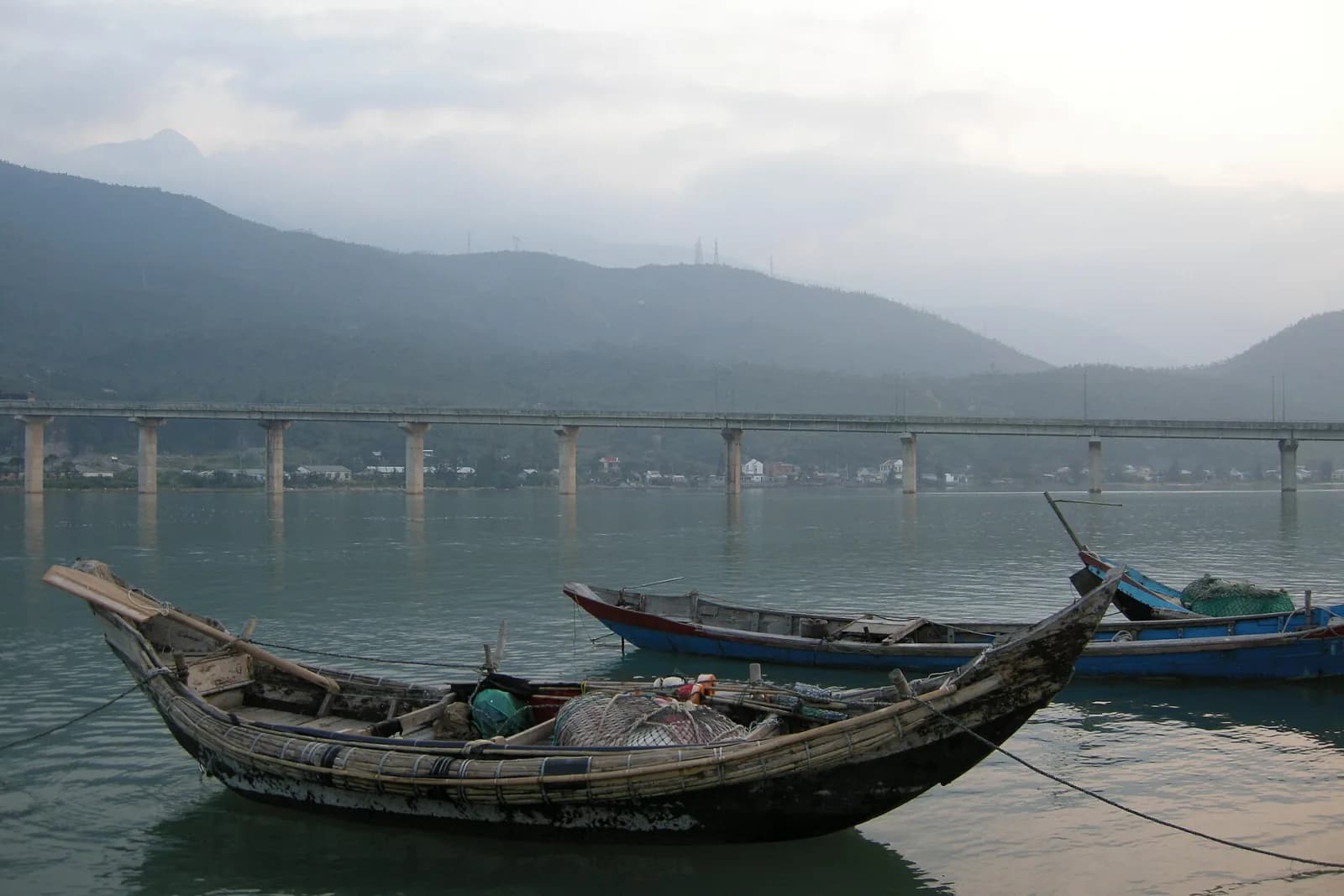
Start by killing a lazy narrative. Vietnam is not a connectivity wasteland waiting for satellite rescue. It is one of the better-connected emerging markets on earth. By August 2025 Vietnam ranked 10th globally in fixed-broadband median speed on Ookla's index — its best-ever placing — with fixed median download at ~262 Mbps, a startling climb from ~163 Mbps and 33rd place as recently as March 2025, while mobile pushed into the global top 20.^[15] Household fiber penetration reached ~85%, far above the ~60% global average, and 4G LTE covers >99.8% of the population — population, not land area, a distinction central to this analysis.^[15]^[16] On the headline metrics, Vietnam looks like a market with no satellite gap at all.
[Researcher] But the aggregate hides the terrain, exactly as it did in East Malaysia. Vietnam's own government, justifying the pilot, put the figure plainly: terrestrial telecoms reliably cover roughly 58% of the land area, falling to a small fraction once maritime zones are included.^[3] The northern mountains (the Northwest and the highlands bordering China and Laos), the Central Highlands (Tây Nguyên), the Mekong Delta's dispersed waterways, and an archipelago of inhabited and strategic islands are where fiber and 4G economics break. Viettel's own 2021 internal estimate put the genuinely hard-to-serve footprint at ~23% of national territory — mountainous, island and remote.^[17] That is the land gap.
[Banker] The land gap, though, is the smaller prize. The structurally satellite-shaped demand in Vietnam is at sea and in motion:
- A fishing fleet of roughly 80,000 registered vessels (≈79,400 registered and ~76,800 licensed as of November 2025), of which >28,000 operate offshore (≥15m), employing several hundred thousand fishermen.^[18]^[38] Vietnam has pushed Vessel Monitoring Systems onto ~98–99% of offshore vessels ≥15m to chase removal of the EU's IUU "yellow card" — a fleet already forced onto satellite tracking and a natural broadband-connectivity adjacency.^[18]^[19]^[38]
- A >3,260 km coastline and contested South China Sea exposure, where offshore oil-and-gas, coast guard, and maritime-domain-awareness all demand resilient links terrestrial networks cannot reach.
- A manufacturing economy in which FDI firms produce ~98% of $126.5B in electronics exports (Samsung alone ~⅕ of national exports), increasingly pushing into provincial industrial parks where redundant, diverse-path connectivity is an operational-continuity requirement, not a luxury.^[20]
So the honest demand picture is a bimodal one: a low-ARPU rural/remote land tail that the state mostly wants subsidized, and a high-ARPU maritime/enterprise/continuity core where satellite is often the only scalable diverse path and willingness-to-pay is real. The pilot's unit economics and strategic value concentrate disproportionately in the second mode, even though residential users still drive volume. (We size both in §9.)
3.2 The Economy: Nearing Upper-Middle-Income, US-Coupled, and Tariff-Exposed
[Researcher] Vietnam's 2025 GDP and income trajectory put it close to — and may ultimately place it above — the World Bank's upper-middle-income threshold, but formal classification depends on Atlas-method GNI per capita, not nominal GDP per capita. The World Bank's FY2026 list, based on 2024 GNI data, still classified Vietnam as lower-middle-income.^[20]^[21] The underlying macro numbers remain striking: GDP ~$514B, GDP per capita ~$5,026, real growth ~8.0%, total trade >$930B, and FDI disbursement ~$27.6B — its highest in five years. A richer, more industrial Vietnam generates more high-ARPU enterprise and continuity demand. The same export engine — a >$123B goods surplus with the US — also made Vietnam tariff-exposed in 2025 and handed Washington leverage over the timing of the Starlink aperture (§6).^[13]
At ~$5,000 GDP per capita, Vietnam is materially poorer than Malaysia (~$13,000) and far poorer than Australia (~$64,000). That single number governs the residential mass-market ceiling: at $85/month, Starlink residential is a luxury good in a country where median fiber is ~$11 and 4G/5G is $4–12.^[9] The arithmetic of affordability, not the cap alone, is what confines Starlink to the high end.
3.3 The Satellite History: National Control Before National Capability
[Researcher] Vietnam's space history rhymes with the region's "foreign technology, national control" template but with a sharper security inflection. VINASAT-1 (2008, ~$300M, Lockheed Martin-built, Ariane-launched) and VINASAT-2 (2012, ~$260M) were Vietnam's first GEO communications satellites, operated by state incumbent VNPT — explicitly framed as instruments of sovereignty and national security, not commercial broadband.^[22]^[23] VINASAT-1 reached end of design life around 2023. In April 2024, the then Ministry of Information and Communications directed the Radio Frequency Authority and VNPT to submit a replacement plan, with Airbus advising VNPT; those telecom functions were later folded into the Ministry of Science and Technology during the 2025 government reorganization.^[22]^[24]
On Earth observation, Vietnam runs VNREDSat-1 (2013, Airbus) and has the Japan-built X-band radar satellite LOTUSat-1 (~600kg, ~500km SSO) staged for launch — delayed by the Epsilon-S vehicle failure — under the Vietnam National Space Center (VNSC/VAST), with an explicit ambition to build a "Made in Vietnam" small-satellite Earth-observation constellation by the early 2030s.^[25]^[26]
[Geopolitics] Note the pattern, because it is the spine of this article's thesis. Across five decades, Vietnam's revealed satellite doctrine is: own the control, source the capability abroad, and keep both inside the security apparatus. VINASAT was foreign-built but state-operated for sovereignty. LOTUSat is foreign-built but for national-security imaging. The Starlink pilot applies the same doctrine to LEO broadband: admit the foreign capability, but place it behind domestic gateways and security-ministry supervision. Vietnam has never confused using foreign space technology with ceding control of it. The pilot is consistent with Hanoi's orbital policy since 2008.
4. The Anatomy of the Leash: What the Pilot Actually Permits
This is the heart of the matter, so it warrants forensic precision. The pilot is a stack of concessions and constraints, and reading them together — not picking the favorable ones — is the only honest way to assess it.
[Researcher] The legal cascade:
- Resolution 193/2025/QH15 — National Assembly, passed 19 February 2025 — created a special-mechanism statutory basis allowing piloting of LEO satellite telecom services, including the power to waive standard licensing and ownership rules.^[1]
- Decision 659/QĐ-TTg — Prime Minister (signed by Deputy PM Nguyễn Chí Dũng), issued 23 March 2025 (widely reported 26 March) — granted SpaceX the controlled pilot, set the cap, the sunset, the gateway and routing conditions, and the security-ministry oversight.^[3]^[4]
- Operating license — Authority of Telecommunications (Ministry of Science & Technology) plus the Radio Frequency Department — issued to Starlink Services Vietnam on 15 February 2026, with separate spectrum/equipment authorization.^[8]
Table 1 — The Vietnam Starlink pilot: concessions vs. constraints
Sources: Resolution 193; Decision 659; Vietnam News / VnExpress / VietnamPlus reporting on license terms.^[1]^[2]^[3]^[4]^[5]^[6]^[8]
4.1 The Gateways Are the Point
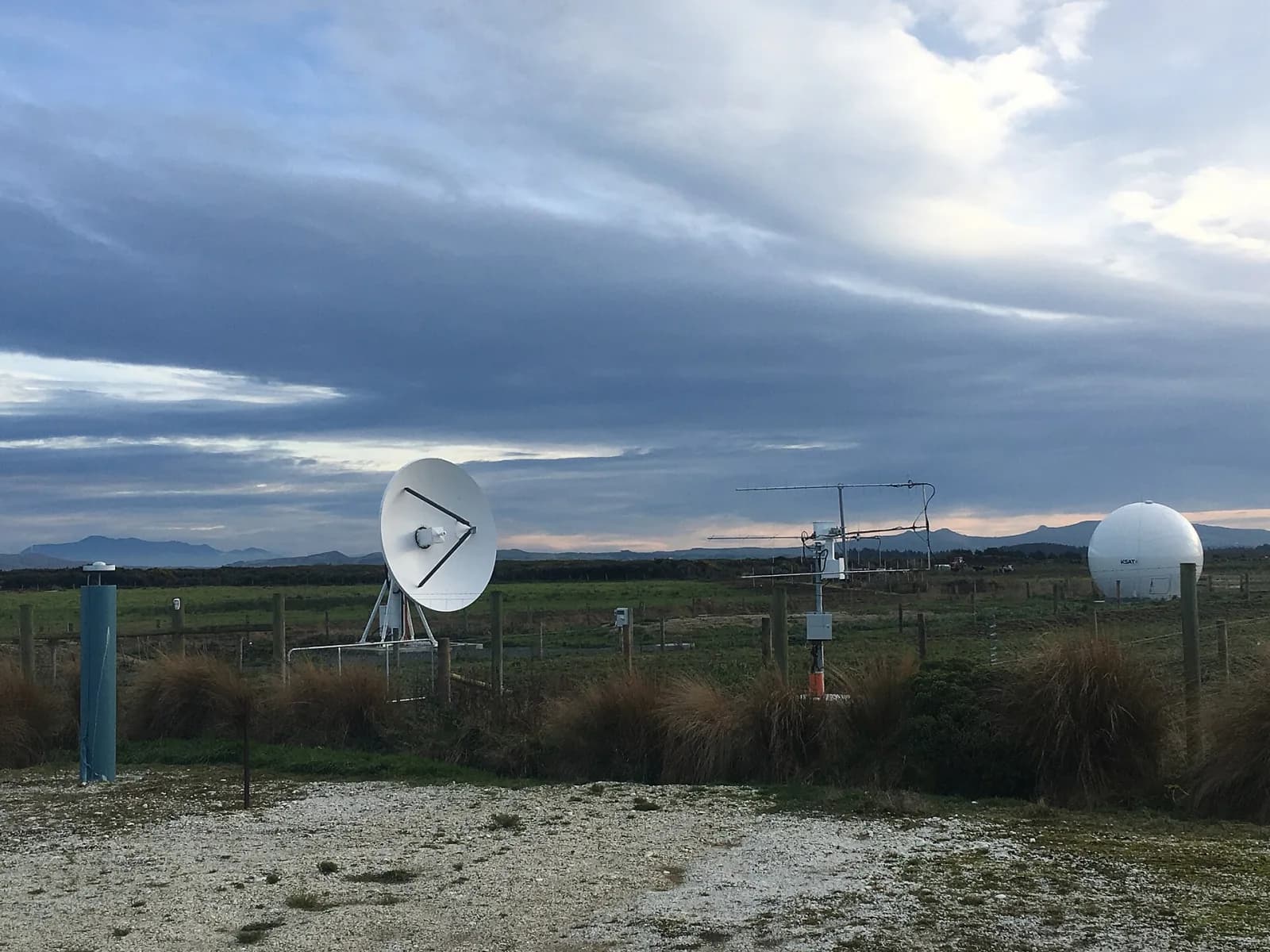
[Country Head] Of all seven rows, the decisive one is the gateways. Four stations — Bình Nguyên commune in Phú Thọ (north), Liên Chiểu in Đà Nẵng (center), and Tân Thuận and Tăng Nhơn Phú in Ho Chi Minh City (south) — running SpaceX's Gateway V4 hardware on 1.85m antennas across Ka and E bands.^[6] The siting maps cleanly onto Vietnam's three economic regions, which is partly capacity logic. But the binding clause is the routing mandate: all traffic from satellite terminals inside Vietnamese territory must pass through a gateway located in Vietnam and connected to the national public telecom network.^[4]
This is the single most important architectural fact in the pilot, and it is what makes Vietnam categorically different from Australia or Malaysia. In Malaysia, MCMC's principle-based regime allowed Starlink traffic to egress through foreign points of presence; "sovereign data" was largely implemented through contract and service design.^[7] In Vietnam, domestic routing is embedded in the licensed network configuration. Licensed user traffic originating from Vietnamese terminals is required to egress through domestic gateway infrastructure, placing the authorized egress path within the jurisdiction of the Cybersecurity Law, Decree 53 and the security authorities. This is a legal and architectural requirement, not a physical limit on optical inter-satellite routing. SpaceX did not bypass Vietnam's data-control regime; it had to reflect that regime in its authorized ground segment.
4.2 The Cap Has a Calculable Shadow Price
[Banker] Why 600,000, and not a round million or an uncapped pilot? The Telecommunications Authority's deputy head, Nguyễn Anh Cường, gave two stated reasons: a manageable scope for monitoring and evaluation, and a technical/capacity argument tied to the per-satellite throughput and the gateway plan, with ~100 Mbps per user as the design target.^[5] Treat the official capacity figure as stated rationale, not a reconstructable model: a literal reading — ~60 Gbps per satellite serving 600,000 users at 100 Mbps — cannot be simultaneous-peak throughput (that would demand ~60 Tbps), so the number necessarily folds in concurrency, oversubscription and satellite/beam reuse the regulator never disclosed. Take both reasons seriously, then distinguish motive from effect. Capacity is genuinely finite and monitoring scope matters. Whatever the unpublished weighting, the cap also limits market-share exposure and protects incumbent stability in practice. That is an effect of the rule; it need not be smuggled in as a proven legislative motive.
The cap binds in two registers:
- As a market-share clamp. Against ~25 million fixed-broadband subscriptions, 600,000 terminals is ~2.4% of the fixed market — and because terminals are shared (a school, a clinic, a longhouse, a boat), the served population could be larger, but the billing base cannot exceed the cap.^[5] Starlink is structurally prevented from becoming a top-tier ISP. By design, it is a niche filler.
- As a non-binding constraint at current prices. Here is the subtlety the headlines miss: at $85/month, Starlink will struggle to reach 600,000 paying terminals within the pilot window anyway. The shadow price of the cap — the revenue lost to the constraint — is near zero in the base case, because affordability bites first. The cap becomes economically binding only if prices fall sharply, subsidy or public procurement scales, or enterprise adoption outruns the model. The no-dumping rule constrains one route — below-cost acquisition — but does not prohibit every lower tariff or negotiated B2B discount. In other words: the cap is a political insurance policy that mostly will not need to pay out, because the price does the limiting. That is elegant policy design, and worth saying plainly.
The reconciliation that matters: a 600,000-terminal cap is the ceiling; the realistic base-case terminal base by 2030 is far below it (§9). Anyone treating "600,000" as a revenue forecast has confused a regulatory limit with a demand estimate.
4.3 The Gateway-Capacity Arithmetic: Why Four Sites Are a Regulatory Scaling Surface
[Researcher] The user of any serious LEO analysis is owed the capacity math, not just the policy headline — so here is the teardown. A Starlink user gateway is the ground node that bridges the satellite mesh to the terrestrial internet; in the current architecture each gateway aggregates many terminals' traffic over a cluster of Ka-band antennas, and forced-domestic routing means Vietnamese demand is constrained by Vietnamese gateway throughput, not just by satellite supply.
Work the envelope — carefully. The binding number for a forced-gateway market is the aggregate gateway throughput on Vietnamese soil, because licensed Vietnamese terminal traffic must transit it. Four gateway sites is a visibly bounded ground footprint, but "four sites" is not "four antennas": each site can host multiple dishes and add capacity incrementally, and the public record discloses neither the antenna count nor the traffic engineered through each site. Site count alone therefore cannot yield a national throughput estimate.
[Banker] This supports a testable hypothesis — not a fact: the four-site plan and the 600,000 cap may have been sized against a common planning envelope. The antennas per site, aggregate feeder-link capacity, oversubscription assumptions and use of inter-satellite routing are undisclosed, so that relationship cannot be reconstructed. The strategic point survives without it. Material expansion requires Vietnamese approval somewhere in the ground stack — more antennas and radio equipment, more assigned spectrum, more backhaul, additional sites, or a higher terminal cap. A site can scale internally before a fifth site is needed, but Starlink cannot unilaterally scale the licensed system. Regulatory approval is the scaling gate, and every approved increment remains inside Vietnamese jurisdiction.
So the real near-term performance question — and the number the market will most want — is the Vietnam Starlink median speed at scale. As of this writing it is unmeasured: Ookla has published no country-level Starlink median for Vietnam, and any specific figure is modeled. My expectation, labeled as such: with a capped subscriber base that grows well below the ceiling, Vietnam could avoid Indonesia's congestion curve and initially sustain something in the ~100–150 Mbps band. But the disclosed site count is insufficient to make that outcome reliable; antennas, spectrum, traffic engineering and rain availability are unknown. Treat the range as a falsifiable forecast, not a measurement, and test it against the first independent at-scale sample (§13).
4.4 The Spectrum Layer: E-Band Adds Headroom, Not a Capacity Number
[Researcher] The gateway count is visible; the feeder spectrum and radio configuration are not. SpaceX's Gen2 architecture authorizes E-band feeder links at 71–76 GHz down and 81–86 GHz up, while Vietnam's disclosed Gateway V4 plan uses 1.85 m antennas across Ka and E band.^[6]^[44] That makes E-band authorization potentially as important as site count for future feeder-link headroom. It does not establish which bands carry initial commercial traffic, how many radios are installed, or the aggregate national capacity.
[Banker] E-band offers wide channel blocks, but allocation width is not throughput. Usable channels, uplink/downlink separation, polarization reuse, payload compatibility, link budgets, coordination, modulation, weather margin and antennas per site all intervene.^[47] The defensible capacity equation is therefore qualitative: licensed feeder spectrum × deployed radios × spectral efficiency × weather availability × terrestrial backhaul. Every public term after the first is missing. Capacity can be added within an existing site before a fifth location is needed, but each increment remains subject to Vietnamese equipment, spectrum and interference approval. E-band expands the possible headroom; it does not turn four site names into a bandwidth forecast.
[Researcher] Two caveats matter. First, rain attenuation rises at high frequencies; ITU-R treats site diversity and traffic rerouting as core reliability tools for Earth-space links above 20 GHz.^[47] Đà Nẵng's monsoon exposure therefore makes nominal spectrum different from all-weather capacity. Second, Vietnam's license requires service cessation if harmful interference affects national-security systems.^[6] Public sources identify no specific defense-system conflict, so none should be invented. What exists is a separate spectrum-based suspension lever, administered through radio licensing, alongside the routing and data-law controls.
5. The Doctrine Behind the Leash: Data Control as the Binding Constraint
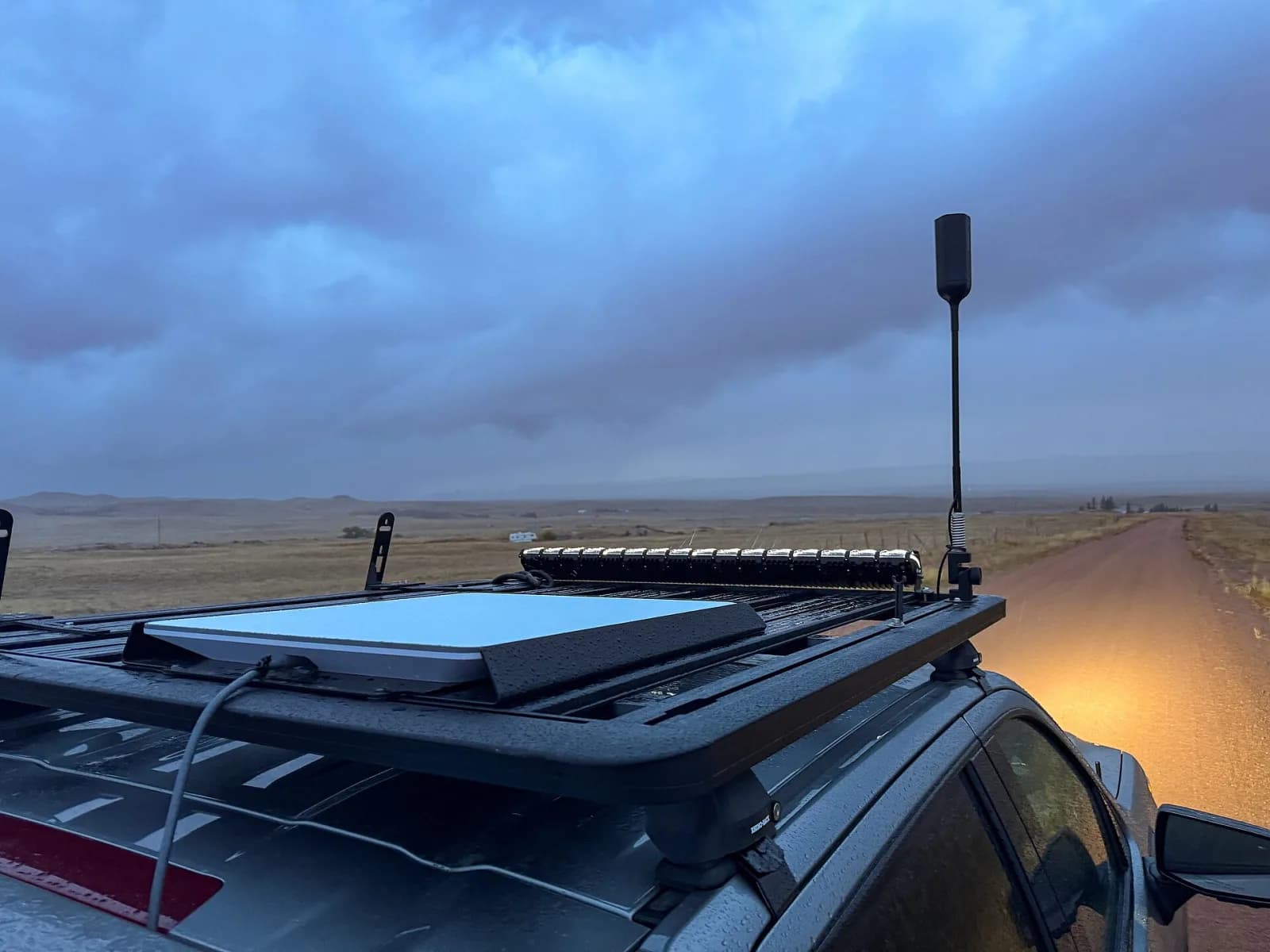
The thesis of this article is that Vietnam's LEO market is governed not by geography or demand but by Hanoi's state-security architecture and data-control doctrine. This section is where that claim earns its keep.
5.1 The Legal Spine: 2018 → 2022 → 2025
[Researcher] Vietnam's data-control regime is among Southeast Asia's harder state-control frameworks, and it hardened further in exactly the window the Starlink pilot was negotiated:
- Cybersecurity Law 2018 (Law 24/2018/QH14) established the principle that providers of telecom, internet and value-added services must protect, retain and — on request — localize user data, and submit to security-agency oversight.^[10]
- Decree 53/2022/NĐ-CP (effective 1 October 2022) operationalized it: in-country data retention for ≥24 months, covering personal data, user-generated data, and relationship data; and, critically, the power of the Minister of Public Security to compel a foreign cross-border provider to store data in Vietnam and establish a local branch or representative office within 12 months of a formal request.^[10]^[11]
- PDPL 2025 (Law 91/2025/QH15, passed 26 June 2025, effective 1 January 2026) elevated personal-data protection from decree to statute.^[27]
- Cybersecurity Law 2025 (adopted 10 December 2025, effective 1 July 2026) consolidated the 2015 and 2018 regimes into a single statute and reaffirmed the data-localization mandate for telecom, internet and value-added service providers handling Vietnamese user data, again with local-presence requirements.^[28]
[Geopolitics] The sequencing is the tell. Vietnam did not relax its data regime to welcome Starlink; it tightened it in parallel. The pilot was granted (March 2025) in the same year the PDPL passed (June 2025) and the new Cybersecurity Law was adopted (December 2025). A state that was loosening control would not be re-codifying localization at statute level in the very window it admits a foreign LEO operator. The best-supported reading is that Hanoi admitted Starlink because it believed the control regime could contain it — and the forced-domestic-gateway architecture is what makes that confidence rational.
5.2 Who Holds the Control Points
[Researcher] Enforcement authority over the Starlink pilot is split across the apparatus by design:
- Ministry of Science & Technology (MoST) — through the Authority of Telecommunications and the Radio Frequency Department — holds the licensing and spectrum lever (and, post-2025 government reorganization, absorbed the former Ministry of Information & Communications' telecom functions).^[8]
- Ministry of National Defence (MND) — whose Cyberspace Operations Command (Bộ Tư lệnh 86 / "High Command 86"), the army's dedicated cyber force stood up in 2017, and other military-security organs supervise the defense/interference dimension; the spectrum license explicitly requires immediate service cessation on harmful interference to national-security systems.^[6]^[35] (Command 86 is distinct from "Force 47," the army's separate information- and public-opinion-warfare unit; the two are frequently conflated.)
- Ministry of Public Security (MPS) — the holder of the Decree 53 data-localization compulsion power and the lead internal-security organ.^[3]^[10]
Three ministries, two of them security ministries, jointly supervising a single foreign operator. There is no equivalent in the Malaysia, Australia or even Indonesia pilots in this series. The governance structure itself encodes the thesis: Vietnam treats a foreign LEO operator first as a security object and only second as a commercial one.
5.3 The Honest Limit of the Control
[Country Head] Steelman the counter-argument, because it has teeth. Does a domestic gateway plus localization law actually deliver control over a Starlink connection? Partly. The gateway routing mandate creates an in-jurisdiction enforcement and egress point, making local retention, traffic management and lawful-access obligations more enforceable than they would be through a foreign point of presence. But the public record does not disclose Vietnam's interception implementation, so the gateway cannot simply be equated with full visibility. It also does not give Vietnam control of the space segment: the satellite-to-terminal link, the inter-satellite laser mesh, and SpaceX's global network remain SpaceX-controlled. End-to-end encrypted traffic transiting a Vietnamese gateway remains opaque in content; what the gateway can buy is routing control, metadata access subject to implementation, retention compliance, and a stop-switch on domestic egress — not omniscience. And the ultimate sovereignty risk — the Ukraine precedent, where SpaceX's control of service availability became a geopolitical lever — is one a domestic gateway cannot neutralize. There is a sharper technical caveat too: forced domestic routing is a legal requirement, not a law of physics. With optical inter-satellite links, SpaceX can technically carry traffic across the laser mesh to another egress; the license requires it not to do so for Vietnamese service. The mandate binds network configuration and SpaceX's compliance, backed by Hanoi's power over the cap, license and 2031 renewal. Vietnam controls the authorized ground architecture; it does not own the orbit. That residual — control dependent on the operator's continued compliance — is exactly why the alternative-capacity ambition (§7) is not rhetorical.
5.4 Why a Party-State Encloses Rather Than Refuses — and What the Design Achieves
[Geopolitics] Step back to the doctrine itself. For Vietnam's single-party system, control of the domestic information space is a condition of political continuity. The state pressures platforms, operates one of Southeast Asia's harder content-and-data regimes, and has built — through MPS and the MND's cyber forces — an apparatus intended to prevent domestic information channels from operating entirely outside state visibility. From that apparatus's perspective, an unregulated satellite terminal bypasses terrestrial control points: there is no domestic ISP, national gateway or cable landing station on which to impose the usual requirements. Uncontrolled Starlink would therefore create a direct exception to the information-control regime Hanoi has spent two decades building.
Given that, a state has three options. Refuse the technology outright (Thailand's instinct on the ownership question^[34]) — but that forgoes the genuine connectivity, maritime-monitoring and trade-diplomacy benefits, and does not eliminate grey-market terminals. Admit it openly (Australia) — incompatible with Hanoi's revealed information-control doctrine. Or enclose it — admit the capability but force the licensed service through a domestic chokepoint the state builds and supervises, re-creating in the LEO layer much of the leverage it had over the terrestrial layer. Vietnam chose the third. It is the option with the most institutional engineering: Hanoi captures connectivity and trade-diplomacy benefits, creates a lawful alternative that can shrink the grey market, and rebuilds enforceable ground-layer control without claiming ownership of the space segment. The forced domestic gateway is not bureaucratic friction. It is the deliberate reconstruction of state information control in orbit-adjacent infrastructure — the national firewall's control logic, re-instantiated at the ground station.
This is why the thesis insists the binding constraint is the data-control doctrine and not geography, demand, price, or even geopolitics. Change Vietnam's geography and the gateway mandate stays. Change the price and it stays. Change which great power supplies the constellation — make it Chinese tomorrow — and the control architecture likely remains, because the doctrine was never only about Washington or Beijing. It was about Hanoi keeping its hand on the country's information flows. Every other feature of this market is downstream of that one fact.
5.5 Import Control: How Licensing Splits the Grey Market
[Researcher] There is a second, quieter function of the enclosure: it is an import-control instrument. Before the February 2026 license, Starlink had no legal status in Vietnam, yet terminals were already inside the country. Black-market dishes flowed into Southeast Asia through Thailand and China, activated on foreign-registered accounts and sold at inflated prices, as they did across the region's unlicensed markets.^[36] A satellite terminal is unusually difficult for a state to interdict: it needs no local SIM, domestic ISP or cable landing, only a clear view of the sky and an account opened abroad. For Vietnam's security apparatus, an uncontrolled grey market in independent uplinks is a direct gap in the terrestrial control regime.
[Country Head] Enclosure addresses lawful demand more effectively than prohibition alone. By licensing a gateway-routed service, Hanoi gives ordinary users a supported channel with less de-activation risk while retaining penalties for the unlicensed alternative. Enforcement has begun: in April 2026 authorities fined the operator of a tourism vessel off Cát Bà VND70 million (~$2,660) for using an unauthorized Starlink terminal.^[36] But licensing creates a bifurcated market, not a clean one. Users who value reliability and legality migrate inside the supervised perimeter. Illicit operators who value evasion precisely because licensed traffic must route through Vietnamese gateways retain an incentive to smuggle foreign-registered roaming terminals and test Starlink's geofencing. Myanmar's scam-compound terminals show both the demand and the countermeasure: SpaceX can disable unauthorized devices, but only after detection and enforcement.^[36] The state has not eliminated the grey market. It has separated it into legitimate and supervised versus illicit and hunted.
5.6 A China-Like Control Logic, Adapted to Vietnamese Constraints
[Researcher] Vietnam's data-control doctrine did not spring from nowhere; in architecture and sequencing it converges strongly with China's — and the comparison explains the form of Vietnam's controls. China legislated the regional template earlier. Its Cybersecurity Law (2016/2017) — Article 37 — requires operators of critical information infrastructure to store personal and "important" data inside China and clear a Cyberspace Administration (CAC) security assessment before specified cross-border transfers; the Data Security Law (2021) added a data-classification and national-security overlay; and the Personal Information Protection Law (2021) set cross-border-transfer gates and penalties of up to RMB 50M or 5% of annual turnover.^[43] Vietnam's stack — Cybersecurity Law 2018, Decree 53/2022, PDPL 2025, Cybersecurity Law 2025 — contains the same functional instruments: in-country retention, security-agency authority, critical-infrastructure concepts, local-presence compulsion, and cross-border-transfer controls.^[10]^[28] Public sources cited here do not prove textual copying or a direct legislative transfer. They do show functional convergence between two single-party systems with a common first-order interest in controlling the domestic information space.
[Geopolitics] But the differences are what make Vietnam the distinct category this article describes — and they are differences of capability and economic position, not simply intent. China backs its doctrine with two decades of enforcement infrastructure: the Great Firewall, a vast censorship-and-surveillance apparatus, the CAC, and — decisively for this story — domestic LEO programs under construction, including Qianfan and Guowang. China's present answer to Starlink is refusal: it is not licensed there, while Beijing is funding eventual domestic substitutes. Vietnam has neither a comparable substitute nor the same enforcement scale: it cannot economically justify a broadband megaconstellation (§7.5), and it still wants the trade, maritime and connectivity benefits of a US system. So it reaches for the next-best instrument — admit-and-enclose. The forced-gateway architecture is the workaround of a security state that seeks a high degree of control but lacks China's capacity to refuse the foreign network without sacrificing the service. Vietnam's enclosure is a China-like control logic implemented by a state that has to be more pragmatic because it is smaller, more trade-dependent and technologically less self-sufficient.
[Geopolitics] The comparison matters because it isolates the mechanism. China's domestic constellation operators sit inside Chinese corporate, cybersecurity and data law from inception; foreign Starlink remains unlicensed. Vietnam cannot reproduce that ownership structure, so it imposes control at the gateway, license and local-entity layers instead. That is functional convergence, not institutional identity. The Vietnamese model may offer a template for other security-minded states that want foreign LEO capacity without accepting open routing: admit the space segment, nationalize the control points, and preserve a supplier-switching option. Section 7.6 makes the claim falsifiable — a future Chinese LEO deal with materially looser routing or security conditions would show that supplier politics, not a neutral control doctrine, determines the terms.
6. The Trade Lever: Why the Aperture Opened When It Did
[Geopolitics] The connectivity rationale for the pilot is genuine and officially stated — remote, island and maritime coverage where terrestrial networks fail.^[3] But genuine rationale and operative cause are different things, and the evidence ladder here must be explicit.
Verified fact: In March 2025, with the Trump administration threatening reciprocal tariffs on Vietnam's >$123B US trade surplus, Hanoi assembled a battery of trade concessions — cutting import duties on US LNG and automobiles, and approving the Starlink pilot with the unprecedented full-foreign-ownership waiver.^[13]^[14] The pilot decision (Decision 659, issued 23 March 2025) landed within weeks of Secretary Rubio's early-March call urging Vietnam to "address trade imbalances."^[13]^[29]
Verified fact: The Washington Post, reviewing internal State Department cables, documented a pattern across tariff-exposed nations — Vietnam among them, alongside India, Cambodia, Lesotho, Somalia — in which US diplomatic missions advocated for Starlink's market access during or shortly after trade negotiations.^[14]
Author inference (flagged): That trade pressure accelerated the ownership waiver is a well-supported inference, not a documented quid pro quo. The Post itself notes that the cables show advocacy, not a demand-for-favors. What is not in dispute is the timing: a state that had guarded its foreign-ownership rule resolved that exact obstacle for a politically prominent US company in the window it was assembling tariff concessions. The pre-2025 history in §6.1 also shows why "tariffs created the policy" would be too strong. The most parsimonious reading is that connectivity created the file, trade leverage accelerated the waiver, and security doctrine determined the operating architecture.
[Banker] The trade-lever framing also explains the shape of the concession, which is otherwise puzzling. Why grant 100% ownership — the politically hardest concession — but cap and sunset everything else? Because a trade negotiation rewards a headline. "Vietnam grants Starlink 100% foreign ownership" is a clean, quotable win for Washington and Musk. The cap, the sunset, the gateways and the security oversight are the fine print that lets Hanoi deliver the headline without actually surrendering control. The structure is optimized to maximize the visible concession while minimizing the real one. That is not connectivity policy. It is trade diplomacy executed through a telecom license.
6.1 The Counterfactual: Tariff Pressure Accelerated the Pilot; It Did Not Invent It
The hard version of the trade thesis now needs its own stress test. If there had been no tariff pressure in early 2025, would Vietnam still have admitted a LEO service on broadly similar security terms? Probably yes. Would it have waived foreign-ownership limits for SpaceX on the same timetable? Probably not. That distinction is the balanced causal claim, and the pre-history makes it unavoidable.
[Researcher] Vietnam's interest in LEO pre-dated the tariff episode by years. Viettel publicly described the uncovered-territory problem and the need to rely on foreign constellations in 2021.^[17] SpaceX and the Vietnamese government were in negotiations by at least mid-2023; those talks stalled over the foreign-ownership ceiling, and Reuters reported that an unpublicized Starlink trial used by the Vietnamese coast guard to guide drones in the South China Sea and Gulf of Thailand stopped after the talks paused in November 2023.^[45] That sequence is unusually probative. It establishes three things before the 2025 trade shock: Hanoi already saw an operational maritime use; SpaceX already wanted the market; and ownership, not demand, was the blocking issue. Resolution 193 then created the statutory pilot mechanism on 19 February 2025, before Decision 659 named SpaceX on 23 March.^[1]^[3]
This history rules out the crude claim that Washington conjured a connectivity policy from nothing. Vietnam had a real coverage problem, a real maritime-security use case and a real negotiation. The country also had independent reasons to diversify after terrestrial outages and natural disasters: a LEO link that can be deployed without a surviving last-mile cable is valuable to border posts, islands and emergency teams even if no US trade official ever mentions Elon Musk. The official remote, island and disaster-resilience rationale is therefore not a fig leaf. It is one of the reasons the file existed in the first place.^[3]^[8]
But the same history strengthens the narrower trade-lever thesis. The negotiations had already identified the exact obstacle — foreign ownership — and had failed to move it. What changed in March 2025 was not Vietnam's awareness of LEO; it was Hanoi's willingness to make the most politically legible concession. Tariff exposure supplied a reason to resolve a stalled file quickly and in a form Washington could count as market access. The security architecture did not disappear when ownership moved. It became more elaborate: a cap, sunset, domestic gateways, routing control and MND/MPS supervision. Trade pressure changed the timing and ownership structure; Vietnam's security doctrine set the operating conditions.
Counterfactual call. Without the tariff threat, my base counterfactual is a later pilot — perhaps 2026–27 — structured through a Vietnamese state operator, a reseller, or a foreign-equity-compliant joint venture, with the same domestic-routing and security conditions. In that world, Vietnam still gets LEO, but SpaceX does not get the 100%-ownership headline. With tariff pressure, Hanoi brought the decision forward and made a concession Washington could recognize while retaining the control points it valued. That is a more careful claim than "tariffs caused Starlink": connectivity needs created the policy path; the trade shock accelerated the ownership waiver; the state-security architecture determined the licensed design.
The causal ladder can therefore be stated without hand-waving:
That last row is the article's anchor. A different trade climate might have changed the date and ownership vehicle. It would not have produced an Australian-style open network. The routing, gateway and security conditions are the stable Vietnamese part of the bargain.
6.2 The Asymmetry of the Bargain: A Small Telecom Concession Against a Huge Trade Exposure
[Banker] Put the relative values on one page. In 2024 the United States imported $136.3B of goods from Vietnam and exported $13.1B, a bilateral US goods deficit of $123.2B.^[46] In 2025 — after the Starlink decision — US imports from Vietnam rose to $193.9B and the deficit to $178.3B; the later US–Vietnam trade framework maintained a 20% reciprocal tariff on originating Vietnamese goods, with selected products eligible for zero treatment.^[46] Those later outcomes do not prove what caused Decision 659. They do show the scale of the exposure Vietnamese policymakers were trying to manage.
Now put Starlink beside it. The government's reported SpaceX investment ambition was roughly $1.5B, while this article's 2030 scenarios span $80M–$350M in annual Vietnam service revenue.^[50] Even if the full investment pledge materialized — it is a company commitment, not verified deployed capital — it would equal only about 0.8% of Vietnam's 2025 goods exports to the United States. Modeled annual Starlink revenue would equal roughly 0.04–0.18% of that export flow. A one-percentage-point change in tariff burden on $193.9B of exports is ~$1.94B per year before exemptions, pass-through and trade diversion — larger than the entire reported SpaceX investment ambition and roughly six to twenty-four times the annual revenue modeled for Starlink Vietnam.
This is not a claim that approving Starlink bought a one-point tariff reduction; there is no evidence of that exchange, and the final tariff outcome plainly reflected a much larger negotiation. It is a revealed-scale test. From Hanoi's perspective, waiving an ownership rule for a tightly enclosed, sub-$0.4B-revenue operator is a cheap diplomatic token when tens of billions of export value sit under tariff risk. The concession can be headline-large and economically small at the same time. Indeed, that is why it is such an efficient trade instrument.
The bargain is asymmetric in three directions:
- Washington receives visibility. A politically prominent US company gets a 100%-owned subsidiary and an apparent market-access win.
- SpaceX receives option value. It secures a legal foothold in a 100-million-person economy, builds local gateways and gains a route to enterprise and maritime demand.
- Hanoi keeps control. The five-year sunset limits duration; the cap limits scale; forced routing limits topology; MND/MPS supervision limits autonomy; and the modeled revenue base is too small to become macro-systemic during the pilot.
This is why the ownership waiver should not be read as liberalization. Liberalization transfers durable economic freedom. Decision 659 transferred a time-boxed corporate form while withholding durable operating freedom. Hanoi spent the least strategically important concession — who owns the local legal entity — to protect the far more important asset — access to its export market — and then used the license architecture to claw back practical control. The trade lever explains the speed and the headline. It does not displace the connectivity rationale, and it never outranks the data doctrine in explaining how the network is allowed to operate.
7. Operators and the Sovereign Question: Viettel, VNPT, and the Capacity Behind the Controls
The licensing structure controls Starlink's present; the operator landscape will shape Vietnam's options after 2031.
7.1 Viettel: A Telco Owned by the Army
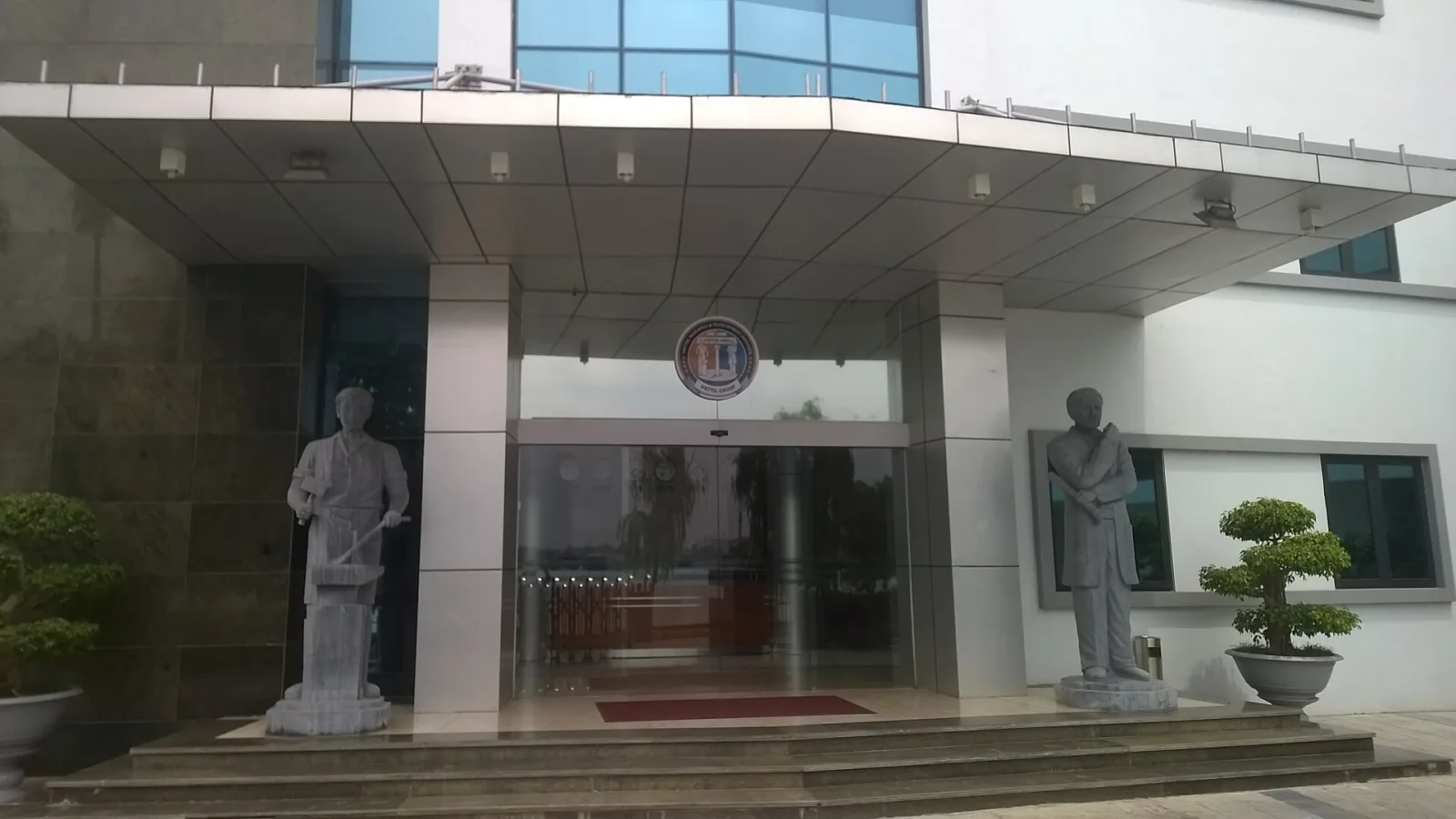
[Researcher] Vietnam's dominant telecom is Viettel — and the single most important fact about it is ownership. Viettel is a wholly state-owned enterprise under the Ministry of National Defence, a major economic unit of the Vietnam People's Army, recently re-designated the Military Industry and Telecoms Group.^[30]^[31] It holds >54% mobile market share and >70 million subscribers, operates a regional footprint across Africa, Southeast Asia and Latin America, leads Vietnam's 5G Open-RAN rollout (>2,000 stations in 2025 under Resolution 57), and runs a high-tech R&D arm working on radar, UAVs, remote-sensing satellites and defense electronics.^[30]^[32]^[33]
[Geopolitics] The ownership structure matters. Vietnam admitted Starlink under joint Ministry-of-National-Defence supervision, while its dominant telecom operator is itself owned by that ministry. The institution helping supervise the pilot therefore also owns the incumbent protected by the no-dumping rule. In Vietnam's political economy, the security apparatus, regulator-adjacent ministries and state operators are not independent market actors; they are parts of the same state system. Starlink enters a market in which its regulator, security counterparty and strongest competitor have closely aligned institutional interests.
7.2 The Sovereign-LEO Ambition — Real Intent, Honest Constraints
[Researcher] Does Vietnam want its own LEO capacity? Yes — and it has said so. As early as April 2021, Viettel publicly proposed trialing its own Starlink-like LEO service for uncovered regions.^[17] But — and this is the load-bearing nuance, the kind of detail the Malaysia cross-review taught us to surface — Viettel's deputy GM Lê Bá Tân was explicit that Vietnam would not build its own constellation: "Internet service providers would need to depend on existing satellite networks operated by foreign companies," citing resource limits, ~10× cost versus broadband, and short satellite lifespans.^[17] Vietnam's national space strategy targets a "Made in Vietnam" small-satellite Earth-observation constellation by the early 2030s — imaging, not broadband.^[26]
[Banker] Be precise, then, about what "sovereign capacity" realistically means for Vietnam in the LEO-broadband layer over the pilot horizon:
- A self-built broadband megaconstellation: ruled out. A Starlink/Qianfan-class system is a $10–20B+ commitment Vietnam has neither the capital nor the industrial base to fund, and Viettel itself said so.^[17]
- A replacement national GEO (VINASAT-3-class): plausible and intended. VNPT, with Airbus support, is planning the VINASAT-1 replacement on national-security grounds — this is the realistic sovereign-capacity move, and it is GEO, not LEO.^[22]^[24]
- A wholesale/partnership LEO model: the live option. The Malaysian template — national operator as ground-segment-and-distribution partner to a foreign constellation — is the most economically rational path to Vietnamese-branded LEO broadband, and the obvious non-US candidates include China's Qianfan/Guowang. As of 1 July 2026, the public record contains no confirmed Viettel/VNPT–Chinese-LEO agreement analogous to MEASAT–SpaceSail; the option exists but is unexercised.
[Geopolitics] This is the strategic core of the controlled-aperture thesis. Starlink's restrictions buy Vietnam time to develop alternatives it cannot yet field: a replacement GEO satellite for sovereign continuity, an indigenous EO constellation for security imaging, and the option to introduce Chinese LEO capacity through a state operator if the US relationship deteriorates. The 600,000 cap and 2031 sunset are not only market-protection tools; they also create a timetable for preserving supplier choice. Starlink is being used as a bridge, not adopted as a permanent sovereign layer.
[Geopolitics] Here is the test that can validate or falsify the thesis: would Vietnam constrain a Chinese constellation any less tightly? My prediction is no. Were Viettel or VNPT to wholesale Qianfan-class capacity, the same core architecture should apply: domestic gateways, the routing mandate, security-ministry supervision and a cap. But a Chinese constellation would introduce frictions Starlink does not. Vietnam and China are active maritime adversaries in the South China Sea, where the highest-value maritime segment sits (§10); Hanoi would be at least as wary of a Chinese network's visibility into its EEZ patrols and fleet movements as it is of a US network's off-switch. China's own data-export and security controls could also collide with Vietnam's insistence on in-country routing. The claim remains a forecast until a Chinese agreement exists: equivalent controls support a supplier-neutral doctrine; materially looser terms refute it.
7.3 VNPT and MobiFone: The State Backbone
[Researcher] Beyond Viettel sit VNPT (state-owned, operator of the VINASAT GEO fleet and the national fixed/fiber backbone) and MobiFone (state-owned mobile).^[22] Together with Viettel they form a wholly state-controlled core. The competitive significance for Starlink: there is no privately-owned national champion to partner with the way IEC Telecom or MEASAT served as commercial intermediaries in Malaysia. Any deep enterprise or government integration in Vietnam runs through a state entity that is simultaneously a competitor — the same "dual-role trap" the Indonesia analysis identified with Telkom, but harder, because in Vietnam the counterpart is owned by the army.
[Banker] Quantify why this matters. In Indonesia, Telkom is Starlink's distributor and rival, giving the incumbent a margin on subscriptions and an incentive to keep the relationship alive. Vietnam has disclosed no equivalent Viettel or VNPT distribution role: the operating license sits with 100%-foreign-owned Starlink Services Vietnam. Until a reseller or wholesale agreement appears, the state telcos capture no demonstrated Starlink revenue while bearing the competitive threat. That makes them structurally less invested in widening the aperture. The conclusion should not be overstated — enterprise integration may still pull a state operator or systems integrator into the value chain — but in government, subsidized-rural and MNO-backhaul procurement, Starlink competes with counterparties that also sit close to the rule-setting apparatus.
7.4 Viettel as Competitor: The Scale of What Starlink Is Up Against
[Researcher] Viettel is not simply an incumbent facing a new entrant. It is an army-owned, vertically-integrated telecom-industrial-defense conglomerate that posted 2024 consolidated revenue of VND190 trillion (~$7.47B) and pre-tax profit of VND51 trillion (~$2.0B), then grew profit a further ~4.5% in 2025.^[41] It spans telecommunications/IT, equipment R&D and manufacturing, defense industry, cybersecurity and digital services.^[42] Its annual pre-tax profit alone is roughly six times the upper end of this article's Starlink Vietnam 2030 scenario range.
[Banker] The scale is also international, which matters because it means Viettel is a state-backed multinational, not a sheltered domestic monopoly. It operates in 11 countries, is the largest mobile operator in 7 of its 10 overseas markets, and runs the #1 network in 6 foreign markets — Metfone (Cambodia), Unitel (Laos), Mytel (Myanmar), Telemor (Timor-Leste), Lumitel (Burundi) and Natcom (Haiti) — with international service revenue up 17.3% and overseas markets contributing ~80% of group growth.^[42] This is an exporter of telecom infrastructure, not merely a buyer of it.
[Geopolitics] And the vertical integration is the competitive kicker the affordability tables miss. Viettel builds its own telecom equipment — it deployed >2,000 home-grown 5G Open-RAN base stations in 2025 under Resolution 57's strategic-technology push — and runs high-tech R&D on radar, UAVs, remote-sensing satellites and defense electronics.^[32]^[33] Trace what that does to each segment Starlink might want. The MNO-backhaul TAM (§9): Viettel does not buy backhaul, it engineers and self-provisions it, and could build its own — which is exactly why §9 rated Starlink's claim on that TAM "weak." Enterprise: Viettel bundles connectivity with cloud, IoT and cybersecurity as the state-trusted vendor, against which a single-product foreign operator competes on a narrow slice. Government/rural: Viettel is the national champion with home-field advantage in every funded program. Starlink is competing against a counterparty that controls the equipment, shapes spectrum policy, owns the army relationship, and helps supervise the very pilot Starlink operates under.
[Banker] The commercial frame is asymmetric: Starlink Vietnam is a foreign, single-product entrant modeled here at roughly $80M–$350M in 2030 across scenarios; Viettel is a $7.5B-revenue, $2B-profit, eleven-country, equipment-making, army-owned conglomerate. Vietnam admitted Starlink to fill gaps the terrestrial network cannot economically reach, not to displace the national champions. The no-dumping rule and 600,000-terminal cap therefore function in practice as incumbent-protection mechanisms, with Viettel as their largest beneficiary — but not their only one; VNPT, MobiFone and broader market stability are also protected.
7.5 What Vietnamese-Branded LEO Would Actually Cost: A Sovereign-Capacity Model
[Banker] The controlled-aperture thesis says Vietnam uses Starlink as a bridge while building its own alternatives — so price those alternatives, because "sovereign LEO" is invoked far more often than it is costed. Three options, three radically different price tags, and the cheapest is the one almost no one names.
Option 1 — A self-built broadband megaconstellation: arithmetically foreclosed. A Starlink/Qianfan-class system is a multi-tens-of-billions commitment, and the numbers are now concrete. Even China's aggressively cost-engineered Qianfan — flat-panel satellites mass-produced at ~10 million yuan (~$1.4M) each, a >96% cut versus traditional comsats^[39] — implies ~$1.8B in satellites alone for the 1,296-satellite Phase 1, and ~$21B for the full ~15,000-satellite constellation, before launch, ground segment and operations. SpaceSail, with Chinese state-bank backing, raised a $933M A round and is seeking ~$2.2B more just to fund deployment, while its revenue "remains earthbound."^[40] Vietnam, whose flagship Viettel earns ~$2B of profit a year (§7.4), would have to commit roughly a decade of its national champion's entire profit to match a single Chinese constellation's satellite capex — with no domestic satellite-manufacturing base and Viettel itself on record (2021) that this is not viable.^[17] This is not a close call; it is closed.
Option 2 — A replacement national GEO (VINASAT-3 class): financeable, intended, and not equivalent. VINASAT-1 (~$300M) and VINASAT-2 (~$260M) cost a fraction of a megaconstellation, and VNPT is already planning the replacement on national-security grounds.^[22] A modern national GEO program in an illustrative $300–600M all-in band — not a disclosed Vietnamese procurement budget — can buy broadcast, disaster fallback and government-continuity capacity. But GEO latency is measured in hundreds of milliseconds and capacity is concentrated: it can provide broadband, but not the same latency, mobility and distributed resilience as a large LEO network. This is the sovereign-continuity play Vietnam is actively considering; it is not a one-for-one mass-connectivity substitute for Starlink.
Option 3 — Wholesale a foreign LEO through a state operator: the economically rational path to Vietnamese-branded LEO broadband. This is the MEASAT–SpaceSail template (§7; Malaysia): the foreign constellation supplies the space segment; Viettel or VNPT supplies some combination of gateways, distribution, billing, compliance and customer ownership. No public benchmark supports a reliable Vietnam-specific capex estimate. Gateway cost depends on land, civil works, antenna count, RF chains, site diversity and fiber backhaul; network operations and security integration mix capex with recurring opex; terminal inventory depends on the launch cohort; and the decisive wholesale-capacity prepayment is undisclosed. Publishing a $115M–$465M point band would therefore create more precision than evidence. The defensible conclusion is dimensional: the local layer is plausibly a hundreds-of-millions financing problem, not a tens-of-billions constellation-ownership problem. Even a cost overrun by several multiples would leave wholesale structurally below self-build because the foreign supplier carries the satellites and launch program. Relative to Viettel's ~$2B annual pre-tax profit, that route is material but potentially financeable.^[41]
[Geopolitics] The sovereign-capacity conclusion survives without a fabricated combined budget. Vietnam's realistic path is Option 2 + Option 3 — a national GEO program for continuity plus a state-controlled ground, distribution and wholesale LEO layer. It offloads constellation capex while retaining jurisdiction, customer relationships and the option to qualify a second supplier. Vietnam's plausible sovereign-LEO future is not a national megaconstellation; it is a portfolio of national continuity capacity, control points and wholesale contracts.
[Banker] Who supplies Option 3 is the open question, and it is geopolitical as well as financial. The candidates are a renewed, wholesale-restructured Starlink deal after 2031; Qianfan/Guowang (the China option, carrying the maritime-distrust and data frictions of §7.2 and §5.6); or Amazon Leo/OneWeb as third-supplier paths with different ownership and control profiles. Do not overstate portability: gateways, terminals, spectrum assignments and network software are not automatically interoperable across constellations, and the present Starlink ground layer is under the Starlink license, not demonstrated Vietnamese ownership. Hanoi's leverage rises only if a future wholesale structure puts distribution, customer contracts and some ground assets under Viettel/VNPT while qualifying a second supplier in parallel. The relative affordability of Option 3 makes that strategy conceivable, not frictionless. The party that can fund and certify a substitute before 2031 sets the renewal terms; the party that merely threatens one does not.
7.6 The China Option Would Face the Same Controls — with Extra Friction
[Geopolitics] It is tempting to treat Qianfan or Guowang as the easy sovereignty answer: a Chinese constellation supplied through Viettel, politically insulated from Washington and comfortable with state control. That is too simple. The China option solves one dependency and creates three others.
First, the Vietnamese enclosure would remain. A Qianfan-class service would still need Vietnamese spectrum authorization, domestic gateways, national routing, MND/MPS supervision and a licensed local operating structure. Nothing in Vietnam's data doctrine becomes less important because the supplier is Chinese. Given the South China Sea dispute, Hanoi may demand additional contractual and technical evidence that Vietnamese traffic cannot be copied, re-routed or remotely disabled outside its control. Supplier nationality changes the threat model; it does not remove it.
Second, the maritime trust problem becomes harder. The highest-value strategic demand sits in the South China Sea, where Vietnam's coast guard, fisheries-surveillance agencies and offshore operators monitor activity by the same state that ultimately sponsors China's national constellation buildout. An American network raises an off-switch and intelligence-dependency risk. A Chinese network raises those risks inside the exact theatre in which Vietnam and China are adversaries. That does not rule out civilian wholesale capacity for rural access or merchant shipping. It makes the most sensitive maritime and government workloads the least likely candidates for a Chinese primary link.
Third, the data-control regimes can collide rather than harmonize. China's Cybersecurity Law, Data Security Law and PIPL subject important data and cross-border transfers to Chinese security review; Vietnam's regime demands in-country retention, local presence and Vietnamese security authority.^[10]^[28]^[43] A Chinese constellation operator and a Vietnamese state reseller would have to specify which telemetry, network logs, subscriber records and operational data remain in Vietnam, which can reach a Chinese network-operations center, and who can compel access. Two governments sharing a control philosophy do not automatically share control. They may be more sensitive to reciprocal exposure because each understands exactly what the other wants from the data.
Finally, the replacement must be operational, not rhetorical. Qianfan's cost-down and financing are real, but its deployment and revenue base remain behind Starlink's.^[39]^[40] A credible substitute requires enough satellites over Vietnamese latitudes, export-cleared terminals, local gateway equipment, spectrum coordination, busy-hour capacity, maritime plans, support, cybersecurity review and months of parallel performance evidence. Starlink terminals and gateways cannot simply be pointed at a different constellation. The alternative must be built and certified as a second network.
That yields a supplier matrix more useful than a US-versus-China slogan:
The strategic answer is therefore not "replace America with China." It is qualify a second supplier, keep both behind Vietnamese gateways, and prevent either from becoming irreplaceable. That is what supplier-agnostic sovereignty looks like for a country unable to own the constellation. If Hanoi announces a Qianfan or Guowang agreement, the thesis is confirmed only if it carries the same routing, cap and security conditions imposed on Starlink. A materially looser Chinese deal would show that supplier politics, rather than a neutral state doctrine, determines the control structure.
8. Pricing and the Affordability Ceiling
[Researcher] Reported indicative pricing centers on ~$85/month residential service plus ~$350 for the terminal — roughly 2.2M VND/month and 9.2M VND hardware, a first-month outlay near $435.^[9] Local reporting has also discussed a lower-priority Residential Lite tier (~700,000 VND/~$27) and a standard band of ~1–1.5M VND, but no final public Vietnam tariff schedule confirms those tiers. The localized Starlink Vietnam site is live, yet on 29 June the local general director said infrastructure preparation was continuing and declined to give a formal launch date.^[52] Treat every Vietnam price and uptake figure here as provisional until orders, invoices and independent performance samples appear.
Table 2 — Starlink Vietnam indicative pricing vs. terrestrial alternatives (2026)
Sources: VnExpress, VietnamNet, TNGlobal on Starlink Vietnam pricing; terrestrial benchmarks from Vietnamese telecom reporting.^[9] Indicative, not official.
[Banker] Affordability is the second binding constraint. At 7–8× fiber, residential Starlink is not competing with terrestrial broadband; it serves households and institutions with no adequate terrestrial option plus the ability or subsidy to pay a premium. The mass-residential market is therefore either government-supported or small. The no-price-dumping rule constrains an overt below-cost land grab and helps protect licensed incumbents.^[12] It does not create a complete commercial moat.
The distinction is B2B. Enterprise, maritime and offshore buyers compare delivered capacity, latency, availability, installation time and total cost of ownership, not the residential sticker price. Starlink's public global maritime offer starts around $250/month for 50 GB, scales to $2,150/month for 2 TB, and advertises hardware capable of 400+ Mbps; those are company claims and not a Vietnam quote.^[48] Viettel publishes no comparable Vietnam GEO-VSAT price/SLA dataset, so a clean cost-per-Mbps comparison cannot be made. But the structural point is clear: Starlink does not need to sell below cost to pressure legacy VSAT economics. A higher list price can still deliver a lower effective cost per usable Mbps and better latency. Viettel's defense is not merely regulation; it is the bundle Starlink lacks — local SLA enforcement, security accreditation, integration, terrestrial fallback and government trust. The no-dumping rule protects the consumer floor. It cannot repeal a technology-driven unit-cost advantage in a bespoke tender.
8.1 The Ho Chi Minh City Office: One Transaction, Three Ministries
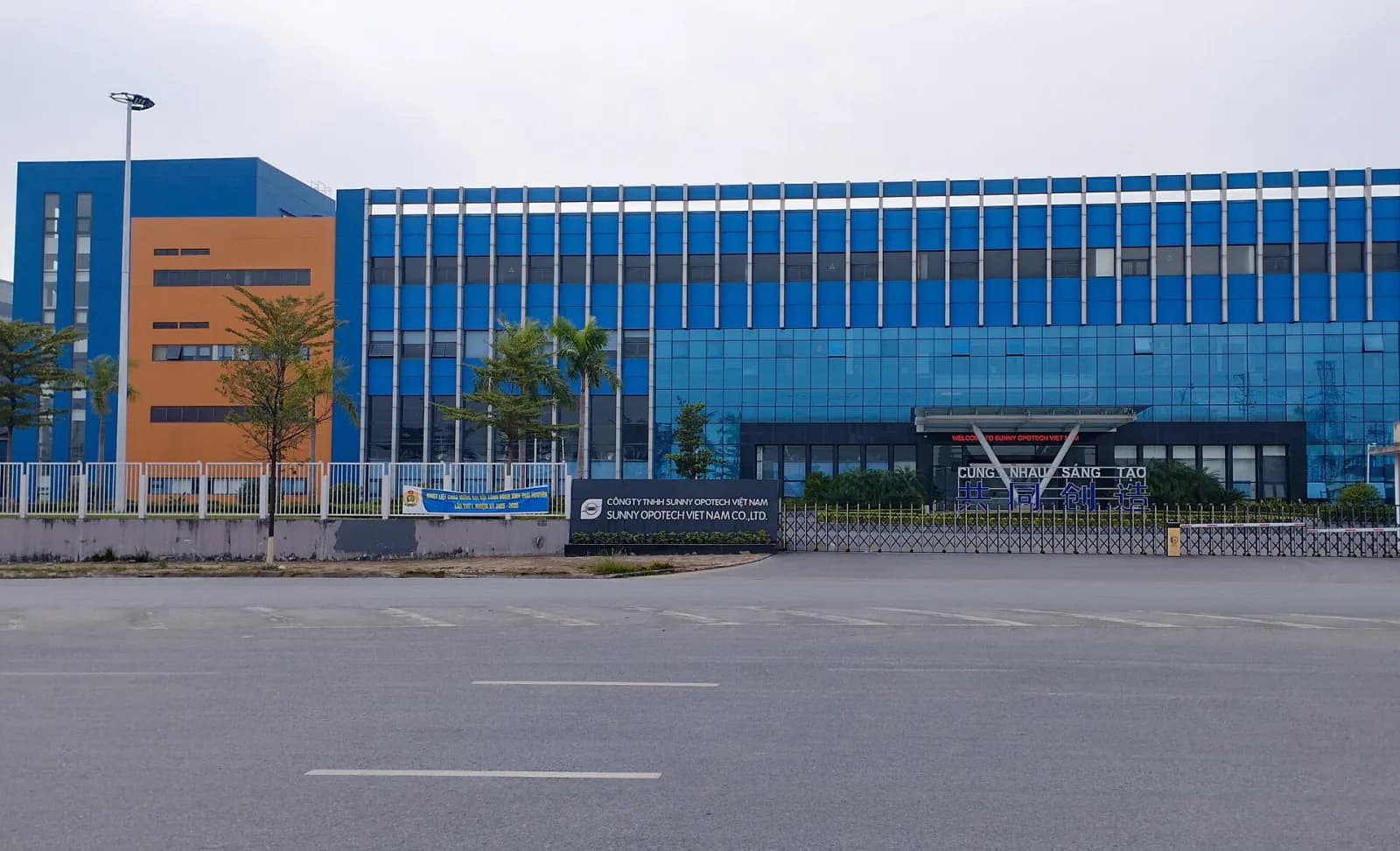
[Country Head — an illustrative scenario, constructed from Vietnam's documented enclosure regime and typical enterprise-procurement dynamics, not a reported transaction. The figures are market assumptions, not a real quote.]
A Wednesday in late 2026. A Korean electronics tier-one with two plants in a Bắc Ninh industrial park calls: a fiber cut during flood season idled a line for nine hours, and the board now wants a diverse-path backup link at both sites — Starlink Business, ~$3,000/year per site, a clean enterprise sale. You draft the proposal. Then you stop, because in Vietnam the connectivity is the easy part.
The client's real question is the one every regulated multinational in Vietnam must now answer: does this link create a compliance exposure under the data regime? Their plant data — production telemetry, some personal data of Vietnamese staff — would flow up to a satellite and back down through a Starlink gateway. Under the forced-routing mandate that gateway is on Vietnamese soil, which helps: egress is in-jurisdiction by design, retention obligations under Decree 53 / the 2025 Cybersecurity Law are satisfiable, and there is no foreign point-of-presence to explain to an MPS inspector.^[4]^[10]^[28] But "helps" is not "solves." The space segment is still SpaceX-controlled; the link is still a foreign-operated network inside a security-enclosed market; and a board with a global governance policy wants documented assurance, not a regulator's verbal comfort.
So the deal is not a connectivity sale. It is a compliance-and-continuity engineering exercise, and — because Vietnam has no privately-owned national champion to wrap it (no IEC Telecom, no MEASAT) — the wrapper either comes from a state-linked systems integrator or from a regional managed-service provider operating across jurisdictions. The integrator runs a local network-operations layer, documents the in-country routing, handles the applicable tariff-registration process and provides the audit trail the board needs — for an illustrative 15–25% managed-service premium over the raw connectivity fee. That premium is an assumption, not a disclosed Vietnam quote; bespoke enterprise pricing can remain opaque even under a no-dumping regime. [Geopolitics] And here is the Vietnamese specificity: that integrator, and the regulatory comfort it sells, ultimately answer to the same state that owns Viettel, holds the MPS data power, and runs the MND interference supervision. The compliance wrapper is not neutral plumbing; it is another point at which the state touches the transaction. In Australia this deal is a sales call. In Vietnam it is a negotiation conducted, implicitly, with three ministries in the room. That is the controlled-aperture market in one transaction: the bandwidth is commodity, the value and the friction both live in the enclosure, and the economic value concentrates in the compliance layer — a layer the state is never entirely outside of.
9. Market Sizing: A Bottom-Up Model of a Capped Market
This is the SemiAnalysis core of the piece: size the addressable market bottom-up, build the revenue from terminals × ARPU × penetration, reconcile every figure to its unit base, and publish the model so any input can be re-priced. Every number below is a modeled estimate or scenario assumption, not a SpaceX disclosure — flagged accordingly.
9.1 The Addressable Base, Segment by Segment
[Researcher / Banker] I build the TAM from the segments where terrestrial economics fail and willingness-to-pay exists, not from population:
Table 3 — Vietnam satellite-broadband addressable terminal base (modeled, 2030 horizon)
All figures modeled by the author from public sector data; not SpaceX disclosures. The total sits below the 600,000 cap in every case — confirming §4.2: the cap is not the binding constraint in the base case; affordability and procurement are.
The derivation chain, made explicit. The residential line is now a real build rather than a range wrapped in prose:
- Rural/remote residential = 27.0M households × 14.2% not using fiber as of May 2026 = 3.83M non-fiber households.^[51] The household count is the ministry's May 2024 planning base while the adoption rate is the newer May 2026 observation; mixing vintages is acceptable for an order-of-magnitude model, not for a point forecast. "Non-fiber" is not "unserved": mobile broadband reaches >99.8% of the population. I assume only 10–20% of that residual is genuinely satellite-shaped after mobile/FWA alternatives (383k–767k); 20–30% of those households can pay or qualify for subsidy (77k–230k); and Starlink captures 50–70% against other solutions. Result: ~38k–161k, rounded to 40k–160k. The mid-case uses 75k, not 110k.
- Maritime & fishing = (~28,000 offshore fishing vessels ≥15m) × (15–55% broadband adoption by 2030) → ~4k–15k, rounded to 4k–16k. The upper bound requires fleet procurement or subsidy; mandatory low-bandwidth VMS does not imply broadband willingness-to-pay.
- Enterprise continuity = (FDI industrial-park sites + remote operations needing diverse-path redundancy) × (satellite-as-backup adoption) → 5k–15k.
- Government/education/health = (remote schools, clinics, border posts inside funded programs) → 10k–30k.
- MNO backhaul = (remote towers on costly microwave) × (satellite-suitable share) × (operator willingness to buy rather than self-provision — low, given state-owned MNOs) → 2k–8k.
The ranges remain wide because public data does not reveal location-level fiber quality, subsidy eligibility or enterprise-site counts. That uncertainty is visible in the multipliers rather than hidden inside a round terminal estimate. Even the high end reaches less than 40% of the cap.
The single most important reconciliation: the modeled addressable base (~62k–232k terminals) is a fraction of the 600,000 cap. The cap binds politically — it forecloses mass-market dominance — long before it binds in the base demand case. "600,000" is a ceiling and a signal, not a forecast.
9.2 The Revenue Build
[Banker] Converting the addressable base into revenue requires ARPU by segment and a penetration/uptake haircut (not all addressable terminals are sold, especially early). Table 4 builds an illustrative 2030 mid-case so the arithmetic is auditable.
Table 4 — Illustrative 2030 bottom-up revenue (mid-case scenario)
Modeled by the author. A high-ARPU maritime/offshore/enterprise core of ~19,000 terminals carries ~$80M — about 44% of revenue on 17% of terminals. Residential/subsidized contributes ~$63M (35%). The model now matches the thesis: volume still sits in the household tail, but enterprise and maritime are the larger combined economic engine.
Two caveats remain. The ~$300 maritime ARPU blends commercial/offshore-support vessels with lower-paying, often-subsidized fishing boats; $3,600 per year is realistic for the latter only through fleet procurement or state underwriting. The ~1,000 offshore-energy/coast-guard terminals are mostly commercial offshore demand plus security-sector optionality: Hanoi is unlikely to make a US-operated network the sole primary link for its most sensitive assets.
[Banker] The 2030 scenarios now span roughly $80M–$350M/year, with the base-case midpoint near $165M and the probability-weighted result near $180M (§9.5). Against a cited ~$7B telecom-services denominator, the full span is about 1–5%, but the categories are not directly comparable: the denominator bundles mobile, fixed and wholesale revenue.^[37] Use it only as an order-of-magnitude scale check, not a market-share claim.
9.3 The Two Inputs That Move Everything — A Sensitivity Grid
[Banker] Publishing the model means publishing what it is sensitive to. Two inputs dominate the 2030 revenue outcome: the residential terminal count (the volume driver, itself a function of price, subsidy and uptake) and the maritime/enterprise blended ARPU (the premium-revenue driver). Holding the rest of Table 4 fixed, the grid below shows how the 2030 total flexes. Read it as the auditable core of the forecast — a reader who disagrees with my inputs can re-price the market in one step.
Table 5 — 2030 revenue sensitivity (US$M): residential terminals × blended core ARPU
Modeled by the author and arithmetically reproducible from the stated assumptions. Each cell = (residential terminals × $70/mo × 12) + (19,000 core terminals × core ARPU × 12) + $37M fixed. "Core" = maritime (10,000), offshore (1,000) and enterprise (8,000), blending to ~$353/month. "$37M fixed" holds government/education and MNO backhaul at Table 4. The center cell reproduces the ~$181M mid-case; the inputs themselves remain scenario assumptions, not independently reconstructable market facts. Every cell stays at or below ~160,000 total terminals, far inside the cap.
[Banker] Why a capped market can still be a good business for SpaceX. Country-level margins, hardware cost and Vietnamese contract terms are undisclosed, so this is customer-mix reasoning, not a P&L. The service carries fixed local costs — gateways, backhaul, spectrum and compliance — and recurring revenue amortizes them across the installed base. A book weighted toward enterprise, maritime and continuity buyers plausibly supports higher ARPU than a discounted residential rollout. That does not establish low churn, low support cost, multi-year contracts or an absolute margin level; none is public for Vietnam. Nor does the no-dumping rule guarantee premium B2B pricing: negotiated buyers compare delivered bandwidth, latency, availability and integration cost, not the sticker price alone. The narrower, defensible conclusion is that the regulatory design constrains scale while tilting the permitted mix toward customers who buy operational value rather than the cheapest megabit. Whether SpaceX captures that value as profit remains unobservable.
9.4 What It Would Actually Take to Hit 600,000
[Banker] If the cap is politically loud but economically distant, quantify the distance. The revised Table 4 mid-case reaches 115,000 terminals in 2030, leaving 485,000 unused slots before the 600,000 ceiling binds. Because the obvious high-ARPU verticals are already represented, most incremental terminals would have to come from residential or publicly funded users. The cap stress-test is therefore a subsidy test.
There are three ways to close the 485,000-terminal gap, and each collides with a different constraint:
- Commercial residential adoption at the indicative $85 plan. This asks households to pay ~7–8× the fiber benchmark plus ~$350 upfront hardware.^[9] The underserved population is not the same as a solvent customer base; many of the places most in need of satellite coverage are precisely those least able to fund it. No-dumping rules also constrain a below-cost land grab.^[12]
- A lower-priority ~$27 Lite tier. If that provisional tier is formally offered, the gap to ~$11 fiber falls to ~$16/month. But 485,000 incremental users still imply ~$93M/year of price support to reach fiber parity, before hardware, installation and program administration. At the $85 tier, bridging the ~$74 monthly gap implies ~$431M/year — above the highest 2030 revenue scenario.
- Bulk government or operator procurement. This can create volume without household willingness-to-pay, but it places the customer acquisition decision in the hands of the same state that owns Viettel and VNPT. To fill the cap this way, Hanoi would have to subsidize a foreign operator at a scale large enough to compete with its own national champions — exactly the political outcome the cap, no-dumping rule and state-operator structure were designed to avoid.
The growth rate is equally unforgiving. Assume, generously, 20,000 active terminals at year-end 2026 after a partial launch year. Reaching 600,000 by year-end 2030 requires a roughly 134% compound annual growth rate for four consecutive years. Start at 50,000 and the required CAGR is still about 86%. By comparison, the revised mid-case path to 115,000 terminals from 20,000 requires ~55% annual growth — already aggressive through new gateways, security approvals and uncertain subsidy channels. These are modeled adoption paths, not reported targets.
There is also a capacity corollary. Hitting 600,000 does not merely require filling the 485,000-slot gap in the mid-case; it requires enough feeder capacity, terrestrial backhaul, spectrum coordination, support and lawful-routing infrastructure to serve them at an acceptable busy-hour experience. The public record does not reveal whether the four sites could do that after adding antennas. Therefore the cap cannot honestly be called either a capacity forecast or a capacity guarantee. It is the maximum number Vietnam is willing to authorize before seeing real demand and performance data.
The shadow price of the cap is thus scenario-dependent:
- In the base case, it is approximately zero: demand reaches perhaps 90,000–150,000 terminals and never touches the ceiling.
- In a subsidy-led widening case, it becomes real, but only because the state has chosen to manufacture demand and would probably raise the cap as part of the same policy decision.
- In a price-war case, the no-dumping rule bites before the cap does.
- In a capacity-constrained case, user experience or gateway authorization bites before either.
This is why "600,000 users" is the wrong headline for investors and operators. The commercially relevant variables are the subsidized price, the procurement channel, and the licensed feeder capacity. The cap is a political backstop. The market must travel a very long way before it becomes an economic constraint.
9.5 Scenario Forecast, 2026–2031
Scenarios are regime variables, not gradients. Probabilities are the author's assessment. Revenue figures are bottom-up, order-of-magnitude ranges — not point forecasts — and they size the satellite-broadband market for Starlink under the pilot, excluding any future indigenous or Chinese-LEO entrant.
Scenario A — The Contained Premium Utility (55%, base case). Starlink launches during 2026, scales into maritime, enterprise, continuity and selected subsidized-rural niches, and reaches ~90,000–150,000 terminals by 2030 at ~$120M–$210M/year. The cap never binds; affordability and procurement do. At the 2031 sunset, Hanoi renews on tighter or similar control terms, possibly with a higher cap but unchanged localization and oversight. Starlink remains a controlled niche service with a premium customer mix; absolute profitability remains undisclosed.
Scenario B — The Aperture Widens (20%). US-Vietnam relations stay warm, the security ministries gain confidence in gateway-mediated control, maritime adoption accelerates and government programs scale. Terminals reach ~220,000–300,000 by 2030; the upper end exceeds Table 3's current-policy TAM because subsidy and bulk procurement manufacture demand that is not commercially addressable today. The cap becomes economically relevant and is raised at renewal; revenue reaches ~$250M–$350M/year. Starlink becomes a genuine secondary connectivity layer, though still gateway-enclosed.
Scenario C — Access Tightens / Tilts Away (25%). US-Vietnam friction or a security incident leads Hanoi to decline a broad renewal, impose punitive terms, or force a state-controlled wholesale structure while accelerating a non-US alternative. Starlink stagnates at ~60,000–100,000 terminals and is displaced first from government and subsidized-rural programs. Revenue plateaus near ~$80M–$140M/year then declines. The migration stress test in §10.1 makes a cliff-edge shutdown less likely than a managed substitution: customer integration slows the exit but does not trap the state.
Table 6 — Starlink Vietnam satellite-broadband revenue, scenario midpoints (US$M; illustrative, ±35%)
Probability-weighted 2030 lands near $180M — an order of magnitude, not a point. The shape is the message: a premium, politically contingent market whose authorized ceiling remains far above modeled demand.
10. Where the Value Concentrates: The Verticals
The residential story is subsidized or premium-niche; the commercial story is the high-ARPU core. Four verticals carry the pilot.
[Researcher] Maritime & fishing — the structural prize. This is Vietnam's most satellite-shaped vertical and the one most aligned with state priorities. >28,000 offshore vessels, a fleet already forced onto VMS at ~98–99% coverage to chase the EU yellow-card removal, and a >$11B seafood export sector whose market access depends on demonstrable traceability and monitoring.^[18]^[19]^[38] [Country Head] The connectivity sale here is not consumer broadband; it is operational and compliance infrastructure — vessel tracking, catch documentation, weather, safety, and crew welfare. And the buyer is frequently the state (via fisheries programs), which makes it a procurement line, not a market gamble. The catch: a deep-sea fishing fleet is price-sensitive and often subsidized, so ARPU is moderate and the volume depends on government underwriting. Still, this is where Starlink's value proposition is least contestable by terrestrial alternatives — and, notably, where the security state's own interest in monitoring its fleet aligns with letting satellite in.
[Banker] Enterprise & manufacturing continuity. Vietnam's FDI-driven manufacturing base — Samsung, Intel, LG, and a deep electronics supply chain producing ~$126B in exports — increasingly demands diverse-path redundancy for industrial parks where a fiber cut means a production-line stoppage.^[20] Starlink as a backup/continuity link (not primary) is a clean enterprise fit at premium ARPU, sold through managed-service wrappers that handle the localization-compliance layer. This is the segment least exposed to the affordability ceiling and least dependent on subsidy.
[Researcher] Offshore energy & maritime-domain awareness — the highest-stakes vertical. Oil-and-gas platforms, support vessels and coast-guard assets across Vietnam's >3,260 km coastline and its contested South China Sea ("East Sea") exposure need resilient links in waters where terrestrial networks do not reach and where the operating environment is, increasingly, a standoff. This is a low-volume, very-high-ARPU segment — perhaps 1,000–3,000 terminals at ~$900/month (Table 3) — but its strategic weight dwarfs its revenue, and it is where the controlled-aperture thesis is most fully tested.
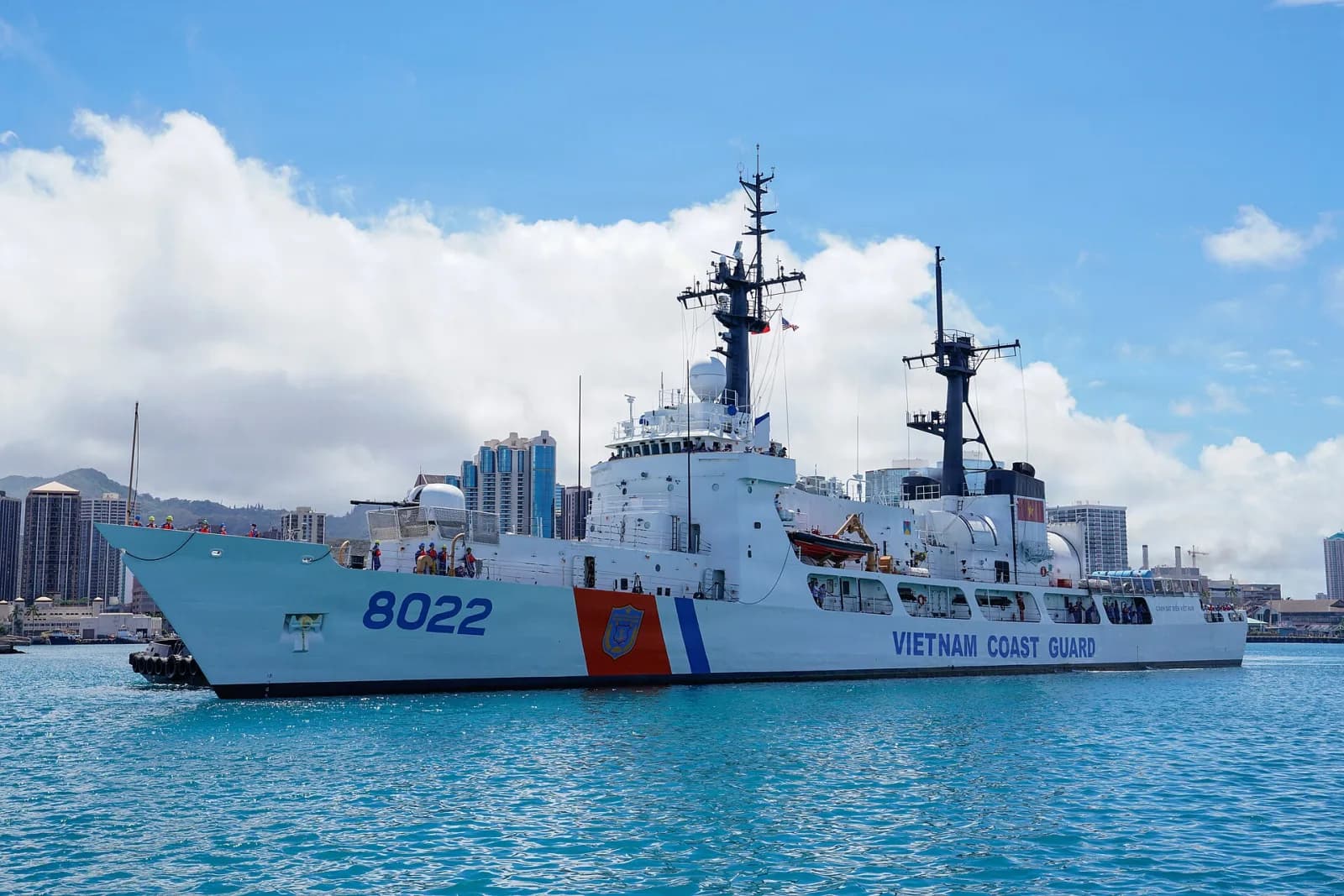
[Geopolitics] Here the security state's interest and Starlink's value converge and collide at the same time. They converge because maritime-domain awareness — tracking the fishing fleet (the EU yellow-card driver), monitoring the exclusive economic zone, and coordinating coast-guard presence against Chinese maritime-militia and survey-vessel incursions near the Paracels and Vanguard Bank — is exactly what a resilient, hard-to-sever broadband link enables. A capped, gateway-routed Starlink is, for the Vietnamese state, a maritime-surveillance multiplier it did not have to build, which is the one place Hanoi's monitoring interest actively favors letting the foreign network in.
And the convergence is sharper than bandwidth. The South China Sea is an active electronic-warfare environment, and Starlink's distributed constellation and steerable terminals offer path diversity that a single fixed link cannot. Ukraine demonstrates both the value and the limit: US government oversight describes Starlink as important to Ukrainian resilience and defense, while battlefield reporting documents episodes in which Russian electronic warfare nevertheless disrupted terminals.^[49] Starlink is resilient, not jam-proof. Vietnam's own pre-2025 coast-guard drone trial shows that the MND had already tested the operational value of the link in the South China Sea.^[45] It is therefore reasonable to infer that contested-environment availability matters to Hanoi; it is not reasonable to claim, absent an official statement or test data, that anti-jam performance caused the license. For Vietnamese maritime forces, Starlink can add a useful diverse path. It cannot be treated as guaranteed tactical survivability.
[Geopolitics] But they collide on the question of who holds the off-switch. A Starlink terminal on a Vietnamese coast-guard cutter shadowing a Chinese survey vessel near Vanguard Bank is a US-operated link inside a Sino-Vietnamese standoff — and the Ukraine precedent is not abstract here. When SpaceX unilaterally constrained Starlink use near Crimea, it proved that the operator, not the user-state, holds ultimate control over service availability in a contested theatre. Transpose that to the East Sea: in a sharp Vietnam–China maritime incident, the resilience of Vietnam's most sensitive links would hinge on the discretion of a US company whose owner runs his own simultaneous relationships with Beijing and Washington. This is the deepest reason the MND supervision clause and the indigenous-capacity ambition (§7) are not theatre — they hedge against exactly the dependency this vertical creates. A coast-guard fleet that relies on a network Hanoi cannot guarantee in a crisis creates a sovereignty exposure the state can tolerate only as a transitional layer. The maritime segment is therefore both Starlink's strongest commercial case in Vietnam and the clearest reason for the operating controls.
[Banker] Commercially the segment is real but bounded: high modeled ARPU and state or state-linked buyers (PetroVietnam, the coast guard, fisheries-surveillance programs), likely procured through security-vetted integrators. It will not move the revenue needle much — a few hundred to a few thousand terminals — but it is the segment most insulated from the affordability ceiling and most aligned with state priorities, which is why it anchors the high-ARPU core of the §9 model. Churn and contract duration remain unknown.
[Country Head] Government, education, health & disaster comms. Remote schools, clinics, border posts, and emergency response. Strategic, subsidy-driven and lower-ARPU in the model — the segment where a fully-foreign-owned American operator is most politically exposed (the same dynamic that made buying Starlink for UiTM controversial in Malaysia), and where Viettel/VNPT have the home-field advantage in any funded program. Starlink wins here only where the state explicitly chooses speed-to-deploy over national-champion preference.
[Banker] The hidden TAM — MNO backhaul. As in Indonesia and Malaysia, remote towers on costly microwave backhaul are a natural LEO wedge. But in Vietnam the wedge is blunter: the MNOs are state-owned, Viettel runs aggressive Open-RAN expansion, and the state may simply self-provision backhaul rather than buy it from a capped American operator it is busy containing. The hidden TAM exists; Starlink's claim on it is weak.
10.1 Enterprise Stickiness: The Constraint on Hanoi's Exit Option
The article has so far treated the 2031 sunset as a lever held by the state. It is, but a sunset clause is not a frictionless off-switch once customers build operations around the service. Every Starlink terminal incorporated into a factory failover plan, a vessel's operational network or a managed-service contract creates a constituency for continuity. By 2031 those dependencies could make non-renewal economically and operationally expensive even if it remains legally straightforward.
Start by separating three kinds of lock-in that are too often collapsed into one:
[Researcher] The first layer is weaker than a dramatic "vendor lock-in" story suggests. Starlink itself markets flexible monthly contracts, self-installation within minutes, direct Ethernet integration aboard vessels and fleet management from a single portal.^[48] Those are selling points precisely because they reduce deployment and switching friction. A factory can unplug a dish; a ship can mount another terminal; a monthly subscription is not a ten-year terrestrial concession. Any analysis that treats the hardware or contract alone as a permanent moat is overstating the case.
The lock-in sits one layer higher. A Korean electronics plant that has certified Starlink as its diverse path has not merely bought bandwidth. It has tested automatic failover, approved routes through its security architecture, documented the service for Vietnamese and global compliance teams, trained operators and attached recovery-time assumptions to the link. Replacing the dish may take hours; re-validating the resilience design can take months. A fishing or merchant fleet adds another layer: vessel installation windows, maritime power and mounting, fleet dashboards, crew procedures, data allowances and shore-side support. The terminal is replaceable. The operating system around it is sticky.
[Banker] Price the friction as a stress test, not a fact. Apply it to the revised Table 4 core — ~8,000 enterprise sites and ~10,000 maritime terminals by 2030. These are scenario assumptions, not vendor quotes:
- If 40% of enterprise sites are simple backup links costing $1,000–$3,000 each to replace and retest, the migration bill is ~$3M–$10M.
- If 50% sit inside managed SD-WAN/compliance designs costing $5,000–$15,000 each to re-engineer, that is ~$20M–$60M.
- If the remaining 10% are high-criticality sites costing $25,000–$100,000 to dual-run, certify and cut over, that is ~$20M–$80M.
- For the 10,000-vessel maritime book, a broad $3,000–$10,000 migration envelope per installed vessel — hardware, mounting, port time, integration and training — adds ~$30M–$100M.
That produces an illustrative $73M–$250M one-time burden before valuing avoided downtime. Dual-running incumbent and replacement service for three to twelve months adds ~$17M–$70M at the model's ~$5.8M monthly enterprise-plus-maritime revenue base. Combined: ~$90M–$320M. Public data cannot validate the contract mix or per-site migration costs; this is a stress test showing what would have to be true for lock-in to become macro-relevant, not a forecast of money Vietnam will spend.
The interpretation matters. A $90M–$320M migration is material relative to the modeled Vietnam business, but it is not large enough to trap the state. Viettel earns roughly $2B in annual pre-tax profit.^[41] The harder cost is operational: coordinated vessel refits, enterprise re-certification and the risk of a continuity gap while a replacement constellation proves itself.
This changes Scenario C without overturning it. A 2031 tilt away from Starlink is more likely to be a managed substitution than a cliff-edge expulsion: stop adding government and subsidized users; require dual-provider designs in critical sectors; migrate state-linked fleets first; let lower-risk enterprise contracts run down; and keep a narrow Starlink license alive until the replacement demonstrates equivalent availability. The sunset gives Hanoi bargaining power, but installed operations give SpaceX transition leverage.
It also explains the strategic contest inside the pilot. SpaceX's rational objective is to embed itself in workflows where replacement risk exceeds subscription cost. Hanoi's is to capture those benefits without allowing single-provider dependency in government or security missions. The migration range matters less than four observable policies: mandatory dual-homing, state-operator resale, Vietnamese-managed SD-WAN, and periodic portability/failover tests. Any of those would show the state actively suppressing lock-in. Multi-year critical-infrastructure awards with no certified alternative would show the opposite. Until procurement documents reveal one direction, the migration-cost model remains a scenario tool, not evidence that stickiness already exists.
The conclusion is therefore two-sided. Customer stickiness raises the cost of tighter restrictions, but it does not transfer licensing authority away from the state. It makes renewal more likely and abrupt non-renewal less likely; it does not necessarily make renewal looser. The more embedded Starlink becomes, the stronger Hanoi's incentive to require portability, dual sourcing or a state-controlled wholesale layer. Enterprise dependence is real, and the likely policy response is to qualify a second network before 2031.
11. The Regional Arc: Indonesia ↔ Australia ↔ Malaysia ↔ Vietnam
[Researcher] Four markets, one constellation, four different binding constraints — the series' core finding rendered as a spectrum:
Table 7 — Four-market comparison
Sources: this series; Ookla; national statistics.^[7]^[15] Vietnam country-level Starlink median not yet published; any Vietnam speed figure is unmeasured.
[Geopolitics] Across the four markets in this series, the spectrum runs from open to enclosed. Australia is the open extreme — no ownership cap, no localization, satellite treated as rural necessity. Malaysia is open-but-hedging — 100% ownership but diversified across orbits and powers. Indonesia is friction-by-protectionism — 49% enforced, gateway-throttled, but not security-enclosed. Vietnam is the enclosed extreme within this four-market set — it grants the most on ownership and the least on everything else, wrapping the operator in a security perimeter none of the other three imposes.
This reframes the lazy "US-aligned = open, China-leaning = closed" heuristic. Vietnam is warming to the US — the pilot is itself a pro-US trade gesture — yet runs the most restrictive LEO regime in this series. Bloc alignment is not enough to explain the outcome. A political system that depends heavily on control of the domestic information space is more likely to constrain a foreign network regardless of which great power supplies it. The prediction is explicit: Vietnam would impose the same core routing, gateway and security controls on a Chinese constellation. A materially looser Chinese deal would falsify the supplier-neutral claim; future licensing provides the test.
The Thailand contrast sharpens it. In November 2025, Thailand's Digital Economy and Society Ministry rejected Starlink's 100%-foreign-ownership proposal outright, citing national-security and ownership-law grounds — "telecom ownership is directly linked to the nation's digital security system."^[34] Two neighboring states, same proposal, opposite answers: Vietnam granted the ownership waiver but surrounded it with operating controls; Thailand refused the waiver altogether. Both are sovereignty strategies. Vietnam's approach relies more heavily on institutional engineering: it acquires connectivity while retaining as much ground-segment and licensing control as possible, without pretending to own the satellites, network software or global service layer.
11.1 Same Four Gateways, Opposite Outcomes: The Enclosure Mechanics
[Researcher] The sharpest way to see what "enclosure" means technically is to compare the two markets in this series that run the same gateway count — Indonesia and Vietnam, four domestic gateways each — and produce opposite outcomes.
In Indonesia, four gateways serve 278 million people under an uncapped license. Demand outran ground capacity, and the result is the congestion-collapse curve the Indonesia analysis documented: median download fell from ~52 Mbps toward 40.69 Mbps and still declining, because every additional subscriber dilutes a fixed gateway throughput.^[7] Indonesia's four gateways are a bottleneck the regulator did not intend — friction by under-provisioning, a byproduct of slow per-gateway approvals rather than a design.
In Vietnam, four licensed gateway sites sit beside a hard 600,000-terminal cap (§4.3). Public data cannot prove that the two were capacity-calibrated, and the cap does not guarantee good performance at 600,000 users. What is provable is the deliberate control surface: the cap limits authorized demand; the routing mandate requires licensed Vietnamese traffic to egress through the domestic ground segment; and scaling antennas, spectrum or sites remains subject to Vietnamese approval. Indonesia's four gateways became a bottleneck; Vietnam's four-site plan is also an explicit jurisdictional chokepoint.
[Geopolitics] That is the mechanical core of the difference between friction and enclosure. Indonesia restricts Starlink through bureaucratic protectionism — a 49% ownership cap, slow approvals and gateway under-provisioning — but it did not build the same explicit domestic-routing and security-ministry control surface into the license. Vietnam granted more on ownership (100%) and built the control surface in: forced routing, a terminal cap and security-ministry supervision. The same site count does not imply identical hardware or capacity; it reveals different policy intent. Jakarta's ground footprint became a throughput problem. Hanoi's licensed ground footprint is also a containment instrument.
12. APAC and Singapore Implications
[Geopolitics] Vietnam's pilot is the clearest case study in the series of how a state-security architecture absorbs a foreign LEO operator — and three lessons travel:
-
Operating conditions, not the license headline, are the unit of analysis. Across APAC, the relevant question is shifting from "is Starlink allowed in?" to "on what terms, and who holds the control surface?" Vietnam shows that an apparently maximal concession (100% ownership) can coexist with extensive controls (cap, sunset, gateway, security oversight). Analysts who read the ownership headline and stop have misjudged the market. The terms of access are the real signal for states that want bandwidth without dependency.
-
Sovereignty in the LEO era is gateway control plus optionality, not ownership. Vietnam is highly unlikely to own a broadband megaconstellation over this horizon — Viettel said in 2021 that domestic providers would need foreign satellite networks.^[17] What Hanoi controls instead is the ground segment's jurisdiction (forced domestic gateways), a regulatory stop-switch on licensed egress, a planned national GEO for sovereign continuity, and the option to qualify another foreign LEO supplier later. That portfolio of control-points and options — not a flag on every satellite — is the realistic sovereignty model for mid-sized APAC states, and Vietnam is its most disciplined practitioner.
-
Regime type predicts enclosure better than bloc alignment. The series began with a tidy correlation — US-aligned markets run faster, more open Starlink. Vietnam breaks the tidy version and replaces it with a better one: a state's tolerance for an uncontrolled foreign network is a function of how much it depends on controlling its domestic information space. That is why Australia is open and Vietnam is enclosed despite both warming to Washington, and why Vietnam would enclose Beijing's constellation just as tightly.
[Researcher] The Singapore dimension. Singapore's own satellite demand is negligible — urban, near-universal fiber and 5G. Its interest in Vietnam is strategic and infrastructural, and sharper here than in any prior market in the series. Three openings:
- The neutral interface layer. As the Malaysia and Indonesia analyses argued, Singapore's regional edge is as the trusted ground, data and coordination hub above the orbital contest. Vietnam's forced-domestic-gateway model is a live demonstration of data-sovereignty enforcement that Singapore — as the region's interconnection and subsea hub — should be reading closely, because it shapes how cross-border traffic from a 100-million-person economy will be routed and governed.
- The compliance-architecture market. Vietnam's enclosure regime creates demand for exactly the managed-service, localization-compliance and security-assurance layer that Singapore firms are well-positioned to provide for multinationals operating across both jurisdictions. The differentiated value in the Vietnamese LEO market sits in the compliance wrapper, not the dish — and that wrapper is a Singapore-adjacent business.
- The leading-indicator value. Within this four-market series, Vietnam is the clearest test of whether a securitized aperture can coexist with deepening US economic ties. If it holds, it may become a reference for other states with similar information-control priorities; if access tightens into expulsion, it signals regional fragmentation Singapore must price into its own infrastructure planning. Either way, Hanoi's 2031 renewal decision is a signal Singapore should be watching.
13. What to Watch: Five Signals to 2031
- The formal service launch, first invoices and early customer mix (2026–27). The localized site is live, but Starlink's Vietnam general manager said on 29 June that infrastructure preparation was still under way and declined to give a launch date.^[52] Independent activation data, tariff filings and the first disclosed enterprise or maritime contracts — not a live webpage — will reveal whether the market is becoming a premium niche or a broader access layer.
- Any Viettel/VNPT–Chinese-LEO (Qianfan/Guowang) agreement. A confirmed wholesale or distribution deal — the MEASAT–SpaceSail equivalent — would be the clearest signal that Hanoi is building a non-US alternative before 2031, increasing the probability of Scenario C.
- The VINASAT replacement decision. A funded, contracted national GEO replacement confirms the sovereign-continuity track and the "control the ground, source capability abroad" doctrine in action.
- Cybersecurity Law 2025 enforcement against Starlink (post-July 2026). The first MPS data-localization order or interference-driven service suspension would show the control framework being actively enforced and recalibrate every operator's risk assessment.
- Procurement architecture before the 2031 sunset. Mandatory dual-homing, a Viettel/VNPT resale role, Vietnamese-managed SD-WAN, portability clauses or recurring failover tests would show Hanoi is actively limiting Starlink lock-in. Their absence would make enterprise continuity harder to replace, but would not transfer licensing power from the state. At renewal, a raised cap with relaxed routing signals Scenario B; tighter terms or non-renewal alongside an alternative signals C.
14. Conclusion: The Aperture Is the Point
Vietnam is not the biggest, richest, or most geographically extreme LEO market in APAC. It is the most instructive about control. It is the series' clearest evidence that the constellation alone does not determine the market; the state is the decisive variable. The same Starlink system enters an open rural-connectivity market in Australia and a capped, security-enclosed service model in Vietnam, because Hanoi designed the pilot to keep licensed connectivity within its regulatory control surface.
The verdict is sharp, not hedged. Vietnam matched Malaysia's 100%-ownership headline and paired it with the hardest control terms among the four markets in this series: a 600,000-terminal cap, a 2031 sunset, four domestic gateway sites, forced in-country routing, joint army-and-police supervision, and a no-dumping rule. The underlying LEO policy pre-dated the tariff shock; the ownership waiver was a trade-accelerated deliverable, giving Washington and SpaceX a visible win while Hanoi retained the primary control surfaces. Starlink in Vietnam is therefore best modeled as a capped, politically-contingent premium utility — strong in maritime, offshore, enterprise-continuity and selected remote-government niches, barred from mass-market scale by both price and design. The 2030 scenarios span ~$80M–$350M/year, with the probability-weighted result near $180M; the spread reflects policy and adoption uncertainty, not false precision. Its customer mix may be more margin-friendly than a discounted residential rollout, but absolute profitability is not publicly verifiable. The aperture stays narrow through the pilot, and my base case (55%) is that Hanoi renews in 2031 on tighter or similar terms, not looser — because the enclosure is working as intended, and behind it Vietnam is using a foreign operator as a bridge while it builds sovereign GEO continuity, indigenous EO capacity, and the option to wholesale non-US LEO if the geopolitics turn.
The aperture widens only on two specific, testable conditions: (a) the security establishment concludes that gateway-mediated control is sufficient, and (b) no credible indigenous or non-US substitute has emerged to make a wider American footprint unnecessary. If both hold by 2031, the cap rises and the market grows. If either fails — and Hanoi is actively trying to create alternatives — the operating restrictions are more likely to persist or tighten. Those are the thresholds that separate the scenarios.
For other security-focused APAC states weighing how to admit a foreign network without ceding control of the domestic information space, Vietnam offers a distinct model. It is neither Malaysia's open hedge nor Australia's broad market access, but a controlled aperture: grant the visible ownership concession, embed control in the licensed topology, keep the sunset short, and distinguish access to a constellation from ownership of orbital capability. In Vietnam, the decisive authority over scale, routing and renewal remains the state.
All data is drawn from public sources, including Vietnam's National Assembly (Resolution 193), the Prime Minister's Office (Decision 659), the Ministry of Science & Technology / Authority of Telecommunications, Vietnamese legal-update and telecom reporting (VnExpress, VietnamNet, Vietnam News, VietnamPlus, VIR), the Washington Post, CNN, Bloomberg, Ookla, VNPT/Viettel disclosures, and the prior Indonesia, Australia and Malaysia analyses in this series. SpaceX discloses no country-level subscriber, revenue or speed figures for Vietnam; where used, all such numbers are clearly labeled modeled estimates or scenario ranges. Scenario probabilities and forward-looking judgments are the author's independent views and are not investment, legal, or procurement advice.
Evidence ladder — how to read the claims here. Verified fact (primary/official): Resolution 193 and Decision 659 and their terms (100% ownership, 600,000 cap, 2031 sunset, 4 gateways, forced domestic routing, MND+MPS oversight); the February 2026 licenses; the Cybersecurity Law 2018 / Decree 53 / PDPL 2025 / Cybersecurity Law 2025 provisions; Viettel's army ownership and market share; the reported indicative $85 pricing; Ookla connectivity rankings; the Washington Post cable reporting; Thailand's rejection. Company/agency statement: Starlink product tiers and investment ambition; official rationale for the cap. Modeled estimate: the Tables 3–5 addressable base, revenue build and sensitivity analysis; the cap stress test; the sovereign-capacity comparison and migration-cost stress test. Author inference (flagged in-text): trade pressure accelerated the ownership waiver; the controls buy time for alternatives; political-system characteristics help predict enclosure; the scenario calls. Scenario assumption: all 2027–2031 forward figures. Where a load-bearing claim could not be cleanly sourced — above all any Vietnam Starlink median and any Viettel/VNPT–Chinese-LEO deal — it is labeled unmeasured or unconfirmed rather than estimated as fact.
Confidence: High on regulatory and legal facts, the pilot terms, operator ownership, and pricing (primary and credible-secondary sourced); Medium on market sizing and scenario forecasts (modeled); the trade-lever causal reading is a clearly-labeled high-confidence inference, not documented fact. Singapore Space Agency is an independent research platform. No official affiliation. UEN 53448796C.
All analysis is based on public sources and represents the author's independent views. It is not investment advice.
Sources52 entries with source notes and links
A/B-grade (official terms via state outlet).
B-grade.
A/B-grade.
B-grade.
B-grade (regulator-sourced).
B-grade.
Malaysia's multi-orbit hedge; 100% Starlink waiver; PDPA non-localization; MEASAT–SpaceSail MoU. Series companion.
A/B-grade (state outlet, regulator-sourced).
corroborated by VietnamNet. B-grade; indicative reported pricing, not a final public tariff schedule.
Corroborating linksVietnamNet
A/B-grade (official US government market intelligence).
- Allen & Gledhill — Data localisation requirement for specific data and entities in Vietnam effective 1 October 2022 (Decree 53 scope, data categories, foreign-enterprise triggers)(allenandgledhill.com)
Vietnam Business Law — Decree 53/2022: Further guidance on data localisation in Vietnam (minimum 24-month period and local-presence requirement). B-grade (professional legal analysis of primary law).
Corroborating linksVietnam Business Law — Decree 53/2022: Further guidance on data localisation in Vietnam (minimum 24-month period and local-presence requirement)
B-grade.
B-grade.
A/B-grade (investigative reporting on primary cables).
context via DataReportal — Digital 2025: Vietnam. B-grade (Ookla-derived via state outlet).
Corroborating linksDataReportal — Digital 2025: Vietnam
- Vietnam Ministry of Science and Technology — Remarkable achievements in science, technology, innovation (29 Jan 2026; 4G coverage >99.8% and 5G >91% of population)(english.mst.gov.vn)
see also MoST — Viet Nam's 5G network covers 26% of population (16 Jul 2025; 4G at 99.8% of population). A-grade (official ministry data).
Corroborating linksMoST — Viet Nam's 5G network covers 26% of population (16 Jul 2025; 4G at 99.8% of population)
B-grade.
- VietnamPlus — Fleet downsizing, occupational shifts to shed EU's "yellow card" (fleet composition, nearshore/offshore split, fishermen, VMS ~98% on vessels ≥15m)(en.vietnamplus.vn)
B-grade. Note: this source's higher headline vessel count (>91,000) appears to be an older/total figure; the current registered fleet is ~79,400 (Nov 2025) per ref-38, which the body uses.
- Vietnam Fisheries Magazine — Vietnam targets lifting EU's IUU "yellow card" by Q4 2025 (EC inspection; VMS rollout; >$11B seafood exports; compliance pressure)(vietfishmagazine.com)
B-grade.
A/B-grade (compiles GSO primary data).
- OECD — OECD Economic Surveys: Viet Nam 2025 (macro context; trade- and investment-driven growth)(oecd.org)
World Bank — World Bank Country and Lending Groups (formal income classifications use Atlas-method GNI per capita; FY2026 groups are based on 2024 data). A-grade (official multilateral sources).
Corroborating linksWorld Bank — World Bank Country and Lending Groups (formal income classifications use Atlas-method GNI per capita; FY2026 groups are based on 2024 data)
B-grade.
- Lockheed Martin — Lockheed Martin-Built VINASAT-1 Satellite Launched Successfully for Vietnam Posts and Telecommunications Group (18 Apr 2008; builder, VNPT customer, Ariane 5 launch, 15-year design life)(investors.lockheedmartin.com)
Fierce Network — Vinasat-1 finally gets into orbit (~$300M program cost, VNPT operation). A/B-grade (manufacturer primary plus contemporary trade reporting).
Corroborating linksFierce Network — Vinasat-1 finally gets into orbit (~$300M program cost, VNPT operation)
B-grade.
- VietnamPlus — Vietnam's first radar satellite LOTUSat-1 ready for orbit (NEC-built X-band SAR; ~600kg; ~500km SSO; VNSC/VAST; launch delayed by Epsilon-S failure)(en.vietnamplus.vn)
B-grade.
B-grade.
B-grade (legal-tech analysis of primary law).
- Government of Vietnam — National Assembly adopts 35 bills and resolutions (Law 116/2025/QH15; effective 1 Jul 2026; consolidation of the 2015 and 2018 laws)(en.baochinhphu.vn)
Duane Morris Vietnam — Vietnam Law on Cybersecurity 2026 — What You Must Know (data localization and local-presence implications); see also Mori Hamada. A/B-grade (official adoption record plus legal analysis).
Corroborating linksDuane Morris Vietnam — Vietnam Law on Cybersecurity 2026 — What You Must Know (data localization and local-presence implications)Mori Hamada
B-grade.
B-grade.
- VietnamPlus — Viettel renamed Military Industry and Telecoms Group (formal designation reflecting defense-industrial role)(en.vietnamplus.vn)
A/B-grade (state outlet).
- VietnamPlus — Viettel to roll out over 2,000 5G Open RAN stations in 2025 (5G expansion scale)(en.vietnamplus.vn)
B-grade.
- VietnamPlus — Resolution 57: telecom providers accelerate 2G shutdown, Viettel hits early 5G milestone (Resolution 57 strategic-tech push; Viettel/FPT/VNG 6G involvement)(en.vietnamplus.vn)
B-grade.
see also Thai Examiner. B-grade.
Corroborating linksThai Examiner
unit role via National Defence Journal. A/B-grade (state/military outlets).
Corroborating linksNational Defence Journal
regional grey-market/abuse context via The Register — SpaceX disables Starlink terminals at Myanmar scam compounds. A/B-grade (state broadcaster citing regulator, plus independent trade reporting).
Corroborating linksThe Register — SpaceX disables Starlink terminals at Myanmar scam compounds
- Mordor Intelligence / Ken Research — Vietnam telecom market size ~$6.6–7.2B (2025), growing toward ~$8.9B by 2030–31(mordorintelligence.com)
B/C-grade (market-research estimates; used only as an order-of-magnitude denominator).
B-grade (state outlet, official registration data).
constellation scale (1,296 Phase 1 / ~15,000 total) via SpaceNews. B-grade (state outlet for cost; B for scale). Per-unit cost used to model satellite capex; an order-of-magnitude input, not a verified BOM.
Corroborating linksSpaceNews
B-grade.
2025 +4.5% via The Investor. B-grade.
Corroborating linksThe Investor
A/B-grade (state/company outlet).
cross-border framework via California Lawyers Association. A/B-grade (legal analysis of primary law).
Corroborating linksCalifornia Lawyers Association
B-grade.
see also Reuters via Investing.com — SpaceX eyes Starlink hub with multiple ground stations in Vietnam. B-grade (Reuters reporting republished by third parties).
Corroborating linksReuters via Investing.com — SpaceX eyes Starlink hub with multiple ground stations in Vietnam
The White House — Joint Statement on a United States–Viet Nam Framework for an Agreement on Reciprocal, Fair, and Balanced Trade (26 Oct 2025; 20% reciprocal tariff maintained, selected zero-rate treatment). A-grade (official US government data and statement).
- US Federal Communications Commission — SpaceX Gen2 E-band authorization (71–76 and 81–86 GHz; coordination conditions)(docs.fcc.gov)
ITU-R Recommendation F.2006 — Channel and block arrangements in 71–76/81–86 GHz; ITU-R Recommendation P.618-13 — Propagation data and prediction methods for Earth-space systems (rain attenuation and site diversity). A-grade (regulator and international technical standards).
Corroborating linksITU-R Recommendation F.2006 — Channel and block arrangements in 71–76/81–86 GHzITU-R Recommendation P.618-13 — Propagation data and prediction methods for Earth-space systems (rain attenuation and site diversity)
- Starlink — Business (flexible monthly contracts, self-installation, backup-connectivity positioning)(starlink.com)
Starlink — Maritime (direct Ethernet integration, fleet management, $250–$2,150 monthly priority plans and advertised speeds up to 400+ Mbps). A-grade for published product design, prices and company performance claims; not independent performance or Vietnam-contract evidence.
Corroborating linksStarlink — Maritime (direct Ethernet integration, fleet management, $250–$2,150 monthly priority plans and advertised speeds up to 400+ Mbps)
Ukrainska Pravda — Ukrainian military's Starlink terminals went down at beginning of Russian offensive in Kharkiv Oblast (reported electronic-warfare disruption). A/B-grade (official US oversight plus credible battlefield reporting).
Corroborating linksUkrainska Pravda — Ukrainian military's Starlink terminals went down at beginning of Russian offensive in Kharkiv Oblast (reported electronic-warfare disruption)
B-grade for the reported company commitment; not evidence of deployed capital.
- Vietnam Ministry of Science and Technology — 100% of households to access fiber-optic cable services by 2025-end (27M households; 5.4M without fiber access in May 2024)(english.mst.gov.vn)
Ministry of Science and Technology — Vietnam has 110.5 million mobile internet subscriptions (6 May 2026; 85.8% of households using fiber). A-grade (official ministry data).
Corroborating linksMinistry of Science and Technology — Vietnam has 110.5 million mobile internet subscriptions (6 May 2026; 85.8% of households using fiber)
- Starlink — Vietnam service page (localized site; Starlink Services Vietnam entity and licensing details)(starlink.com)
VietnamNet — What is the current status of Elon Musk's Starlink service in Vietnam? (29 Jun 2026; infrastructure preparation ongoing; Vietnam general manager declined to give a formal launch date). A/B-grade (company page plus management and regulator reporting).
Continue reading

24 Jun 2026 · 50 min read
Malaysia Satellite Internet 2026: Three Orbits, Two Powers, and the APAC LEO Laboratory
Malaysia is Southeast Asia's clearest multi-orbit market: Starlink is live, MEASAT anchors GEO, and SpaceSail remains a strategic option rather than a proven rival.

3 May 2026 · 55 min read
Indonesia Satellite Internet: Starlink's 17,000-Island Opportunity and Three Structural Constraints
Indonesia's 17,000-island opportunity is constrained by regulation, ground infrastructure, and Telkom's dual role; Starlink leads, while Qianfan remains an option.
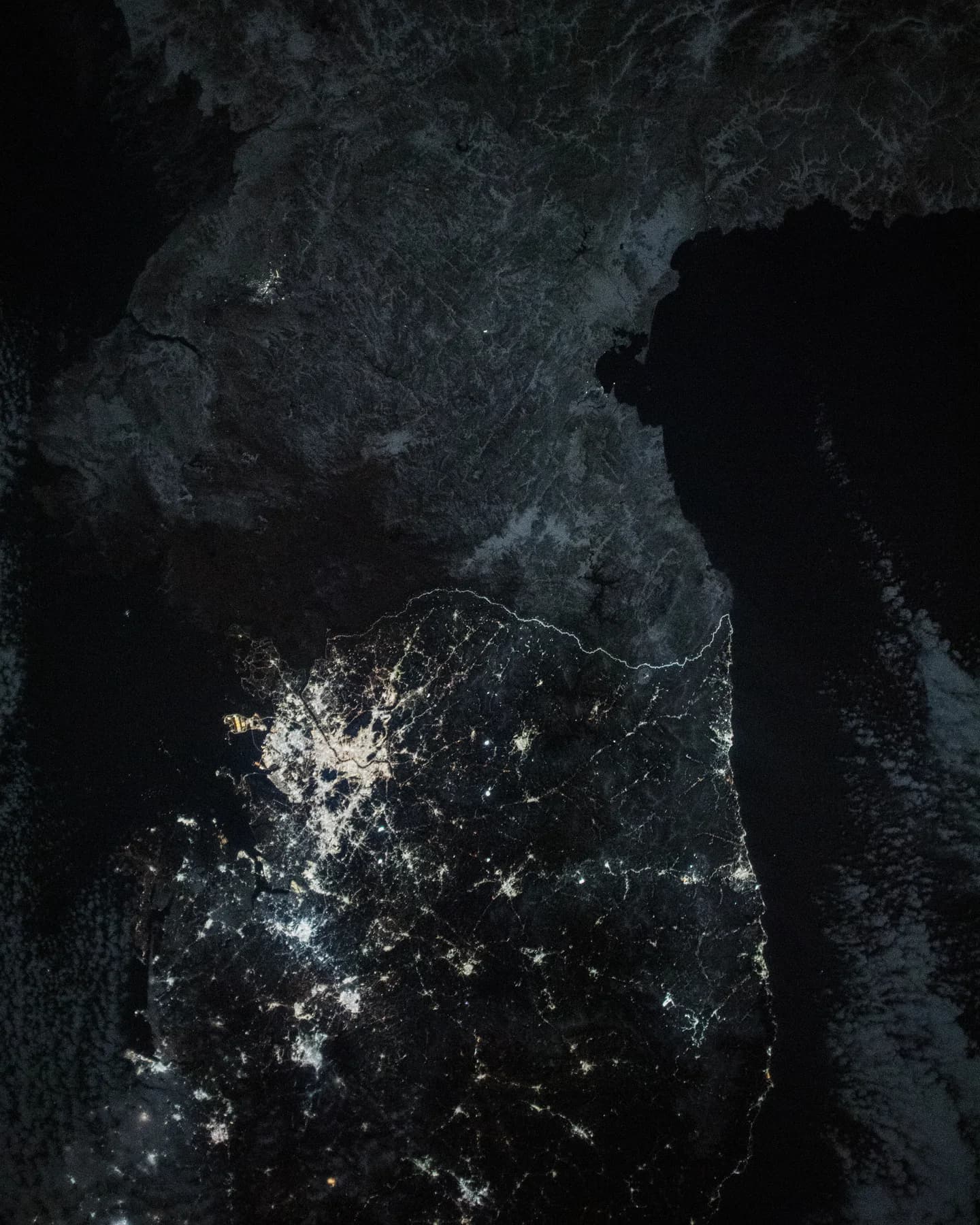
23 Aug 2026 · 59 min read
South Korea LEO 2026: Open Now, Build Later
Korea opened the market to Starlink and OneWeb, then committed to a sovereign constellation whose defense case is far stronger than its commercial one.