
China's Orbital Compute Reality Check: Who Is Actually in Orbit?
China's orbital-compute programs now include real in-orbit validation, but public evidence still separates credible engineering paths from constellation-scale claims.
Method & disclosure
Confidence: High for regulatory filings, government websites, listed-company announcements, and official technical disclosures. Medium for company progress scoring, commercialization timelines, and some media-reported claims that are not yet backed by telemetry or audited operating data.
Review mode: Human + AI cross-check
Writing support: AI assisted
Singapore Space Agency
On this page · 8
Key findings
The argument in brief
- China's orbital compute sector is real, but still early: a few verified in-orbit assets sit beside a much larger financing and policy narrative.
- Tiansuan has the strongest Chinese technical proof point, while Guoxing has the most visible in-orbit fleet and the clearest commercial-economics problem.
- The decisive gaps are not only chips; launch cost, open platform standardization, optical relay, and thermal engineering are at least as important.
- Orbital Chenguang's RMB57.7 billion credit line is best read as policy mobilization, not as evidence of deployable engineering capacity.
China's Orbital Compute Reality Check: Who Is Actually in Orbit?
From Starcloud and Google Suncatcher to Tiansuan, Guoxing Aerospace, Orbital Chenguang, Zhejiang Lab, and Dongfang Tiansuan - a noise-adjusted assessment based on in-orbit facts, engineering constraints, and commercial pathways.
Disclaimer: The progress scores in this report measure publicly verifiable progress versus narrative inflation. They are not judgments on investment value, valuation reasonableness, or future return probability. This report is not a bearish note on China's orbital compute industry, nor a bullish note on Western routes. It applies the same evidence standard to the whole sector.
Methodology: The scoring framework weights verifiable in-orbit facts at 35%, regulatory and prospectus documents at 20%, commercial customers and revenue validation at 20%, scaling engineering path at 15%, and financing and capital signals at 10%.
1. Fact Status Box
Confirmed facts from A-grade sources: filings, government websites, and listed-company announcements
- Micro-Nano Star's STAR Market IPO application was accepted on May 11, 2026. Its prospectus disclosed RMB385 million in 2025 revenue, RMB1.093 billion in cumulative losses over three years, and 92.33% concentration among its top five customers.^[25]^[26]
- Guoxing Aerospace filed with HKEX for the third time on May 14, 2026. Its prospectus disclosed RMB703 million in 2025 revenue, a RMB256 million loss, 22 AI satellites in orbit, 7.62% gross margin, and a January 2026 launch failure.^[24]^[27]
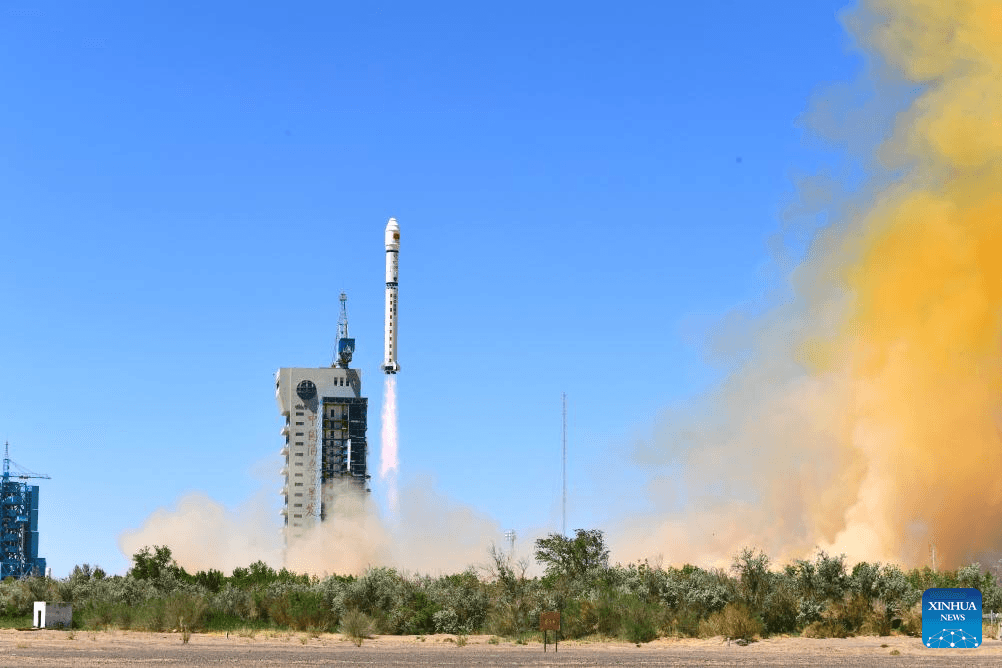
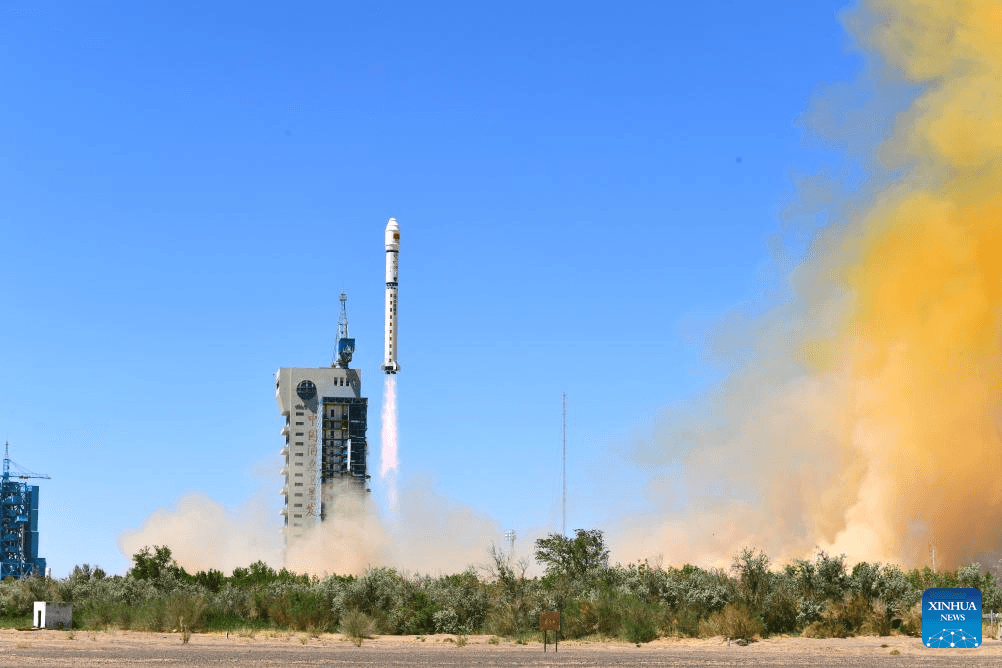
- Orbital Chenguang's Chenguang-1 satellite successfully launched on January 14, 2026 and is currently conducting in-orbit technical validation, according to Shunho Stock disclosures and Beijing municipal government materials.^[23]^[28]
- NVIDIA formally announced the Space-1 Vera Rubin Module at GTC 2026, with availability stated as “at a later date.”^[12]
- Shunho Stock (002565) confirms a 27.8% equity stake in Orbital Chenguang.^[23]
Media reporting with relatively high confidence
- Tiansuan's Aurora 1000 has reportedly operated in orbit for more than 1,000 days, according to 36Kr and Beijing Daily.^[16]^[20]^[21]
- Zhejiang Lab's Three-Body Computing Constellation launched its first 12 satellites on May 14, 2025: 744 TOPS per satellite, 5 POPS across the 12-satellite network, and an 8-billion-parameter space-based model deployed in orbit, according to Science and Technology Daily / Xinhua reporting.
- Guoxing Aerospace reportedly deployed Alibaba's Qwen3 model on in-orbit satellites in November 2025, described as the world's first deployment of a general-purpose large language model in orbit.^[15]
- Dongfang Tiansuan announced on May 15, 2026 that it had started joint development of the world's first space-based optical-computing satellite with Guangbenwei Intelligent Technology.
- Starcloud-1 used an NVIDIA H100 GPU to perform LLM training in orbit.^[5]
- Google Project Suncatcher reports five-year LEO radiation testing of Trillium TPU v6e and a 2027 prototype launch plan.^[6]^[8]^[9]
Reported claims that still require source hardening
- SpaceX orbital data-center satellite filings reportedly involving roughly one million satellites.
- SpaceX+xAI corporate integration, reported by multiple outlets but not yet confirmed through SEC-grade documentation.
- Musk's Terafab 1 TW annual compute-production target, which currently lacks an engineering roadmap.
Author inference, not standalone fact
- Every company progress percentage in this report, expressed as a range with an error band of roughly ±10 percentage points.
- The judgment that Guoxing's 5 POPS figure should be treated as theoretical rather than commercially usable unless inter-satellite networking is fully clarified.
- The dimensional gap analysis across launch cost, chips, platform standardization, optical relay, and thermal engineering.
2. 90-Second Summary
China's orbital compute sector is neither empty nor on the edge of immediate mass commercialization. It is in an early validation phase defined by a small number of genuine in-orbit facts, a large amount of financing narrative, and several unresolved engineering gaps.
The strongest in-orbit evidence belongs to: Tiansuan, Guoxing Aerospace, Zhejiang Lab's Three-Body Computing Constellation, Orbital Chenguang, Micro-Nano Star, and Yiwei Aerospace. Tiansuan is the most credible long-duration case. Guoxing has 22 AI satellites and the reported first Qwen3 deployment in orbit, but inter-satellite networking still needs clarification. Zhejiang Lab's constellation has the most complete technical validation. Chenguang-1 is now in orbit, but its compute is roughly equivalent to one terrestrial server. Micro-Nano Star has 32 satellites in orbit, but it is primarily a satellite manufacturer rather than a compute platform. Yiwei is focused on communication-satellite compute and is still small.
The largest gap between narrative and evidence appears at: Orbital Chenguang, Guoxing Aerospace, and Dongfang Tiansuan. Chenguang-1 is real, but the gap between one server-class payload and a GW-class space data center is measured in millions of times. Guoxing's 7.62% gross margin and repeated filing lapses reveal a difficult commercial reality. Dongfang Tiansuan has the most differentiated technical route, but no in-orbit product yet.
The largest structural constraints are: launch cost, space-grade reliability engineering for domestic GPUs, and the lack of a standardized open platform.
The most important 2026 industrial signal: China's space-compute industry conference on April 3, 2026, the creation of a dedicated space-compute committee, an explicit April 21 statement of support from a MIIT vice minister, and the launch of ten joint technology programs.
3. Noise Removal Manual
This framework sits before the company analysis because it governs every later judgment.
4. Global Benchmarks
4.1 SpaceX Integrated Control Capacity = 100%
This 100% is not a claim that SpaceX has already commercialized orbital compute. It sets SpaceX's combined control over launch, constellation operations, manufacturing, capital mobilization, and vertical integration as the upper benchmark.
According to multiple media reports, SpaceX submitted an application in January 2026 for orbital data-center satellites at a scale described as roughly one million spacecraft, although the filing number still requires independent verification.^[1] Musk also announced a Terafab plan targeting one terawatt of annual compute production in March 2026.^[2] Multiple financial and technology outlets have reported a SpaceX+xAI corporate combination, but the detailed structure is not yet confirmed by SEC-grade documentation.^[3]
Integrated control capacity: 100%. Actual orbital-compute hardware validation: roughly 65%. Commercial feasibility: roughly 40%.
4.2 Starcloud High-Performance GPU In-Orbit Validation = 100%
This 100% is a benchmark for high-performance GPU validation in orbit, not for the commercial viability of orbital data centers.
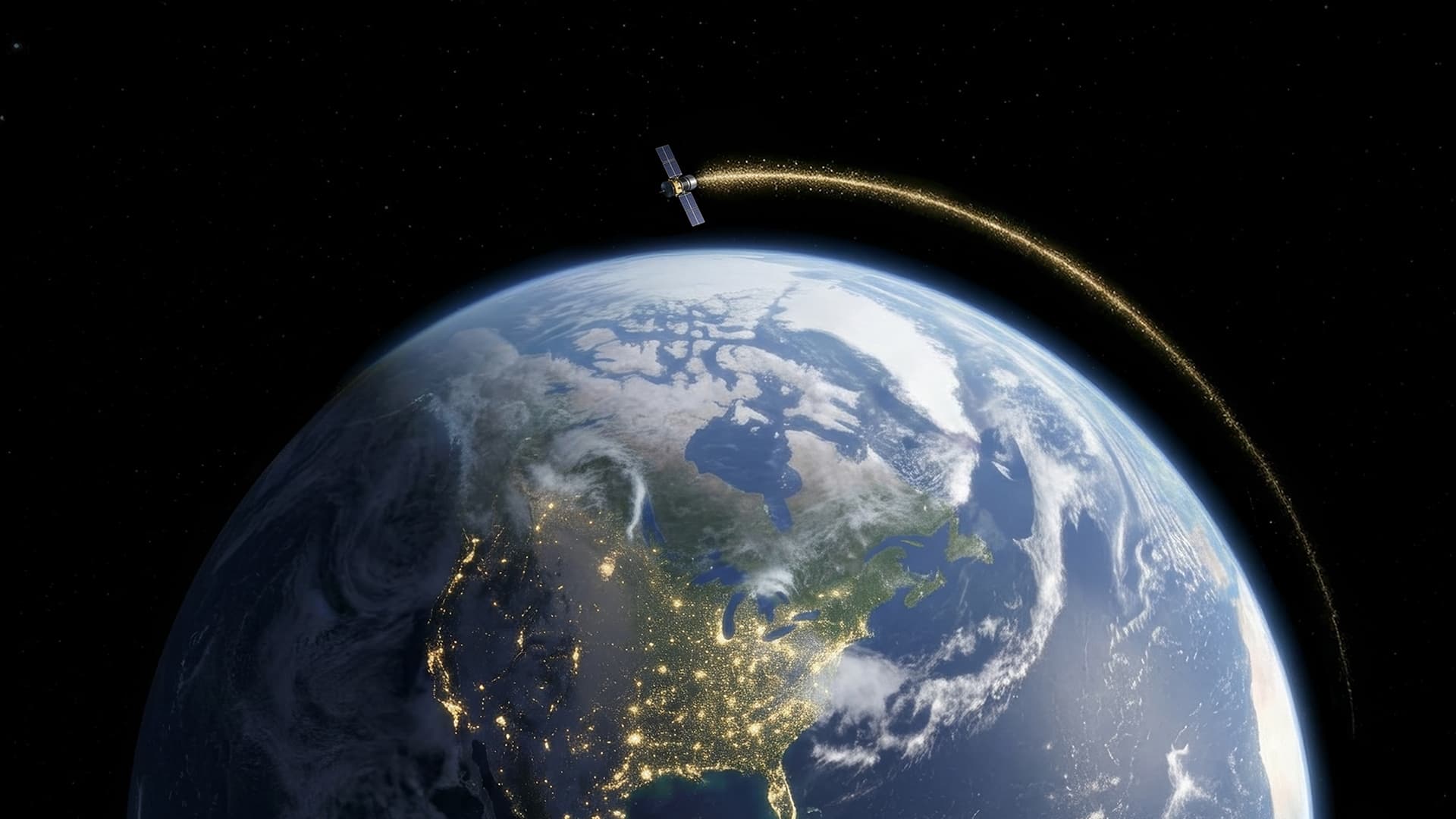
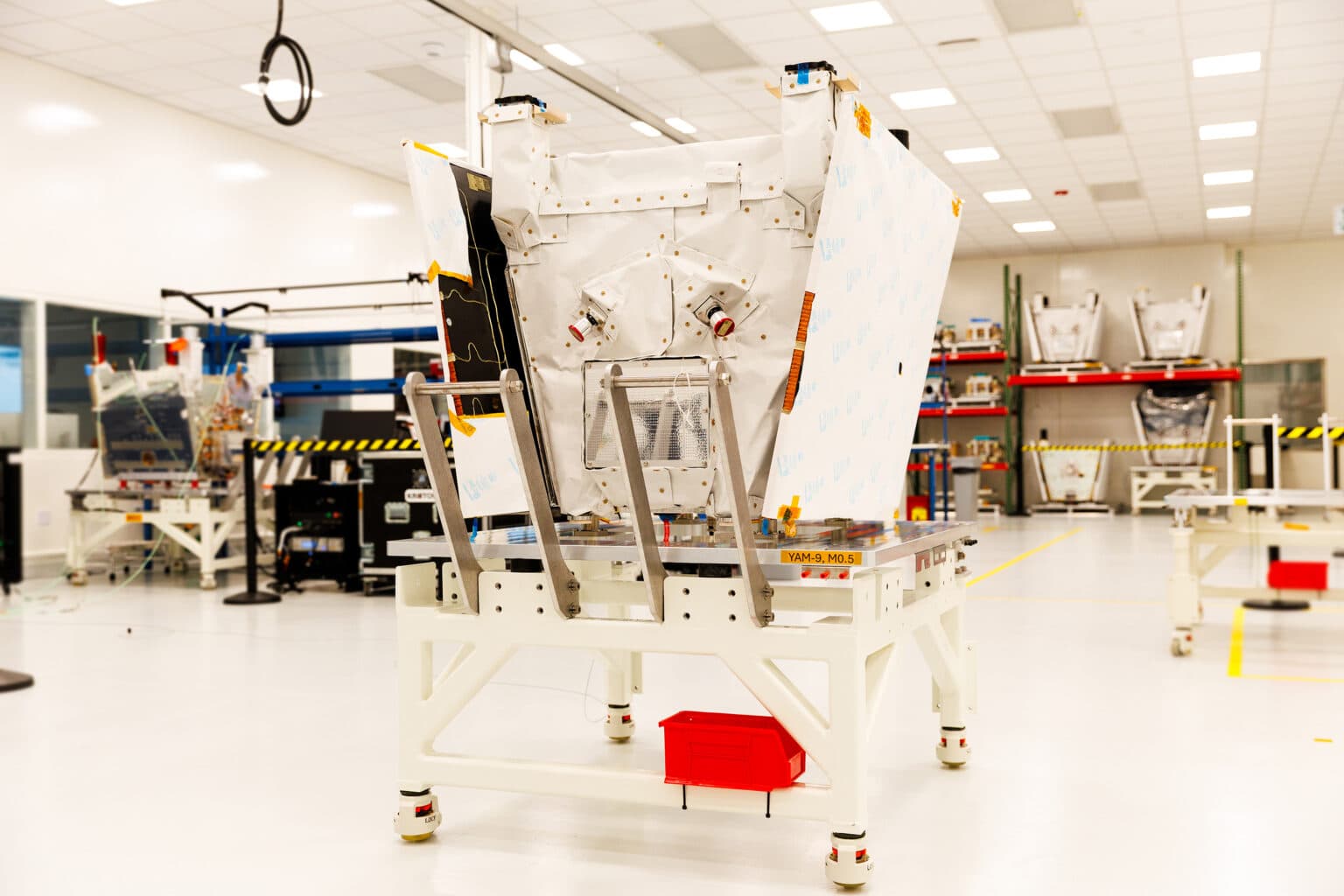
Starcloud-1 launched in November 2025 with an H100-class GPU pathway, demonstrated NanoGPT training and Gemma model execution in orbit, while a separate A6000 satellite was damaged during launch.^[4]^[5] Starcloud-2 is planned for late 2026 with Blackwell B200, 100x more power generation, and what the company describes as the largest deployable radiator yet attempted for this category; reported partner-hardware delivery details remain unconfirmed.^[7]
The technical route has been validated. The business model remains a hypothesis.

4.3 Other Western Participants
Google Project Suncatcher: Trillium TPU v6e has undergone five-year LEO radiation testing; Google has disclosed a 1.6 Tbps optical-link laboratory result, an 81-satellite formation-flying research model, and a plan to launch two prototype satellites in 2027.^[6]^[8]^[9]^[13]^[14] This is the most conservative route and the most honest public timeline.

Cowboy Space, formerly Aetherflux: $275 million Series B, $2 billion valuation, no in-orbit GPU, no compute validation, and a self-built rocket plan for 2028.^[10] Among Western participants, it has the largest valuation-to-hardware gap.
Kepler Communications + Sophia Space: more than $233 million in financing, a distributed inference route using multiple Jetson Orin processors, and an April 2026 launch of what the companies describe as the largest orbital compute cluster.^[11] Among non-SpaceX Western participants, this is the clearest commercial pathway.

NVIDIA Space-1 Vera Rubin Module: announced as delivering 25x the space inferencing compute of H100, with availability stated as “at a later date.” It is the single most important unknown variable in this sector. If delivered, it will reset every current in-orbit compute comparison.
5. Global Progress Table
These ranges are directional author assessments, with roughly ±10 percentage points of error. They are not engineering measurements and do not constitute investment advice.
6. Company-by-Company Deep Mapping
The structure is consistent: company base, supply chain, partner network, in-orbit assets, commercial model, strengths and weaknesses, development path, and noise-adjusted judgment.
6.1 Tiansuan: The Most Credible Long-Duration In-Orbit Data, but Reliability Engineering Is the Real Test
Company Base
Product Roadmap
Supply Chain
Partner Network
In-Orbit Asset
Financing
Angel round led by Gewu Zhi Zhi, several tens of millions of RMB, November 2025. Angel+ round led by Shenzhen Capital Group and SMIC Juyuan, RMB100M-class, March 2026. The company reportedly reached tens of millions of RMB in revenue within roughly one year of founding.
Strengths and Weaknesses
Development Path
Short term, 12 months: Aurora 5000 in-orbit validation in 2026H2. A successful flight would be a Chinese space-compute milestone; the biggest risk is radiation fault tolerance of domestic chips.
Medium term, 2-3 years: batch supply to large constellations such as Qianfan and Guowang. The question is not only compute, but integration cost and interface standardization.
Long term, 5+ years: the Tiansuan plan, meaning a ten-thousand-card space supercomputer. This requires domestic high-performance AI GPU breakthroughs and a major reduction in launch cost.
Noise-adjusted judgment: Aurora 1000 is Tiansuan's decisive differentiator. But two constraints must be treated honestly: the performance gap versus NVIDIA H100 is real and widening; and space-grade reliability engineering for domestic chips is harder than algorithmic coordination. Current state: 100% at validation layer, roughly 15% at commercial deployment layer.
6.2 Guoxing Aerospace: Most AI Satellites in Orbit, First Reported LLM Deployment, Difficult Unit Economics
Company Base
Supply Chain
Partner Network
Milestone Timeline
In-Orbit Asset Check
Commercial Economics
For 2025 AI computing satellites, average cost was RMB17.305M per satellite and price was RMB18.734M, leaving gross profit of only RMB1.428M per satellite. That is not enough to cover R&D, G&A, and selling expenses.
Strengths and Weaknesses
Development Path
Short term: third HKEX IPO attempt in 2026H2. Success would restore funding continuity; another lapse would deepen questions about the model.
Medium term: 02/03 orbital compute-center deployment in 2026. Core challenge: stable inter-satellite networking and gross-margin improvement.
Long term: the 2,800-satellite StarCompute plan. At current launch cadence, this implies roughly 30-40 years. That number itself explains the problem.
Noise-adjusted judgment: Qwen3 in orbit is Guoxing's most important technical achievement and one of China's closest claims to a global first. But the prospectus reveals a hard commercial reality. A 7.62% gross margin means selling 12 AI compute satellites produces only about RMB17.13M in gross profit, far below what a 2,800-satellite plan would require. The in-orbit facts are real. Commercial sustainability is the unresolved question.
On 5 POPS: the reported inter-satellite networking issue has not been officially clarified. If unresolved, 5 POPS is theoretical aggregate compute rather than stable distributed compute service. The commercial meaning is completely different.
6.3 Zhejiang Lab / Three-Body Computing Constellation: China's Most Complete In-Orbit Technical Validation
Entity note: Zhejiang Lab is a research institution directly under the Zhejiang provincial government, not a commercial company. Its Three-Body Computing Constellation is currently China's most complete in-orbit compute validation. Zhejiang Lab leads the spaceborne intelligent computer, space OS, space model, and inter-satellite communication system; Guoxing develops the satellite platform and whole spacecraft.
Basic Information
Technical Parameters
Supply Chain and Division of Labor
Second-Orbit Expansion Partners
Guoxing Aerospace, Zhixing Space, Diwei-2, Kaiyun United, LandSpace Hongqing, Shifang Starlink, Zhongke Ruige, and Micro-Nano Star.
Milestones
Strengths and Weaknesses
Noise-adjusted judgment: The Three-Body Computing Constellation is China's strongest system-level in-orbit compute validation. The key is to understand the division of labor: Guoxing's 18 AI computing satellites are the platform layer for Zhejiang Lab's Three-Body project. The same foundational program is being described from different institutional angles.
Progress score: 32-40%. Technically it is China's strongest case, but it is not a commercial company and cannot be compared directly with Starcloud.
6.4 Orbital Chenguang: Major Fact Update, Chenguang-1 Is Already in Orbit
Company Base
Chenguang-1 Supply Chain
Three-Stage Plan
The Institutional Logic Behind the RMB57.7B Credit Line
A RMB57.7 billion strategic credit line from 12 state-owned banks to a company founded only months earlier makes sense only inside a policy-bank logic.^[19] Once commercial space and space computing are treated as strategic emerging industries, banks are encouraged to show credit support for such directions. Orbital Chenguang receives a large endorsement number; the banks fulfill a strategic-emerging-industry credit narrative. Without in-orbit validation and commercial conditions, that credit line is not equivalent to usable cash. It signals mobilization capacity, not market validation.
Strengths and Weaknesses
Noise-adjusted judgment: Chenguang-1 is real and in orbit. That is an important update. But the project lead's own description of its compute as roughly equal to one terrestrial server is the most honest number. Chenguang-1 validates technical direction, not commercially usable compute.
Revised progress score: 12-20%. The score rises from concept-only because Chenguang-1 is in orbit, but the gap to the GW vision keeps the composite score low.
6.5 Micro-Nano Star: The Clearest Financial Window Into Chinese Commercial Satellite Manufacturing
Company Base
Supply Chain
Financials
Cumulative three-year losses reached RMB1.093B. The largest customer accounted for 56.15%, and the top five customers accounted for 92.33%.
IPO Use of Proceeds
The planned RMB5B raise is aimed at Taijing Constellation Phase I, SAR payloads, platform core units, and communication satellites. Compute is not the core IPO direction. The “500 TOPS space supercompute” narrative is marketing-adjacent, not the central strategic bet.
Noise-adjusted judgment: Micro-Nano Star is the most financially transparent company in this report because the data comes from regulatory filings. Its real strategy is remote-sensing satellite manufacturing. Compute is an attached capability, and 500 TOPS is fleet aggregate compute rather than usable per-platform compute. The 2025 revenue surge likely reflects staged recognition from a large customer order; 92% customer concentration is the core risk.
6.6 Dongfang Tiansuan: Optical Compute, the Most Differentiated Chinese Route
Company Base
Why Optical Compute Could Be Better Suited to Space
Latest Progress, May 15, 2026
- Jointly building a space-based optical-computing innovation center with Guangbenwei Intelligent Technology in Shanghai.
- Starting joint development of the world's first space-based optical-computing satellite.
- Beginning preliminary space validation of optical-computing chips.
- Seven key technology programs: radiation-resistant compute chips, new space energy, advanced payloads, efficient thermal control, space compute cloud platform, inter-satellite laser networking, and in-orbit intelligent services.
Partners
Strengths and Weaknesses
Noise-adjusted judgment: Dongfang Tiansuan has the most differentiated technical logic in this report. If a photonic compute satellite reaches orbit and produces useful data, it would be globally unique. But today the route is extremely early. Progress score: 3-8%.
6.7 Yiwei Aerospace: The Most Pragmatic Market Choice
Company Base
Market Logic
Supply Chain and Partners
Noise-adjusted judgment: Yiwei has the clearest strategic discipline among the Chinese companies reviewed. Communication-satellite compute is a certainty-demand market and does not require a speculative “space AI boom.” The key question is whether the BUPT payloads are independently developed by Yiwei or jointly embedded in the Tiansuan constellation. The next 12-18 months should be judged by whether Yiwei wins its first commercial operator contract.
6.8 Qingbo Aerospace: Strong Academic Base, Rational Software-First Route
Company Base
Core Assets
Already present: several customized situational-awareness software systems delivered, actual revenue, qualified supplier status for large satellite constellation operators, and a serious academic moat through Professor Baoyin.
Not yet present: a space-based experimental satellite, planned for 2026 but not yet started.
An April 2026 angel round is the clearest external capital signal disclosed so far.^[18]
Noise-adjusted judgment: Software first is the rational path: revenue, customer relationships, and low survival risk. The hard transition is from software company to integrated space-ground company.
6.9 Kaiyun Group: Valuable Data Accumulation, Funding Gap Behind the Constellation Narrative
Founded in 2004 and pivoted to space data in 2021. Core assets include the AOE orbital database with 30B+ records, 27 ground stations, and Kaiyun-1 in orbit since September 2025.
Noise-adjusted judgment: The real value lies in 20 years of software accumulation and ground observation network. The 108-satellite “Xinghan Plan” is a business narrative, not the current execution plan.
6.10 GEOVIS + Sugon: Standards Setters and Architects of a Space Compute Network
GEOVIS (688568) is a listed space-information services leader with RMB2.677B in 2025 revenue and a “digital Earth” product line. Sugon (603019) is a domestic compute-infrastructure leader and is moving toward combination with Hygon Information, connecting domestic chips to complete systems.
On July 8, 2025 in Hefei, the two signed a space-computing cooperation framework agreement:
- Joint R&D of dedicated space-compute chips and systems.
- Building an integrated user terminal — space edge — space cloud — ground cloud compute architecture.
- Promoting standards for space-chip interfaces and space-data processing models.
- GEOVIS disclosed in its 2025 annual report that it had successfully connected to a national-level compute service platform.
The standards intent is the key point. If successful, future domestic space-compute hardware may need to be compatible with this architecture. This is ecosystem positioning, not merely product competition.
Noise-adjusted judgment: Both are listed companies with funding, resources, and CAS-linked backgrounds. A framework agreement is not a product, but the standards ambition makes them possible long-term beneficiaries. Watch whether 2026-2027 brings concrete products rather than more framework language.
6.11 Geespace / Geely Constellation: Strongest Commercial Loop, but Communications First
Geespace is currently the closest commercial loop among Chinese commercial satellite constellations: 64 satellites, actual communication revenue, and auto-industry customers. But its core is communications, not compute. Its relevance to space compute is as a potential customer for companies like Yiwei. If Geespace's expansion constellation procures spaceborne compute modules, that would be a major commercial validation signal for the communication-satellite compute niche.
6.12 CASC's 15th Five-Year Plan: The State Team's Ultimate Endorsement
China Aerospace Science and Technology Corporation has included GW-class space digital-intelligence infrastructure in its 15th Five-Year Plan, covering a cloud-edge-end integrated space architecture and deep integration of compute, storage, and transport. It supports three modes: space-data space-compute, ground-data space-compute, and space-ground co-compute.
This is the strongest strategic confirmation signal for China's space-compute sector. CASC is the Long March rocket manufacturer and China's largest state-owned space group. This is not a startup slide deck; it is a state-team planning document. A reasonable expectation is initial results around 2030, not 2027.
7. Industry Chain and Dimensional Gap Analysis
7.1 Global Industry Chain Node Map
7.2 China Is Not Simply Two to Three Years Behind
7.3 Launch Cost Is the Root Variable
All $/kg numbers are public estimates rather than direct procurement prices.
Core conclusion: Until China has commercial mass production of a reusable heavy launcher comparable to Starship economics, its orbital compute unit economics will remain structurally disadvantaged. Zhuque-3's 2026 recovery validation is the launch-cost variable to watch.
7.4 China's Closed-Ecosystem Path: The Honest Counterargument
This report repeatedly notes China's lack of a standardized open platform. But there is a plausible alternative path: state-led constellations such as Qianfan and Guowang could build closed but internally efficient compute networks serving domestic applications, bypassing the open-platform stage. Chinese internet history has precedents for this. It does not change the fact that China lacks an open platform, but it changes how binding that gap may be.
8. Final Judgment
8.1 Seven-Sentence Summary
-
Tiansuan's Aurora 1000 is the most credible in-orbit technical asset, but Aurora 5000 faces the harder-to-quantify challenge of domestic chip reliability in orbit.
-
Guoxing's reported Qwen3 in-orbit deployment is China's most important single technical milestone in this category, but a 7.62% gross margin shows the gap between “number of AI satellites in orbit” and “commercial sustainability.”
-
Zhejiang Lab's Three-Body Computing Constellation is China's most complete technical validation: 12 satellites networked in orbit, an 8B-parameter model, and an inter-satellite networking breakthrough. But 5 POPS usability still needs clarification, and the lead entity is a research institution rather than a commercial company.
-
Orbital Chenguang's Chenguang-1 is in orbit as of January 14, 2026, with compute roughly equal to one terrestrial server and a gap of millions of times from the GW-class vision. The RMB57.7B credit line is a policy signal, not market validation. Both statements are true and should not be conflated.
-
Dongfang Tiansuan's optical-compute route is the most differentiated technical logic in the sector: photons are naturally radiation-resistant and lower-heat, and the route avoids the GPU export-control ceiling. But the commercial path is unknown.
-
Launch cost is the root constraint: China's roughly $5,000-10,000/kg versus an approximate $200/kg economic threshold is a 25-50x gap and harder to close quickly than the chip gap.
-
The 2026 space-compute industry conference, explicit MIIT support, and CASC's GW-class 15th Five-Year Plan together show that China's sector has moved from early exploration into state-backed industrial promotion. State backing does not equal commercial feasibility; the gap between the two still needs time.
8.2 Situation Awareness
Opportunities mature enough to work on now:
- Thermal engineering: China's weakest technical layer and therefore a real market opportunity.
- Inter-satellite laser communication: Accelink is already mass-producing modules; system integration still has room.
- Communication-satellite compute OS: Yiwei's niche, with a clear demand base.
- Software and data services: Qingbo's route, higher margin and lower capital burden.
Opportunities still early and high-risk:
- General orbital AI compute platforms, whose economics depend heavily on Starship-class launch cost.
- Large-scale space data centers, where engineering, funding, and technology are all unresolved.
- Optical-compute space chips, where the direction may be right but the timing window is unknown.
Is it too late? No. Most core opportunities are not yet occupied. But market education cost is high and the commercial path is unclear, which is both the opportunity and the risk.
8.3 Key Indicators for the Next 12 Months
This report is based on public information available as of May 20, 2026. Progress scores are directional judgments using ranges rather than exact single-point measurements. They are not engineering measurements and do not constitute investment advice. All “judgment” sections are derived from verifiable public facts, with inference explicitly marked.
Sources28 entries with source notes and links
- FCC public docket, filing number still requiring independent verification - SpaceX orbital data-center satellite application, 2026-01-30, B-grade pending document hardening.
- SpaceNews - Terafab plan and Austin event, 2026-03-22, B-grade.
- TechCrunch and other media - reported SpaceX+xAI corporate integration, 2026-02, B-grade.
- TechCrunch - Starcloud $170M Series A and YC fastest-unicorn framing, 2026-03-30, B-grade.
- CNBC - Starcloud-1 H100 in-orbit NanoGPT training and Gemma run, 2025-12-10, B-grade.
- NPR - Google orbital data-center economics and approximate $200/kg launch-cost threshold, 2026-04-03, B-grade.
- Tech-Insider - reported Starcloud-2 partner hardware delivery details, 2026-04, C-grade.
- Introl Blog - Google Suncatcher technical parameters, 2026-02-21, C-grade.
- SpaceNews - Sundar Pichai orbital data-center remarks, 2025-12-30, B-grade.
- TechCrunch - Cowboy Space $275M Series B and $2B valuation, 2026-05-11, B-grade.
- TechCrunch - Kepler and Sophia Space orbital compute cluster claim, 2026-04-13, B-grade.
- NVIDIA official announcement - Space-1 Vera Rubin Module and availability language, 2026-03-16, A-grade.
- Data Center Dynamics - Google and SpaceX Suncatcher discussions, 2026-05, B-grade.
- SpaceNews - Sundar Pichai comments on orbital data centers becoming normal in roughly 10 years, 2025-12-30, B-grade.
- Caixin Weekly - Guoxing Santixingzuo inter-satellite link issue, 2026-03, B+ grade.
- 36Kr - Tiansuan angel and angel+ rounds; Aurora 1000 1,000-plus days in orbit, 2025-11/2026-03, B-grade.
- 36Kr - Yiwei Aerospace angel round, 2026-01, B-grade.
- ChinaVenture / Taibo - Qingbo Aerospace angel round, 2026-04, B-grade.
- STAR Market Daily - Orbital Chenguang RMB57.7B credit line and Pre-A1 round, 2026-04, B-grade.
- Eefocus - Tiansuan technical parameters, 2025-12, C-grade.
- Beijing Daily - Aurora 5000 parameters, including 3,000 TOPS and 10 domestic GPUs, 2025-12-18, B-grade.
- ChinaVenture / Qilin Hall - Yiwei seed and angel rounds, 2025-2026, B-grade.
- Shunho Stock announcement - Orbital Chenguang equity structure, 2026-01-27, A-grade.
- HKEX / Guoxing Aerospace prospectus - third filing, 2025 revenue, 22 AI satellites, 7.62% gross margin, launch failure, 2026-05-14, A-grade.
- SSE / Micro-Nano Star STAR Market prospectus - 32 satellites in orbit, RMB385M revenue, losses, customer concentration, 2026-05-11, A-grade.
- Sina Finance / 21st Century Business Herald - Micro-Nano Star prospectus analysis, 2026-05-13, B-grade.
- Finet / Caifa Zhiku - Guoxing prospectus analysis, repeated filing, gross margin, launch failure, 2026-05, B-grade.
- Beijing Municipal Science and Technology Commission - space data-center construction work meeting, 2025-11, A-grade.
Continue reading
23 Jun 2026 · 30 min read
China's Orbital-Compute Mobilisation: Capital, Constraints, and the Layers That Can Actually Win
China is organising state capital, launch, satellites, silicon, and optical links around orbital compute before the sector has proved a commercial closed loop.
6 Jun 2026 · 31 min read
Orbit Is Architecture: Why Orbital Compute Is First an Orbit-Design Problem
Orbit choice sets the limits of orbital compute: illumination, heat rejection, radiation, downlink, lifetime, and regulation change across LEO, MEO, GEO, and SSO.
27 May 2026 · 40 min read
Western Orbital Compute, Under Review: Starcloud Moves Fastest, Google Reasons Best
A layered assessment of Starcloud, Google Suncatcher, Axiom, Kepler, and NVIDIA against the thermal, bandwidth, radiation, and sovereignty constraints that decide commercialization.