
China's Satellite Industry 2026: The Factories Are Real, the Revenue Is Not — Yet
China has built real satellite factories, but GW, Qianfan, and Honghu-3 still must convert state-backed capacity into launch cadence, revenue, and repeat exports.
Method & disclosure
Confidence: High for launch events, factory metrics, and filing-disclosed financials. Medium for constellation in-orbit tallies and valuation figures from financial press; single-source claims carry source grades in the references.
Review mode: Human + AI cross-check
Writing support: AI assisted
Singapore Space Agency
On this page · 12
- 011. The 90-Second Summary
- 022. A CubeSat to Bangkok: Why This Launch Is the Right Lens
- 033. The Layer Map: Four Layers, Two Speeds
- 044. The Demand Engine: Three Mega-Constellations and a Long Tail
- 055. The Factory Race: Satellite Manufacturing Becomes an Industry
- 066. The Supply Chain: Where the Value, and the Chokepoints — Are
- 077. The Compute Layer: Tiansuan and the On-Orbit Computing Bet
- 088. The Capital Filter: IPO Wave Meets the Loss Ledger
- 099. Industrial Geography: Who Builds Where
- 1010. What Could Break the Thesis
- 1111. 2026–2030 Outlook and What to Watch
- 1212. What This Means for APAC and Singapore
Key findings
The argument in brief
- China has built genuine satellite mass-production capacity before proving enough commercial demand to absorb it.
- GW, Qianfan, and Honghu-3 create three different demand ledgers: contracted batches, policy-backed deployment, and filed optionality.
- Launch cadence and factory utilisation—not nameplate capacity—now decide whether the manufacturing learning curve compounds.
- The sector becomes a business only when state-backed orders convert into repeat exports and subscription revenue beyond procurement programmes.
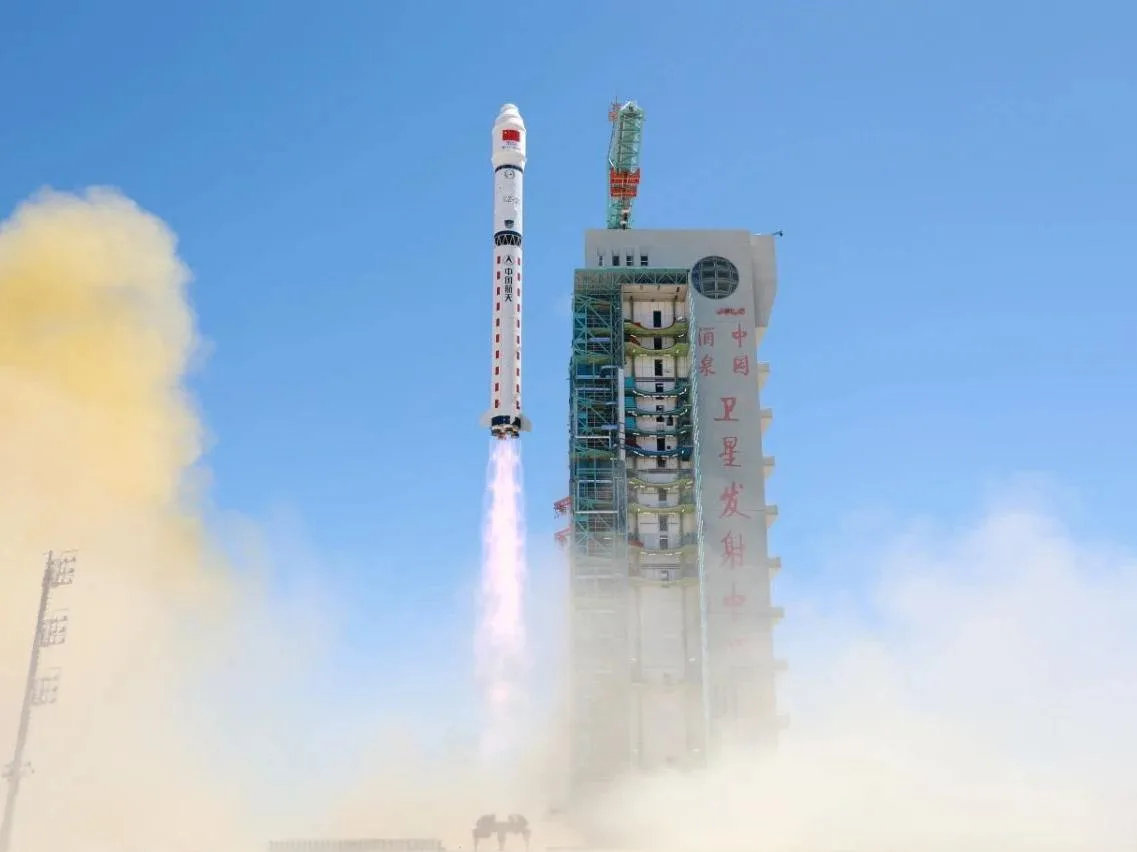
On 25 August 2026, a Long March 6C lifted off from Taiyuan carrying a Thai-flagged CubeSat built in Nantong by GalaxySpace, the first whole-satellite export to Southeast Asia by a Chinese commercial satellite company, delivered as one package: the spacecraft, its ground system, and the training to run it. That single cubesat is a better lens on China's satellite industry than any mega-constellation headline. The country has spent five years turning satellite manufacturing into a genuine mass-production industry, and it is now looking for customers. The build-out is real. The business model is not, yet.
Companion piece: China's Space Industry Ecosystem in 2026 maps the full industrial stack; this report goes one layer down, into the satellite segment itself.
Disclaimer. All data in this report comes from public sources, graded A/B/C in the references. Company claims are marked as such. Analysis represents the author's independent views and does not constitute investment advice.
Methodology. Where we compare constellation players, we weight verifiable in-orbit hardware highest, then official filings and audited financials, then signed commercial contracts, then stated plans. Scores and rankings measure publicly verifiable progress, not investment value.
1. The 90-Second Summary
China's satellite industry has crossed the manufacturing threshold and is now hitting the commercial one. The argument has four parts:
First, the demand engine is state-anchored and enormous, but it comes in three tiers that should not be conflated. Three mega-constellations — the national GW system (12,992 satellites planned, roughly 180 network satellites in orbit by mid-2026, or about 200 including earlier test spacecraft), Shanghai's Qianfan/G60 (15,000+ planned, 238 in orbit as of early July 2026), and LandSpace-affiliated Honghu-3 (10,000 filed with the ITU, first technology satellite launched 19 August 2026) — plus a long tail of IoT and remote-sensing fleets give Chinese satellite factories contracted batch orders in the hundreds, high-confidence policy-backed deployment demand in the thousands through 2029, and filed optionality in the tens of thousands. The binding constraint is no longer whether satellites can be built; it is launch cadence and the ITU milestone clock (GW must have ~1,300 satellites in orbit by September 2029 or its spectrum rights shrink proportionally).^[49]
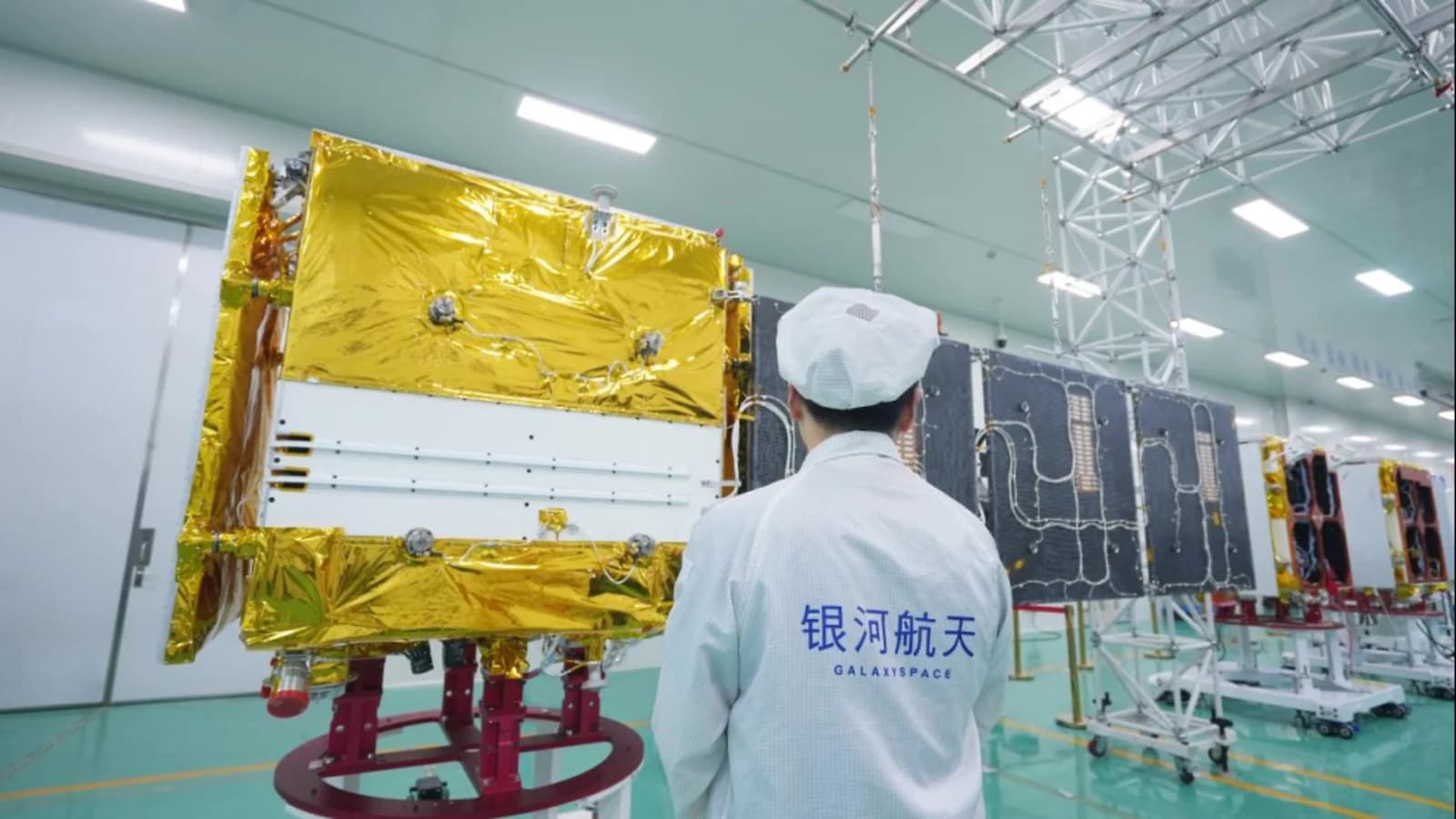
Second, the factory race is the real story of the last three years. GalaxySpace's Nantong plant builds 100–2,000 kg satellites at a three-day production beat with an annual nameplate of ~150 medium satellites. Genesat's Songjiang digital factory for Qianfan claims one satellite every 1–1.5 days and 500–600 per year. The state-owned Wenchang "super factory" completed at the end of 2025 is designed for 1,000 satellites a year next to the launch pads. Satellite manufacturing in China has moved from craft to industry, and that transition, not any single constellation, is what makes the Thai cubesat export possible.
Third, the supply chain is localised in volume but not yet in depth. Several high-volume subsystems — T/R chips for phased-array antennas, Hall thrusters, star trackers, gallium-arsenide solar cells — are now domestically sourced at scale, with listed suppliers (Chengchang/铖昌, Guobo/国博, Zhenlei/臻镭, Shanghai Hanxun/瀚讯) riding the constellation build-out, though confidence varies sharply by category. The residual chokepoints are aerospace-grade FPGAs, high-speed ADC/DACs, radiation-hardened memory, and the remaining reliability gap in batch consistency and on-orbit ageing, a gap that closes only through manufacturing discipline plus accumulated flight heritage.
Fourth, the money has arrived before the revenue. Yuanxin (Qianfan's operator) booked RMB 2.19 billion of cumulative net losses across 2023–2025 (~RMB 2.3bn including Q1 2026) on negligible operating revenue (RMB 189,000 in 2025), and on 17 August 2026 closed a RMB 6.98 billion raise at a ~RMB 50.05 billion valuation (implied by the 13.94% stake sold), 82.6% of it from a state fund-led consortium. GalaxySpace raised a Series C at a reported ~RMB 32 billion valuation in February 2026 and filed for IPO tutoring in March. Four satellite companies are formally in the IPO pipeline (MinoSpace, GalaxySpace, Chang Guang, Spacety), with Geespace targeting end-2026 and ADA Space's Hong Kong application lapsed. Capital markets are pricing the 2030s. The companies that survive the filter will be the ones whose satellites find paying customers beyond the state constellation orders, which is exactly why a training-wheel export deal with Thailand's GISTDA matters more than its size suggests.
China's satellite industry in 2026 resembles its EV industry in 2016–17: mass-production capability has arrived before proven unit economics, consolidation lies ahead, and repeat export revenue will separate the eventual winners from state-procurement specialists. State constellations underwrite the learning curve. Launch cadence controls how fast the factories can learn. Exports decide whether the result becomes an industry or a permanent procurement programme. Watch the launch count, the IPO prospectuses and the second Thai-style export contract.
The operating problem is a three-way mismatch. Factory capacity, launch throughput and paying demand must grow together; today they do not:

2. A CubeSat to Bangkok: Why This Launch Is the Right Lens
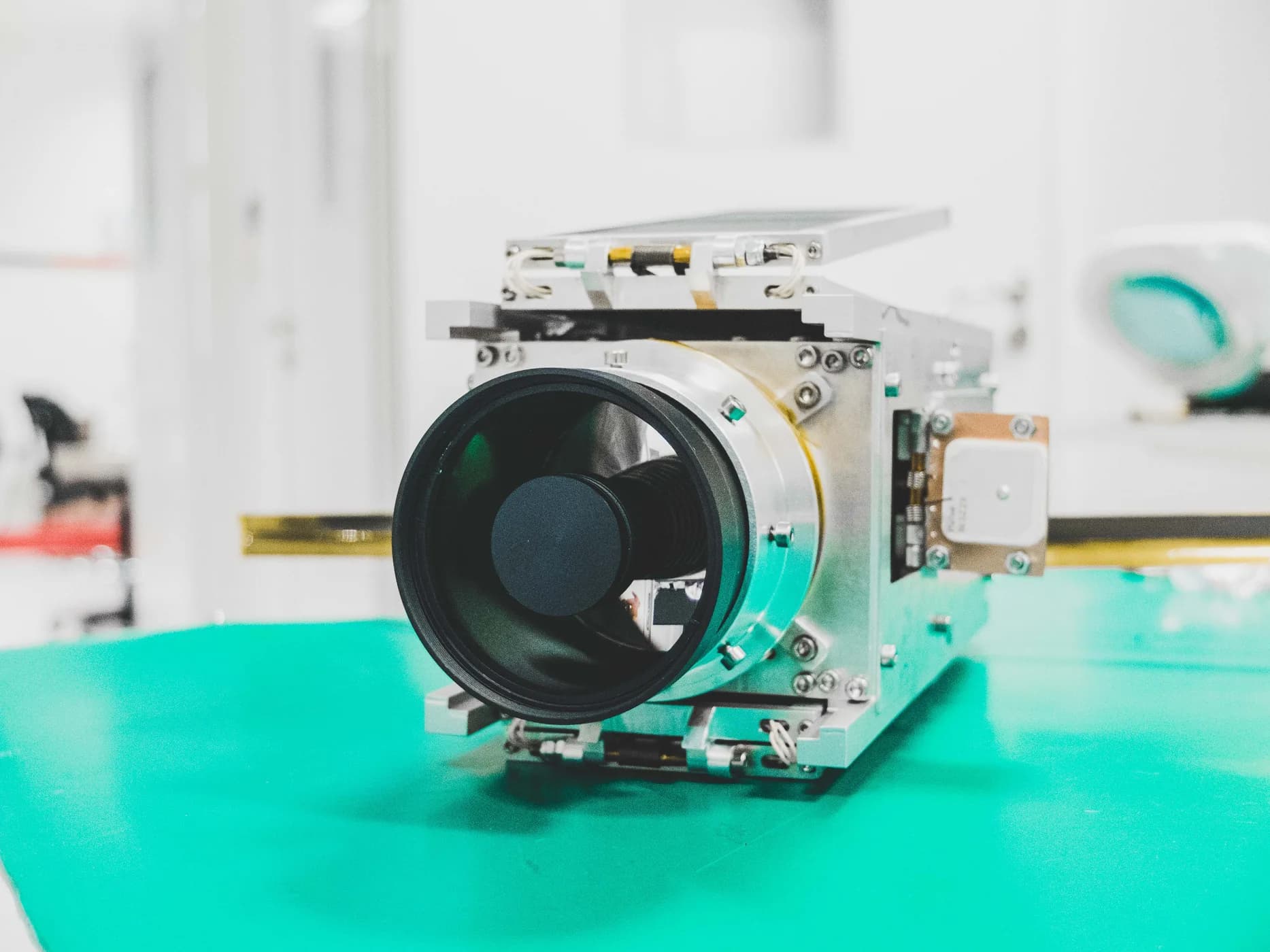
The payload manifest of the 25 August Long March 6C flight reads like a cross-section of the entire industry. Seven satellites went up. Three were built by GalaxySpace: two SAR satellites for Zhongke Satellite (中科卫星) carrying high-resolution radar plus a "space cloud" payload that fuses remote sensing with on-orbit compute, and the Lingzhi-09 (灵知09) Thailand CubeSat for GISTDA, Thailand's Geo-Informatics and Space Technology Development Agency.^[1]
The Thai satellite is small. The structure of the deal is not. GalaxySpace delivered what it calls an integrated "whole satellite + ground system + capability building" package: the spacecraft, the ground segment, and a training programme that brought Thai engineers to China and sent GalaxySpace teams to Thailand for on-site teaching and ground-system commissioning. GISTDA's deputy executive director for space technology, Phee Choosri, framed it as a vehicle for talent development and knowledge transfer, not just hardware.^[2] It is the first whole-satellite export to Southeast Asia by a Chinese commercial space company: design, build, launch, and on-orbit delivery in one contract.^[1]
This did not come out of nowhere. GalaxySpace has been working Thailand for over two years: a low-orbit broadband demonstration with Mahanakorn University of Technology in mid-2024 that ran a telemedicine video call over its eight-satellite "Little Spider Web" (小蜘蛛网) test constellation, the first overseas application of a Chinese LEO broadband network, followed by a ground station at the university and, in February 2025, an MoU with True Corporation, Thailand's largest telecom operator, covering LEO communications, integrated space-ground networks, and direct-to-device technology.^[3]^[4] The company says it has cooperation intentions with partners in more than ten countries across ASEAN, the Middle East, and Africa.^[5]
Three things make this the right entry point for a satellite-industry stocktake.
It proves the product can cross a border. An export customer buying a complete system is buying delivered capability, not potential, and GalaxySpace has now launched 49 self-developed satellites, including more than ten SAR spacecraft.^[1] But precision matters here. A single CubeSat contract proves exportability: that a Chinese commercial firm can package, sell, and support a complete space system for a foreign government. It does not prove mass-production economics; it says nothing about the 150-per-year line's yield, cost curve, or reliability at scale. For an industry whose open question is commercial rather than industrial, exportability is the more relevant proof anyway.
It reveals the business model China wants to export. Not launch services but satellites-as-infrastructure, bundled with ground systems and training, aimed at states that want sovereign capability without building an industry. It is a turnkey infrastructure-export model reminiscent of China's broader industrial playbook, and it competes directly with what Airbus, Thales, and increasingly SpaceX's hosted-payload ecosystem offer emerging space nations. One caveat worth stating plainly: this contract proves turnkey delivery of a CubeSat-class system, not the exportability of broadband-constellation service. Whether the template scales to phased-array communications satellites, with their export-control and spectrum complications, is an open question we return to in Section 12.
It marks where the value chain is heading. The same launch carried SAR satellites with on-orbit cloud-processing payloads, remote sensing fused with compute.^[1] The satellite is becoming a platform for processing, not just collection. That convergence (which we treat in Section 7 on the Tiansuan constellation and orbital computing) is where Chinese satellite makers believe their next margin pool sits.
3. The Layer Map: Four Layers, Two Speeds
The satellite segment of China's space industry is best read as four layers, each moving at a different speed:
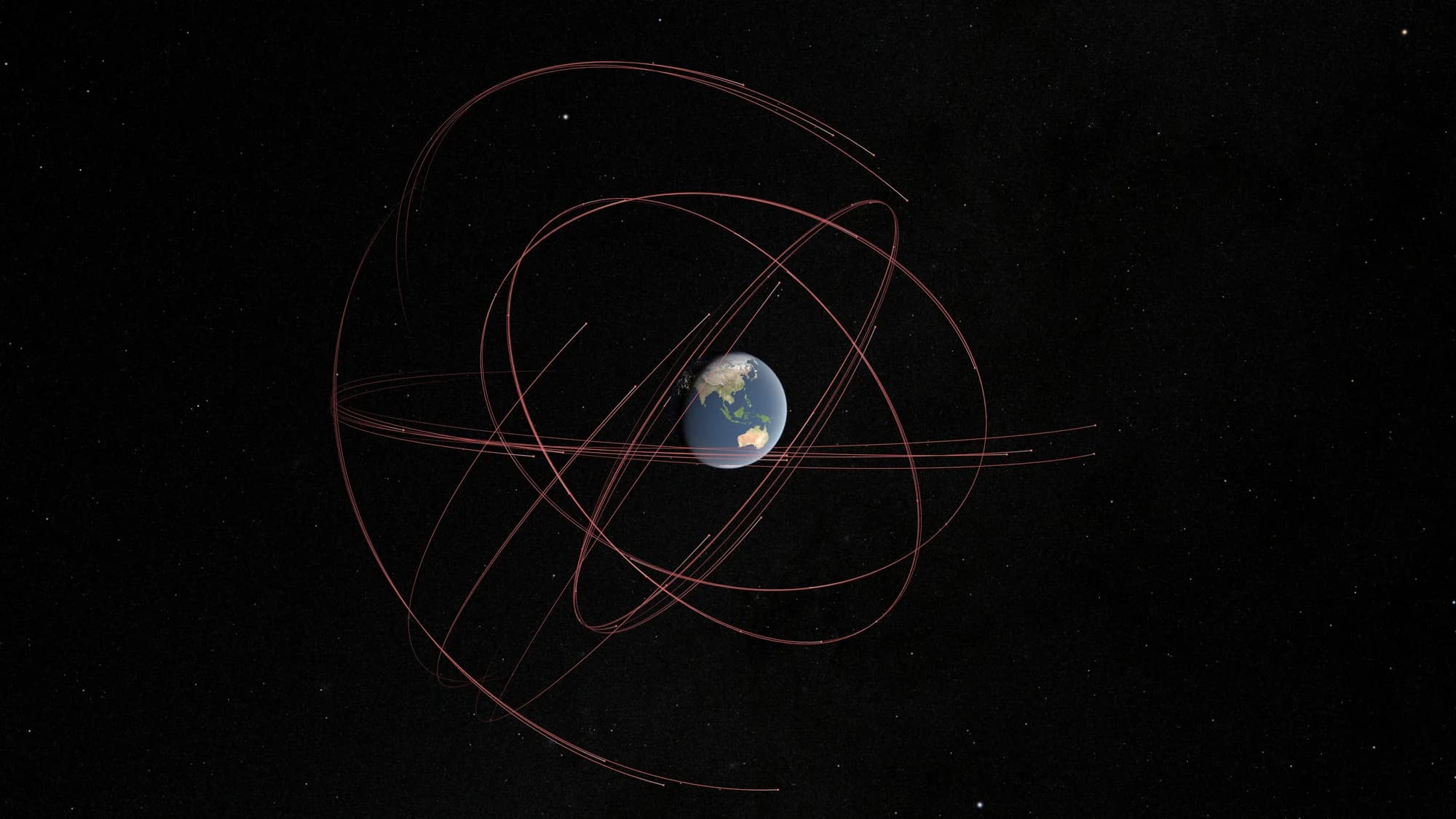
Two structural observations follow. First, the layers are not equally bankable: manufacturing and components monetise the constellation build-out today, while the constellation operators themselves are multi-year capital sinks, a point the financial data in Section 8 makes painfully concrete. Second, the boundary between layers is dissolving. GalaxySpace manufactures for others and operates its own test constellation; Geespace builds and operates; LandSpace's Hongjing affiliate filed a constellation while its parent builds the rockets. Vertical integration is the dominant strategic response to a market where no single layer yet generates reliable cash flow.
4. The Demand Engine: Three Mega-Constellations and a Long Tail
Every factory, supplier, and IPO ultimately traces back to one fact: China has committed to deploying tens of thousands of LEO satellites this decade, and the ITU's use-it-or-lose-it milestone rules turn that commitment into a schedule. But "tens of thousands" is not one demand number. It splits into three different ledgers:
4.1 GW/Guowang — the national system
China Satellite Network Group (中国星网, China SatNet), founded April 2021 and headquartered in Xiong'an, is building the GW constellation: 12,992 satellites in two shells, GW-A59 (6,080 satellites below 500 km) and GW-A2 (6,912 at 1,145 km).^[17]^[49] Deployment was slow through 2024, then inflected: 17 batch launches by end-2025 put 136 network satellites in orbit. Groups 18–19 added 18 more in January 2026, taking the network fleet to 154; adding 25 earlier test spacecraft brought the broader public tally to 179. Groups 20, 21, and 22 then arrived at widening intervals (13 March, 9 April, 17 June), leaving roughly 180 network satellites in orbit by mid-year, or about 200 if the earlier test spacecraft are included.^[7]^[8] The 2026 plan calls for 300–500 satellites and a completed backbone network with continuous national coverage by year-end; the ITU milestone requires ~1,300 satellites (10% of filing) by September 2029, and full deployment is targeted around 2035.^[7]^[49] ITU bring-into-use rules are defined against frequency assignments rather than literal satellite counts, so "~1,300 satellites" is the industry's working proxy for the September 2029 threshold; miss it and the spectrum rights shrink proportionally.^[49] The gap between the plan and the observed Q2 cadence is the live test of the thesis, priced in Section 10.
For Asia-Pacific readers, one more thing about GW that the industrial framing tends to hide: this is a sovereign system, not merely a big anchor order. Spectrum-and-orbit position, civil-military fusion overtones, and data-routing jurisdiction are part of the package. Any regional operator evaluating a Chinese LEO broadband offer is buying into infrastructure with sovereign characteristics, and the regulatory friction is not only licensing but data routing and security review. We return to what that means in Section 12.
Technically, GW satellites carry Ka-band payloads and laser inter-satellite links, with single-satellite bandwidth in the gigabit class and inter-satellite rates advertised at Tbps scale; deorbit sails are fitted for end-of-life disposal. Direct-to-cell service with mainstream handsets is planned from 2026, though note the contrast with Qianfan, which has already demoed it.^[6] Manufacturing is deliberately multi-sourced: the early groups were split between CAST's Fifth Academy (groups 1, 2, 3, 5, 8, 10), CAS's Innovation Academy for Microsatellites (groups 4, 6, 9), and GalaxySpace (group 7, the first batch built by a private company, and group 19).^[9]^[10] That multi-sourcing is itself a policy choice: the state is using its anchor demand to qualify a commercial supplier base.
4.2 Qianfan/G60 — the commercial challenger
Qianfan (千帆, "Thousand Sails"), operated by Shanghai Yuanxin Satellite (垣信卫星), a Shanghai state-capital company founded 2018, is the market-oriented counterpart: a three-phase plan of 648 satellites (324 by end-2026 for initial regional service), 1,296 by 2027 for global coverage, and 15,000+ by 2030.^[11] First 18 satellites launched August 2024; 108 in orbit by end-2025; 200 by 5 June 2026, when its AIS ship-tracking payload system completed deployment, followed four days later by its first direct-to-cell test satellite.^[11]^[12] Then came the cadence proof: two launches in under 30 hours on 4–5 July 2026, 18 satellites on a Long March 6A from Taiyuan and then a first-ever 20-satellite flat-stack on a Long March 8A from Hainan, taking the constellation to 238 in orbit, the first Chinese LEO broadband fleet past 200.^[41] Yuanxin's stated 2026 target is 324 cumulative satellites plus a ground system for key-region operations, at which point it says initial commercial service begins.^[43] That target has already slipped once: the programme's satellite-system chief framed phase one's 324 as a by-July goal in a June 2026 CCTV interview, and July arrived with 238. The year-end bar is now the operative one, and the slip itself is data for Section 10.^[44]
Yuanxin is also the sector's financing bellwether, and the bell just rang. Its RMB 6.7 billion Series A in early 2024, led by the China Development Bank manufacturing-transformation fund, was the largest single round ever for a Chinese satellite company. The follow-on round, launched in June 2026 amid reports of ambitions up to RMB 15 billion at valuations as high as RMB 75 billion, closed on 17 August 2026 at RMB 6.976 billion from 18 investors for 13.94% of new equity, a post-money valuation of roughly RMB 50.05 billion, below the rumoured RMB 60 billion pre-money figure the company had publicly disputed weeks earlier. A 24-member consortium led by the state-owned China Structural Reform Fund II took RMB 5.764 billion of it, 82.6% of the round.^[42] The print settles the valuation debate and confirms the pattern this report keeps returning to: state money is carrying constellation capex, at prices that assume the 2030s deployment schedule holds. The financial statements disclosed alongside the raise are the sobering part, and we return to them in Section 8.
4.3 Honghu-3 — the vertically integrated wild card
The third 10,000-satellite filing is the industry's wild card. Shanghai LanJian Hongjing (蓝箭鸿擎/鸿擎科技), 48%-owned by rocket maker LandSpace, filed the Honghu-3 constellation (鸿鹄三号) with the ITU in May 2024: 10,000 satellites across 160 orbital planes.^[13] On 19 August 2026 its Honghu-03 (鸿鹄03) technology satellite rode the Zhuque-3 reusable rocket's second flight, the same mission that achieved China's first orbital-class booster land recovery, validating three domestic firsts: an argon-propellant Hall thruster, an active fluid-loop plus deployable-radiator thermal system, and a standalone Tbps-class onboard router. It was also the first satellite built in Xiong'an.^[14]^[50]^[15]
Honghu-3's logic is SpaceX's logic: own the rocket, own the satellite, own the constellation, and let each layer subsidise the others' learning curves. Whether Hongjing can fund a 10,000-satellite system is an open question; no major constellation financing has been disclosed. But as a technology demonstrator aligned with a reusable-launch roadmap, it is the most SpaceX-shaped object in the Chinese industry.
4.4 The long tail, and a caution on counting
Beyond the big three: Geespace (时空道宇, Geely-backed) completed its 64-satellite phase-one IoT constellation in September 2025, won approval for commercial satellite-IoT trials in August 2026, and is targeting an IPO around end-2026;^[16] Guodian Gaoke's 38-satellite Tianqi narrowband IoT constellation is generating nine-figure RMB revenue and is reportedly in merger talks with a telecom operator;^[5] remote-sensing fleets led by Chang Guang's Jilin-1 (150+ satellites) continue to expand. The pre-GW state constellations (CASC's Hongyan and CASIC's Hongyun) have been absorbed into or superseded by the GW programme, and China Satcom, the GEO incumbent, sits outside this report's LEO frame. Chinese entities have filed for more than 50,000 satellites with the ITU in total.^[17]
Filings are not programmes. The 50,000-satellite headline counts paper constellations that will never be built; even the funded three face the launch-capacity arithmetic in Section 10. The demand engine remains three-tiered: contracted batch orders in the hundreds, policy-backed deployment demand in the thousands through 2029, filed optionality in the tens of thousands, and a long tail that will consolidate.
For readers who want the four systems on one page:
5. The Factory Race: Satellite Manufacturing Becomes an Industry
The least appreciated fact about Chinese commercial space is that its most complete success to date is not a rocket or a constellation. It is the satellite factory. Five production systems now define the landscape:
Sources: company disclosures and government/media reporting as cited below.^[18]^[19]^[20]^[21]^[22]

The production model changed before the market did. GalaxySpace's Nantong plant treats satellites like cars: flat-stackable integrated-cast structures (the Lingxi-03 was China's first satellite built with automotive-style die-casting), robotic assembly with six-axis force control replacing master technicians, and full-flow digital quality management. Development cycle time is down 80%; the plant claims several industry-leading throughput metrics.^[18] Genesat's line cut per-satellite build time from 2–3 months to 1–1.5 days.^[20] Platform architecture, pulse lines, digital thread: the EV industry's production grammar transplanted into aerospace, and the single strongest piece of evidence that Chinese satellite cost curves will keep falling.
The anchor order was split, and the effect was to build the market. GW's early groups were parceled across the Fifth Academy, CAS Microsatellite, and GalaxySpace; Qianfan split between Genesat and CAS Microsatellite.^[9] Whether or not supplier development was the sole intent, the effect is clear: anchor demand has qualified multiple batch-production systems where a narrower supplier base might otherwise have emerged. Classic Chinese industrial policy, overcapacity risk included.
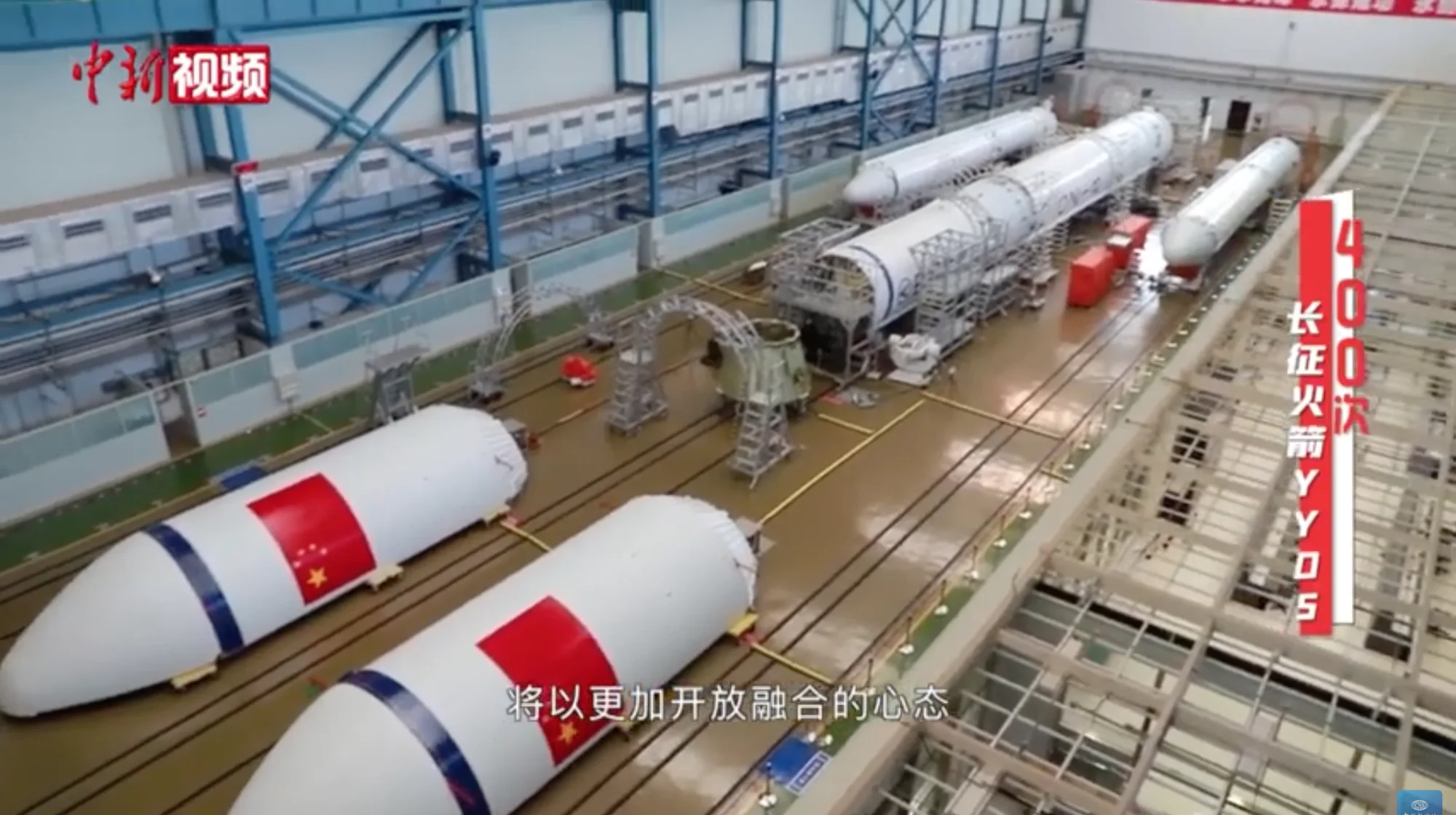
Capacity is ahead of launch; utilisation is the missing variable. Sum the nameplates — Wenchang 1,000, Genesat 500–600, GalaxySpace 150, MinoSpace 150, plus the state academies, and the total approaches 2,000 satellites a year. Against that, the 2026 plan of 30–50 constellation-dedicated launches, at demonstrated densities of 8–20 satellites per mission, inserts roughly 240–1,000 satellites a year. Nameplate is clearly ahead. But whether effective factory output already exceeds planned orbital insertion cannot be established from public data: if real utilisation of that 2,000-satellite nameplate is only 25–35% (500–700 satellites a year), the two curves are already close, and GalaxySpace's 22-shipped-against-150-nameplate year points exactly that way. The defensible claim is narrower: nameplate capacity has clearly outrun demonstrated launch throughput, launch is the most visible candidate bottleneck, and effective factory utilisation is the missing variable. That is why constellation launch tenders now matter as much as satellite orders, and why they are worth pricing carefully. Yuanxin's 2025 tender of RMB 1.336 billion for seven launches carrying 94 satellites implies a tender-envelope average of roughly RMB 14 million per satellite, a budget allocation that bundles launch services, integration, and mission assurance rather than a pure launch price; under a ~250 kg satellite-class assumption, on the order of RMB 50,000–55,000 per kilogram.^[23] SpaceX's vertically integrated reusable Starlink launch economics sit well below that, though the two figures are not the same accounting animal, an external tender envelope versus an internal transfer cost. The direction of travel is visible in the reusable camp's pricing: LandSpace's Zhuque-3 won Yuanxin's 18-satellite launch package, a formal contract disclosed in its STAR Market prospectus, and prospectus-derived reporting puts a single Zhuque-3 launch at ~RMB 150 million of service revenue — a per-launch caliber, while the reported ~RMB 300 million Yuanxin contract is a package figure that may cover more than one launch. At a full 18-satellite load, that works out near RMB 8 million per satellite, some 40% below the 2025 tender-envelope average.^[53]^[52]
6. The Supply Chain: Where the Value, and the Chokepoints — Are
In a custom satellite, platform and payload split value roughly 50/50; in a batch-produced communications satellite, the payload takes ~70%.^[17] The payload's core is the phased-array antenna, and the antenna's core is the T/R (transmit/receive) component, over half of antenna cost. That is where the constellation build-out's money is flowing, and the listed supply chain is already inflecting:
- T/R chips and RF front-ends. Chengchang Technology (铖昌科技) is the acknowledged leader in spaceborne phased-array T/R chips; Guobo Electronics (国博电子) ships active-array T/R modules at a scale of hundreds of thousands of channels per year; Zhenlei Technology (臻镭科技) supplies power-management, SiP, and high-speed data-converter chips to the major constellation customers.^[24]^[25]
- Communications payloads and gateways. Shanghai Hanxun (上海瀚讯) is the core communications-subsystem supplier for Qianfan: physical layer, protocol stack, and core-network standards, plus payloads, gateways, and test terminals to both Yuanxin and Genesat.^[26] FiberHome (烽火通信) has emerged as a multi-programme supplier of laser inter-satellite terminals and onboard routers, including, per company-linked disclosures, the 100 Gbps laser terminal and routing system for Honghu-3, with a joint Xiong'an production line rated at 100 satellite payloads a year.^[27]
- Attitude and orbit control. Tianyin's star trackers fly on every Qianfan satellite launched to date;^[23] Hall-effect thrusters have reached volume flight status, with Hongjing's Jinwu krypton/argon line the most visible and the argon variant's first in-orbit validation on Honghu-03.^[14]
- Power. Flexible solar wings, a GalaxySpace signature technology ~1 mm thick and accordion-folded for flat stacking, and gallium-arsenide cells (Changelight/乾照 and peers) are domestically sourced; Honghu-03's large flexible wing was built by commercial supplier Heshun Electric to Hongjing's own Chiyu (赤羽) energy-system design.^[28]^[15]
Localisation confidence varies sharply by segment:
GalaxySpace's own supplier count tells the diffusion story: from ~100 partner companies in 2018 to more than 1,300 today, over half of them private firms pulled up into aerospace-grade work, a bearing maker adopting new materials, a die-caster learning satellite tolerances.^[28] This is the "aerospace +" effect Chinese policymakers hoped for: constellation demand as an industrial-upgrading machine.
The residual chokepoints are aerospace-grade FPGAs and high-end radiation-hardened processors (partial substitution only), high-speed ADC/DACs above the highest sampling classes, large-capacity rad-hard storage, some high-precision star-tracker and gyro grades, and, pervasively, batch yield and on-orbit ageing data.^[29]^[25] China can build a prototype of everything; the gap is building ten thousand of anything with consistent reliability. That gap closes through manufacturing discipline plus accumulated flight heritage, which is one more reason the constellation cadence matters: every batch launch is also a qualification run for the supplier base.
7. The Compute Layer: Tiansuan and the On-Orbit Computing Bet
The most distinctive bet in China's satellite industry is that the satellite stops being a sensor with a radio and becomes a server with wings. The anchor tenant of that bet is an academic consortium, not a company: the Tiansuan Constellation (天算星座), led by Professor Wang Shangguang's team at Beijing University of Posts and Telecommunications with Spacety (天仪研究院) as satellite builder, an open-source, on-orbit testbed for space computing.^[30]
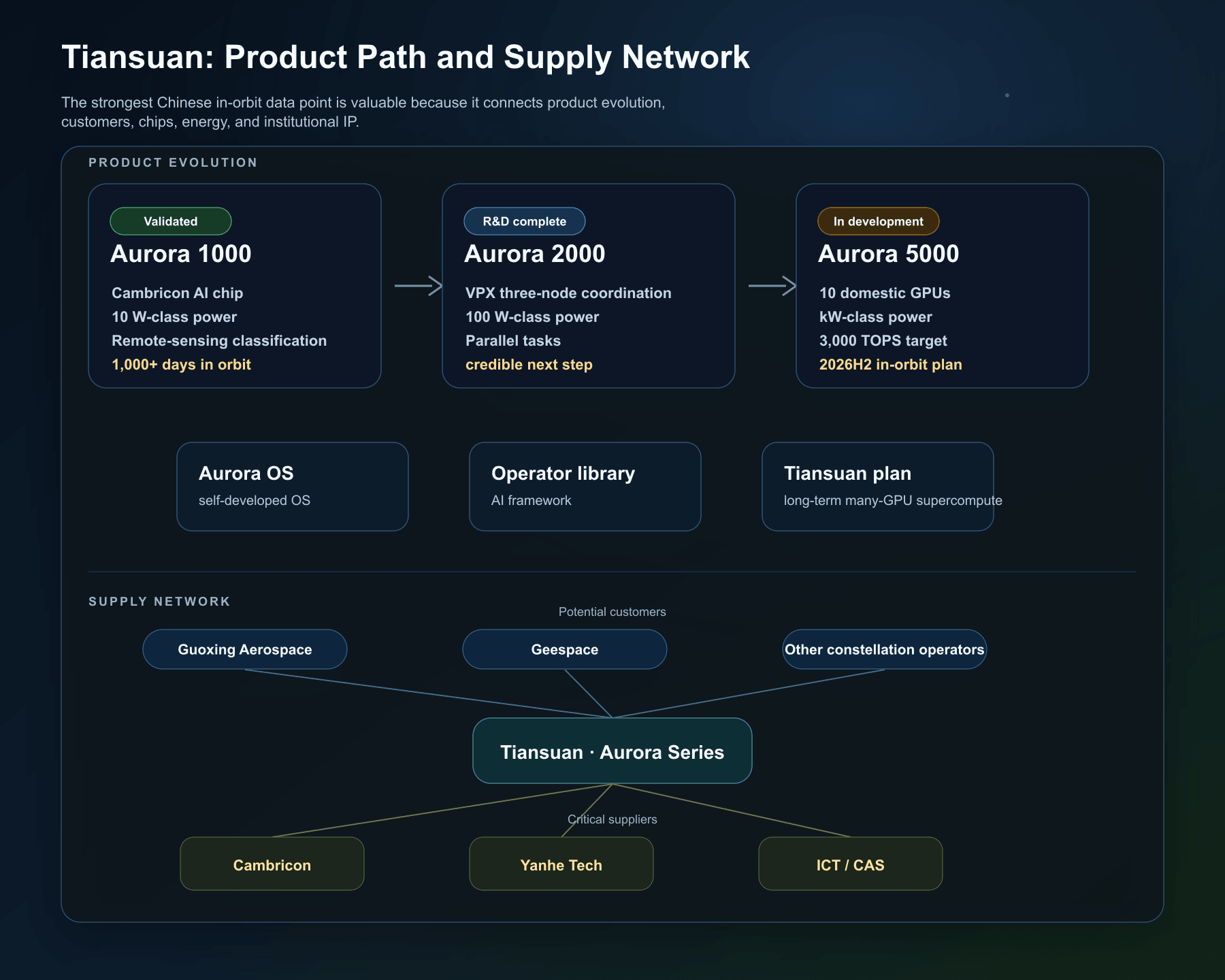
The programme's engineering record is real. The lead satellite BUPT-1 (北邮一号, launched January 2023) flew the world's first onboard 5G core network, a lightweight variant shrunk to a fifth of terrestrial equipment volume and later recognised with an IEEE satellite-technology innovation award, plus a cloud-native satellite platform whose code was contributed to the CNCF's KubeEdge project, and RROS, a dual-kernel satellite operating system with full independent IP that won a USENIX ATC best-paper award and is open-source.^[31] Phase two (24 satellites planned) began in May 2025 with BUPT-2 and BUPT-3, two of six satellites on the same Zhuque-2 flight, carrying high-capacity inter-satellite laser links, a snapshot hyperspectral camera, an IoT test platform, and the team's "space server," a general-purpose orbital compute module they claim costs a tenth of mainstream equivalents.^[32] By mid-2026 the constellation counted eight satellites and a ground network spanning Yantai, South China, Beijing, and Hefei stations; the team reports measured results of +50% on-orbit target-recognition accuracy, −90% downlink data volume, and emergency-report turnaround compressed from a day to an hour.^[33] More than 30 domestic institutions have run experiments on the platform, supporting 60+ organisations, with researchers from 50+ countries participating in the ecosystem.^[31]
Tiansuan matters to the industry for three reasons beyond its papers.
It is training the integration layer. Every claim Chinese satellite makers now make about "intelligent" spacecraft — on-orbit AI inference, cloud-native deployment, software-defined payloads — is being de-risked on Tiansuan's open platform before it goes into a commercial product. GalaxySpace's August 2026 SAR pair with fused "space cloud" payloads, delivering minute-level in-orbit image processing for disaster response, is the commercial shape of the same idea.^[1]
It anchors a national computing-in-orbit stack that now has a commercial wing. Zhijiang Lab and ADA Space (国星宇航) launched the 12-satellite "Three-Body Computing Constellation" in May 2025 (744 TOPS per satellite, 5 POPS aggregate, an 8-billion-parameter model in orbit, L0-to-L4 data processing), with a ~2,800-satellite "Star-Compute" programme sketched behind it; Beijing's municipal government convened a space-data-centre working group in November 2025 targeting gigawatt-scale compute in dawn-dusk orbit.^[34]^[35] We have covered the economics and the hype cycle of this layer separately (China's Orbital Compute Mobilisation); the point here is structural. Orbital computing is becoming a satellite-industry demand category — new payloads (GPUs, servers, laser links), new platforms, new factory volume — regardless of whether "data centres in space" ever clears an economic bar.
It is China's asymmetric play. Starlink's moat is launch economics and terminals; China's satellite industry cannot win that fight this decade. On-orbit computing is a layer where a coordinated state-academic-commercial stack (BUPT + Zhijiang Lab + ADA Space + GalaxySpace-class manufacturers) has unusually dense public experimentation and some genuine technical firsts: the 5G core in orbit, cloud-native satellites, an open-source space OS. That is leadership in experimentation, not yet in commercial deployment, and the distance between the two is the whole story. Compute constellations are even further from paying customers than communications constellations, and the gap between a 12-satellite demo and a 2,800-satellite programme is a financing canyon.
8. The Capital Filter: IPO Wave Meets the Loss Ledger
The financing numbers tell a two-speed story. Primary-market activity is intense — 193 disclosed deals worth RMB 21.97 billion across commercial space from 2025 through Q1 2026, and 2026 has become the satellite sector's IPO year.^[16] The pipeline:
Sources: exchange filings and financial-press reporting.^[36]^[37]^[38]^[39]^[42]^[16]
The table exposes the industry's central tension. The manufacturer with real revenue and a narrowing loss (MinoSpace) saw its IPO rocked just over two weeks after acceptance (accepted 11 May, suspended 26 May) by a military-procurement suspension, a reminder that "commercial" space revenue in China is still overwhelmingly state-anchored demand: public-sector and policy-derived purchasing rather than independently price-discovered commercial demand. (Whether MinoSpace's IPO review is suspended or continuing through inquiry after the procurement ban had not been publicly disclosed as of this report.) The constellation operator with the strongest strategic mandate (Yuanxin) has negligible revenue, RMB 189,000 in 2025 against RMB 890 million of losses, because a constellation only becomes a business at service scale, and Qianfan is still ~90 satellites short of its 324-satellite initial-service threshold (and ~410 short of phase-one completion).^[39] And the valuations — GalaxySpace tripling from RMB 11.5bn to a reported 32bn in two years; Yuanxin printing ~50.05bn against a rumoured 60bn pre-money — are not pricing current cash flows; they are pricing the 2029–2035 deployment schedule and the assumption that the state will keep the order book full.
A late-2025 Shanghai Stock Exchange listing guideline for commercial-space companies, explicitly accommodating unprofitable hard-tech issuers, is what opened this IPO window.^[37] Whatever the stated intent, the practical effect is to let public-market capital fund loss-making hard-tech issuers at exactly the moment the sector's capex needs are rising. It also transfers the filtering function to public investors. The EV analogy applies again: the 2019–2021 EV IPO wave funded the survivors (Li Auto, XPeng) and the casualties (WM Motor) alike, and the difference was visible only in retrospect, in the unit economics. For satellite companies, the equivalent numbers to watch are satellites-per-launch-contract, factory utilisation, and the revenue mix between state constellation orders and everything else.
8.1 Qianfan's unit economics, stress-tested
The valuation table above begs the question nobody in the primary market wants to model: what does Qianfan's P&L look like at scale? Yuanxin publishes no tariff roadmap, so what follows is a build from verifiable anchors plus clearly labelled assumptions. Two ledgers must stay separate — growth-stage cash and steady-state operations, because mixing them produces nonsense.
The production and launch anchors are visible, but neither is a fully loaded cost. Hu Haiying, head of CAS Microsatellite and Qianfan's satellite-system chief, told CCTV in June 2026 that a Qianfan satellite now costs "RMB 10 million-plus," down from roughly RMB 300 million for a traditional LEO satellite, with a seven-year design life.^[44] That is a reported per-satellite production cost: the interview does not define whether R&D amortisation, AIT, and insurance sit inside it. Add the launch side, Yuanxin's own 2025 tender implying a ~RMB 14 million per-satellite tender envelope (§5, ref 23), and phase one's 648 satellites pencil out at roughly RMB 15–18 billion of capex before the ground segment.
Ledger A — the growth-stage cash question (2026–2028). What has actually gone in so far is best anchored on the balance sheet rather than our satellite math: total assets of RMB 10.25bn plus cumulative net losses of ~RMB 2.3bn imply roughly RMB 12.5bn of capital put into the business. Reassuringly, the two known mega-rounds (RMB 6.7bn Series A plus this month's RMB 6.98bn ≈ RMB 13.7bn raised) sit in the same neighbourhood. Our bottom-up figure, 238 satellites launched at ~RMB 24–28m each ≈ RMB 5.7–6.7bn, fits inside that asset base as the on-orbit hardware portion; adding it to the losses separately would count the same capex twice. What remains is the modeled capital still required to reach the stated 1,296-satellite configuration: ~1,050 more satellites ≈ RMB 25–30bn of production and launch, plus ground segment, gateways, and operating losses already running ~RMB 1bn a year. Note what is not in this window: meaningful replacement cost. Satellites launched in 2024–2027 do not reach end-of-life until 2031–2034, so the growth stage is a pure build-out burn. The question Ledger A answers is simply: how much more capital does the build need, and how much can early revenue offset?
The revenue side is three lines, none of them proven. Consumer broadband: no published tariff; the industry expectation is "RMB 100-class monthly, under RMB 1,000 a year," against Starlink's US list prices of $55–130 a month plus a $349 terminal.^[45]^[46] Direct-to-cell: the real mass-market wedge (unmodified handsets; 5G voice and video calls already demoed in June 2026), but billed through the mobile operators, whose own satellite price anchor today is a RMB 10/month emergency-voice pack on the GEO Tiantong system, and whose 2030 policy target is just "over 10 million satellite-communication users" industry-wide, with consumer tariffs expected to land at RMB 50–100 a month.^[45]^[47]^[48] Enterprise and government: maritime, aviation, energy, Belt-and-Road anchor tenants. Real demand, but much of it is state-anchored purchasing rather than independently price-discovered.
Stress-test 2028, assuming the 1,296-satellite global-coverage configuration is in place (author's assumptions, not company guidance):
The denominators make the table auditable. D2C base case: the MIIT's 2030 target is 10m+ satellite-communication users industry-wide; at RMB 50/month retail and a 10–15% wholesale share to the satellite operator, 10 million users yield RMB 0.6–0.9bn, so the base case implicitly assumes Qianfan captures most of the national target two years early, and the bear case assumes the MNOs keep D2C as a retention feature with minimal wholesale pass-through. Broadband: 500,000 subscribers is well under 0.1% of China's fixed-broadband households plus overseas Belt-and-Road sites; the bull case's 1.5 million by 2028 would require extremely rapid uptake relative to the early commercial ramp of incumbent LEO operators. The missing number is Qianfan's per-satellite throughput: measured terminal rates of 450–500 Mbps describe links, not aggregate network capacity, so 1.5 million concurrent subscribers cannot be checked against constellation capacity. These are demand-side scenarios, not network-capacity-validated cases.^[45]
Ledger A's verdict: even the bull case, ~RMB 6.2bn of annual revenue by 2028, offsets at most a fraction of the RMB 25–30bn still to be spent on the build. The growth stage is financed, not earned. Yuanxin will need its RMB 6.98bn raise, and probably more like it, regardless of how commercialisation goes.
Ledger B — the steady-state question (2034+). Once 1,296 satellites are in place and the first generation reaches end-of-life, the seven-year design life sets a replacement treadmill of ~185 satellites a year. What that treadmill costs depends on which cost curve you believe:
- At today's prices (~RMB 24–28m per satellite, production plus launch envelope): ~RMB 4.4–5.2bn a year.
- At 30% cost decline, roughly what scaled reusable launch plus another seven years of manufacturing learning would need to deliver: ~RMB 3.1–3.6bn.
- At 50% decline: ~RMB 2.2–2.6bn.
These floors exclude ground-network and operating costs, which public data does not disclose; the real breakeven sits above them. So the steady-state bar reads: annual revenue must clear roughly RMB 5bn at current costs, or RMB 3–4bn if the cost curves fall, and falling cost curves are the base case. Either way, the constellation becomes a self-sustaining business only if something between the 2028 base case and the 2028 bull case becomes the permanent revenue run-rate of the 2030s. No public data today proves that will happen, and the entire 15,000-satellite endgame sits on the far side of it. Starlink reportedly crossed cash-flow breakeven only with a constellation an order of magnitude larger, a subscriber base in the millions, and replenishment launched on its own rockets at internal cost.
The conclusion is uncomfortable but clarifying: Yuanxin today functions less like a self-funded broadband operator than a policy-backed financing vehicle for national infrastructure. Its economics resemble an infrastructure SPV more than a subscription business, and the ~RMB 50bn valuation cannot be justified by currently observable broadband subscription economics alone. What the valuation can be read as pricing is two options: that direct-to-cell removes the dedicated terminal entirely, turning every unmodified Chinese smartphone into a potential endpoint, and that Belt-and-Road enterprise billing exports capacity China's saturated terrestrial networks don't need. Both are plausible; only the first has meaningful technical validation today. Neither shows up in revenue before 2027–2028, and the steady-state bar in Ledger B sits above even our bull case. Until then, the "commercial" in commercial space remains a financing adjective, not a P&L noun.
9. Industrial Geography: Who Builds Where
The satellite industry's map differs from the launch industry's in one important way: it follows electronics and optics supply chains, not propulsion heritage.
- Beijing (Yizhuang + Haidian). Headquarters and payload R&D: GalaxySpace's Beijing base, LandSpace/Hongjing lineage, BUPT's Tiansuan team, the "Rocket Street" cluster. Policy gravity — regulators, spectrum administration, anchor customers — keeps this the industry's decision centre.
- Xiong'an. China SatNet's headquarters made it the constellation capital by administrative fiat; Honghu-03's "first Xiong'an-built satellite" and FiberHome's Xiong'an payload line show a manufacturing cluster being policy-seeded around the anchor tenant.^[15]^[27]
- Shanghai (Songjiang/Lingang). The commercial satellite-manufacturing capital: Yuanxin, Genesat's G60 digital factory, Hongjing, plus CAS Microsatellite and the Eighth Academy's legacy base. The G60 corridor's electronics supply chain is the unglamorous, decisive reason Qianfan sits in Songjiang.
- Yangtze Delta manufacturing belt (Nantong, Wuxi, Taizhou). The factory belt: GalaxySpace Nantong, MinoSpace Wuxi, Geespace Taizhou, riding on Shanghai's payload suppliers and precision-manufacturing labour.
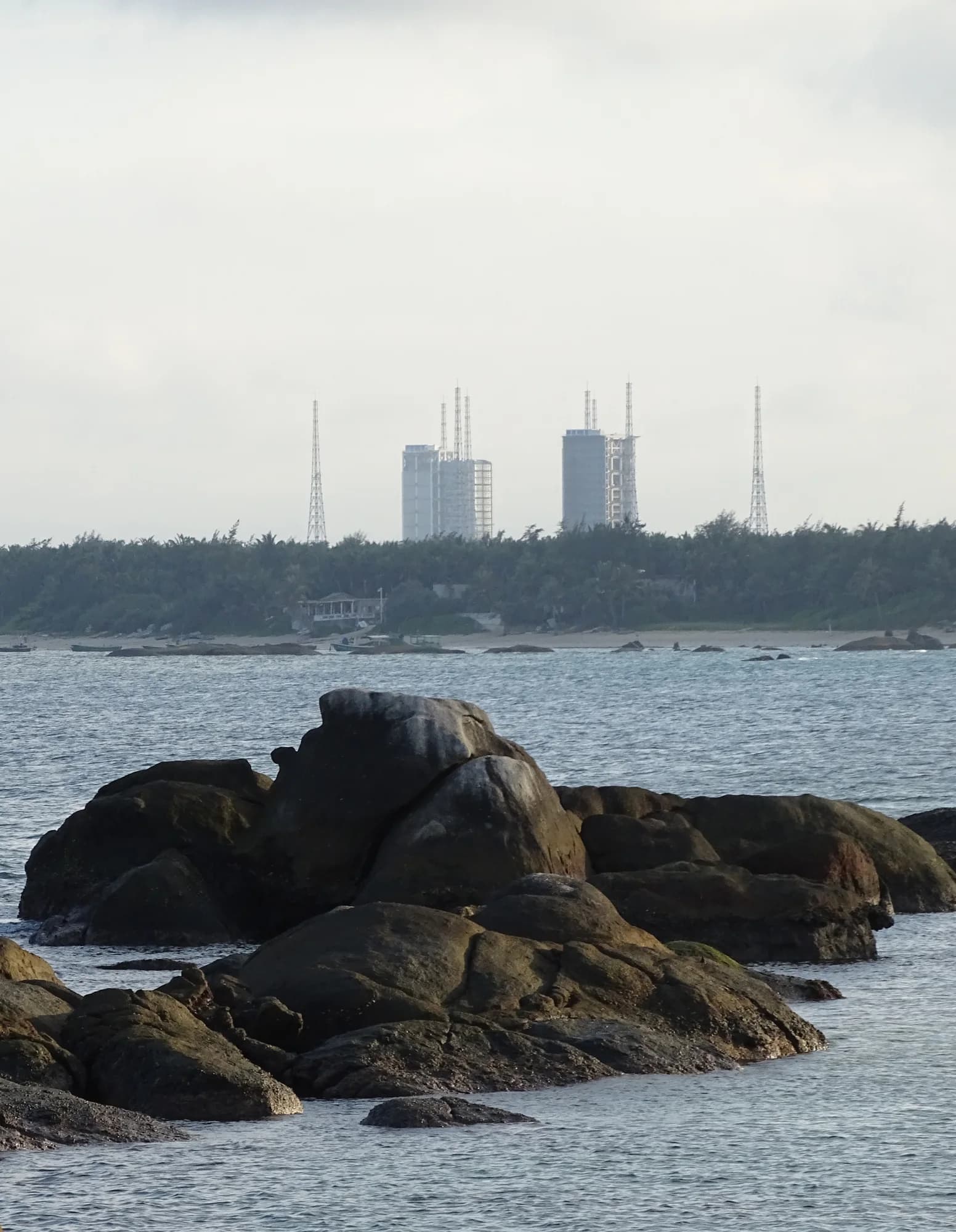
- Wenchang (Hainan). The state's build-to-launch bet: a 1,000-satellite factory next to the commercial spaceport, cutting satellite transport from days to hours.^[22] If launch cadence materialises, Wenchang becomes the industry's Cape Canaveral-with-a-factory.
- Application cities. Changchun (Chang Guang's optics), Wuhan (geoinformation and CASIC-lineage manufacturing), Changsha (Spacety), Xi'an and Chengdu (GalaxySpace's payload, component, and solar-wing bases; propulsion heritage).^[40]
The pattern: state demand decides that satellites get built; electronics supply chains decide where; and launch sites are beginning to pull manufacturing toward themselves.
10. What Could Break the Thesis
The strongest counterargument to everything above is arithmetic, and the arithmetic has to respect whose satellites fly on which rocket. GW needs roughly 1,100 more satellites in orbit by September 2029. Qianfan's flat-stack launches carry 18–20 satellites each, but GW's own demonstrated density is much lower: 17 batch launches had delivered 136 satellites by end-2025, about eight per group, and nothing public suggests that has changed.^[7] At that density, GW alone needs on the order of 110–140 launches over three years, roughly 35–45 a year, which approaches or exceeds the entire national plan of 30–50 constellation-dedicated launches for 2026, before Qianfan (another ~21–23 missions for phase one at its own density) and the long tail even enter the queue. There are only two ways the GW math closes: the groups get bigger, or the milestone slips. Until a larger GW group size shows up in an actual launch, the tight ledger is the base case.
Q2 2026 already offered a preview of the failure mode: gaps of roughly two months between groups 20, 21, and 22. And Yuanxin's own 2025 tender history, two February rounds that failed for lack of bidders before a July restructuring split the work among three rocket startups, shows how thin the launch-supply bench still is.^[51] None of this requires reusable rockets to fix in the near term: expendable cadence expansion and larger stacks can carry the 2029 milestone. Reusables (Zhuque-3's August 2026 land recovery was a genuine milestone) matter for the 15,000-satellite endgame's economics, not for next year's cadence.^[14] What does not survive a launch shortfall is everything downstream: factory lines idle, supplier revenue disappoints, and the IPO cohort's prospectus promises collide with deployment reality.
Second: demand authenticity. Strip out state constellation orders and the commercial demand for Chinese-made satellites is thin: a handful of SAR fleets, IoT trials, university cubesats, and one Thai export. The GISTDA deal is strategically important precisely because it is rare. If export controls, payment frictions, or geopolitical pressure limit the Belt-and-Road satellite market, the industry's second demand leg does not materialise.
Third: the state-interface risk cuts both ways. MinoSpace's military-procurement suspension showed how quickly >75%-concentrated revenue can freeze; conversely, the whole build-out depends on continued state tolerance for funding loss-making constellation operators at billion-RMB scale. Policy has been consistently supportive since satellite internet entered the "new infrastructure" list in 2020 and the 2026 government work report singled it out, but the sector's entire cash-flow model is one policy mood away from stress.^[18]
11. 2026–2030 Outlook and What to Watch
Our base case: by 2030 China operates one of the world's two or three largest sovereign-backed LEO broadband systems (GW backbone plus Qianfan phase one, on the order of 1,500–2,500 combined satellites), has consolidated its satellite manufacturing to three or four production systems of genuine scale, has listed at least three pure-play satellite companies, and has signed a small but real portfolio of Thai-style whole-system exports across ASEAN, the Middle East, and Africa. The consolidation call deserves its gates, our warning thresholds rather than industry law: utilisation below ~30% for two consecutive years, loss of an anchor contract, an IPO failure, customer concentration above 70%, or state and defence end-market exposure above 70% (MinoSpace already ticks the last one). Watch those, not the headline count. Orbital computing remains a technology-leadership claim rather than a business, with Tiansuan-class platforms feeding commercial products.
The signals that would confirm or break this:
- Launch cadence — read GW and Qianfan separately, and watch group size as much as gaps. Qianfan's July 30-hour double-launch showed its cadence can run hot; Q2 2026's failure preview was specifically a GW rhythm break. At GW's demonstrated ~8-per-group density, its milestone math needs group gaps under roughly two weeks, or visibly larger groups of 16+ satellites. Confirmation looks like a full-year constellation-launch count at the top of the 30–50 plan with GW group size trending up; failure looks like two-month GW gaps returning at unchanged group size. Also watch whether Qianfan's 324-satellite target, already slipped from July to December, holds at year-end.
- Qianfan's service revenue. The licensing question is close to resolution — industry executives at MWC Shanghai 2026 expected both GW and Qianfan to receive satellite-internet operating licences within the year, and Yuanxin executives have tied the start of commercial operations to completing 324 satellites in orbit.^[43] The first real commercial billing (Brazil entry was flagged for 2026; 30+ country talks claimed) converts Yuanxin from a capex vehicle into an operator, or exposes the absence of demand.^[11] When comparing direct-to-cell progress, keep the maturity levels straight: Qianfan has demoed unmodified-handset 5G calls; GW's direct-to-cell is still a plan.
- The IPO cohort's disclosures. MinoSpace's prospectus gave the industry its first audited look at commercial satellite economics; GalaxySpace's will be the defining document. Watch gross margin per satellite and customer concentration.
- Repeat whole-system exports. One contract proves exportability; repeat orders, or multiple independent customers at meaningful ticket sizes, prove a business line.
- Compute payloads going batch. If Tiansuan-class space servers or Three-Body-class compute payloads start appearing in constellation batch orders (not demos), the compute layer is real demand.
- Chokepoint localisation. Any credible aerospace-grade FPGA or high-speed converter reaching flight qualification changes the supply-chain ceiling.
12. What This Means for APAC and Singapore
For Asia-Pacific, the practical consequence of China's satellite-industry maturation is that a second, increasingly integrated satellite-system supply base now exists in the region's backyard, priced and packaged for markets historically served by Western primes through bespoke, high-ticket procurement models. The GISTDA template (satellite + ground system + training, with financing presumably eased by policy banks) will be marketed aggressively across Indonesia, Malaysia, the Gulf, and Africa; whether it lands depends on a constraint the template itself cannot solve. A CubeSat with a training package is exportable in ways that phased-array communications satellites, SAR constellations, and on-orbit compute payloads may not be, under both Chinese export-control classifications and end-user politics. APAC space agencies should read the offer as GISTDA did: a capability-acceleration opportunity that opens a potential standards-and-vendor-dependency path (ground segment, data formats, training pipeline) whose lock-in depth will depend on how proprietary the interfaces turn out to be.
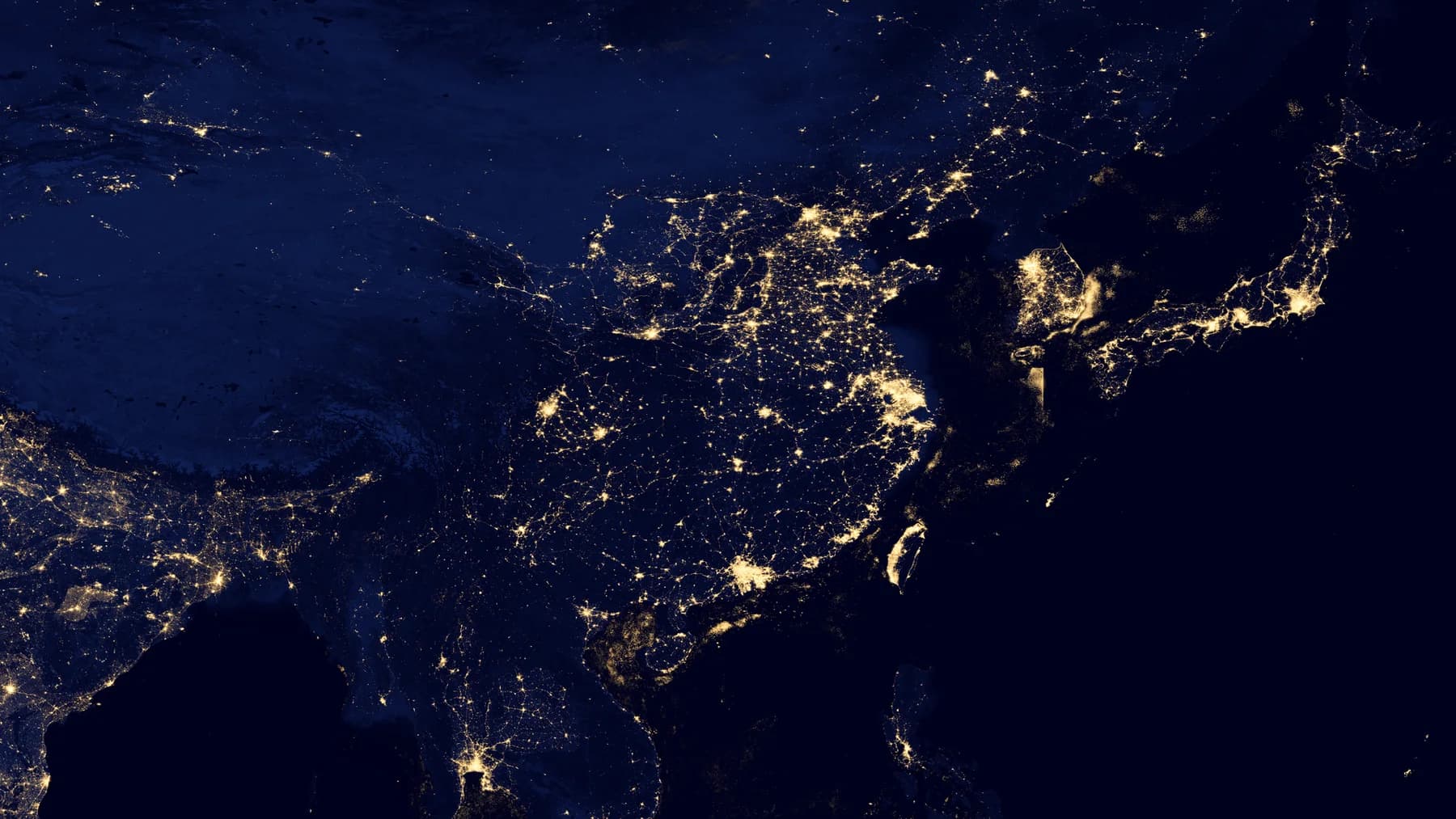
For operators, Qianfan's commercialisation and GW's regional coverage will put a Chinese LEO broadband offer into APAC markets where Starlink faces licensing friction, but GW in particular arrives as a system with sovereign characteristics, where data-routing jurisdiction and security review are part of the package rather than an afterthought. The competitive variable to watch is not bandwidth; it is regulatory packaging: landing rights, data-routing jurisdiction, and local-partner structures, exactly the things GalaxySpace has been assembling in Thailand since 2024.
For Singapore specifically, three openings are realistic. First, the neutral-hub play: as Chinese satellite firms internationalise, they may seek non-Chinese ground infrastructure, telemetry sites, and commercial jurisdiction for contracts, and Singapore's existing ground-station and satellite-services base is a natural counterparty. Second, the standards-and-trust layer: an export wave built on bundled Chinese systems creates demand for independent verification, insurance, and data-governance frameworks, services rather than hardware, where Singapore's credibility is the product. Third, selective supply-chain participation: Singapore's precision-manufacturing and semiconductor base can supply the non-sensitive tiers of this build-out (and of its Western competitors) without taking a side in the constellation race. No public Chinese programme cited here has named Singapore in any of these roles; they are inferred openings, not announced ones. What Singapore should not do is pretend it can or should host a competing manufacturing cluster; the Wenchang model's economics depend on a scale of state demand that exists in exactly one country.
The deeper lesson of the Thai cubesat is the one this whole report points at: China's satellite industry has finished its manufacturing adolescence. The next five years decide whether it becomes a business.
All data in this report is drawn from the public sources listed below, including Xinhua, Caixin, 科创板日报, exchange filings, university disclosures, and sell-side research. Company claims are identified as such in the text. All analysis represents the author's independent views and does not constitute investment advice.
Sources53 entries with source notes and links
- 新华网 — 银河航天三颗卫星发射成功:SAR双星与泰国卫星同步入轨(news.cn)
2026-08-25. Launch manifest, 49-satellite tally, SAR order claims, first SEA whole-satellite export. A-grade source.
- 财联社/科创板日报 — 中国商业航天企业首次面向东南亚整星出口(cls.cn)
2026-08-25. GISTDA "satellite + ground + training" package structure; Phee Choosri quotes. B-grade source.
- 财新 — 深度:中国商业航天进展如何?(database.caixin.com)
2025-02-22. Mahanakorn University demo, Rayong telemedicine call, 小蜘蛛网 30-minute service window. B-grade source.
- 人民网 — 中国卫星互联网企业助力中泰数字经济发展(world.people.com.cn)
2025-02-10. True Corporation MoU scope (LEO comms, integrated network, D2D). A-grade source.
- 财新周刊 — 特别报道:竞夺太空制高点(weekly.caixin.com)
2026-03-07. GalaxySpace internationalisation (10+ countries, licensing difficulty); Tianqi constellation revenue and merger talks. B-grade source.
- 中国星网GW星座 — 百度百科(baike.baidu.com)
Retrieved 2026-08-28. Retained for technical-spec colour only (Ka/laser ISL, deorbit sails, D2C plans); architecture and ITU milestone are anchored to refs 17 and 49. C-grade source (aggregator).
- 雪球 — 中国星网的最新进展(xueqiu.com)
2026-02-11. Launch cadence (16 batch launches in calendar 2025, 17 total including the Dec 2024 first; 154 operational + 25 test by Jan 2026), 2026 plan of 300–500 satellites, backbone-network target. C-grade source (investor post; cadence tallies corroborated by CCTV launch reports).
- IT之家 — 我国成功发射卫星互联网低轨22组卫星(ithome.com)
2026-06-17. 22nd GW group launch; backbone network expected end-2026; 2026 government work report language on satellite internet. B-grade source.
- 攀爬科技树 — GW星座低轨10组发射记录与承制分工(mp.weixin.qq.com)
2025-08-26. Manufacturer split across CAST Fifth Academy, CAS Microsatellite, GalaxySpace by group number. C-grade source (specialist tracker; cross-checked against launch reports).
- 雪球 — GW星座在轨数量更新(低轨19组,银河航天研制)(xueqiu.com)
2026-01-22. Group 19 built by GalaxySpace; ~154 in orbit at that date. C-grade source.
- 财联社 — 垣信卫星启动新一轮融资,最低募资额50亿元(cls.cn)
2026-06-24. Round launch terms, disputed RMB 60bn valuation report, three-phase plan, 200 satellites in orbit and AIS completion (2026-06-05). B-grade source.
- 搜狐/每日经济新闻 — 垣信卫星B轮融资报道(m.sohu.com)
2026-06-23. First direct-to-cell test satellite (2026-06-09); asset totals 2023–Q1 2026. B-grade source.
- 金融界 — "鸿鹄三号"提交10000颗卫星星座计划(m.jrj.com.cn)
2024-05-30. ITU API filing, 10,000 satellites / 160 planes, LandSpace 48% stake, Wuxi factory. B-grade source.
- 财新 — 蓝箭朱雀三号一子级首次实现陆地回收(caixin.com)
2026-08-19. Zhuque-3 Y2 flight, land recovery, Honghu-03 deployment. B-grade source.
- IT之家 — 官方详解首颗"雄安造"卫星鸿鹄03星(ithome.com)
2026-08-19. Argon Hall thruster, fluid-loop thermal, Tbps onboard router; Xiong'an build. B-grade source.
- 新浪财经 — 时空道宇获批开展卫星物联网商用试验(finance.sina.cn)
2026-08-20. Geespace 64-satellite phase one, commercial IoT trial approval, IPO timing; 睿兽分析 deal-flow data (193 deals / RMB 21.97bn, 2025–Q1 2026). B-grade source.
- 山西证券 — 低轨卫星互联网专题报告(pdf.dfcfw.com)
2024-07-03. Value-chain split (payload ~70% in batch satellites), T/R cost share, ITU filing totals (51,300), GW/Qianfan architecture details. B-grade source (sell-side; model estimates labelled as such).
- 新华网 — 量产与技术双轮驱动,银河航天为中国太空新基建持续注入动能(news.cn)
2026-05-09. Nantong factory: 3-day beat, 150 medium sats/yr, 100–2,000 kg range, 80% cycle reduction, 22 satellites shipped 2025. A-grade source.
- 头条/南通市政府 — 南通制造卫星再飞天(m.solarzoom.com)
2026-04-27. Factory director 成明 on industrialised production; dozens of satellites in batch production. B-grade source.
- 财新周刊 — 封面报道:卫星互联网迎拐点(weekly.caixin.com)
2025-02-21. Genesat pulse line (1–1.5 days/satellite, 500–600/yr by 2026) per Shanghai SASAC; Chang Guang production comments. B-grade source.
- 凤凰科技 — 银河航天自研伞天线,微纳星空2小时成像(i.ifeng.com)
2026-06-11. Nantong vs Wuxi line comparison; MinoSpace 89.7% utilisation, 112-satellite Taijing approval, RMB 1bn+ order book. B-grade source.
- 新浪财经 — 商业航天、中国卫星、超级工厂(finance.sina.com.cn)
2026-01-02. Wenchang super-factory ownership (51% CASC commercial-satellite arm / 49% Wenchang authority), 1,000/yr capacity, "build-to-launch" integration. C-grade source (market commentary; ownership structure corroborated by corporate records).
- 赏玥资本 — 垣信13.36亿发射服务招标与供应链梳理(mp.weixin.qq.com)
2025-07-31. Yuanxin launch tender (7 launches / 94 satellites / RMB 1.336bn); Tianyin star trackers on all Qianfan satellites; supplier mapping. C-grade source.
- 铖昌科技 2022年半年度报告(stockn.xueqiu.com)
Spaceborne T/R chip positioning and satellite-internet solution claims. B-grade source (issuer filing, but dated 2022; recent segment-level public disclosure remains thin).
- 金融投资报 — 周末证券:商业航天主线(finance.sina.com.cn)
2026-03-20. Analyst supplier shortlist (Zhenlei, Guobo, Chengdu Huawei); batch-manufacturing thesis. C-grade source.
- Matrace/公司公告汇编 — 千帆星座组网卫星发射与供应商(stocks.matraceai.com)
2026-07-05. Shanghai Hanxun's Qianfan communications-subsystem role per its 2026-03-02 private-placement inquiry response. B-grade source (filing-derived).
- 东方财富财富号 — 烽火通信卫星设备批量采购与在轨验证(emcreative.eastmoney.com)
2026-04-27. FiberHome laser-terminal/router supplies to GW, Qianfan, Honghu-3; Xiong'an line. C-grade source (single-source claims; treated as company-linked disclosure).
- 科技日报 — 在北京,商业航天"冲"出新势力(mp.weixin.qq.com)
2025-06-20. GalaxySpace supplier base 100→1,300+, >50% private; Lingxi-03 integrated casting; flexible-wing production. A-grade source.
- 天下工厂 — 商业航天产业链全景(tianxiagongchang.com)
2026-05-22. Localisation scorecard: solved segments vs residual gaps (Hall thruster batch supply, star-tracker grades, T/R yield). C-grade source (industry content site; used for consensus framing, corroborated by sell-side assessments).
- 天算联盟 — 天算星座介绍(tiansuan.org.cn)
Programme charter: BUPT + Spacety + partners, open-source positioning, experiment manifest. A-grade source (first-party).
- 北京邮电大学 — 重大成果专场发布:天算星座入选2025中关村论坛(mp.weixin.qq.com)
2025-04-06. Onboard 5G core (IEEE award), KubeEdge contribution, RROS (USENIX ATC best paper), space-server cost claim, +50%/−90% metrics, ecosystem counts. A-grade source (first-party; performance claims are the team's own).
- 科技日报 — "天算星座"二期正式启动(yf.net.cn)
2025-05-20. BUPT-2/3 launch (Zhuque-2, 2025-05-17), 24-satellite phase-two plan, payload manifest. A-grade source.
- 北京邮电大学 — 天算星座团队太空服务器在轨稳定运行近一年(bupt.edu.cn)
2026-04-24. Space-server on-orbit validation status. A-grade source.
- 钛媒体 — 把服务器送上天:太空算力是破局还是泡沫?(tmtpost.com)
2026-05-12. Three-Body Computing Constellation specs (12 sats, 744 TOPS, 5 POPS, 8B-param model); Starcloud comparison; Beijing GW-scale data-centre plan. B-grade source.
- 宇航学报 — 低轨巨型星座与太空算力综述(预览)(spacejournal.cn)
BUPT-1 payload details (>22 TOPS, Atlas 200 DK); Zhijiang Lab 1-POPS/11-kg platform; ~2,800-satellite compute-constellation plan. A-grade source (academic journal).
- 凤凰网财经 — 长光、银河航天折戟,75亿空中相机企业杀出卫星第一股(finance.ifeng.com)
2026-06-16. MinoSpace IPO timeline, valuation, business mix; SSE commercial-space listing guideline (late 2025). B-grade source.
- 搜狐 — 微纳星空科创板IPO获受理,拟募50亿(sohu.com)
2026-05-15. MinoSpace financials (revenue/loss trajectory), D-round investors, Wuxi line economics (AIT 20 days–1.5 months). B-grade source.
- 新浪财经 — 320亿!首家商业航天独角兽启动IPO(finance.sina.com.cn)
2026-03-31. GalaxySpace Series C (~RMB 32bn post-money, Feb 2026), SSF/Huijin participation, Xu Ming 72.87% voting control, Xi'an/Chengdu/Beijing subsidiary roles. B-grade source.
- 凤凰财经 — 融资50亿亏损22亿:长光卫星、垣信们何时才能不靠"输血"活下来(h5.ifeng.com)
2026-07-08. Yuanxin revenue/loss ledger 2023–Q1 2026; MinoSpace military-procurement suspension (2026-05-26) and >75% military revenue; Chang Guang's ~RMB 5bn round and IPO refiling. B-grade source.
- 财联社 — 银河航天启动A股IPO进程(m.cls.cn)
2026-03-31. Funding history, Hurun valuations (RMB 11bn 2023 / 11.5bn 2024), 40+ satellites at that date, IPO-tutoring sequence vs peers. B-grade source.
- 上海市国资委 — 联和投资公司下属垣信卫星成功发射的千帆组网卫星增至238颗(gzw.sh.gov.cn)
2026-07-07. Two launches in under 30 hours (2026-07-04/05), first 20-satellite flat-stack on Long March 8A, 238 satellites in orbit. A-grade source.
- 财新 — "中国版SpaceX"垣信完成近70亿元融资,估值500亿元低于预期(m.caixin.com)
2026-08-18. Round closed 2026-08-17: RMB 6.976bn, 18 investors, 13.94% new equity, ~RMB 50.05bn post-money; China Structural Reform Fund II-led 24-member consortium took RMB 5.764bn (82.6%); earlier reported ambitions of up to RMB 15bn at up to RMB 75bn valuation. A-grade source.
- 澎湃新闻 via 新浪财经 — 千帆星座今年计划达到累计在轨324颗卫星(finance.sina.cn)
2026-07-10. Yuanxin VP 徐云翔: 238 in orbit, 324-satellite 2026 target, ground system for key-region operations, initial commercial service capability; MWC Shanghai 2026 licensing expectations. B-grade source.
- 新华网客户端 — 千帆星座加速组网,中国低轨卫星互联网开启战略突围(央视《面对面》胡海鹰专访)(app.xinhuanet.com)
2026-06-10. Qianfan per-satellite cost down to "RMB 10 million-plus" from ~RMB 300m traditional; seven-year design life; 18-satellite flat-stack launch; phase-one 324-satellite goal framed as by-July-2026. A-grade source.
- 搜狐 — 一曲旧时代的挽歌:中国卫通推出2.8万元起卫星移动数据套餐(m.sohu.com)
2026-08-26. Qianfan consumer tariff roadmap undisclosed; industry expectation of "RMB 100-class monthly, sub-RMB-1,000 annually"; measured 450–500 Mbps down / 100 Mbps up / ~50 ms; June 2026 unmodified-handset 5G voice/video direct-to-cell demo. B-grade source.
- SatelliteInternet.com — Starlink Internet Plans, Pricing, and Review 2026(satelliteinternet.com)
2026-08-11. US list prices: Residential $55–130/month, Standard kit $349. C-grade source (price tracker; used as public list-price benchmark).
- 五度易链 — 提速!运营商的卫星互联网布局(info.datadowell.com)
2026-03-23. MNO direct-to-cell tariffs (China Telecom RMB 10/month function pack etc.); consumer satellite services still in pilot stage. B-grade source.
- 每日经济新闻 via 微信 — 中国版星链要来了?手机直连卫星对普通人有哪些影响?赛迪研究院专家解读(mp.weixin.qq.com)
2025-09-01. MIIT guideline target: 10m+ satellite-communication users by 2030; CCID's Zhou Yuzhe: consumer tariffs could fall to RMB 50–100/month. B-grade source.
- 财新网专栏 — 从长征十号乙看行业爆发拐点(opinion.caixin.com)
2026-07-13. GW's September 2020 ITU filing (12,992 satellites); ITU rule requires ~1,300 satellites (10%) deployed by September 2029 or spectrum rights shrink proportionally; 2025 national launch count ~90, of which GW-related 130+. B-grade source (authoritative secondary analysis; the ITU filing itself was not directly accessible).
- 网易 — 我国首次!朱雀三号实现火箭陆地回收(163.com)
2026-08-19. LandSpace's STAR Market prospectus: formal launch-service contracts with China SatNet and Yuanxin; core-supplier list for GW; winner of Yuanxin's 2025 18-satellite launch package. B-grade source (prospectus-derived).
- 网易 — 千帆星座2026年冲刺324颗在轨目标,民营火箭破解运力瓶颈(163.com)
2026-01-22. Yuanxin's 2025 launch-tender history: two February rounds failed for lack of bidders, July restructuring, package two split one launch each to LandSpace, Space Pioneer, and CAS Space with delivery by March 2026; Zhuque-3's 18-satellite win. B-grade source.
- 网易 — 一年亏17亿,朱雀三号一发1.5亿:蓝箭IPO到底赌的是什么?(163.com)
2026-07-01. Prospectus reporting: ~RMB 150m service revenue per Zhuque-3 launch; LandSpace's Yuanxin launch contract reported at ~RMB 300m. B-grade source.
- 东方财富公告库 — 蓝箭航天科创板首次公开发行股票招股说明书(申报稿,2026-06-29更新)(data.eastmoney.com)
2026-06-29. Issuer filing: formal launch-service contracts with China SatNet and Yuanxin; GW core-supplier list; Yuanxin 2025 18-satellite launch package win. A-grade source (issuer filing).
Continue reading
15 Apr 2026 · 30 min read
China's Space Industry Ecosystem in 2026: From CASC and CASIC to Commercial Launch, Satellite Internet, and Critical Components
A map of China's state and commercial space ecosystem, from launch and satellite manufacturing to critical components, capital, regulation, and overseas expansion.
12 Jul 2026 · 56 min read
The Long March Paradox: China Is Selling Launch Capacity Abroad While Guowang and Qianfan Starve for It
China's exportable launch surplus and its megaconstellation bottleneck sit on different production lines; the real constraint is non-fungible medium lift and missing vertical integration.
23 Jun 2026 · 30 min read
China's Orbital-Compute Mobilisation: Capital, Constraints, and the Layers That Can Actually Win
China is organising state capital, launch, satellites, silicon, and optical links around orbital compute before the sector has proved a commercial closed loop.