
The Long March Paradox: China Is Selling Launch Capacity Abroad While Guowang and Qianfan Starve for It
China's exportable launch surplus and its megaconstellation bottleneck sit on different production lines; the real constraint is non-fungible medium lift and missing vertical integration.
Method & disclosure
Confidence: High for launch records, official filings and disclosed contracts; medium for tracker-derived constellation counts and provisional vehicle-mix details explicitly labelled in the text.
Review mode: Human + AI cross-check
Writing support: AI assisted
Singapore Space Agency
On this page · 11
- 011. The 90-Second Summary
- 022. A Ritual in April: What CGWIC's Catalogue Actually Reveals
- 033. The State Export Machine: CGWIC's Book Is Real, Narrow, and Political
- 044. The Commercial Wave: Signed Revenue vs. Memoranda Theatre
- 055. The Scoreboard: What 23 Months of Deployment Actually Shows
- 066. The ITU Clock: The Math, and What Missing It Actually Costs
- 077. The Constraint Stack: Five Layers, One Binder
- 088. The SpaceX Mirror: The Missing Institution Is Vertical Integration
- 099. Selling Coverage That Doesn't Exist Yet: Constellation as Foreign Policy
- 1010. What It Means for Asia-Pacific and Singapore
- 1111. What to Watch
Key findings
The argument in brief
- China's exportable launch surplus sits largely on vehicle lines that Guowang and Qianfan cannot use efficiently; total capacity and useful constellation capacity are different markets.
- The present binder is expendable kerolox medium lift; the 2027–2028 binder is whether a recovered Chinese booster can actually re-fly at useful cadence and cost.
- Guowang and Qianfan do not own launch marginal cost, leaving both far above SpaceX's modeled internal Starlink economics despite abundant satellite-factory capacity.
- For APAC buyers, Chinese launch is a credible ITAR-free option, but Qianfan overseas service before late 2027 remains a capacity promise rather than an operating fact.
Every spring, China Great Wall Industry Corporation publishes a catalogue of spare Long March launch slots and invites the world to buy them. Every month, China's two flagship megaconstellations fall further behind deployment schedules that will decide their ITU spectrum rights and their credibility with foreign partners. Both facts are true at once, and that is not a paradox — it is the clearest single piece of evidence about how China's launch industry is actually structured. This report maps China's space export push from the state and commercial sides, then does the arithmetic on why Guowang and Qianfan are late: the spare capacity CGWIC sells sits on production lines the constellations cannot use, China's first recovered orbital booster (July 10, 2026) has yet to re-fly, and — the deepest layer — neither constellation operator owns its launch marginal cost. The binding constraint is architecture, not effort.
This piece updates and, where the evidence demands it, overturns two earlier articles on this platform: Why Chinese Space Companies Are Going Global (December 2024) and China's Commercial Launch Sector in 2025: Capacity Is No Longer the Constraint (April 2025). Read alongside April 2026 and the Structural Shift in LEO Constellations for the demand-side view.
Disclaimer: This is independent analysis built from public sources — company announcements, state media, regulator documents, launch trackers, and specialist trade reporting. It scores no one for investment purposes and endorses no company. Where a number is a verified fact, a company claim, a modeled estimate, or the author's inference, the text says so. Singapore Space Agency is a private research platform and does not represent any government.
Methodology note: Deployment counts are anchored to independently tracked launches (Jonathan McDowell's catalogues, SpaceNews, China-in-Space's launch-by-launch records) rather than aggregate claims. Cadence and cost tables are built bottom-up from per-launch satellite counts and disclosed contract values; every derived figure shows its inputs so a reader can re-price any assumption. Some pages on cgwic.com could not be retrieved at draft time; the existence, date, and mission count of CGWIC's April 2026 announcement are corroborated by independent reporting, but its exact vehicle mix is flagged as provisional.
1. The 90-Second Summary
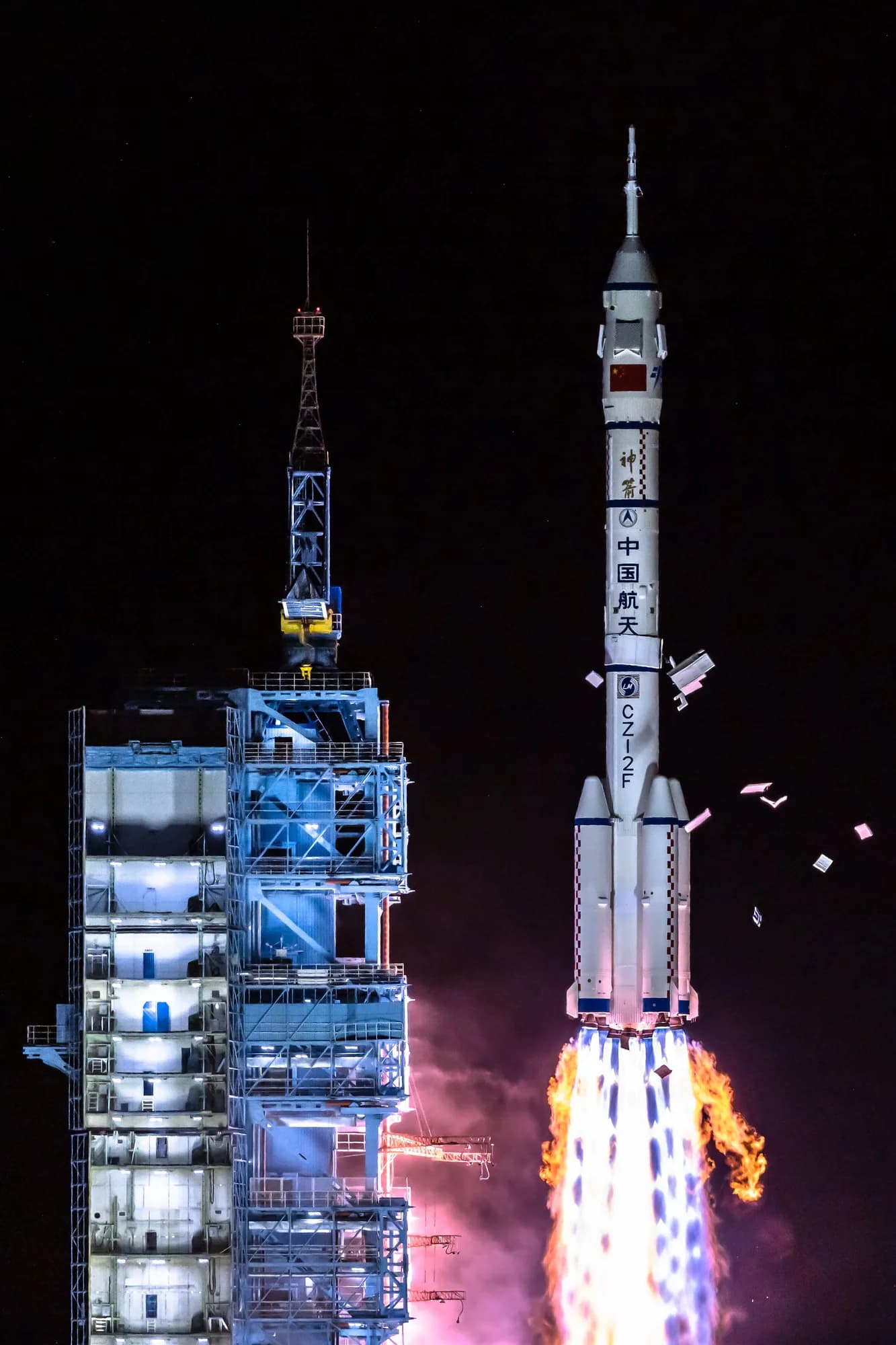
The artifact. In April 2026, China Great Wall Industry Corporation (CGWIC) — the launch-export arm of state prime CASC — released its latest annual "Long March fleet launch opportunities" catalogue, offering 2026–2027 rideshare and dedicated slots to international customers, continuing a yearly ritual it has run since 2023.^[1]^[2]^[3] In the same twelve months, CGWIC launched Pakistan's PRSC-EO3 on a Long March 6,^[4] flew commercial imaging satellites on hypergolic Long March 2Ds,^[5] and kept selling in-orbit-delivered satellites to state customers across Asia, the Middle East and Africa. China's state launch sector is visibly advertising spare capacity to foreigners.
The puzzle. Meanwhile, as of July 5, 2026, Qianfan (Thousand Sails) has launched 238 satellites in 23 months against a first-phase plan that called for 648 by the end of 2025;^[6]^[7] Guowang has roughly 177 satellites functioning in or moving toward operational orbits (tracker estimate — SatNet publishes nothing) against a filing of 12,992 and an ITU requirement of about 1,300 by September 2029, a date this report computes from the identified filing and treats as an author-derived scenario with months-scale uncertainty, not an ITU-published deadline.^[8]^[9] Both constellations are launch-starved — and note that the June–July sprint now underway does not contradict that: the sprint runs on CASC vehicles diverted to the backlog, which is capacity borrowed, not a commercial launch layer unbound (Section 5.3). In February 2025, Spacesail ran a launch tender that failed for lack of qualified bidders.^[10] A constellation could not buy launch in the same country whose state launch marketer was simultaneously advertising slots to foreigners.
The resolution. The contradiction dissolves once you see that "Long March" is not one fleet. The slack sits on legacy hypergolic and small-lift lines (LM-2C/2D/3B/6-class) — mature, high-rate, and wrong for megaconstellation logistics. The scarce asset is the kerolox medium-lift class (LM-6A/8/8A/12) that flat-pack constellation batches actually need, and that class is production-limited and expendable. Selling the surplus abroad while the bottleneck starves is not incoherence; it is rational price discrimination on a non-fungible fleet — and an admission that the fleet cannot be rebalanced quickly.
The stack, ranked. Working through five candidate constraints — vehicle-type mismatch, no reusability, satellite production, institutional political economy, and pads/range — the evidence says: satellite output stopped being the binder around mid-2025 (factories now turn out satellites faster than rockets can fly them; Genesat alone claims ~300 satellites/year with a second plant building, and a 1,000-per-year Wenchang plant is commissioning^[11]^[12]); pads stop binding by 2027 (Hainan is adding two universal pads toward 60+ launches/year^[13]); the binding constraint now is expendable kerolox medium-lift production, and the constraint that decides 2027–28 is reusability — where the scoreboard moved as this report went to press: on July 10, 2026, CASC's Long March 10B recovered an orbital-class first stage by sea-platform net capture on its maiden flight — China's first orbital booster recovery, and the first anywhere on a debut launch — with re-flight of the recovered stage targeted by year-end.^[65] (One technical caution the headlines blur: net capture on hooks is a different recovery path from propulsive leg landing — it trades landing-burn precision for capture-structure loads, and its refurbishment-and-reuse economics have no flight precedent anywhere; recovery method maturity and reuse maturity are separate questions.) Until a recovered stage actually re-flies, every constellation batch still consumes a whole rocket: Zhuque-3 reached orbit but crashed its booster (December 2025), Long March 12A missed its landing (December 2025), and Tianlong-3 failed outright on debut (April 2026).^[14]^[15]^[16]
The deepest layer is structural. Starlink flies 120+ dedicated missions a year because SpaceX owns its launch marginal cost. Guowang and Qianfan buy launch at administered prices from CASC — a conglomerate whose subsidiaries also build competing hardware and whose incentive is fleet utilization, not any one customer's cadence — or from commercial startups whose rockets mostly have not flown. Spacesail's 2025 award of $187 million for seven launches carrying 94 satellites^[10] implies roughly $6,000–7,000 per kilogram — four to ten times SpaceX's modeled internal Starlink cost. That is a vertical-integration failure, and no amount of factory-building fixes it until someone lands a booster and reflies it.
The call. Guowang's ITU 10% milestone (September 2029) is now arithmetically reachable only if China's 2027 launch mix looks radically different from 2026's — and the consequence of missing it is softer than commonly claimed (proportional capping of the filing, not cancellation), which is precisely why China's spectrum establishment filed for roughly 200,000 additional satellites in late December 2025 — over 95% of it through a newly created state spectrum institute, not the constellation operators themselves — as a national-level hedge.^[17]^[62] Qianfan's overseas agreements — Brazil first among them — are pre-sales of capacity that does not yet exist, made by a company that booked ¥188,700 (about US$26,000) of revenue in 2025 — per financial-press reporting of its fundraising disclosures (B-grade; treat as reported filing figures, not audited statements we have inspected).^[19] The schedule risk sits with the partner countries, not with Shanghai. For Asia-Pacific buyers the practical takeaways are: Chinese rideshare is now the cheapest ITAR-free path to SSO if your payload contains no US-controlled components; Qianfan service in Southeast Asia before late 2027 is narrative, not capacity; and the moment to re-examine every assumption in this report is the day a recovered Chinese booster flies again — a day that moved sharply closer on July 10.
2. A Ritual in April: What CGWIC's Catalogue Actually Reveals
Start with the artifact, because it is stranger than it looks.
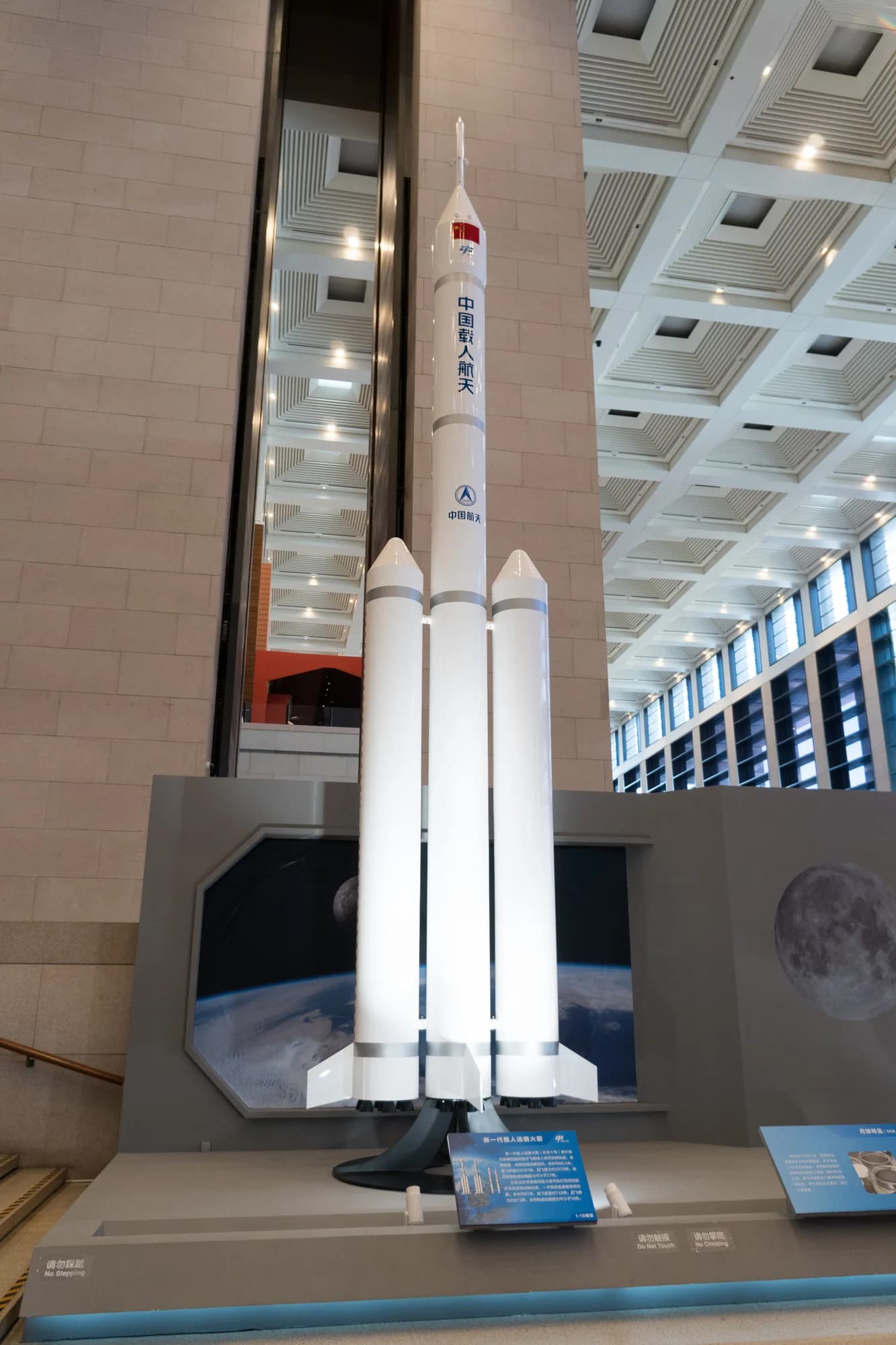
CGWIC — China Great Wall Industry Corporation, the sole authorized launch-services exporter of CASC, the state aerospace prime — maintains a standing "Long March Fleet Launch Opportunities" page that functions as a public price list without prices: specific vehicles, specific windows, specific orbits, offered to any international customer who can clear China's own export approvals.^[1] The practice became an annual ritual in April 2023, when CGWIC published its 2023–2024 rideshare schedule through China's State Council information portal;^[2] an expanded 2024–2026 catalogue followed on April 3, 2024;^[3] and on April 24, 2026 CGWIC released its 2026–2027 edition: a list of 29 rideshare missions flying between summer 2026 and the end of 2027, with additional missions open to international payloads.^[63] (The cgwic.com pages themselves were not retrievable at draft time; the release's existence, date, and mission count are corroborated by independent reporting, but the exact vehicle mix on the list — the detail that matters most for Section 7.1 — remains provisional until the page is re-verified.)
The rideshare program is real, not brochureware. CGWIC counts five dedicated rideshare missions flown to date — Long March 6 in April 2021, the 22-satellite Long March 8 mission in February 2022, Long March 2D in January 2023, Long March 6C in May 2024, and Long March 2D again in January 2025 — placing 52 satellites, on top of a piggyback business that has flown international payloads since the 1990s.^[1] And the export flights keep coming: on March 26, 2026, a Long March 2D flew SuperView Neo commercial imaging satellites;^[5] on April 7, 2026, CGWIC's own newsroom celebrated launching the seventh batch of Spacesail's Qianfan satellites on a Long March 8;^[20] on April 25, 2026, a Long March 6 delivered Pakistan's PRSC-EO3, the third launch under a 2022 multi-launch agreement with SUPARCO and the mission that completed Pakistan's electro-optical constellation.^[4]^[21]
Note what those three flights have in common: the export and commercial-EO missions flew on the LM-2D and LM-6 — legacy hypergolic and small kerolox vehicles — while the constellation batch flew on the LM-8, the scarce kerolox medium-lifter. The same sales organization serves both queues. One queue has slack it advertises to foreigners every April. The other made a state-backed megaconstellation wait seven months between batches in 2025 (Section 5).
Three readings of the ritual are possible, and it pays to be explicit about which one the evidence supports:
- The naive reading — China has abundant launch capacity, so the constellations' delays must be caused by something else (satellites, money, politics). This is the reading CGWIC's marketing invites, and it is wrong as stated: capacity abundance is real but segment-specific.
- The cynical reading — the announcements are diplomatic theatre with no commercial substance. Also wrong: Pakistan, Egypt, and commercial EO customers demonstrably fly, and the rideshare missions are full.
- The structural reading — the catalogue is exactly what a rational monopolist does with a non-fungible fleet: it price-discriminates. Hypergolic lines (LM-2C/2D/3B/4-series) are mature, amortized, and sized by decades of state demand; their marginal missions earn more revenue from a foreign EO operator or a bundled state-to-state deal than from domestic constellation work they cannot physically serve anyway (wrong performance class, wrong pads, propellant handling that new coastal sites will not host). The kerolox medium-lift class the constellations need is allocated by plan, not by price. Selling the surplus abroad is the visible shadow of an internal allocation problem — which makes the April catalogue a diagnostic instrument, not a contradiction.
This report adopts the third reading and spends Sections 5–8 quantifying it. But first, the export picture the catalogue sits inside — because "China's space overseas reach" is two very different machines wearing one flag.
3. The State Export Machine: CGWIC's Book Is Real, Narrow, and Political
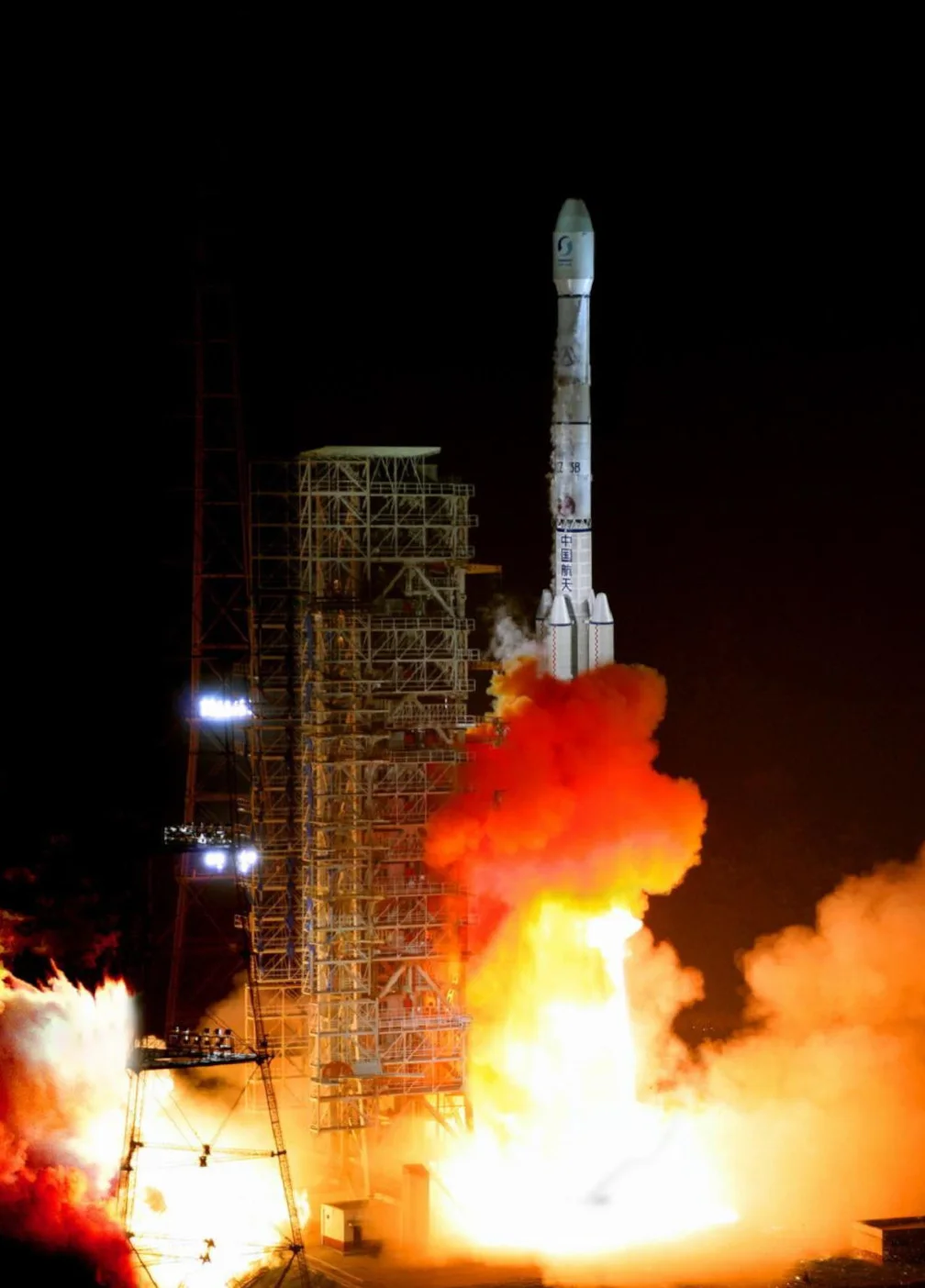
CGWIC's launch-and-satellite export business is the oldest "going global" channel in Chinese space — AsiaSat-1 in 1990 was the first commercial Long March launch — and its modern book has three product lines, each with different economics and a different verification status.
Line 1: In-orbit delivery (IOD) of communications satellites. This is the flagship product: China builds the satellite (usually on CAST's DFH platform), launches it on an LM-3B from Xichang, positions it, tests it, and hands over a working system, typically with Chinese policy-bank financing attached. The verified recent case is Pakistan's PakSat-MM1: launched May 30, 2024 on an LM-3B, positioned at 38.2°E on June 7, and formally delivered to SUPARCO on August 16, 2024 after final acceptance — a textbook IOD contract executed in eleven weeks from launch to handover.^[22] The lineage runs through Nigeria (NigComSat), Venezuela, Bolivia, Laos, Algeria, Belarus, Cambodia and the APT/APSTAR series — a two-decade record of selling space infrastructure to states that either cannot buy Western (financing, sanctions, politics) or get a materially better bundled price from Beijing. Verified fact: the deliveries happen. Author's inference, flagged as such: the margin on these deals is political first and commercial second — they are financed exports in the classic Belt-and-Road pattern, and their pricing is not a clean market signal.
Line 2: Launch services for foreign government EO programs. Egypt's MisrSat-2 (December 2023, a China-aid-financed imaging satellite)^[23] and NExSat-1 (February 2024, flown on a Smart Dragon-3)^[24] plus the three-launch SUPARCO series culminating in PRSC-EO3 (April 2026)^[4]^[21] define the current template: multi-launch framework agreements with space agencies in the China-aligned or non-aligned world, flown on hypergolic, small-kerolox, and solid vehicles with production slack. This line is growing and is the most direct beneficiary of the April catalogues.
Line 3: Rideshare for anyone launchable. The five dedicated rideshare flights and the standing piggyback offer.^[1] The constraint on this line is not Chinese supply but customer-side law: any satellite containing US-origin ITAR/EAR-controlled components — which is most Western-built smallsats — cannot legally fly on a Chinese vehicle. The addressable market is therefore satellites with no US content: Chinese-built exports, domestically-built emerging-market satellites (Pakistan's SUPARCO builds, university cubesats), and the occasional European "ITAR-free" platform whose owner is willing to absorb the political cost. That is a real market, but a thin one — and it is why CGWIC's international rideshare tally (tens of payloads over five years) is two orders of magnitude smaller than SpaceX's Transporter program.
The honest summary of the SOE track: verified, durable, state-to-state, and structurally small. It converts Long March's legacy-line slack into diplomatic revenue. What it has never done — and shows no sign of doing — is compete for the global commercial manifest at scale. That project has been delegated, half-deliberately, to the commercial sector.
4. The Commercial Wave: Signed Revenue vs. Memoranda Theatre
The second machine is younger, louder, and much harder to grade, because its unit of progress is often a signing ceremony. The discipline this platform applies: a deal counts when hardware flies or money changes hands; everything else is a memorandum. Applying that filter to the overseas activity of China's commercial space companies as of July 2026:
4.1 Launch: real flown revenue exists, and it is concentrated in one company
CAS Space (Guangzhou, majority-owned by the Chinese Academy of Sciences) is the only Chinese commercial launcher with a repeat international manifest: Oman's first satellite (OL-1, November 2024, the mission this platform flagged in 2024 as the symbolic barrier-breaker),^[25] two Mexican ThumbSat femtosatellites (August 2025), and Pakistan's first hyperspectral imaging satellite PRSS-2-HS1 plus additional international payloads in October 2025 — reporting around those missions also lists payloads for the UAE, Egypt and Nepal across the Kinetica-1 manifest.^[26]^[10] Kinetica-1 is a solid small-lifter; the revenue per mission is modest; but this is flown, repeat, multi-country business — the genuine article.
Galactic Energy has the domestic cadence record (Ceres-1) and sea-launch capability but no verified dedicated international mission; its overseas story is pipeline. LandSpace, Space Pioneer, iSpace, Orienspace, Deep Blue Aerospace: as of this writing, no verified flown international customer of consequence. Their international activity is MOU-grade — exhibition-booth agreements, framework cooperation signings — and should be priced at zero until a foreign payload sits on top of one of their rockets. This is not a criticism of the engineering; it is bookkeeping.
4.2 Satellites and data: where the export engine actually works — and where sanctions bite
The satellite side has more real foreign revenue than the launch side, and correspondingly more sanctions exposure.
Chang Guang Satellite Technology (CGSTL) — the Jilin-1 EO constellation operator, with 100+ satellites in orbit — is the proof that Chinese commercial space products sell globally, and the proof of what happens next: sanctioned by the US in December 2023 (allegedly supplying imagery to Wagner), named again in May 2025 for allegedly providing Red Sea targeting imagery to the Houthis,^[27]^[28] with further US sanctions actions against Chinese satellite-imagery firms in May 2026 over Iran-war imagery.^[29] CGSTL pulled its IPO in December 2024 citing sanctions and losses, then announced a Shanghai IPO restart in January 2026. The pattern generalizes: the more commercially successful a Chinese remote-sensing exporter becomes in the non-aligned world, the more likely its customer list intersects a US-sanctioned conflict, and the more Western-facing business (insurance, components, capital) it loses. Kharon's 2025 investigation of China's "commercial rocket economy" aiding Iranian and Russian programs shows the compliance perimeter tightening around the whole sector, not just named entities.^[30]
GalaxySpace — the most credible commercial comms-satellite manufacturer — has run overseas LEO broadband demos (Thailand, 2024) and now builds batches for Guowang itself (Section 5), which is the more telling fact: the state constellation is absorbing commercial manufacturing capacity, the exact inverse of the export narrative.
4.3 Constellation-as-export: Qianfan's foreign book, graded
Spacesail's international agreements deserve their own evidence table, because they are the centerpiece of the "China exports connectivity" story and they vary enormously in hardness:
Company-claim, on the record: Qianfan intends to begin consumer connectivity services around Q4 2026 in at least Brazil and China, with Malaysia possibly following, plus aviation connectivity.^[6]^[35] Section 9 tests that claim against deployed capacity. The one-line grade of the whole book: one real regulatory beachhead (Brazil), several validated demos, and a tail of ceremony.
4.4 What this updates from our 2024–2025 calls
The December 2024 piece on this platform argued Chinese space firms were going global because the domestic market was crowded and capital rewarded exportability; the April 2025 piece declared "capacity is no longer the constraint" and predicted foreign customers would increasingly test Chinese launch. Eighteen months of evidence grades those calls as follows:
- Vindicated: the anchor-customer prediction (Oman → Mexico → Pakistan on Kinetica-1; SUPARCO's multi-launch series); the "three tiers" framing — Galactic Energy monetized reliability, LandSpace converted credibility into the most advanced reusable program, and Space Pioneer's "limited tolerance for execution mistakes" proved exactly right when Tianlong-3 exploded 33 seconds into its debut.^[16]
- Overturned: "capacity is no longer the constraint." It is the constraint — the 2025 piece mistook vehicle count for vehicle class. China had more rockets than ever in 2025 and its flagship constellations still starved, because the specific class they need (medium-lift kerolox, ideally reusable) was and is production-limited. This report exists to correct that error with arithmetic.
- Revised: "obstacles are commercial, not ideological." Still half-true for launch, no longer true for remote sensing, where US sanctions have become the primary structural constraint on the export book (CGSTL, May 2026 actions).^[27]^[29]
And one motive deserves more weight than we gave it in 2024: going global is partly demand-side necessity. The biggest domestic demand pools — Guowang above all — are procured through channels that structurally favor CASC/CAS-lineage suppliers (Section 7.4). For a private launch or satellite firm, "overseas" is not just diversification; it is the only large customer set whose procurement it can actually win on price. The export push and the constellation bottleneck are the same story told from opposite ends.
5. The Scoreboard: What 23 Months of Deployment Actually Shows
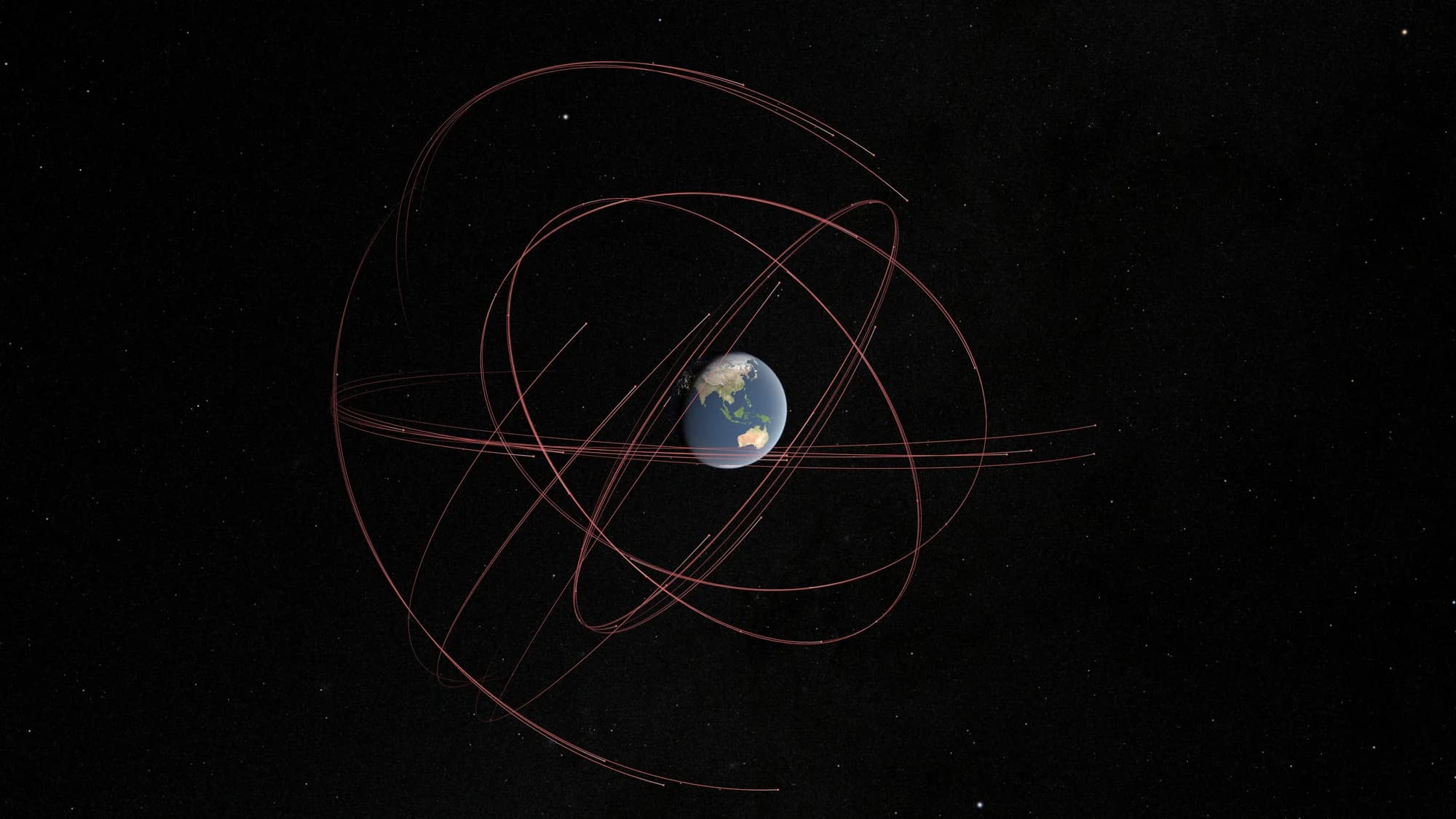
Now the puzzle itself. Everything in Sections 6–9 depends on getting the deployment record exactly right, so this section builds it launch by launch from independently tracked missions. Where a figure is interpolated rather than tracked, the table says so.
5.1 The snapshot, July 7, 2026
Sources and status: counts are verified against launch-by-launch tracking; "~190 launched" for Guowang includes pre-operational test satellites and units that failed orbit-raising, and is an estimate range from trackers rather than an official figure — SatNet publishes nothing.^[8] The plan figures are company/CASC statements, not independent forecasts.
5.2 Guowang: the anchored launch record
SatNet is opaque, but enough launches are individually documented to anchor the curve (interpolations marked):
Read the shape, because the shape is the argument. Phase 1 (Dec 2024 – Aug 2025): ~7 launches in 8 months — slow, blamed by most analysts on first-generation satellite design and production problems, which is consistent with SatNet re-competing satellite work to GalaxySpace and IAMCAS during this window.^[44]^[45] Phase 2 (Sept 2025 – mid-Jan 2026): ~12 launches in ~4.5 months — the real acceleration, batches roughly every two weeks, exactly when the satellite factories hit stride.^[48] Phase 3 (after group 19, Jan 19 – June 2026: 3 launches in 5 months) — the acceleration stalled. The inputs, since the methodology note promises them: groups 19–22 are verified and add 36 satellites in 2026; the difference between that and the ~57 implied by the end-2025 estimate of ~120 sits in the interpolated December–January cluster, so the honest H1-2026 range is 36–57 added, against a full-year stated plan of 310.^[42] Even the generous end of that range is a stall. Satellites were no longer the binder; rockets were: the LM-8A/12 class was simultaneously feeding Qianfan's overdue backlog (Section 5.3), and China's national launch cadence went visibly quiet for roughly a month in Q2 2026 — a gap in the tracking record that has no official explanation.^[8]^[64]
The per-launch number is the quiet scandal: Guowang's average batch is about 8 satellites. The vehicles doing the work carry 9 (LM-8A, LM-12, ~695 kg platform) or 5–10 (LM-6A, LM-5B, ~1,000 kg platform).^[42] Starlink puts 24–29 satellites of roughly 800 kg on every Falcon 9. China is deploying a 13,000-satellite filing in single-digit increments.
5.3 Qianfan: the complete launch log
Qianfan's record can be reconstructed in full — and it is a starvation diary with a sprint at the end:
Three facts jump out of this table.
First, the gaps are launch gaps, not factory gaps. Between March and October 2025, Qianfan launched nothing — while Genesat's Songjiang plant was operating at a claimed one-satellite-per-day rate and signing its second-phase expansion.^[11] During that exact window, Spacesail ran a launch tender (February 2025: nine launches, 162 satellites, ≥4.5 t to 800 km) that failed for insufficient bidders — fewer than three qualified bids, automatic cancellation under Chinese procurement rules — and had to re-run it before awarding roughly $187 million for seven launches — four batches of 10 satellites plus three batches of 18, 94 in all — to LandSpace, Space Pioneer and CAS Space in late 2025, on rockets (Zhuque-3, Tianlong-3, Kinetica-2) that at award time had flown zero times combined.^[10] A megaconstellation with satellites in storage could not purchase launch. That single procurement episode is worth more than every capacity headline of 2025.
Second, the sprint is real — and it is Long March, not the commercial awardees, doing it. From June 1 to July 5, 2026, Qianfan flew 5 batches and added 76 satellites — more than half of its 2026 total in five weeks — and Spacesail has told suppliers it wants 100+ new satellites up by end of July.^[58] Every one of those missions flew on CASC vehicles (LM-6A, LM-8, LM-8A, LM-12B). Of the commercial tender's seven launches, the score so far: Tianlong-3 destroyed its first mission-capable flight in April,^[16] Zhuque-3 is preparing its second-ever flight (Section 7.2), Kinetica-2 has flown once, successfully, with a cargo-ship prototype rather than a Qianfan batch.^[54] The state monopoly is bailing out the schedule the commercial sector was hired to rescue.
Third, attrition compounds the cadence problem. Per Jonathan McDowell's tracking, 14 of the first 90 Qianfan satellites failed to complete orbit-raising and are decaying;^[40] an independent photometric study found evidence some are tumbling.^[41] Later batches perform much better (1 failure in the 54 satellites of batches 3–5),^[40] but a planning-grade attrition allowance of 5–10% belongs in every cadence requirement below — which only widens the gap.
5.4 The comparison that frames everything
Calendar 2025, verified: China conducted 93 orbital launches (some trackers count up to 97 attempts), an all-time national record, of which CASC flew 73.^[46]^[48] SpaceX alone flew 165 Falcon 9 missions, 123 of them Starlink, delivering 3,000+ Starlink satellites in the year.^[38] China's two megaconstellations combined deployed roughly 170 satellites in 2025 — about one-eighteenth of Starlink's same-year deployment, in the very year China set its all-time national launch record, with a 2026 national target of 140+ launches.^[48]
China does not have a launch-count problem. It has a launch-class problem. Sections 6–7 quantify what that costs.
6. The ITU Clock: The Math, and What Missing It Actually Costs
The deadline everyone cites is real, but its teeth are widely misdescribed. Both need to be precise.
6.1 The rule
Under ITU Resolution 35 (WRC-19), a non-GSO filing must bring its first satellite into use within 7 years of the filing date, then deploy 10% of the constellation within 2 further years, 50% within 5, and 100% within 7 — i.e., filing + 9 / + 12 / + 14 years. The consequence of missing a milestone is not cancellation: the filing is capped in proportion to what is actually deployed at the milestone date.^[49]^[50] Spectrum priority survives; scale ambition is what dies.
6.2 Guowang's arithmetic
The GW filings (GW-A59: 6,080 satellites; GW-2: 6,912) date to September 2020. First launch December 2024 satisfied bringing-into-use. The 10% milestone — roughly 1,300 satellites by September 2029 — is the operative constraint.^[9]
The requirement is roughly 3–5× the demonstrated H1-2026 rate, sustained for three years, net of attrition. At the current vehicle mix it means 3.3 dedicated launches per month for one program — against a national all-vehicle record of 93 launches per year for everything China does in space.
Note first that the official signals do not even agree with each other: in mid-2025, reporting around SatNet put the nearer-term target at 400 satellites in orbit by 2027^[9] — irreconcilable with the 310-in-2026 / 900-in-2027 ramp publicized since.^[42] Plans that disagree by 2× about the same program are not schedules; they are postures. Now test the more ambitious version against the arithmetic. The publicized ramp — 310 satellites in 2026, 900 in 2027, 3,600/year from 2028^[42] — would sail through the milestone: ~120 (end-2025) + 310 + 900 → ~1,330 by end-2027, done two years early. But convert 900/year into launches:
This is the central finding of the report, stated plainly: Guowang's published 2027–28 ramp is not a schedule; it is a procurement signal. It is arithmetically deliverable only by vehicle classes that either do not exist yet or have never flown successfully. The plan's out-years are a message to LandSpace, Space Pioneer, CAS Space, and CASC's own reusable programs: build it and the manifest is yours. That is a rational way to summon an industry. It is not a basis for anyone — investor, partner government, or analyst — to date service availability.
6.3 Qianfan's arithmetic
Spacesail's own phase-1 plan (company claim, repeatedly published): 648 satellites by end-2025 — actual was 90, an 86% miss^[37]^[40] — and 1,296 by end-2027 for global coverage.^[37] From 238 (July 5, 2026), reaching 1,296 by end-2027 requires ~1,058 satellites in 18 months ≈ 59/month ≈ 3 launches/month at the 18–20 satellite batch size — every month, without the seven-month gaps that have characterized the program so far. The best five weeks in Qianfan's history (June–July 2026) averaged ~15/week; sustaining that indefinitely is exactly what has never happened. Model it from demonstrated 2026 behavior instead. Spacesail has told suppliers it wants 100+ new satellites up by the end of July;^[58] if that lands, Qianfan sits near ~340 on August 1. The question is then which regime governs August–December: the surge (~50–70/month when CASC diverts vehicles) or the reversion to the drought–surge mean that has characterized every previous stretch (~20–30/month averaged). That yields ~550–700 by end-2026 in the bull case (surge mostly holds), ~420–520 in the base case (reversion) — modeled estimates; re-price them by changing the assumed vehicle availability, and note the base case explicitly assumes the historical pattern in which surges are followed by droughts because the same LM-6A/8/8A/12 pipeline must alternate back to Guowang's overdue plan. Even the bull case leaves phase-1 completion (1,296) in 2028, not 2027.
Qianfan's ITU position is murkier than Guowang's — its milestone dates are not cleanly public, and the "unlikely to meet ITU deadlines" judgments in circulation are analyst inferences rather than ITU statements (this report treats them the same way, and flags the exact dates as unverified). What matters is that the same Resolution 35 mechanics apply: miss, and the filing gets capped to deployed reality.
6.4 What missing actually costs — less than advertised, and China is already hedging
Here is where the common narrative overshoots. A capped filing is a bounded loss: priority for what you have deployed survives, and nothing stops new filings. The behavior to watch is therefore not deadline panic but filing strategy — and in late December 2025 China showed its hand, though the fingerprints are not the ones usually reported. Filings published by the ITU in January 2026 total roughly 200,000 additional satellites across more than a dozen constellations — but over 95% of that sits in just two filings, CTC-1 and CTC-2 (96,714 satellites each, in 3,660 orbital planes), lodged not by any constellation operator but by a newly established state body, the Institute of Radio Spectrum Utilization and Technological Innovation.^[17]^[62] SatNet, Shanghai Yuanxin (Spacesail's filing entity), China Mobile and China Telecom appear alongside with separate, far smaller filings.^[62] All of it landed ahead of WRC-27 discussions that may tighten milestone and fee rules, and state media simultaneously framed the filings as responsible and transparency-minded.^[18]
The attribution matters analytically. If the operators had filed 200k, the read would be corporate hedging. Instead, the entity that claimed 193,000 satellites is a purpose-built spectrum vehicle with no constellation, no factory, and no launch contract — which makes the filings a sovereign spectrum reserve, held at the national level rather than on any operator's books. The strategic read (author's inference, but a short chain): Beijing's planners can count launches as well as anyone. The December filings are insurance against the 2020-vintage filings being capped — re-basing China's spectrum claim under current rules before the rules change, in a vehicle insulated from any single program's schedule failure, so that a 2029 milestone miss on GW becomes a bookkeeping event rather than a strategic one. The soft consequence at the ITU does not mean no consequence anywhere: the hard deadline lives in the export book, where Brazil, Malaysia, and airline partners were promised service dates, not filings (Section 9). Spectrum politics forgives; customers eventually do not.
7. The Constraint Stack: Five Layers, One Binder
"Why are they late?" has five candidate answers. Most commentary picks one and stops. The honest method is to test all five against the record, date when each one bound, and name the one that binds now. In order:
7.1 Vehicle-type mismatch: the slack is real and unusable
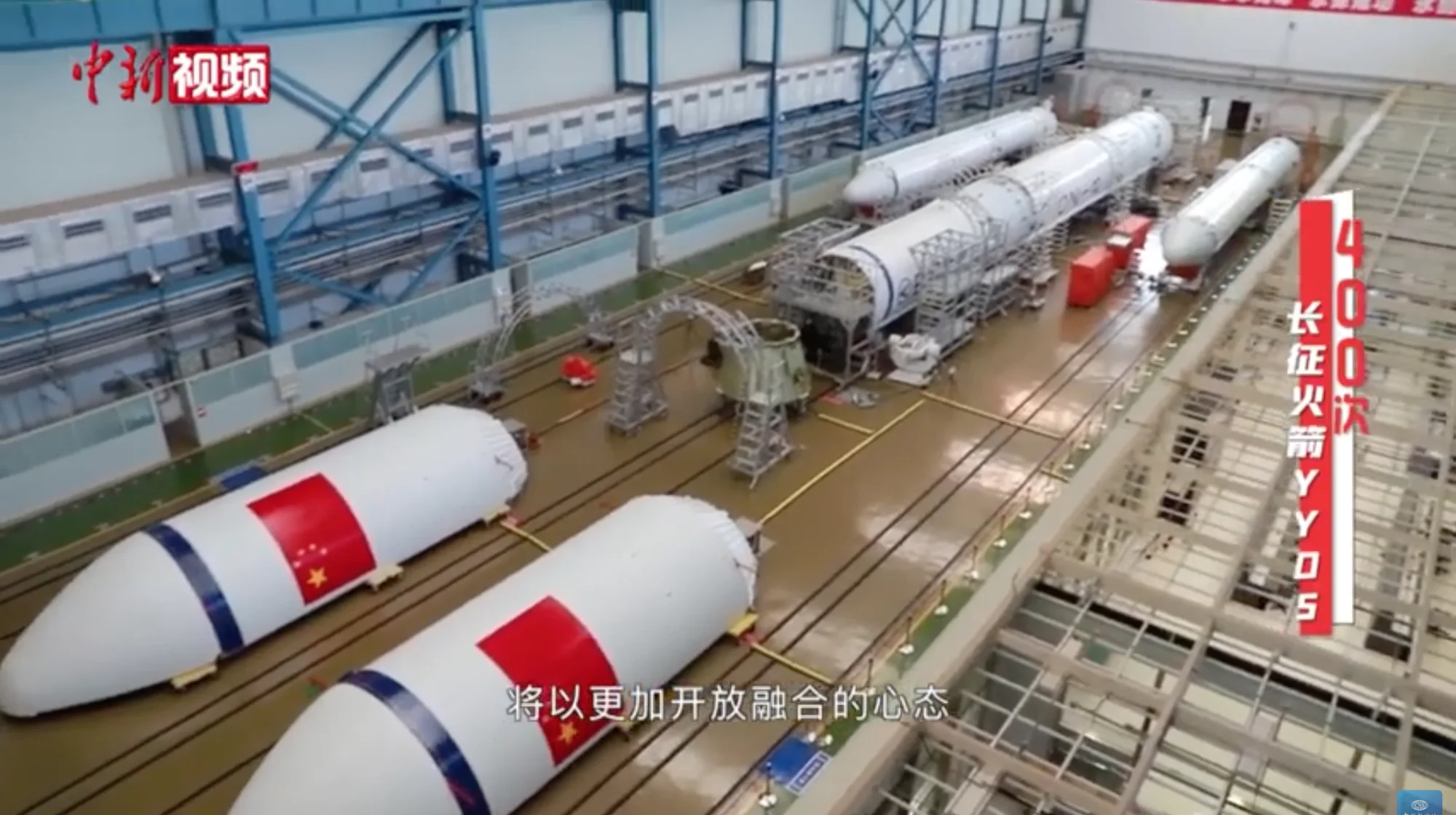
The April catalogue and the starving constellations coexist because Long March is two fleets wearing one name.
Fleet A — the legacy lines. LM-2C/2D/3B/4-series: hypergolic propellants, inland pads (Jiuquan, Taiyuan, Xichang), production lines matured over three decades and sized by state demand for recon, weather, navigation and GEO comms. These lines have genuine marginal slack — that is what CGWIC sells every April, and what Pakistan's EO program and SuperView's imaging constellation fly on.^[4]^[5] But they are the wrong tool for megaconstellation logistics: payload classes of 1–4 t to SSO, fairings and adapters sized for one or a few satellites, toxic propellants unwelcome at the new coastal commercial pads, and per-launch satellite counts that would make a 13,000-satellite deployment take centuries.
Fleet B — the kerolox constellation class. LM-6A, LM-8/8A, LM-12: the only vehicles that have ever carried an operational Guowang or Qianfan batch. This fleet is young, pad-constrained, and production-limited — and the revealed ceilings are public. The LM-8A, designated by CASC's launch academy as the "high-density" constellation workhorse, flew 6 times in its 2025 debut year, and its maker's own guidance for 2026 is "at least 10, at most 15" missions.^[51] The LM-6A, the single most-used constellation vehicle, accumulated 25 flights in its first four years — a long-run average near 6 per year.^[6] Add every LM-8, LM-12 and LM-5B mission actually flown for the two constellations in the trailing twelve months and the total is roughly 24 dedicated launches, ~265 satellites (Guowang ~117 from the Section 5.2 curve, Qianfan 148 from batches 6–14) — against combined stated 2026 plans of 634 satellites (Guowang 310 + Qianfan 324),^[42]^[43] which need 45–55 launches at current batch sizes. The class exists; it simply produces at half the required rate, and both constellations queue for the same vehicles — the June–July 2026 record shows GW and QF batches alternating through the identical LM-8A/LM-12/LM-6A pipeline.^[7]^[8]
This is why "China has spare launch capacity" and "China's constellations are launch-starved" are simultaneously true, and why the April catalogue is evidence rather than paradox: CGWIC monetizes Fleet A abroad precisely because Fleet A cannot serve the domestic backlog on Fleet B. A price-discriminating monopolist with a non-fungible fleet sells each segment to its highest-value use: hypergolic slack goes to foreign EO programs and bundled state deals at export prices; scarce kerolox slots are allocated by plan at administered prices. The one thing the system cannot do quickly is convert one into the other — engines, tooling, pads, and crews do not transfer.
Verdict: real, structural, and binding now — but it is the surface expression of layer 7.2.
7.2 No reusability: cadence scales linearly with factory output
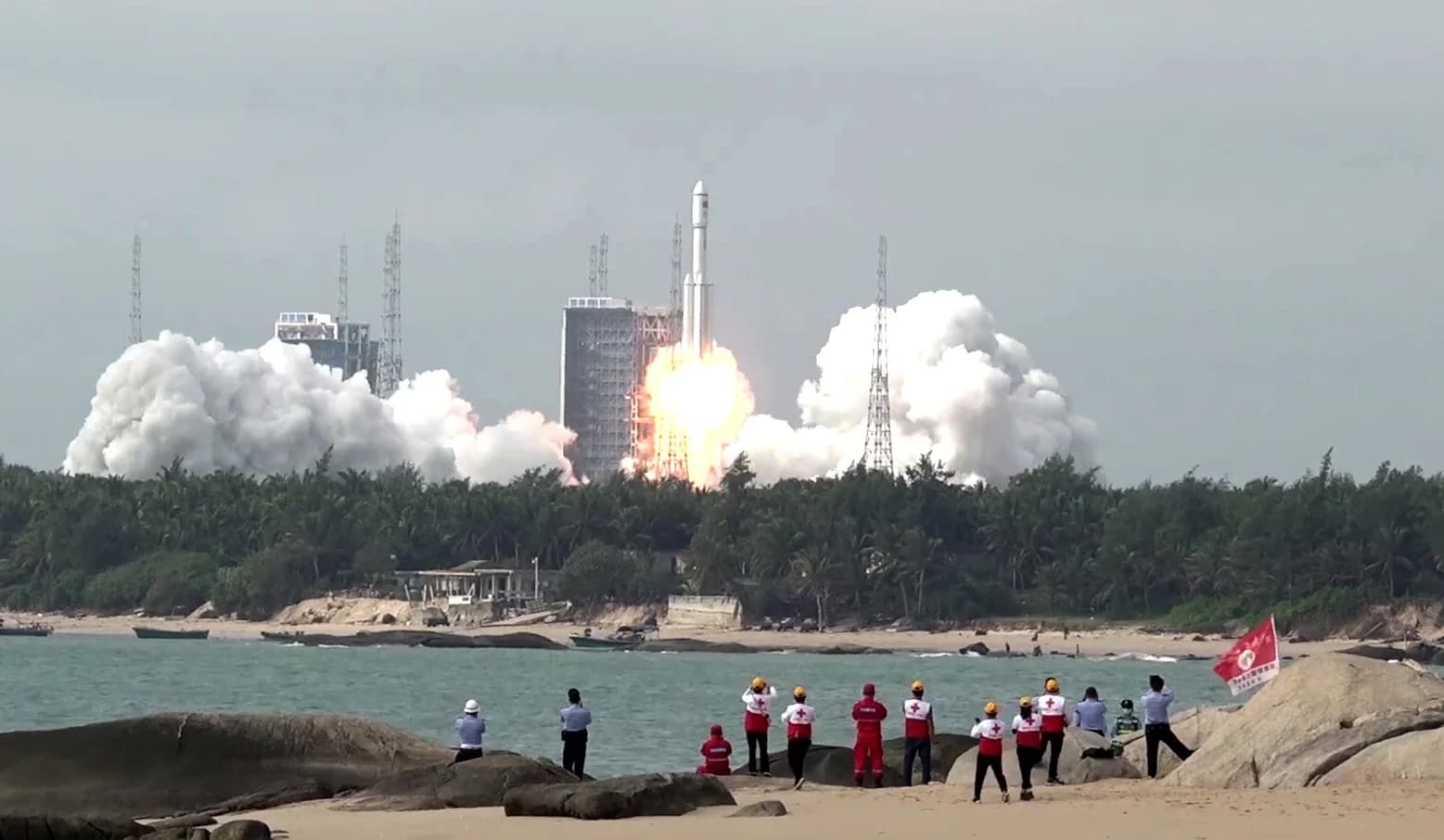
The reason Fleet B's ceiling is 24 launches per year instead of 120 is that every mission consumes an entire vehicle. An LM-8A burns four YF-100-class staged-combustion engines plus an upper stage per flight; 40 dedicated Guowang launches a year — the ITU-milestone requirement at current batch sizes (Section 6.2) — means roughly 160 first-class engines annually for one program, before Qianfan, before everything else Long March does. CASC publishes no YF-100 production figures (flag: unverified); the honest proxy is the revealed one — the vehicle designated to fly "high-density" constellation missions is capped by its own maker at 10–15 flights this year.^[51] Expendable architecture makes launch cadence a linear function of engine and airframe production. Reusability breaks that linearity: SpaceX closed 2025 flying a single Falcon 9 booster for its 32nd time and delivering its 3,000th Starlink satellite of the year.^[61]
So the 2027–28 question reduces to: when does China get a recovered booster that re-flies? The scoreboard as of July 11, 2026:
Summary: China's first orbital-class booster recovery is no longer pending — LM-10B did it on July 10, 2026, on its first attempt. Re-flights to date: zero. Recovery de-risks the physics; only re-flight changes the economics. Until a recovered stage flies again, every deployment plan remains a bet on expendable factory output and Section 6's arithmetic stands unchanged — but two re-flight attempts are now scheduled inside six months (CASC's recovered LM-10B stage by year-end; Zhuque-3's Q4 target if its August landing works), and the moment one succeeds, the 3,600-per-year out-years stop being fiction and become merely hard.
Verdict: this is the constraint that decides 2027–28, and the single highest-information variable to watch — now with a live clock on it.
7.3 The satellite side: the binder until mid-2025, not anymore
The lazy version of this report would say "rockets, obviously." The record says the binding constraint has moved. Through mid-2025, satellites were the problem: Guowang's first-generation design and production issues are the consensus explanation for its seven-launches-in-eight-months start,^[44] and SatNet's response — bringing GalaxySpace and IAMCAS batches into the supply chain from August 2025^[45] — is when the cadence jumped.
By 2026 the satellite side is demonstrably ahead of the launch side:
- Genesat (Spacesail's manufacturing affiliate, Songjiang): ~300 satellites/year claimed phase-1 rate — one per day — with a ¥1.2 billion second phase contracted for +150 one-tonne-class and +300 sub-500 kg satellites annually.^[11]
- Wenchang "super factory": ~1,000 satellites/year capacity, commissioning since December 2025.^[12]
- IAMCAS delivered the largest Qianfan batch yet (20 satellites) in July 2026;^[7] GalaxySpace has flown two Guowang groups.^[45]
Claimed national capacity relevant to these two programs alone now exceeds 1,600 satellites/year; actual combined deployment in the trailing twelve months was ~310. Capacity claims are company claims (flag), and utilization is unverified — but the February 2025 tender episode settles the direction of the imbalance: Spacesail had 162 satellites' worth of launches to buy and could not buy them.^[10] Factories wait on rockets, not vice versa. Attrition (7.3's footnote to 7.2): the 14-of-90 early orbit-raising failures^[40] add a 5–10% planning tax but do not change the ranking.
Verdict: was binding 2024–mid-2025; now slack. If reusable launch arrives in 2027, this layer could bind again at the 3,600/year plan level — watch factory utilization disclosures, not groundbreakings.
7.4 Political economy: the constraint nobody can photograph
Four structural facts, all verifiable, one inference chain.
Fact 1. SatNet is a central SOE created in April 2021 directly under SASAC — the first central SOE headquartered in Xiong'an, Beijing's showcase new district^[56] — with no consumer business, no published financials, and no visible service launch five years in. Its procurement ran almost entirely through CASC/CAS-lineage suppliers until GalaxySpace's 2025 entry.^[45]
Fact 2. Spacesail is a municipal champion — Shanghai state capital plus CAS lineage — that raised ¥6.7 billion in February 2024, is now seeking up to ¥15 billion (~US$2.1 billion) more,^[57]^[19] and has cumulative disclosed revenue since 2023 of under ¥1.4 million — including ¥188,700 for all of 2025 and zero in Q1 2026.^[19]
Fact 3. Spacesail's February 2025 launch tender — spec written for a mature rocket lifting ≥4.5 t to 800 km, which at the time described only CASC vehicles — failed with fewer than three bids and was automatically cancelled; the re-run award went to three companies whose qualifying rockets had never flown.^[10]
Fact 4. When Qianfan finally sprinted in June–July 2026, the vehicles were CASC's, not the tender winners'.^[6]^[7]^[37]
The inference (labeled as such): China's constellation programs sit inside a procurement structure where the only proven supplier of the scarce input is a conglomerate whose own priorities — lunar program, national-security payloads, its subsidiaries' satellite businesses, CGWIC's export book — rank above any single customer's cadence, and whose prices are administered rather than negotiated. A tender that attracts zero qualified bids is what an administered price looks like when it meets a real market. A central buyer (SatNet) cannot discipline CASC, because both report upward to the same owner; a municipal buyer (Spacesail) cannot either, because it has no alternative supply until the commercial fleet exists. Add the widely-reported-but-unverifiable layer — leadership churn and inter-ministry contention at SatNet (treat as rumor-grade; this report relies on the visible procurement behavior instead) — and you get exactly the observed pattern: plans announced in units of thousands, deployment delivered in units of nine.
Verdict: not the proximate binder — rockets are — but the reason the proximate binder persists. Which sets up Section 8.
7.5 Pads and range: solved ahead of need
The easiest layer to dismiss with numbers. Hainan's commercial site operates two pads (Pad 1 dedicated to LM-8-series, Pad 2 universal across 20+ vehicle types); Pads 3 and 4 broke ground in early 2026, with commissioning targeted mid-2026 and first missions no earlier than December 2026, taking site capacity beyond 60 launches/year;^[13] the site is targeting 20+ missions in 2026.^[60] Jiuquan's commercial zone hosts the startups; sea launch adds solid-vehicle margin. Pad supply is being built faster than vehicle supply — by 2027 China will have more constellation-capable pad-hours than rockets to put on them.
Verdict: not binding, and unlikely to bind before 2028.
7.6 The verdict, the steelman, and the thresholds
Steelman the null hypothesis first, because it is respectable: "This is normal megaproject lag. Starlink's first two years were slow too; Kuiper slipped years past its filings; every constellation misses its early schedule. China is 19 months in, accelerating (June–July 2026 proves it), factories are built, pads are building, five reusable programs are in flight test. Check back in 2028."
Three answers, in ascending order of force:
- The acceleration is borrowed, not owned. The June–July sprint ran on CASC vehicles diverted to the backlog — the commercial launch capacity that is supposed to carry 2027 remains at zero flown batches. Starlink's 2019–20 lag ended because SpaceX owned the fix; Qianfan's lag ends only when someone else's rocket works.
- The tender episode is not what lag looks like; it is what structure looks like. Schedule lag is a full manifest running late. A constellation unable to buy launch at any offered price, in the most launch-capable country on earth by mission count, while that country's export arm advertises slots abroad — that is misallocation, not lag.
- The plans themselves concede the point. A 2027 target of 900 satellites that requires 100 launches of the current workhorse (Section 6.2) is not a plan that anyone intends to execute with the current fleet. The out-years are procurement signals. The null hypothesis cannot explain why the official ramp assumes vehicles that do not exist; the structural reading predicts exactly that.
The call, with thresholds:
- Binding now (mid-2026): expendable kerolox medium-lift production — Fleet B output, ~24 dedicated launches/year against a ~50-launch requirement.
- Binding 2027–28: reusability. Half of this report's key threshold has already fired: a Chinese booster landed intact on July 10, 2026 — inside the window we set, though it was CASC's lunar-program LM-10B rather than the commercial vehicle we picked as favourite.^[65] The operative test is now re-flight of a recovered stage by mid-2027 (CASC targets end-2026, LandSpace Q4 2026): if it happens, the 2028 arithmetic changes fundamentally and this report's pessimism about the ITU milestone should be cut roughly in half. If not, Guowang enters 2028 needing ~45 satellites/month with a fleet that has never exceeded ~10/month sustained, and the milestone is out of reach on arithmetic alone.
- Binding after that (if launch is solved): monetization and ground segment — a constellation with ¥188,700 of revenue scaling to thousands of satellites has a business-model constraint that no rocket fixes.
- What would change my mind: (a) a recovered booster re-flying inside 12 months — LM-10B's July 10 recovery has already delivered the first half of this; a re-flight moves the whole analysis; (b) Guowang exceeding 150 satellites deployed in H2 2026 (signals CASC production headroom this report believes absent); (c) disclosure of a large Guowang launch award to commercial providers with delivery dates — would show the political-economy layer unlocking faster than assumed; (d) CGWIC's next April catalogue offering LM-8/8A international slots for 2027 — would falsify the fleet-scarcity claim outright, and I would retract Section 7.1.
8. The SpaceX Mirror: The Missing Institution Is Vertical Integration
Strip the geopolitics and the megaconstellation problem is an industrial-organization problem: who owns the marginal cost of launch?
SpaceX answered by aggregation. It is simultaneously the constellation operator, the satellite factory, and the launch provider; every Starlink mission is priced internally at marginal cost — a recovered booster, a new upper stage, propellant, and operations. Public estimates put that marginal cost at $15–30 million per flight (modeled estimate; SpaceX discloses nothing), which at 24–29 satellites of ~800 kg works out to roughly $650–1,700 per kilogram delivered to orbit. The result: 123 Starlink missions in 2025 — cadence limited by production and pads, never by procurement.^[38]
China's structure severs every one of those links. Spacesail's 2025 award prices the severance precisely: $187 million for seven launches carrying 94 satellites ≈ $2.0 million per satellite ≈ $6,000–7,000 per kilogram at Qianfan's ~300 kg class^[10] (the award mixes four 10-satellite and three 18-satellite batches across different vehicles, so per-launch prices vary — the per-kg figure is the blended average, and it assumes launch-services-only contract scope; if the award bundles integration, insurance or mission support, the implied pure-launch $/kg is lower) — four to ten times SpaceX's modeled internal number, paid by an operator with five figures of annual revenue to suppliers who had not yet flown the rockets. And that was the commercial discount tier; the CASC missions that actually fly are priced by administration, invisible to analysis but unlikely to be cheaper — which is, not incidentally, what CGWIC's export behavior reveals: an organization that finds it worthwhile to market legacy-line slots to foreign EO programs is an organization whose internal transfer prices do not clear the domestic constellation market.
State the Stratechery version plainly: Starlink is an integrated aggregator; Guowang and Qianfan are captive customers of their competitor's parent. CASC builds Guowang satellites (through CAST), flies Qianfan batches (through CGWIC's sales machinery and SAST/CALT's vehicles), sells export launches, runs the lunar program, and answers to SASAC — the same owner as SatNet. No entity in that structure captures the upside of constellation cadence, so no entity pays the cost of accelerating it. LandSpace, Space Pioneer, CAS Space and iSpace are the system's answer — creating the integrated or at least market-priced launch supplier that the SOE structure cannot — and the entire 2027–28 constellation schedule is, in effect, an unhedged long position on their success. That is why Section 7.2's scoreboard, not any ITU table, is the real master schedule of Chinese LEO.
One more mirror-image worth naming: SpaceX's structure has its own single point of failure — everything depends on one company's decisions, a concentration risk Starlink's customers and the US government now live with (see SpaceX's 2026 structural shift). China's structure fails differently: nobody is indispensable, so nobody is responsible. Pick your pathology; orbit rewards only one of them on a deadline.
9. Selling Coverage That Doesn't Exist Yet: Constellation as Foreign Policy
Now close the loop back to "overseas reach," because Act 2's most ambitious export product is the one with the least inventory: connectivity.
Qianfan's foreign book (Section 4.3) pre-sells service from a constellation that, at 238 launched and ~215–220 functional satellites, is one-third of the way to its regional service threshold (648) and under 2% of its filed ambition. The promised sequence — Brazil commercial service in 2026 under the Telebras arrangement and Anatel authorization,^[31]^[32] consumer service in Brazil and China around Q4 2026, Malaysia thereafter, aviation connectivity alongside^[6]^[35] — implies usable capacity over specific territories by specific dates. Run the capacity sanity check (all modeled, since Spacesail discloses no per-satellite throughput): even granting an optimistic 20–40 Gbps per satellite and ~300 satellites on orbit by Q4 2026 in polar planes, the fraction of beam-hours over Brazil supports a service measured in thousands — not hundreds of thousands — of concurrent users at broadband rates. Starlink entered Brazil with global capacity already deployed; Qianfan is entering with a promise that 2027–28 launches will arrive on time, and Section 7 just priced that promise.
So who bears the schedule risk? Not Shanghai. Telebras committed regulatory and political capital; Malaysian and Thai partners committed spectrum-coordination and market positioning; airline partners committed fleet-planning attention. If deployment slips — the base case here — the partners absorb the delay while the MOUs quietly age. This is why the correct frame for Qianfan's international agreements is foreign policy, not sales: each memorandum is a low-cost option Beijing's ecosystem writes on future capacity, valuable for diplomatic lock-in (a state telco that has integrated Qianfan planning is a state telco that has not deepened Starlink integration) even if service arrives years late. The option is cheap for the seller precisely because the buyer pays the waiting cost.
The competitive clock, meanwhile, runs at Starlink speed: roughly 430,000 Asia-Pacific subscribers by end-2025 within a ~9-million-user global base,^[59] direct-to-cell live with Globe in the Philippines, and 10 million users globally by April 2026 (see the April 2026 LEO report). Every quarter of Qianfan slippage in Southeast Asia is a quarter in which the addressable early-adopter base signs two-year contracts with someone else. And in the background, the December 2025 filing wave — a purpose-built state spectrum institute claiming ~193,000 satellites, with China Mobile and China Telecom making ITU appearances alongside the incumbents^[17]^[62] — signals that Beijing's own ecosystem expects the LEO market to be re-fought on future filings rather than settled by the current two programs.
Guowang's export story is different and simpler: it has none — no disclosed foreign partner, no service date, no terminal ecosystem, and a plausible primary mission (sovereign, dual-use connectivity) for which export was never the point. Treat claims of Guowang direct-to-cell consumer service "from 2026" as unverified until SatNet shows a terminal and a tariff (C-grade in the source pool; flagged).
10. What It Means for Asia-Pacific and Singapore
Translate the structure into decisions actually facing regional operators, buyers, and regulators.
For APAC smallsat operators buying launch. Chinese rideshare is now the region's cheapest path to SSO — if your satellite contains zero US-controlled components, which is the gate that disqualifies most commercially available buses and payloads in Singapore, Australia, Japan and Korea. The realistic user profile is the SUPARCO model: domestically-built or Chinese-supplied satellites, often with financing attached, flown through CGWIC or CAS Space.^[4]^[26] For everyone else, the operative comparison remains Transporter-class rideshare, India's PSLV/SSLV, and the emerging Japanese and Australian options. Watch one repricing risk: if Chinese reusables work and domestic constellation demand still lags (the 2028 bear case for Guowang), China will have a genuine surplus of cheap kerolox lift to dump on the international market — the first scenario in which Chinese launch pricing becomes a market-moving fact for Southeast Asian procurement rather than a niche.
For SEA telcos and governments weighing Qianfan. The capacity math says treat every pre-2028 service commitment as a pilot, not a procurement. The rational posture — visible already in Malaysia's hedged MEASAT positioning — is to take the demo, keep the MOU warm, and sign nothing exclusive. Qianfan's genuine strategic value to a SEA government is as negotiating leverage against Starlink's pricing and data-governance terms; that leverage exists whether or not Qianfan ever serves a customer, and costs nothing to hold. Countries that need connectivity in 2026–27, not options — the Philippines archipelago problem, Indonesian outer islands (see the Indonesia deep-dive) — will be served by whoever has satellites overhead, which until at least 2028 means Starlink, OneWeb, and GEO.
For the sanctions-exposed middle. The CGSTL arc — commercial success in the non-aligned world, then December 2023, May 2025 and May 2026 US actions^[27]^[29] — defines the compliance geometry every APAC intermediary now operates in. Insurers, banks, and component vendors in Singapore touching Chinese-origin space deals carry screening obligations that did not exist three years ago, and the perimeter is widening from named entities toward the sector.^[30]
For Singapore specifically. Singapore's realistic position in this story is the one this platform has argued before (Singapore as APAC's space hub): not a customer of Chinese launch (US-content rules), not a Qianfan market (fiber-rich), but the neutral clearing layer — the venue where Chinese capability and regional demand get structured, financed, insured, and dispute-resolved when they do transact, and the analytical vantage point for pricing exactly the schedule risk this report quantifies. The practical openings that follow from this report's thesis accrue to Singapore-based firms, not to any one actor: (a) independent advisory, legal, and diligence work pricing Chinese constellation commitments for SEA governments and telcos — some third party has to tell a ministry what 238 satellites can and cannot deliver in Q4 2026, and that party cannot credibly sit in Beijing or Washington; (b) compliance engineering for the widening sanctions perimeter; (c) if Chinese commercial reusables succeed in 2027–28, Singapore-domiciled contracting and insurance structures become the natural interface for the first genuinely exportable cheap Chinese lift. None of this requires Singapore to pick a side; all of it requires the arithmetic in Sections 5–7.
11. What to Watch
Five dated signals will confirm or break this report's thesis:
- Re-flight of a recovered stage — the signal that rewrites Sections 6–8. LM-10B's maiden-flight recovery on July 10^[65] settled the landing question; what remains is the one that moves the economics. CASC targets re-flying the recovered LM-10B stage by end-2026; LandSpace targets a Q4 re-flight if Zhuque-3's second flight (now expected around August)^[53]^[52] lands cleanly. One successful re-flight by mid-2027 forces a rewrite of this report; none by then locks in the pessimistic ITU arithmetic.
- Guowang's H2 2026 total. The stated plan needs ~250 more satellites by December 31 — about 28 launches in six months at current 9-per-launch batch sizes.^[42] Above 150 would surprise this report (threshold (b) in Section 7.6); below 100 confirms the production ceiling and effectively kills the 900-in-2027 plan on schedule.
- Whether the commercial tender launches actually fly Qianfan batches by early 2027 — Kinetica-2 expendable missions being the leading indicator,^[54] Tianlong-3's return-to-flight the laggard.^[16] Zero commercial batches flown by mid-2027 means the $187M award was schedule theatre and CASC remains the only real supplier.^[10]
- Brazil, Q4 2026: does Qianfan bill a customer — any customer — for consumer service?^[31]^[35] Watch also whether Spacesail's ¥15 billion round closes, and at what implied valuation; a down-round or a heavier state share tells you what domestic capital thinks of the export narrative.^[57]^[19]
- CGWIC's April 2027 catalogue. If LM-8/8A slots appear for international customers in the 2027–28 manifest, Fleet B has slack and Section 7.1 is wrong — the cleanest single falsifier this report can offer. If the catalogue is again built on LM-2C/2D/6-class vehicles while constellation batches queue, the paradox — and the thesis — stands for another year.
The deeper thing to watch is not on any manifest. Watch whether China's system can create what it has never had: an entity that owns, end to end, the cost of putting its own constellation up on time. The April catalogue proves China can sell rockets. The scoreboard proves that selling rockets is not the same as owning a schedule. Until those two facts belong to the same organization, expect the paradox to renew every April.
All data from public sources, including CGWIC and CASC announcements, SpaceNews, China-in-Space and other specialist launch tracking, Jonathan McDowell's satellite catalogues, ITU documents, Chinese state media, and financial press reporting, as cited below. Deployment counts are as of July 7, 2026; reusability status is as of July 11, 2026; both will date quickly. All analysis, models, and forward-looking judgments represent the author's independent views and are not investment, legal, or procurement advice.
Sources65 entries with source notes and links
Standing rideshare/dedicated-slot catalogue; five dedicated rideshare missions (LM-6 2021, LM-8 2022, LM-2D 2023, LM-6C 2024, LM-2D 2025), 52 satellites. Page intermittently unreachable at draft time; contents corroborated via search indexes. A-grade source (company primary).
- State Council of the PRC — China releases rocket rideshare schedule in 2023, 2024(english.www.gov.cn)
Origin of the annual launch-opportunities ritual, April 2023. A-grade source.
April 3, 2024 catalogue release. A-grade source (company primary).
- SpaceNews — China launches PRSC-EO3 for Pakistan, lofts internet test and environment monitoring satellites(spacenews.com)
April 25, 2026 LM-6 launch from Taiyuan; CGWIC launch services. B-grade source.
- CGWIC — CGWIC Successfully Launches SuperView Neo 2-05, 06 Satellites by LM-2D Launch Vehicle(cgwic.com)
March 26, 2026 commercial EO mission on a hypergolic LM-2D. A-grade source (company primary).
- [China-in-Space — Qianfan Grows Again With Thirteenth Deployment Via Taiyuan [Long March 6A]](https://www.china-in-space.com/p/qianfan-grows-again-with-thirteenth). July 4, 2026: 18 satellites, cumulative 218; 25th LM-6A mission; lists Brazil/Malaysia/Kazakhstan/Türkiye and aviation as targeted markets around Q4 2026. B-grade source (specialist tracking).
- [China-in-Space — Largest Qianfan Group Delivered via Upgraded Launch Vehicle [Long March 8A Y9]](https://www.china-in-space.com/p/largest-qianfan-group-delivered-via). July 5, 2026: 20 IAMCAS-built satellites, cumulative 238; first LM-8A Qianfan mission. B-grade source.
- [China-in-Space — GuoWang Adds Nine More Satellites to Earth Orbit Constellation [Long March 12 Y7]](https://www.china-in-space.com/p/guowang-adds-nine-more-satellites). June 17, 2026: 22nd group; 177 spacecraft functioning in/toward operational orbits; ~190 launched including test units. B-grade source.
- SpaceNews — China adds new satellites to Guowang constellation, eyes accelerated launch rate(spacenews.com)
GW filing (12,992 satellites, September 2020) and the ITU requirement of ~1,300 satellites by September 2029. B-grade source.
- SpaceNews — China resumes launches for Thousand Sails constellation, CAS Space launches new international payload(spacenews.com)
October 2025: Qianfan resumption after the 2025 gap; February 2025 tender (nine launches, 162 satellites, ≥4.5 t to 800 km) cancelled on insufficient bids; subsequent ~$187M award for seven launches/94 satellites to LandSpace, Space Pioneer and CAS Space; Kinetica-1 international payloads. B-grade source.
- Songjiang District Government — "Qianfan Constellation" completes 5 batch launches(english.songjiang.gov.cn)
Genesat Songjiang plant one-satellite-per-day rate; ¥1.2B phase-2 plant (+150 one-tonne-class, +300 sub-500 kg satellites/year). Capacity figures are company/government claims. A-grade source (official announcement of claims).
- SatNews — Wenchang 'Super Factory' Nears Operation with 1,000 Satellite Annual Capacity(news.satnews.com)
December 2025. B-grade source; capacity is a program claim.
- China-in-Space — Wenchang Commercial Launch Site Plans to Complete New Facilities in 2026(china-in-space.com)
Pads 3 and 4 construction, commissioning targets, and 60+ launches/year site capacity goal. B-grade source.
- [China-in-Space — LandSpace Successfully Debuts Zhuque-3, Falls Barely Short of Landing [Zhuque-3 Y1]](https://www.china-in-space.com/p/landspace-successfully-debuts-zhuque). December 3, 2025: orbit achieved; first-stage recovery failed on abnormal combustion during landing phase. B-grade source.
- SpaceNews — Long March 12A reaches orbit in first reusable launch attempt, but landing fails(spacenews.com)
December 23, 2025 SAST demo from Jiuquan; landing missed near Minqin pad. B-grade source.
April 3, 2026 failure ~33 seconds after liftoff; third Chinese orbital loss of 2026; second vehicle possible before end-2026. B-grade source.
- SpaceNews — China files ITU paperwork for megaconstellations totaling nearly 200,000 satellites(spacenews.com)
Filings submitted late December 2025, published/reported January 2026; more than a dozen constellations, with SatNet, Shanghai Yuanxin (Spacesail) and China Mobile among the filers. B-grade source.
- Global Times — China's 200,000 satellite filings at ITU underscore global responsibility(globaltimes.cn)
State-media framing of the January 2026 filings; used here as evidence of official positioning, not as independent fact. B-grade source (state media).
- Bamboo Works — SpaceSail seeks billions for China's Starlink challenge, as revenue remains earthbound(thebambooworks.com)
Spacesail revenue: ¥49,300 (2023), ¥1.15M (2024), ¥188,700 (2025), nil Q1 2026; ¥6.7B February 2024 round; new raise up to ¥15B. B-grade source.
April 7–8, 2026: CGWIC-managed LM-8 flight of Qianfan batch 7 from Hainan Pad 1. A-grade source (company primary).
Third launch under the 2022 CGWIC–SUPARCO multi-launch agreement; completed Pakistan's PRSC-EOS constellation. A-grade source (company primary).
Launched May 30, 2024 (LM-3B), positioned at 38.2°E June 7, formal in-orbit delivery August 16, 2024. A-grade source (company primary).
- eoPortal — EgyptSat-2 (MisrSat-2)(eoportal.org)
China-financed Egyptian imaging satellite, launched December 2023. B-grade source.
February 2024. A-grade source (company primary).
- Chinese Academy of Sciences — CAS Space Launches 15 Satellites Including Oman's First(english.cas.cn)
November 2024 Kinetica-1 mission with OL-1. A-grade source.
October 2025: Pakistan's PRSS-2-HS1 hyperspectral satellite and additional international payloads. B-grade source.
- Orbital Today — US Sanctions Chinese Satellite Firm Over Alleged Support for Houthi Attacks(orbitaltoday.com)
CGSTL: December 2023 Wagner-related sanction; May 2025 Houthi-imagery designation. B-grade source.
- Defense One — A closer look at the Chinese space company accused of helping the Houthis(defenseone.com)
CGSTL structure, Jilin-1 constellation scale, IPO withdrawal. B-grade source.
May 9, 2026 actions. B-grade source.
Sector-wide compliance-perimeter analysis. B-grade source.
- China-in-Space — Brazil Approves Qianfan Constellation to Begin Providing Connectivity Services(china-in-space.com)
Anatel authorization; November 2024 Telebras MOU lineage. B-grade source.
- TowerXchange/Capacity — Analysis: China's SpaceSail deal to enter Brazil competing with SpaceX's Starlink(towerxchange.com)
Brazil market-entry analysis. B-grade source.
Company announcement; partnership terms undisclosed. A-grade source for the company claim itself.
- China Daily — China's commercial satellites accelerate global connectivity(chinadaily.com.cn)
December 2025: Spacesail tests in Malaysia, Mongolia, Kazakhstan; cooperation agreements with Telebras and Thailand's National Telecom. B-grade source (state media).
- China-in-Space — Qianfan System Testing Well Underway Ahead of Consumer Services(china-in-space.com)
Maritime-grade early links; phased-array consumer/aviation terminals shown at MWC Shanghai 2026; Q4 2026 consumer-service targets for Brazil and China. B-grade source.
December 16, 2024: first 10 satellites, LM-5B/YZ-2 from Wenchang; SatNet background. B-grade source.
- SpaceNews — Qianfan constellation deployment hits 200 satellites with Long March 8 and 6A launches(spacenews.com)
June 4–5, 2026 double launch; 200 launched in 12 groups over 22 months; original 648-by-2025 target and shortfall. B-grade source.
- Space.com — SpaceX shatters its rocket launch record yet again — 165 orbital flights in 2025(space.com)
165 Falcon 9 flights, 123 Starlink missions, 3,000+ Starlink satellites in 2025; >9,300 active. B-grade source.
- [China-in-Space — Qianfan Jumps Back Ahead of Guowang in Satellite Count [Long March 6A Y25]](https://www.china-in-space.com/p/qianfan-jumps-back-ahead-of-guowang). June 4, 2026: Qianfan 182 vs Guowang 168; Genesat-built batch. B-grade source.
- Jonathan McDowell — Qianfan constellation statistics(planet4589.org)
Independent tracking: launch dates for batches 1–5; 14 of the first 90 satellites failed orbit-raising, concentrated in the October 2024 batch. A-grade source (independent primary tracking).
Photometric evidence of tumbling among early Qianfan units. A-grade source (technical paper).
- China-in-Space — China's Mega-Constellations Mega-Article(china-in-space.com)
Running launch catalogue for both constellations; stated GW ramp (310 in 2026, 900 in 2027, 3,600/year from 2028); ~1,000 kg and ~695 kg Guowang platform classes and vehicle assignments. B-grade source; ramp figures are program statements.
- China Daily — Commercial aerospace to soar in '26(epaper.chinadaily.com.cn)
March 2026: Spacesail 2026 plan of 324 satellites; 108 in orbit as of February 2026. B-grade source (state media).
- Forecast International Flight Plan — Too Ambitious? China's Guowang Constellation off to a Slow Start(flightplan.forecastinternational.com)
June 2025 assessment attributing the slow start substantially to first-generation satellite issues. B-grade source.
- [China-in-Space — Second Commercially Made GuoWang Group Reaches Orbit [Long March 12 Y5]](https://www.china-in-space.com/p/second-commercially-made-guowang). January 19, 2026 from Hainan Pad 2; GalaxySpace-built groups 7 (August 2025) and 19; supplier mix of CAST, IAMCAS, GalaxySpace. B-grade source.
China: 93 orbital launches in 2025, CASC 73. B-grade source.
- [China-in-Space — Long March 12B Debuts With Qianfan Carrying Mission [Long March 12B Y1]](https://www.china-in-space.com/p/long-march-12b-debuts-with-qianfan). June 1, 2026 debut carrying a two-satellite Qianfan test pair. B-grade source.
- KeepTrack — China's Rocket Factory Finds a Second Gear(keeptrack.space)
2025 attempts counted at 97; 2026 national target 140+; early-2026 constellation cadence of batches every 2–3 weeks. B-grade source; counting conventions differ from SpaceNews's 93.
- SpaceNews — ITU sets milestones for megaconstellations(spacenews.com)
WRC-19 Resolution 35: 10%/50%/100% milestones at +2/+5/+7 years after the 7-year bring-into-use deadline; proportional capping of filings on a miss. B-grade source.
Primary description of milestone mechanics and consequences. A-grade source.
- [China-in-Space — Wenchang Launch Begins GuoWang Deployments in 2026 [Long March 8A Y7]](https://www.china-in-space.com/p/wenchang-launch-begins-guowang-deployments). LM-8A: six missions in debut year 2025; Launch Vehicle Academy guidance of at least 10 and at most ~15 missions in 2026. B-grade source.
- SpaceNews — Landspace targets Q2 for next Zhuque-3 orbital launch and recovery attempt(spacenews.com)
Q2 2026 recovery-test plan; first re-flight of a recovered booster targeted Q4 2026. B-grade source.
- China-in-Space — Zhuque-3, Long March 10B Aiming for Booster Recovery in July(china-in-space.com)
Zhuque-3 Y2 static fire June 29, 2026, second flight imminent; LM-10B recovery test NET July 10, 2026. B-grade source.
- Chinese Academy of Sciences — China's New Commercial Rocket Kinetica-2 Completes Maiden Mission(english.cas.cn)
March 30, 2026 successful debut carrying the Qingzhou cargo-spacecraft prototype. A-grade source.
Pallas-1 debut preparation (no recovery on first flight); Hyperbola-3 2026 target with sea-platform landing; Kinetica-2 reuse ambitions. B-grade source.
China SatNet's Xiong'an headquarters and direct-SASAC status. A-grade source.
March 2026: raise of up to ¥15B (~US$2.1–2.2B). B-grade source.
- China-in-Space — Qianfan Wants 100+ New Satellites Launched by End of July(china-in-space.com)
Mid-2026 surge target. B-grade source.
~9M global subscribers by December 2025; ~430k Asia-Pacific. B-grade source (commercial research estimates).
- China-in-Space — Wenchang Commercial Launch Site Aiming for 20+ Missions This Year(china-in-space.com)
2026 mission target for the Hainan commercial site. B-grade source.
- Spaceflight Now — SpaceX launches 3,000th Starlink satellite of 2025 on record-setting 32nd flight of Falcon 9 booster(spaceflightnow.com)
December 7, 2025. B-grade source.
- Space Intel Report — China, with recent ITU filings for 200,000 satellites, calls for greater transparency and coordination among operators(spaceintelreport.com)
CTC-1 (CHN2025-79441) and CTC-2 (CHN2025-79398), 96,714 satellites each in 3,660 planes, filed late December 2025 by the Institute of Radio Spectrum Utilization and Technological Innovation — over 95% of the ~200k total; separate smaller filings by SatNet, Shanghai Yuanxin, China Mobile and China Telecom. Corroborated by China Daily. B-grade source.
Corroborating linksChina Daily
- NASASpaceFlight — China roundup: cargo, crew, and reusability (May 2026)(nasaspaceflight.com)
Corroborates CGWIC's April 24, 2026 release: 29 rideshare missions between summer 2026 and end-2027, with further missions open to international payloads; vehicle mix not specified. B-grade source.
- SpaceNews — China conducts 4 launches in 3 days, but silence follows Kuaizhou-11 launch(spacenews.com)
The nearest public signal for the Q2 2026 cadence gap; the gap itself is an observation from launch-tracking records, not an officially acknowledged pause. B-grade source.
- SpaceNews — China becomes second country to recover orbital booster with Long March 10B(spacenews.com)
July 10, 2026 maiden flight from the Hainan commercial site: first stage recovered ~11 minutes after liftoff on a sea platform using a net-capture system (landing hooks, no legs); re-flight of the recovered stage targeted by end-2026. Corroborated by Space.com and SCMP. B-grade source.
Continue reading
20 Sept 2026 · 23 min read
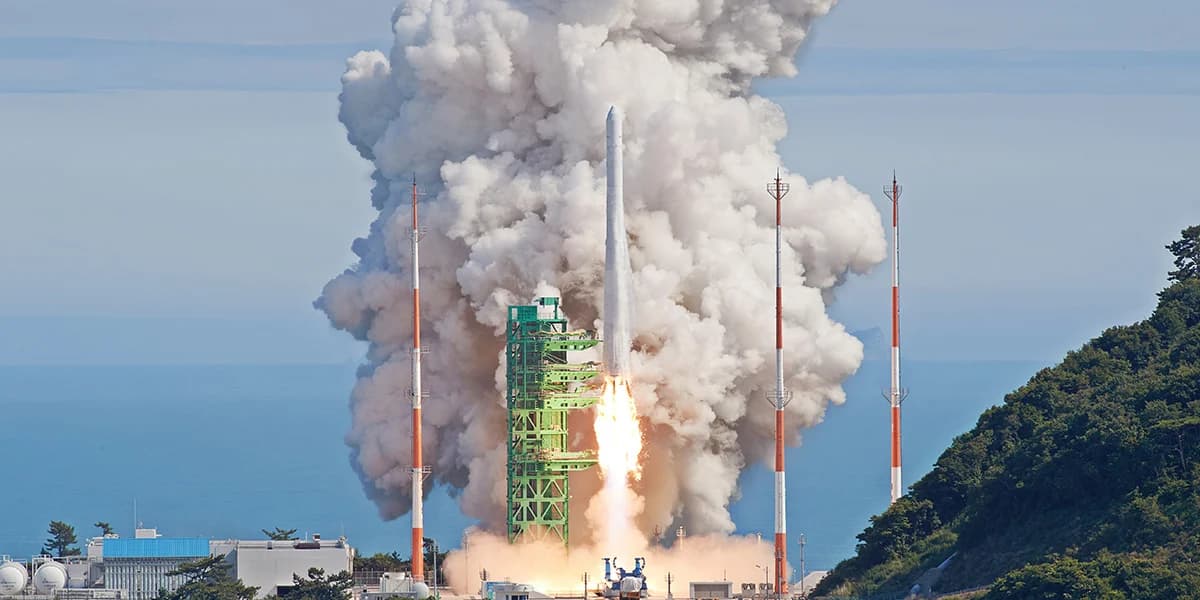
South Korea's Launch Startups: Hanwha Gets the Manifest
Hanwha has the institutional advantage, Innospace the clearest export path. A mission-by-mission review and operating model show what Korean launch startups still need.
2 Apr 2025 · 9 min read
China's Commercial Launch Sector in 2025: Capacity Is No Longer the Constraint
China's launch market enters 2025 with more rockets, more capital, and harder questions about cadence, reliability, and commercial demand.
15 Apr 2026 · 30 min read
China's Space Industry Ecosystem in 2026: From CASC and CASIC to Commercial Launch, Satellite Internet, and Critical Components
A map of China's state and commercial space ecosystem, from launch and satellite manufacturing to critical components, capital, regulation, and overseas expansion.