
India's Launch Privatization, Audited: Two Flights, Then More Than Six
Vikram-1 proved India's private launch engineering; Parliament's own two-then-six planning figure shows that the missing manifest remains the business test.
Method & disclosure
Confidence: High for official flight, Parliament, facility and policy records; medium for company schedules, investment exposure and modeled demand explicitly labelled in the text.
Review mode: Human + AI cross-check
Writing support: AI assisted
Singapore Space Agency
On this page · 13
- 011. The 90-Second Summary
- 022. The Six-Week Ledger, Dated
- 033. Vikram-1 Succeeded. The Thesis Didn't Move.
- 044. Supply Reform Is Not Demand
- 055. Parliament Said Two, Then Six
- 066. ISRO Is Handing Off Production, Not Creating Capacity
- 077. A Private Spaceport Without an Anchor Customer
- 088. ISRO’s Handover Has a Talent Bill
- 099. Consolidation Timing: More Pressure, Not Yet a New Date
- 1010. EVEREST Has Hardware. It Still Owes Fire.
- 1111. Singapore Already Has Skin in the Game
- 1212. The Facts That Would Prove Us Wrong
- 1313. What to Watch
Key findings
The argument in brief
- Vikram-1 proved private Indian launch engineering; it did not create the repeat customer manifest on which the business depends.
- Parliament's own planning figure—two proposed launches, then more than six expected—is supply intention, not signed demand, and it remains thin.
- Moving SSLV, PSLV and LVM3 production to industry changes the producer; absent disclosed cadence or capacity gains, it does not prove supply growth.
- GIC and Temasek are already repeat investors in Skyroot, while India's FDI thresholds show Singapore's most open industrial path sits above the launch layer.
Six weeks after we called India's launch-startup tier a demand famine dressed as an engineering story, Vikram-1 reached orbit, ISRO signalled an exit from routine rocket and satellite manufacturing, and IN-SPACe offered a second spaceport to private bidders. Celebratory coverage bundled the three into one verdict: the private sector has arrived. It has not. Vikram-1 settled the engineering question; Parliament then exposed the business problem. Private companies propose two commercial launches in FY2026-27 and expect more than six in FY2027-28, with the later figure still awaiting IN-SPACe approval. That is the first official planning number since our July teardown, and it is thin. At the same time, ISRO is preparing to shed routine production while restricting scientists from leaving Gaganyaan. The clean handover story is already colliding with its talent bill. Our consolidation date stays at roughly 2030, Kulasekarapattinam earns credit as capacity rather than demand, and Singapore's exposure is no longer incidental: GIC and Temasek are both repeat investors in the sector's flagship company.
This is the direct sequel to India's Launch-Startup Tier: Real Rockets, a Missing Manifest, and a $1.1 Billion Bet That Demand Shows Up, published July 12, 2026, before Vikram-1 flew; read it first for the company-by-company teardown and famine-ratio model updated here. It also extends the India paragraph (§5.1) of The Third Pole in Orbit: OneWeb's Soul, DayOne's Method, adapting its non-controlling sovereign-capital pattern from an orbital-compute constellation to national launch-industry investment.
Disclaimer: This is independent analysis built from public sources — company announcements, IN-SPACe/PIB/Parliament records, funding disclosures, and trade reporting from India, Singapore, and international outlets. It endorses no company, fund, or government body and is not investment advice. Singapore Space Agency is a private research platform and does not represent any government.
Methodology: The July grades remain: Skyroot A−, Agnikul B+, Astrobase C+, EtherealX C. We update the same famine-ratio model with the new government figures, preserving the distinction between company plans and customer demand. Evidence is current through August 23, 2026.
1. The 90-Second Summary
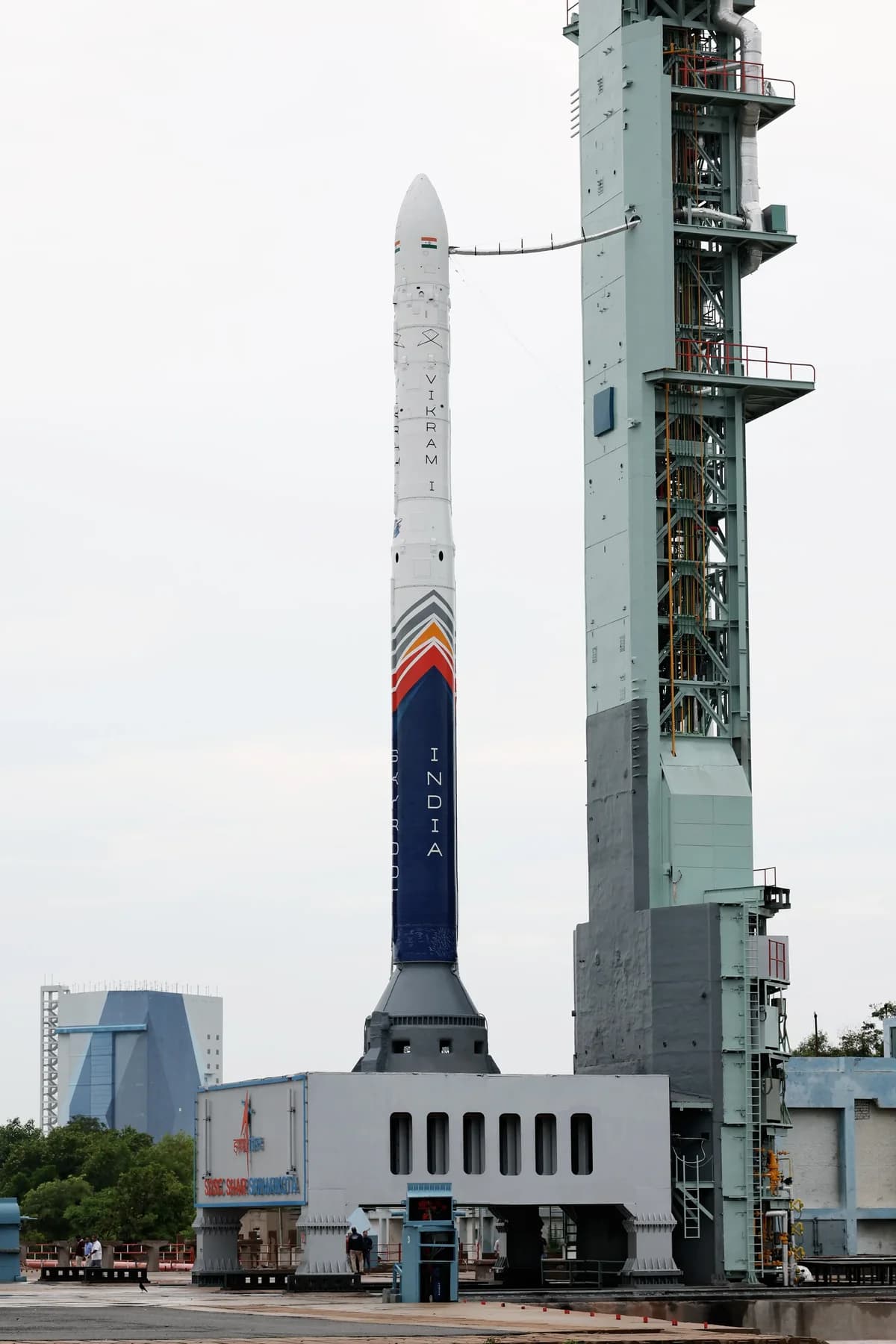
Six weeks in one frame. Vikram-1 flew on July 18, 2026, reaching a 450 km, 60° orbit about fifteen minutes after a 35-minute delay and carrying four technology demonstrators, including Skyroot's SCOPE satellite.^[3]^[4]^[5] Coverage calls India the third country after the US and China to orbit a privately built rocket;^[3]^[26] the label depends on whether Rocket Lab belongs to its New Zealand birthplace or its current US headquarters, and nothing here depends on the ranking. The larger shift came around the flight. On August 21, Goenka said ISRO intends to move PSLV and LVM3 production to private industry after SSLV, concentrating the agency on R&D and advanced missions; this is policy direction in motion, not a completed exit.^[8]^[9]^[10]^[11]^[12] IN-SPACe opened the ₹986-crore Kulasekarapattinam complex to Indian private operators while the Department of Space retains ownership.^[13]^[14]^[15] Parliament then supplied the number that matters: two commercial launches proposed for FY2026-27 and more than six expected in FY2027-28, with the later manifest still unapproved.^[17]^[18]^[19]^[20] Astrobase unveiled its 800 kN EVEREST FFSC engine;^[30]^[31]^[32] post-launch cap-table coverage surfaced Temasek's separate $27.5M Skyroot round;^[27]^[28]^[29] and Modi met twenty space-startup founders, promising continued support.^[24]^[25]
The popular headline gets the causality wrong. "ISRO steps back, private India steps up" compresses engineering, industrial policy, capital and demand into one story. Vikram-1 proves private industry can build an orbital rocket. The manufacturing transfer and spaceport tender show the state ceding production and operations. Higher investment shows capital availability. None creates payloads, still the binding constraint. Parliament's planning figure is the first official number on that missing variable. It sits near the low end of our July famine model, although proposed is not approved and the fiscal-year treatment of Vikram-1 remains unclear.
The July thesis survives Vikram-1 because the flight validates engineering, not manifests.^[1] Moving PSLV and LVM3 to HAL/L&T is producer substitution until India publishes higher capacity, faster cadence or lower cost. Kulasekarapattinam is a ₹986-crore capacity asset, not a demand engine. The July 14 memo restricting departures from Gaganyaan, amid reports of 120-plus resignations, puts a visible crack in the frictionless-exit narrative.^[33]^[34]^[35]^[36] For Singapore, the under-read fact is repeated GIC and Temasek exposure to Skyroot, while India's FDI thresholds — 100% for components, 74% for satellite manufacturing and 49% for launch vehicles and spaceports under the automatic route — show exactly where foreign participation becomes politically sensitive.
2. The Six-Week Ledger, Dated
The press narrative treats five unrelated events as one story. The dated sequence separates them:
Read across the row dates and the pattern is not "privatization arrives." It is: a cluster of high-visibility announcements (Goenka's summit remarks, Modi's founder meeting, the investment figure release) compressed into ten days, immediately following a lower-visibility Parliament disclosure that sits uneasily next to the same cluster's framing. The Parliament reply is dated August 13; the summit remarks and the Modi meeting are dated August 21. The contrast is a straightforward attention asymmetry — the August 21 announcements received far more coverage than the August 13 planning figure, and Section 5 exists to correct it, not to make a claim about anyone's intent in sequencing the announcements.
3. Vikram-1 Succeeded. The Thesis Didn't Move.
Our July report pre-registered exactly this outcome as one of two counterfactuals, specifically so it could not be accused of hindsight after the fact: "if it succeeds, none of the demand arithmetic in Section 8 moves — success validates engineering, not manifests, and the famine ratio is unchanged the morning after."^[1] It is worth restating why that holds, because the instinct — reasonably — is to treat a maiden orbital success as the biggest news in the sector and update everything around it.
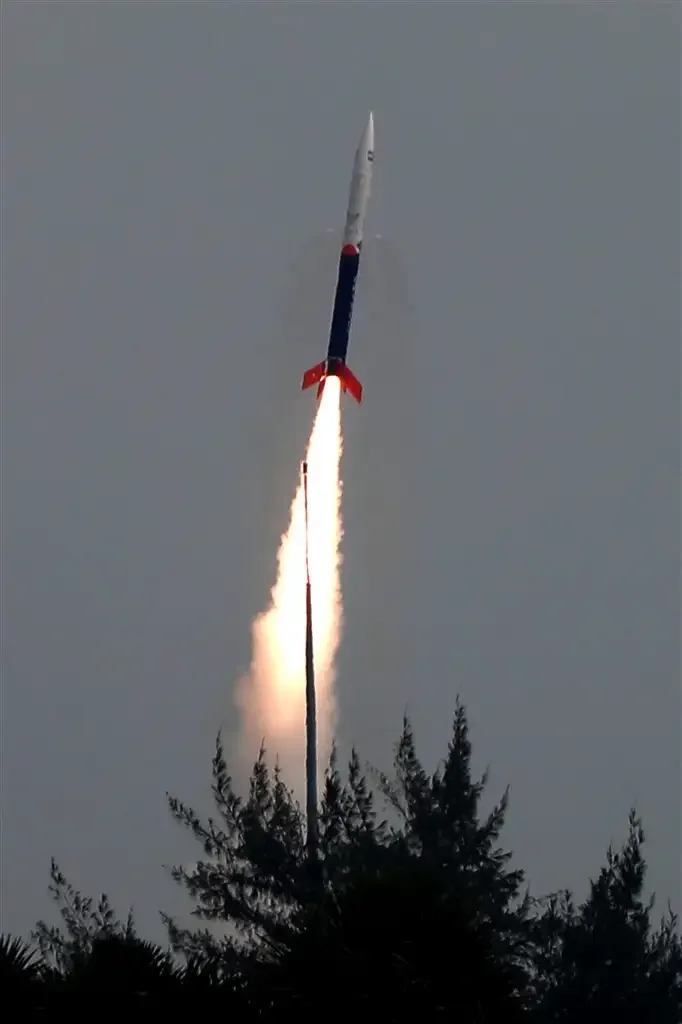
Orbit settles one question. Vikram-1 is an all-carbon-composite four-stage vehicle: three solid stages, then a liquid orbital-adjustment module. It reached a 450 km circular orbit at 60° and deployed four verified payloads — Skyroot's SCOPE demonstrator plus customer hardware from Grahaa Space, Cosmoserve and DCubed.^[3]^[4] The smallest risk in Skyroot's A− score is now retired. Architecture, team and campaign discipline have been proved in the only currency that counts: payloads in the intended orbit.
Flights two through ten remain blank. The July report found a maiden manifest dominated by technology demonstrators, including an early report of a gold-and-diamond art payload that did not appear on the confirmed final list.^[1] The flown manifest is stronger than that early picture: three of four slots came from external technology-demonstration customers. Yet a demonstrator is not recurring revenue, and no customer has publicly booked a second Vikram mission. One buyer signing two flights would be the most information-dense commercial event this tier could produce. It still has not happened.^[1]
Success still matters. Flight heritage compounds: Rocket Lab moved from Electron's difficult 2017-18 debut to 21 launches in 2025.^[37] A proven vehicle opens insurance, defence and foreign-manifest conversations that a pre-flight company cannot credibly hold. But conversations are pipeline, not backlog. Skyroot's CEO already put commercial cadence in 2027;^[1] the July 18 success did not bring that date forward because cadence is now a manufacturing-and-demand problem.
Circle the second flight, not the first. Our July threshold was two to three quarters between vehicles, putting Vikram-2 around Q1-Q2 2027. A silent 2027 — one flight, then nothing — is the failure mode.^[1] An eighteen-month gap after success damages the business thesis as much as the same gap after a failed debut. July 18, 2026 is history. The date that matters is Vikram's next launch.
4. Supply Reform Is Not Demand
The dominant reading of the past six weeks fails on one variable: payloads.
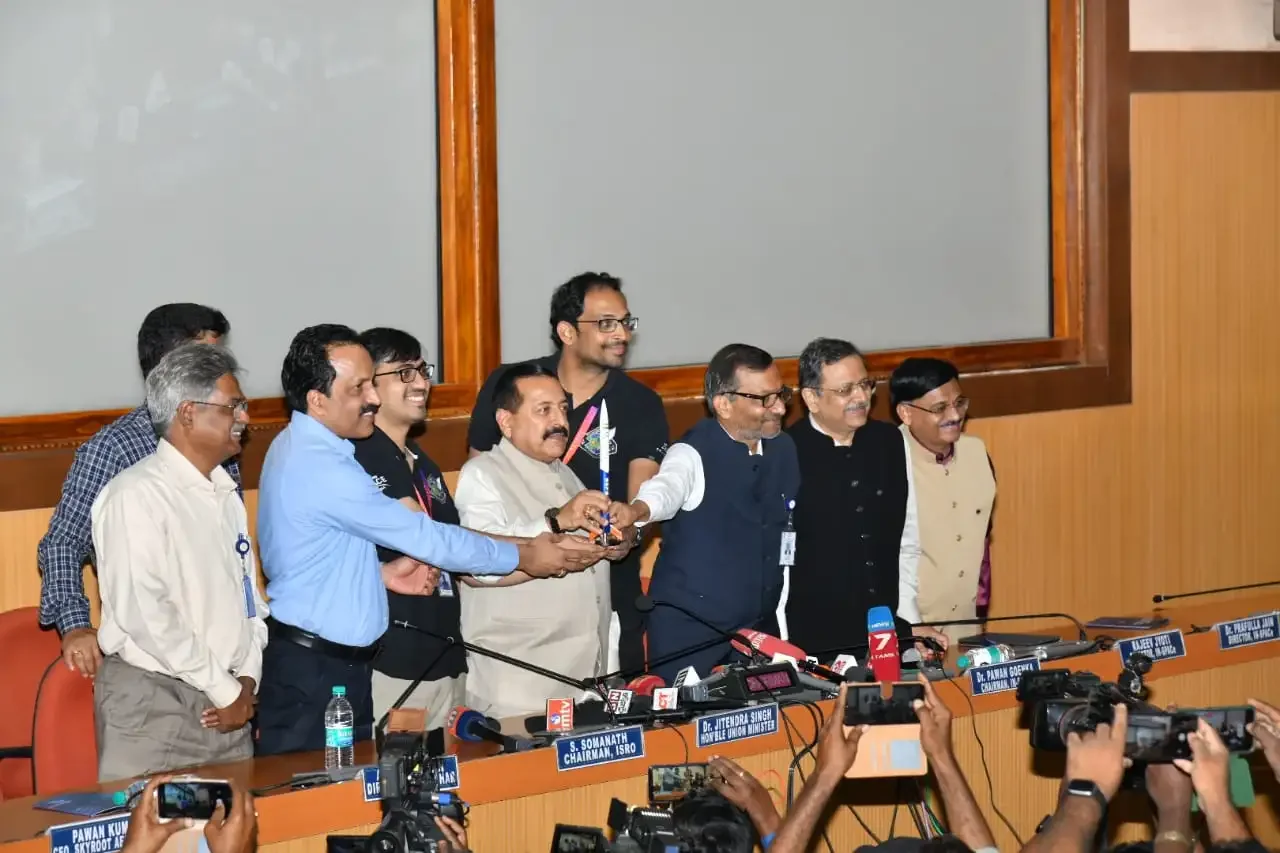
The seductive reading. ISRO is exiting manufacturing, transferring PSLV and LVM3 after SSLV, opening a second spaceport and giving startup founders the Prime Minister's attention. Therefore the private launch sector has arrived and the demand critique is stale. Every premise is true. The conclusion is not.
Supply is not demand. With one exception — Parliament's planning figure — every event in Section 2 changes who may build rockets, operate facilities or finance capacity. None changes how many Indian commercial spacecraft need a ride. Outside government and defence, verified domestic demand still equals roughly one Vikram-1 flight a year.^[1] An ISRO factory exit creates no satellite operator. A private Kulasekarapattinam may cut launch cost or delay, but it creates no satellite operator either. Modi's founder meeting helps morale and investor optics. It manufactures zero kilograms of payload.
The exception is state manufacturing demand. Moving PSLV and LVM3 to industry, after SSLV went to HAL, turns the state's institutional launch programme into an order book for HAL and HAL-L&T. That is demand for vehicle manufacturing capacity, awarded to established aerospace primes. It is not demand for the dedicated small-lift launch services sold by Skyroot, Agnikul, Astrobase and EtherealX. Our July report drew the line: "This is privatisation of production, not of design... an HAL SSLV at NSIL-subsidised pricing is Vikram-1's most dangerous domestic rival."^[1] SSLV overlaps directly with Vikram-1 and Agnibaan. The heavier PSLV and LVM3 serve rideshare and institutional missions outside the startups' core product.
The strongest bull case is political, not commercial. A credible state exit signals long-run commitment to private industry and lowers the risk that IN-SPACe's reforms are quietly reversed. That can support valuations and compress political-risk premia. It cannot fill a manifest. Any valuation treating policy durability as booked launches is pricing the wrong variable — the same error behind Skyroot's $1.1B round, which priced flawless execution and a manifest that did not yet exist.^[1]
Three events would overturn this. The frame breaks if ISRO pairs its exit with more state payloads routed to the four startups; if Kulasekarapattinam comes with an anchor-tenant contract; or if the next Parliament figure rises enough to change the famine math rather than the optics. None has happened. Section 13 keeps the dates.
5. Parliament Said Two, Then Six
The least celebrated announcement is the most useful one. It also needs the most careful reading.
Read the verbs once. On August 13, 2026, Jitendra Singh told the Rajya Sabha that private space companies propose to undertake two commercial launches in FY2026-27 and expect more than six in FY2027-28; IN-SPACe has not approved the later manifest.^[17]^[18] This is an accountable government tally of company plans — stronger than a conference slide, weaker than a signed backlog. That distinction matters here. It need not be restated every time the number appears.
Put it beside the July model. That model built three separate numbers from public transactions: domestic commercial demand of roughly one Vikram-1-equivalent flight a year, based on Tata's TSAT-1A, both Pixxel Fireflies batches and Digantara's SCOT — all launched by SpaceX;^[1] a cash-neutral floor of about six flights a year for one company, with 8-12 paid flights as the credible survival band;^[1] and a tier-wide 8-15 paid flights a year by 2028-30, combining government, export and aggregation candidates at modeled midpoints.^[1] Parliament describes an earlier transition year. It is a trajectory check, not a like-for-like steady-state comparison.
Two is thin, however it is divided. Parliament gave no company split. It does not need one to reveal the problem: an entire country's private commercial-launch plan totals two missions for the year. HAL's SSLV production starts in August 2027, outside that window. The "more than six" figure for FY2027-28 then lands near the bottom of the trajectory our model considered adequate for the tier. It does not lock 2028-30 to the low end. It tells us where the industry is starting.
Skyroot's counterclaim is near-monthly cadence. Its leadership says that becomes possible once reliability is established, with commercial rhythm beginning in 2027.^[40] Either Parliament's tally is conservative or Skyroot's cadence is aspirational, as early launch-company cadence usually is. Public data cannot yet choose between them. But the gap is stark: company interviews point toward monthly flight; the industry's own aggregate plan says two, then more than six.
This matters more than the summit quotes. A ministerial answer in Parliament outranks a roadmap slide as evidence of industry planning. Eight days later, Goenka's summit remarks and Modi's founder meeting overwhelmed it. The neglected number remains the sharper signal: the first official plan is low.
The range can still break upward. "More than six" could mean seven or twenty; fifteen would materially weaken the low-trajectory reading. The disclosure also leaves Vikram-1's fiscal-year treatment unclear. Both ambiguities are real. Neither makes two look like abundance.
6. ISRO Is Handing Off Production, Not Creating Capacity
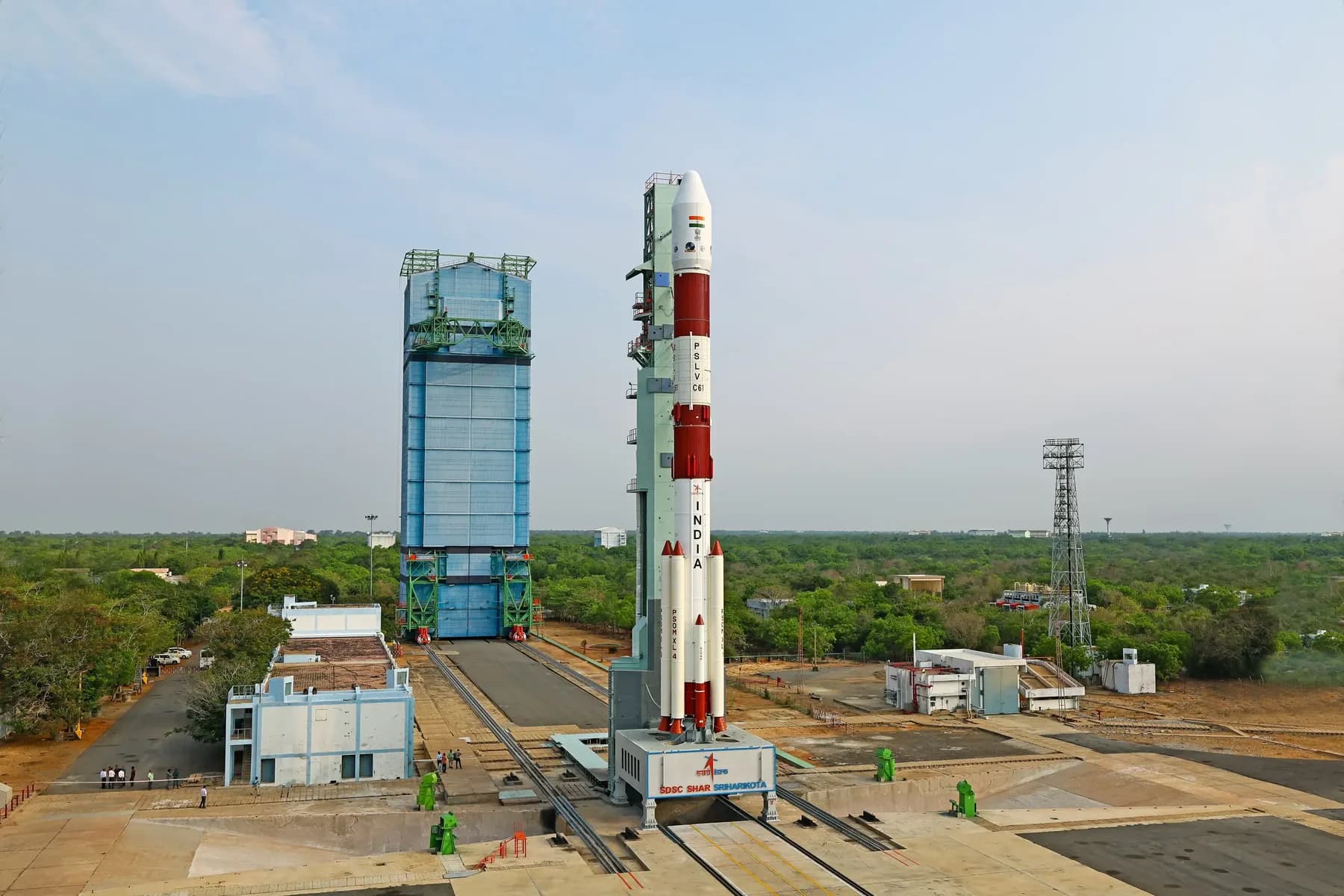
The Goenka announcement deserves a harder look than "ISRO is stepping back." Transferring whole-vehicle production for PSLV and LVM3 — India's two most-flown, most complex launch vehicles — to private industry is a materially larger undertaking than the SSLV transfer our July report already priced.
Start with SSLV. HAL won ISRO's roughly 500 kg small-lifter for ₹511 crore (~$61M), beating an Adani-backed consortium. Technology transfer runs through 2027; independent production targets August 2027 and 6-10 vehicles a year.^[1] One relatively simple launcher, three years, less than $100M.
PSLV and LVM3 are another order of difficulty. PSLV mixes solid, liquid, solid and liquid stages across three decades of production; LVM3 is India's heaviest operational vehicle, with a cryogenic upper stage and both dedicated OneWeb missions behind it.^[1] HAL-L&T already holds an ₹860 crore (~$103M) contract for five PSLVs. The first industry-built unit, assigned EOS-10, has slipped again and is now expected around March 2027.^[42] That is a production price, not a technology-transfer valuation. Tooling, supplier qualification, training and first-article inefficiency sit outside it. No public number covers those costs, so the total transfer bill is unknown.
The buyers and builders are the old industrial base. HAL and HAL-L&T have the balance sheets, government relationships and cost-plus experience for slow state procurement. Skyroot, Agnikul, Astrobase and EtherealX lack the headcount and manufacturing footprint to compete for PSLV or LVM3 production. This is a transfer from the state to its defence primes, running parallel to the startup tier.
A new producer is not yet more supply. India has published no new build rate, cost or cadence for either vehicle. The base case is therefore replication of ISRO's current output, followed — perhaps — by higher rates once private incentives bite. Until HAL/L&T publishes that increase, the transfer is institutional change, not demonstrated capacity growth.
Only SSLV attacks the startups head-on. Its 300-500 kg class overlaps Vikram-1 and Agnibaan, so a 6-10-flight HAL line at NSIL-backed pricing directly contests their missions.^[1] PSLV (~1,750 kg to SSO) and LVM3 (~8,000 kg to LEO) serve heavier rideshare, institutional and constellation work. They compete with the startups for propulsion, avionics and systems talent, and for investor attention, but mostly not for customers. Payload-class segmentation is the difference between a real competitive map and a slogan.
7. A Private Spaceport Without an Anchor Customer
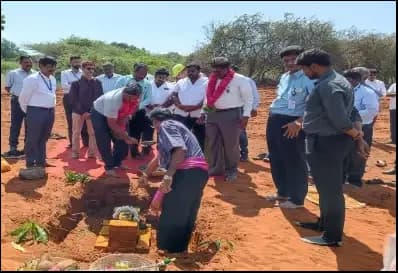
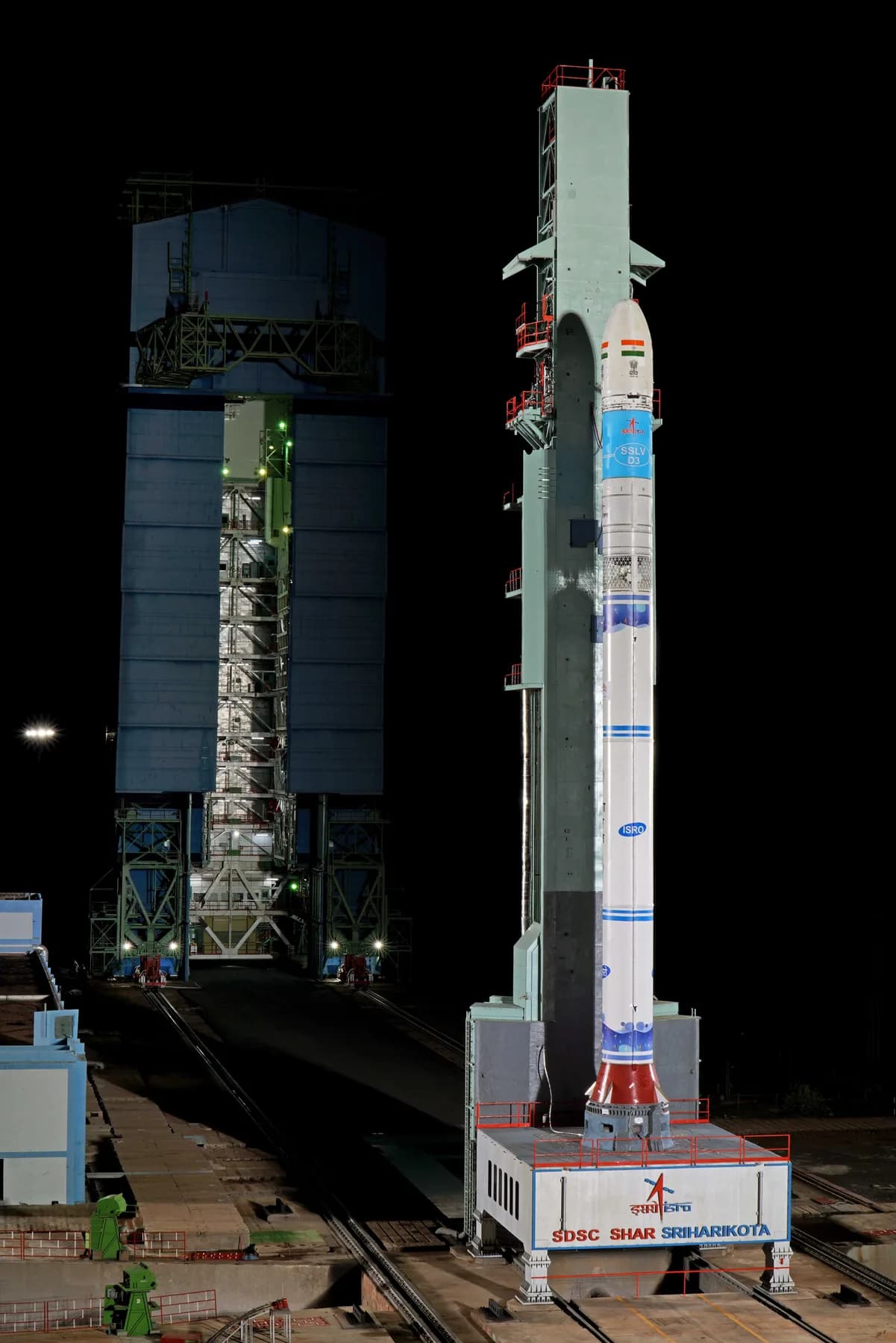
The concrete asset. Kulasekarapattinam covers more than 2,200 coastal acres in Tamil Nadu's Thoothukudi district, costs roughly ₹986 crore (~$118M), and targets SSLV-class vehicles up to about 500 kg from December 2026.^[13]^[14]^[15]^[16] IN-SPACe's operator process charges a non-refundable ₹50,000 registration fee, closed registration on August 24, and scheduled a September 10 site visit followed by a September 15 conference.^[13]^[15]^[16] Bypassing NSIL's traditional launch-infrastructure mandate is an institutional first.^[14]
India is privatising a range. Sriharikota remains state-operated and serves both ISRO missions and Vikram-1. Kulasekarapattinam is the second site, built specifically for the small-launch class. Giving a private entity daily operations, scheduling and range-safety duties is a genuine retreat of the state. Private rockets already existed. A privately operated range did not.
A private range still needs customers. Lower fees and smoother scheduling help whichever vehicle uses the site. They add no payloads. The EOI carries no disclosed anchor-tenant contract or guaranteed volume from NSIL, ISRO or the Ministry of Defence. Without one, Kulasekarapattinam is useful supply-side capacity being sold in the press as demand.
Our grade: B+ for infrastructure and institutional novelty; C for demand. The facility and the operating shift matter. The payload base does not yet justify the capacity at scale. An anchor procurement commitment would change the grade immediately; another operator announcement would not.
Foreign capital cannot lead the bid. The operator must be an Indian entity and the Department of Space retains ownership. Section 11.2 turns that rule toward Singapore.
8. ISRO’s Handover Has a Talent Bill
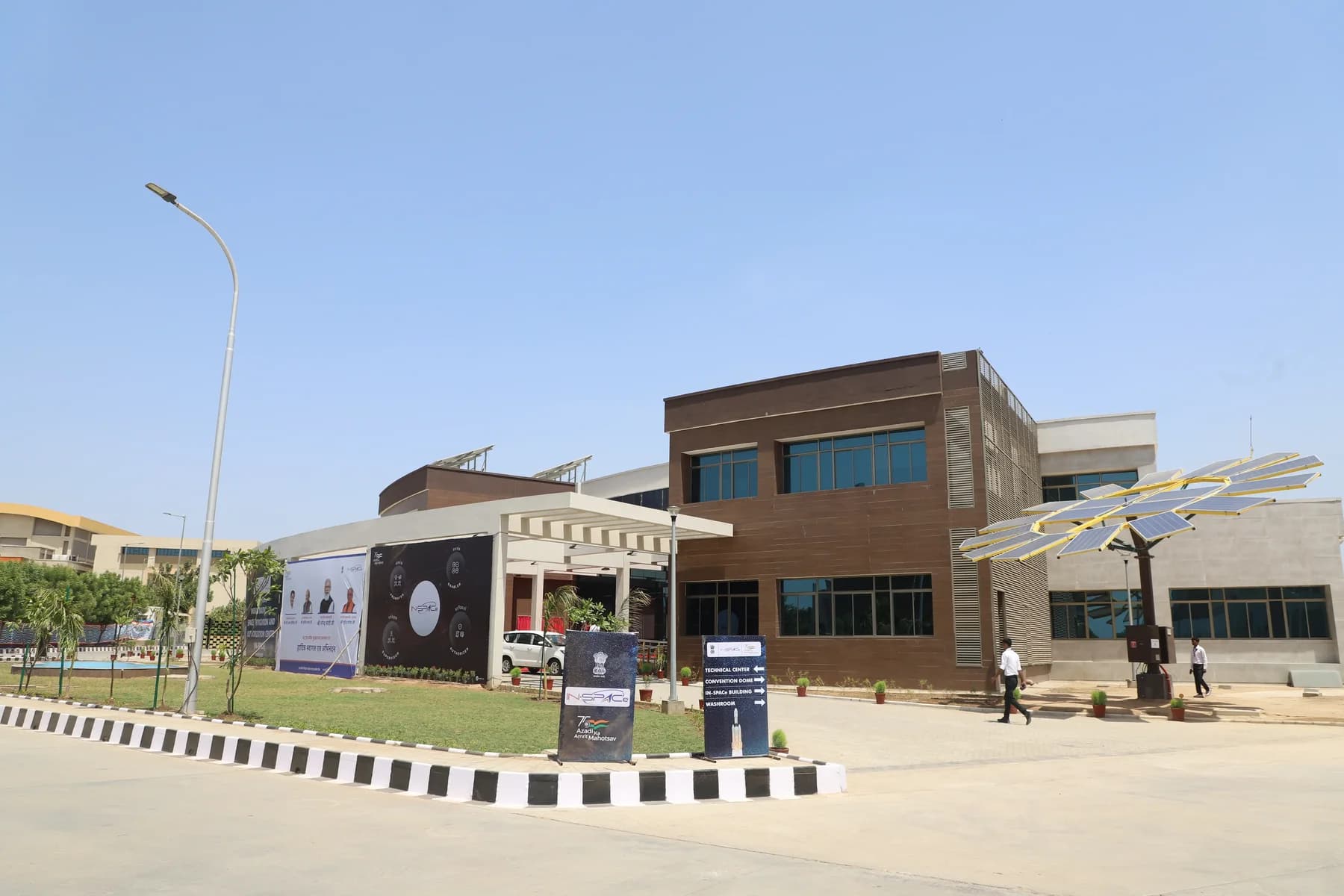
The manufacturing-exit story and the resignation memo belong in the same frame. Most coverage kept them apart.
The denominator is missing; the memo is not. Reports converge on more than 120 recent resignations or voluntary-retirement requests, including Chandrayaan-3 and SpaDeX personnel: roughly 80 departures from U R Rao Satellite Centre and about 20 key engineers from Vikram Sarabhai Space Centre.^[33]^[34]^[35]^[36] ISRO has published neither total technical headcount nor normal attrition, so the raw number cannot establish an abnormal spike. The July 14 memo can: the Department of Space told centres not to accept departures from Gaganyaan and other "important missions" without departmental approval.^[33]^[36] Management does not issue that order when retention is immaterial.
The memo punctures the clean-exit story. ISRO says it is leaving manufacturing to focus on R&D and advanced missions. In the same month, it restricted scientists from leaving those missions. Whatever the historical attrition rate, talent retention has become an active constraint.
The destination remains unknown. Reporting points to higher private pay, equity and faster project leadership,^[35]^[36] but gives no split among startups, HAL, retirement or other industries. Claims of a direct ISRO-to-startup transfer therefore outrun the evidence.
For startups, the direction cuts both ways. Talent leaving a state monopoly can strengthen the private ecosystem and support India's labour-cost advantage.^[1] But an exit restriction says the transition is straining flagship missions. That raises execution risk around the LVM3/PSLV handover more than it inspires confidence.
9. Consolidation Timing: More Pressure, Not Yet a New Date
Our July call remains a state-brokered oligopoly by roughly 2030: Skyroot, HAL/NSIL and at most one of {Agnikul, Astrobase, EtherealX}, with the rest absorbed as propulsion teams and test infrastructure.^[1] Six weeks of news increased the pressure. It did not supply the arithmetic for an earlier date.
The ratio has not moved enough. Consolidation follows supply growth divided by demand growth. PSLV/LVM3 currently add a new producer, not a proven increase in output. SSLV is the only transferred vehicle that directly overlaps Vikram-1 and Agnibaan, and it was already in the July model. Parliament's two-then-six-plus plan sits near the low end of a later-year demand band. Nothing in the new evidence helps the startups; nothing yet forces a new date.
Three conditions pull 2030 forward to 2028-29. HAL/L&T must disclose materially higher production or lower cost than ISRO; the approved FY2027-28 manifest must stay near six rather than break upward; and at least two startups must hit a financing wall without a repeat customer. As of August 23, no condition has been met.
Talent tightens the vise. Astrobase, funded by a $10M seed, and EtherealX, valued at $80.5M after raising $25.5M, compete for senior propulsion and systems engineers against HAL, L&T and ISRO's retention effort. That slows execution. It does not date the consolidation.
Capability progress selects survivors; it does not enlarge the market. Vikram-1 and EVEREST strengthen two likely survivors without changing the oligopoly logic or its date.
The overturn threshold stays hard. A defence responsive-launch programme must contract at least six flights a year, or a domestic constellation must procure more than 100 satellites.^[1] Parliament described commercial launches, and no Indian megaconstellation has appeared. The call remains roughly 2030.
10. EVEREST Has Hardware. It Still Owes Fire.
The July milestone board was designed to beat narrative momentum with dated tests.^[1] Two entries have moved.
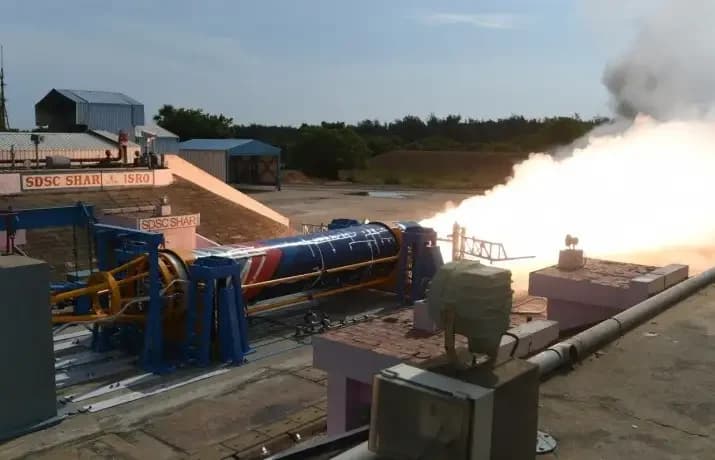
Astrobase has hardware; it still owes fire. In July, its 800 kN FFSC engine was photographed but unverified, with a full-scale hot fire set as the 2026 pass/fail event.^[1] On August 8, Astrobase unveiled EVEREST: an integrated 800 kN, 80-tonne-class LOX-methane engine following a September 2025 subscale hot fire and January 2026 turbopump trials.^[30]^[31]^[32] Claims that this makes India the fourth FFSC nation rest on elastic definitions of "developed." The cleaner benchmark is flight: only Raptor has flown, while China's Lanyan and America's Stoke Zenith remain in ground test.^[1] EVEREST is enough to move Astrobase provisionally from C+ toward B−. The full-scale hot fire and stage static fire still decide the grade.^[1]
Agnikul raised its own bar. The July milestone was a late-2026/2027 orbital attempt.^[1] Mission-02 now pairs that attempt with India's first sea recovery of a private orbital-class booster.^[38] Orbital insertion with a failed recovery would still pass the original flight criterion; recovery would be the bonus. That rule is set now, before the result.
EtherealX missed its own date. Hot-fire testing at the Tamil Nadu facility was targeted for mid-2026.^[39] By August 23, Pegasus (323s vacuum Isp) and Stallion (306s sea-level Isp) remained pre-fire in public reporting. That is schedule slip, not an absence of news. The C grade stands, now with less shelf life: a clean hot fire can still move it, but the missed date stays on the record.
Skyroot's structural update is Singaporean. Post-launch reporting surfaced Temasek's October 2023 $27.5M (₹225 crore) round, distinct from GIC's 2022 Series B and 2026 unicorn round.^[27]^[28]^[29] Two Singapore sovereign vehicles, not one, are disclosed investors. Without a full cap table, that proves repeated exposure, not its exact size.
11. Singapore Already Has Skin in the Game
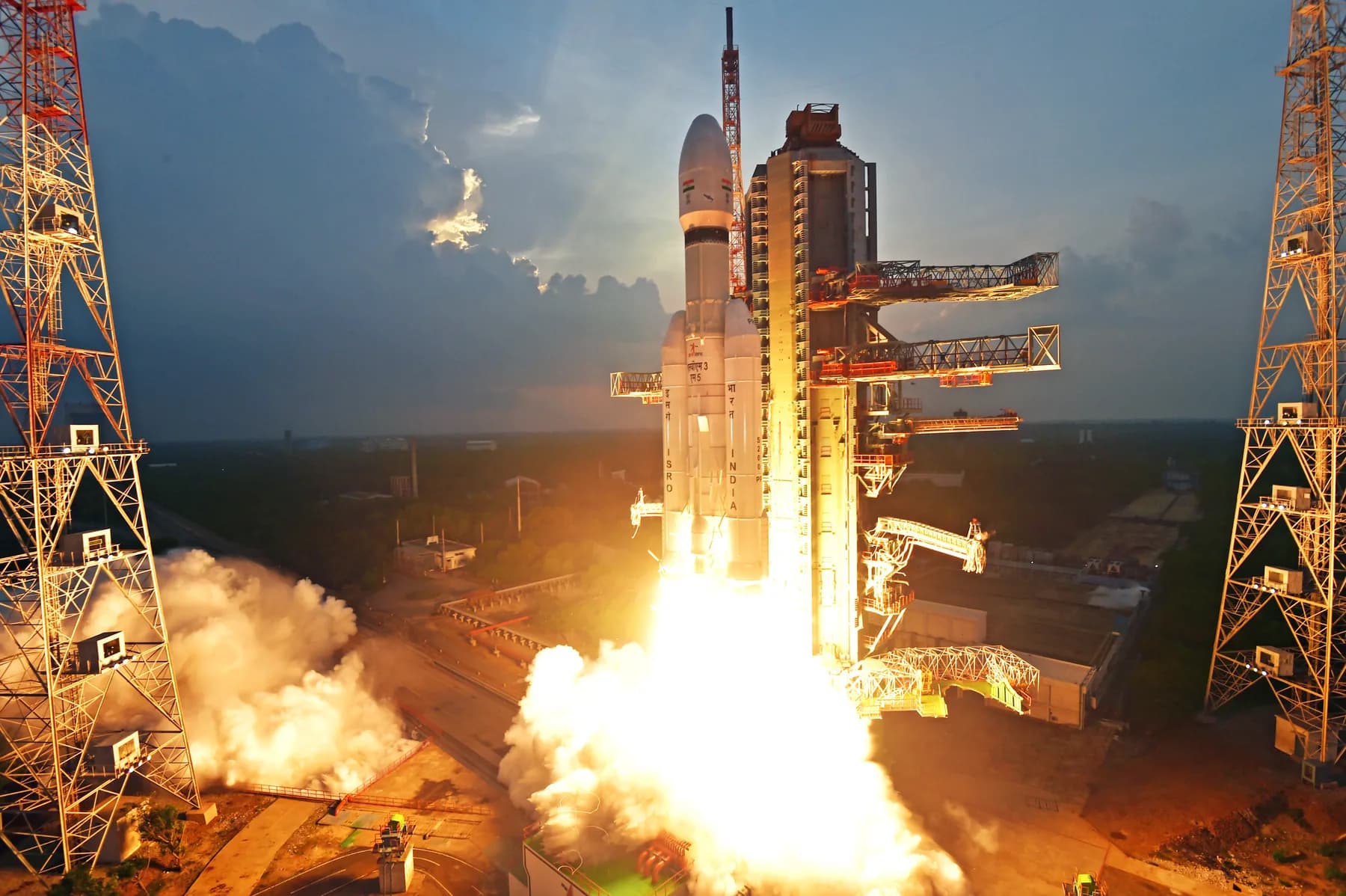
Two facts matter for Singapore: its capital is already exposed, and India's FDI regime becomes tighter precisely as activity approaches launch. Our companion venture blueprint identified work packages and offtake, not equity control, as the credible route to deeper engagement.^[2] The objective is closer collaboration because Indian companies choose Singapore, not a Singapore strategy for extracting value from India.
11.1 What Singapore's Capital Exposure to Skyroot Actually Is
Three rounds, two institutions. GIC led Skyroot's $51M Series B in 2022;^[1] Temasek led a separate $27.5M round in October 2023;^[27]^[28]^[29] and GIC co-led the May 2026 ~$60M unicorn round with Sherpalo Ventures, alongside BlackRock-managed funds.^[1] Public disclosure gives round sizes, not each fund's cheque or current ownership. It supports no claim that Singapore is the largest shareholder. It does show unusually deep, repeated sovereign-fund exposure from one country to one launch company. GIC and Temasek are independently mandated; the absence of a shared "house view" may be the governance design working as intended.
11.2 The FDI Structure, Corrected
India's February 2024 reform did not set the hard FDI "ceilings" described in much coverage, including our July report. 100%, 74% and 49% are automatic-route thresholds. Above them, investment needs government approval; it is not barred. Launch-vehicle ownership above 49% is therefore harder, not illegal.
The regulatory gradient is clear. India tightens access as activity approaches launch vehicles and spaceports, citing dual-use sensitivity, while remaining most open in satellite components and manufacturing — the layers Singapore is best equipped to supply. The rule identifies an opening; it does not make every investment wise.
Kulasekarapattinam closes one door and leaves another ajar. The operator must be Indian-incorporated and the Department of Space keeps ownership.^[13]^[15] A foreign-led bid is out. The EOI does not state a minimum Indian shareholding, so foreign participation above the 49% automatic threshold remains an approval question rather than a disclosed prohibition.
11.3 When This Channel Becomes a Strategy
Singapore's plausible role is a trust layer and capital hub that regional industries choose to use, not an owner of its neighbours' talent or infrastructure.^[2] The channel already exists: two sovereign funds back Skyroot, FDI is most open where Singapore's industrial base is strongest, and Kulasekarapattinam requires Indian leadership while leaving room for approved foreign participation. Over the next 12-18 months, one of three events would prove the channel is deepening: a Singapore operator signs an Indian launch partnership or offtake; a Singapore-linked Indian satellite-manufacturing joint venture appears; or an Indian Kulasekarapattinam consortium names foreign technical or financial partners. Without one, the relationship remains capital exposure rather than coordinated industrial strategy.
12. The Facts That Would Prove Us Wrong
Restating and extending our July report's thresholds, updated for what has and has not happened:
On the famine thesis generally: fifteen or more approved FY2027-28 commercial launches would materially weaken Section 5's low-trajectory reading. This is the single most important near-term number.
On consolidation timing (Section 9): an Indian defence responsive-launch program of record contracting ≥6 flights/year, or a domestic constellation procurement above 100 satellites, remains the threshold that would overturn the oligopoly call in the startups' favor — unchanged from our July report, and still not met.
On Kulasekarapattinam (Section 7): if the eventual operator selection is bundled with a disclosed anchor-tenant procurement commitment — guaranteed flight volume, not just facility access — the "infrastructure not demand" grade in Section 7 should be revised upward toward a genuine demand-side event.
On the talent-retention constraint (Section 8): materially slower resignations or a structured ISRO retention plan would soften the "active management strain" reading. Total technical headcount and normal attrition would settle the question.
On Singapore's own posture (Section 11): without an operator partnership, manufacturing joint venture or foreign participation in an Indian-led Kulasekarapattinam bid within 12-18 months, Singapore's role remains capital exposure rather than coordinated industrial strategy.
13. What to Watch
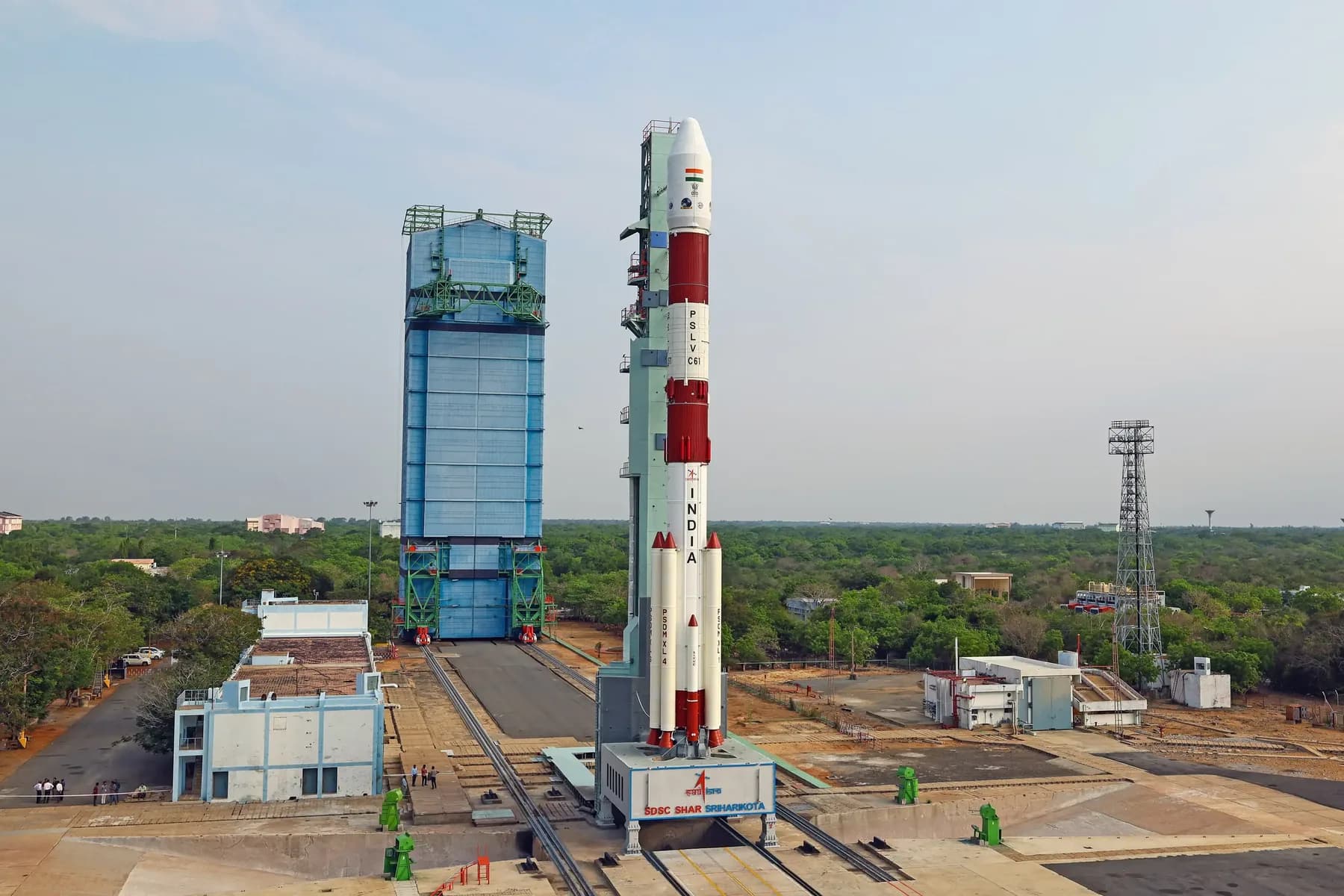
- The approved FY2027-28 manifest, which will supersede Parliament's provisional "more than six."^[17]^[18]
- Vikram's second flight date. Our July report's kill signal — a silent 2027 — is now the live test; Vikram-1 succeeding makes the second-flight timing, not the first-flight outcome, the load-bearing signal (Section 3).
- The EVEREST full-scale hot fire and stage static fire — the test that matters after the August 8 unveiling.^[30]^[31]^[32]
- Whether the Kulasekarapattinam operator selection (expected after the September 10 site visit and September 15 pre-EOI conference) comes bundled with an anchor-tenant procurement commitment — the fact that would move Section 7's grade from infrastructure to genuine demand signal.^[13]^[15]
- ISRO's resignation rate, headcount baseline and any structured retention plan after the July 14 memo.^[33]^[36]
- Whether Singapore's exposure to Indian launch (Section 11) shows any sign of deliberate coordination — a disclosed operator-to-operator partnership or offtake agreement, a manufacturing joint venture, or a named non-Indian participant in an Indian-led Kulasekarapattinam bid, any of which this platform will treat as a genuine development rather than assume in advance.
All data from public sources, including India's Parliament and PIB/IN-SPACe disclosures, company announcements (Skyroot, Agnikul, Astrobase, EtherealX), and independent trade reporting (SpaceNews, Via Satellite, Space.com, Al Jazeera, Business Standard, Business Today, Inc42, Deccan Herald, The Wire, ThePrint, and others), each graded in the references below. Company and government statements are reported as claims or disclosures, not independently re-verified facts, except where multiply corroborated; figures Parliament itself describes as "proposed" or "expected" are reported as such throughout, not upgraded to settled demand. Analysis represents the author's independent views and is not investment advice; nothing in Section 11 is a recommendation to any specific fund, company, or government body, and endorses none.
Sources42 entries with source notes and links
The direct predecessor this report updates: company teardowns, famine-ratio model, FDI automatic-route thresholds, Skyroot valuation audit, China-comparison and oligopoly-consolidation call. Prior SSA analysis built on A/B-grade primary sources; not an independent primary source.
Companion venture blueprint: DayOne-pattern non-controlling sovereign-capital governance design (§4), regional resource map India paragraph (§5.1), phase-gated launch procurement thesis. Prior SSA analysis; not an independent primary source.
July 18, 2026 flight: 450 km orbit reached ~15 minutes after a 35-minute-delayed liftoff; India third country with private orbital launch capability. B-grade source.
Confirmed payload manifest: Grahaa Space, Cosmoserve, DCubed, and Skyroot's own SCOPE satellite. B-grade source.
- Via Satellite — Skyroot Aerospace Makes History for India With First Launch Success(satellitetoday.com)
Independent corroboration of orbit parameters and mission success. B-grade source.
- Al Jazeera — India achieves milestone with launch of first private-sector orbital rocket(aljazeera.com)
International independent corroboration, July 18, 2026 dateline. B-grade source.
Corroborates sequencing claim (US, China, India). C-grade aggregator source; load-bearing figures cross-checked against refs 3–5.
- Business Today — India's private space sector enters commercial take-off, says Pawan Goenka, Chairman of IN-SPACe(businesstoday.in)
Business Today India@100 summit, August 21, 2026: Goenka's remarks on ISRO exiting manufacturing to focus on R&D; PSLV/LVM3 transfer alongside SSLV. B-grade source (on-the-record official remarks, reported).
Independent corroboration of the manufacturing-exit framing and ~120 technology-transfer-agreement figure. B-grade source.
- Outlook India — ISRO To Shift Launch Vehicle Production To Private Sector, Focus On Research(outlookindia.com)
Corroborates PSLV/LVM3 transfer framing and ISRO's R&D-focus repositioning. B-grade source.
- Gujarat Samachar — ISRO Moves Out of Satellite, Rocket Assembly in Historic Pivot to Private Sector(english.gujaratsamachar.com)
Independent corroboration of the same announcement. B-grade source.
Aggregator corroboration. C-grade source.
- Business Today — ISRO hands spaceport to private firms: How firms could transform India's rocket launches(businesstoday.in)
August 13, 2026: Kulasekarapattinam EOI process, ₹986 crore facility cost, registration deadline, site-visit and pre-EOI conference dates. B-grade source.
- TechTimes — IN-SPACe Hands India's Second Spaceport to Private Operator, Bypassing NSIL Mandate(techtimes.com)
Corroborates the NSIL-bypass framing as an institutional first. C-grade aggregator source.
- Indian Defence News — India Opens Kulasekarapattinam Spaceport To Private Operators(indiandefensenews.in)
Corroborates EOI timeline: site visit September 10, pre-EOI meeting Ahmedabad September 15. C-grade aggregator source.
Corroborates ₹50,000 Bharatkosh registration fee and 2,200-acre facility size, December 2026 targeted completion. C-grade aggregator source.
- Global Security (PIB mirror) — Parliament Question: Private Companies In Space Sector(globalsecurity.org)
August 13, 2026 Rajya Sabha reply by Union Minister Jitendra Singh: 2 commercial launches FY2026-27, 6+ FY2027-28 (manifest pending IN-SPACe approval); 440 registered startups; 113 IN-SPACe authorisations to 52 NGEs, 18 startups. The underlying government statement is A-grade; this report accessed it via a third-party PIB mirror rather than pib.gov.in directly, so the retrieval host is graded separately as B.
- Swarajya Mag — Indian Private Space Companies Eye Over Eight Commercial Rocket Launches Across FY27 And FY28(swarajyamag.com)
Independent corroboration of the Parliament reply figures. B-grade source.
- Indian Defence News — Indian Private Space Firms Set To Cross Eight Commercial Launches In FY 2027 And FY 2028(indiandefensenews.in)
Aggregator corroboration of the same Parliament figures. C-grade source.
Corroborates startup count and manifest figures. B-grade source.
- Telangana Today — India's space sector has 440 startups, 18 receive IN-SPACe authorisations: Govt(telanganatoday.com)
Corroborates the government-disclosed startup and authorisation figures. B-grade source.
- Business Standard — India hosts 440 space startups, private investment up six-fold to $618 mn(business-standard.com)
August 16, 2026: private investment growth from $100.5M (2021-22) to $618.5M (through March 2026), $187M in 2026 alone. B-grade source.
- Business Standard — Private investment in India's space sector crosses $618 million after 2020 reforms(business-standard.com)
Corroborates the same investment figures with base-year context (2020 reform origin). B-grade source.
- Business Standard — PM Narendra Modi meets founders, CEOs of 20 homegrown space-tech startups(business-standard.com)
August 21, 2026, Seva Teerth, New Delhi: named attendee list (Skyroot, Agnikul, Astrobase, Pixxel, Dhruva Space, and 15 others). B-grade source.
- Indian Defence News — PM Modi Assures Space Start-Ups of Support, Highlights India's Innovative And Commercially Viable Model(indiandefensenews.in)
Corroborates the Modi meeting and quoted assurances. C-grade aggregator source.
July 23, 2026 analysis piece contextualizing Vikram-1's success within India's broader private-space trajectory. B-grade source (title/summary corroborated via search; full text not independently fetched due to access restriction).
- Indian Startup News — Spacetech startup Skyroot Aerospace raises Rs 225Cr from Singapore-based Temasek(indianstartupnews.com)
October 2023: Temasek-led $27.5M round, distinct from and predating GIC's larger positions. B-grade source.
Corroborates the Temasek round size and date. C-grade source.
- Business Standard — Space-tech company Skyroot raises $27.5 mn in funding round led by Temasek(business-standard.com)
Contemporaneous (2023) primary reporting corroborating the Temasek round. B-grade source.
- Indian Defence News — Astrobase Unveils India's First 80-Ton 'Everest' FFSC Rocket Engine(indiandefensenews.in)
August 8, 2026: EVEREST engine unveiling, specs, and remaining full-scale hot-fire milestone. C-grade aggregator source.
Corroborates the engine unveiling and technical specifications. C-grade source.
- Republic World — India's Private Space Sector Reaches New Heights as Astrobase Unveils First FFSC Rocket Engine 'EVEREST'(republicworld.com)
Corroborates the "fourth nation with FFSC" framing and subscale/turbopump test history (September 2025, January 2026). B-grade source.
- Deccan Herald — ISRO faces talent drain; over 120, including SpaDeX, Chandrayaan-3 scientists, quit(deccanherald.com)
Resignation figures by centre (UR Rao Satellite Centre ~80, Vikram Sarabhai Space Centre ~20); July 14, 2026 Department of Space memorandum blocking resignations from Gaganyaan and "important missions." B-grade source.
- The Wire — India's Space Brain Drain: ISRO Scientists Quitting is a Symptom of a Larger Problem(m.thewire.in)
Independent analysis corroborating the resignation trend and its drivers (private-sector compensation, equity, project-leadership opportunity). B-grade source.
Corroborates the causal link between the 2020/2023 privatization reforms and the resignation trend. B-grade source.
- Gujarat Samachar — ISRO Brain Drain: Government Steps In As Over 100 Top Scientists Quit Amid Private Sector Boom(english.gujaratsamachar.com)
Corroborates the July 14, 2026 memo and government response framing. B-grade source.
Electron cadence history (2017-18 debut through 21 launches in 2025) used as the flight-heritage-compounding comparator in Section 3. Prior SSA analysis on A/B-grade sources.
July 21, 2026: Agnikul's Mission-02 announcement, targeting India's first attempted sea recovery of a private orbital-class booster. B-grade source.
- TechCrunch — Indian SpaceX rival EtherealX hits 5x valuation as it readies engine tests(techcrunch.com)
Pegasus/Stallion engine specifications and the company's own "mid-2026" hot-fire target, which had passed by this report's August 23 evidence cutoff without a confirmed test. B-grade source.
July 7, 2026: Skyroot leadership on in-house production capacity approaching near-monthly Vikram-1/1U cadence once reliability is established, used in Section 5 as the company-level cadence claim set against the Parliament's tier-wide figure. B-grade source.
Professional summary of the February 2024 DPIIT notification's exact category wording (components/ground/user-segment at 100%; satellite manufacturing and operation at 74%; launch vehicles, associated systems, and spaceports at 49%) and the notification's stated dual-use rationale for the 49% threshold. B-grade secondary source describing an A-grade primary notification this report has not independently retrieved from the gazette.
- Economic Times — First industry-built PSLV launch slips to March 2027(m.economictimes.com)
August 17, 2026: reports a further delay of the HAL–L&T-built PSLV-N1, now expected around March 2027. B-grade source; timing is attributed to people familiar with the matter rather than an official schedule update.
Continue reading
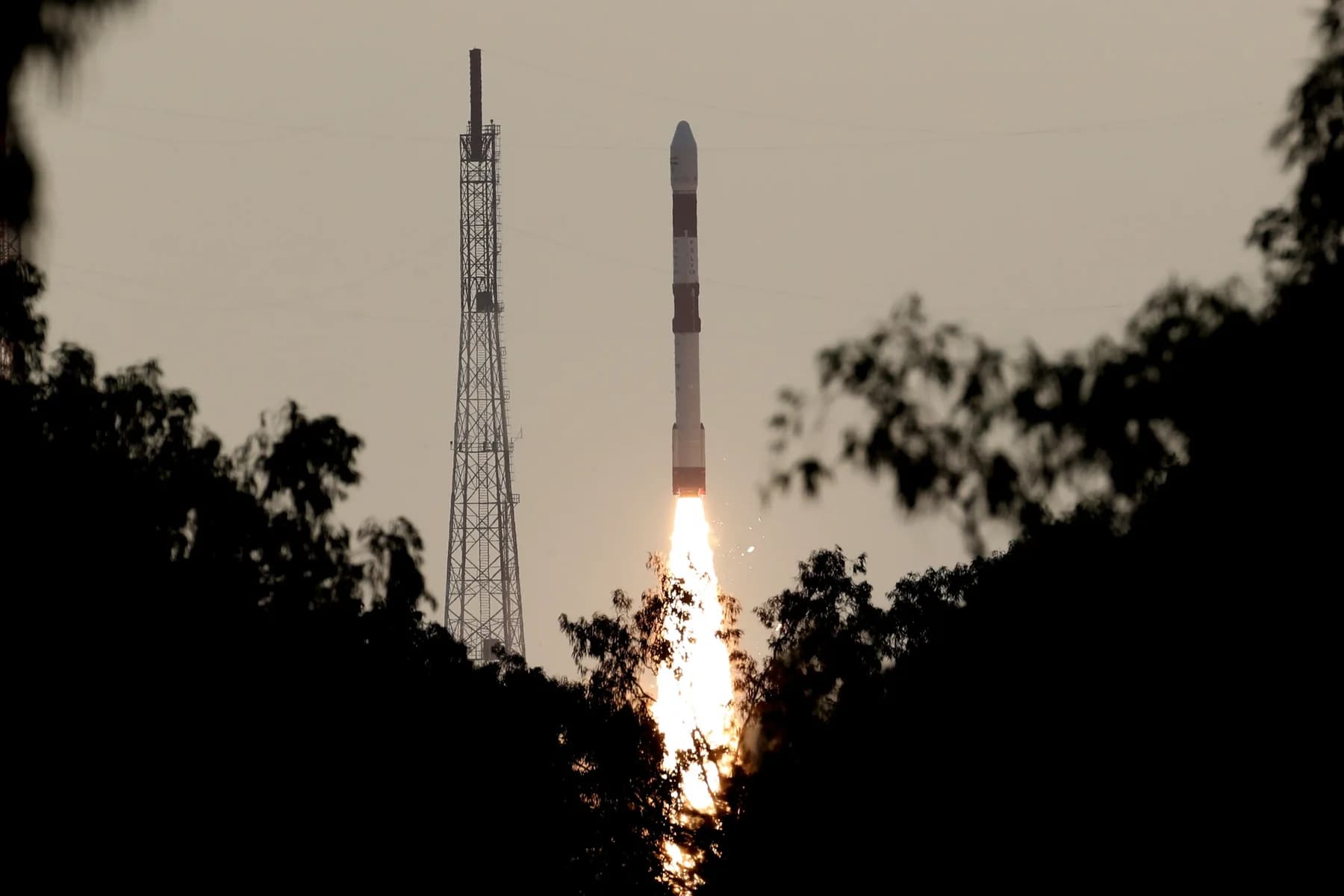
12 Jul 2026 · 49 min read
India's Launch-Startup Tier: Real Rockets, a Missing Manifest—and a $1.1 Billion Bet That Demand Shows Up
India's private launch engineering is real, but the domestic manifest is roughly one Vikram-1 flight a year; Skyroot's unicorn valuation already assumes the demand gap closes.
12 Jul 2026 · 98 min read
The Third Pole in Orbit: OneWeb's Soul, DayOne's Method
A Singapore-founded Indo-Pacific orbital-compute venture is buildable only as a phased, demand-anchored operating company whose multi-sovereign capital cannot control it.
13 Jul 2026 · 55 min read
The Global Reusable Rocket Census, Mid-2026: Landings Are Now Common. Reflights Are Still Rare.
A global census of reusable launch systems shows that booster recovery is spreading, while propulsion-grade reflight and cadence economics remain overwhelmingly concentrated at SpaceX.