
The Global Reusable Rocket Census, Mid-2026: Landings Are Now Common. Reflights Are Still Rare.
A global census of reusable launch systems shows that booster recovery is spreading, while propulsion-grade reflight and cadence economics remain overwhelmingly concentrated at SpaceX.
Method & disclosure
Confidence: High on flown milestones; moderate on company timelines for unflown vehicles
Review mode: Human + AI cross-check
Writing support: AI assisted
Singapore Space Agency
On this page · 7
- 011. The 90-Second Summary
- 022. The Reuse Maturity Ladder — Every Vehicle, Classified
- 033. Master Specification Table — Flying and Near-Term Vehicles
- 044. Recovery-Method Taxonomy — Five Categories, Plus a Different Axis
- 055. The Economics Layer — What Reflight Data Actually Shows
- 066. What It Means for Asia-Pacific and Singapore
- 077. What to Watch (Next 12 Months)
A rocket landing is no longer proof of a reusable launch business. As of July 2026, two countries — through three organisations — have recovered an orbital-class first stage, and two companies have re-flown one. But those headlines conceal three very different contests. The recovery gap — can you get the stage back intact — is closing fast: China's Long March 10B crossed it on its first flight through net capture aboard a sea-recovery ship. The reflight gap — can the recovered stage fly again, and with its own engines — has been crossed by exactly two organisations, one of them with replacement engines. And the cadence-economics gap — hundreds of landings, dozens of flights per booster, nine-day turnarounds, a cost structure increasingly shaped by the expendable upper stage — belongs to SpaceX alone, and is still widening. This census maps every serious reusable launch vehicle in the world — configurations, engines, materials, payload penalties, recovery methods — onto that three-gap ladder. The scoreboard as of this week: SpaceX at 36 flights of a single booster and at least 636 landings; Blue Origin at one structural reflight on new engines; everyone else at zero.
This piece is a technical companion to China's Commercial Launch Sector and Rocket Lab's Vertical Integration. Read all three together for the market-structure view behind the engineering milestones.
Disclaimer: This is a technical survey, not a company ranking. Where vehicles are grouped into maturity tiers, the tiers reflect publicly verifiable flight-test milestones only, not design quality, funding, or commercial prospects. Figures for unflown vehicles are company claims unless stated otherwise, and are labelled as such. Nothing here is an endorsement of, or recommendation on, any company.
1. The 90-Second Summary
- Recovery now has three operators; routine reuse still has one. SpaceX (2015), Blue Origin (2025) and China's state sector (Long March 10B, 10 July 2026) have recovered orbital-class first stages. LM-10B did it by net capture at sea on its maiden flight.^[1]^[2]
- Reflight is the dividing line. Only SpaceX and Blue Origin have re-flown orbital booster hardware. Falcon 9 is an operating fleet whose leader, B1067, completed a record 36th flight on 9 July 2026. Super Heavy remains experimental; New Glenn has re-flown one structure with replacement engines.^[39]^[3]^[4] Landing counts flatter newcomers. Reflight counts expose them.
- China's crowded 2026 campaign produced one recovery, two near-misses and several incomplete tests. Zhuque-3 reached orbit and nearly landed; Long March 12A reached orbit but lost its stage; Tianlong-3 failed on ascent; Kinetica-2 and Long March 12B flew without recovery attempts; LM-10B landed on flight one.^[2]^[5]^[6]^[7]^[8]^[54] Two to four more Chinese attempts are plausible before year-end.
- Recovery architecture is splintering. Droneship landings on legs remain the proven default. China has added a sea-going net system that removes landing legs, while SpaceX uses a tower catch and Rocket Lab plans Neutron's captive "Hungry Hippo" fairing.^[2]^[9]
- Second-stage reuse is the next frontier. Stoke Space's Nova uses a regeneratively cooled metallic heatshield upper stage and was designed for full reuse from day one. Starship attacks the same problem at far greater scale. No conventionally staged, vertically recovered orbital upper stage has yet flown twice; the Space Shuttle orbiter used a different winged architecture.^[10]^[11]
- End-2027 forecast: 5–7 organisations land orbital boosters; 3–4 re-fly one; SpaceX alone flies most missions on reused hardware. Guidance has ceased to be the central mystery, though Zhuque-3 and Long March 12A show it is not a commodity. Repeatable relight at re-entry conditions, refurbishment cost and turnaround discipline now set the pace. Those constraints appear after the landing video ends.
2. The Reuse Maturity Ladder — Every Vehicle, Classified
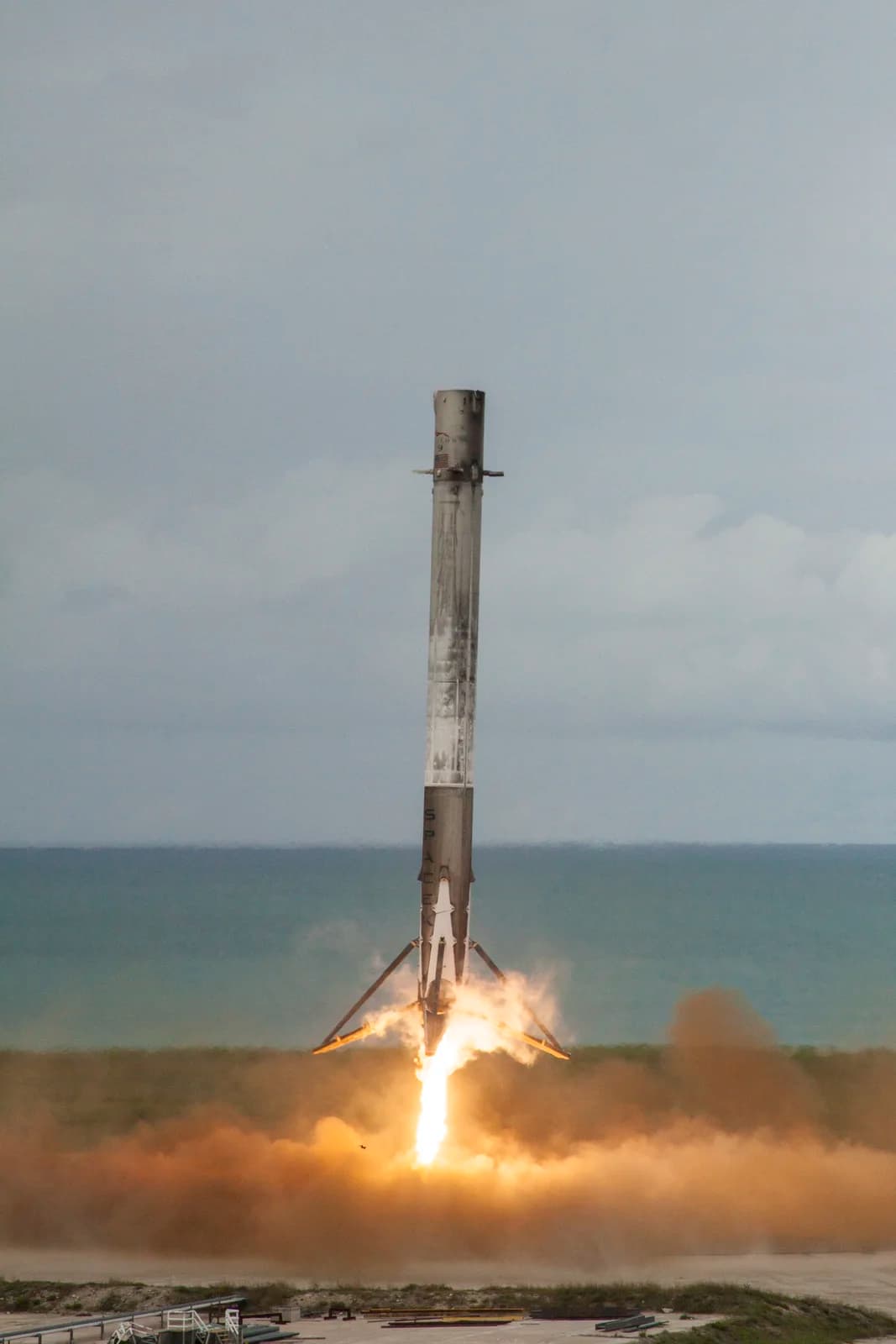
Landings make headlines; the ladder below is what matters. Tier assignments use publicly verifiable milestones as of July 13, 2026. Each orbital vehicle appears once, at its highest demonstrated milestone: a precursor hopper is folded into the orbital vehicle's record once that vehicle has flown, rather than being counted again in a lower tier. That prevents a long test campaign from masquerading as several independent programmes.
Tier A1 — Operational integrated reuse (recovered and re-flown with flight-proven propulsion, at commercial cadence):
Tier A2 — Booster reflight demonstrated, experimental or partial:
Suborbital context, outside the orbital ladder: New Shepard (Blue Origin) pioneered routine VTVL reuse — first landing Nov 2015, first reflight Jan 2016, 38 flights by Jan 2026, and is mature rather than experimental; it sits outside the tiers only because the ladder measures orbital-class stages. Paused ≥2 years from Jan 2026 to redirect resources to Blue Moon.^[16]
Tier B1 — Intact propulsive recovery, awaiting reflight:
The LM-10 family is the clearest disclosed proposal anywhere for sharing recovered stages across related launch vehicles — worth spelling out. LM-10 is the triple-core crewed lunar vehicle; LM-10A is the single-stick, all-kerolox crewed variant with the recoverable first stage; LM-10B pairs that same first stage with a new methalox YF-219 second stage. CALT's disclosed architecture suggests a future operating model in which LM-10A flies crew and recovers boosters, and LM-10B re-flies those flight-proven boosters with a freshly built upper stage ("拼好箭," as Chinese commentary puts it) — a design intent, not yet a demonstrated operation. LM-10C, in early development, would go all-methalox on both stages (sharing LM-10B's second stage) as a 5 m commercial reusable; it would not use the kerolox booster pool, but inherits the family's 5 m manufacturing base, methalox upper-stage technology, recovery fleet, and operating data. If it works, LM-10A and LM-10B share one recovered-stage pool across crewed and commercial missions — hedging early reflight-life limits by spreading stages across vehicles rather than stacking flights on one booster.^[40]^[41]
Tier B2 — Recovered by passive means; reflight unproven or deprioritised:
Tier C — Orbital flight achieved, landing attempted and failed:
Tier D — Orbital vehicle flown, recovery not yet attempted / ascent failure:
Tier E — Full-scale or high-altitude VTVL test articles flown:
China's other state contractor — CASIC — is real, but far behind the flying ladder. CASC dominates the orbital-reuse scoreboard (LM-10B, LM-12A, LM-12B). CASIC's parallel path runs through the solid-rocket Kuaizhou brand under Space Sanjiang's CASIC Rocket Technology Co. (Expace). Confirmed hardware on that path: a 70 t-class reusable methalox engine (publicly branded Mingfeng-2 / 鸣凤二号) completed a 200 s full-system long-duration hot-fire in November 2023 and subsequent multi-start / throttle / rated multi-condition hot-fires; the low-altitude VTVL article above flew in January 2024 on a company methalox engine — public sources do not prove that hop used Mingfeng-2 (secondary compilations instead point to the smaller Mingfeng-1 / ~10 t-class family).^[57]^[58]^[59] In April 2024, Expace said it was building a kilometre-class recovery test article powered by the 70 t-class engine and intended to fly it that year; no public completion record was found by this report's July 2026 cutoff, an important schedule miss rather than evidence that the test occurred.^[59] The named orbital follow-on is Kuaizhou-6 (快舟六号), a reusable liquid methalox vehicle publicly exhibited and described in 2024 programme reporting; company and provincial coverage also frame a “15th Five-Year Plan early period” goal for a low-cost space-transport system built around the Kuaizhou-6 series — a programme aspiration, not a hard flight schedule.^[61] What remains not public as of July 2026: complete architecture, LEO rating, orbital-stack manufacture / static-fire evidence, a 10 km-class hop, or a credible first-flight/recovery date. Do not rank Kuaizhou-6 with LM-12A, Zhuque-3, or LM-12B. The flown test article belongs in Tier E; Kuaizhou-6 sits in Tier G — a named programme with engine and hop-chain evidence, but no public orbital full-vehicle hardware milestone. Separate common mix-up: CAS Space (中科宇航) and its Kinetica-2 are not CASIC — they sit in the Chinese Academy of Sciences commercial orbit, not the defence-industry Kuaizhou chain.
Why the Long March 12 names are unusually confusing. The suffixes conceal three materially different vehicles and two lead organisations; they should not be read as a neat A-to-B product evolution. The baseline Long March 12, first flown in November 2024, is an expendable 3.8 m kerolox launcher led by SAST, CASC's Eighth Academy, using four YF-100-family first-stage engines. Long March 12A is also SAST-led and retains the 3.8 m manufacturing envelope, but it is a 70.4 m, 437 t methalox reusable design: seven privately developed Longyun-70 engines on stage one and a YF-209V-class methane engine on stage two. Long March 12B, by contrast, is led by the CASC-owned China Commercial Rocket Co. (CACL): 4.37 m diameter, about 72 m tall, all-kerolox, with nine reusable YF-102R engines on stage one and one YF-102RV vacuum engine on stage two; CASC states roughly 20 t to LEO. It shares the Long March brand and a commercial-constellation mission with the other vehicles, but not their complete propulsion stack, diameter or prime-contractor chain.^[53]^[54]^[55]
The Eighth Academy connection is real, but easy to overstate. CACL is presented by CASC as a group-level commercial rocket company, not simply as an Eighth Academy subsidiary or a renamed SAST programme. At the same time, LM-12B is not institutionally isolated from Shanghai's SAST base: official programme reporting says CACL's trajectory, guidance, navigation and control team formed a joint team with the Eighth Academy's 803 Institute and Harbin Institute of Technology. The precise formulation is therefore: LM-12 and LM-12A are Eighth Academy-led; LM-12B is CACL-led with documented Eighth Academy technical participation. Public official material reviewed for this report does not establish that the Eighth Academy controls CACL's equity, so the article does not make that stronger ownership claim.^[56]
Tier F — Hardware in build/test, no free-flight recovery test yet: Neutron (Rocket Lab — first flight target Q4 2026, five commercial missions already manifested)^[23]; Nova (Stoke Space — Stage 1 proto-qualification complete Jun 2026, LC-14 pad complete, debut targeted end-2026)^[10]; Terran R (Relativity — second stage to Stennis Jun 2026, maiden flight target end-2026)^[24]; Eclipse (Firefly/Northrop Grumman — first full vehicle NET 2027)^[25]; Themis T1H (ArianeGroup/ESA — first 100 m hop slipped to NET Q2 2026, still pending as of writing)^[26]; Pallas-1 (Galactic Energy — vehicle at Jiuquan, launch-and-recovery test planned within 2026)^[27]; Gravity-2 (Orienspace — debut possibly Oct 2026)^[8]; Hyperbola-3 (iSpace — 2026 debut)^[21].
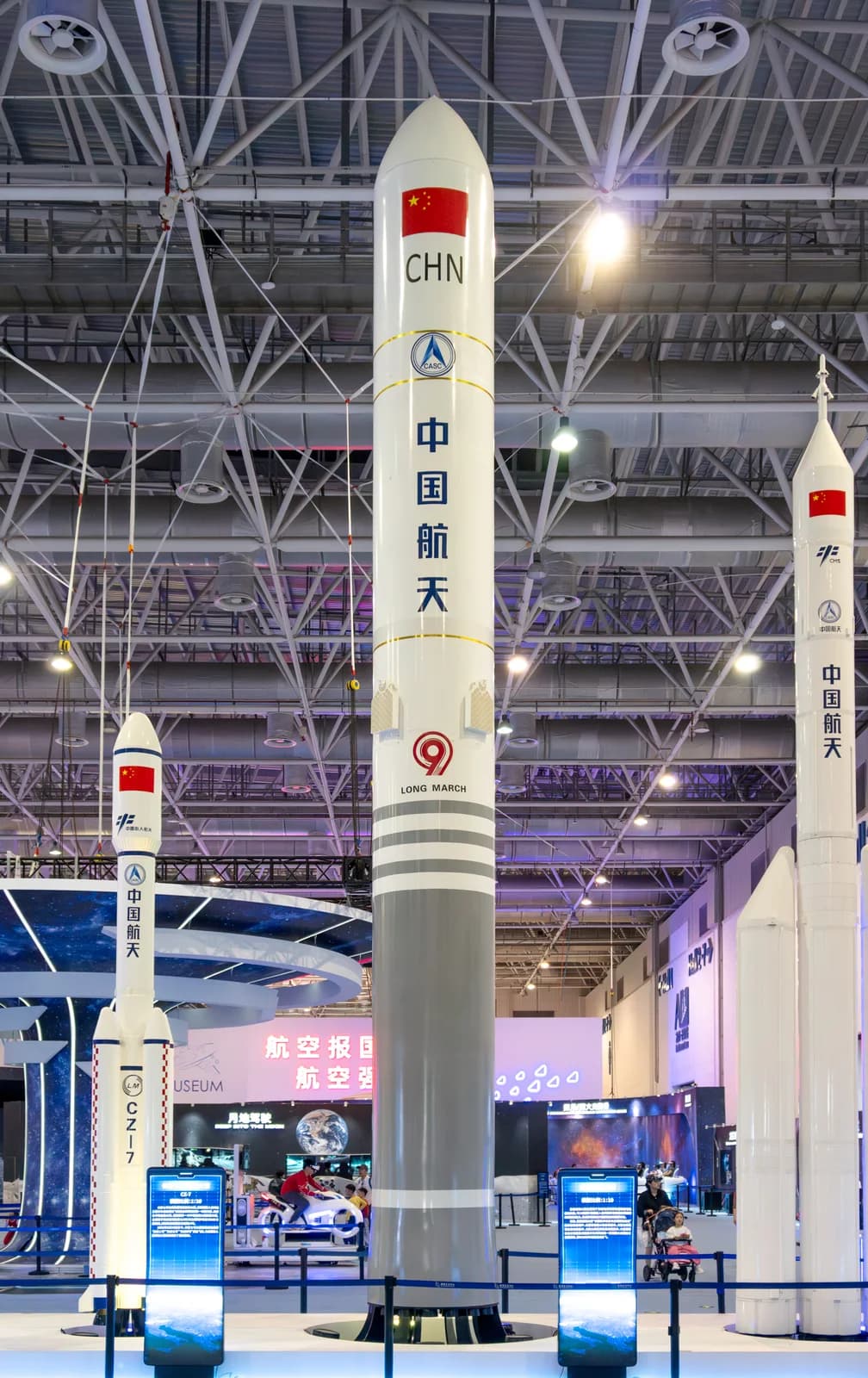
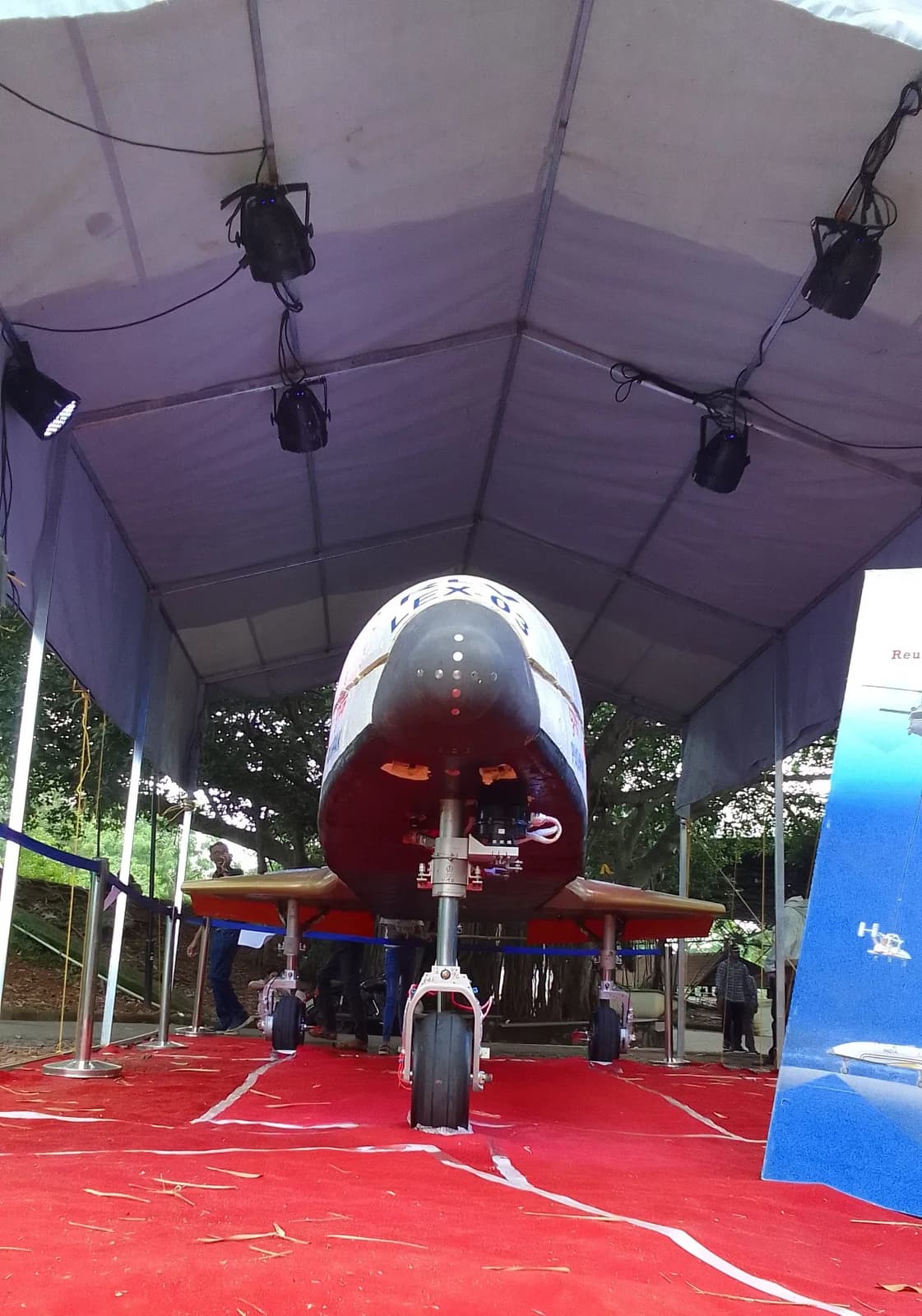
Tier G — Design/paper stage or non-VTVL testbeds: MaiaSpace Maia (Themis-derived first stage, semi-independent development)^[26]; Ariane Next (concept); Amur-SPG (Roscosmos — repeatedly slipped; experimental launch-and-landing now stated for ~2028, orbital service ~2030; treat all Russian dates as C-grade)^[28]; ISRO RLV/Pushpak (winged testbed — three autonomous runway landings completed by Jun 2024; orbital re-entry experiment OREX planned; this is a spaceplane technology programme, not a VTVL booster)^[29]; India's NGLV/Soorya (state heavy-lift programme, reusable first-stage design target, development flights no earlier than 2032–35)^[52]; Astrobase (claimed 4 m, seven-engine reusable medium-lifter; FFSC engine and 2027 hop not yet demonstrated)^[49]; EtherealX Razor Crest Mk-1 (claimed fully reusable medium-lifter including the upper stage; no engine or vehicle flight)^[50]; Skyroot and Agnikul (stated future recovery ambitions, but their near-term small launchers are not reusable); JAXA RV-X / CALLISTO (JAXA-CNES-DLR — ground research, no free flights)^[30]; Innovative Space Carrier ASCA (domestic-engine VTVL hop now targeted after its US campaign was cancelled; no free flight)^[51]; Long March 9 (full-reuse redesign on paper, Starship-like architecture, ~2033); Kuaizhou-6 (快舟六号, CASIC/Expace) — named reusable methalox orbital programme with engine hot-fires and a separate low-altitude tech hop on the same brand chain; no public full-vehicle manufacture, stack static-fire, LEO rating, or credible first-flight date as of July 2026; “15th Five-Year Plan early period” low-cost transport goal is programme aspiration only^[57]^[58]^[61]; CASIC Tengyun (腾云工程) — horizontal-takeoff, multi-use spaceplane / TSTO concept under CASIC's Third Academy; not Falcon-style VTVL; sparse public engineering milestones after the 2016–21 concept window (historical targets spoke of ~2025 key tech / ~2030 demo)^[60]; RFA One, Isar Spectrum, Skyrora XL (Europe — expendable first, reuse aspirational; Spectrum's second flight was in preparation as of early 2026)^[31]; PLD Space Miura 5 (Spain — parachute sea recovery of the first stage planned from early flights); CosmoLeap Yueqian-1 (China — chopstick tower catch, debut planned 2027; see §4b)^[38]. South Korea has no orbital reuse hardware programme yet — Perigee Aerospace has stated reuse ambitions only, which is why it appears in no tier.
2.1 “Everyone Else” Is Not One Tier — Three Different Learning Loops
The long tail looks homogeneous only if every programme is scored by altitude. Its members are buying different kinds of knowledge.
- Europe is building an industrial bridge, not merely a hopper. Themis is a 28 m reusable-stage demonstrator powered by Prometheus, whose declared 30–110% throttle range is directly relevant to descent and landing. The public programme is designed to learn stage operations and feed those lessons into Maia and, later, Ariane Next; it is not itself a commercial launcher. Europe's missing proof is therefore not another engine firing. It is a sustained free-flight campaign followed by a procurement and production path that turns shared public technology into a vehicle customers can actually book.^[45]
- Japan is assembling three ingredients that have not yet become one programme. JAXA frames RV-X/CALLISTO around guidance and control, propellant management and engine maintenance under short-interval VTVL operations, but the current lineage has not free-flown. Honda alone has supplied the private-sector flight evidence: a 271 m hop with 37 cm landing accuracy, on an explicitly suborbital technology path with no commercialisation decision. ISC, meanwhile, shows the missing connective tissue — its imported-engine hop campaign was cancelled and it is rebuilding around a domestic engine. Japan has a state research base, one unusually precise corporate demonstrator and an integrator still closing propulsion; it does not yet have a single reusable orbital vehicle programme combining all three.^[22]^[46]^[51] This is consistent with our Japan launch-startup teardown, which treats Honda as the tier's technological ceiling rather than a current launch competitor.
- India has two reuse ladders, neither of which should be hidden behind Pushpak. The state ladder couples Pushpak's winged hypersonic-return work to NGLV/Soorya, whose reusable-first-stage ambition is real but whose approved development cadence points to the 2030s. The startup ladder is earlier and riskier: Astrobase is attempting an 800 kN FFSC engine and a reusable medium-lifter after raising only $10 million; EtherealX claims a fully reusable 9+15-engine vehicle, including its upper stage, before an engine has flown. Skyroot and Agnikul are much closer to orbit, but their near-term vehicles are small expendables; recovery remains a roadmap item.^[47]^[49]^[50]^[52] The result matches our India launch-startup scorecard: India has credible reusable-spacecraft knowledge and two serious reusable-launch options, but no reusable launch-stage evidence yet. Pushpak cannot lend maturity to Astrobase or EtherealX, and Vikram-1 cannot either.
Russia is different again: Amur's issue is schedule credibility, not the absence of a plausible methane-booster architecture. These programmes deserve more than a list, but they should not receive borrowed maturity. Europe is testing a state-to-market bridge; Japan an operations discipline; India a winged re-entry system. None is yet running the complete launcher loop of recover → inspect → re-fly → sell again.
Adjacent track — engine-first developers (not a rung on the vehicle ladder): propulsion is the long pole in reusable launch, and a credible engine programme predates a credible rocket by years — so these belong in the census even though they have no vehicle to tier. The standout: Yucheng Exploration (宇辰探索, China), developing Dapeng-1 (DP-1) — a 200 t-class full-flow staged combustion methalox engine positioned as a merchant ("off-the-shelf") powerplant for fully reusable rockets, which completed a full-scale fuel-rich preburner ignition test on June 30, 2026. A preburner ignition is a component milestone, not an integrated engine hot-fire; but if DP-1 progresses to integrated hot-fire, it would join the very small group of active orbital-launch FFSC programmes led by Raptor and Stoke's Zenith, and it is a merchant, 200 t-class FFSC proposition with no close Western equivalent (Ursa Major sells merchant engines, at a fraction of this thrust and cycle complexity).^[42] Jiuzhou Yunjian (Longyun-70, already flown on Yuanxingzhe-1) plays the same merchant role one cycle-complexity class lower.^[36] Together they mark a structural difference in China's supply chain: propulsion R&D decoupling from vehicle integration, whereas among the leading Western reusable-launch primes propulsion remains predominantly vertically integrated (SpaceX, Blue Origin, Rocket Lab, and Stoke all build their own engines; Blue Origin's BE-4 sales to ULA and merchant suppliers like Ursa Major are the exceptions, not the pattern).
The distribution is the story: one organisation in Tier A1, two more in A2, and more than twenty below them. A growing number of well-funded programmes can now reach Tier C–D. The compounding advantages live at the top.
Read the ladder as three distinct gaps, because they close at completely different speeds:
- The recovery gap — can you get the stage back intact — closes in flights. China went from zero to a first-try net capture in one launch; Blue Origin needed two. This gap is closing fast worldwide and is likely to look substantially less exceptional by 2028–29.
- The reflight gap — can the recovered stage fly again, and with its own engines — closes in teardowns. It took SpaceX fifteen months (Dec 2015 → Mar 2017); Blue Origin crossed it structurally but not propulsively; CASC says it will cross it in under six months. Nobody outside those three has crossed it at all.
- The cadence-economics gap — many reflights, fast turnaround, high reliability, and a demonstrated cost advantage over rebuilding the same stage — closes in fleet-years. It is accumulated through operations, not demonstrated in a single flight, which is why it is the only gap that is still widening: at the current cadence, every week adds roughly two to three flight-proven-booster missions to SpaceX's side of the ledger and zero to anyone else's.
The strategic error to avoid is reading progress on gap one as progress on gap three. A net catch and a 36th flight are not points on the same curve.
3. Master Specification Table — Flying and Near-Term Vehicles
Figures for unflown vehicles are company claims (marked †). GLOW = gross liftoff weight. Payload figures to LEO unless noted.
"n/d" = no credible public disclosure. † = company/state claim for an unflown or newly flown vehicle. Chinese commercial and Russian entries compile official disclosures with limited independent verification (B/C-grade).
Three patterns jump out of the table:
- Methalox convergence, with an honest caveat. Of the clean-sheet designs, almost everything is methane: Starship, New Glenn, Neutron, Nova's first stage (its reusable upper stage is hydrogen), Terran R (methalox Aeon R), Zhuque-3, Hyperbola-3, Yuanxingzhe-1, Themis/Maia, Amur. Methane's substantially lower coking tendency removes one major source of inspection and refurbishment burden. But it is not a prerequisite for high reuse counts — Falcon 9 has flown a kerolox booster 36 times, which proves that operational learning, engine margins, and inspection discipline can outweigh propellant chemistry. The sharper statement: methane is the clean-sheet consensus for rapid reuse; kerolox with discipline is the incumbent proof. China's state programme split the difference on LM-10B — a kerolox YF-100K first stage for schedule and heritage, a methalox YF-219 second stage for performance and future cost (state media has leaned hard on the LNG-derived methane angle; note it applies to the second stage, not the booster that landed).^[40]
- Nine-engine clusters are the most-copied Falcon-derived architecture — a local optimum, not a law. Zhuque-3, Tianlong-3, Hyperbola-3, Nebula-1, and Neutron all copied Falcon 9's arithmetic: one engine for landing at deep throttle, engine-out margin on ascent. The underlying physics is real — a booster returning nearly empty weighs ~5% of GLOW, so even one engine at minimum throttle often exceeds vehicle weight (Falcon 9 cannot hover; it must "hoverslam"). But the counter-examples show it is one solution among several: New Glenn and Nova use seven, LM-10B uses seven, Amur uses five, Super Heavy uses thirty-three. Engine unit thrust, production economics, and base-diameter packing all pull on the same choice. What is universal is not the count — it is that deep throttle and relight reliability, not landing legs, are the gating technologies.
- Stainless steel vs composites has split the field. SpaceX (Starship) and LandSpace (Zhuque-3) chose stainless steel: cheap, weldable, thermally forgiving on re-entry, at a dry-mass penalty. Neutron instead uses carbon composite, a low ballistic coefficient, lifting surfaces and reusable thermal protection to reduce aerothermal load.^[73] Terran R uses high-strength aluminium, a high-angle-of-attack entry, entry burns and a reusable aft heat shield.^[74] These are vehicle-specific trades among dry mass, manufacturability, trajectory and thermal protection, not a general medium-lift exemption from harsh re-entry. Falcon 9's Al-Li tanks are the incumbent middle path. No material has won because the optimum genuinely changes with stage size, return trajectory, ballistic coefficient, manufacturing scale and inspection regime.
3.1 Engine Data — the Part of the Rocket That Actually Gets Reused
Reusability is an engine property before it is a vehicle property: what must survive 10+ flights is the turbomachinery. Figures below are manufacturer-published unless noted; Isp shown only where credibly disclosed. Unflown engines marked †.
Two readings of this table. First, the cycle choice maps cleanly onto ambition: gas generator for pragmatic reusability (throw away some Isp, keep the turbopumps simple and inspectable), staged combustion where cadence economics justify complexity, and full-flow — the hardest cycle ever flown — only where full, rapid reuse is the entire business model (SpaceX, Stoke). Second, deep throttle and relight, not peak thrust, are the reuse-gating specs, and they are exactly the figures most manufacturers do not publish. Where a company advertises its throttle band and in-flight relights (LandSpace, Space Epoch, Honda), that is a deliberate signal of landing-programme maturity.
4. Recovery-Method Taxonomy — Five Categories, Plus a Different Axis
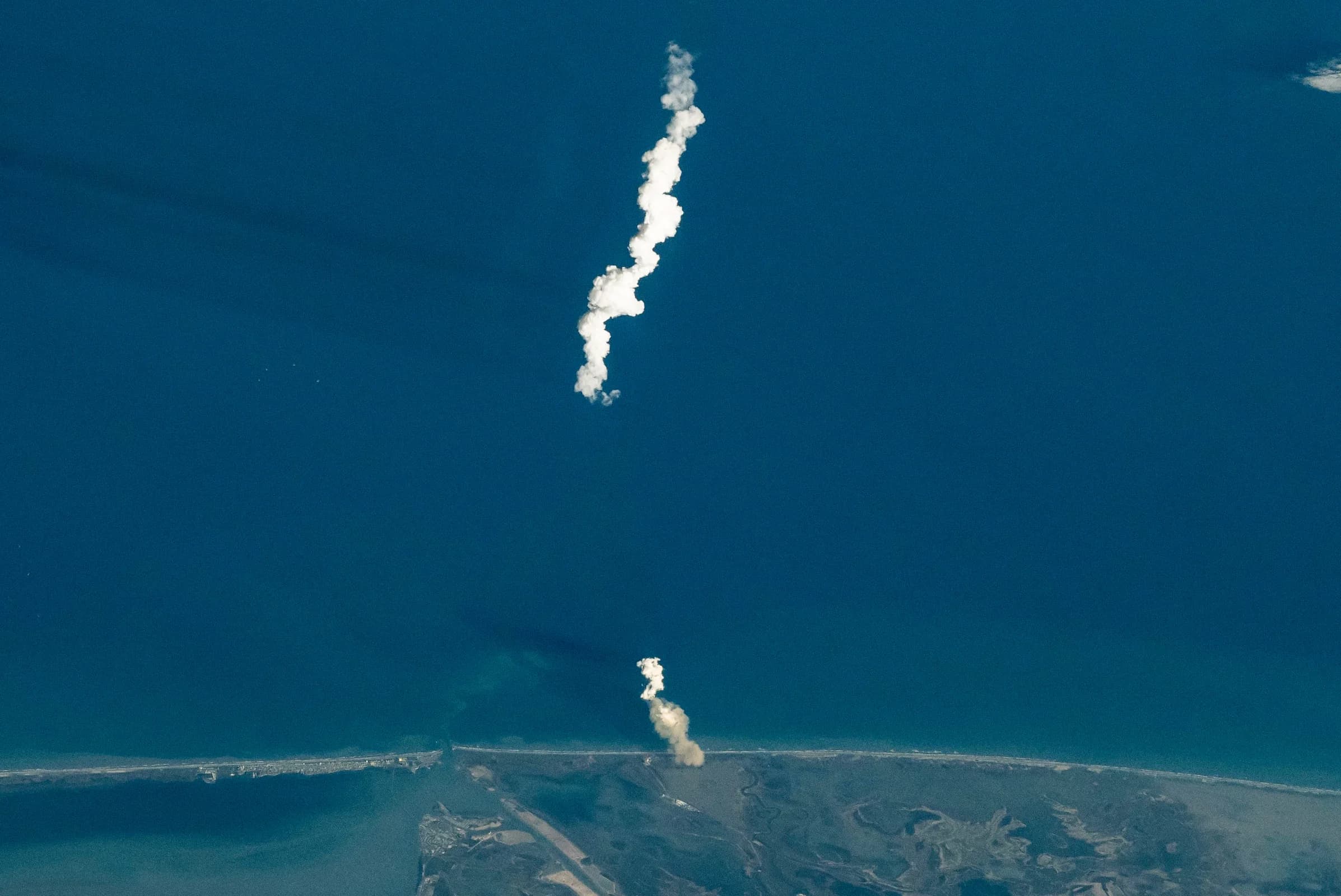
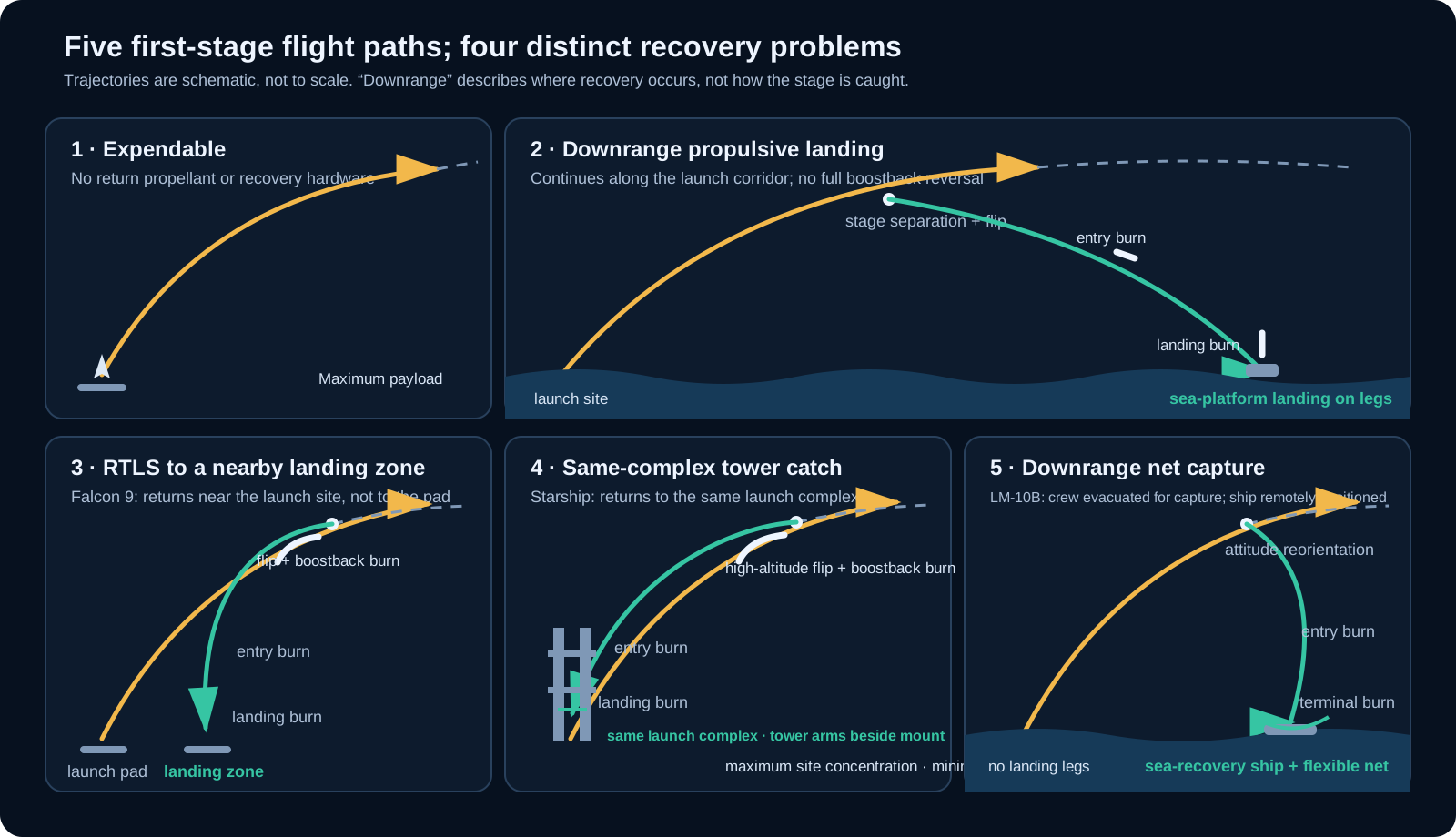
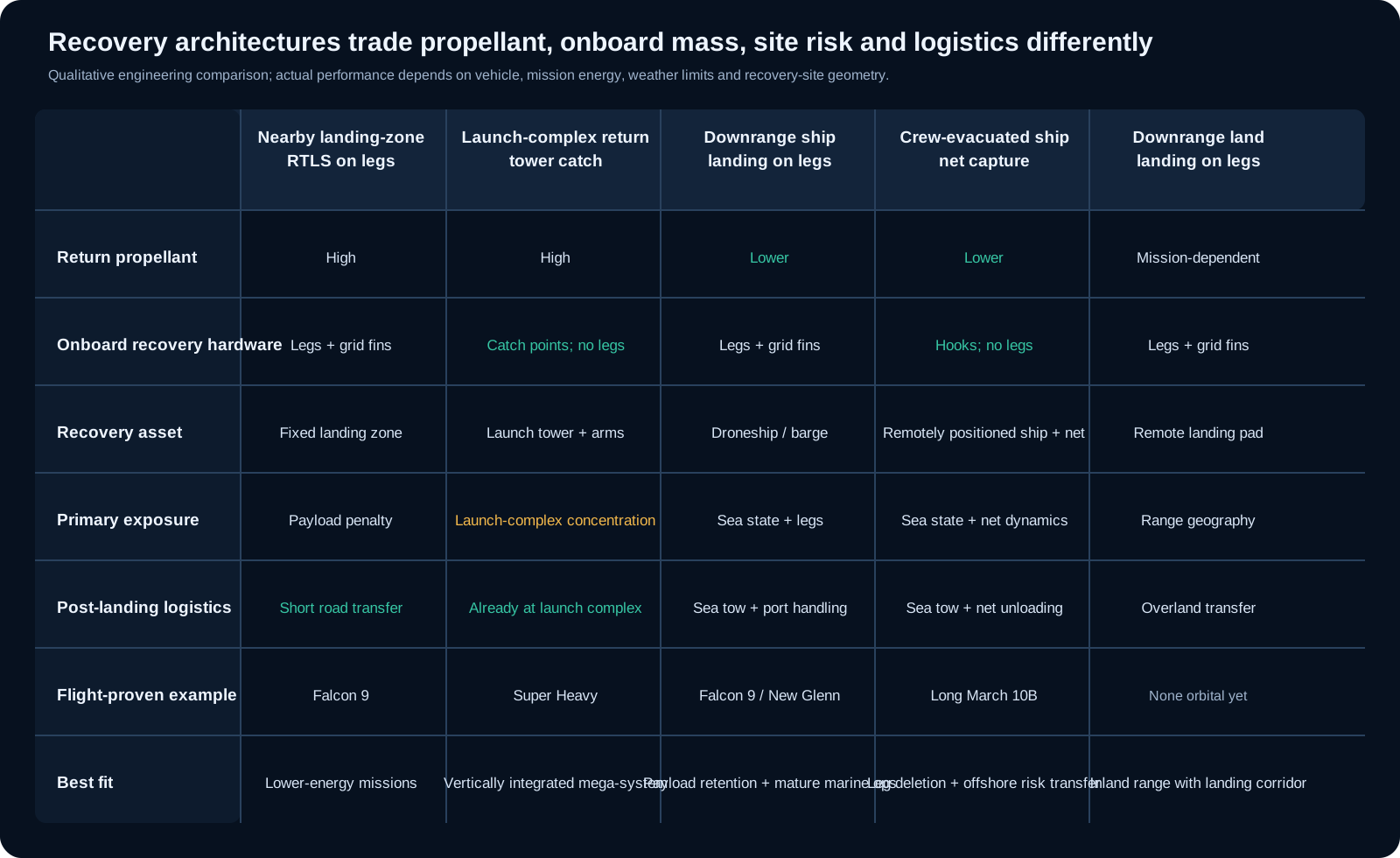
Location and capture method are two different axes. Downrange says where the stage is recovered — along the launch corridor rather than back near the launch site. It does not tell us whether the stage lands on legs, enters a net, or returns to land. RTLS is also not one physical endpoint: Falcon 9 returns to a dedicated landing zone a few kilometres from its pad, while Super Heavy returns to the same launch complex for capture by the launch tower. Collapsing both into “land return” hides materially different flight paths, site risks and ground logistics.
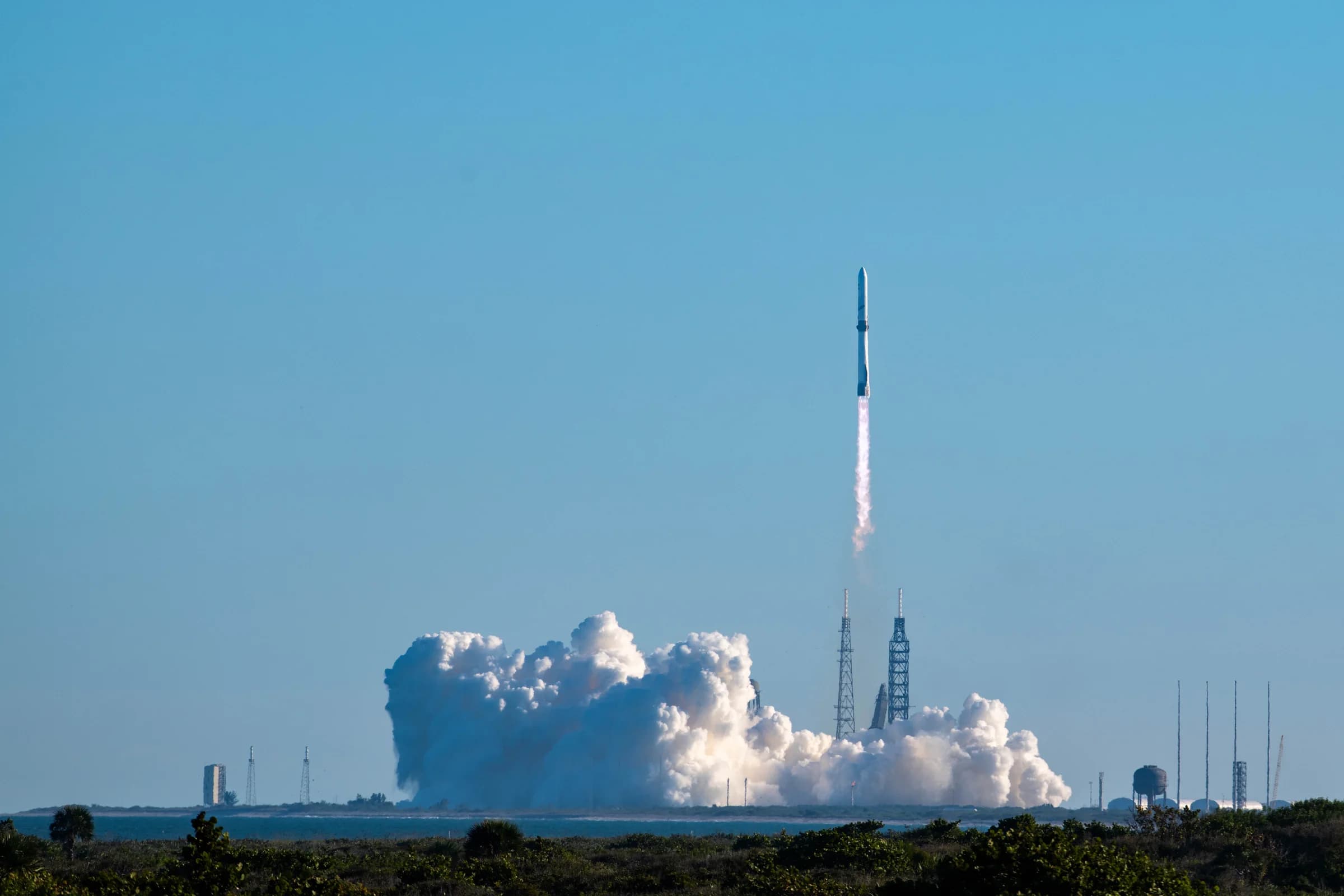
(a) Propulsive vertical landing on legs — nearby-zone RTLS or downrange recovery. The proven default: Falcon 9 (at least 636 landings by the report date^[39]), New Glenn (droneship Jacklyn), Zhuque-3/Tianlong-3/Hyperbola-3/Nebula-1/Terran R (planned). Falcon 9's RTLS endpoint is a dedicated landing zone near the launch pad, not the launch mount itself. Downrange sea landing exists because of the propellant penalty: boostback for RTLS costs Falcon 9 roughly 40% of expendable payload versus ~25% for a droneship landing — the delta is the boostback burn plus steeper landing reserves. Every medium-lift entrant is building or chartering a barge for the same reason.^[12] China adds an inland variant unavailable to coastal launchers: Zhuque-3 flies from Jiuquan and lands downrange on land — a dedicated pad at Minqin, ~390 km from the site — capturing most of the downrange payload benefit without a ship.^[33]
(b) Return to the launch complex for tower-arm capture ("chopsticks"). Super Heavy only: three successful catches. Unlike Falcon 9 RTLS, this trajectory terminates at the original launch complex, where arms on the tower beside the launch mount catch the booster; it does not land back on the pad. The rationale is mass and cadence — deleting legs saves roughly 10 t of booster dry mass and returns the vehicle directly to launch infrastructure rather than requiring days of marine recovery and transfer. Why has nobody else flown it? Because it demands metre-level terminal guidance and concentrates recovery risk at the launch complex. SpaceX can rebuild a tower; a single-site startup usually cannot. One challenger exists on paper: Beijing-based CosmoLeap raised $73M in April 2026 for Yueqian-1 (70 m, 18 t / 12 t recovered LEO), explicitly designed around a chopstick tower catch, with a debut planned for 2027 — the first direct copy of the architecture anywhere.^[38] Notably, even SpaceX skipped the catch on the V3 debut, prioritising ascent data over recovery risk — a revealed preference for what actually matters this year (Artemis-relevant milestones).^[14]^[15]
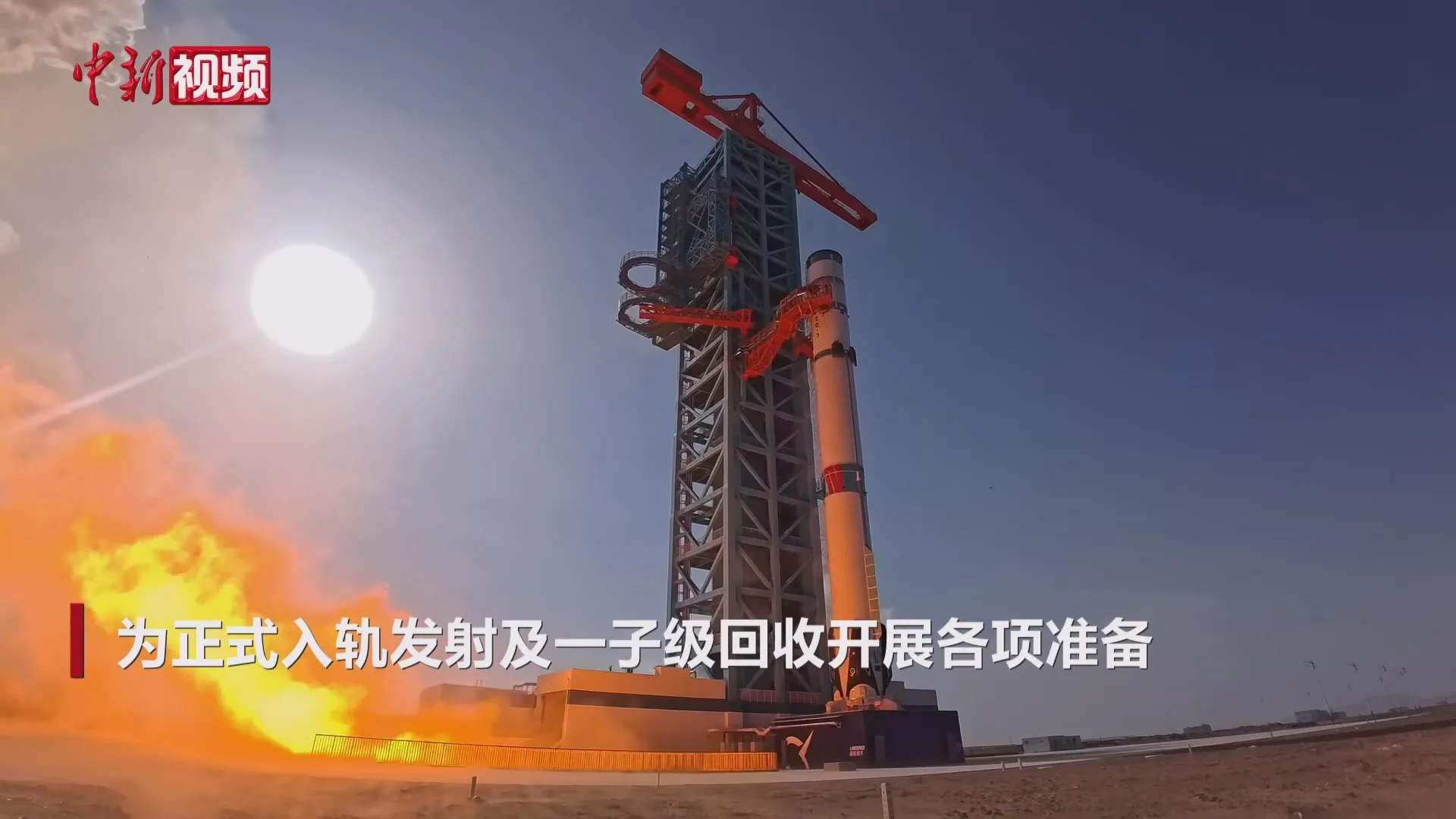
(c) Downrange net capture by a crew-evacuated, remotely positioned sea-recovery ship — the new Chinese category. The precise operating description is sea-recovery-ship net-system capture with personnel evacuated for the capture window; “net-system recovery” is the useful short form. LM-10B's Linghang Zhe caught the descending stage with a flexible, hydraulically damped net system: the booster deploys capture hooks, not legs.^[2]^[17]^[62]^[63] It is downrange recovery by location and net capture by mechanism. CCTV's documented sequence has the ship sail to the recovery area, complete inspection, then evacuate personnel before the rocket returns; remote dynamic positioning holds it on target during capture. The dry-mass logic resembles tower catch, but the capture infrastructure sits offshore — so a failed catch puts the recovery asset at risk rather than the only launch position. The first-flight success proves capture feasibility, not reflight or turnaround economics.
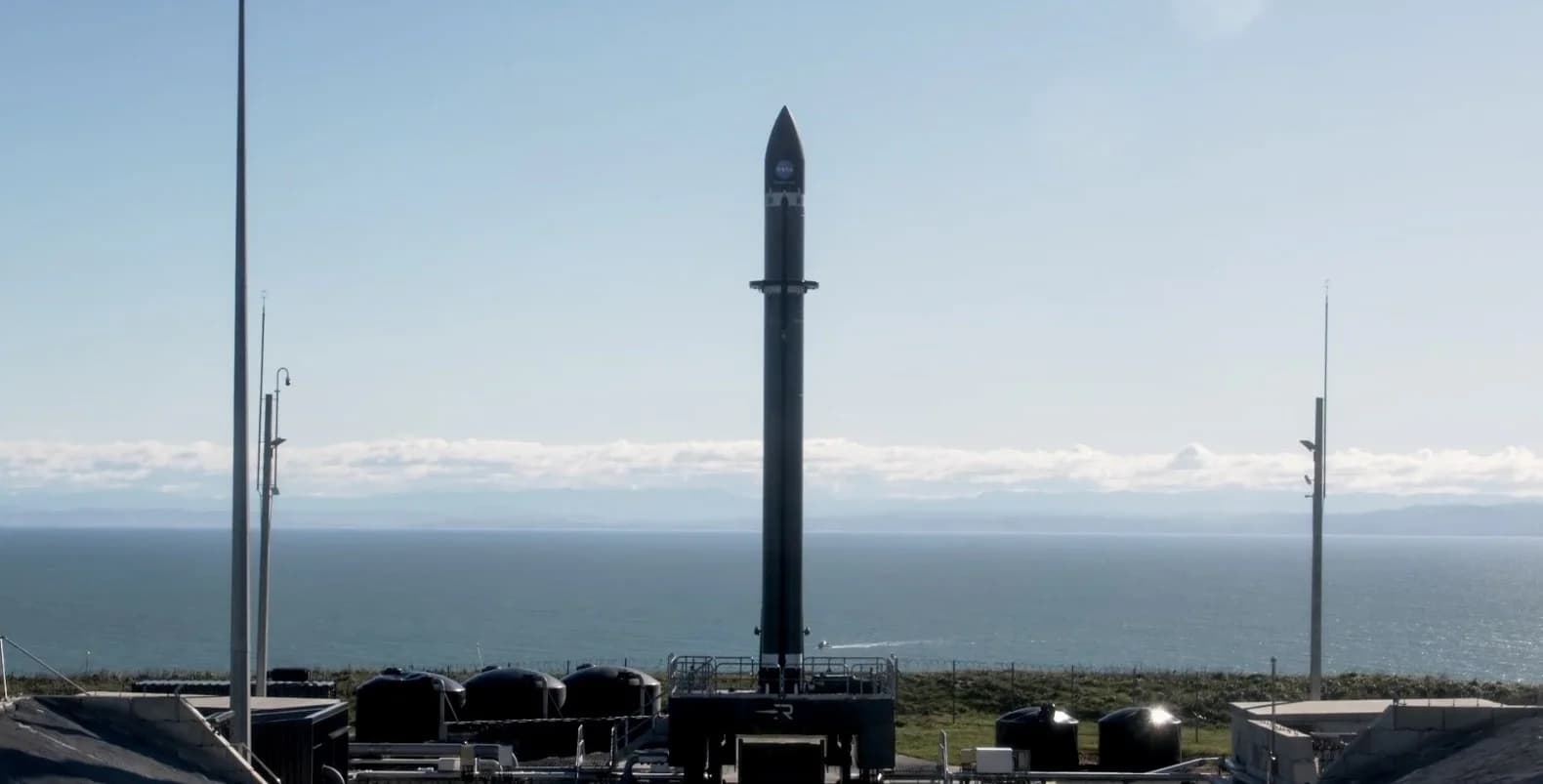
(d) Ocean surface and parachute recovery. Two working sub-methods. Parachute/marine: Electron — helicopter mid-air catch attempted 2022, abandoned 2023 as marine splashdown proved cheaper and the carbon-composite stage tolerated salt water better than expected; stages recovered and requalified, but zero reflights — an honest signal that at 300 kg-class payload, reuse economics are marginal and Rocket Lab's engineering attention moved to Neutron.^[18] Propulsive sea soft-landing: Space Epoch's stainless Yuanxingzhe-1 decelerates to a hover and settles onto the water itself — no ship, no legs, salt-water tolerance engineered in from the start; demonstrated at validation scale in May 2025.^[35]^[36] Some Chinese smallsat concepts have proposed parachute-plus-airbag land recovery; none has flown a full-scale test (C-grade, design stage).
(e) Captive-component architectures. Neutron's "Hungry Hippo" fairing never separates — the jaws open in flight, release the second stage, close, and return with the booster, deleting fairing-recovery boats and requalification entirely. First flights will be RTLS; downrange recovery will use the barge Return On Investment.^[9]^[23]
(f) The different axis: second-stage reuse. Everything above recovers stage one; the ladder in §2 is a stage-one ladder. Stoke's Nova upper stage attacks the other half of the problem: a regeneratively cooled metallic heatshield with a ring of thrust chambers around its perimeter, fed by the stage's hydrogen — the same LH₂ that feeds the Andromeda engine flows through the shield during re-entry, so the heatshield is an actively cooled engine assembly rather than sacrificial tiles. Plumbing instead of ceramics, and the propellant choice is load-bearing: hydrogen's heat capacity is what makes the shield work.^[10]^[11] SpaceX solves the same problem at a vastly larger scale with a ceramic-tile system and belly-first aerodynamic entry. Stage mass, ballistic coefficient, mission profile, and turnaround requirements differ enough between the two that neither design should be read as the universal template — a second rational divergence, like stainless-versus-composite. No conventionally staged, vertically recovered orbital upper stage has been re-flown by anyone (the winged Shuttle orbiter is the historical exception that proves how different this architecture is). Winged horizontal-landing vehicles (Pushpak, Dream-Chaser-style concepts) remain a separate technology lane aimed at re-entry payloads, not booster economics.^[29]
4.1 Why Upper-Stage Reuse Is Almost a Different Industry
Calling it “recovering the other stage” understates the problem. A first stage turns around before reaching orbital speed; an upper stage must erase roughly orbital velocity, survive the corresponding heating environment, and still reserve mass and propellant to control where it comes down. Four constraints compound:
- Heat and durability. A heatshield that survives once is not yet reusable. Seams, fasteners, plumbing and control surfaces must retain margin after repeated thermal cycling, and inspection cannot consume the savings. Starship accepts a high-ballistic-coefficient entry and a large ceramic-tile maintenance surface; Nova claims a low-ballistic-coefficient vehicle and an actively cooled metallic shield that slows below 100 m/s before engine restart. Both are company architectures, not yet an operational comparison.^[48]
- The mass fraction is punitive. On the upper stage, every kilogram of shield, landing propellant, structure and landing hardware is nearly a kilogram unavailable to payload. Nova's own published figures make the trade visible: about 3,000 kg to LEO in fully reusable mode versus up to 7,000 kg at maximum performance. The economic question is therefore not whether recovery is possible, but whether the recovered hardware is worth more than the payload and mission flexibility surrendered to bring it home.^[48]
- There is no single return mission. LEO deployment, GTO injection and high-energy missions leave an upper stage with different energy, timing and disposal constraints. A booster can be designed around a comparatively repeatable return corridor; a reusable upper stage either narrows the missions it can serve or carries enough performance and thermal margin to cover a much wider envelope.
- Recovery only opens the ledger. Controlled deorbit, landing-site availability, range safety, payload de-integration, heatshield inspection and engine recertification all enter the turnaround loop. Full reuse wins only when the total cost and time of that loop stay below replacement — at a flight rate high enough to amortise the more complex vehicle.
That produces a stricter evidence ladder for the next frontier:
The 2027-grade test should therefore be unforgiving: do not award “full reuse” for a heatshield firing, a hop or even one intact orbital return. The sequence is orbital entry → controlled recovery → post-flight qualification → same-stage reflight, with the same engines and thermal-protection hardware wherever the architecture claims them reusable. Only the last step turns an atmospheric-survival programme into a reusable transport system.
5. The Economics Layer — What Reflight Data Actually Shows
The only economically meaningful reuse dataset on Earth belongs to Falcon 9, so it defines the benchmark:
5.1 Falcon 9’s Learning Curve — From Recovery Event to Production System
“Engine reuse rate” sounds like the obvious metric, but it is not publicly observable: SpaceX does not publish a serialised flight history for each Merlin engine, and engines can be inspected or exchanged independently of the airframe. The defensible fleet proxy is the share of launches using a flight-proven booster. It rose from about 28% in 2017 to 95.2% in 2025; SpaceX's 2026 securities filing supplies the latter denominator directly — 157 of 165 Falcon 9 launches used flight-proven boosters.^[64]^[71]
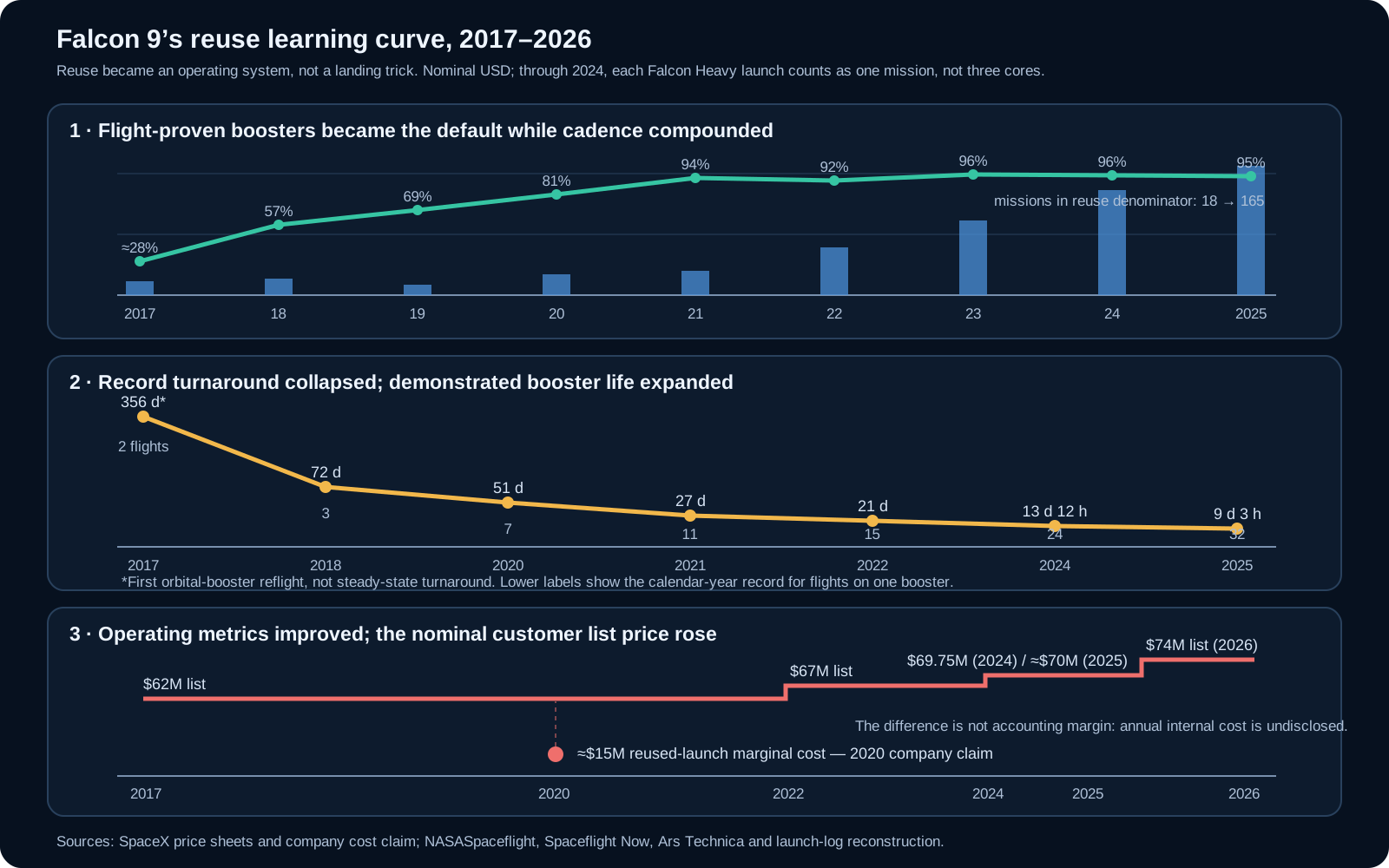
† SES-10's interval measures the gap from the booster's first flight to the first-ever orbital-booster reflight. It is a historical milestone, not a steady-state turnaround statistic. Every turnaround point in the chart is a record minimum, not a fleet average. Mission totals and adoption shares through 2024 include Falcon Heavy; each Heavy launch counts as one mission, not three cores. The 2020 denominator also includes the non-orbital in-flight-abort test, which used a new booster; excluding it gives 25 orbital launches but breaks the 21/26 = 80.8% adoption calculation. The 2025 disclosure covers Falcon 9 only, while Q1 2026 covers Falcon missions. Those denominator changes are shown rather than silently normalised.
The chart deliberately does not draw a fictional annual “unit-cost” curve. Public customer price and SpaceX's internal cost are different series. The standard list price moved from $62M to $67M in 2022, $69.75M in 2024 (rounded to $70M in 2025 reporting), and $74M in 2026, while Musk put the marginal cost of a reused launch at roughly $15M in a 2020 interview — a company claim without a continuously disclosed overhead series.^[68]^[70]^[72]^[44] The defensible conclusion is not “price fell every year”; it is that reuse adoption, cadence and asset life improved together while the nominal customer price rose. That is evidence that SpaceX retained much of the operating benefit rather than passing it through mechanically—not a calculation of accounting margin, because annual internal cost and contract-level pricing remain undisclosed.
The amortisation math, made auditable. Take SpaceX's own historical (unaudited) claim that the booster represents roughly 60% of vehicle hardware cost, and normalise vehicle hardware to 100 units — the indexed model needs no disputed dollar figures:
At 36 flights, the original booster build contributes only ~1.7 indexed units per mission. Unless refurbishment and recovery operations are extraordinarily expensive, that makes the reusable first stage cheaper per flight than expendable upper-stage hardware, although public data cannot quantify the margin. The second stage and integration therefore set more of the marginal-cost floor, which is why Starship and Nova matter. The exact crossover point remains unknowable: SpaceX does not disclose refurbishment cost, recovery-fleet opex or early-retirement write-offs. By flight 36 the initial build is a rounding error. Flights two through five are the economic test every newcomer must survive.
This decomposition also gives the census its most useful distinction: technical recovery → technical reflight → operational reuse → economic reuse are four different finish lines. A stage that comes back intact (recovery) may still cost more to re-fly than to rebuild (no economic reuse). The real divide in this industry is not expendable versus reusable — it is economically reused versus merely recoverable. On that definition, the club has one member.
Pricing tells the same story from the demand side: Falcon 9's advertised standard price rose from $62M to $67M in 2022, to $69.75M in 2024 / roughly $70M in 2025, and to $74M in SpaceX's current 2026 capabilities material.^[68]^[72]^[44] Reuse clearly improved asset utilisation without lowering the nominal customer price curve. That is evidence of pricing power, not a disclosed profit-margin series; inflation, mission mix, integration scope and demand exceeding supply also matter. Limited comparable competition is the most likely reason SpaceX can retain rather than automatically pass through much of the operating benefit. (Author inference; SpaceX does not publish a continuous cost structure.) Reuse sets the market's price floor only when at least two operators have economic reuse.
Insurance and regulatory acceptance, once mooted as barriers, resolved quietly in the US: NASA and the Space Force both certify reused boosters for their most critical missions, and public market behaviour suggests flight-proven Falcon boosters are no longer treated as an exceptional risk class (mission-level premium data are not public — labeled inference). China is unlikely to replay this curve on the same clock: acceptance there runs through institutional acquisition — the state constellations and CASC-adjacent programmes that dominate demand — where qualification cycles for commercial (民营) hardware have historically run well beyond two years regardless of actuarial data. Expect the state's own vehicles (LM-10B) to get reflight acceptance fast, and commercial reflights to wait in a queue that is political-institutional, not statistical.
One more observation the LM-10 family makes possible. The amortisation arithmetic itself never changes — build cost divided by total flights, whatever vehicle the stage flies on. What CALT's disclosed architecture adds is a second route to utilisation: SpaceX drives it by assigning one standardised booster to a deep manifest; CALT proposes to create it across two related vehicles and mission classes, so crewed LM-10A missions feed flight-proven boosters into the commercial LM-10B manifest. That broadens the addressable mission pool and reduces booster idle time, and it de-risks early operations, but it does not substitute for demonstrating long component life: if each stage only ever flies two or three times, build cost stays poorly amortised no matter how many vehicles share it. Cross-vehicle utilisation is a bridge to Falcon-like economics, not an alternative to them. That a state programme designed the bridge in from day one is the tell that China studied the Falcon 9 ledger, not just the landing videos.
6. What It Means for Asia-Pacific and Singapore
- APAC is now the second centre of reusable-launch development. As of July 2026, the region has one successful orbital booster recovery (LM-10B), two near-misses (Zhuque-3, LM-12A), one reusable-design orbital vehicle flown without a recovery attempt (LM-12B), Honda's active hop programme and the world's densest 2026–27 recovery-test pipeline. Europe's first free-flight hop has yet to occur. Chinese reusable lift now belongs in 2027–28 procurement scenarios as a credible planning case. It becomes an operational baseline, and a source of pricing pressure, only after reflights begin.
- But reflight-grade reliability is what buyers should contract on. A landed booster proves an integrated recovery sequence; a re-flown booster with retained propulsion proves the engines, tanks, and refurbishment chain — a structural reflight on replacement engines proves less. APAC payload owners writing 2027+ launch contracts should demand reflight heritage data at that granularity, not landing showreels, and price the difference.
- Singapore's realistic openings are in the supporting layers, not the rockets. Singapore is highly unlikely to ever host vertically integrated reusable-booster manufacturing. But recovery at sea — droneships, net-system recovery vessels, downrange telemetry, marine refurbishment logistics — is a maritime-services and precision-engineering problem, which is exactly Singapore's industrial profile. Add insurance and standards: as reused boosters from multiple flags enter the market, someone neutral has to write the actuarial and certification frameworks for cross-border reflight acceptance. A Singapore-based reused-vehicle underwriting and data-standards practice is a genuine, defensible niche; a Singapore launch pad is not.
7. What to Watch (Next 12 Months)
- Zhuque-3's second flight (Q2–Q3 2026 slip watch). A clean landing makes LandSpace the first Chinese commercial company in Tier B1 and puts its stated Q4 2026 reflight in play — the single most consequential non-US milestone of the year.^[5]
- Starship V3 Flight 13 and the first V3 booster catch. The FAA-required Flight 12 mishap investigation must close first — though hardware is already moving (a Super Heavy went to the pad for testing the week of July 9). If B20/S40 then fly clean by late summer and catches resume, full-reuse cadence math reopens. Another failure pushes Artemis and the 100 t-class economics right.^[15]^[32]
- Blue Origin's twin recovery — from the FAA grounding after NG-3's orbit miss, and from the May 28 LC-36 explosion. New Glenn's reflight proved the booster structure; the question is now upper-stage reliability and cadence from a damaged single pad.^[13]^[43]
- Neutron, Nova, and Terran R — three "end of 2026" debuts. Historical base rates say at most one flies this year. Whichever does becomes the first new US medium-lift reusable since Falcon 9.
- Whether LM-10B's captured stage re-flies before end-2026, as CASC says it will. Meeting that target would compress SpaceX's 2015→2017 landing-to-reflight interval to under six months and put a Chinese state vehicle in Tier A2 on its second-ever flight; slipping it would confirm that the reflight gap, not the landing gap, is where the decade still lives.^[2]
All data from public sources including SpaceNews, NASASpaceflight, Spaceflight Now, company announcements (SpaceX, Blue Origin, Rocket Lab, Stoke Space, Relativity, Firefly, LandSpace, Honda, ISRO, JAXA, ESA/ArianeGroup), Xinhua/CGTN, and Wikipedia launch logs cross-checked against primary reporting. Company-claimed figures are labelled as such. Analysis represents the author's independent views and is not investment advice.
Sources74 entries with source notes and links
- Scientific American — China's Long March 10B Rocket Successfully Launches, and Lands(scientificamerican.com)
Milestone framing and first-flight recovery. B-grade source.
- SpaceNews — China becomes second country to recover orbital booster with Long March 10B(spacenews.com)
Jul 10, 2026 launch time, Hainan site, net-capture vessel details. B-grade source.
B1067's record 35th flight (Jun 2026) and the 40-flight qualification target; the 36th flight and cumulative landing count are cited to ref-39. B-grade source.
- Spaceflight Now — Third flight of Blue Origin's New Glenn rocket to feature 1st reuse of booster(spaceflightnow.com)
NG-3 reflight of "Never Tell Me the Odds," second landing. B-grade source.
- SpaceNews — Zhuque-3 reaches orbit on test flight, first stage lost during landing attempt(spacenews.com)
Dec 3, 2025 flight, landing anomaly. B-grade source.
- Wikipedia — Long March 12A(en.wikipedia.org)
Used only for VTVL precursor-test chronology and the CZ-10 Feb 2026 splashdown rehearsal; the flight/recovery facts are cited to SpaceNews (ref-34). Tertiary compilation, cross-checked — B− grade.
Apr 3, 2026 failure, vehicle specs. B-grade source.
- SpaceNews — China's Kinetica-2 rocket debuts successfully(spacenews.com)
Mar 30, 2026 maiden flight, CBC configuration, 625 t GLOW; Gravity-2 timing per NASASpaceflight China roundup. B-grade source.
- Rocket Lab — Neutron(rocketlabcorp.com)
"Hungry Hippo" captive fairing, Archimedes engines, 13 t reusable payload. A-grade source (company claims for unflown vehicle).
- NASASpaceflight — Stoke Space completes Nova Stage 1 structural verification(nasaspaceflight.com)
Proto-qualification Jun 2026, LC-14, end-2026 debut target. B-grade source.
- Stoke Space — company site(stokespace.com)
Full-reuse architecture, regeneratively cooled metallic heatshield upper stage, Zenith full-flow first-stage engine. A-grade source (company claims).
- Spaceflight Now — SpaceX launches 450th Falcon 9, breaks booster turnaround record(spaceflightnow.com)
9-day 3-hour turnaround (B1088), Mar 2025; prior record 13 days 12 hours. B-grade source.
- Space.com — Blue Origin reuses New Glenn, lands booster, but deploys satellite into wrong orbit(space.com)
NG-3 BE-3U underperformance, new-engine partial reuse, BlueBird 7 loss. B-grade source. The May 28 static-fire explosion is cited separately to ref-43.
- TechCrunch — SpaceX launches Starship V3 for the first time, but loses booster on return(techcrunch.com)
Flight 12, May 22, 2026; B19 engine explosion and breakup. B-grade source.
- NASASpaceflight — Following Starship V3 debut, SpaceX prepares for follow up(nasaspaceflight.com)
V3 grid-fin/catch-point changes, Flight 13 (B20/S40) planning. B-grade source.
- Blue Origin — New Shepard to pause flights(blueorigin.com)
38 flights through Jan 2026; ≥2-year pause announced Jan 30, 2026 to prioritise Blue Moon. A-grade source.
CASC confirmation, Linghang Zhe capture system. A-grade for the official claim; state media — treat performance figures as claims.
- Rocket Lab — Previously flown Electron returns to production line in preparation for first reflight(rocketlabcorp.com)
Marine recovery process; requalification; no reflight flown since. A-grade source (company).
- Xinhua — China's LandSpace plans new recovery test for Zhuque-3 reusable rocket in 2026(english.news.cn)
Q2 2026 second attempt, Q4 2026 reflight target, re-entry data verified on Flight 1. A-grade for company/official statements.
- China in Space — Deep Blue Aerospace's Nebula-1A appears in Haiyang ahead of potential first launch(china-in-space.com)
Static fires Sept/Nov 2025, Haiyang stacking Mar 2026, Q2–Q3 2026 demo flight. B-grade source.
- Wikipedia — i-Space(en.wikipedia.org)
) (cross-checked with SpaceNews funding coverage). Hyperbola-3 specs (69 m, 8.5 t reusable / 13.4 t expendable), Wenchang sea-recovery prep Dec 2025, 2026 debut. Tertiary compilation, cross-checked — B− grade; specs are company claims.
- Honda Global — Honda Conducts Successful Launch and Landing Test of Experimental Reusable Rocket(global.honda)
271.4 m altitude, 37 cm landing accuracy, 2029 suborbital goal. A-grade source.
- Spaceflight Now — Rocket Lab announces five-launch Neutron deal as it continues aiming for late 2026 debut(spaceflightnow.com)
Q4 2026 target, Jan 2026 tank-test incident, manifest. B-grade source.
- NASASpaceflight — Terran R second stage heads to Stennis as Relativity advances toward 2026 debut(nasaspaceflight.com)
Jun 2026 status, end-2026 target, LC-16. B-grade source.
- Wikipedia — Eclipse (rocket)(en.wikipedia.org)
) (cross-checked with Firefly/Northrop releases). NET 2027 first full vehicle; $50M Northrop investment; Miranda tap-off engines. Tertiary compilation, cross-checked — B− grade; specs are company claims.
T1H specs (30 m, single Prometheus), NET Q2 2026, T1E/T3 roadmap, MaiaSpace linkage per European Spaceflight. B-grade source.
- China in Space — Galactic Energy's Pallas-1 appears at Jiuquan ahead of debut flight(china-in-space.com)
Vehicle at Jiuquan May 2026; launch-and-recovery test within 2026. B-grade source.
- TASS / Interfax reporting on Amur-SPG(tass.com)
Experimental launch-and-landing ~2028, service ~2030 after repeated slips. C-grade — Russian official timelines have slipped 4+ years; treat as aspirational.
Three autonomous landing experiments through Jun 23, 2024; OREX/SPEX planned. A-grade source.
- JAXA — RV-X / CALLISTO reusable launch vehicle research(kenkai.jaxa.jp)
JAXA-CNES-DLR cooperation status. A-grade source.
- European Spaceflight — Isar Aerospace prepares for next Spectrum flight(europeanspaceflight.com)
Spectrum Flight 2 preparation; RFA One/Skyrora XL status context. B-grade source.
- Spaceflight Now — FAA requires SpaceX-led mishap investigation before resumption of Starship launches(spaceflightnow.com)
Flight 12 grounding status. B-grade source.
- NASASpaceflight — China successfully debuts tallest rocket, LandSpace prepares for second landing attempt(nasaspaceflight.com)
Zhuque-3 Y2 pad return Jun 19, static fire Jun 29 (~769 t), post-mid-July launch window, Minqin landing pad ~390 km downrange. B-grade source.
- SpaceNews — Long March 12A reaches orbit in first reusable launch attempt, but landing fails(spacenews.com)
Dec 23, 2025 flight and recovery failure detail. B-grade source.
~575 t GLOW, 14 t expendable / ~7 t recovered (company claims), end-2026 orbital target. B-grade source reporting company claims.
- IT之家 / 新浪科技 — 元行者一号验证型火箭海上软着陆回收试验(ithome.com)
May 29, 2025 validation flight: 4.2 m dia, 26.8 m, 57 t, single Longyun-70 (Jiuzhou Yunjian), 2.5 km hop, 20–110% throttle, 8 s relight, sea soft-landing. B-grade source.
Sea-level thrust 280 tf, mass 1,525 kg (company claims). A-grade for the claim itself; unaudited.
- SpaceNews — Cosmoleap secures $73 million for reusable rocket with tower catch recovery(spacenews.com)
Yueqian-1 specs (70 m, 18 t / 12 t LEO), chopstick tower architecture, Apr 2026 round, 2027 debut plan. B-grade source.
- Spaceflight Now — SpaceX launches Falcon 9 rocket on record-breaking 36th flight(spaceflightnow.com)
B1067 36th flight = SpaceX's 635th booster landing (Jul 9); B1067's 35th was Jun 7, and B1071 reached 35 flights on Jul 10, 2026, per companion Spaceflight Now coverage. B-grade source.
- 新浪新闻/央视 — 成功回收!记者探访长征十号乙火箭(news.sina.com.cn)
LM-10B official specs: 5 m dia, 63.6/70.2 m (short/long fairing), ~760 t GLOW, 890 t liftoff thrust, 16 t LEO recovered; S1 7× YF-100K kerolox, S2 1× YF-219 methalox (140 t-class vacuum). A-grade for the official disclosure; state media — performance figures are claims.
- 科技日报 — 长征十号甲、长征十号乙、长征十号丙"三兄弟"到底有啥区别?(stdaily.com)
LM-10 family architecture: shared LM-10A/10B first stage, recovered-stage handover model, LM-10C all-methalox early development. A-grade (official/state science media).
- IT之家 — 宇辰探索200吨级全流量液氧甲烷发动机"大鹏一号"富燃预燃室点火试验圆满成功(ithome.com)
DP-1 full-scale fuel-rich preburner ignition, Jun 30, 2026; merchant FFSC engine positioning. B-grade source reporting company claims.
- SpaceNews — New Glenn rocket explodes on Cape Canaveral pad(spacenews.com)
May 28, 2026 static-fire explosion; vehicle destroyed, LC-36 damaged. B-grade source.
- SpaceX — Capabilities & Services (2026)(spacex.com)
Standard payment plan through 2026: $74M for Falcon 9 up to 5.5 t to GTO (raised from $70M in Feb 2026). A-grade source (company price sheet).
- ESA — Themis(esa.int)
and Prometheus. Themis dimensions, reusable-stage role and Prometheus 30–110% throttle range. A-grade programme sources.
Corroborating linksPrometheus
- JAXA — CALLISTO(ard.jaxa.jp)
and RV-X. Programme objectives: repeated VTVL operations, guidance and control, propellant management and engine maintenance. A-grade programme sources.
Corroborating linksRV-X
Three autonomous landing experiments, deployable landing gear and planned orbital re-entry experiment. A-grade programme source.
- Stoke Space — Nova(stokespace.com)
Upper-stage active metallic heatshield, LH₂/LOX architecture, company payload figures and entry profile. A-grade for the company's claims; unverified in orbital flight.
800 kN FFSC methalox engine and seven-engine, 4 m reusable-medium-lift architecture. A-grade for company claims; no full-scale engine or vehicle flight yet.
Razor Crest Mk-1 9+15 engine architecture, full-reuse claim and development targets. B-grade source reporting company claims.
- Innovative Space Carrier — Additional allocation and extension under the SBIR programme(innovative-space-carrier.co.jp)
Domestic VTVL development extended to May 2027 after failure to advance to Phase 3. A-grade company/programme source.
- India Strategic — NGLV “Soorya” for Future Space Missions(indiastrategic.in)
Cabinet-approved 96-month programme, reusable-first-stage target and three development flights. B-grade source.
- CASC — Reusable Long March 12A reaches orbit(spacechina.com)
and China Youth Daily — Long March 12A maiden flight. Official Dec 23, 2025 result and vehicle dimensions; the second source identifies the privately developed seven-engine Longyun first stage. Payload ranges remain programme/company disclosures. A-grade for the official mission result; B-grade for engine-sourcing detail.
Corroborating linksChina Youth Daily — Long March 12A maiden flight
technical explainer, and SpaceNews — Long March 12B delivers Qianfan satellites on debut flight. CASC confirms the Jun 1, 2026 maiden-flight result, tenth-batch designation, CACL prime-contractor role, no recovery attempt, vehicle architecture and ~20 t LEO claim. SpaceNews's Jun 3 correction cites orbital tracking showing two satellites in 1,020–1,048 km polar orbits. A-grade for official mission facts; B-grade for the two-satellite count; performance remains a state programme claim.
Corroborating linkstechnical explainerSpaceNews — Long March 12B delivers Qianfan satellites on debut flight
Baseline LM-12's Eighth Academy leadership, 3.8 m kerolox architecture, four-engine first stage and Nov 30, 2024 maiden flight. A-grade programme source.
- CASC — How Long March 12B was built in 21 months(m.spacechina.com)
CACL-led development and documented joint TGNC work with the Eighth Academy's 803 Institute and Harbin Institute of Technology. A-grade programme source; does not establish CACL equity ownership.
and Space.com — Chinese company's reusable rocket prototype aces launch-and-landing test. Jan 26, 2024 Expace/CASIC Sanjiang free-flight VTVL: 22 s flight, 9 s hover, 0.15 m hover precision, methalox engine; official framing as foundation for a Kuaizhou-series reusable methalox launcher. Official copy names the propellant class, not the engine model. A-grade for the official Chinese report; B-grade for the English secondary. Low-altitude verification article, not orbital-class.
Corroborating linksSpace.com — Chinese company's reusable rocket prototype aces launch-and-landing test
- IT之家 — CASIC 70 t-class methalox engine completes 200 s full-system long-duration hot-fire(ithome.com)
(Nov 23, 2023 company announcement). 70 t-class reusable methalox engine designed and assembled by CASIC Rocket Technology Co. under Space Sanjiang (later public branding: Mingfeng-2). A-grade for the company claim; no independent thrust/Isp audit. Does not state that this engine flew the Jan 2024 hop.
- China News Service — Kuaizhou rockets push into the reusable track(chinanews.com.cn)
and CASIC official WeChat reporting on Mingfeng-2 multi-start / throttle / rated multi-condition hot-fires (Mar 2024). B-grade reporting of company milestones; confirms engine work continued past the 200 s long-duration run and records Expace's then-current plan to fly a kilometre-class article using the 70 t engine within 2024. No public completion record was found by Jul 2026. Does not establish that Mingfeng-2 powered the Jan 2024 hop, nor an orbital flight schedule. Secondary compilations attributing that hop to Mingfeng-1 (~10 t class) remain unverified by primary official text.
- Xinhua — CASIC plans Tengyun spaceplane demo around 2030(xinhuanet.com)
and China Youth Daily — China developing next-generation spaceplane under Tengyun. Horizontal-takeoff TSTO / multi-use spaceplane concept under CASIC's Third Academy; historical 2025 key-tech / 2030 demo language. A/B-grade for programme existence and architecture; C-grade for schedule — sparse open engineering progress after the 2016–21 window. Not a Falcon-style VTVL booster programme.
Corroborating linksChina Youth Daily — China developing next-generation spaceplane under Tengyun
- China News Service Hubei / Hubei Daily — Hubei commercial aerospace “arrow” advances(hb.chinanews.com.cn)
and related provincial coverage of Kuaizhou-6 reusable liquid-rocket development (also exhibited as a “new face” at China Space Day 2024 events). Public programme name for the CASIC/Expace reusable methalox orbital vehicle; Mingfeng-family engine R&D cited alongside. B-grade for the name and programme framing; does not establish full architecture, LEO rating, stack hardware status, or a firm first-flight date. “15th Five-Year Plan early period” low-cost transport language is project aspiration only.
- China National Space Administration — China completes its first successful reusable-launch-vehicle recovery mission(cnsa.gov.cn)
Official terminology: the LM-10B first stage was vertically recovered aboard the Linghang Zhe recovery ship through a net-system capture. A-grade official source.
- CCTV News — Inside China's first rocket-recovery ship Linghang Zhe(xinwen.bjd.com.cn)
Operational sequence: remote dynamic positioning can be commanded from 10–20 km away; after inspection, personnel evacuate before the rocket return and capture. B-grade state-media report quoting the development team.
- ElonX — SpaceX Statistics(elonx.net)
Launch-log reconstruction used for annual Falcon launch counts, landing success and flight-proven-booster shares through mid-2025. C-grade tracker; selected milestones are cross-checked below.
- NASASpaceflight — SpaceX sets reuse records in 2020(nasaspaceflight.com)
2020: 51-day turnaround record, 75-day second-half average and fleet-life record increasing from four to seven flights. B-grade source.
- NASASpaceflight — SpaceX continues to break reuse records in 2021(nasaspaceflight.com)
31 missions supported by ten boosters; first 11th flight and sub-month reflight. B-grade source.
- Spaceflight Now — SpaceX launches a Falcon 9 booster twice in three weeks(spaceflightnow.com)
B1062's 21-day same-booster turnaround record in April 2022. B-grade source.
Falcon 9 standard price increased from $62M to $67M in 2022. B-grade source reporting the company price sheet.
- NASASpaceflight — SpaceX achieved a record-breaking 2024(nasaspaceflight.com)
134 Falcon launches, 13-day 12-hour turnaround and 24-flight booster record at year-end. B-grade source.
Transcript and context for Musk's May 2020 statement that a reused Falcon 9 launch had roughly $15M marginal cost. Company claim via secondary transcript; C-grade source.
Discloses 165 Falcon 9 launches in 2025, including 157 flight-proven-booster launches; Q1 2026 records 40 Falcon missions, of which 39 used flight-proven boosters. A-grade regulatory filing.
- Spaceflight Now — SpaceX raises Falcon 9's standard price to $74 million(spaceflightnow.com)
Reports $74M in 2026, up from $70M in 2025 and $67M in 2022; SpaceX's January 2024 price sheet listed $69.75M. B-grade source cross-checked against archived company price material.
- Rocket Lab — Neutron Payload User's Guide, v1.0(rocketlabcorp.com)
Neutron first-stage carbon-composite structure, lifting surfaces, low-ballistic-coefficient entry, and reusable thermal protection over the thrust structure. A-grade company technical source; the vehicle has not yet flown.
- Relativity Space — Terran R vehicle architecture and first-stage reuse process(relativityspace.com)
High-strength aluminium architecture, high-angle-of-attack entry, entry burn, aerodynamic controls, and reusable aft heat shield. A-grade company technical source; the vehicle has not yet flown.
Continue reading
22 Aug 2026 · 49 min read
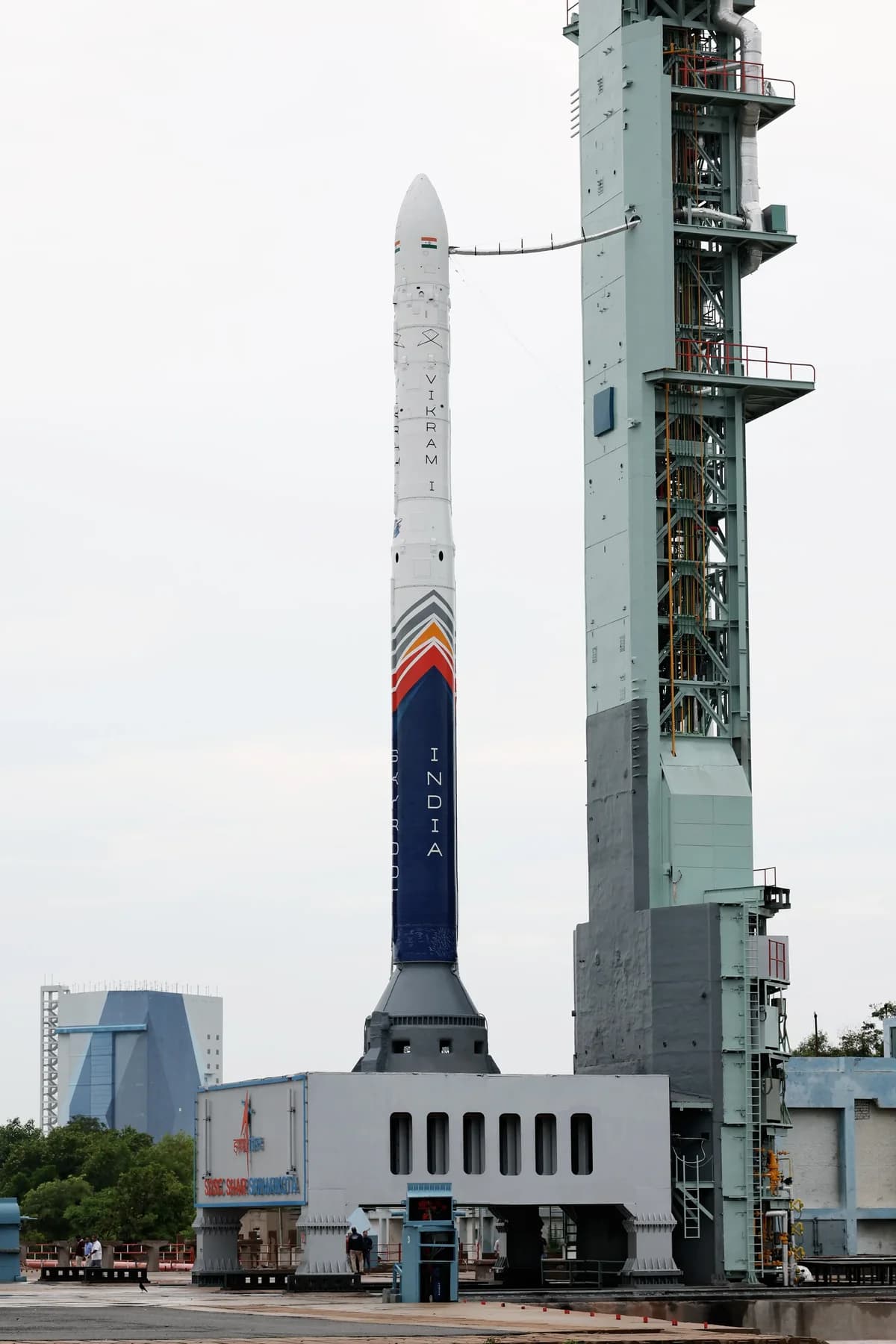
India's Launch Privatization, Audited: Two Flights, Then More Than Six
Vikram-1 proved India's private launch engineering; Parliament's own two-then-six planning figure shows that the missing manifest remains the business test.
20 Apr 2026 · 22 min read
Rocket Lab in 2026: Vertical Integration, Defense Scale, and the Neutron Inflection Point
Rocket Lab is now a vertically integrated space-systems prime; its upside depends on defense execution, satellite scale, and whether Neutron converts promise into cadence.
12 Jul 2026 · 49 min read
India's Launch-Startup Tier: Real Rockets, a Missing Manifest—and a $1.1 Billion Bet That Demand Shows Up
India's private launch engineering is real, but the domestic manifest is roughly one Vikram-1 flight a year; Skyroot's unicorn valuation already assumes the demand gap closes.