
India's Launch-Startup Tier: Real Rockets, a Missing Manifest—and a $1.1 Billion Bet That Demand Shows Up
India's private launch engineering is real, but the domestic manifest is roughly one Vikram-1 flight a year; Skyroot's unicorn valuation already assumes the demand gap closes.
Method & disclosure
Confidence: High for official launch, facility and funding records; medium for company schedules and modeled demand, cost and valuation scenarios explicitly labelled in the text.
Review mode: Human + AI cross-check
Writing support: AI assisted
Singapore Space Agency
On this page · 13
- 011. The 90-Second Summary
- 022. The Tier at a Glance: Four Companies, One Scorecard
- 033. Skyroot: The Leader, Priced for a Manifest That Doesn't Exist Yet
- 044. Agnikul: Exquisite Engineering Aimed at the Graveyard Segment
- 055. Astrobase: Auditing the Hardest Claim in the Tier
- 066. EtherealX and the Rest: Ambition per Dollar
- 077. The State Backdrop: Scaffold and Ceiling at Once
- 088. The Payload Famine: The Arithmetic That Decides Everything
- 099. The China Mirror: Why India Does Not Get the EV Movie
- 1010. The Cost-Claim Audit: India Is Not Cheap — It Is Non-Aligned
- 1111. What Would Make the Tier Investable at Scale: Falsifiable Milestones
- 1212. What It Means for Asia-Pacific and Singapore
- 1313. What to Watch
Key findings
The argument in brief
- Vikram-1 is the engineering test; India's missing private manifest is the business test, and the article's thesis survives either maiden-flight outcome.
- Skyroot leads every verifiable axis, but its $1.1 billion valuation implies a 19–29× forward revenue multiple before repeat launch demand is proven.
- India's non-ISRO domestic commercial demand is modeled at roughly one Vikram-1 flight a year—far below the cadence required to sustain four private launch companies.
- India's advantage is non-aligned dedicated access, not the cheapest kilogram; survival depends on defence procurement and an aggregated Indo-Pacific manifest arriving by 2029.
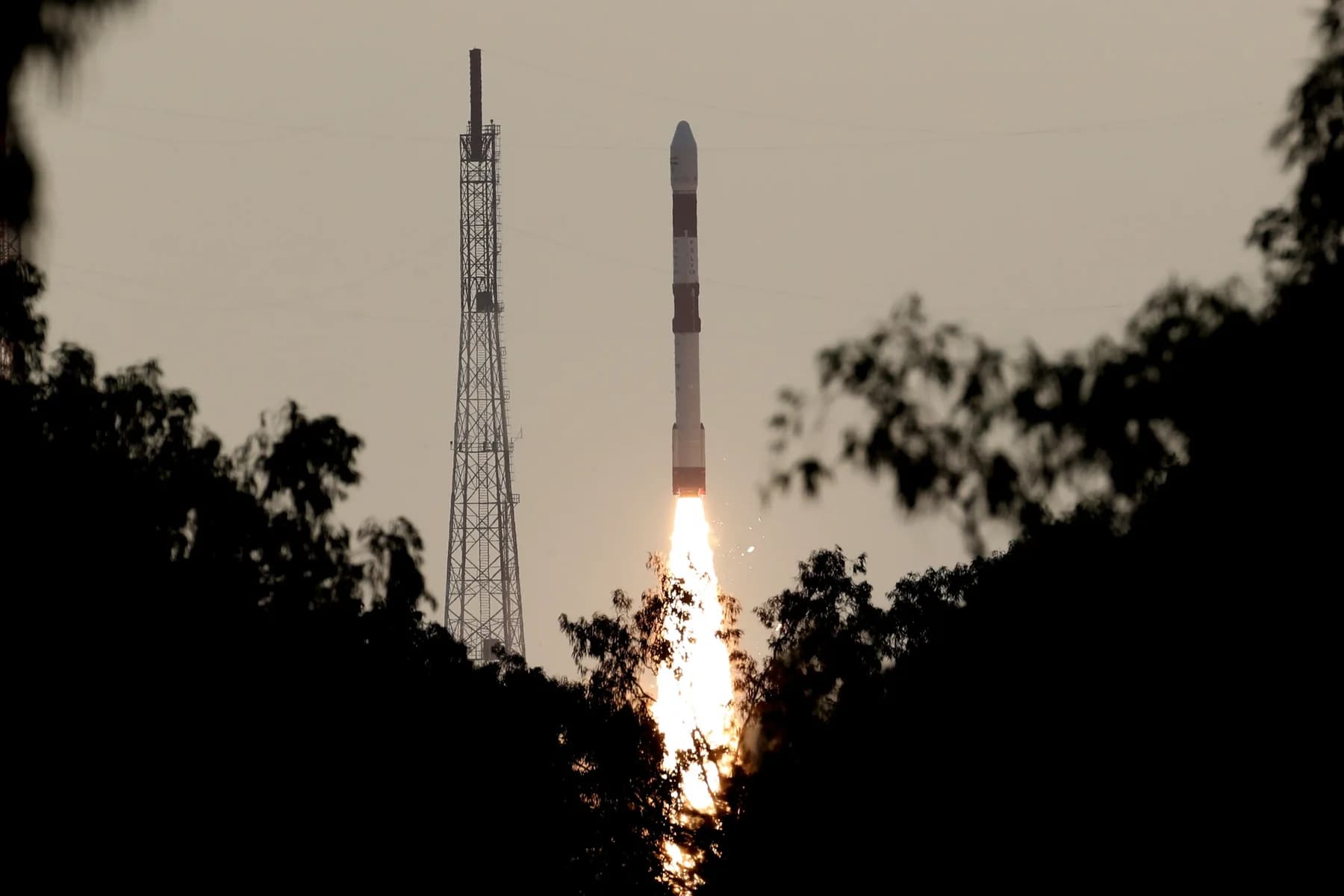
Vikram-1 — India's first privately built orbital rocket, flown by a company Singapore's GIC just helped price at $1.1 billion — is stacked at Sriharikota with its launch window formally open and its maiden attempt already postponed within it (no confirmed new date as of publication; the window runs to August 4, subject to assembly, weather and range clearance). This report is built so that none of its conclusions move with that date: Vikram-1 is the engineering test; the manifest remains the business test. Behind Skyroot stand three more startups betting progressively harder propulsion architectures on progressively less money, up to Astrobase's attempt at full-flow staged combustion — the cycle only one engine in history has ever flown — on a $10 million seed round. The engineering tier is real: test stands are firing, a private high-thrust facility exists, and the state has transferred a whole launch vehicle to industry. What does not exist is the demand. India's entire domestic commercial launch market outside ISRO's own manifest is roughly one Vikram-1 flight per year, and India's flagship private satellites fly on SpaceX. This report tears down each company against verified fact, audits the "India launches cheap" myth per kilogram, runs the China comparison honestly — and concludes the tier's binding constraint is not thrust, it is payloads. Who survives will be decided by whether Delhi converts defence surveillance money into a launch program of record, and by whether the aggregated Indo-Pacific manifest we modeled elsewhere arrives before China's export wave and Starship's price curve close the window. Our call: the window is 2026–2029, Skyroot is the only company priced for it, and the valuation already assumes it stays open.
This is one of the two launch-tier companion deep-dives promised in The Third Pole in Orbit, which sketches the Indo-Pacific demand-aggregation thesis this article tests; read it with The Long March Paradox for the China baseline used throughout.
Disclaimer: This is independent analysis built from public sources — company announcements, regulator documents, government releases, funding disclosures, and trade reporting. The company grades in Section 2 measure publicly verifiable engineering and commercial progress, not investment value, and endorse no company. Where a number is a verified fact, a company claim, a modeled estimate, or the author's inference, the text says so. Singapore Space Agency is a private research platform and does not represent any government.
Methodology: Company scorecards weight verified flown hardware highest, then verified ground-test and facility milestones, then funding actually closed, then commercial contracts with named counterparties, then company-stated roadmaps (which are graded as claims, never as facts). Cost-per-kilogram figures are built bottom-up from disclosed prices and payload masses; every derived figure shows its inputs so a reader can re-price any assumption. The evidence base is current through July 12, 2026; Vikram-1's maiden attempt is recorded as postponed within its July 12–August 4 window, with no confirmed new attempt date as of publication.
1. The 90-Second Summary
The moment. India's first private orbital launch attempt — Skyroot's Vikram-1, Mission Aagaman — has a window of July 12 to August 4, 2026, from Sriharikota; the maiden attempt has been postponed within the window and, as of this report's date, has not flown. The outcome is pending — and, by design, nothing in this report's thesis depends on it: a launch tests engineering, and this report's binding constraint is the manifest.^[3]^[5] Two months earlier, Skyroot became India's first space unicorn: a ~$60M round co-led by Sherpalo Ventures and Singapore's GIC at a $1.1B valuation, with BlackRock-managed funds participating.^[4]^[6] The tier behind it — Agnikul, Astrobase, EtherealX — has collectively raised barely $270M, an order of magnitude less than China's equivalent tier had at the same stage, while betting on architectures up to and including full-flow staged combustion, the hardest propulsion cycle ever attempted.
The layers. Treat India's launch sector as two layers, not one. The state tier (ISRO/NSIL, now partially privatised into HAL and an HAL–L&T consortium) is operational, price-anchored, and capacity-thin: PSLV is proven, SSLV has been sold outright to HAL for ₹511 crore, the first industry-built PSLV flies this year, and the NGLV "Soorya" reusable heavy-lifter just passed a 175-tonne semi-cryo engine test — but its first flight is 2032 at the earliest.^[27]^[29]^[30]^[32] The startup tier is where the story is, and it splits again: Skyroot and Agnikul are small-lift companies about to fly; Astrobase and EtherealX are reusable-medium-lift bets that will not fly before 2028–29. Ranking them flat would be a false comparison; we grade each against its own claims.
The binding constraint is demand, not engineering. India's verified domestic commercial launch demand outside ISRO's own manifest — every private Indian satellite that actually needed a ride in the last 30 months — sums to roughly one Vikram-1 flight per year (Section 8 shows the count). India's flagship private satellites — Tata's TSAT-1A, Pixxel's Fireflies, Digantara's SCOT — all flew on SpaceX.^[35]^[36] A small-lift company needs on the order of 6–12 paid flights a year to survive (modeled, Section 8.2). The famine ratio is roughly ten to one. Every strategy question in this sector reduces to: whose payloads?
The calls, compressed. (1) Skyroot leads, and it is not close — real flown heritage, the only near-term orbital attempt, the only foreign-manifest channel (Exolaunch), and repeat sovereign backing. But $1.1B prices flawless execution and a manifest that does not yet exist. (2) Agnikul is real engineering in a commercially dead size class — 300 kg dedicated launch is the segment where only one company on Earth (Rocket Lab) has survived, on cadence and a US defence customer Agnikul does not have. (3) Astrobase is the most honest architecture bet and the least proven company — the facility is verified and impressive; everything above the facility is a claim, and FFSC-first on $10M is the single most aggressive propulsion wager anywhere in the world right now. Credible engineering and funding narrative — the 2026 full-scale hot fire decides which dominates. (4) The China EV-pattern sequence does not map onto India (Section 9): India has no Guowang-scale domestic constellation procurement to fund a price war, so it gets no war and no shakeout-driven export flood — it gets a state-brokered oligopoly of two or three survivors whose only path to scale is imported demand: defence programs of record, Western rideshare overflow, and the aggregated Indo-Pacific sovereign manifest.^[1] (5) India is not cheap per kilogram — the Section 10 table shows Indian small-lift at roughly 1.5–2.5× SpaceX rideshare prices at mid-case, with only dedicated LVM3 near parity. What India actually sells is the only low-cost-labor launch tier that is simultaneously non-US, non-Chinese, and legally able to fly US-content payloads — a real product, but a niche one.
What would change our mind, with thresholds: an Indian defence responsive-launch program of record contracting ≥6 flights/year; a domestic LEO constellation procurement above 100 satellites; a clean full-scale Astrobase FFSC hot fire in 2026; Vikram-1 success followed by a second flight within six months and a first repeat commercial customer. Absent at least two of those by end-2027, this tier consolidates to Skyroot-plus-HAL and the rest becomes acqui-hire material for India's defence primes. A reader who stops here knows what we think; the sections below show the work.
2. The Tier at a Glance: Four Companies, One Scorecard
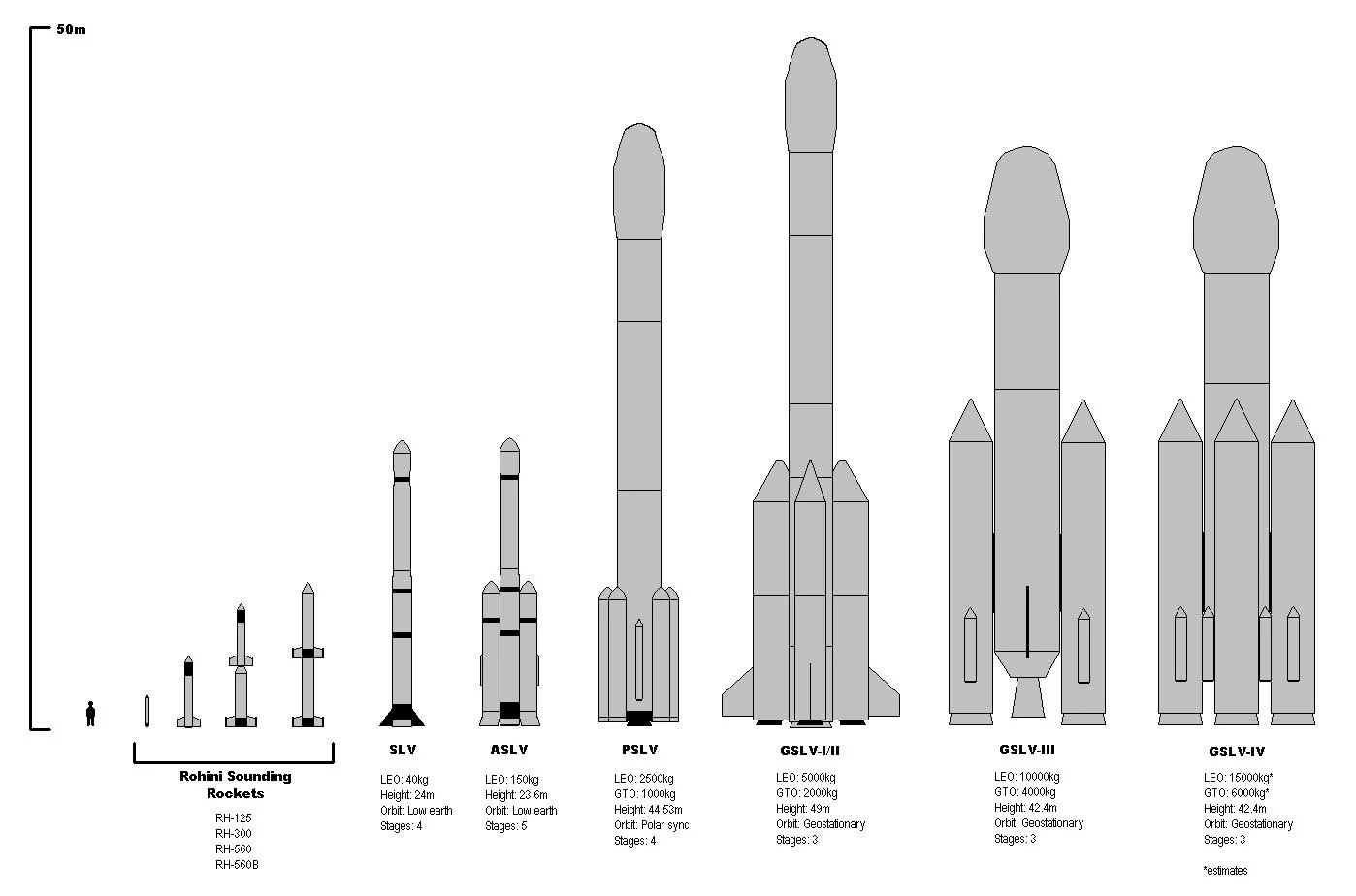
The scorecard first, then the teardowns. Column discipline: "Verified flown/fired" contains only independently reported hardware events; "Claimed next" contains company statements graded as claims.
Two names deliberately absent. Dhruva Space is a satellite-platform and ground-segment company, not a launch company — it belongs in a satellite-manufacturing teardown, not here. The long tail of seed-stage propulsion outfits (SpaceFields' solid boosters, Abyom, and peers) is real as a component ecosystem but has no orbital vehicle program that meets this report's evidence bar; treating them as launch companies would inflate the tier. If one of them closes a Series A on vehicle development, they enter the next revision.
The aggregate number worth staring at: four companies, ~$271M raised, attempting between them one orbital small-lift program about to fly, one more a year behind it, and two reusable medium-lift programs. For calibration, China's commercial launch tier had raised well over $2B (author inference from disclosed rounds across 15+ firms; flagged as an estimate) before its first private orbital success in 2019, and Stoke Space alone has raised several hundred million dollars to get one FFSC engine to ground test.^[23] India is attempting the same technical ladder on roughly a tenth of the capital — which is either the labor-cost advantage working exactly as advertised, or under-capitalisation about to be exposed. Probably both, company by company. The teardowns decide which.
3. Skyroot: The Leader, Priced for a Manifest That Doesn't Exist Yet
3.1 What is verified
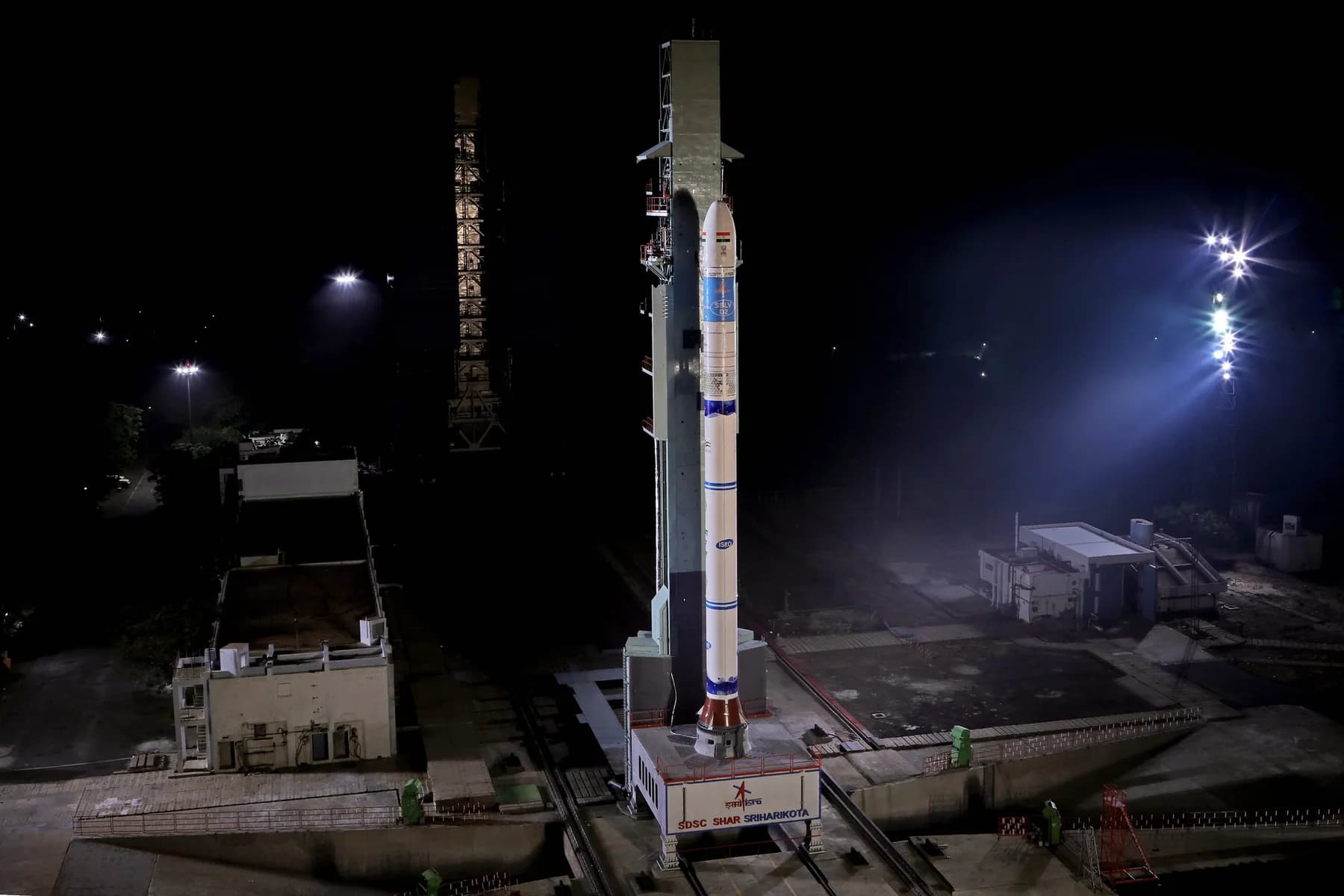
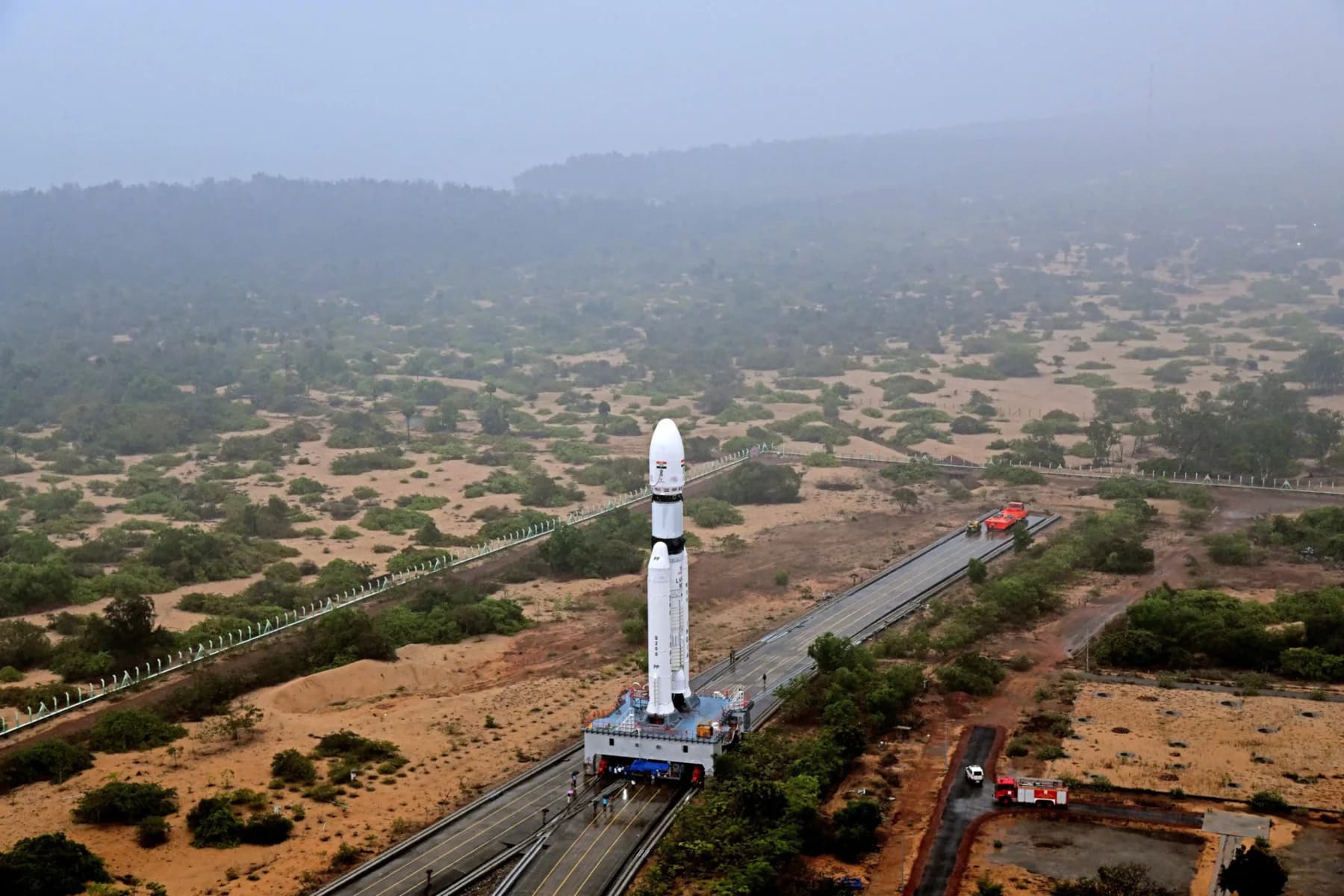
Skyroot Aerospace (Hyderabad; founded 2018 by ex-ISRO engineers Pawan Kumar Chandana and Naga Bharath Daka) holds every first that matters in this tier. Vikram-S, November 18, 2022: the first privately built Indian rocket to reach space, a suborbital solid-motor demonstrator.^[10] Vikram-1, now stacked for Mission Aagaman: a roughly 25-metre, all-carbon-composite, four-stage vehicle — three solid stages plus a liquid orbital-adjustment module — sized for payloads up to ~480 kg to LEO (~300 kg class to higher SSO), targeting a 450 km, 60°-inclination orbit on the maiden flight, with launch authorization running through IN-SPACe.^[3]^[5]^[7] All stages have been ground-fired; the vehicle is the first Indian orbital rocket ever built outside ISRO.^[3]
The capital stack is equally verified and unusually sovereign-flavoured. GIC led Skyroot's $51M Series B in 2022 and co-led the May 2026 unicorn round with Sherpalo Ventures — roughly $60M total, structured as approximately $50M of primary equity plus ~$10M of BlackRock-managed structured debt, at a $1.1B pre-money valuation (~$1.16B post, adding the ~$50M primary and ~$10M debt — reporting consistently frames the $1.1B as pre-money, a doubling of the ~$550M valuation set three years earlier), taking cumulative funding to ~$160M.^[4]^[6]^[10] Sherpalo's Ram Shriram — an early Google backer and Alphabet board member — joins the board.^[4] Read the cap table strategically: Singapore's sovereign wealth fund is now a repeat, conviction backer of Indian private launch, a fact Section 12 returns to.
The commercial architecture is the most developed in the tier, and honestly graded it is channel, not backlog: a Strategic Partnership Agreement with Germany's Exolaunch (October 2025) under which Exolaunch integrates and deploys international customer satellites on Vikram vehicles beginning with Vikram-1 missions — this is the pipe through which Western rideshare demand could actually reach Sriharikota — plus an Axiom Space MoU (June 2025) on LEO logistics, and membership in the 2024 Nibe Space EO-constellation launch agreement.^[12]^[10] None of these is a disclosed firm-order backlog. CEO Pawan Chandana's own framing is that Vikram-1 becomes commercially available in 2027 after the test campaign.^[11]
3.2 What the maiden manifest accidentally reveals
Look closely at what Mission Aagaman is actually carrying, because it is this report's thesis in miniature. The flight manifests six payloads, and the ones publicly identified include a diamond-jewellery art object ("Cosmic Bloom," by Cosmos Diamonds), an 18-carat-gold miniature sculpture of Indian scientific icons ("Microart"), and one genuine technology demonstration — Cosmoserve Space's "Mission Embrace" robotic-arm debris-capture demo.^[8] A maiden test flight carrying symbolic payloads is normal and commercially sensible — nobody puts a $20M satellite on a first launch. But note what is absent: a queue of Indian commercial satellites waiting for the second and third flights. The most consequential launch in Indian private-space history could not fill its fairing with paying spacecraft, because — as Section 8 quantifies — the spacecraft largely do not exist. Gold statuettes on flight one is charming; the question that decides the company is what flies on flights three through ten.
3.3 The valuation audit
Steelman the $1.1B first, because the bulls have a real case: (i) scarcity — Skyroot is the only non-Chinese, non-Western private orbital launch company in Asia this close to orbit, and strategic scarcity commands a premium; (ii) the defence option — India's military space budget is inflecting (Section 8.3), and a proven private launcher is the natural vehicle for responsive-launch money; (iii) the comparables — Rocket Lab traded far above $1.1B before Neutron flew anything, and Firefly listed at multiples of this with a thinner manifest; (iv) the FDI reform makes foreign ownership of this asset legible for the first time.^[25]
Now the audit. At a conservatively modeled $4–6M per Vikram-1 flight (price undisclosed; modeled from vehicle class and Electron's $8.5M ASP minus India's cost base — see Section 10), a mature cadence of 10 flights/year generates $40–60M of revenue at gross margins that small-lift history says are thin. The ~$1.16B post-money is therefore 19–29× a revenue level the company might reach in 2028–29 under good execution — it is not a launch-services multiple at all. It is a claim that Skyroot becomes one or more of: (a) the anchor contractor of an Indian defence launch program of record; (b) the Vikram-2-and-beyond medium-lift consolidator of the Indian tier; (c) the third-pole launch supplier to aggregated Indo-Pacific sovereign demand.^[1] Each is plausible; none is contracted. Verdict: Skyroot is the genuine leader and simultaneously the tier's most narrative-dependent price. The engineering risk is the smallest in the tier; the valuation risk is the largest. And the valuation carries an embedded dilution clock the headlines skip: reaching a 10-flight/year cadence plus Vikram-2 development plausibly needs another $150–250M of capital (modeled from the §8.2 cost base and vehicle-development comparables) — one to two more rounds — so between today's $1.1B pre-money and the revenue level that justifies it sits an estimated 25–40% of further dilution, more if any round prices flat or down. The $1.1B is not just a bet that the manifest arrives; it is a bet that it arrives before the cap table pays for the waiting.
What Vikram-1's outcome actually changes: success makes Skyroot the only company in the Indo-Pacific startup tier with orbital heritage and resets every conversation about Indian launch credibility; a failure is survivable (Rocket Lab, Astra, and half of China's tier lost maiden flights) provided the second vehicle flies within two or three quarters — which is a production question, and Skyroot's stated use of the unicorn round is precisely cadence and Vikram-2 acceleration.^[4] The kill signal is not a failed first flight; it is a failed first flight followed by a silent 2027.
4. Agnikul: Exquisite Engineering Aimed at the Graveyard Segment
4.1 What is verified
Agnikul Cosmos (Chennai, IIT Madras-incubated, founded 2017) has the tier's most technically distinctive verified achievement: Agnibaan SOrTeD, May 30, 2024 — a suborbital flight powered by the world's first single-piece 3D-printed rocket engine to fly, launched from India's first private launchpad (ALP-01, Sriharikota).^[13]^[14] That is not incremental: printing an entire semi-cryogenic engine as one part attacks the cost structure of engine manufacturing at its root, and flying it settles the "does it survive real loads" question. Through H1 2026 the company progressed to three-engine and then four-engine clustered static fires — reported as India's first multi-engine semi-cryo cluster tests, the gating capability for an orbital first stage — and states an orbital attempt "later this year" with booster-recovery experimentation on the roadmap.^[15] Funding: ~$75.5M cumulative, a ₹25 crore Tamil Nadu state investment in early 2026 (the first Indian state-government equity in a space startup), a closed $17M round at ~$500M in November 2025, and reported talks for $50–75M more at the same ~$500M — two consecutive pricings at a flat valuation, which is itself a market signal worth registering.^[16]
4.2 The segment problem, stated without mercy
Agnibaan is a ~300 kg-to-LEO dedicated launcher.^[15] The global record of that segment is a graveyard: Astra (delisted, pivoted), Virgin Orbit (bankrupt), Relativity's Terran 1 (abandoned for medium-lift), Vector (bankrupt), ABL (pivoted to missiles). Exactly one company has made dedicated small-lift work — Rocket Lab — and our own teardown of it shows how: ~$8.5M per Electron against ~$26k/kg, a record 16 launches in 2024 rising to 21 in 2025, a US defence/intelligence customer base that pays for schedule and orbit precision, and even then launch is the low-margin storefront for a vertically integrated space-systems business.^[40] The segment's one survivor survives on cadence and a customer Agnikul does not have.
Steelman Agnikul's counter: (i) its cost base is Indian — the breakeven cadence is genuinely lower than Electron's (Section 8.2 models the threshold at 6–12 flights/year, and Agnikul plausibly sits at the bottom of that band); (ii) "launch anywhere, anytime" configurability plus a private pad is a real responsive-launch pitch to the Indian MoD, the one domestic customer whose demand curve could inflect (Section 8.3); (iii) the printed-engine cost curve improves with every unit in a way solid-stage architectures do not. All true. But every one of those arguments is a defence-demand argument wearing a commercial costume — and India's responsive-launch program of record does not yet exist. Verdict: B+ on engineering, C on segment economics; Agnikul's realistic terminal states are (a) India's Electron-analog on defence cadence, if and only if Delhi builds the program, or (b) the tier's premier propulsion asset inside someone else's company. An orbital success this year changes the odds between those outcomes, not the outcomes.
The timeline should also be graded honestly: Agnikul's leadership was guiding "orbital within a year" in mid-2024;^[14] the attempt is now claimed for late 2026.^[15] A two-year slip on a two-stage vehicle is normal for the industry and consistent with a company doing cluster integration properly rather than rushing — but it means Agnikul reaches orbit, at best, four-plus years behind Rocket Lab's cadence curve at the same age, in a smaller home market.
5. Astrobase: Auditing the Hardest Claim in the Tier
Astrobase is where this report slows down, because the company makes the single most aggressive engineering claim in Asian commercial launch and deserves neither the hype it gets from Indian tech media nor a reflexive dismissal.
5.1 The claims, itemised and graded
Astrobase Space Technologies: founded 2024 by Neeraj Khandelwal — co-founder of crypto exchange CoinDCX — with ex-ISRO propulsion scientists including Devakumar Thammisetty; $10M seed led by BanyanCo.^[17] The claim stack, each item graded:
5.2 How hard is FFSC-first, actually?
This platform has a full technical explainer on why full-flow staged combustion is the Everest of engine cycles — two preburners, one fuel-rich and one oxidiser-rich, driving separate pump trains, all propellant through the chamber — and why it is simultaneously the highest-performance and most reuse-durable architecture; we will not re-teach the cycle here.^[21] What this article must do is state the historical base rate, because it is the audit's anchor:
Sixty years of propulsion history; one FFSC engine family has reached flight. SpaceX got there with, conservatively, over a billion dollars of engine-program spending, hundreds of development engines, and a decade of iteration (author inference from program history; SpaceX publishes no engine P&L). LandSpace — backed by one of the deepest-funded private space companies in China — has an FFSC engine at roughly Raptor-2 thrust class in ground test and still chose to fly its current-generation rocket on simpler gas-generator engines first.^[22]^[2] Stoke, with several hundred million dollars raised, has hot-fired but not flown.^[23] Astrobase proposes to compress this on a $10M seed round plus milestone-linked state support.
5.3 The steelman, and the verdict
The bull case is better than it looks, and it has three legs. First, the architecture logic is sound: if you accept that India's tier will not reach orbit at scale before 2029 anyway, then building for the terminal architecture — the one that supports high-cadence reuse — rather than spending five years on a gas-generator dead-end is defensible. Being eight years behind SpaceX on the right architecture may beat being five years behind on the wrong one; this is precisely the argument our FFSC explainer makes about why the cycle is the minimum viable architecture for large reusables.^[21] Second, the sequencing is correct: facility before vehicle, powerhead before full engine, engine before airframe. That is the ISRO propulsion culture the founding team came from, and it is the opposite of the vaporware pattern (render first, test stand never). The Anantapur stand is real, rated far above the current engine (200 t class against an 80 t engine), and is itself a monetisable asset — India has no other private high-thrust test infrastructure, and every company in this report plus HAL is a potential customer.^[19] Third, the cost base is not American: an Indian propulsion team at 25–40% of US engineering cost (author inference from industry salary data, consistent with our earlier work^[1]) genuinely stretches $10M several multiples further than it stretches in Kent, Washington.
Now the bear case, which is arithmetic. Raptor-class development consumed capital three orders of magnitude beyond Astrobase's disclosed funding. Even applying a generous 4× India cost multiplier and crediting 2020s knowledge spillover (published Raptor telemetry, additive-manufacturing maturity, methalox tooling now commercial), a credible full-scale FFSC engine program plus a seven-engine reusable vehicle is a $150–400M program minimum (modeled estimate; re-price it, but not below the sum LandSpace has visibly spent on Lanyan alone). The 2029 maiden-flight claim therefore contains an implicit, undisclosed $140M+ of future fundraising — meaning the real 2026 test is not only whether the engine fires, but whether a clean fire unlocks the Series A/B that the plan silently requires. The crypto-founder provenance cuts both ways: it explains the appetite for a moonshot and access to non-traditional capital, and it means the company has no aerospace revenue discipline to fall back on if the narrative stalls.
Verdict: C+ — credible engineering direction, correct sequencing, verified infrastructure, and a business plan that is currently a claim about future fundraising. The honest label is neither "India's SpaceX" nor "funding narrative": it is a well-sequenced option on Indian FFSC, whose strike date is the 2026 full-scale hot fire. A clean, published, full-duration burn this year would make Astrobase the most technically interesting launch startup in Asia and would validate the 2029–31 regional reusable tier our third-pole model's Phase-2 launch gate depends on.^[1] A slipped or partial campaign relegates the company to test-infrastructure-as-a-service — which, note, is a real business, just not a $1B one.
6. EtherealX and the Rest: Ambition per Dollar
EtherealX (Bengaluru, founded 2022) out-claims even Astrobase: Razor Crest Mk-1 is pitched as a fully reusable medium-lifter — booster and upper stage both recovered — with nine Stallion engines on the first stage and fifteen Pegasus engines on the second, a demo vehicle in late 2027 and commercial service from late 2028, funded by a $20.5M Series A (TDK Ventures and BIG Capital, January 2026, with Accel and Prosus participating) at an $80.5M valuation, on top of a $5M seed.^[24] Full reusability including the upper stage is the problem SpaceX has not finished solving with Starship, and Stoke Space — the only startup architected for it from day one — has consumed an order of magnitude more capital getting to ground test.^[23] EtherealX's own gating milestone is engine hot fires by mid-2026 and a 150-acre Andhra Pradesh campus operational on the same timeline.^[24] Until those fires happen, the correct price on the technical claims is zero and the correct read on the company is a well-backed engine program with a vehicle-shaped pitch deck. The ~6× valuation jump in seventeen months (₹120 crore seed, August 2024 → ₹720 crore post, January 2026) tells you Indian deep-tech capital wants a reuse story; it tells you nothing about turbopumps. Grade: C, review upon first hot fire — which is due within months, so the grade has a short shelf life.
The honest map of the remainder: Dhruva Space builds satellite platforms and ground stations (real company, wrong article); Bellatrix Aerospace is in-space propulsion; SpaceFields and a handful of solid-motor and component startups form a genuine supplier base — several are already vendors to the four vehicle programs above — but none has an orbital launch vehicle program with funded hardware. India's launch-startup tier, properly counted, is four companies. Anyone telling you it is fifteen is counting pitch decks.
7. The State Backdrop: Scaffold and Ceiling at Once
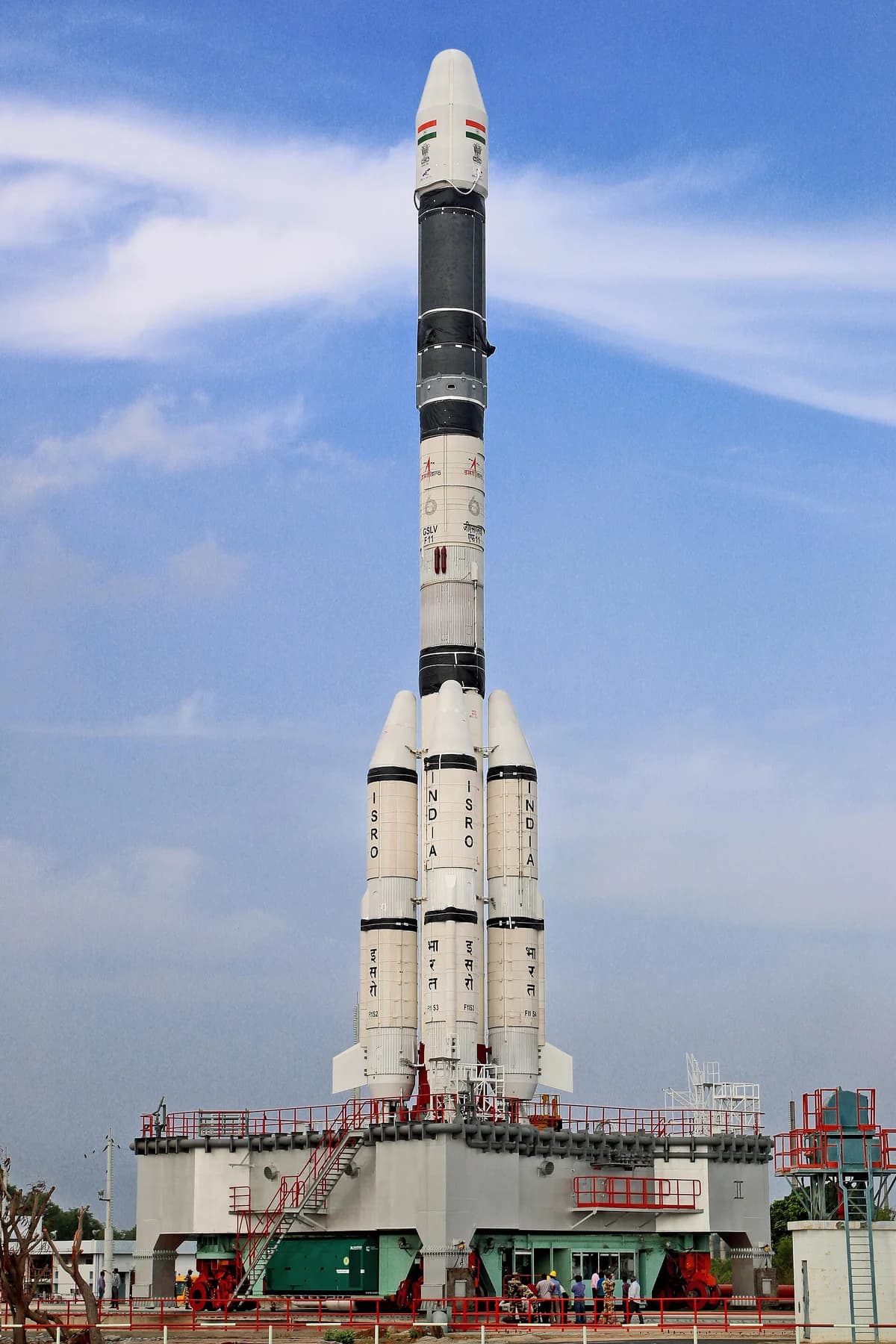
The startups exist inside a state structure that is simultaneously the most supportive it has ever been and the quiet source of their hardest problems. Five facts frame it — kept brief, because the state is context here, not protagonist.
One: the policy stack is genuinely reformed. The 2023 Indian Space Policy formalised the division of labour — ISRO does R&D, NSIL runs commercial operations, IN-SPACe authorises and promotes private activity;^[26] the February 2024 FDI amendment opened 100% automatic-route foreign investment in space components, 74% in satellite manufacturing/operation, and 49% in launch vehicles (the launch cap held lower explicitly on dual-use grounds);^[25] and IN-SPACe now functions as a single-window authoriser with over 100 ISRO technology-transfer agreements executed and a stated ambition to grow India's space economy from ~$8.4B to $44B by 2033.^[33]^[34] The GIC/Sherpalo round and TDK Ventures' EtherealX cheque are direct products of the FDI change — foreign capital in the tier is verified reality now, not aspiration.
Two: the state is transferring whole vehicles, not just components. The SSLV — ISRO's ~500 kg small-lifter — was sold outright to Hindustan Aeronautics Ltd for ₹511 crore in a competitive bid (HAL beat an Adani-backed consortium), with technology transfer running through 2027, HAL free to build and commercialise independently from August 2027, and NSIL already scheduling SSLV missions from late 2026.^[27]^[28] The HAL–L&T consortium separately holds a ₹860 crore contract for five PSLVs, with the first industry-built PSLV (PSLV-N1, carrying EOS-10) expected in 2026 after payload-side delays.^[29] This is privatisation of production, not of design — and it inserts a state-champion competitor directly into the startups' segment: an HAL SSLV at NSIL-subsidised pricing is Vikram-1's most dangerous domestic rival, selling essentially the same 300–500 kg dedicated service with a sovereign balance sheet behind it. The startups' only durable answer is positioning, not price: HAL sells Indian sovereign concrete — parliament-auditable, procurement-cycle-bound, politically unimpeachable for state payloads — while Skyroot sells a global commercial platform: foreign cap table legibility (GIC on the register), the Exolaunch channel, and decision speed no PSU procurement law permits. Those are different products wearing the same fairing diameter, which is why HAL's entry compresses the startups' domestic pricing without automatically taking their export and defence-responsive niches.
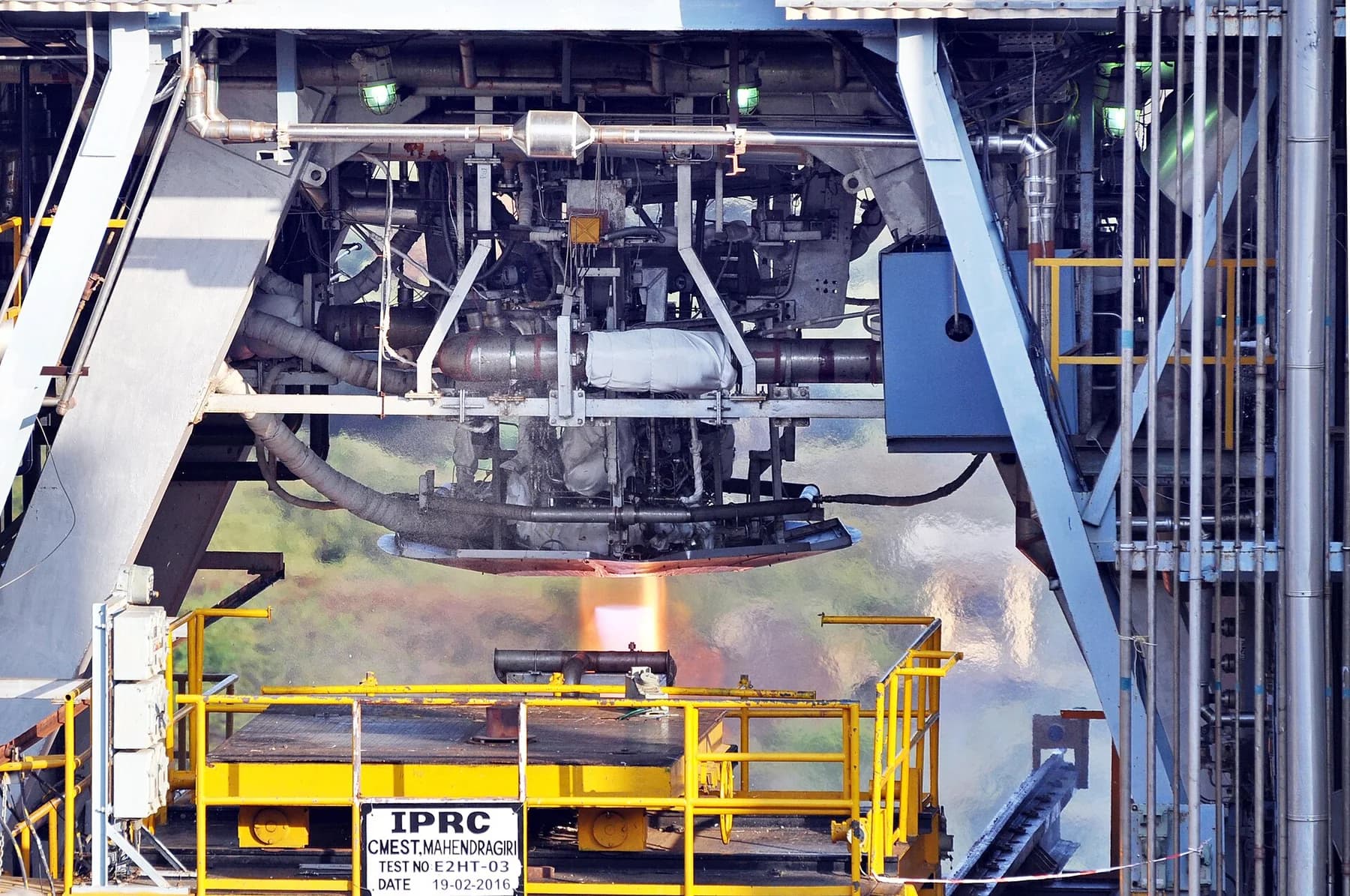
Three: the future heavy-lift roadmap is real but slow. The NGLV — "Soorya," approved by Cabinet in September 2024 at ₹8,240 crore for three development flights — is a partially reusable medium-to-heavy vehicle (first stage rated for 15–20 reuses) intended to triple LVM3's capacity.^[32] Its pacing item, the 2,000 kN SE-2000 semi-cryo engine, passed a milestone on June 24, 2026: the eighth power-head test article hot fire, reaching 175 tonnes of thrust — 88% of rated — with full-thrust demonstration next.^[30]^[31] (Precision note: ISRO frames the test within the SC120 stage program that will replace LVM3's L110 core; the engine family serves both the LVM3 upgrade and NGLV — its pacing role for NGLV is this report's reading, not ISRO's sole framing.) Credit where due: that is one of the harder engines under development anywhere outside the US and China (oxidiser-rich staged combustion at 2 MN). But the program's own approved schedule runs 96 months from 2024 — development flights 2032–2035.^[32] The Indian state will not field a reusable vehicle this decade. Which means: if a reusable Indian rocket flies before 2032, it will be a startup's — that is the entire strategic significance of Astrobase and EtherealX, and the reason IN-SPACe is signing milestone agreements with a two-year-old company.^[19]
Four: the state's prices anchor the market from below. NSIL's commercial tariffs — modeled from public figures at roughly $10,000–14,000/kg on SSLV, $9,000–18,000/kg on PSLV, and $5,000–8,000/kg on dedicated LVM3 missions^[1] — are not cheap by global standards (Section 10), but they are the domestic ceiling: no Indian startup can price above the state's vehicle for the same orbit and survive procurement scrutiny. Every startup's unit economics are therefore squeezed between NSIL's administered ceiling and SpaceX's commodity floor.
Five: the state is also the biggest customer — and keeps its demand in-house. ISRO's own missions, the national EO fleet, NavIC (2-tonne-class navigation satellites on GSLV — irrelevant to smallsat launchers, whatever the occasional "NavIC augmentation" pitch implies), and the bulk of SBS-3 fly on ISRO/NSIL vehicles by default. The startups get the state's blessing; the state's payloads still mostly go to the state. That asymmetry is the bridge to the demand problem, which is the heart of this report.
8. The Payload Famine: The Arithmetic That Decides Everything
8.1 Count the actual demand
Strip away projections and count verified Indian commercial payloads — over the last 30 months. Ledger rules, stated so this number can be attacked on its definition rather than its arithmetic: counted — spacecraft owned by non-government Indian entities that required a paid ride to orbit, whether flown dedicated or rideshare (rideshare mass converted to Vikram-1-equivalents by mass, not by mission count); excluded — ISRO/NSIL institutional missions (the state launches its own), defence programs of record (counted separately as Candidate 1 in §8.3, because their procurement channel is different), foreign-owned payloads brokered through Indian entities (that is export demand, Candidate 2), and Indian-owned satellites still under contract but unflown (listed when verifiable, flagged as pipeline). This is a modeled census of visible demand, not a claim of omniscience — classified or unannounced defence smallsats would raise the count, which is precisely why §8.3 treats defence as the swing variable rather than pretending it is in this table:
Read the total: on the order of eight to twelve spacecraft in thirty months, aggregate mass well under two tonnes — roughly one fully-loaded Vikram-1 flight per year of domestic commercial demand, at one hundred percent capture. And the capture rate is currently zero: every flagship Indian private satellite above chose SpaceX, at $6,500–7,000/kg rideshare pricing that no Indian dedicated small-lifter can touch (Section 10). This is not disloyalty; it is procurement. Pixxel and Digantara are venture-backed companies buying the cheapest reliable kilogram on the market, and the cheapest reliable kilogram is American.
Set that against the supply now being built: Vikram-1 (2027 commercial), Agnibaan (2027–28 realistic), HAL's SSLV line (6–10 vehicles/year targeted from 2028^[27]), plus NSIL's 15 scheduled SSLV missions.^[27] India is constructing, quite deliberately, perhaps 20–30 small-lift launch slots per year of domestic supply by 2028 against approximately one flight per year of verified domestic commercial demand. The famine ratio is not subtle.
8.2 The survival threshold, built bottom-up
How many paid flights does a small-lift company need? Build it (all modeled estimates; re-price freely):
Conclusion: roughly 6 flights/year is cash-neutral only on the most favourable assumptions; 8–12 paid flights/year is the credible commercial-survival band. Applied per company (modeled): Skyroot, with the larger team, own composite production and an orbital campaign to amortise, sits at the top of the cash-need band (~$45–58M/yr at 6 flights) and therefore needs the upper end of the flight range or defence-premium pricing; Agnikul, smaller and printing engines as single parts, plausibly sits at the bottom (~$27–40M/yr) — which is exactly why its terminal states in §4.2 are "defence Electron-analog" or "acquired propulsion asset," not independent commercial survival at market prices. India's labor arithmetic genuinely halves the threshold relative to a US peer — Rocket Lab needed ~16 Electron-class missions in 2024 plus a systems business to make the model respectable^[40] — but halving a threshold does not conjure the manifest that must clear it. Domestic commercial demand covers perhaps one-tenth of one company's survival band, and there are two companies in the segment plus HAL.
8.3 So whose payloads? Test the three candidate answers
Candidate 1: government-guaranteed demand. This is the only domestic answer with real money behind it. The Space Based Surveillance Phase-3 program — approved October 2024, ₹26,968 crore (~$3.2B), 52 satellites by end-2029, 31 of them to be built by private industry (Ananth Technologies, Centum, Alpha Design named; build timelines compressed to 12–18 months) — is the largest space procurement in Indian history.^[37] The honest caveats: most SBS-3 spacecraft are several-hundred-kg-to-tonne-class and will default to PSLV/SSLV-class NSIL launches, and the launch procurement has not been competitively opened to startups. The genuinely startup-shaped demand is responsive launch — rapid replenishment of surveillance capacity, the mission Vikram-1's 24-hour-integration pitch and Agnikul's private-pad "launch anywhere, anytime" architecture are transparently designed for. India watched the April–May 2025 conflict with Pakistan drive exactly this requirement into policy (the SBS-3 acceleration is explicitly framed around it^[37]). Modeled: a formal responsive-launch program of record could anchor 4–8 flights/year across the tier by 2028–30 — which, note, is most of one company's survival band, and is why we keep saying the tier's real customer is the Ministry of Defence whether the pitch decks admit it or not. It does not exist yet. Watch for it.
Candidate 2: export demand. Here India holds one real structural card, best seen against the China baseline: any satellite containing US-origin ITAR/EAR-controlled components — which is most Western smallsats — cannot legally fly on a Chinese vehicle, a constraint that caps China's commercial rideshare book at tens of payloads over five years.^[2] No such bar applies to India: US-licensed commercial smallsats have flown on PSLV for years, and the Exolaunch partnership is precisely a machine for routing Western manifest onto Vikram.^[12] India is therefore the only low-cost-labor launch tier that is simultaneously non-US, non-Chinese, and legally open to US-content payloads. The limiting factor is price: Western rideshare demand clears at Transporter's $7,000/kg,^[38]^[39] and Indian dedicated small-lift cannot meet that number (Section 10). What India can sell abroad is the dedicated product — your orbit, your schedule, no US vehicle in the loop — to customers who value schedule control or non-US flags: Southeast Asian agencies, Gulf EO programs, Japanese and Korean startups with full manifests at home, and Western constellation operators needing plane-fill on a specific timeline. Modeled honestly: 2–5 export flights/year across the tier by 2028 at premium-to-rideshare pricing. Real, insufficient alone.
Candidate 3: the aggregation thesis. Our third-pole design study argues the Indo-Pacific's national launch tiers are individually starving but collectively feedable: a multi-sovereign orbital-compute operator procuring 4–8 dedicated medium launches in a 2028–29 window and 20–40 more in Phase 2, competitively awarded across Indian, Japanese and Korean suppliers, plus the sovereign constellations that a proven third-pole procurement model would catalyse.^[1] For India specifically, that thesis names PSLV/LVM3 as Phase-1 bidders and "Astrobase-class reusables if flying" as Phase-2 bidders. This report's contribution to that model is a verification status: the Indian supply side of the thesis is on schedule at the small end (Vikram-1 at the pad) and pre-hardware at the medium end (Astrobase's hot fire pending, EtherealX pre-fire). Aggregated sovereign demand is the only candidate large enough to feed medium-lift reusables by 2030 — and it is, as of today, a design study, not a purchase order. Anyone underwriting the tier on it should say so out loud.
The synthesis: stack all three candidates at their modeled midpoints and the tier-wide paid manifest in 2028–30 is perhaps 8–15 flights/year — enough for one comfortable survivor or two hungry ones, not four. That is the sentence the whole report exists to deliver, and it is why the China comparison matters next: China's tier faced the same arithmetic and got rescued by a domestic megaconstellation. India has no Guowang.
9. The China Mirror: Why India Does Not Get the EV Movie
9.1 The tempting analogy
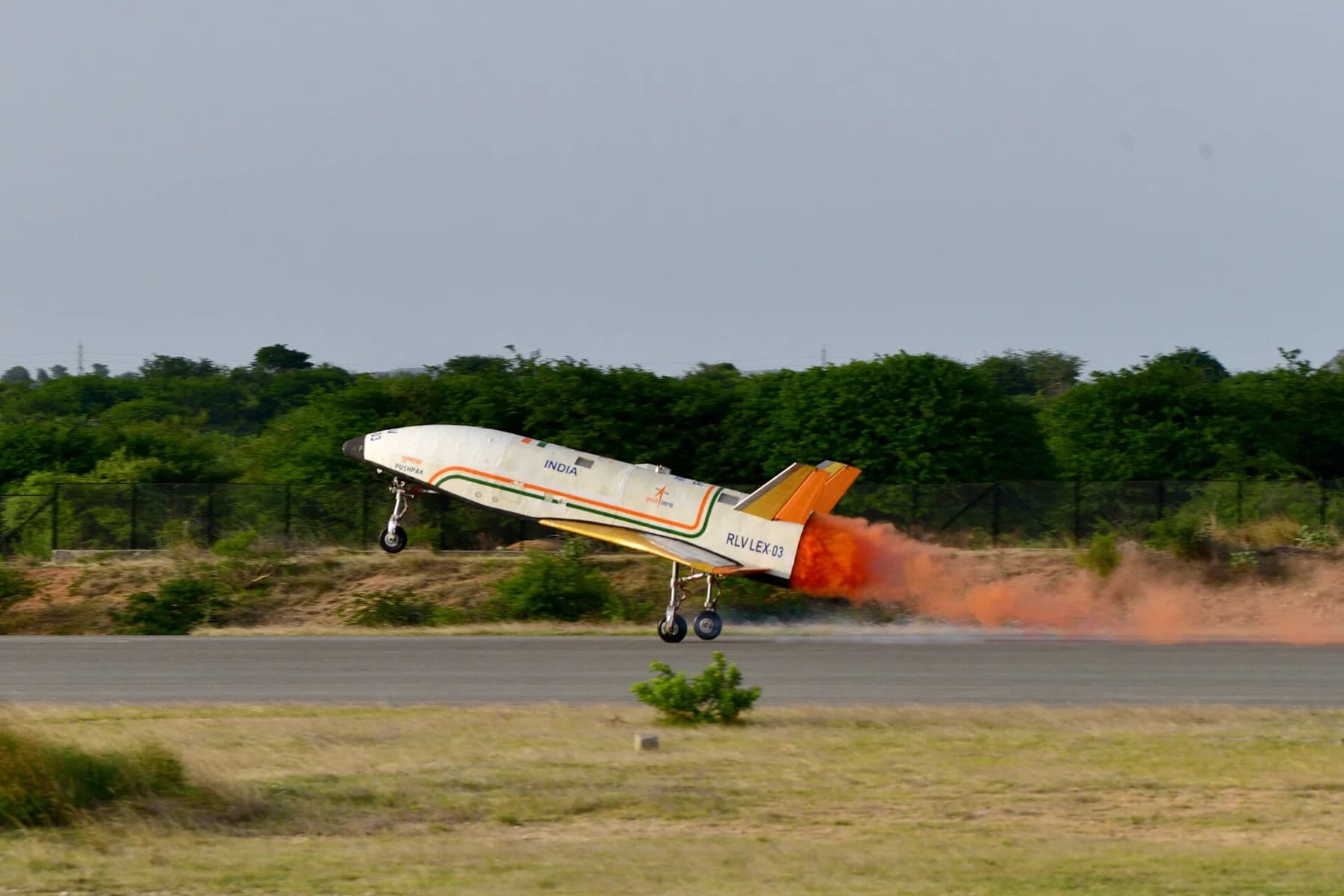
Superficially, India 2026 is China 2019–21 with the serial numbers filed off: a policy opening (India 2020/2023 ≈ China 2014–15), a founding wave of ex-state-program engineers with venture money, first private orbital attempts (iSpace flew July 2019; Skyroot attempts July 2026 — a seven-year lag on that marker), pre-reuse architectures, and state test infrastructure rented to startups. Our China companion models where that sequence went next: domestic constellation procurement arrives (Spacesail's $187M tender, 2025), a price war follows as reusables mature (~2027–28), a shakeout consolidates fifteen-plus firms to four to six, and the survivors flood outward in 2029–31 — the EV pattern, re-run in launch, with the July 10, 2026 Long March 10B maiden-flight booster recovery starting the re-flight clock.^[2] If India is simply China minus seven years, the playbook writes itself: wait for Indian constellation procurement, fund the price war, back the export survivors.
9.2 Why the sequence breaks
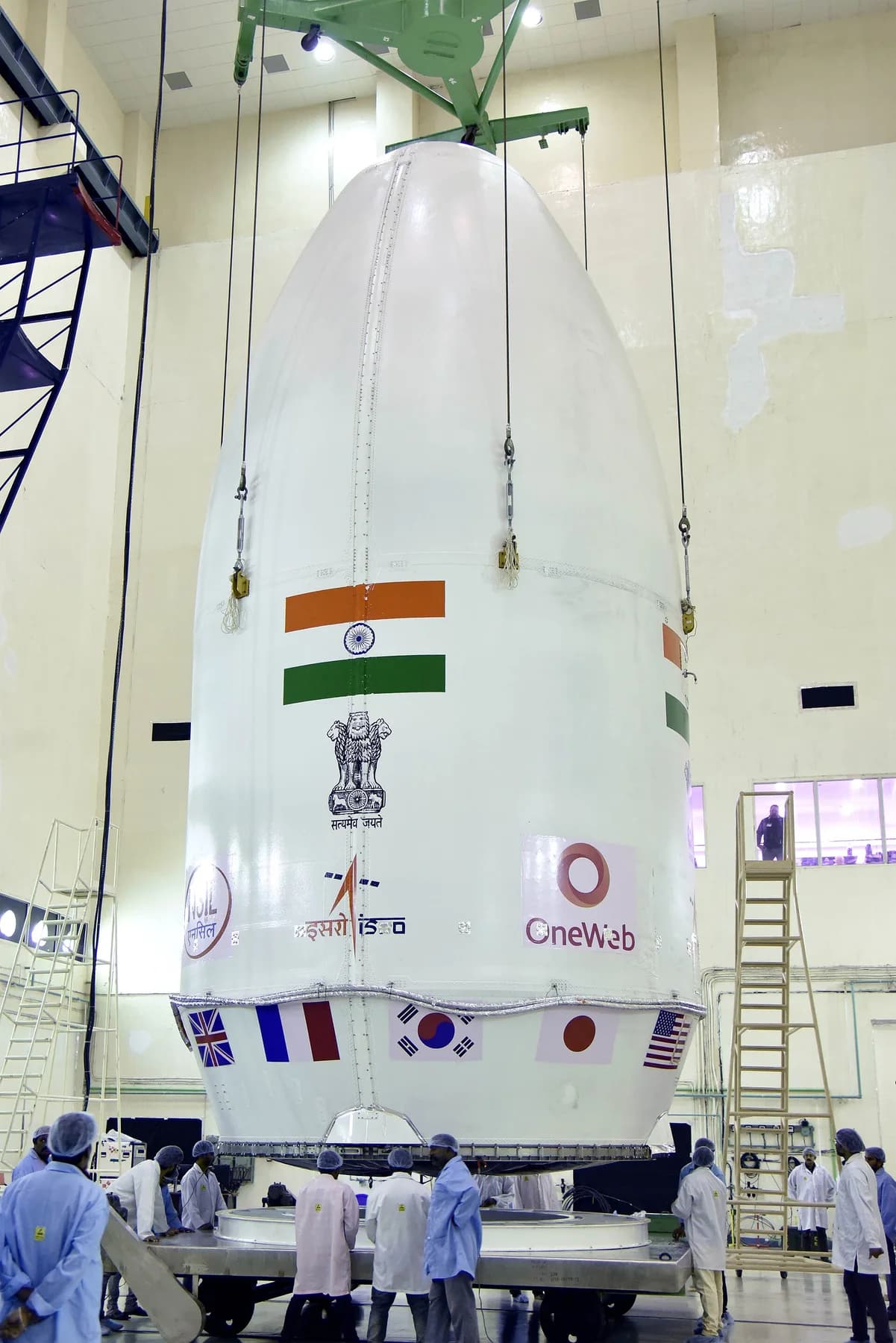
(One consistency note across this platform's series, so no reader trips on it: our venture blueprint maps the EV sequence onto China's launch sector and models a 2029–31 export wave; this section argues the same sequence does not map onto India. Both are the same claim — the EV pattern is a consequence of demand structure, not a law of industrialisation — applied to two different demand structures.) It breaks on the first domino. China's tier was rescued from its own payload famine by state constellation demand at national-mission scale: Guowang's 13,000-satellite filing and Qianfan's 15,000-satellite ambition created — however dysfunctionally (our companion documents the starvation in detail^[2]) — a procurement pool measured in hundreds of launches, awarded through tenders startups could win. India has no equivalent and none is coming on this window's timeline: no Indian LEO broadband megaconstellation is filed at scale, funded, or in procurement; SBS-3's 52 satellites over five years is a real program but two orders of magnitude smaller than Guowang; and India's consumer connectivity market is being contested by Starlink, OneWeb (via Bharti, launched on LVM3 — note the irony: India's biggest constellation launch customer ever was a foreign constellation buying emergency capacity^[1]) and Jio's GEO/terrestrial mix, none of which generates Indian launch demand.
No megaconstellation, no price war — a price war requires something to fight over. No price war, no forced shakeout at scale. No shakeout, no cohort of battle-hardened, cost-crushed exporters. The EV sequence is not a law of developing-economy industrialisation; it is a consequence of demand structure, and India's demand structure is inverted: China built demand first (state constellations) and let supply fight for it; India is building supply first (four startups, HAL, NSIL slots) and hoping demand arrives.
9.3 So what does India get instead? The call
Steelman the "export-first leapfrog" optimists before ruling: because ISRO's administered prices anchor the domestic market low and thin, Indian startups are forced outward from day one — Exolaunch, Gulf and ASEAN dedicated missions, the US-content legality card — and export-first discipline plus Indian cost structure could make them leaner exporters than China's domestically-fattened tier, without a capital-incinerating price war on the way. There is something to this: Skyroot's channel strategy is genuinely export-shaped, and the tier's capital efficiency is real.
But the leapfrog thesis fails on timing, and timing is the whole game. India's exportable small-lift product matures 2027–28 — exactly when, per our China companion's dated model, Chinese reusables begin their domestic price war, and two to three years before the Chinese export wave (2029–31) puts $2,000–4,000/kg non-Western capacity into every market India would sell to (every market, that is, without US-content payloads — the one moat that survives).^[2] Meanwhile Starship's price curve, whatever its schedule, presses down from the commodity end.^[1] Indian medium-lift reusables — the products that could compete in that world — are 2029 claims resting on engines that have not done a full-scale hot fire.
The position: India gets neither the EV sequence nor the leapfrog. It gets a state-brokered oligopoly — the characteristically Indian outcome, visible already in the HAL vehicle transfers: by 2030, an Indian launch sector of two or three entities — Skyroot (the funded private champion), HAL/NSIL (the state's commercial vehicle line), and at most one of {Agnikul, Astrobase, EtherealX} — flying a combined 10–20 missions/year, anchored by defence and NSIL demand, exporting at the margin on the non-US/non-China/US-content-legal niche, with the also-rans absorbed as propulsion teams and test infrastructure by the survivors or by defence primes (Adani, L&T, Tata all have space ambitions and chequebooks). That is a real industry and a strategically valuable one. It is not a wave, and investors priced for a wave will be repriced. What would overturn this call: an Indian constellation program of record above ~100 satellites with competitive launch procurement (the one event that would import China's sequence), or aggregated Indo-Pacific sovereign demand arriving at Phase-2 scale per the third-pole model.^[1] Watch for exactly those two events and nothing else; everything else is noise.
10. The Cost-Claim Audit: India Is Not Cheap — It Is Non-Aligned
"India launches at a fraction of Western cost" survives in headlines because it was true for mission budgets (Chandrayaan-3 famously cost less than a Hollywood film) and for labor. It has never been true per kilogram against SpaceX, and the tier's strategy only makes sense once that is faced squarely.
Read the table honestly: Indian dedicated small-lift runs ~1–3× SpaceX rideshare per kilogram (≈1.5–2.5× at mid-case modeled prices), PSLV/SSLV ~1.3–2.6×, and only dedicated LVM3 approaches rideshare parity (0.7–1.1×) — and LVM3 is not a smallsat product. The Chandrayaan arithmetic (cheap engineers) does not transfer to $/kg because $/kg at small scale is dominated by physics and cadence, not salaries: a 300 kg-class expendable rocket amortises an entire vehicle, campaign, and range over a few hundred kilograms no matter who builds it. India's labor advantage shows up not as cheap kilograms but as survivable low cadence — the ability to lose money slowly enough to reach the milestones that matter (Section 8.2's halved breakeven). That is a real advantage; it is just not the one in the headlines.
So what does India actually sell? Three things, each with a binding boundary:
- Non-US, non-Chinese dedicated capacity. Your orbit, your schedule, no dependence on an American commodity queue or a legally unreachable Chinese one. Binds for: sovereign and defence-adjacent payloads across the Indo-Pacific, Gulf and Africa; Western operators needing schedule insurance. Does not bind for: cost-driven commercial rideshare, which stays on Transporter.
- US-content legality plus low-cost labor — the combination neither China (ITAR-barred^[2]) nor Europe (high-cost) offers. Binds for: Western smallsat primes and aggregators (the Exolaunch channel^[12]). Does not bind if: the price gap to rideshare exceeds what schedule control is worth — roughly a 2× premium ceiling, on revealed customer behaviour (author inference).
- Engineering labor at 25–40% of US cost, inside a legally investable jurisdiction post-FDI-reform.^[25] This is what GIC and TDK are actually buying: not cheap launch, but cheap development of assets (vehicles, engines, test infrastructure) whose strategic scarcity is priced globally. Binds for: capital. Does not bind for: customers — a cheap-to-build rocket is not a cheap ride unless cadence arrives, and cadence is a demand problem (Section 8).
The audit's bottom line: "cheap Indian launch" is a capital-markets product today and a customer product only after cadence. Any pitch inverting that order is selling the wrong slide.
11. What Would Make the Tier Investable at Scale: Falsifiable Milestones
Scale-investability — underwriting the tier as an industry rather than optioning single companies — requires converting claims into dated, checkable events. The board:
Note what is absent from this board: valuations, MoUs, partnership announcements, and ministerial visits. None of those is evidence. The tier becomes investable at scale on the day two of the demand-side rows (repeat customer; program of record; constellation procurement) go green — engineering rows alone, even all green, produce beautifully built rockets waiting for payloads.
12. What It Means for Asia-Pacific and Singapore
Singapore capital is already the tier's quiet underwriter. GIC led Skyroot's 2022 Series B and co-led the 2026 unicorn round^[4]^[10] — Singaporean sovereign capital is, by our count, the largest repeat foreign backer of Indian private launch. That is exactly the trust-layer pattern our third-pole work describes: Singapore supplies capital and jurisdictional credibility to Indo-Pacific space assets it could never build domestically.^[1] The corollary cuts both ways: Singapore's exposure to the tier now rises and falls with the demand-side milestones in Section 11, and a Vikram-1 outcome is — modestly but really — a GIC portfolio event.
For Southeast Asian smallsat operators, the practical translation of this report: from 2027–28, Indian startups add a second non-US, non-Chinese dedicated small-lift option (alongside NSIL's state vehicles) at a modeled $8,000–20,000/kg — priced above Transporter, below Electron, with orbit and schedule control rideshare cannot give. Price it as schedule insurance and flag diversification, not cost savings: a Philippine EO program, a Malaysian agency, or a Vietnamese university constellation buys Vikram-class launch to control its plane and its politics, and keeps buying Transporter for everything cost-driven. The China caveat from our companion applies in mirror image: Chinese rideshare is cheaper still for ITAR-free payloads,^[2] so the Indian offer wins precisely where payloads carry US content or where Beijing is politically unbuyable — which, for most ASEAN government payloads, is a live constraint in both directions.
For the third-pole thesis specifically, this teardown returns a mixed verification to the venture blueprint:^[1] the Indian small-lift leg of the WP-L1 bidder pool is arriving roughly on schedule (Vikram-1 at the pad, PSLV/LVM3 standing behind it); the Indian reusable medium-lift leg that Phase-2 economics lean on is still pre-hot-fire, and its 2029 claims embed undisclosed nine-figure fundraising. Anyone building the aggregated-demand model should carry Indian reusables as an option with a 2026 strike (Astrobase's hot fire), not as a planning assumption. Conversely, the aggregation thesis is the only demand candidate in Section 8.3 big enough to feed those reusables — the two analyses need each other, which is precisely why they are companion pieces.
For APAC regulators and agencies, the Indian state's 2023–26 sequence — policy, FDI carve-outs by sensitivity tier, single-window authorisation, whole-vehicle technology transfer by competitive bid, milestone-linked startup support^[25]^[26]^[27]^[19] — is now the reference implementation for converting a state space program into an industry without losing control of dual-use assets. The 49% launch-vehicle FDI cap with everything above it case-by-case is a template several ASEAN drafting processes will copy. The part not to copy: building supply-side enthusiasm three years ahead of any demand-side program of record. That gap is the famine, and it was a policy choice.
13. What to Watch
- The open window. Vikram-1's window closes August 4; the first attempt has already been postponed within it.^[3] Success, failure, or a fully scrubbed window each reprices the tier — and whatever happens, the second-flight interval matters more than the first-flight outcome. Two counterfactuals, pre-registered so this report cannot be accused of hindsight: if it succeeds, none of the demand arithmetic in Section 8 moves — success validates engineering, not manifests, and the famine ratio is unchanged the morning after; if it fails, the failure is survivable precisely as §3.3 states (maiden-flight losses are the industry base rate), and the kill signal remains a silent 2027, not a loud 2026.
- A published, full-duration Astrobase FFSC burn in 2026. The difference between "India's most interesting propulsion program" and "a test-stand business" is one test campaign, contractually dated this year.^[17]^[19]
- The first repeat commercial customer, anywhere in the tier. One buyer, two contracted flights. Until it happens, every manifest is a famine dressed as a pipeline.
- A defence responsive-launch program of record or a >100-satellite Indian constellation procurement. Either event imports the demand structure India currently lacks and overturns Section 9's oligopoly call in the startups' favour.
- The China clock. Zhuque-3's recovery attempt (mid-July–August) and LM-10B's re-flight (targeted by year-end) date the 2029–31 export wave that closes India's small-lift window from below^[2] — every Chinese slip is Indian runway.
All data from public sources, including company announcements (Skyroot, Agnikul, Astrobase, EtherealX, Exolaunch, Stoke Space, SpaceX), Government of India and ISRO/IN-SPACe/PIB releases, and independent trade reporting (Bloomberg, SpaceNews, NASASpaceflight, Via Satellite, TechCrunch, Business Standard and others), each graded in the references. Company roadmaps are reported as claims, not facts. Analysis represents the author's independent views and is not investment advice.
Sources41 entries with source notes and links
Companion design study (forthcoming): aggregated Indo-Pacific demand thesis (§6.5.3), NSIL pricing bands, launch supply-curve model, India cost-base inference. Prior SSA analysis built on A/B-grade primary sources; not an independent primary source.
Companion teardown (forthcoming): China's EV-pattern export-wave model, LM-10B July 10, 2026 recovery, Zhuque-3 status, ITAR exclusion of Chinese vehicles. Prior SSA analysis; not an independent primary source.
- Business Standard — Skyroot sets launch window for India's 1st private orbital rocket Vikram-1(business-standard.com)
July 12–August 4, 2026 window; Mission Aagaman; vehicle description; IN-SPACe clearance. B-grade source.
$60M round co-led by GIC and Sherpalo at $1.1B pre-money; BlackRock-managed funds; ~$160M cumulative; Ram Shriram board seat; use of proceeds (cadence, Vikram-2). B-grade source.
- NASASpaceflight — Launch Preview: Long March 10B and Vikram-I debut(nasaspaceflight.com)
Independent technical preview of Vikram-1's maiden flight; 480 kg LEO class, carbon-composite airframe. B-grade source.
- Via Satellite — Skyroot Secures $60M in Funding, Becoming India's First Space 'Unicorn'(satellitetoday.com)
Corroborates round size, co-leads, valuation. B-grade source.
Payload-class figures (up to 480 kg LEO), 450 km/60° maiden target. C-grade source (secondary aggregation; figures cross-checked against refs 3, 5, 9).
- The Week — Vikram-1 to carry attractive payloads; gold, diamonds, in-orbit robotic arm and more(theweek.in)
Maiden manifest: six payloads, Cosmic Bloom, Microart, Cosmoserve Mission Embrace. B-grade source.
Vehicle family specifications. A-grade for company claims (first-party; performance figures are claims until flown).
- Wikipedia — Skyroot Aerospace(en.wikipedia.org)
Vikram-S November 18, 2022 flight; GIC-led 2022 Series B; Axiom Space MoU (June 2025); corporate history. C-grade tertiary source; load-bearing items cross-checked against contemporaneous reporting.
- ThePrint — Vikram-I rocket to be ready for commercial launches in 2027, says Skyroot CEO Pawan Chandana(theprint.in)
Commercial-availability timing, on the record. B-grade source (company claim, reported).
- Exolaunch — Germany's Exolaunch and India's Skyroot Aerospace Announce Strategic Partnership Agreement(exolaunch.com)
October 2025 SPA: Exolaunch to integrate/deploy international customer satellites on Vikram vehicles from Vikram-1 missions. A-grade source (first-party announcement).
- Agnikul Cosmos — Missions(agnikul.in)
Agnibaan SOrTeD May 30, 2024 suborbital flight from private pad ALP-01; Agnibaan ~300 kg LEO configurability. A-grade for company claims.
- Business Standard — AgniKul fires up reusable rocket dream, orbital launch next target(business-standard.com)
June 2024 leadership guidance of orbital "within a year" — the baseline for the slip audit. B-grade source.
- Indian Defence News — Agnikul Cosmos Successfully Test-Fires India's First Four-Engine Semi-Cryogenic Cluster(indiandefensenews.in)
Four-engine cluster static fire (May 2026); orbital attempt claimed "later this year"; recovery ambitions. C-grade source (aggregator; treated as reported company claims).
- Business Standard — Spacetech major Agnikul raises $17 mn in funding round at $500 mn valuation(business-standard.com)
November 2025, with The Tech Portal — Agnikul Cosmos could raise up to $75Mn at $500Mn valuation, May 2026. Closed $17M round at ~$500M (Nov 2025); reported talks for $50–75M more at the same valuation (May 2026); ~$75.5M cumulative; TIDCO ₹25 crore state investment. B-grade (closed round) / C-grade (talks; flagged in text).
Corroborating linksThe Tech Portal — Agnikul Cosmos could raise up to $75Mn at $500Mn valuation
- Entrackr — CoinDCX co-founder partners with ISRO scientists to launch Astrobase, raises $10 Mn(entrackr.com)
Founding team (Khandelwal, Thammisetty et al.); BanyanCo-led $10M (deal initially reported at $7M — the URL slug reflects this — with the founder later clarifying ~$10M); roadmap: full-scale test 2026, VTVL hop 2027, orbital 2029. B-grade source.
800 kN FFSC LOX-methane engine; seven-engine 4 m reusable medium-lifter; $300/kg 2034 target. A-grade for company claims (first-party; all performance figures are claims until independently tested).
- The Tribune — IN-SPACe Funds Astrobase Rocket Tech(tribuneindia.com)
June 2026 milestone-linked support agreement; Anantapur facility (21.5 acres, 200 t class) as India's first private high-thrust stand; government attendance. B-grade source.
- Indian Defence News — Astrobase Powers India's Reusable Rocket Leap With 800 kN FFSC Engine And Mega 3D Printer Milestone(indiandefensenews.in)
LOX powerhead hot-fire preparation; "India's largest metal 3D printer" claim. C-grade source (aggregator; treated as company claims).
The cycle mechanics, Raptor arc, and global FFSC race this article builds on rather than re-teaching. Prior SSA analysis on A/B-grade technical sources.
Lanyan FFSC long-duration campaign; intended for future vehicles, not the current Zhuque-3. B-grade source.
Zenith FFSC ground hot-fire; Nova not yet flown. A-grade source (first-party).
- TechCrunch — Indian SpaceX rival EtherealX hits 5x valuation as it readies engine tests(techcrunch.com)
$20.5M Series A (TDK Ventures/BIG Capital), $80.5M valuation; Razor Crest Mk-1 9+15 engine architecture; mid-2026 hot fires; 2027 demo / 2028 commercial targets; 150-acre campus. B-grade source.
FDI limits: 100% components (automatic), 74% satellites, 49% launch vehicles/spaceports; dual-use rationale for the launch cap. A-grade source.
- ISRO — Indian Space Policy 2023(isro.gov.in)
Role delineation: ISRO R&D, NSIL commercial, IN-SPACe authorisation/promotion. A-grade source.
- Business Standard — HAL outbids Adani-backed firm to bag transfer of tech of SSLV from ISRO(business-standard.com)
₹511 crore competitive award; transfer through 2027; independent HAL production from August 2027 at 6–10/yr; NSIL's 15 scheduled SSLV missions. B-grade source.
Corroborates deal value and first-ever whole-vehicle transfer framing. B-grade source.
- Communications Today — India's first privately built PSLV set for early 2026 launch(communicationstoday.co.in)
HAL–L&T ₹860 crore five-PSLV contract; PSLV-N1/EOS-10; delay attribution to payload readiness. B-grade source.
- ISRO — ISRO successfully conducted hot test of Semicryogenic Engine Power Head Test Article at higher thrust level(isro.gov.in)
June 24, 2026 PHTA hot fire at 175 t (88% of rated 2,000 kN); eighth in series; full-thrust demonstration next. A-grade source.
- Bloomberg — India's ISRO Achieves Milestone With Semi-Cryogenic Rocket Engine Hot Test(bloomberg.com)
Independent corroboration and program context for the SE-2000 test. B-grade source.
- India Strategic — NGLV – "Soorya" for Future Space Missions(indiastrategic.in)
Cabinet approval September 18, 2024; ₹8,240 crore; 96-month program; three development flights; 15–20-reuse first stage; ~3× LVM3 capacity. B-grade source.
$8.4B current base; $44B/2033 target; $11B export ambition. B-grade source (official targets, reported; targets are aspirations, not forecasts).
- Press Information Bureau via GlobalSecurity — Parliament Question: Expanding Satellite Launch Services (February 2026)(globalsecurity.org)
100 technology-transfer agreements; official framing of launch-services expansion. A-grade source (government statement on the record).
Transporter-12 (January 2025): Pixxel's first three Fireflies, Digantara's SCOT — India's flagship private satellites flying on SpaceX. B-grade source.
- Satellogic — Tata Advanced Systems Limited and Satellogic Announce TSAT-1A Satellite Launch Success(satellogic.com)
TSAT-1A launched April 7, 2024 on SpaceX Bandwagon-1; India's first private sub-metre EO satellite. A-grade source (first-party joint release).
- Raksha Anirveda — SBS-3: Testing Private Industry's Defence Role(raksha-anirveda.com)
SBS-3: October 2024 CCS approval, ₹26,968 crore, 52 satellites by end-2029, 31 private-built (Ananth, Centum, Alpha Design), compressed 12–18-month build timelines. B-grade source.
- SpaceX — SmallSat Rideshare Program(spacex.com)
Current rideshare terms and booking structure. A-grade source (first-party pricing).
- New Space Economy — SpaceX Rideshare Pricing as of February 2026(newspaceeconomy.ca)
$350k/50 kg SSO base, $7,000/kg incremental; Falcon 9 list-price context (~$74M, 2026). C-grade source (independent aggregation of first-party pricing; base figures cross-checked against ref 38).
Electron ~$8.5M ASP, 16 launches in 2024 and 21 in 2025, why the sole small-lift survivor survives on cadence plus defence demand plus a systems business. Prior SSA analysis on A/B-grade sources.
- Pixxel — Pixxel launches three more Fireflies with SpaceX, paving the way for planetary-scale hyperspectral imaging(pixxel.space)
Second Firefly batch launched August 26/27, 2025 on a SpaceX Falcon 9 rideshare (NAOS mission). A-grade source (first-party).
Continue reading
13 Oct 2026 · 34 min read
India's LEO Race: Jio's Sovereign Bet Needs Buyers, Starlink Needs a Decision
Musk’s Ambani feud exposes an unfinished access decision. Jio’s proposed sovereign constellation has financing capacity, but affordable household broadband alone is a weak return case.
22 Aug 2026 · 49 min read
India's Launch Privatization, Audited: Two Flights, Then More Than Six
Vikram-1 proved India's private launch engineering; Parliament's own two-then-six planning figure shows that the missing manifest remains the business test.
12 Jul 2026 · 51 min read
Japan's Launch-Startup Tier: Real Rockets, Borrowed Engines, and a Market the State Forgot to Build
Japan has funded an unusually capable launch-startup tier while allowing its commercial manifest to flow abroad; capability grants cannot substitute for a repeat customer.