
Japan's Launch-Startup Tier: Real Rockets, Borrowed Engines, and a Market the State Forgot to Build
Japan has funded an unusually capable launch-startup tier while allowing its commercial manifest to flow abroad; capability grants cannot substitute for a repeat customer.
Method & disclosure
Confidence: High for official launch records, government funding decisions and named contracts; medium for company roadmaps and modeled survival thresholds explicitly labelled in the text.
Review mode: Human + AI cross-check
Writing support: AI assisted
Singapore Space Agency
On this page · 13
- 011. The 90-Second Summary
- 022. The Tier, Mapped: Five Organisations, Four Different Games
- 033. Interstellar Technologies: The Only Business-Shaped Thing in the Tier
- 044. Space One: Three Straight Failures and the Question the Solid Niche Can't Answer
- 055. Honda: What a Carmaker's Hopper Actually Means
- 066. Innovative Space Carrier: The Propulsion Gap, Told as One Company's Year
- 077. The Rest of the Field, Graded Quickly
- 088. The Squeeze From Above: H3, MHI, and a State That Is Its Own Best Customer
- 099. The Payload Famine, Quantified — and the Aggregation Thesis Tested
- 1010. The Subsidy Paradox: ¥1 Trillion That Buys Capability, Not Customers
- 1111. The Propulsion Gap: Who Actually Closes It, and When
- 1212. What It Means for Asia-Pacific and Singapore
- 1313. What to Watch: The Falsifiable Timeline
Key findings
The argument in brief
- Japan's satellite operators have booked dozens of dedicated Electron missions while the domestic startup tier receives capability grants rather than repeat flight orders.
- Interstellar Technologies is the only business-shaped company in the tier; Space One is a strategic reserve, Honda a plausible consolidator, and ISC evidence that allied propulsion is not a commodity.
- The ¥1 trillion Space Strategy Fund can build engines and factories, but only COTS-style block procurement can transfer delivery risk and create a financeable revenue curve.
- Japan's structural opening is not cheaper kilograms; it is sovereign, schedule-aligned launch for security and commercial payloads that cannot live on foreign manifests.
Japan has assembled the most technically diverse launch-startup tier in Asia outside China — a methane-fuelled orbital rocket backed by Toyota, a carmaker's hopper that landed 37 centimetres from its target, a solid-rocket venture with blue-chip parents, a reusable-transport startup that tried to shortcut the engine problem by buying American. And Japan has simultaneously arranged for that tier to have almost no commercially contestable customers beyond fragmentary state demonstration orders. The institutional manifest is contractually welded to H3 and Mitsubishi Heavy Industries; Japan's own commercial constellations — iQPS, Synspective, Axelspace — have exported essentially their entire launch books to Rocket Lab and SpaceX; even JAXA now buys Electron. Into that vacuum the state pours capability money: a ¥1 trillion Space Strategy Fund and an SBIR rocket programme worth up to ¥15 billion per company — grants that reward milestones, not customers. This report tears down each company against its verified record, quantifies the payload famine, and makes the call: one company in this tier is shaped like a business, one is shaped like a hedge, one is shaped like a question, and the rest are shaped like grant applications. Unless Japan converts its 2028 domestic-launch pledge into COTS-style block procurement, one of the best-supported launch-startup tiers outside the US and China risks maturing into a museum of capabilities.
This is one of the two country deep-dives promised in The Third Pole in Orbit (§6.5.3), whose Indo-Pacific demand-aggregation thesis is tested against Japan in Section 9. Read it with The Long March Paradox for the China baseline, and Full-Flow Staged Combustion for the engine-cycle layer.
Disclaimer: This is independent analysis built from public sources — company announcements, ministry documents, launch records, and specialist trade reporting. It scores no company for investment purposes and endorses none. Singapore Space Agency is a private research platform and does not represent any government.
Method and evidence ladder: Every load-bearing figure is labelled — verified fact (flight records, ministry documents, filings), company claim (stated, not independently confirmed), modeled estimate (our arithmetic from stated inputs), or author inference. Funding and grant figures are disclosed caps or announced amounts, not audited drawdowns. The build tables in Sections 2, 9, 10 and 13 publish their inputs so any reader can re-price an assumption.
1. The 90-Second Summary
The indictment, in one paragraph of verified facts. Synspective, Japan's radar-constellation champion, put its tenth StriX satellite in orbit on June 26, 2026 — all ten flew on Rocket Lab's Electron from New Zealand, and the relationship has grown to 27 dedicated Electron missions — 10 flown, 17 still booked — plus rideshare agreements covering seven spacecraft with SpaceX; flights with any Japanese provider: zero.^[1]^[2]^[55] iQPS, the other flagship SAR operator, has its eighth dedicated Electron mission (of fifteen contracted) on the pad this month.^[3] In October 2025, JAXA itself — the agency whose fund exists to build a domestic launch industry — signed two dedicated Electron launches for its flagship technology-demonstration satellites.^[4] Meanwhile Japan's most advanced startup launch attempt, Space One's third Kairos flight, self-destructed 69 seconds after liftoff on March 5, 2026 — the third consecutive failure;^[5] Innovative Space Carrier cancelled its US reusable-hop campaign in December 2025 and restarted around an engine it must now build itself;^[6] and the tier's one credible orbital vehicle, Interstellar Technologies' ZERO, will not fly before 2027.
The tier is real. Interstellar (IST) closed a ¥20.1 billion (~$130M) Series F in January 2026 led by Woven by Toyota, ran a 60-second full-thrust burn of its 130 kN methane engine in spring 2026 — the largest methane rocket engine yet fired in Japan — and is planning a mass-production plant with Toyota engineers embedded in the company.^[7]^[8] Honda flew and landed a VTVL hopper in June 2025 before any funded Japanese startup managed it. The engineering talent exists; three separate organisations are firing liquid rocket engines within a few kilometres of each other at Taiki, Hokkaido.
The squeeze is structural. Above the tier sits H3: every anchor payload Japan launches — navigation, reconnaissance, station cargo, planetary science — is assigned to a state-developed vehicle flown by MHI, whose own record (a 2023 debut loss, a December 2025 upper-stage failure, a June 12, 2026 return to flight) guarantees that institutional risk tolerance for manifest experiments stays near zero.^[9]^[10]^[11] Below the tier sits a domestic commercial launch market that we quantify in Section 9 at roughly 6–10 dedicated smallsat missions a year — nearly all of it already contracted to foreign providers through the end of the decade. A small launch company needs on the order of 6–12 paid flights a year to survive commercially (author inference, consistent with our regional model). Japan's uncommitted domestic demand currently feeds approximately zero companies.
The state's answer is the wrong instrument. The ¥1 trillion, ten-year, JAXA-administered Space Strategy Fund and the MEXT SBIR rocket programme (up to ~¥15 billion per company) are capability subsidies: they pay for engines, factories and test campaigns.^[12]^[13] They do not buy flights. The US built SpaceX with the opposite instrument — $396M of COTS milestones followed by a $1.6B, twelve-flight cargo manifest — and China is currently disciplining its own startup tier with constellation batch procurement. Japan has grants where it needs a customer. Its own policy contains the fix — the Basic Plan's stated policy that from FY2028 Japanese government satellites fly on domestic flagship or private rockets, with private satellites to follow as far as practicable, inside a stated goal of ~30 launches a year by the early 2030s — but as of July 2026 that pledge remains — with one telling exception, an MoD demonstration-satellite launch ordered on Kairos for FY2026^[59] — a slogan without procurement contracts attached.^[14]
The calls, so a reader who stops here knows them. (1) IST is the tier — the only company with an orbital-class vehicle in integration, signed customers, an industrial anchor shareholder, and Phase 3 state money; we put ZERO's maiden flight in 2027 with roughly a 40% chance of reaching orbit at the first attempt, and rate IST's survival as largely independent of that outcome. (2) Space One is now a strategic-reserve programme wearing startup clothes: the solid-rocket niche is real but its buyer is the state, and after 0-for-3 the company's future is a Canon/IHI/government decision, not a market one. (3) Honda is not a startup competitor — it is the tier's ceiling and its most plausible eventual consolidator; a 2029 suborbital demonstrator is credible, a commercial orbital service before ~2032 is not. (4) ISC is the propulsion gap told as one company's year: buying an American engine was supposed to be the shortcut, and its cancellation proves allied propulsion is not a commodity either. (5) Structurally: capability money without a manifest builds a museum. What would change our mind is specified, with dates, in Section 13. And the clock is not Japanese: China recovered an orbital-class booster on its maiden flight on July 10, 2026, and re-flies it within months if the plan holds — the regional price window Japan's tier must eventually sell into is narrowing from the west.^[15]
2. The Tier, Mapped: Five Organisations, Four Different Games
A flat ranking of Japan's launch ventures would be a false comparison — they are not playing the same game. Separate the layers first:
- Orbital contenders — companies with a funded, credible path to an orbital launch attempt this decade: Interstellar Technologies (liquid methane), Space One (solid).
- Corporate internal R&D — Honda: not venture-funded, not selling anything, technologically ahead of most of the funded tier.
- Reusable-transport aspirants — Innovative Space Carrier (ISC) and SPACE WALKER: pre-vehicle companies whose product is a future architecture, not a near-term manifest.
- Frontier concepts — AstroX (balloon-launched "rockoon"): pre-suborbital, scientifically interesting, commercially unpriceable today.
Table 1 — The scorecard, July 11, 2026 (all rows verified against primary or credible secondary sources; "call" column is author judgment):
Funding numbers are announced amounts, not verified drawdowns. What the table already shows: cumulative disclosed capital across the tier is roughly ¥70 billion-plus (~$450M+) — IST alone reports ¥44.6 billion raised since founding,^[56] and Space One's parents and investors had put in over ¥20 billion by late 2024^[57] — spread across five architectures and four propulsion approaches. The tier's diversity is a symptom, not a strength: with no customer to converge on, every company optimises for a different grant theme. The rest of this report takes the four companies that matter in descending order of commercial reality, then turns to the squeeze that shapes them all.
3. Interstellar Technologies: The Only Business-Shaped Thing in the Tier
3.1 What is verified, July 2026
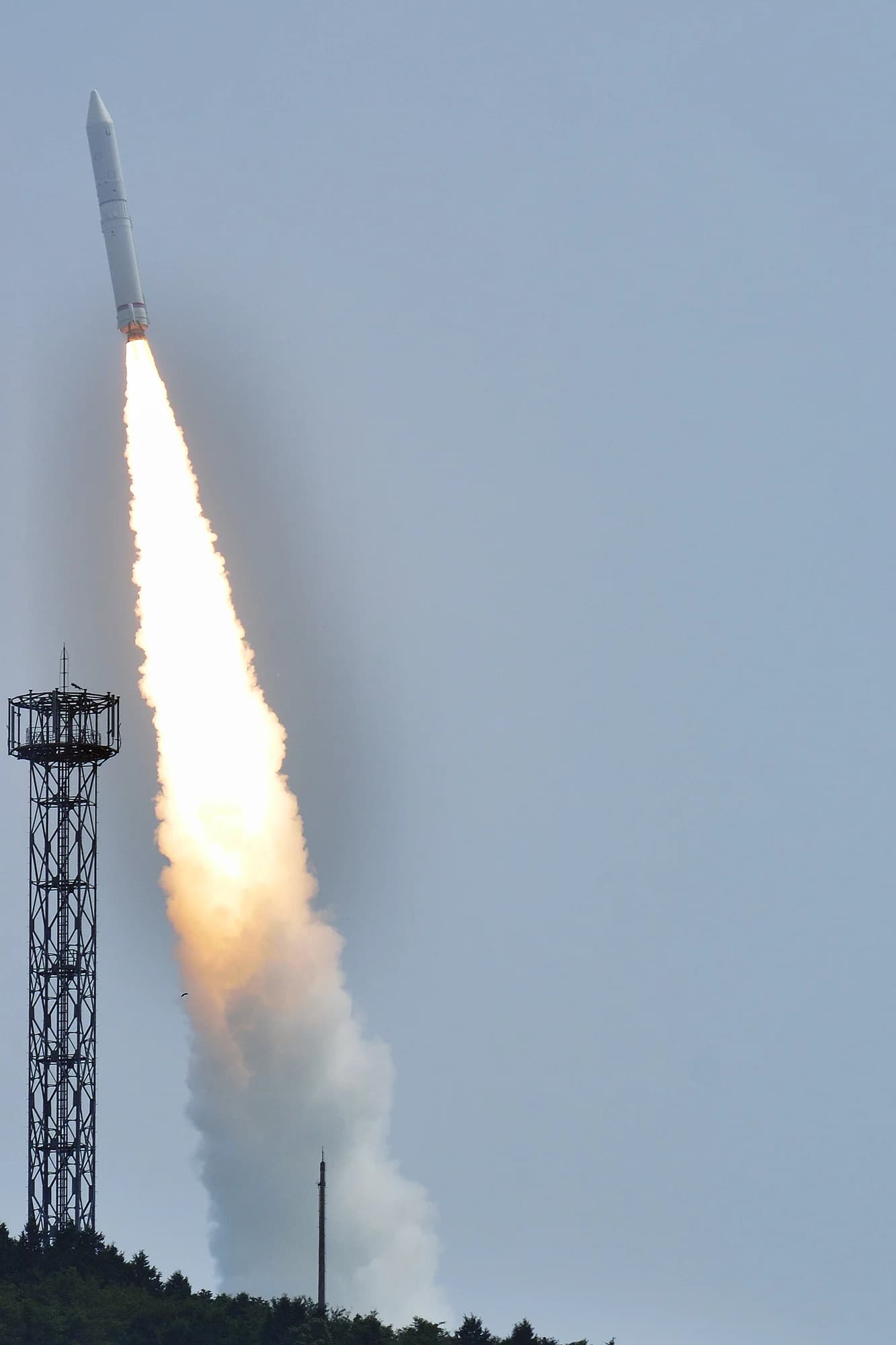
IST is Japan's oldest launch startup — Taiki, Hokkaido, founded 2013 out of the hobbyist rocket collective around Takafumi Horie — and the only one that has actually put hardware into space: seven suborbital MOMO flights between 2017 and 2021, of which three crossed the space boundary, the first (MOMO-3, May 2019) making IST the first private Japanese company to reach space.^[21] That record is worth naming precisely because of what it taught: MOMO's 3-for-7 was a public, iterative, cheap-failure campaign — the SpaceX development culture, not the JAXA one — and it is the reason IST's orbital programme, slow as it has been, rests on more flight-derived engineering data than the rest of the tier combined.
The orbital vehicle is ZERO: two stages, 32 m tall, 2.3 m diameter, 71 tonnes at liftoff, nine COSMOS engines on the first stage and a vacuum-nozzle tenth on the second, carrying 800 kg to LEO or 250 kg to SSO — an Electron-class-and-a-half vehicle aimed squarely at the dedicated-smallsat market Rocket Lab currently owns in Japan.^[16] The engine is the programme: COSMOS is a ~130 kN gas-generator-cycle engine burning liquid biomethane (locally sourced in Hokkaido, mostly from dairy-farm waste — a genuine logistics choice, not just branding: Taiki has no LNG terminal). Verified progress in 2026: a 60-second main-combustion test reaching target values this spring — full-duration-class for the first-stage burn profile — with Nikkei reporting IST has moved to planning a new mass-production factory; the company states it is now running integrated COSMOS firings weekly at Taiki and has hit 13 tonnes of thrust, which it claims as the most powerful methane rocket engine yet fired in Japan (company claims, consistent with the reported test cadence).^[8]^[22] The launch site is the other gate: ZERO flies from Hokkaido Spaceport's orbital pad, whose completion IST places within FY2026 (i.e., by March 2027), with the maiden flight to follow — which is why every credible statement of the first-launch target now reads 2027.^[8]
The manifest for that first flight is signed, and its composition is the whole Japanese demand problem in miniature: eight payload customers as of mid-2026 — five announced in early 2026 (a 1U IoT/remote-sensing cubesat from Singapore startup Ocullospace, a US student team's wooden-chassis 1U, Osaka Metropolitan University's small-spacecraft lab, Tokyo City University, and a separation-system demonstration from Korea's DALRO Aerospace), plus three more added since.^[23]^[24] Real contracts, real integration work — and not one of them is a Japanese commercial constellation operator. The first flight of Japan's leading private orbital rocket will carry educational and demonstration cubesats from four countries while iQPS and Synspective fly from New Zealand. Hold that image; Section 9 prices it.
3.2 The Toyota deal: what Woven actually bought, and what IST actually got
The financing arc is the clearest in the tier. Series E: ¥3.1 billion (2024). Series F: first close January 7, 2025 with Woven by Toyota investing ¥7 billion under a capital-and-business alliance; a second close reported at ~$62M cumulative by August 2025; final completion announced January 16, 2026 at ¥20.1 billion (~$129.7M) in combined equity and debt, Woven lead, with SBI Group, Nomura Real Estate, B Dash Ventures and SMBC-linked vehicles participating.^[7]^[25]^[26]
What Toyota gets, per the alliance's own terms: a board director appointed by Woven, and the industrial relationship formalised — Toyota personnel have been embedded in IST since 2020, eleven engineers transferring production and operations expertise before the equity ever arrived.^[26] Read the deal for what it is rather than what the press releases gesture at. Toyota is not buying launch revenue; ¥20 billion is rounding error on its balance sheet. It is buying (a) a live testbed for applying Toyota Production System discipline to aerospace manufacturing — the explicit premise of the alliance is that rockets should be made the way cars are made, in volume, with takt times; (b) an option on the space layer of its mobility thesis (Woven's remit is the software-and-infrastructure future of transport, and satellite connectivity sits inside it); and (c) industrial-policy goodwill in a country now spending ¥1 trillion on exactly this sector (author inference on all three, grounded in the alliance's stated scope). What IST gets is more concrete and more valuable than the cash: the only thing that separates a rocket startup from a rocket programme is the ability to build vehicle number six for less than vehicle number two, and Toyota is the best manufacturing tutor on the planet.
The comparison that matters is with Honda, and it is instructive in both directions: Toyota decided to buy its way into launch; Honda decided to build. Toyota's route gets a flying vehicle sooner and someone else's balance-sheet risk; Honda's route keeps the IP and the engineers. Which route was right depends entirely on whether the market the vehicles serve ever materialises — which is Section 9's question, not an engineering one.
3.3 What is still unproven, and the call
Be honest about the gap between IST's position and an operating launch company. No integrated stage firing of nine clustered engines has been publicly demonstrated; cluster dynamics (propellant feed coupling, base heating, engine-out handling) are historically where nine-engine first stages earn their scars. The pad is unfinished. The company has never flown a turbopump-fed vehicle — MOMO was pressure-fed. And ZERO's unit economics are unpublished: no launch price has been announced, and at 250 kg to SSO it must land near Electron's ~$8M-class pricing to win commercial payloads on anything other than flag preference (modeled benchmark; Section 9).
The state relationship is nonetheless the strongest in the tier: IST holds SBIR Phase 1 (¥2.0B cap) and Phase 2 (¥4.63B cap) awards and was one of only two companies advanced to Phase 3 at the March 31, 2026 stage gate — a further tranche of up to ¥7.37B, taking its cumulative cap to ≈¥15.44B;^[28] it also signed a 2024 basic agreement with JAXA as a priority launch provider ("Launch Operator A") under the JAXA-SMASH small-satellite programme — the closest thing Japan has to demand-side support.^[13]^[27]^[28] IST has also announced early development of DECA, a much larger next-generation vehicle^[8] — at this stage a statement of ambition, not a programme, and we treat it as such.
The call. ZERO flies in 2027 (company target; we see no public evidence of a blocker that moves it earlier, and pad completion bounds it later). First-attempt orbital success: ~40% (author judgment — the base rate for maiden flights of new orbital vehicles this decade is roughly a coin flip, and nine-engine clusters plus a new pad sit on the hard side of that distribution). But the investment case never depended on flight one: IST is the only company in this tier whose capital structure, production strategy, state support and customer pipeline all survive a maiden-flight failure. If Japan's startup tier produces one operating launch company this decade, it is this one — and Sections 9–10 explain why even that outcome needs a policy change to become a business rather than a subsidised capability.
4. Space One: Three Straight Failures and the Question the Solid Niche Can't Answer
4.1 The record
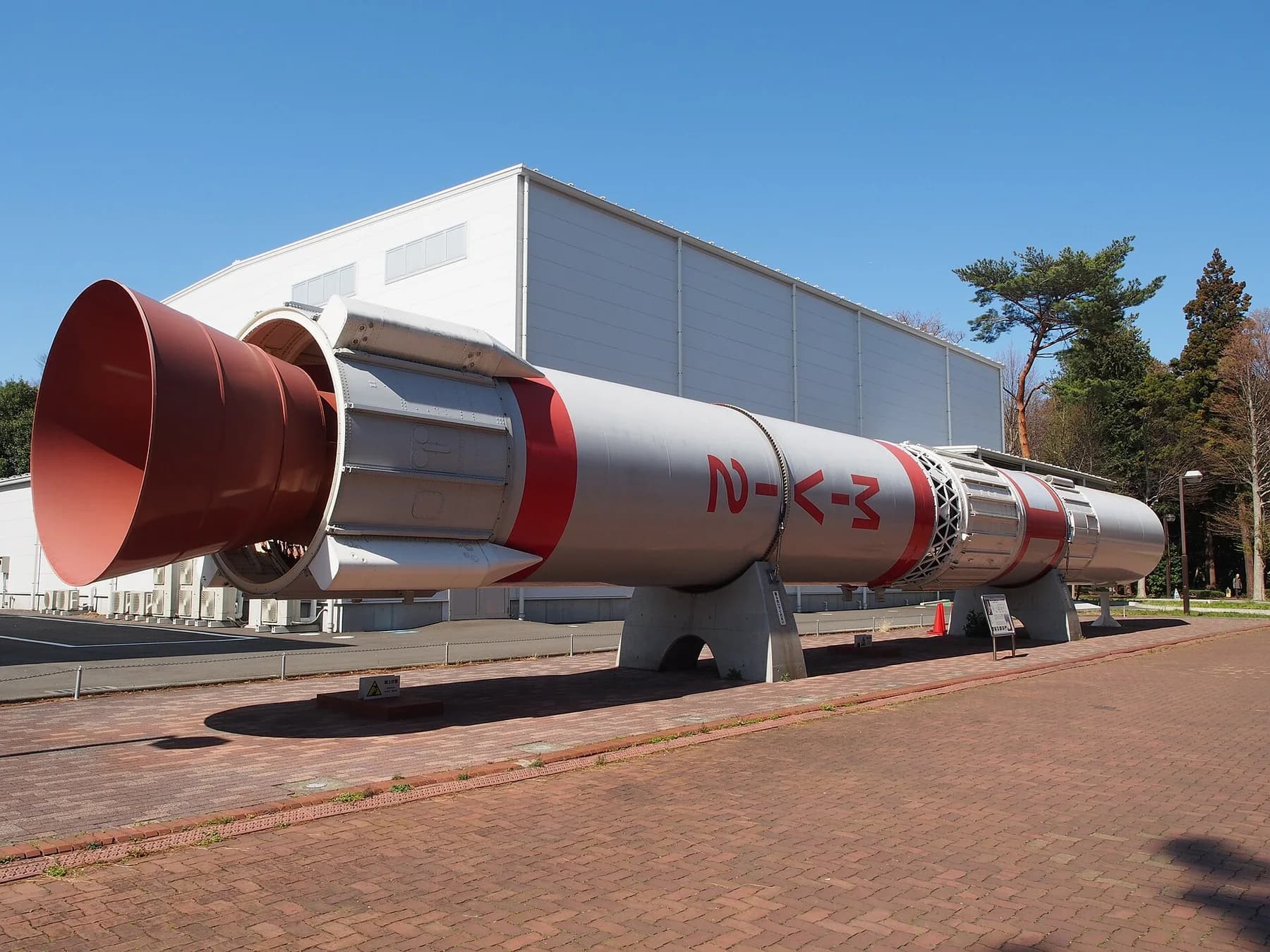
Space One was founded in July 2018 with the most institutionally respectable cap table in Japanese new space — Canon Electronics, IHI Aerospace, Shimizu Corporation and the Development Bank of Japan — to fly Kairos, a small solid-propellant vehicle (three solid stages plus a liquid post-boost stage, roughly 250 kg-to-LEO class) from its own private launch site, Spaceport Kii in Wakayama.^[5] The pitch was cadence and responsiveness: solid motors stack fast, store long, and launch on short notice — up to 20 flights a year once mature (company claim).^[29]
The record is now the worst-verified in the tier: Flight 1 (March 13, 2024) destroyed itself five seconds after liftoff when the autonomous flight-termination system triggered. Flight 2 (December 18, 2024) was terminated about three minutes in after losing attitude control during ascent. Flight 3 (March 5, 2026) flew normally for the first minute, then the autonomous flight-safety system commanded destruct at 68.8 seconds, ~29 km altitude, during first-stage burn; the company's preliminary statement said no major vehicle or trajectory abnormality had been found and pointed at the flight-safety system itself as the likely anomaly source — five smallsats lost, including a Taiwanese space-agency payload.^[5]^[30] As of this writing, no Flight 4 date has been announced; the CEO has restated the long-run cadence targets unchanged.^[29]
Three failures with three apparently different proximate causes is a harder diagnosis than one repeated flaw: it suggests the problem is not a component but an engineering-assurance system — the thing Canon and IHI parentage was supposed to guarantee. And the Flight 3 hypothesis deserves its own flag: if the vehicle was flying nominally and the safety system killed it, that is simultaneously the most recoverable failure mode (no propulsion redesign) and the most damning one (the company destroyed a working rocket).
4.2 Steelman, then the verdict
Steelman the niche honestly, because it is real. Solid small launch is the correct architecture for exactly one customer class: governments that want responsive, storable, short-notice launch of small security payloads — a requirement Japan's defence establishment demonstrably has, and one that Epsilon S (the state's own small solid, grounded after two static-fire explosions; Section 8) is currently failing to meet. Kairos's private spaceport adds schedule sovereignty no JAXA range offers. A functioning Kairos would be a strategic asset for Japan regardless of its commercial economics, and the state visibly agrees: Space One was the second of the two companies advanced to SBIR Phase 3 in March 2026 despite three straight failures, and in April 2026 it received a Space Strategy Fund grant decision of ~¥2.66B under the fund's high-cadence rocket-manufacturing theme, for robotics in solid-motor production.^[13]^[31]^[32]^[60] Most telling of all, the Ministry of Defense is already behaving like the customer this section says the company needs: a ¥8.5B contract for upper-stage capability-enhancement research (a methane upper stage for an enhanced Kairos), and a demonstration-satellite launch on Kairos planned for FY2026, ordered via Space BD.^[58]^[59] The strategic-reserve procurement is, in fragments, already happening — without anyone naming it.
But name what that pattern is: a company that has never delivered a payload, whose grants keep arriving anyway, whose parents (Canon Electronics, IHI) treat it as a strategic position rather than a return-seeking investment, and whose realistic anchor customer is the government. That is not a startup failing in a market; it is a strategic-reserve programme being procured in slow motion, without anyone writing the full procurement contract. The commercial story — 20 flights a year serving Asian smallsat operators — was already implausible against Electron's price and reliability before the failures; after 0-for-3 it is narrative. (Solid rockets also carry a structural cost floor: motors are consumed per flight and never benefit from the reusability curve every liquid competitor is climbing — the same architecture-versus-effort distinction our China analysis draws for expendable kerolox lines.)
Thresholds, stated. If Flight 4 flies within twelve months of the Flight 3 report with a transparent root-cause disclosure, and Flight 5 follows within six months of Flight 4, the cadence thesis revives and this section's verdict is wrong. If Kairos has not returned to flight by mid-2027, the honest description is a state-adjacent capability held on Canon's and IHI's books — and Japan would be better served by saying so and funding it as such.
5. Honda: What a Carmaker's Hopper Actually Means
5.1 What it is
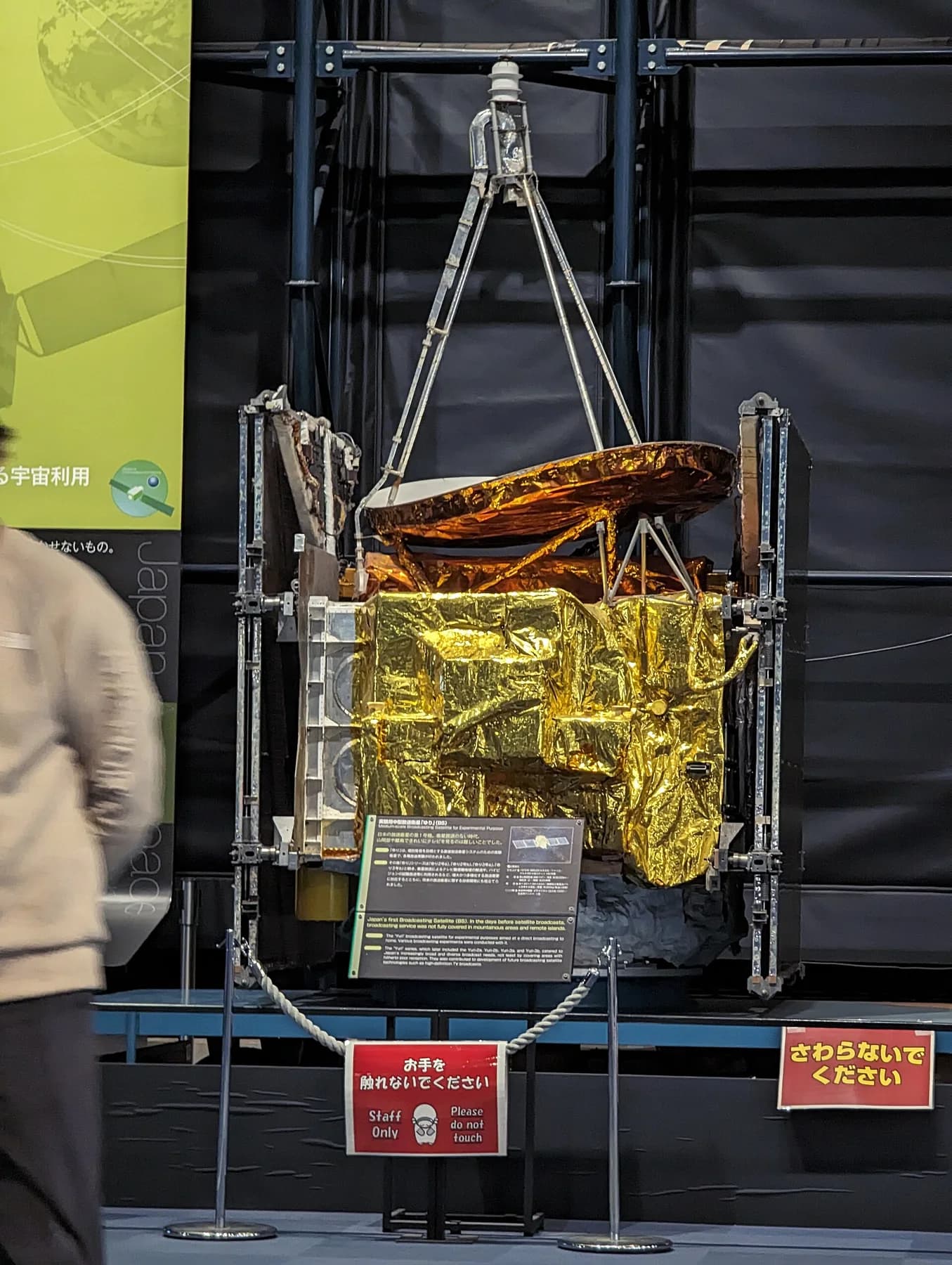
On June 17, 2025, at Honda's own facility in Taiki, an experimental vehicle 6.3 m long and 85 cm in diameter (dry mass ~900 kg, wet ~1,312 kg) flew a 56.6-second vertical takeoff-and-landing profile to 271.4 m and touched down 37 cm from its target.^[17] Strip the novelty and read the engineering: a throttleable liquid propulsion system, real-time guidance and control through hover and descent, landing-leg dynamics — the exact skill stack that took SpaceX's Grasshopper programme years and that no funded Japanese startup has yet demonstrated. Honda R&D had been running engine combustion and hover tests at Taiki since 2024; the programme traces to internal research announced in 2021, motivated — in Honda's own framing — by the overlap between rocketry and its core competencies in combustion, control and, eventually, satellite demand from connected vehicles.^[17]^[33] The stated goal is a technology capability for suborbital launch by 2029, with — Honda is explicit — no decision yet on commercialisation.^[17]
5.2 What it isn't, and the three end-states
Honda is not a "launch startup," and analysing it as the sixth competitor in Table 1 would miss the point. It has no external customers, no launch licence path announced, no vehicle-scale test since the hop (as of July 2026), and no capital constraint — which means none of the survival dynamics that shape the rest of the tier apply. What it has is the deepest reusable-propulsion-and-control demonstration in Japanese private hands. Three end-states, ranked by our read of likelihood:
- Vertical self-supplier (most likely). Honda builds toward launching its own payloads — connectivity and sensing satellites serving its mobility business — the way it builds engines: in-house, unhurried, IP-closed. The 2029 suborbital target fits a programme still buying information, not market position. In this world Honda never competes for third-party manifests and never rescues the startup tier; it simply exists above it, absorbing talent.
- Consolidator (the scenario that matters for this report). If Japan's tier produces flying-but-undercapitalised companies post-2028 — a post-failure Space One, an ISC with a hopper and no money — Honda is the natural acquirer: balance sheet, Taiki co-location, manufacturing culture. Note the strategic symmetry already visible: Toyota bought into the tier (IST); Honda built beside it. If Honda's build stalls or its 2029 gate forces a make-or-buy decision, buying is the obvious correction, and the tier's distressed assets will be cheap.
- Merchant supplier (least likely). Honda selling engines or GNC stacks to the startups would single-handedly close the propulsion gap of Section 11 — and everything in Honda's industrial history says it will not: the company does not sell its core powertrains to competitors.
The call: treat Honda as the tier's ceiling — proof the talent and technology exist in Japan at automotive-industrial quality — and as latent consolidation capital, not as a current competitor. A Honda commercial orbital service before roughly 2032 is not a credible scenario on public evidence; a Honda suborbital demonstrator by 2029 is. The sharpest thing the hop proved is uncomfortable for everyone else: the binding constraint on Japan's startups was never national engineering capability. It is capital intensity and demand — which no amount of Taiki airspace fixes.
6. Innovative Space Carrier: The Propulsion Gap, Told as One Company's Year
ISC's 2025–26 arc is worth a section not because the company is large — it is the smallest serious player in the tier — but because it ran, in public, the experiment everyone else avoided: can a Japanese launch startup skip the engine problem by buying American? The answer came back in twelve months, and it reprices the whole tier's roadmaps.
The experiment. ISC, founded 2022 under CEO Kojiro Hatada with a mission of reusable space transport by 2040, structured itself as an integrator: buy the engine, iterate the vehicle. In April 2025 it agreed to purchase Ursa Major's Hadley — the US merchant-market's small oxygen-rich staged-combustion engine — with joint study of the larger methane-fuelled Arroway to follow; in May it announced ASCA 1.0, a 100-metre-class hop-and-landing campaign at Spaceport America via its Colorado subsidiary Sirius Technologies, targeting December 2025, on a roadmap to an orbital vehicle around 2028; in July the partnership was celebrated at a signing ceremony at the US Embassy in Tokyo as a model of US–Japan space-industrial cooperation.^[34]^[35]^[36] The logic was impeccable: Japan has no merchant engine supplier, engines are the longest-lead item in any launch programme, and the US has exactly one company whose business is selling them.
The result. On December 23, 2025, ISC cancelled the US campaign. The stated causes: FAA authorisation timelines that could not close before the programme's March 2026 deadline, compounded by the US government shutdown.^[6]^[37] The restructured plan: develop its own engine in-house, demonstrate vertical takeoff and landing domestically with flight hardware in FY2026, and attempt a launch demonstration in FY2027 (company claims).^[6] Five months later the SBIR stage gate delivered the state's verdict: not advanced to Phase 3, but granted a ¥1.0 billion additional allocation and a Phase 2 extension to end-May 2027 — kept alive, not backed.^[18]^[13]
What it means beyond one company. First, the propulsion inference: when the shortcut failed, ISC's only fallback was to accelerate an in-house engine programme in year four of its existence — building on earlier internal methane work and an electric-turbopump partnership with Ebara, whose engine passed its first ignition test on March 4, 2026^[62] — because in Japan there is nothing to buy off a catalogue and no one to license from. Every Japanese launch venture is forced into vertical propulsion integration, which multiplies the tier's aggregate capital requirement and duplicates the same combustion-devices learning curve three or four times over, much of it on public money (Section 10). Second, the geopolitical inference, which generalises well beyond Japan: allied-market inputs are commodities in price only, not in availability. A US engine comes bundled with US regulatory timelines, US political calendars, and US export perimeters — schedule risk of a different nationality, not the absence of risk. This is the same lesson our venture design study draws about SpaceX's "fair terms" launch offer (commodity price ≠ commodity market), demonstrated here at the component layer, between allies. Any Indo-Pacific programme currently writing "procure engines from US merchant suppliers" into its critical path should read ISC's December announcement twice.
The call. ISC's 2028 orbital-service goal is no longer credible; the company is now a propulsion startup with a transport roadmap attached, racing a May 2027 funding cliff. The falsifiable test is clean: an in-house-engine VTVL hop by March 2027 — and the Ebara electric-turbopump engine's March 2026 ignition is the first hardware evidence the gate is reachable.^[62] Fly it, and ISC re-enters the map as Japan's most capital-efficient reusability play; miss it, and the honest expectation is acqui-hire — plausibly by the carmaker one section up.
7. The Rest of the Field, Graded Quickly
Completeness requires naming who else claims the tier, and being brief about it.
- SPACE WALKER (Tokyo, 2017): the winged-spaceplane lineage of Kyushu Institute of Technology's WIRES research, targeting suborbital science and eventually point-to-point transport. It was one of the four companies selected into the SBIR rocket programme in 2023 — and the one removed at the September 2024 stage gate; its test-flight targets (a WIRES-class demonstrator once aimed at ~2026, a suborbital science mission later this decade) have slipped repeatedly and its disclosed funding is a fraction of the tier's leaders.^[19]^[38] Real engineering heritage, no flying hardware, no visible path to the capital a spaceplane requires. Narrative until a vehicle leaves the ground.
- AstroX (Minamisōma, Fukushima, 2022): rockoon launch — lift the rocket by balloon above the dense atmosphere, fire from altitude. Series A completed at ¥2.32 billion total (~$15.6M); a December 2025 test demonstrated aerial separation of a dummy rocket from the balloon launcher; the company aims to reach space (suborbital) by end-2026 (company claim).^[20]^[39] The physics case (drag and range-safety relief for very small vehicles) is genuine; the operational case (weather, recovery logistics, cadence) has defeated every rockoon-to-orbit attempt in history. Watch the end-2026 attempt; price the business at zero until well after it.
- Cut list, stated. We exclude sounding-rocket and student-scale efforts, engine-component ventures, and paper constellations of launch SPVs; none has a funded orbital path. We also exclude JAXA's own reusable testbeds (RV-X lineage) as state R&D, though they feed the Section 11 picture.
The honest summary of the long tail: Japan does not have a deep launch-startup bench. It has two orbital contenders, one carmaker, and a set of options money keeps alive.
8. The Squeeze From Above: H3, MHI, and a State That Is Its Own Best Customer
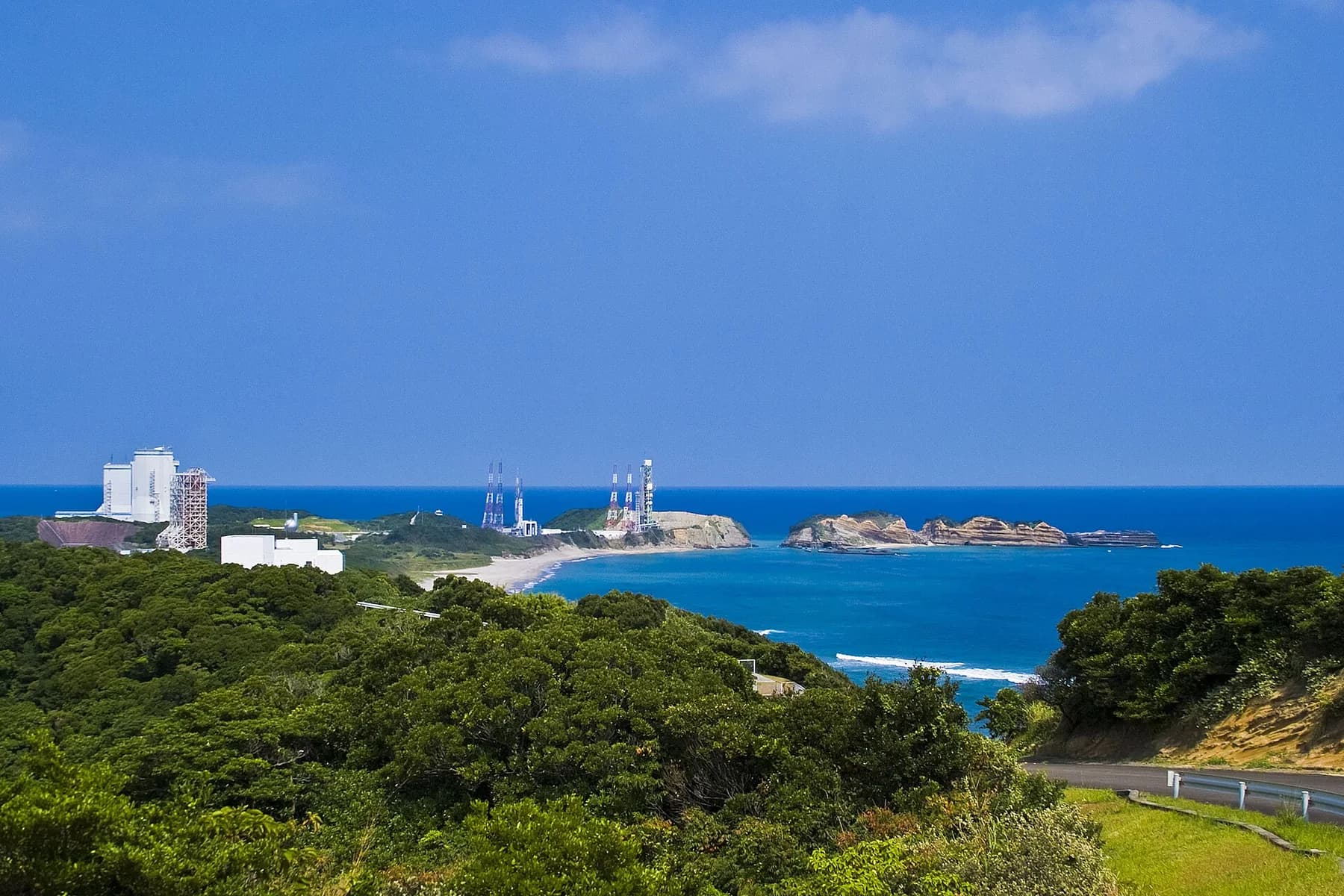
The upper jaw of the squeeze is the flagship programme, and it must be read honestly rather than dismissively, because H3 is simultaneously the tier's roof and the national system working as designed.
H3's record, with no varnish. Nine liftoffs through June 2026, two failures. A destroyed maiden flight in March 2023; six straight successes across 2024–25; then on December 22, 2025, the eighth H3 failed, costing a Quasi-Zenith navigation satellite — a satellite-adapter delamination (a manufacturing-process escape: adhesive over-heated during drying) that let the payload shift and sever the second-stage fuel line.^[10] The return to flight — the ninth liftoff — on June 12, 2026 doubled as the debut of H3-30 — the three-first-stage-engine, zero-solid-booster configuration that is the programme's cost play — and delivered all six payloads.^[11] The cost target is ~¥5 billion (~$33M) per flight, roughly half of H-IIA, set explicitly to chase commercial competitiveness.^[40] A two-failures-in-nine record and a successful low-cost-variant debut can both be true; they are.
What H3 absorbs. Everything institutional: navigation (QZSS), reconnaissance (IGS), station cargo (HTV-X), planetary science (MMX, whose narrow window drove the urgency of the June return to flight), plus the defence manifest now growing under Japan's security build-up. This is policy, not accident — the flagship's cadence and unit cost only close if the state manifest rides it. The consequence for the startup tier is arithmetical: the only deep-pocketed, schedule-insensitive, flag-requiring launch customer in Japan is contractually spoken for. No Japanese startup will carry a government anchor payload of consequence this decade; the tier competes for whatever is left after H3 eats.
And the state's small-launch record makes it worse. Epsilon — the JAXA/IHI small solid that was supposed to be the institutional smallsat ride — failed on its sixth flight in October 2022, destroying, among eight payloads, iQPS's QPS-SAR-3 and -4.^[41]^[42] Its successor Epsilon S then suffered ground-test explosions in July 2023 and November 2024; reported replanning in mid-2025 (reverting the second stage to the proven Enhanced Epsilon design) put the earliest debut around late 2026 — a date to treat as provisional.^[43]^[44] Note who sits on both sides of that story: IHI Aerospace builds Epsilon S and co-owns Space One. Japan's solid-rocket industrial base is simultaneously failing the state programme and the startup — with the same engineering culture implicated in both — while the payload class both were built for buys Electron.
The Epsilon-6 failure deserves one more sentence, because it is where the payload famine's psychology was set: the last time Japanese commercial constellation operators trusted a domestic rocket, it destroyed their satellites. iQPS's subsequent provider, Virgin Orbit, then went bankrupt — after which iQPS signed with Rocket Lab and never looked back.^[45] The exodus documented in the next section is not disloyalty; it is two burned hands.
9. The Payload Famine, Quantified — and the Aggregation Thesis Tested
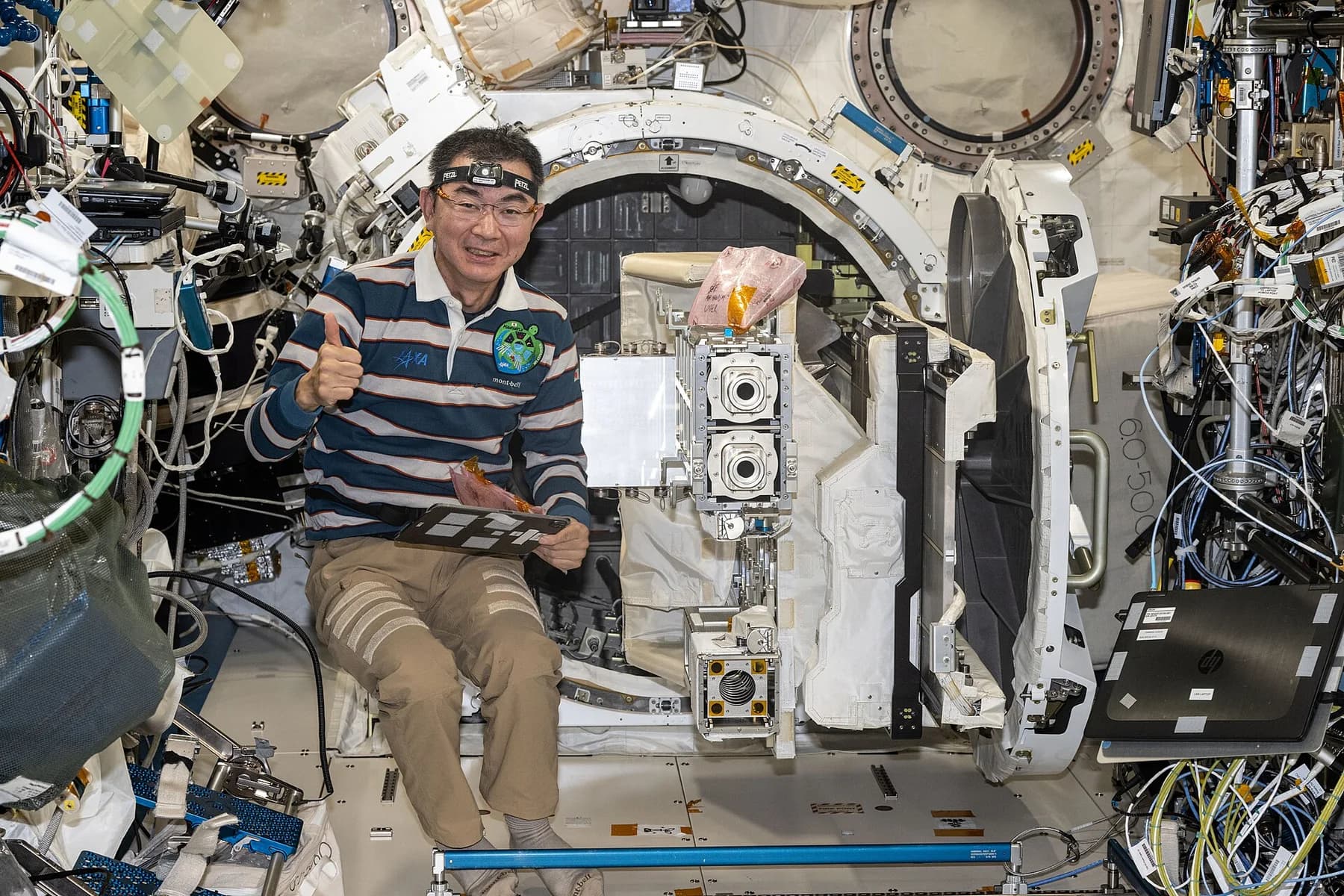
9.1 Where Japan's satellites actually fly
Table 2 — Japan's dedicated smallsat launch demand and where it goes (verified contracts, July 11, 2026):
Run the arithmetic that table implies, with inputs visible. Synspective and iQPS together hold ~42 contracted dedicated Electron-class missions (27 + 15); at a dedicated-Electron price band of roughly $7.5–8.5M (modeled from Rocket Lab's disclosed average revenue per launch^[61]), that is ~US$315–355M of Japanese commercial launch spend this decade — effectively all of it flowing to Launch Complex 1 in Mahia, New Zealand, with the overflow going to SpaceX rideshare. Rocket Lab itself describes more than two dozen dedicated Japanese missions booked through the end of the decade;^[46] Japan is arguably Electron's single most important customer nation (see our companion teardown of why Rocket Lab wins exactly this business). Annualised, Japan's entire dedicated commercial smallsat demand runs at roughly 6–10 missions a year through 2028–29 — and it is already contracted.
Now set that against the survival threshold. A small launch company needs on the order of 6–12 paid flights a year to cover a standing army, a pad, and a production line (author inference from published startup cost bases; the same threshold our regional model uses). The uncommitted Japanese commercial demand available to IST or Space One in 2027–29 — new constellations not yet under contract, replenishment options, university and agency one-offs — is realistically 1–3 missions a year (modeled estimate; count the operators in Table 2 and what they have left to sign). Japan's domestic market, fully repatriated, feeds at most one company, and only at the next re-contracting cycle (~2028–30) — and repatriation must be won against an Electron that already counts 91 missions and will pass 120 by that window, and against operators who remember Epsilon-6.^[55]
That is the famine, precisely: it is not that Japan lacks a satellite industry — iQPS, Synspective and Axelspace are collectively among Asia's best smallsat operators — it is that Japan's satellite industry rationally exported its launch demand years before Japan's launch startups could serve it, and locked the exports in multi-year contracts.
9.2 Testing the aggregation thesis against Japan
Our venture design study argues (§6.5.3) that no single Indo-Pacific domestic market can feed its own launch tier, and that only an aggregated, competitively awarded regional manifest — anchored by politically segmented sovereign demand that will fly neither American nor Chinese — pushes one or two suppliers per weight class over the survival threshold by 2030–31. Japan is the strongest test of that thesis, because Japan is the best case: the largest domestic space budget in the region outside China, two world-class constellation operators, and a funded startup tier. If aggregation is unnecessary anywhere, it should be unnecessary here.
The numbers above say the opposite, and sharpen the thesis in three ways. First: Japan confirms that the domestic-demand ceiling binds even at the top of the region — if 6–10 contracted missions a year cannot feed one startup at home, no Indo-Pacific market can, and the aggregation mechanism is not optional. Second: Japan shows the timing trap the thesis underweights — aggregated demand arriving 2029–31 meets a Japanese tier whose funding cliffs (ISC May 2027, Space One's patience, IST's post-maiden-flight raise) fall in 2027–28. Aggregation saves the survivors; it does not prevent the shakeout. Third: Japan identifies which Japanese asset the regional market can actually use. A 250 kg-to-SSO ZERO in 2028, priced near Electron, with a working Hokkaido pad and JAXA priority-provider status, is a credible bidder for exactly the dedicated-SSO work packages a regional buyer would tender (the WP-L1 archetype); nothing else in the tier is. For everything else Japan sells into the region — thermal hardware, optical terminals, flagship-grade QA, and Space Strategy Fund co-funding riding on component vendors — the venture study's Japan chapter (§5.2) already made the call, and this teardown reinforces it: Japan's exportable strength is precision components, quality assurance and co-funding more than bulk launch.
10. The Subsidy Paradox: ¥1 Trillion That Buys Capability, Not Customers
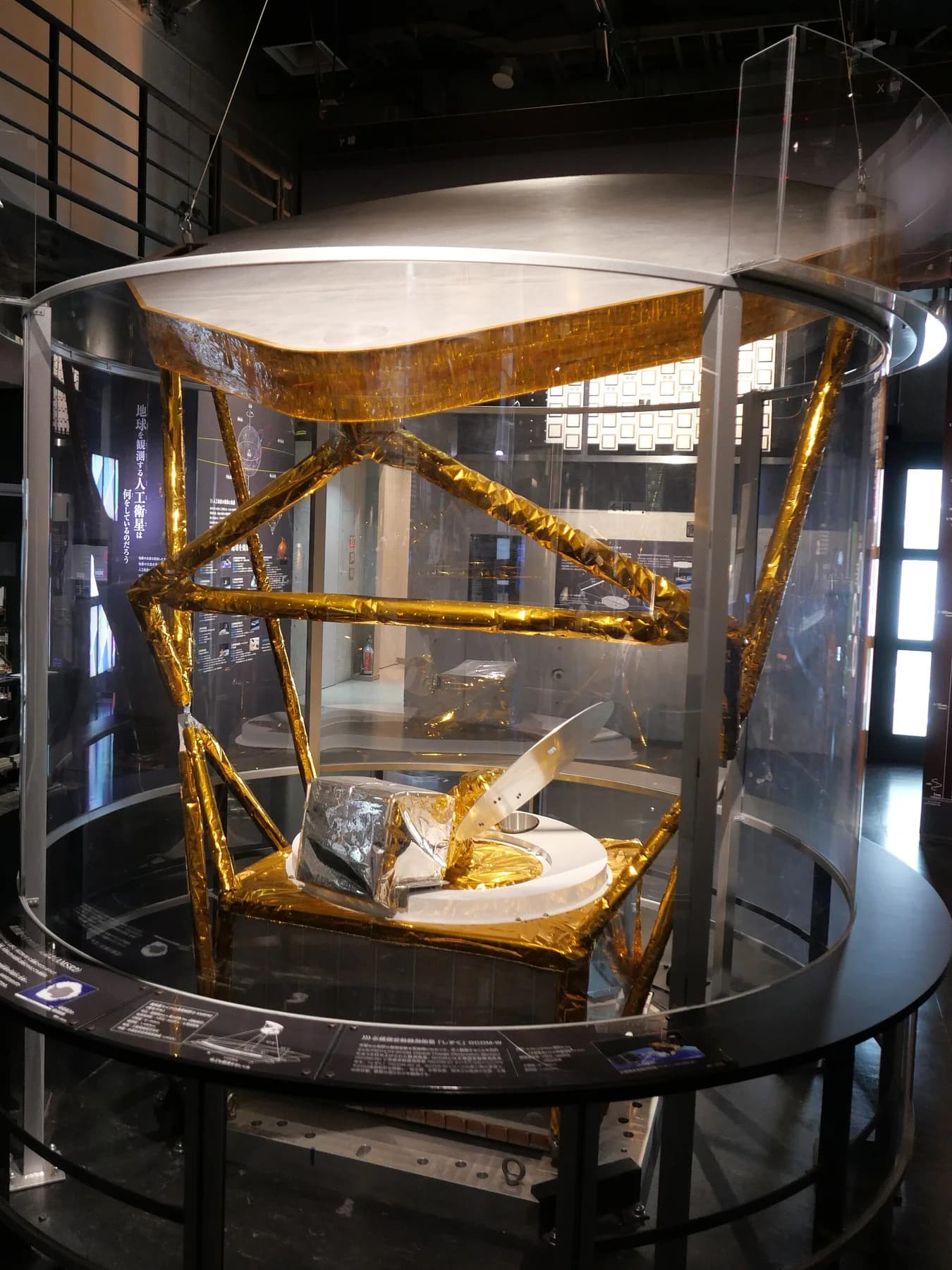
10.1 The money map
Table 3 — Japan's state money into the launch tier (disclosed instruments, July 2026):
(Amounts are disclosed caps or announced awards; several SSF theme-level figures rest on secondary cataloguing and are flagged as such in the references.)
10.2 Steelman the design — it is better than the caricature
Before the verdict, give the funds their due, because the caricature ("Japan sprays money") misses three genuinely good design choices. First, the SBIR programme kills companies: four entrants in 2023, three after September 2024, two after March 2026 — real stage gates with real exits, which is more Darwinian than most industrial policy anywhere, and the ¥1B consolation-plus-extension for ISC is a defensible way to preserve option value on reusability without pretending it earned Phase 3.^[13]^[18] Second, the SSF corrects a real market failure: Japan's suppliers under-invest in space-grade manufacturing because volumes are tiny; paying Space One to roboticise solid-motor production or component vendors to cut costs attacks the supply curve directly, and — as our venture design study notes from the buyer's side — SSF grants that lower Japanese vendors' marginal cost of bidding into regional work packages are a feature for the whole Indo-Pacific, not just Japan.^[31]^[50] Third, the fund's architects understood the sector needed patient capital at a scale (¥1T) Japanese VC could not supply; measured purely as capability formation, weekly methane-engine firings at Taiki are the money visibly working.^[22]
10.3 …and then assess it against the two systems that worked
Now hold that design against the two demand-side machines running elsewhere. The US, 2006–08: NASA paid SpaceX up to $396M in COTS milestones — capability money, exactly like SBIR — but then signed a $1.6B Commercial Resupply Services contract for twelve flights before the vehicle had ever reached the station.^[52] The manifest, not the milestones, is what financed Falcon 9's production line, disciplined its cost structure, and gave every private investor a revenue line to underwrite. China, 2024–26: constellation batch procurement is performing the same function coercively — Spacesail's ~$187M award for seven launches carrying 94 satellites went to three commercial providers who must now hit price and cadence to get paid, and annual re-competition of Guowang/Qianfan batches is the forcing function pushing the sector toward reusability.^[53] Both systems buy flights and let flights pull capability. Japan buys capability and hopes flights follow.
Steelman the strongest objection to the COTS prescription before adopting it: NASA's $1.6B manifest monetised intrinsic demand — ISS cargo had to be bought from someone — whereas a Japanese 10–20-mission block-buy would be, in part, manufactured demand, and a critic will call it a grant wearing a contract's clothes. Two answers. First, even manufactured demand transfers what grants never do: delivery-priced risk (pay on flight, not on milestone review), a revenue line a production facility can be financed against, and a price benchmark every bidder must beat. Second — and Section 4's evidence lands here — Japan does have an ISS-cargo-equivalent intrinsic requirement: the MoD's responsive-launch and security-payload demand, which is already buying Kairos upper-stage research and a demonstration flight in fragments.^[58]^[59] The honest COTS translation for Japan is not inventing satellites to launch; it is consolidating the security manifest the defence build-up is already generating — plus the smallsat demonstration layer JAXA-SMASH already procures — into one competitively awarded domestic block-buy, instead of routing it by default to the flagship or dribbling it out one mission at a time.
The result is a tier with inverted incentives, visible in every section above: Space One receives new grant decisions within weeks of its third consecutive failure, because grants price technical promise, not delivery;^[31] IST's first-flight manifest is educational cubesats because no instrument exists that would put a paying Japanese constellation batch on it; ISC could rationally restart a four-year-old company around a brand-new engine programme because the funding gate it faces is a review committee, not a customer. None of these companies is behaving irrationally. They are optimising correctly for the market the state actually built — a market whose only reliable buyer purchases milestones. A tier that optimises for milestones accumulates capabilities the way a museum accumulates exhibits: each one real, none of them load-bearing.
The fix is already written down in Japan's own Basic Plan — the FY2028 domestic-launch pledge^[14] — and it fails only at the last step: nobody has converted it into contracts at scale. The COTS-shaped version writes itself: a multi-year government block-buy of, say, 10–20 smallsat missions across FY2028–31, competitively awarded to domestic providers that meet flight-heritage gates, at prices benchmarked to Electron — call it ~¥15–25B (modeled: 15–20 missions × ¥0.8–1.2B), i.e., 1.5–2.5% of the Space Strategy Fund, redeployed from capability to demand. JAXA-SMASH is this instrument in embryo — note that it already had to include Space BD and Mitsui Bussan Aerospace, brokers whose manifests today run on foreign vehicles^[27] — it is merely two orders of magnitude too small. Whether anything like it appears by the time FY2028 budgets are written is, in our judgment, the single variable that decides whether this tier becomes an industry. Section 13 dates it.
11. The Propulsion Gap: Who Actually Closes It, and When
Strip the company stories down to the engine layer and Japan's position clarifies uncomfortably.
What Japan can fly today. The flagship stack: MHI's LE-9 (expander-bleed hydrogen — sophisticated, flagship-only, useless to startups) and IHI's solid motors (currently exploding in ground test at Epsilon S scale^[43]). Below that: nothing flight-proven. Japan has no merchant liquid-engine supplier, no flown private turbopump engine, and no reusable engine of any class — the physical fact underneath ISC's failed American shortcut, IST's decade-long grind, and Honda's in-house patience.
Who is closest. Ranked by verified evidence, not roadmap:
- IST's COSMOS — 130 kN, gas-generator methalox, 60-second full-thrust burns achieved, weekly integrated firings, flight target 2027.^[8]^[22] The first Japanese privately developed pump-fed engine to fly will almost certainly be this one. But be precise about what it is: a workhorse expendable-class cycle. A gas-generator engine can be landed and reflown (Merlin proved it), but ZERO's nine-engine first stage is not designed for recovery, and IST has published no reuse roadmap for it. COSMOS closes the orbital access gap, not the reusability gap.
- Honda's undisclosed engine — the only Japanese liquid engine that has already done the reusable engine's actual job: deep throttle, restart, controlled descent, landing.^[17] Scale unknown, cycle unknown, schedule pointed at 2029 suborbital. On demonstrated control authority, Honda — not any startup — holds Japan's most credible path to a flown reusable propulsion system. It is also the path least likely to be shared.
- ISC's restart — an in-house engine programme begun, effectively, in January 2026, targeting a hop within fifteen months.^[6] Treat the schedule as aspiration until hardware fires.
- The state's own testbeds — JAXA's RV-X lineage and the H3-successor studies (the Basic Plan targets a next-generation flagship in the 2030s at half H3's specific cost^[14]). Real, slow, and structurally MHI-bound.
The benchmark, so the gap has a number. LandSpace flew the world's first methalox rocket to orbit in July 2023;^[54] China's state programme recovered an orbital-class booster — on a maiden flight — on July 10, 2026, with re-flight targeted inside six months;^[15] the US merchant market sells staged-combustion engines off a catalogue (that is what Hadley is^[34]); and the engine-cycle frontier has moved to full-flow staged combustion, a race Japan is not entered in at any scale (see our FFSC teardown). Japan's first private orbital methalox flight is targeted for 2027 — four years behind China's — and its first credible reusable stage, on any current public roadmap, lands no earlier than 2029–31 (Honda's trajectory, or an IST successor vehicle), by which point our China analysis expects Chinese commercial launch to be exporting at $2,000–4,000/kg into every market that will take it.
The call. Japan closes its orbital-propulsion gap in 2027 (IST, ~40% first-attempt; near-certain by second or third attempt given funding). Japan does not close its reusable-engine gap this decade through the startup tier: it closes it, if at all, through Honda's internal programme or the flagship successor — both of which are structurally unavailable to the startups. Policy implication, stated plainly: if the Space Strategy Fund wants a Japanese reusable engine that the tier can use, it should fund one as shared merchant infrastructure — an Ursa Major of Japan, whether hosted at IHI, at a startup, or as a consortium — rather than paying three companies to duplicate quarter-scale versions of the same combustion-devices campaign. Nothing in the current theme list does this.^[50]
12. What It Means for Asia-Pacific and Singapore
For Indo-Pacific payload buyers (operators, agencies, brokers). Japanese startup launch is a 2028-plus option, not a 2026 procurement line. The rational posture: benchmark everything against Electron (price, heritage, slot availability); treat ZERO as the one Japanese vehicle worth qualifying early — a second dedicated-SSO supplier in-region has real option value against Rocket Lab's pricing power and SpaceX rideshare's schedule tyranny — and price Kairos at zero until two consecutive successes. For payloads with US-content constraints or China-exposure constraints, note what this teardown implies: the politically segmented middle market (fly neither American nor Chinese) that our venture study identifies as the regional tier's only durable demand base is exactly the market ZERO can serve from 2028 — if it survives its own maiden flight.
For the third-pole procurement thesis. This teardown is the Japan input to the venture study's work-package map, and it confirms the split hypothesis with sharper dates. What a competed Indo-Pacific manifest can realistically buy from Japan: dedicated SSO launch from IST (2028+, one vehicle class); precision components, thermal systems, optical terminals and flagship-grade QA from the MELCO/IHI-class industrial base immediately; and — uniquely in the region — co-funding, because SSF development grants can legally sit under Japanese vendors' bids into foreign-anchored programmes, lowering their prices without touching the buyer's governance.^[50] What such a manifest cannot buy from Japan: bulk launch (H3 is institutionally saturated and price-uncompetitive at $6,000–12,000/kg modeled), reusable lift (nobody has it), or solid responsive launch (0-for-3). Aggregated regional demand arriving 2029–31 plausibly carries one Japanese launch supplier — IST — over the survival threshold; it will not resurrect the rest, and it must survive the 2027–28 shakeout to matter.
For Singapore specifically. Three concrete threads. First, the smallest and most telling: a Singapore startup's cubesat — Ocullospace — is on ZERO's maiden manifest;^[23] the first commercial connective tissue between Singapore's smallsat scene and Japan's launch tier already exists at 1U scale, and Singapore payload developers get the earliest, cheapest look at Japanese launch quality by keeping such slots coming. Second, capital: Singapore sovereign capital has already underwritten regional launch once (GIC led Skyroot's Series B and co-led its 2026 unicorn round^[63]), and the IST Series F pattern — a strategic industrial anchor plus financial investors around a company with state-capability money underneath — is precisely the deal shape a Singapore-based fund could occupy in Japan's post-shakeout consolidation of 2027–28, when distressed tier assets (ISC-class engineering teams, Space One's spaceport) reprice. Third, the policy mirror: Singapore's NSAS, writing its own playbook with a fraction of Japan's budget, should read Table 3 as a controlled experiment someone else paid ¥1 trillion to run — capability grants without procurement pull produce museums; small, credible, multi-year demand commitments (even single missions, honestly tendered) produce companies. A city-state that will never fund a launch industry can still be the demand aggregator and trust layer that feeds one — which is, precisely, the venture study's argument for where Singapore sits in the stack.
13. What to Watch: The Falsifiable Timeline
Table 4 — Dated milestones that confirm or break this report's calls:
The bear case that would prove us too generous: ZERO fails twice and IST's Series G stalls; Kairos never re-flies; the FY2028 pledge dissolves into "flagship rockets where practicable." The bull case that would prove us too harsh: a 2027 block-buy announcement, ZERO orbits first try with a Japanese constellation batch signed within a year, and Honda surprises everyone by selling engines. We assign the bull case well under a third — and would be pleased to be wrong, because the region needs the third pole's Japanese layer to exist.
All data from public sources, including company announcements and press releases (Interstellar Technologies, Space One, Honda, ISC, Synspective, iQPS, Axelspace, Rocket Lab, Ursa Major), government and agency documents (Cabinet Office Basic Plan on Space Policy, MEXT SBIR publications, JAXA Space Strategy Fund materials), and specialist trade reporting (SpaceNews, Nikkei, Payload, Space.com, Spaceflight Now, Japan Times and others), retrieved July 10–11, 2026. Figures labelled as company claims, modeled estimates, or author inferences are exactly that. Analysis represents the author's independent views and is not investment advice.
Sources63 entries with source notes and links
June 26, 2026. Tenth StriX on Electron; Rocket Lab sole provider to date. A-grade source (company primary).
September 2025. The deal that took upcoming contracted Electron missions to 21 at the time; Rocket Lab's June 2026 count puts the relationship at 27 dedicated Electron missions total (see ref-55); SpaceX agreements cover rideshare spacecraft, not dedicated launches. A-grade source (company primary; totals superseded as noted).
- Rocket Lab — "The Grain Goddess Provides" mission page (iQPS)(rocketlabcorp.com)
QPS-SAR-13 as the eighth of fifteen contracted Electron missions; 36-satellite constellation target. A-grade source (company primary).
- Rocket Lab / GlobeNewswire — Rocket Lab Secures Multiple Launches with Japan Aerospace Exploration Agency (JAXA)(globenewswire.com)
October 10, 2025. Two dedicated Electron launches for JAXA's technology-demonstration satellites; RAISE-4 from December 2025. B-grade source (company release via wire).
March 2026. Flight-3 failure ~69 s / ~29 km; five payloads lost; flight history; founding investors. B-grade source.
- ISC — 米国でのASCA 1.0ミッションを中止。自社エンジンを開発し、国内での離着陸実証を経て2027年度中に打上げ実証を目指す(innovative-space-carrier.co.jp)
December 23, 2025. US campaign cancelled (FAA timelines, US government shutdown); pivot to in-house engine; domestic VTVL in FY2026, launch demonstration in FY2027. A-grade source (company primary).
- SpaceDaily — Interstellar raises major Series F funding to expand launch and satellite business(spacedaily.com)
January 2026. Series F completed January 16, 2026: ¥20.1B (~$129.7M) equity + debt, led by Woven by Toyota with SBI Group, Nomura Real Estate, B Dash Ventures, SMBC-linked investors. B-grade source.
- Nikkei — インターステラ、「ゼロ」の燃焼試験成功 新工場建設へ計画づくり着手(nikkei.com)
May 2026. 60-second COSMOS burn reaching target values; mass-production plant planning; launch after FY2026 pad completion; DECA engine development to follow. B-grade source.
- Wikipedia — H3 (rocket)(en.wikipedia.org)
). Flight log: 2023 maiden failure, December 22, 2025 failure cause (satellite-adapter delamination severing the second-stage fuel line), June 12, 2026 H3-30 debut. C-grade tertiary source used for the consolidated flight record; key events corroborated by refs 10–11 and by JAXA's own release titling the December 2025 loss the failure of the 8th H3 vehicle (A-grade), which anchors the nine-liftoff count.
Corroborating linksJAXA's own release titling the December 2025 loss the failure of the 8th H3 vehicle
- Spaceflight Now — H3 rocket suffers upper stage anomaly, fails to correctly deploy navigation satellite(spaceflightnow.com)
December 22, 2025. B-grade source.
June 12, 2026. H3-30 three-engine configuration debut; all six payloads deployed. B-grade source.
- JAXA — Overview of the Space Strategy Fund (SSF) (PDF)(fund.jaxa.jp)
¥1 trillion, 10-year, JAXA-administered fund; structure and technology-commercialisation mandate. A-grade source.
March 31, 2026. Interstellar and Space One advanced to Phase 3; ISC granted Phase 2 extension. A-grade source.
~30 launches/year public-private capability target by the early 2030s; policy of launching domestic government and private satellites on Japanese flagship or private rockets from FY2028. A-grade source.
- SpaceNews — China becomes second country to recover orbital booster with Long March 10B(spacenews.com)
July 10, 2026. Maiden-flight sea-platform net-capture recovery; re-flight of the recovered stage targeted by end-2026. B-grade source.
- Interstellar Technologies — ZERO (product page)(istellartech.com)
32 m / 2.3 m / 71 t; 800 kg LEO, 250 kg SSO; nine first-stage COSMOS engines plus one vacuum-nozzle second-stage engine; biomethane/LOX. A-grade source (company primary; performance figures are company claims until flown).
- Honda — Honda Conducts Successful Launch and Landing Test of Experimental Reusable Rocket(global.honda)
June 17, 2025. 6.3 m × 85 cm vehicle (~900 kg dry / 1,312 kg wet); 271.4 m apogee; 37 cm landing accuracy; 56.6 s flight; 2029 suborbital technology goal; no commercialisation decision. A-grade source (company primary).
- ISC — SBIRフェーズ3事業のステージゲート審査委員会により、10億円の追加配分と延長期間が決定(innovative-space-carrier.co.jp)
June 5, 2026. ¥1.0B additional allocation; Phase 2 extended to end-May 2027; no Phase 3 advancement. A-grade source (company primary).
- SPACE CONNECT — 文科省がSBIR「民間ロケットの開発・実証」のフェーズ3移行企業を公表(space-connect.jp)
Programme structure; four companies selected 2023; SPACE WALKER removed at the September 2024 stage gate; per-company cap originally described as ~¥14B through Phase 3 — superseded by the March 2026 awards (IST cumulative ≈¥15.44B; see ref-28). B-grade source.
- Japan Startup Observer — AstroX Closes Series A at ¥2.32 Billion to Commercialize 'Rockoon' Satellite Launch Technology(japanstartupobserver.substack.com)
2026. Series A total ¥2.32B (~$15.6M); December 2025 aerial-separation test; end-2026 space-reach target (company claim). C-grade source (single-outlet aggregation; figures not independently confirmed).
MOMO programme history; MOMO-3 (May 2019) as the first privately developed Japanese rocket to reach space; three space-reaching flights in seven attempts. B-grade source.
mid-2026. 13-tonne thrust claim; weekly integrated COSMOS firings at Taiki. A-grade primary of a company claim — treated as company claim, not verified fact.
- Interstellar Technologies — Interstellar Technologies to Launch 5 Customer Payloads on Orbital Vehicle ZERO's First Flight(istellartech.com)
2026. Ocullospace (Singapore), Wolfpack (US), Osaka Metropolitan University SSSRC, Tokyo City University, DALRO Aerospace (Korea) separation system; signed launch service agreements; 2027 first flight. A-grade source (company primary).
- Interstellar Technologies — Interstellar Technologies secures 3 new Customer Payloads to Orbital Launch Vehicle ZERO's First Flight(istellartech.com)
2026. First-flight book expanded to eight payload customers. A-grade source (company primary).
August 2025. Series F interim close on the way to the January 2026 completion. B-grade source.
- Interstellar Technologies — Interstellar Reached Agreement on Capital and Business Alliance with Woven by Toyota(istellartech.com)
January 7, 2025. ¥7B first-close investment; Woven director appointment; eleven Toyota personnel embedded since 2020; mass-production rationale. A-grade source (company primary).
March 2024. JAXA-SMASH basic agreement, "Launch Operator A"; Space One, Space BD and Mitsui Bussan Aerospace also selected; FY2028 domestic-launch policy context. B-grade source.
2026. Per-company SBIR amounts: IST P1 ¥2.0B / P2 ¥4.63B / P3 tranche up to ¥7.37B (cumulative cap ≈ ¥15.44B for IST alone); Space One P1 ¥0.32B / P2 ¥1.23B / P3 cap ¥4.46B. B-grade source.
- 宇宙旅行.com — スペースワン KAIROS 3号機も失敗 — 次回4号機はいつ?(xn--29sob207cg49a.com)
2026. No Flight 4 date announced as of mid-2026; CEO's restated cadence targets (~20/yr, ~30/yr in the 2030s — company claims). C-grade source (aggregator; used for status and quoted targets only).
March 5, 2026. Flight-3 date and termination; company preliminary statement pointing at the autonomous flight-safety system. B-grade source.
- Space One — 宇宙戦略基金採択事業における補助金交付決定について(space-one.co.jp)
April 17, 2026. Space Strategy Fund grant decision (high-cadence rocket-manufacturing theme; robotics in solid-motor production). A-grade source (company primary; award amount ~¥2.66B per independent reporting — see ref-60).
- Space One — 文部科学省 SBIR フェーズ3事業における追加資金 4.1億円の配分が決定(space-one.co.jp)
February 21, 2025. ¥410M additional SBIR allocation. A-grade source (company primary).
June 2025. Hop context; Honda's stated satellite/mobility rationale; sector roundup. B-grade source.
- ISC — Agreed with Ursa Major Technologies for future rocket engine development and additional procurement(innovative-space-carrier.co.jp)
April 9, 2025. Hadley procurement; joint study of the methane staged-combustion Arroway. A-grade source (company primary).
- ISC — Attended the signing ceremony with Ursa Major Technologies at the U.S. Embassy in Tokyo(innovative-space-carrier.co.jp)
July 14, 2025. US–Japan industrial-cooperation framing of the engine deal. A-grade source (company primary).
- Reuters via U.S. News — Japan's Reusable Rocket Startup ISC Eyes US Test Launch in December(usnews.com)
May 28, 2025. ASCA 1.0 100-m hop plan at Spaceport America on Ursa Major's Hadley; ~2028 orbital-vehicle goal; CEO Kojiro Hatada. B-grade source.
- マイナビニュース TECH+ — ISC「ASCA 1.0」の米国離着陸試験を断念 国内開発エンジンで'27年度実証へ(news.mynavi.jp)
December 25, 2025. Independent reporting of the cancellation and in-house-engine pivot. B-grade source.
- Interesting Engineering — Japan's winged reusable rocket plans to take off, land like airplane (CES 2025)(interestingengineering.com)
January 2025. SPACE WALKER roadmap and test-flight targets (company claims). C-grade source.
AstroX background; Minamisōma base; rockoon concept. B-grade source.
- Nikkei Asia — Japan enters low-cost rocket competition against SpaceX with H3 launch(asia.nikkei.com)
~¥5B per-flight H3 cost target, roughly half of H-IIA. B-grade source.
October 12, 2022. Command destruct after attitude deviation. A-grade source.
- IHI — Launch failure of Epsilon-6(ihi.co.jp)
2022. QPS-SAR-3/-4 (AMATERU-I/-II) among the payloads lost. A-grade source (company primary).
- Reuters via U.S. News — Japan's Space Agency Halts Epsilon S Rocket Engine Test After Fire(usnews.com)
November 25, 2024. Second Epsilon S static-fire explosion in sixteen months. B-grade source.
February 2026, with Science Japan — Epsilon S programme status, March 2026. Replanning after the two static-fire explosions; earliest debut ~FY2026/late 2026. B-grade sources.
Corroborating linksScience Japan — Epsilon S programme status
- SpaceNews — Japanese SAR company iQPS to launch with Rocket Lab after Virgin Orbit bankruptcy(spacenews.com)
2023. iQPS's provider migration after Epsilon-6 and Virgin Orbit. B-grade source.
- Rocket Lab / GlobeNewswire — Rocket Lab Secures Latest Multi-Launch Contract with iQPS for Three Dedicated Electron Missions(globenewswire.com)
October 7, 2025. Contract build-up; Rocket Lab's "more than two dozen dedicated Japanese missions booked" claim. B-grade source (company release via wire).
June–July 2026. QPS-SAR-13 (MIKURA-I); July 1 attempt postponed. A-grade source (company primary).
- Axelspace / Business Wire — Axelspace's Seven GRUS-3 Earth Observation Microsatellites Successfully Launched and First Signals Received(businesswire.com)
July 7, 2026. GRUS-3 batch on SpaceX Transporter-17. A-grade source (company primary).
- SpaceNews — Japan creates multibillion-dollar space strategic fund to boost space industry(spacenews.com)
¥1 trillion (~$6.7B) fund creation and intent. B-grade source.
Launch-adjacent themes including high-cadence manufacturing-process innovation, rocket components, and future-transport ground/sea-recovery technology. A-grade source.
- 宇宙旅行.com — 宇宙の補助金・支援制度まとめ 2026年版(xn--29sob207cg49a.com)
2026. Catalogued SSF theme sizing (manufacturing-process theme ~¥24.5B / 4 years) and programme comparisons. C-grade source; theme-level figures flagged accordingly.
- NASA — Commercial Orbital Transportation Services: A New Era in Spaceflight (SP-2014-617, PDF)(nasa.gov)
COTS milestone funding (up to $396M to SpaceX) and the $1.6B, twelve-flight CRS contract. A-grade source.
- SpaceNews — China resumes launches for Thousand Sails constellation, CAS Space launches new international payload(spacenews.com)
October 2025. Spacesail's failed February 2025 tender and subsequent ~$187M award for seven launches / 94 satellites across three commercial providers. B-grade source.
- NASASpaceFlight — LandSpace claims win in the methane race to orbit via second ZhuQue-2 launch(nasaspaceflight.com)
July 2023. World's first methalox launch vehicle to reach orbit. B-grade source.
- Rocket Lab — Rocket Lab Completes 10th Consecutive Launch with 100% Mission Success for Synspective(rocketlabcorp.com)
June 2026. The relationship's current totals: 27 dedicated Electron missions (10 flown, 17 booked) plus agreements covering seven Synspective spacecraft on SpaceX rideshare; Electron's 91-mission count. A-grade source (company primary).
- Interstellar Technologies — Series F completion release(istellartech.com)
January 16, 2026. ¥20.1B Series F completion and cumulative capital raised of ¥44.6B (~$288M). A-grade source (company primary).
- Space One — cumulative funding announcement(space-one.co.jp)
October 2024. Cumulative funding surpassing ¥20B. A-grade source (company primary).
with sorae — スペースワン、防衛省から「カイロス」上段能力向上研究を受注. ¥8.5B MoD contract for upper-stage capability-enhancement research (methane upper stage for an enhanced Kairos). A-grade (ministry primary) / B-grade (reporting).
Corroborating linkssorae — スペースワン、防衛省から「カイロス」上段能力向上研究を受注
MoD demonstration-satellite launch on Kairos planned for FY2026, ordered via Space BD. A-grade source (company primary).
- マイナビニュース TECH+ — Space One 宇宙戦略基金採択報道(news.mynavi.jp)
April 17, 2026. Space Strategy Fund grant to Space One reported at ~¥2.66B. B-grade source.
Electron average selling price and the business model behind Japan's exported manifest. Prior SSA analysis on A/B-grade sources; the $7.5–8.5M band is modeled from Rocket Lab's disclosed averages therein.
- ISC — 自社エンジン燃焼試験成功(エバラ電動ポンプ搭載)(innovative-space-carrier.co.jp)
March 4, 2026. First successful ignition test of ISC's in-house engine with an Ebara electric turbopump. A-grade source (company primary).
May 7, 2026. GIC's 2022 Series B lead and 2026 unicorn-round co-lead (with Sherpalo) in India's Skyroot. B-grade source.
Continue reading
20 Sept 2026 · 23 min read
South Korea's Launch Startups: Hanwha Gets the Manifest
Hanwha has the institutional advantage, Innospace the clearest export path. A mission-by-mission review and operating model show what Korean launch startups still need.
12 Jul 2026 · 49 min read
India's Launch-Startup Tier: Real Rockets, a Missing Manifest—and a $1.1 Billion Bet That Demand Shows Up
India's private launch engineering is real, but the domestic manifest is roughly one Vikram-1 flight a year; Skyroot's unicorn valuation already assumes the demand gap closes.
22 Apr 2026 · 34 min read
Rocket Lab in 2026, Part II: The Scarcity Machine, Industrial Tempo, and Why Neutron Is Really a Management Test
Rocket Lab is a scarcity-forged industrial operating system, not a mini-SpaceX; Neutron tests whether founder-driven execution can scale into a medium-lift institution.