
South Korea LEO 2026: Open Now, Build Later
Korea opened the market to Starlink and OneWeb, then committed to a sovereign constellation whose defense case is far stronger than its commercial one.
Method & disclosure
Confidence: High for licensing, official program milestones and OECD connectivity data; medium for K-LEO schedules and modeled commercial demand.
Review mode: Human + AI cross-check
Writing support: AI assisted
Singapore Space Agency
On this page · 11
- 011. The 90-Second Summary
- 022. The Constraint Is Execution, Not Access
- 033. Country Context: The Best-Connected, Most Exposed Market in the Series
- 044. Korea Opened the Door Without Giving Up Control
- 055. Five Satellites Are Not Yet a Broadband Mesh
- 066. Korea Can Fund Both Bets
- 077. K-LEO Has a Defense Buyer. Its Commercial Buyer Is Missing.
- 088. Japan Already Won the Direct-to-Device Round
- 099. A $90M–$220M Market Cannot Justify a $48B Build
- 1010. The APAC Lesson: Open Now, Build Later
- 1111. Five Signals That Decide the Thesis
Key findings
The argument in brief
- Korea opened ordinary commercial access to Starlink and OneWeb while funding a sovereign alternative; openness now and national control later are one policy, not a contradiction.
- The commercial market is a $90M–$220M maritime, aviation and government niche because fibre and 5G have already erased the residential coverage gap.
- The five-satellite 425 Project proves delivery discipline, but scaling to a 128–512-satellite broadband mesh adds optical links, terminals and network operations Korea has not yet demonstrated.
- K-LEO has a credible defense buyer and no visible commercial buyer; a tariff, spectrum plan and the 2032 laser-link test decide whether the commercial story becomes real.
South Korea approved Starlink's cross-border supply agreement in May 2025 and had nationwide service by December. Eutelsat OneWeb entered through Hanwha Systems and KT SAT in the same year. Seoul then committed up to 13.2 trillion won ($9.5B) of public money to a 128–512-satellite military-and-6G constellation by 2035. Hanwha's separate 55 trillion won ($38.5B) pledge runs through 2040 and covers rockets, satellites and space-AI infrastructure; it is not a K-LEO budget and must not be added to the state figure. Korea has settled the access question. The harder test is whether a defence-industrial base that delivered five reconnaissance satellites can build and operate 25 to 100 times as many communications spacecraft while North Korea is actively jamming navigation signals. Our call is blunt: the sovereign military and government network probably ships. A mass-market "Korean Starlink" does not. Near-universal fibre and 5G coverage leave it without enough retail demand.
This is the seventh article in the "APAC From the Ground Up: A Market-by-Market Guide to LEO Connectivity" series (MGT-07). Earlier published instalments cover Indonesia, Australia, Malaysia, Vietnam and the Philippines. Korea is the first market in the series with ordinary foreign-operator access, almost no residential coverage gap, and enough domestic industrial capital to fund a sovereign alternative at the same time.
Disclaimer. Singapore Space Agency is an independent research platform (UEN 53448796C). It is not a government body and does not represent official policy. This analysis draws only on public sources and represents the author's independent views. It is not investment, legal or procurement advice. Neither SpaceX nor Eutelsat OneWeb discloses country-level Korea subscriber, revenue or performance data; every such figure is explicitly labeled as modeled, estimated or scenario-dependent. K-LEO is a formally approved industrial-policy framework as of July 2026 with named budget scenarios, not yet a contracted, funded, satellite-by-satellite program; forward-looking claims about its 2030–2035 delivery are treated as government targets, not verified facts.
1. The 90-Second Summary
Starlink Korea LLC registered as a telecommunications provider and applied for a cross-border supply agreement in May 2023. On 30 May 2025, the Ministry of Science and ICT (MSIT) approved that agreement together with Hanwha Systems–Eutelsat OneWeb and KT SAT–Eutelsat OneWeb.^[1]^[2] Equipment certification followed in August; Starlink launched nationwide residential, business and roaming service in December. Residential plans cost ₩64,000–87,000 a month and enterprise plans ₩90,000–3.42 million, with maritime, aviation, industrial and disaster-response accounts taking priority.^[3]^[4]^[5]
Registration to commercial launch took about two and a half years, roughly Vietnam's elapsed time from its first documented talks to licensing and materially faster than Taiwan's unresolved route to market.^[6]^[54] Korea imposes no Vietnam-style domestic-gateway mandate, terminal cap or sunset clause. Starlink operates on ordinary commercial terms.
Korea can license foreign capacity and finance a sovereign alternative at once. Hanwha paid $300 million for 8.8% of OneWeb in 2021, then sold its diluted post-merger stake in June 2025 at a roughly 74% loss and redirected capital towards its own defence-satellite business.^[7]^[8]^[52] The group had already delivered SAR payloads for the five-spacecraft 425 Project, launched from December 2023 through November 2025 under the Agency for Defense Development.^[10]^[39] That record gives the July 2026 K-LEO strategy more credibility than a clean-sheet roadmap. It does not prove that Hanwha can scale to 128–512 communications satellites or master the network technology they require.
Four facts resolve the picture:
- Regulation: the Telecommunications Business Act requires a cross-border supply agreement with a licensed domestic telecom.^[1]^[14] SpaceX uses its wholly owned Starlink Korea subsidiary; Eutelsat OneWeb uses Hanwha Systems and KT SAT.^[1]^[2] MSIT cleared both constellations in one action.
- Demand: Korea has the OECD's second-highest fixed-broadband penetration and exceptionally dense 5G coverage.^[15]^[16] The §9 model puts addressable satellite-broadband revenue at $90M–$220M by 2030, concentrated in maritime, aviation, disaster networks and remote industrial sites. That cannot justify K-LEO's capital plan as a retail broadband investment.
- Industry: SK Telecom, KT and Hanwha sell or host foreign LEO capacity today while participating in a state-backed domestic competitor. Korea can afford both bets.
- Security: recorded North Korean GPS-jamming incidents rose from 39 in 2023 to 578 in 2024; one campaign disrupted more than 500 aircraft and hundreds of ships.^[17]^[18] North Korea also jammed Koreasat 5 military traffic in 2012.^[19] Foreign LEO adds resilience, but wartime control remains foreign.
Starlink and OneWeb should hold Korea's commercial LEO niche through this decade. Maritime, aviation, disaster recovery and remote industrial sites form a modest business; terrestrial saturation prevents a mass market. K-LEO is more likely to ship as a defence and government communications network than as consumer 6G broadband. Two developments would overturn that judgment: a successful 2032 laser-inter-satellite-link demonstration, and a concrete commercial tariff, spectrum allocation and retail distribution plan published before then. Neither exists today. Without both, the foreign-operator market stays open alongside a sovereign network carrying a commercial gloss.
2. The Constraint Is Execution, Not Access
Korea is not short of capital, market access or political will. It must turn a five-satellite reconnaissance record into a communications network 25 to 100 times larger, adding laser inter-satellite links, phased-array terminals and continuous network operations. That is an execution problem. The evidence in the sections that follow comes from MSIT and National Space Committee announcements, the Telecommunications Business Act, OECD broadband statistics and named corporate disclosures. K-LEO's commercial scope remains the major disclosure gap.
3. Country Context: The Best-Connected, Most Exposed Market in the Series
3.1 There Is No Coverage Gap — And Korea Knows It Better Than Any Market Before It
Kill the lazy narrative immediately, as this series has done for every prior market. South Korea is not connectivity-poor by any metric that matters. It has the OECD's second-highest fixed-broadband subscription rate at 47.3 per 100 inhabitants (behind only Iceland), and the highest share of fiber-to-the-premises in total fixed broadband among OECD members at 90.5%.^[15] Korea's own government reports leading the world in 5G base-station density — 593 stations per 100,000 inhabitants — a claim the analysis treats as directionally credible but not independently verified, since it comes from a government self-promotional release rather than an OECD or ITU comparative dataset.^[16] On the independently sourced OECD metric, Korea ranks second globally in 5G connections per capita (63 per 100, behind only the United States' 68.4).^[20] Korea's own reporting also describes rural 5G speeds beating urban 5G speeds almost everywhere else in the developed world — again a government-sourced claim, flagged rather than adopted outright — attributed to a dense, mountainous-but-compact geography (100,364 km², smaller than Ohio) paired with three decades of state-directed telecom-infrastructure investment.^[16]
This puts Korea in the same structural category this series established for Taiwan: a market where the household connectivity problem satellite is supposed to solve has already been solved, terrestrially, at a level few countries on earth can match. Population is roughly 51.6 million as of 2026, GDP per capita around $37,400, nominal GDP near $1.86 trillion — Asia's fourth-largest economy and, on a per-capita basis, comparable to much of Western Europe.^[21]^[22] There is no East-Malaysia-style geographic frontier, no Vietnam-style 42%-of-land-area coverage gap, no Philippines-style typhoon-destroyed-tower cycle. Korea's mainland is compact, urbanized (over 80% of the population lives in cities), and already fibered to a degree most of this series' markets will not reach for a decade.
So, as in Taiwan — the household-ARPU TAM model this series has used for Indonesia, Vietnam, Malaysia and the Philippines returns close to zero for Korea. There is no meaningful residential mass-market opportunity for LEO broadband to fill, and Starlink's own go-to-market confirms this: unlike Indonesia or the Philippines, where residential connectivity is the headline pitch, Starlink Korea's public positioning from day one has been B2B and B2G — maritime, aviation, industrial plants, public services, disaster response, with residential service offered but explicitly secondary.^[3] That is not caution born of regulatory pressure. It is an accurate read of where the actual Korean demand sits.
3.2 Where the Real Gap Is: At Sea, In the Air, and at the DMZ
The demand that does exist concentrates in three pockets, each structurally similar to what this series found in maritime Vietnam and archipelagic Taiwan, but Korea-specific in composition:
- The merchant and fishing fleet. SK Telink — SK Telecom's satellite-focused subsidiary and Starlink's domestic reseller — signed Starlink supply agreements with HMM (the world's ninth-largest container carrier), Pan Ocean, H-Line Shipping, SK Shipping and KSS Line during 2025–2026, deploying Starlink across 113 Pan Ocean vessels alone by December 2025.^[23]^[24] This is a straightforward global-maritime-plan sale — the same category that anchors Malaysia's and Vietnam's maritime revenue, but Korea's fleet is unusually large and unusually export-exposed: Korean shipping and shipbuilding are core national-strategic industries, and reliable connectivity for a merchant fleet moving semiconductors, autos and LNG is an operational-continuity requirement with real balance-sheet weight behind it.
- Aviation. Hanjin Group's five airline affiliates — Korean Air, Asiana, Jin Air, Air Busan and Air Seoul — committed to fleet-wide Starlink in-flight WiFi, with rollout beginning in the second half of 2026.^[25] This mirrors the pattern seen with AirAsia in Malaysia: a slow, capital-heavy procurement cycle, but a genuine long-term revenue line once it lands, and a five-airline group commitment is unusually concentrated compared to the fragmented aviation deals in other markets in this series.
- Government resilience and disaster networks. SK Telink supplies LEO satellite communications to the Korea Expressway Corporation's disaster-response network — a direct, named, funded government-infrastructure contract, not a pilot.^[26] This is the clearest evidence that Korea's actual institutional LEO demand is resilience-driven, not coverage-driven: expressway operators, power-grid operators and emergency responders buying LEO as a failover layer against a terrestrial-network disruption, not as a primary connectivity solution.
Notice what is absent from this list relative to earlier markets in the series: there is no rural-residential-subsidy program comparable to Malaysia's JENDELA 2 or the Philippines' typhoon-driven emergency procurement, because there is no comparably underserved rural population to subsidize. Korea's LEO demand is B2B and B2G almost by elimination — the residential market simply is not there in the way it is in Indonesia, Vietnam or even Malaysia's East Malaysia frontier.
3.3 The North Korea Factor: Why Resilience Demand Is Real Even Without a Coverage Gap
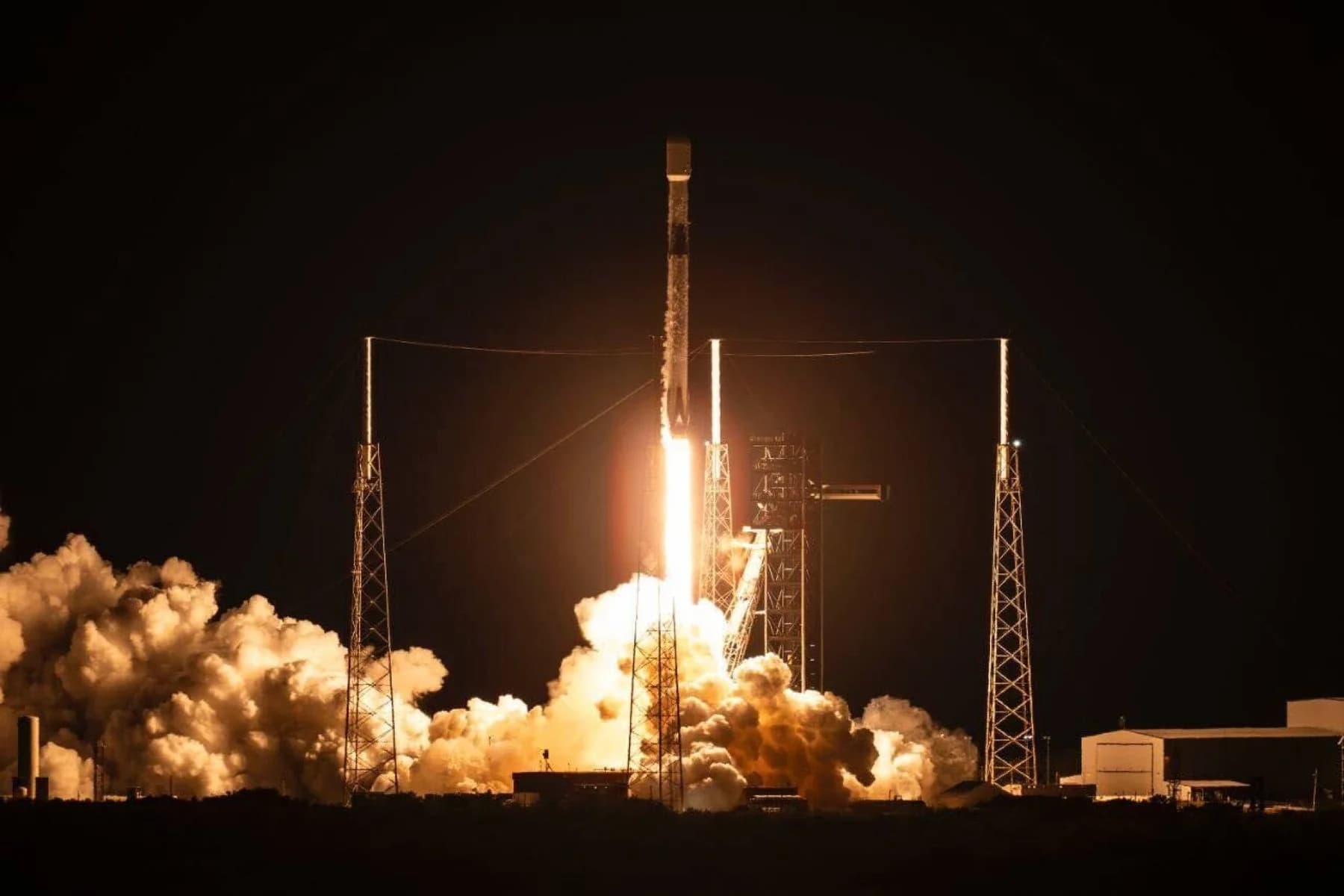
This is where Korea's story diverges sharply from Taiwan's, even though both markets share "no coverage gap" as a starting condition. Taiwan's resilience anxiety centers on a small number of physically locatable submarine-cable landing points and a pattern of cable damage near Chinese-flagged vessels. Korea's resilience anxiety centers on something different and, in one sense, more diffuse: active, ongoing, escalating electronic warfare against civilian and military positioning and communications systems, conducted openly by a neighbor with a fixed geographic launch point 50 km from Seoul.
North Korea's GPS-jamming campaign against South Korea has a documented history stretching back to at least December 2010, with incidents recorded through 2011 and a March 2012 campaign that specifically jammed military communications traffic running through South Korea's own Koreasat 5 satellite, sent from a location near Pyongyang — part of a total of more than 2,100 jamming attacks launched from North Korean territory since 2010.^[19] The frequency and intensity have escalated sharply and recently: South Korea's Institute for National Security Strategy and multiple defense-monitoring outlets recorded jamming incidents rising from 39 in 2023 to 578 in 2024 — a fifteen-fold increase, though the cited reporting does not fully standardize what counts as one "incident" (a detected signal, a discrete campaign day, or an individual affected-vessel report), so the analysis treats the rise as directionally real rather than a precise measure of North Korean jammer output, with the most significant single campaign running from May 29 to June 2, 2024, disrupting GPS reception for more than 500 aircraft and hundreds of ships simultaneously.^[17]^[18] South Korea's military formally attributed a further jamming attack to North Korea in November 2024.^[27] Separately, Korean defense analysts have flagged that South Korea's own 425 Project reconnaissance satellites — the country's most prized sovereign space asset — remain vulnerable to jamming and cyberattack, an admission from within Korea's own defense-analysis community, not an external critique.^[28]
The resilience case for LEO in Korea is structurally different from Taiwan's, with one important technical qualifier the government's own framing glosses over. Taiwan's threat model is interdiction — physically cutting a small number of cables. Korea's threat model is degradation — jamming positioning and communications signals across an entire operating theatre, an attack that does not require physical proximity to infrastructure and that has already been demonstrated hundreds of times against civilian aviation and shipping. But GPS jamming and satellite-communications jamming are not the same RF problem: GNSS denial exploits the extremely weak received signal strength of one-way navigation broadcasts, while a LEO broadband link uses a materially higher link budget, steerable phased-array terminals and (for constellations with them) inter-satellite optical relays that route around a jammed ground segment. North Korea's demonstrated, repeated success at GPS jamming is evidence of intent and electronic-warfare capability — it is not, by itself, evidence that the same jammers would deny a LEO communications link with equal ease. The more directly relevant precedent is the 2012 Koreasat 5 incident (§3.2), which was actual satcom interference, not GNSS jamming. Read correctly, a LEO constellation with resilient inter-satellite links adds an independent, geographically distributed communications path that complicates an adversary's denial problem — it does not make that path jammer-proof, and terminals and gateways remain exploitable, but that qualified claim is still a real hedge fiber redundancy alone cannot offer, and the same logic makes LEO resilience-relevant in Taiwan, applied to a different and, if anything, more frequently demonstrated threat vector.
The harder case is that a foreign-operated LEO constellation only partially closes this gap. Starlink and OneWeb terminals are themselves susceptible to jamming and spoofing at the terminal and downlink level, and neither company has published Korea-specific resilience data against North Korean electronic-warfare techniques. More importantly, in a full-scale conflict scenario, Korea would be relying on private American and British-anchored (Eutelsat/OneWeb) infrastructure for wartime communications resilience — the same Ukraine-precedent dependency risk this series flagged in Vietnam and the Philippines. That gap — sovereign control over the constellation used for wartime and disaster communications — is the defensible rationale for K-LEO. It is a military and government-continuity case, not a broadband-market case.
4. Korea Opened the Door Without Giving Up Control
4.1 The Legal Mechanism — Slower Than Malaysia, Faster Than Vietnam, Structurally Like Taiwan
Korea's Telecommunications Business Act requires any foreign satellite-communications provider to enter Korea through a cross-border supply agreement with a licensed domestic telecommunications operator — the foreign constellation supplies the space segment, the domestic partner holds the actual Korean operating license and regulatory accountability.^[1]^[14] This is architecturally the same gatekeeping mechanism Taiwan uses (and that killed Starlink-NCC talks there in May 2026 over ownership terms), and it rhymes with the domestic-partner requirement embedded in Vietnam's gateway mandate, but Korea's implementation carries none of the additional constraints that made Vietnam's and (attempted) Taiwan's versions politically fraught.
Table 1 — The Korean LEO market-entry timeline
Sources: MSIT/RRA announcements as reported by Korean and international trade press; National Space Committee proceedings.^[1]^[2]^[3]^[5]^[11]^[12]^[32]^[33]^[34]
From first corporate registration to nationwide commercial launch: roughly two years and nine months. That is materially faster than Taiwan, which has not licensed an operator as of August 2026 despite talks stretching back further, and it is comparable to Vietnam's timeline (2023 talks stalling on ownership, resolving into a February 2026 license), but the outcome is categorically more open. Korea imposed no subscriber cap, no forced-domestic-gateway routing mandate, no sunset clause, and no joint security-ministry supervision structure. The delay in Korea was ordinary regulatory process — frequency-interference technical standards and equipment certification, not a deliberate enclosure mechanism. That is a materially different story from Vietnam's, and worth stating plainly against the "protectionist Korea" assumption this series set out to test.
4.2 Why Two Constellations, Two Regulatory Counterparties, and a Reseller Layer On Top
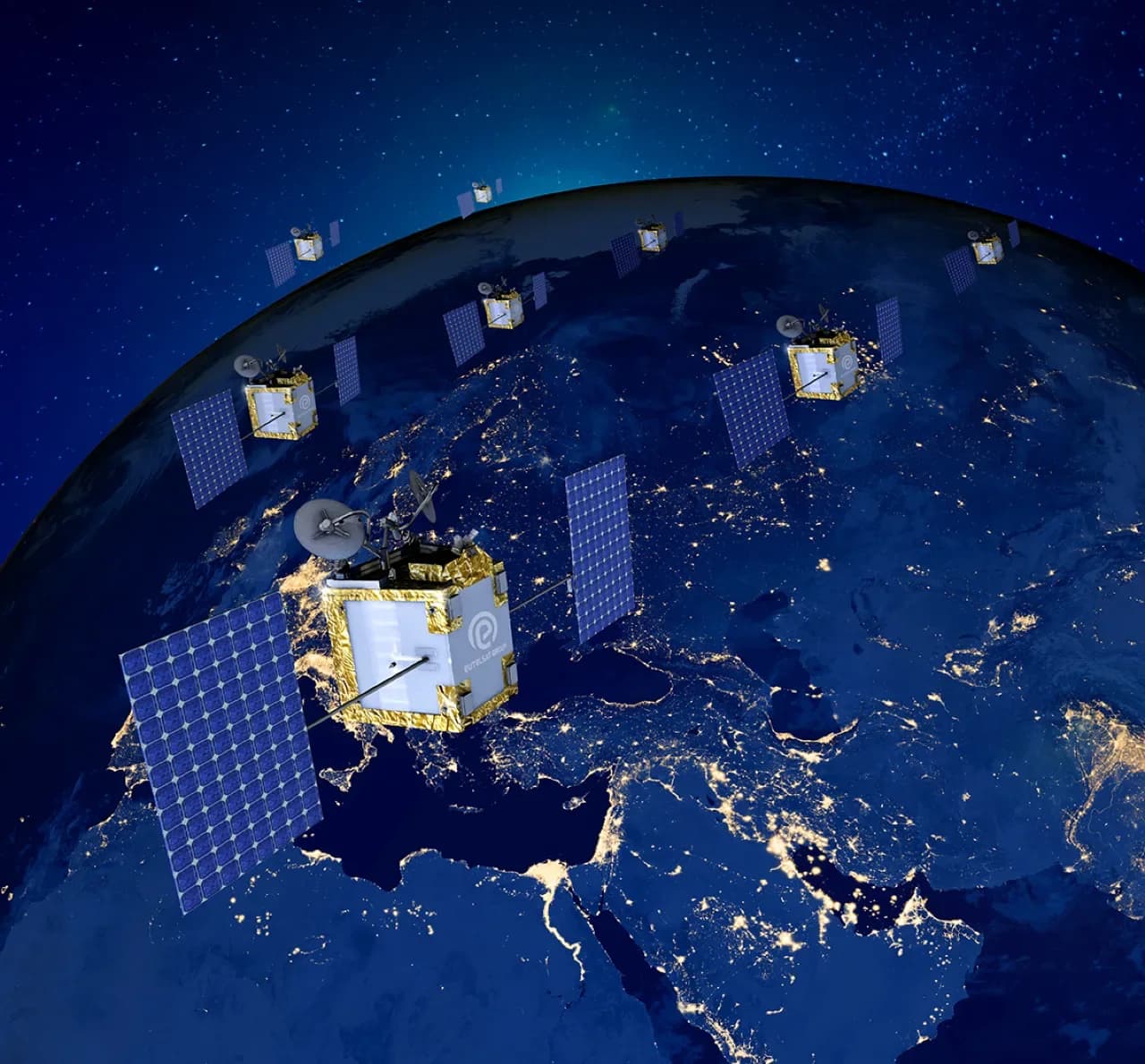
The most structurally distinctive feature of Korea's approval is that MSIT cleared two competing LEO constellations through a single regulatory action — a degree of multi-operator openness this series has not seen anywhere else, with a regulatory and commercial structure that is easy to over-simplify and worth stating precisely. The actual cross-border supply agreements are between SpaceX and its own Korean subsidiary, Starlink Korea LLC, on one side, and Eutelsat OneWeb and two separate Korean partners — Hanwha Systems and KT SAT — on the other, meaning OneWeb effectively has two independent Korean distribution channels while Starlink has one regulatory counterparty that is itself SpaceX's local entity, not a third-party gatekeeper.^[1]^[2] SK Telink — a separate SK Telecom subsidiary — sits one layer downstream: SpaceX appointed it (alongside KT SAT, which resells both OneWeb and Starlink capacity) as the commercial reseller responsible for local marketing, enterprise sales and the maritime/aviation account relationships detailed in §3.2, but it is not a party to the underlying regulatory agreement.^[2] Intellian Technologies — a Korean satellite-terminal manufacturer — was named as the local terminal-deployment partner backing the OneWeb licenses, adding a domestic manufacturing angle to the OneWeb side of the market that Starlink, which manufactures its own terminals, does not have.^[35]^[36]
The Hanwha–OneWeb relationship did not start with this 2025 license, and it did not survive it either. Hanwha Systems bought an 8.8% equity stake in OneWeb for $300 million in August 2021, well before OneWeb merged with Eutelsat, making it a part-owner rather than a pure reseller of the constellation. But in early June 2025 — days after Hanwha's own cross-border supply agreement with OneWeb cleared MSIT on May 30 — Hanwha sold the entire position (by then approximately 5.4% of the merged Eutelsat, after a board seat resignation in April) for roughly $85 million, a 74% loss on the original investment, stating explicitly that a minority stake without board control was "meaningless" and that capital was better redeployed into its own military-satellite business.^[7]^[8]^[52] Read together with the K-LEO council's launch eight months later in February 2026 and the ₩55 trillion pledge that July, the sequence is coherent, not contradictory: Hanwha exited a passive equity position in someone else's constellation at a loss the same year it began building the case for its own — the clearest revealed-preference evidence here that Hanwha's strategic center of gravity is sovereign build, not foreign-constellation equity. That is a meaningfully different commercial position from SK Telink's pure-reseller relationship with Starlink, and it explains why Hanwha, rather than SK Telecom or KT, is the natural anchor for Korea's sovereign K-LEO ambitions: it has direct engineering and commercial exposure to how a LEO constellation is built and financed, plus, as of 2026 — a stated hiring plan to grow its Space Business Division by at least 100 people specifically in SAR satellites and space-AI data centers.^[37]
KT SAT's position is different again. KT SAT is Korea's legacy GEO operator, running the Koreasat fleet, and its OneWeb agreement functions the way MEASAT's Qianfan MoU functions in Malaysia: a capital-light way for a GEO incumbent to add a LEO layer to its portfolio without funding a constellation itself. Separately, KT has signed an MoU with KT SAT and Korea Aerospace Industries (KAI) on 6G-and-LEO integration — positioning KT to be a distribution and terrestrial-integration layer for whichever LEO capacity (foreign or eventually K-LEO) it ends up carrying.^[38]
4.3 Pricing and the Enterprise-First Structure
Table 2 — Starlink Korea indicative pricing (December 2025 launch)
Sources: Korea Herald, Telecom Review Asia pricing coverage.^[4]^[5]
The pricing structure tells the same story the go-to-market strategy does. A ₩7.43 million/month maritime tier and a ₩64,000/month residential tier sold by the same operator in the same launch window is not a market chasing volume; it is a market chasing the enterprise and maritime accounts where the willingness-to-pay is real and residual demand is a pure bonus. Compare this to Vietnam, where the $85/month residential price is 7–8x median fiber and functions as a de facto affordability cap; in Korea, the residential price (approximately $43–59) is far closer to competitive with Korean fiber and mobile broadband pricing, meaning affordability is not the binding constraint on residential uptake the way it is in poorer ASEAN markets — the binding constraint is simply that Korean households already have excellent terrestrial service and no reason to switch.
5. Five Satellites Are Not Yet a Broadband Mesh
5.1 A Working Constellation, Not a Roadmap
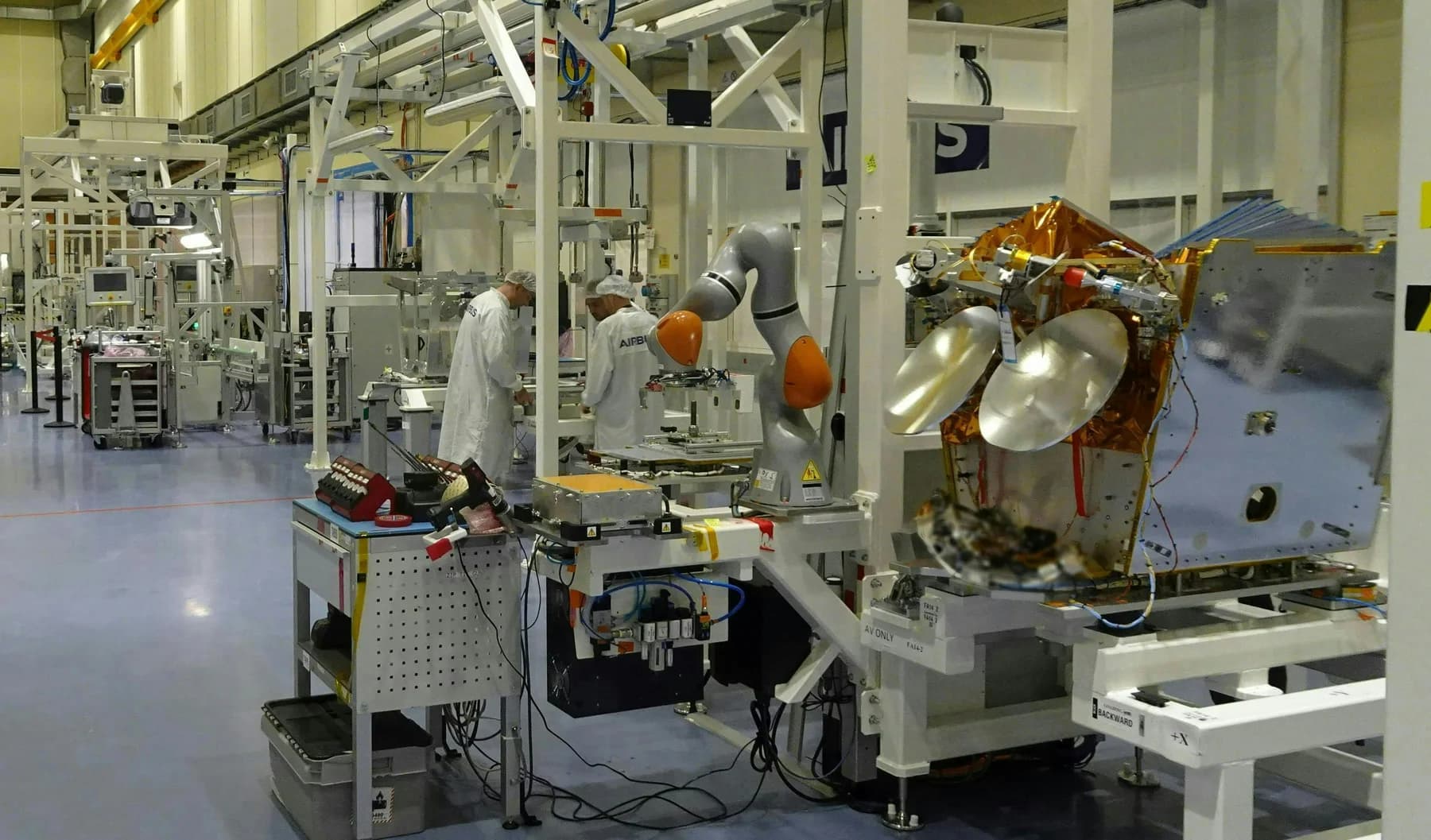
Before assessing K-LEO's credibility, this series' discipline demands establishing what Korea has actually already built, because that track record is the single strongest piece of evidence for taking K-LEO's 2035 target more seriously than this series has taken any comparable sovereign-constellation promise elsewhere. The 425 Project — the numeric name derives from the Korean pronunciation of "SAR" (사, sounding like "4") and "EO" ("25") — is a five-satellite military reconnaissance constellation: one electro-optical/infrared (EO/IR) satellite and four Synthetic Aperture Radar (SAR) satellites, providing round-the-clock, all-weather surveillance of North Korea's nuclear and missile programs.^[39]^[9] The program is a joint effort between Thales Alenia Space (SAR payload technology), Korea Aerospace Industries (KAI, satellite bus/integration) and Hanwha Systems (payload systems), under South Korea's Agency for Defense Development (ADD) as prime contractor.^[40]^[9]
The launch cadence: the first EO/IR satellite launched in December 2023; the four SAR satellites followed between April 2024 and November 2025, with the fifth and final satellite completing the constellation in November 2025.^[10]^[39] The SAR satellites can resolve objects as small as one meter and, working together, allow four to six observation passes per day over the Korean Peninsula and surrounding regions.^[9]
This is the fact the analysis treats as load-bearing: Korea's defense-industrial base has already designed, built and launched a five-satellite constellation on a roughly two-year cadence (Dec 2023 → Nov 2025) — the fifth satellite completed post-launch operational testing in the months since — under a named consortium (ADD as program authority, KAI on bus integration, Hanwha Systems on SAR payloads) that includes the same company, Hanwha, now anchoring K-LEO's private-capital side. No other market in this series, not Vietnam, not Malaysia, not Taiwan, not the Philippines — has a comparable, already-shipped sovereign satellite-constellation track record to point to when assessing the credibility of its next-generation ambitions. Taiwan's TASA has flown one imaging satellite (Formosat-8A) and has no orbital-launch capability of its own before 2034 at the earliest; Vietnam explicitly disclaimed building its own constellation as too costly; Malaysia's MEASAT has never built a satellite bus, only operated purchased GEO spacecraft. Korea's starting position for K-LEO is structurally stronger than any comparable ambition elsewhere in Southeast or East Asia covered by this series.
5.2 The Honest Limit: SAR Reconnaissance Is Not LEO Broadband
The transfer limit is equally important. The 425 Project is a reconnaissance constellation — five satellites, each doing Earth observation, not internet-relay communications. Building and flying an imaging satellite that photographs fixed ground targets on a predictable orbit is a materially different engineering problem from building, launching, and operating a 128–512-satellite broadband mesh with inter-satellite optical links, dynamic beam-forming, user-terminal phased arrays, and continuous global (or at minimum, peninsula-and-Arctic) coverage requiring a completely different ground-segment and network-operations architecture. SpaceX's own Starlink took roughly six years and multiple major hardware revisions between its first 2019 launch batch and reaching a broadband-competitive median speed at meaningful subscriber scale; even a well-funded, competent defense-industrial base does not automatically translate five-satellite reconnaissance success into hundred-satellite broadband-mesh success on the same timeline.
The National Space Committee's own disclosed technical framing acknowledges this gap implicitly: the ₩4–13.2 trillion budget scenarios span a 128–512 satellite range specifically because the engineering and cost model is not yet fixed, and the plan sequences a 2030 manufacturing-and-launch-capacity milestone before a 2032 in-orbit validation phase (specifically for inter-satellite laser links) ahead of full 2035 deployment.^[11] That sequencing — laser inter-satellite links validated in 2032, three years before full deployment — is the single most technically demanding and highest-risk element of any broadband mega-constellation, and it is scheduled as a late-stage validation step, not something Korea has already solved. The implication is narrower: Korea's reconnaissance-satellite credibility is real and transferable to some parts of K-LEO (bus manufacturing, launch-integration relationships, program management discipline), but the broadband-mesh-specific engineering — laser links, beam management, ground-segment scale — is unproven and scheduled to be proven only in the back half of the program.
6. Korea Can Fund Both Bets
6.1 What Was Actually Approved, and What Was Not
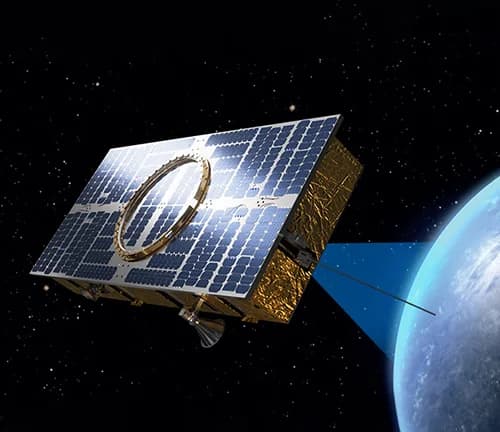
On July 3, 2026, at the fifth meeting of Korea's National Space Committee — chaired by President Lee Jae-myung, held in Jinju, South Gyeongsang Province — the government formally ratified an "Aerospace Industry Support Strategy" released by KASA (Korea AeroSpace Administration), the country's newly established civilian space agency.^[11]^[12] The headline figures:
Table 3 — K-LEO: the approved industrial-strategy framework, July 2026
Sources: SatNews, BigGo Finance, Seoul Economic Daily reporting on the National Space Committee's July 3, 2026 proceedings.^[11]^[12]^[13]^[41]^[42]^[43]
Read this table the way this series reads every capital-allocation claim: as a decision with an opportunity cost, not a symbolic gesture. ₩55 trillion from Hanwha alone is roughly $38.5 billion spread across 2026–2040 — averaging close to ₩3.9 trillion (approximately $2.7B) a year, comparable in scale to a meaningful slice of Korea's entire ₩65.9 trillion 2026 national defense budget^[53] — and, even amortized to an annual run rate, still more than an order of magnitude larger than the entire commercial LEO-broadband opportunity the model puts for Korea in §9 (approximately $90M–$220M by 2030). That mismatch is not evidence the plan is fake. It is evidence the plan is not primarily about the commercial LEO-broadband market this series otherwise covers. A private conglomerate does not commit $38.5 billion of capital chasing a market worth a few hundred million dollars a year. It commits that kind of capital chasing either (a) a genuinely global commercial ambition — competing with Starlink and Amazon Leo for international broadband and enterprise contracts, not just the domestic Korean market, or (b) a defense-and-strategic-industrial payoff, where satellite manufacturing capacity, launch-vehicle development and space-AI infrastructure feed Korea's broader defense-export business (Hanwha's K9 howitzers, K2 tanks and naval systems already make it one of the world's top-ten arms exporters) and national prestige objectives that are not priced the way a subscriber-revenue business is.
6.2 The K-LEO Council: A Private-Led, State-Blessed Structure
The organizational form matters as much as the budget. K-LEO was formally launched as an industry council on February 4, 2026 at Seoul's War Memorial of Korea, not inside a ministry building, a deliberate signal of the defense-industrial framing — bringing together SK Telecom, KT, Hanwha Systems, Hanwha Aerospace, LIG Nex1 (Korea's other major defense-electronics prime) and roughly 80 participating companies, spanning four operational workstreams: satellites, ground stations, terminals and communications.^[32]^[44] Korean reporting explicitly frames this as a shift toward a "private-led, government-supported" (민간 주도-정부 지원) cooperation model for space and defense in the "NewSpace era" — a deliberate contrast with the state-directed model that built Korea's earlier GEO satellites (Koreasat) and even the government-agency-led 425 Project.^[32]
One notable absence: LG Uplus, Korea's third major carrier, sits on neither the K-LEO council's founding roster nor any disclosed Starlink/OneWeb resale agreement as of this writing — the domestic LEO story so far runs through SK (Telecom and Telink), KT (and KT SAT) and Hanwha, leaving LG Uplus a visible gap rather than a deliberate absence public evidence can explain from public sources. That gap is itself a signal worth watching (§11): an LG Uplus D2D or K-LEO announcement would be the clearest evidence Korea's carrier landscape is converging on LEO as a three-way rather than two-way race.
This is the structural feature that most distinguishes Korea from every other market in this series. Vietnam's Viettel is a wholly state-owned enterprise under the Ministry of National Defence — the state is the operator.^[51] Malaysia's MEASAT is capital-constrained and cannot self-fund a constellation, so it bought optionality through an MoU rather than equity risk.^[50] Korea inverts both: the state sets the strategic target and provides co-investment and regulatory cover, but the capital, the engineering risk and the commercial execution sit with private, already-profitable defense-industrial conglomerates that have their own independent reasons — export markets, defense budgets, AI-infrastructure ambitions — to build satellite manufacturing capacity regardless of whether K-LEO ever sells a single residential broadband subscription.
This also explains why SK Telecom and KT sit on the K-LEO council while simultaneously reselling or hosting foreign LEO capacity today: they are not choosing sides. They are hedging exactly the way Malaysia's political economy hedges between Starlink and Chinese digital infrastructure, except Korea's hedge is funded from a far deeper private balance sheet and does not require choosing a foreign patron at all — Korea is building its own third option, with Canadian partners (MDA Space, Telesat) providing technology transfer rather than capital or political alignment risk.^[33]^[34]
6.3 The Telesat/MDA Angle: Borrowing Proven Architecture, Not Reinventing It

Hanwha Systems' January 2026 MoUs with Canada's MDA Space and Telesat are a specific, checkable signal about how K-LEO intends to close its technical-credibility gap. Telesat — builder of the Telesat Lightspeed constellation — agreed to explore defense-user-terminal compatibility between K-LEO and Lightspeed; MDA Space agreed to assess whether its Aurora software-defined satellite-bus architecture — announced in 2024 with Telesat as anchor customer, but not yet demonstrated with a confirmed in-orbit flight history — could support Hanwha's constellation build.^[33]^[34] Neither MoU is a contracted, funded commitment — both are described as exploratory, and neither partner brings a fully proven broadband-constellation bus to the table, but the pattern is coherent with Korea's revealed strategy across other sectors (semiconductors, batteries, shipbuilding): acquire foreign technology and IP through partnership, then localize manufacturing and iterate domestically, rather than building from first principles the way China's Qianfan/Guowang programs are attempting. This is a plausibly lower-risk path to closing the laser-inter-satellite-link and software-defined-bus gap flagged in §5.2 than pure domestic R&D would be — though it borrows from partners whose own broadband-constellation technology is itself still maturing, not a fully de-risked off-the-shelf transfer, and it is exactly the "foreign technology, national control" template this series identified in Malaysia's MEASAT-1996 history and Vietnam's VINASAT program, here applied by a much wealthier buyer with much stronger negotiating leverage.
7. K-LEO Has a Defense Buyer. Its Commercial Buyer Is Missing.

7.1 The Dual-Use Framing, Read Skeptically
KASA and the National Space Committee's own language describes K-LEO as serving both "sovereign military communication" and "commercial 6G infrastructure."^[11] Take that framing seriously enough to test it, rather than either accepting or dismissing it wholesale. The military-and-government case is strong on every dimension the evidence already establishes: North Korea's demonstrated, escalating jamming campaign (§3.3); Korea's own defense-analysis community flagging jamming vulnerability in its existing reconnaissance satellites (§3.3); a defense-industrial consortium (Hanwha, KAI, LIG Nex1) with a proven, on-time delivery record (§5.1); and a natural customer (Korea's own military and government agencies) that does not need to be won through competitive pricing against Starlink, because it will simply be the mandated buyer of a sovereign system the way most countries' militaries mandate use of national or allied satellite infrastructure.
The commercial 6G broadband case is structurally weaker, and the demand analysis (§3.1–3.2) explains why. Korea has no meaningful underserved residential population. Its enterprise, maritime and aviation LEO demand — $90M–$220M by 2030 in the model — is already being served by Starlink and OneWeb through SK Telink, Hanwha Systems and KT SAT. A K-LEO commercial broadband product entering that market in 2032–2035 would face incumbents with seven to ten years of switching costs, integration depth and brand trust — the same entrenchment dynamic this series flagged as Starlink's structural advantage in Malaysia's enterprise segment.
Cabinet deliberations and legislative budget debates are not public, so the motive behind the dual-use framing remains unknown. The asymmetry is enough: the military/government case rests on a named, escalating threat (§3.3), a proven delivery consortium (§5), and a mandated buyer. The commercial-6G case rests on a target percentage (0.7%→3.0% global space-economy share), ETRI's disclosed 200 Gbps spatial wireless link,^[11] and no published tariff, spectrum or retail-distribution plan. Korea also has a precedent for dual-use architecture: Koreasat 5 carried commercial capacity and the country's first dedicated military-communications function before ANASIS-II replaced the military role in 2020. Koreasat 5A, the 2017 commercial successor, is purely civilian. The precedent proves familiarity, not commercial intent. Broadband for citizens remains the later, thinner half of a program whose defense case is already strong.
7.2 What Would Make the Commercial Case Real — A Falsifiable Test
For the commercial-6G half of K-LEO to become a credible, near-term threat to Starlink and OneWeb's Korean enterprise franchise, three concrete things would need to happen that have not happened as of this writing: (1) MSIT or KASA would need to publish a distinct commercial spectrum allocation and retail/wholesale tariff framework for K-LEO capacity, separate from the military-procurement track; (2) at least one of SK Telecom, KT or LG Uplus would need to announce a specific K-LEO commercial-service integration plan with a dated launch window, the way Japan's three carriers did with Starlink Direct-to-Cell (§8); and (3) the 2032 in-orbit laser-link validation milestone would need to succeed on schedule, not because defense communications inherently need less network sophistication than broadband (resilient military links can demand just as much crosslink and routing capability), but because the distinction that actually separates the two tracks is customer and procurement structure, not engineering simplicity, and a milestone miss would delay whichever track depends on it regardless of label. None of these three conditions is currently public. Until at least one of them appears, treat K-LEO's commercial-broadband dimension as a stated government target, not a market development — the same evidentiary discipline this series applied to Malaysia's Qianfan MoU before treating it as anything more than an option.
8. Japan Already Won the Direct-to-Device Round
8.1 Japan Got There First — By Years, Not Months
This series has not yet directly compared Korea to Japan, and the comparison is instructive because it complicates any simple "Korea is behind" or "Korea is ahead" narrative. On carrier-integrated satellite-to-phone direct-to-device (D2D) service — arguably the single most consumer-relevant LEO product category for a market with near-universal existing mobile coverage — Japan is clearly and significantly ahead. All three of Japan's incumbent nationwide carriers — KDDI, NTT Docomo and SoftBank — now offer Starlink-based satellite-to-phone direct communication, but not on a single timeline: KDDI's "au Starlink Direct" was first, live since April 2025, with NTT Docomo and SoftBank following roughly a year later in April 2026 — all built on the shared Starlink Mobile technology base, with KDDI in particular extending maritime coverage to 24 nautical miles specifically in response to fishing-industry requests and launching a dedicated SOS center.^[45]^[46]^[47] None of the three carriers is trying to monetize satellite connectivity as a standalone product — the cost is folded into existing mobile tariffs, a "coverage insurance" framing rather than a new revenue line.^[46] Separately, Rakuten Mobile is pursuing a distinct high-speed D2D path using AST SpaceMobile rather than Starlink, giving Japan two competing D2D technology bases in commercial deployment simultaneously.^[46] KDDI's underlying Starlink ground-station relationship in Japan dates back to a 2022 partnership (initially backhaul, not D2D), giving Japanese carriers a multi-year head start on carrier-integrated satellite service relative to Korea's carriers, who as of August 2026 are still at the 6G-research-and-MoU stage on satellite-terrestrial integration, not commercial D2D deployment.^[47]^[48]
Table 4 — Korea vs. Japan vs. Taiwan: LEO market posture, 2026
Sources: the analysis, above.^[6]^[45]^[46]^[47]^[49]^[54]
The comparison sharpens the thesis rather than undercutting it. Japan chose fast, deep carrier integration with a foreign D2D provider and has shown no comparable public appetite for a sovereign LEO-broadband-scale build — its resilience posture is oriented around earthquake/tsunami disaster response, where speed of foreign-technology adoption mattered more than sovereignty of the underlying constellation. Korea chose a slower carrier-integration path but paired it with by far the largest sovereign-build commitment in Northeast or Southeast Asia. Both are coherent national strategies; they reflect different threat models (Japan's natural-disaster resilience vs. Korea's adversarial-state electronic-warfare exposure) and different industrial bases (Japan's carriers lack a Hanwha-scale defense-industrial satellite-manufacturing arm ready to build a constellation from a standing start). Korea did not choose sovereignty over openness. It chose openness now and sovereignty later, funded by a defense-industrial base wealthy enough to run both tracks simultaneously — a luxury this series has not documented anywhere else.
9. A $90M–$220M Market Cannot Justify a $48B Build
Scenarios are regime variables, not smooth gradients. Revenue figures are bottom-up, order-of-magnitude ranges, not point forecasts, and size the commercial satellite-broadband market across Starlink and OneWeb combined; they exclude K-LEO capital expenditure, KT SAT's legacy GEO/broadcast revenue, and defense/government procurement spending on the 425 Project or K-LEO's military tranche, all of which are separate and, in K-LEO's case, far larger pools.
9.1 The Segment Build
Following the same discipline this series applied in Malaysia and Vietnam — classify by evidence strength and revenue potential rather than inventing precise subscriber counts SpaceX and Eutelsat do not disclose:
Table 5 — Korea satellite-broadband bottom-up build, illustrative 2030 (base case)
The bridge the headline rests on: maritime and aviation, together, carry over 65% of modeled revenue from well under 10% of terminal count — the same high-ARPU-core, low-terminal-count pattern this series found in Malaysia's and Vietnam's maritime/enterprise segments. Aviation alone is approximately 38% of the base-case total, and its $18,000/month ARPU is the single most load-bearing, least-sourced number in this model — neither SpaceX nor the Hanjin carriers disclose per-aircraft economics, so this figure is triangulated from comparable in-flight-connectivity contracts elsewhere in this series, not a Korea-specific disclosure. Halving it to $9,000/month would cut modeled aviation revenue to approximately $38M and pull the base-case total down toward $160M, which is why this is presented as a range, not a point estimate, and why the aviation line deserves the most skepticism of any figure in this table. Note the modeled approximately $1,200/month maritime ARPU sits well below Table 2's disclosed ₩10.98M (approximately $7,430)/month SK Telink "Smart" maritime tier: that figure is the ceiling plan for the highest-bandwidth offshore/1TB use case, not the fleet average, and most of the merchant and fishing fleet buys lower-tier plans closer to the modeled blended figure.
Table 6 — Scenario range, 2030 satellite-broadband revenue (US$M, illustrative)
These are regime scenarios, not a probability distribution — no disclosed data supports assigning precise probabilities. Across all three, Starlink and OneWeb's 2030 Korean revenue plausibly lands somewhere in the $90M–$220M range: a fraction of a percent of Korea's telecom sector revenue, but concentrated and strategically disproportionate to its size, exactly the pattern this series has found in every market to date. (No Korea-specific margin, CAC or reseller-split data is publicly available, so segment profitability remains unknown.)
The investment logic falls out cleanly. For Starlink and OneWeb, Korea is not a mass-market prize — it is a high-ARPU enterprise-and-maritime franchise in a stable, open, high-income regulatory environment, arguably the lowest-political-risk market of any this series has covered, precisely because Korea's own sovereign-build ambition targets defense and government use cases rather than displacing the foreign operators' existing commercial book. For Korea's government and Hanwha, the ₩13.2 trillion state budget and ₩55 trillion Hanwha capital plan are not sized against this approximately $90M–$220M commercial opportunity at all — it is sized against defense-sovereignty value and Korea's targeted ₩70 trillion global space-economy revenue share, an entirely different, much larger, and much harder-to-verify calculation that depends on Korea winning export and manufacturing revenue globally, not just serving its own 51.6 million citizens.
10. The APAC Lesson: Open Now, Build Later
Korea is the series' clearest demonstration that "how open is a market to foreign LEO" and "how seriously is a government building a domestic alternative" are not opposite ends of one spectrum — they are two independent variables, and a wealthy, defense-industrially capable state can max out both simultaneously in a way capital-constrained states cannot. Four lessons travel from Korea to the wider region, and specifically to Singapore:
- Openness is not the endpoint of a market's LEO story; it is one input into a larger industrial-policy calculation. Korea proves that a market can run an entirely conventional, non-coercive foreign-operator licensing regime — no caps, no forced routing, no sunset clauses, while simultaneously building a sovereign alternative an order of magnitude larger in committed capital than the market it is opening. Regional regulators reading Vietnam's enclosure model as "the" alternative to Malaysia's open-market model are missing a third path: open now, build later, funded by domestic industrial capacity rather than by constraining the foreign entrant.
- Defense-industrial credibility is transferable, but not directly, to broadband-constellation credibility. Korea's 425 Project gives K-LEO a legitimacy no other sovereign-constellation ambition in this series can claim, but the analysis (§5.2, §7.2) shows that legitimacy applies most strongly to the military/government half of K-LEO and weakly to the untested, later-scheduled, broadband-specific engineering. Regional observers should apply the same discipline to any state's sovereign-constellation announcement: ask what track record actually transfers, and what is genuinely new engineering risk being underwritten by reputation borrowed from an adjacent, different program.
- A hostile-neighbor electronic-warfare threat is a distinct resilience driver from natural disaster or cable interdiction, and it argues for sovereignty faster than either. Korea's GPS-jamming exposure is quantifiably escalating (39→578 incidents in one year) in a way Taiwan's cable-cutting pattern, while real, is not documented to be accelerating at a comparable rate. States facing active, demonstrated electronic warfare from a neighboring state — a category that includes parts of Northeast Asia and the Korean Peninsula specifically, but potentially extends to other contested-border contexts in the wider region — have the strongest evidentiary case in this series for prioritizing sovereign resilience capacity over reliance on any foreign commercial operator, however open the regulatory relationship.
- Singapore's opening is structurally closer to Korea's than to Vietnam's, but Singapore lacks Korea's defense-industrial scale to run a parallel sovereign-build track. Singapore, like Korea, has near-saturated terrestrial connectivity and therefore a similarly thin commercial LEO-broadband opportunity domestically, but Singapore has no Hanwha-scale conglomerate capable of self-funding a comparable sovereign constellation, and no comparable single-adversary electronic-warfare threat driving urgency. Singapore's realistic opening is not replicating K-LEO; it is the role this series has repeatedly identified: a neutral hub for satellite-ground-segment services, gateway infrastructure, cross-border regulatory harmonization expertise, and — given Korea's own need for foreign technical partnerships (Telesat, MDA Space) to close its engineering gaps — a potential integration and financing node for exactly the kind of foreign-technology-partnership structure Hanwha is now building. Korea's K-LEO program, if it needs Southeast Asian ground-station diversity or a neutral jurisdiction for regional commercial distribution once (if) the constellation reaches commercial service after 2032, is a plausible future counterparty for Singapore-based satellite-services intermediaries, not a market Singapore can meaningfully compete with on sovereign-build capacity.
11. Five Signals That Decide the Thesis
The following signals, dated and concrete, would confirm or break the central call — that K-LEO ships as a defense-and-government sovereignty layer while Starlink/OneWeb retain Korea's commercial enterprise-and-maritime niche indefinitely:
- A distinct commercial-tariff or spectrum framework for K-LEO, published by MSIT or KASA separate from the military-procurement track, before end-2028. If that document has not appeared by end-2028, treat the commercial-6G track as an unsubstantiated industrial-policy objective rather than an executable product plan, not because the framing was necessarily insincere, but because a program that far along without one has, in practice, no near-term commercial plan.
- The 2032 in-orbit laser-inter-satellite-link validation milestone. A successful, publicly verified demonstration on or near schedule would be the first hard technical evidence that K-LEO's broadband-specific (not just SAR-reconnaissance-adjacent) engineering is tracking its own roadmap; slippage past 2033 would support the skepticism about the commercial-broadband timeline specifically.
- Any SK Telecom, KT or LG Uplus carrier-integrated direct-to-device announcement, on the Japan model, using either Starlink Mobile or a competing D2D provider, with a dated commercial launch window. This would be the clearest signal Korea is closing its D2D gap with Japan independent of K-LEO's timeline.
- Publicly disclosed Starlink Korea or OneWeb Korea subscriber or revenue figures. Neither SpaceX nor Eutelsat currently discloses country-level Korea data; any future disclosure (an SK Telink or Hanwha Systems earnings breakout, for instance) would allow the bottom-up model to be directly tested against reported figures.
- A named K-LEO prime-contract award or funded satellite-manufacturing order (as opposed to the current MoU-and-strategy stage with MDA Space and Telesat), which would mark the transition from industrial-policy announcement to executing program — the same transition this series has flagged as decisive in reading Malaysia's Qianfan MoU and Vietnam's sovereign-satellite ambitions.
All data from public sources including: South Korea's Ministry of Science and ICT (MSIT) and National Radio Research Agency announcements as reported by Korean and international trade press (Korea Herald, Korea Times, KED Global, Telecom Review Asia, Light Reading); South Korea's National Space Committee and KASA (Korea AeroSpace Administration) proceedings as reported by SatNews, BigGo Finance and Seoul Economic Daily; OECD broadband and 5G statistics; corporate disclosures from Hanwha Systems, SK Telecom, KT and SK Telink; and defense- and security-focused reporting from Shephard Media, GlobalSecurity.org, NK News and Al Jazeera on North Korea's GPS-jamming campaign. Analysis represents the author's independent views and is not investment, legal or procurement advice. Neither SpaceX nor Eutelsat OneWeb discloses country-level Korea subscriber, revenue or performance data; every such figure is explicitly labeled as modeled, estimated or scenario-dependent, and K-LEO's commercial (as distinct from military/government) scope is treated throughout as a stated government target rather than a verified market development.
Sources54 entries with source notes and links
- Light Reading — Starlink and OneWeb secure regulatory approval for South Korean satellite Internet(lightreading.com)
Reports MSIT's May 30, 2025 approval of three cross-border supply agreements. B-grade source.
- KED Global — SpaceX's Starlink, Eutelsat's OneWeb land in Korea for LEO satellite services(kedglobal.com)
Names the three approved agreements: Starlink Korea–SpaceX, Hanwha Systems–OneWeb, KT SAT–OneWeb. B-grade source.
- Telecom Review Asia — Starlink Enters South Korea, Prioritizing Maritime and Aviation Connectivity(telecomreviewasia.com)
Describes B2B/B2G-first go-to-market and August 2025 equipment certification. B-grade source.
- Korea Times — Starlink service expands among Korean shippers, airlines(koreatimes.co.kr)
Business/maritime pricing detail, including SK Telink's premium maritime tier. B-grade source.
Confirms December 2025 nationwide launch and residential pricing. B-grade source.
Confirms Chunghwa Telecom's domestic OneWeb license, Taiwan's only live LEO commercial service as of this writing. B-grade source.
- SpaceNews — South Korea's Hanwha enlarges space focus with $300 million OneWeb investment(spacenews.com)
Confirms August 2021, $300M, 8.8% stake. B-grade source (credible independent trade press).
- Hanwha — Hanwha's Space Business Leaps Forward with Announcement of Investment in Satellite Company OneWeb(hanwha.com)
Company primary source on the OneWeb investment. A-grade source (company disclosure).
- Wikipedia — 425 Project(en.wikipedia.org)
Supplementary overview of constellation composition, consortium and capabilities, cross-checked against and secondary to the defense-trade-press reporting at refs 39–40. C-grade source (aggregated overview, not primary reporting).
- GlobalSecurity.org — Military Reconnaissance Satellite No. 5 Successfully Launched, Marking the Final Phase of the 425 Project(globalsecurity.org)
Confirms November 2025 completion of the five-satellite constellation. B-grade source.
- SatNews — South Korea Formally Ratifies 2035 "K-Starlink" Low Earth Orbit Constellation Plan(satnews.com)
Primary reporting on the July 3, 2026 National Space Committee ratification, satellite-count scenarios, budget figures and milestone schedule. B-grade source.
- Seoul Economic Daily — Kim Dong-kwan Pledges 55 Trillion Won for "Space Independence," Vows K-LEO Network by 2035(en.sedaily.com)
Confirms Hanwha's ₩55 trillion pledge and 2035 K-LEO target. B-grade source.
- BigGo Finance — South Korea Bets 70 Trillion Won on Space: Aims for Homegrown 'Starlink' by 2035, Moon Landing Pulled Forward to 2030(finance.biggo.com)
National space-economy revenue target and Hyundai Motor's ₩42 trillion pledge. B-grade source.
- Korea-certification.com — South Korea opens Market to LEO Satellite Internet Services(korea-certification.com)
Explains the Telecommunications Business Act's cross-border supply agreement requirement. B-grade source.
Korea's fixed-broadband penetration and fiber-share rankings among OECD members. A-grade source (official OECD statistics).
Government self-promotional portal reporting on Korea's 5G base-station density and connection-rate rankings; the underlying comparative ranking is not independently corroborated in this article. C-grade source (government claim, flagged as such).
Jamming-incident statistics (39 in 2023, 578 in 2024) and the May–June 2024 campaign. B-grade source.
- IPDefenseForum — South Korea, Allies confront North Korea's GPS signal jamming(ipdefenseforum.com)
Regional-security reporting on jamming escalation and allied response. B-grade source.
- North Korea Tech — Report: DPRK jams South Korean satellite comms(northkoreatech.org)
Historical record of North Korea's March 2012 jamming of military communications traffic on Koreasat 5, and the cumulative 2,100+ jamming-attack count since 2010. B-grade source.
- OECD — Digital connectivity expands across the OECD, but rural areas are falling further behind(oecd.org)
OECD 5G-connections-per-capita comparative data. A-grade source.
- Worldometers — South Korea GDP (2026)(worldometers.info)
GDP and GDP-per-capita figures. B-grade source (secondary compilation of IMF/World Bank data).
- Worldometers — South Korea Population (2026)(worldometers.info)
2026 population estimate. B-grade source.
Named maritime accounts. B-grade source.
December 2025 fleet-deployment figure. B-grade source.
- Korea Times — Starlink service expands among Korean shippers, airlines(koreatimes.co.kr)
Hanjin Group's five-airline Starlink commitment, H2 2026 rollout. B-grade source.
- Seoul Economic Daily — SK Telink Supplies LEO Satellite Comms to Korea Expressway Disaster Network(en.sedaily.com)
Named government-infrastructure resilience contract. B-grade source.
- Al Jazeera — South Korea's military blames North Korea for GPS signal 'jamming attack'(aljazeera.com)
November 2024 formal attribution. B-grade source (credible independent reporting, citing the Korean military's own attribution).
- Korea Times — South Korea's spy satellite vulnerable to North's jamming, cyberattacks(koreatimes.co.kr)
Korean defense-analysis community's own assessment of 425 Project vulnerability. B-grade source.
2023 timeline slippage attributed to administrative review. B-grade source.
- Korea Herald — Starlink service may be available in Korea as early as April: sources(koreaherald.com)
Early-2025 timeline reporting. B-grade source.
- Korea Times — Starlink service may be available in Korea as early as April: sources(koreatimes.co.kr)
Corroborating early-2025 timeline reporting. B-grade source.
February 4, 2026 K-LEO council launch, member companies. B-grade source (Korean-language primary trade reporting).
- SpaceNews — Hanwha exploring South Korean defense constellation with MDA Space and Telesat(spacenews.com)
January 2026 MoU reporting. B-grade source (credible independent trade press).
- The Defense Post — Hanwha, MDA Space to Collaborate on S. Korea's K-LEO Military Satellite Network(thedefensepost.com)
Corroborating MoU detail and dates. B-grade source.
- Intelliantech — South Korea Grants Regulatory License for Eutelsat OneWeb LEO Services, Backed by Intellian Technologies' Local Terminal Deployment(intelliantech.com)
Names Intellian's terminal role. B-grade source (company press release).
- Computer Weekly — South Korea grants regulatory licence for LEO services(computerweekly.com)
Corroborating OneWeb licensing detail. B-grade source.
- BigGo Finance — Hanwha Systems Kicks Off $14.1 Billion Space Investment with Massive Triple-Digit Experienced Hire Drive(finance.biggo.com)
Hanwha Space Business Division hiring plan. B-grade source.
- TelecomTalk — KT Signs 6G LEO Satellite Agreement with KT SAT and KAI(telecomtalk.info)
KT's 6G-and-LEO integration MoU. B-grade source.
December 2023 first-launch reporting and constellation overview. B-grade source (defense trade press).
- EDR Magazine — Hanwha Systems supplies final SAR payload for Korea's reconnaissance satellite program(edrmagazine.eu)
Consortium and payload-delivery detail. B-grade source.
- BigGo Finance — Hanwha to Invest 55 Trillion Won (approximately $35.9 Billion) by 2040, Expanding Territory with Independent Launch Vehicles and Space AI(finance.biggo.com)
Hanwha's 2026–2040 investment-scope detail. B-grade source.
- Seoulz — Korea Deep Space Economy 2026: Inside the $72B Bet to Become a Top 5 Space Power(seoulz.com)
Aggregated context on Korea's combined public-private space-investment scale. C-grade source (aggregator; figures cross-checked against primary reporting above).
- BigGo Finance — South Korea to Build Independent LEO Satellite Network by 2035, Investing Up to approximately $9.5 Billion(finance.biggo.com)
State-budget figure and satellite-count scenario detail. B-grade source.
Korean-language reporting on K-LEO council composition and defense-industrial "Big Four" framing. B-grade source.
- Advanced Television — NTT Docomo, Softbank back Starlink for Japan(advanced-television.com)
Japan carrier D2D rollout reporting. B-grade source.
- BigGo Finance — Satellite Smartphone Service: Three Japanese Carriers Enter the Next Phase of Competition as KDDI Takes the Lead(finance.biggo.com)
April 2026 three-carrier D2D launch detail, KDDI maritime-coverage extension, Rakuten/AST SpaceMobile alternative path. B-grade source.
KDDI's earlier Starlink ground-station partnership history. B-grade source.
- SatelliteProME — South Korea plans to launch 6G trials in 2026(satelliteprome.com)
MSIT's 6G-trial and satellite-integration research timeline. B-grade source.
- Taipei Times — Telecom reform could allow Starlink(taipeitimes.com)
Confirms the Legislative Yuan's July 2026 first-reading approval of the foreign-ownership-relaxation amendment and Taiwan's 49% cap that has deterred Starlink to date. B-grade source.
Cross-reference for MEASAT's capital-constrained wholesale-distributor model, used comparatively in §6.2 and §7.1. Prior SSA secondary analysis, not an independent primary source for the underlying Malaysia facts, which that article itself sources and grades.
Cross-reference for Vietnam's enclosure model and Viettel's state-owned-enterprise structure, used comparatively throughout. Prior SSA secondary analysis, not an independent primary source for the underlying Vietnam facts, which that article itself sources and grades.
- SatNews — Hanwha Systems Exits Eutelsat OneWeb Stake, Focusing on Military Satellite Business(news.satnews.com)
Confirms June 2025 sale of Hanwha's approximately 5.4% Eutelsat stake for approximately $85M (a 74% loss on the original $300M investment) and the company's stated rationale of refocusing on its own defense-satellite business. B-grade source.
Confirms Korea's total 2026 national defense budget. B-grade source (defense trade press).
- BigGo Finance — Low-Earth Orbit Satellite Door Opens? Taiwan Legislature Passes Initial Review to Relax Telecom Law, Paving Way for Starlink(finance.biggo.com)
Corroborating detail on the July 2026 amendment and its case-by-case exemption mechanism, cited alongside ref-49. B-grade source.
Continue reading
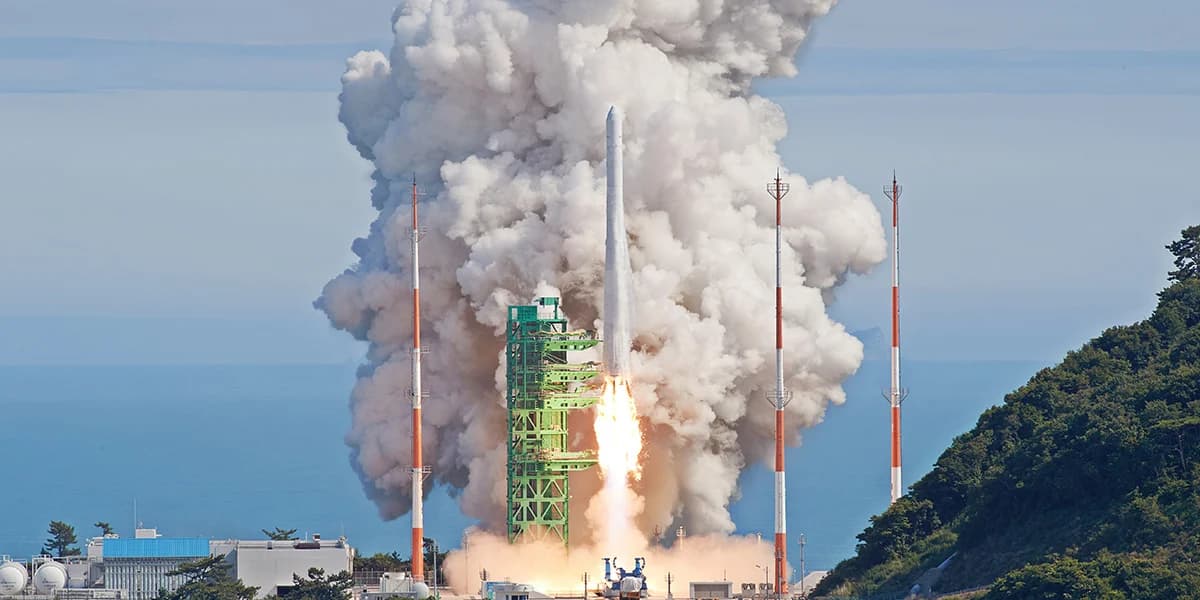
20 Sept 2026 · 23 min read
South Korea's Launch Startups: Hanwha Gets the Manifest
Hanwha has the institutional advantage, Innospace the clearest export path. A mission-by-mission review and operating model show what Korean launch startups still need.

24 Jun 2026 · 50 min read
Malaysia Satellite Internet 2026: Three Orbits, Two Powers, and the APAC LEO Laboratory
Malaysia is Southeast Asia's clearest multi-orbit market: Starlink is live, MEASAT anchors GEO, and SpaceSail remains a strategic option rather than a proven rival.

1 Jul 2026 · 88 min read
Vietnam Satellite Internet 2026: The Leashed Aperture
Vietnam has admitted Starlink through a controlled aperture: full foreign ownership on paper, but domestic gateways, a hard terminal cap, a 2031 sunset and security-ministry oversight in practice.