
Spectrum Is the Balance Sheet: Constellations Depreciate, Rights Stacks Compound — and Orbital Compute Is Building the Exit from the RF Regime
The scarce asset in LEO is not the satellite but the coordinated rights stack—and optical orbital compute is building the first credible exit from the radio-frequency regime.
Method & disclosure
Confidence: High for cited transaction terms, regulator decisions, ITU rules and deployed systems; medium for operator road maps and inferred spectrum value; low-confidence or single-source claims are labeled in the text.
Review mode: Human + AI cross-check
Writing support: AI assisted
Singapore Space Agency

On this page · 11
- 011. The 90-Second Summary
- 022. The $8 Billion Tell: What Rocket Lab Actually Bought
- 033. The Physics of the Ledger: An Operator's Map of the Electromagnetic Spectrum
- 044. Spectrum Architecture for Communications Constellations: Four Link Classes, Four Different Games
- 055. Spectrum Architecture for Compute Constellations: The First Credible Exit from the RF Regime
- 066. Filing Is Not Owning: The Rules That Discipline the Ledger
- 077. The Governance Stack: From One-Country-One-Vote to Administration Shopping
- 088. The Player Map: Who Filed What, Who Flew What
- 099. The Real Game: Warehousing, Options, and the M&A Repricing of Spectrum
- 1010. What It Means for Asia-Pacific — and Singapore's Realistic Openings
- 1111. What to Watch
Key findings
The argument in brief
- LEO satellites depreciate on a five-to-ten-year clock; coordinated rights stacks can survive fleet replacement and compound through use, coordination, and ecosystem adoption.
- The 2025–2026 deal tape shows where scarcity sits: handset-compatible L/S-band rights and operating priority, not undifferentiated high-frequency filings.
- Optical inter-satellite links give orbital-compute constellations a credible path outside the ITU radio-frequency regime, though TT&C and national market access remain.
- For Singapore, the defensible opening is coordination, optical ground infrastructure, weather-diverse gateways, and multi-orbit network technology—not speculative spectrum warehousing.
Every satellite in low Earth orbit is a depreciating asset with a five-to-ten-year life. The rights that let it transmit are conditional at every layer — but assembled, kept in use, and defended, they outlast every satellite generation, and the best-positioned stacks have repriced sharply upward in every recent transaction. In the past twelve months, roughly $39 billion of satellite-spectrum transactions were announced: SpaceX agreed to acquire EchoStar spectrum for $17 billion plus a further $2.6 billion tranche; Amazon agreed to acquire Globalstar for ≈$11.6 billion; and Rocket Lab agreed to acquire Iridium for an implied enterprise value of $8 billion. The first EchoStar spectrum-transfer step closed into a trust in May 2026, but final acquisition and consideration remain targeted for 2027; the Amazon and Rocket Lab whole-company deals also remain subject to closing conditions.^[91] EchoStar separately agreed to sell ≈$23 billion of terrestrial spectrum to AT&T, setting the benchmark for what clean licensed paper is worth. Two of the satellite deals are whole-company acquisitions whose public terms never allocate value between spectrum, fleets, subscribers and contracts — and this piece does not pretend otherwise. Its argument is sharper: in every deal, the strategic logic ran through rights no buyer could recreate through ordinary capital expenditure on a commercially relevant timetable. "Spectrum," throughout, is shorthand for that coordinated rights stack — ITU priority, licenses, landing rights, coordination agreements, device ecosystem — not bare megahertz. Spectrum, so defined, is the balance sheet of the LEO economy. This piece maps the physics, the rules, the players and the games — and makes one forward claim: orbital-compute constellations, whose data plane can run on lasers outside the ITU's radio regime, are the first space business with a credible path out of the spectrum system that binds everyone else. That exit devalues one moat and creates another.
This piece is the spectrum companion to "Orbit Is Architecture", which made the same argument for orbital mechanics. Orbit decides what physics allows; spectrum decides what law allows. Read them together.
Disclaimer: This analysis assesses publicly verifiable facts — regulator dockets, ITU documents, SEC filings, operator disclosures and independent tracking data — not investment value. Assessments of who is "real" and who is "warehousing" measure demonstrated deployment against filed claims, and are the author's independent judgment, not an endorsement or indictment of any company. The Singapore Space Agency is an independent research platform and does not represent any government.
Methodology: Where this piece classifies operators (deployed / building / optioning / warehousing), the classification is qualitative and rests on four observable criteria, in descending order of weight: verifiable in-orbit deployment against filed totals; binding regulatory milestones met, waived, or missed; spectrum actually brought into use versus merely filed; and capital visibly committed to ground and user segments (contracts, factories, gateways). Filed claims and company statements are labeled as such throughout; author estimates are labeled as inference.
1. The 90-Second Summary
The claim. Satellites, factories and launch capacity determine who can deploy; rights stacks determine who can operate without asking an earlier entrant's permission — and in LEO it is the second asset that compounds. (Spectrum, per the definition above: the operationally embedded rights stack, not bare megahertz.) Satellites depreciate on a five-to-ten-year clock. The rights stack — ITU priority, bring-into-use status, national licenses, landing rights, coordination agreements — is conditional at every layer (Section 6 counts six ways to lose it), but held together and kept in use it compounds — through use, coordination, ecosystem adoption and regulatory embeddedness, not the passage of time alone: renewals are routine, transfers increasingly common (with regulator approval), and recent transactions have sharply repriced the best-positioned stacks upward. The 2025–2026 deal tape is the evidence: roughly $39 billion of satellite-spectrum transactions announced in twelve months — spanning pure license sales and spectrum-led whole-company acquisitions — and over $62 billion counting the seller's parallel terrestrial exits. The public terms never break out the fleets; the strategic logic in every case ran through the rights.
The layers. Spectrum strategy is not one game but four, and ranking players across them is a category error:
- User-link spectrum — the strategically binding layer, because it must close into the customer's terminal. Within it, two different scarcities: handset-compatible L/S and cellular-adjacent bands are quasi-exclusive and where the M&A premium concentrates; broadband Ku/Ka is shared, and its value comes from priority, deployment speed and capacity density, not exclusivity.
- Feeder/gateway spectrum (Ka, Q/V, E-band) — abundant bandwidth, brutal rain physics, solvable with money (more gateways, site diversity).
- Inter-satellite links — migrating from RF to optical, which requires no ITU frequency coordination at all. This is the quiet structural shift of the decade.
- TT&C — small in bandwidth, absolute in criticality; the RF tether no operational constellation, however optical, is likely to cut in the foreseeable future.
Who leads. SpaceX leads every RF layer that matters: more than 10,700 active satellites in orbit as of June 29, 2026, Ku/Ka/E-band authority, a regulator-approved path to 50 MHz of US S-band from EchoStar, and the only operating D2D constellation at mass scale.^[84]^[91] OneWeb remains second by deployed broadband fleet at 654 satellites; Amazon is the fastest-building Western challenger, with 396 satellites deployed by July 2, but its now-certain miss of the July 30, 2026 FCC interim milestone costs it a forfeited surety bond and demoted spectral priority on every satellite launched after the deadline, lasting until deployment or certification conditions are met (outside date March 2028).^[35]^[36]^[88] China's Guowang and Qianfan hold enormous filings (12,992 and ≈15,000) against roughly 375–377 satellites launched or tracked in orbit: 200 Qianfan and an estimated 175–177 Guowang.^[83]^[85]^[86] Their binding constraint is still launch cadence, not paper. Iridium, Globalstar and the Ligado estate hold the L/S-band scarcity rents — which is why Rocket Lab and Amazon agreed to acquire the first two and AST secured long-duration usage rights to the third.
The binding constraint. Not bandwidth — priority. ITU coordination runs first-come-first-served; the FCC protects earlier processing rounds for ten years. Later entrants inherit interference-avoidance obligations that compound into a decade of cost disadvantage before the protection sunsets. That is why filings behave like options and why operators pay billions for thirty-year-old paper.
The forward claim. Orbital-compute constellations (SpaceX's million-satellite filing, Blue Origin's 51,600-satellite Project Sunrise filing, Starcloud, Google Suncatcher and China's Three-Body/Star-Compute program) run traffic that is internal-heavy, gateway-terminated and largely schedulable, with asymmetry that depends on workload — and, decisively, none of it terminates in mass-market handsets.^[93] Their data plane can ride optical inter-satellite links and optical ground stations — both outside the ITU Radio Regulations, which stop at 3,000 GHz. A compute constellation still needs RF for TT&C and fallback, and it still needs national market access. But if lasers work at availability targets, the user-link spectrum moat that defines communications constellations simply does not bind compute constellations — and the regulatory chokepoint migrates from the ITU queue to national laser-safety, aviation and data-sovereignty rules, where nothing like first-come-first-served priority exists yet. Watch who builds optical ground networks, not who files RF paper.
The call. The strategic positions are clear: control the user-link scarcity (L/S/D2D and Ku priority), or build the exit (optical ground infrastructure). Everything in between — feeder-band filings, V-band paper constellations, six-digit satellite counts filed through small administrations — is option-writing, and most of those options are likely to expire or be materially haircut under the milestone regime. We name which ones below.
2. The $8 Billion Tell: What Rocket Lab Actually Bought
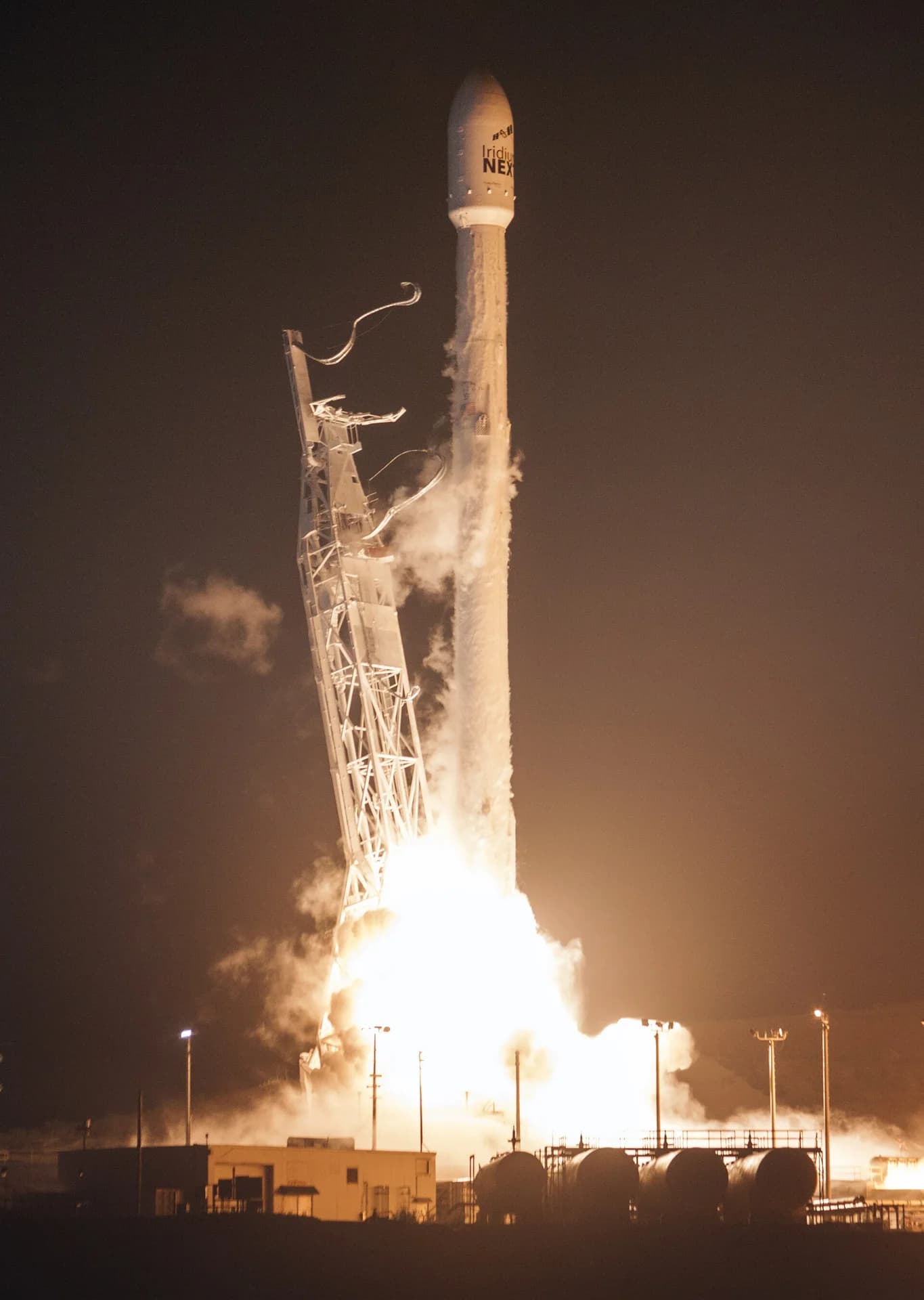
On June 29, 2026, Rocket Lab and Iridium announced a definitive merger: $54 per Iridium share — $27 in cash, $27 in Rocket Lab stock subject to a collar — an enterprise value of roughly $8.0 billion, backed by a $3.6 billion bridge loan, expected to close in mid-2027 pending shareholder and regulatory approval.^[1]^[2]^[3]
Start with what Iridium is on paper: a mature, profitable, slow-growing mobile-satellite operator. 2025 revenue of $871.7 million, operational EBITDA of $495 million, about 2.5 million subscribers across handsets, IoT modules, aviation, maritime and US government contracts.^[4]^[5] The fleet is 66 operational NEXT-generation satellites plus in-orbit spares at 780 km, launched 2017–2019 — meaning the constellation is one-third to one-half through its design life and will need a multi-billion-dollar replacement cycle in the 2030s.
Now run the arithmetic a buyer runs — with the assumptions on the table, and a sensitivity so the reader can re-price them. The agreed enterprise value implies ≈16x Iridium's $495 million of operational EBITDA; no consideration has yet been paid because the transaction has not closed. What would a standalone Iridium support?
Iridium is not a perfect GEO comparable — its IoT growth, government revenue mix and LEO architecture arguably earn a premium multiple — which is why the table runs to 12x. The residual strategic premium is therefore $2–5 billion depending on your multiple; this article's working figure of $4–5 billion is the high-end residual produced by the conservative standalone multiples, and the argument survives anywhere in the range. Three things the residual is and is not. It cannot be explained primarily by the satellites: the fleet is a cash-generating but finite-lived asset carrying a multi-billion-dollar replacement obligation in the 2030s. It cannot be assigned cleanly to spectrum alone: the deal terms make no such allocation, and the residual prices an integrated rights-and-operations bundle — government contracts, landing rights in ≈100 jurisdictions, three decades of coordination agreements, a certified terminal ecosystem, and the L-band itself. And it cannot be explained by hardware replacement cost at any multiple in the table, because within that bundle, coordinated global L-band is the one component with no construction path at all (author's model, stated assumptions above):
- Global L-band MSS rights. Iridium's user links run in 1616–1626.5 MHz — roughly 10 MHz of L-band with near-zero rain fade, building-penetrating propagation, and coordinated global standing built over three decades.^[5] L-band MSS is functionally closed to new entrants: the allocations are fully occupied by Iridium, Globalstar, the Inmarsat fleet and the Ligado estate. That closure is a regulatory artifact, not physics — the ITU's first-come-first-served design created it — but an artifact three decades deep is as binding as geology. You cannot file your way into it; you can only buy your way in.
- The only truly global, licensed, RF-crosslinked LEO architecture besides Starlink. Iridium's K-band crosslinks (23.18–23.38 GHz) let it serve poles and oceans through a handful of gateways — a licensed topology that took decades of coordination to assemble.^[6]
- Landing rights and government trust in ≈100+ jurisdictions, plus the US Department of Defense relationship (the EMSS gateway contract) — regulatory assets with no construction substitute.
Rocket Lab's own framing of the deal — a "fully vertically integrated" space company spanning launch, satellite manufacture, and now spectrum plus recurring service revenue — is the tell.^[1] Rocket Lab already owned rockets (Electron, Neutron in development), satellite buses, laser terminals (Mynaric, acquired out of distress in 2025) and sensors (Geost). What it could not recreate through normal capital expenditure on any commercially relevant timeline was global, coordinated, brought-into-use L-band with landing rights, certifications and government trust attached. Rocket Lab can build replacement satellites; it could not build that. The fleet makes the rights productive; the rights make the fleet strategically irreplaceable.
The historical rhyme makes the point brutally. In 2000–2001, the first Iridium's $6 billion constellation and its spectrum rights were bought out of bankruptcy for roughly $25–35 million because the market priced the spectrum at the value of a failing voice business. In 2026, the same core L-band position — attached to a business a fraction of the size Motorola once projected — attracted an agreed $8 billion enterprise value, subject to closing. That position survived a bankruptcy, a corporate transfer and a complete constellation replacement, not because a 1990s filing sat quietly appreciating, but because successive operators kept the rights in use and maintained the regulatory stack around them through every transition. The satellites were rebuilt once and will be rebuilt again; the kept-in-use rights never lapsed. Constellations depreciate. Operating rights stacks compound. That asymmetry is the thesis of this article, and the rest of it explains the machinery — physical, legal, and commercial — that produces it.
One necessary caveat, because rigor demands it: spectrum is not a riskless perpetuity. It is an administrative permission that regulators have clawed back before (the FCC forced the C-band clearance; the ITU suppresses unused filings), and its value is contingent on use conditions. Section 9 prices that reclamation risk. But between reclamation events, the direction of travel has been one way — and the 2025–2026 tape is the steepest repricing yet.
3. The Physics of the Ledger: An Operator's Map of the Electromagnetic Spectrum
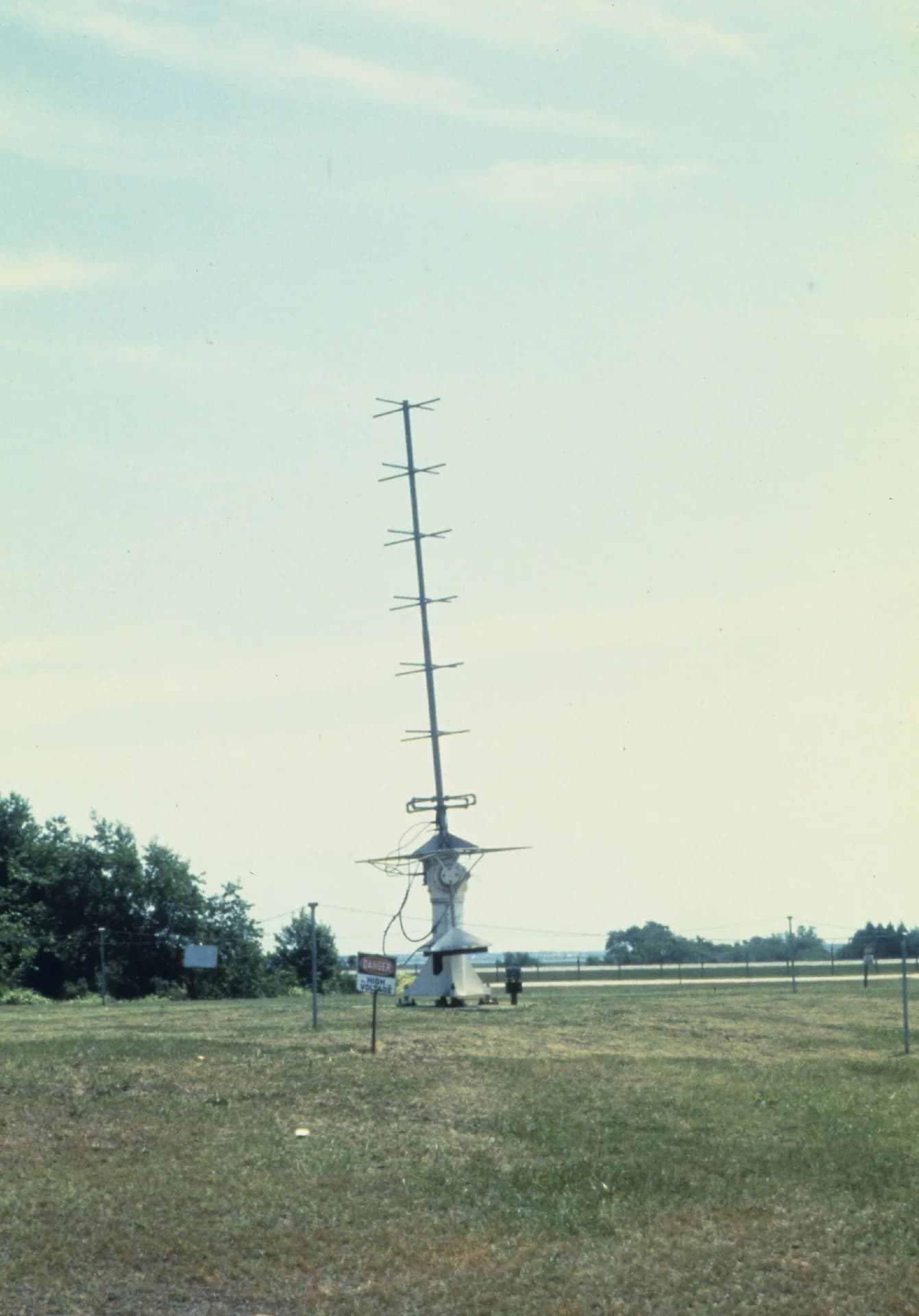
Spectrum values are not arbitrary. They are the shadow price of physics: how much information a band can carry, through how much atmosphere, into how small an antenna, at what cost. Three relationships drive everything.
Shannon sets the ceiling. Channel capacity scales with bandwidth times log of signal-to-noise. Bandwidth is the linear term — which is why the industry keeps climbing to higher frequencies, where allocations are wider. L-band offers an operator perhaps 10–30 MHz; Ka-band offers ≈3,500 MHz; E-band ≈10,000 MHz; a single 1550 nm optical channel offers more usable bandwidth than the entire RF satellite spectrum combined.
The atmosphere sets the tax. Rain attenuation rises steeply with frequency (the ITU-R P.618 model is the industry-standard prediction method^[7]), and specific molecular absorption lines carve out no-go and special-purpose zones — most importantly the oxygen absorption peak around 60 GHz, where the atmosphere absorbs so strongly (≈15 dB/km at sea level^[8]) that the band is nearly useless Earth-to-space but attractive for space-to-space links that want inherent immunity to ground-based interception. Illustrative magnitudes — directional ranges informed by ITU-R P.618-style modelling for a heavy-rain tropical site, not reproducible link budgets (assumptions: rain rate ≈100 mm/h exceeded 0.01% of the year, Singapore-class conditions; elevation angle 40°; circular polarization; representative downlink frequencies of 1.5, 4, 12, 20 and 40 GHz; 99.9% link availability target): L/S-band <0.5 dB — negligible; C-band ≈1–2 dB; Ku ≈8–15 dB; Ka ≈25–40 dB; Q/V 50+ dB, at which point you do not fight the rain, you route around it with site diversity.
Antenna physics sets the terminal. Ideal aperture gain is G = 4πA/λ² — gain scales linearly with aperture area and inversely with wavelength squared. At L-band (≈19 cm wavelength) a handheld omni antenna closes a link to a satellite only if the satellite compensates with an enormous aperture — which is why D2D satellites like AST's carry 64+ m² arrays. At Ka-band (≈1 cm) a 30–60 cm phased array closes a broadband link — which is why consumer LEO broadband lives in Ku/Ka.
The map, in one table (allocations per ITU Radio Regulations; the RR govern radio waves up to 3,000 GHz — a boundary that becomes the pivot of this entire article in Section 5^[9]):
¹ Aggregate allocation scale across uplink and downlink, indicative only — no single operator or link can use these totals; actual access depends on region, service direction, sharing conditions and national assignments.
Read the table as an economist and the industry's structure falls out of it. Scarcity rents concentrate where four variables overlap: forgiving propagation, handset compatibility, legal priority, and device-ecosystem support — in practice, the L/S and cellular-adjacent bands at the bottom of the table. All four must hold: impair any one and the discount is brutal, as Ligado's GPS-encumbered L-band (trading at ≈90% below clean S-band, Section 9.2) demonstrates. That is where the $17B EchoStar deal, the $11.6B Globalstar deal, the $8B Iridium deal and the Ligado transaction all live. Volume economics concentrate in the middle — Ku/Ka — where consumer broadband is possible and competition is about deployment speed, not allocation access. The top of the table is open frontier — Q/V/E/W — where anyone can still file, which is precisely why filings there signal option-writing rather than scarcity. And the last row is not on the regulator's map at all. Hold that thought.
4. Spectrum Architecture for Communications Constellations: Four Link Classes, Four Different Games
A communications constellation is not "in a band." It is a stack of four link classes with different physics, different regulatory queues and different scarcity. Conflating them — as most coverage does — is how you misprice operators.
4.1 User links: where the scarcity is
The user link is the binding asset because it must close into the customer's terminal, and terminals set hard physics limits.
Broadband (Ku/Ka). Starlink's user downlinks ride Ku-band with Ka for capacity; its constellation exceeded 10,700 active satellites by June 29, 2026.^[10]^[84] In January 2026 the FCC authorized a further 7,500 Gen2 satellites — taking authorized Gen2 to 15,000, on top of ≈4,400 Gen1 — across Ku, Ka, V and E-band, with W-band elements in the record.^[11]^[12] Amazon Leo (ex-Kuiper) is Ka-band on the user side by original design. OneWeb's 654-satellite Gen1 uses Ku user links from 1,200 km.^[88] The strategic texture here: Ku/Ka user spectrum is shared, not owned — multiple NGSO systems overlap the same allocations, and the winner is decided by deployment speed and interference priority (Section 6), not by exclusive title.
Mobile/safety (L/S). The opposite regime: quasi-exclusive, coordinated, closed. Iridium's 1616–1626.5 MHz, Globalstar's Big-LEO L/S segments, Inmarsat's L-band and the Ligado estate partition the space between them. No new entrant has assembled a global L-band MSS position from scratch in twenty years; every recent entry (AST, Apple via Globalstar, Viasat-Skylo-Ligado) is a purchase or a lease of incumbent rights.
Direct-to-device (cellular bands). The newest user-link class does not use satellite spectrum at all — it reuses terrestrial mobile spectrum from space, which required a new legal category. The FCC created its "Supplemental Coverage from Space" (SCS) framework in March 2024.^[13] Starlink's D2D service runs on T-Mobile's PCS G-block (1910–1915 / 1990–1995 MHz), authorized in November 2024.^[14] In September 2025 SpaceX agreed to acquire EchoStar's AWS-4 (2000–2020 / 2180–2200 MHz) and H-block (1915–1920 / 1995–2000 MHz) licenses — 50 MHz of exclusive US S-band plus related global MSS filings — for $17 billion in cash and stock plus ≈$2 billion of interest support, later expanded by a $2.6 billion AWS-3 tranche.^[15]^[70] The FCC approved the transaction in May 2026 and the licenses moved into a transaction trust; final transfer to SpaceX and payment remain targeted for November 2027.^[91] Strategically, that shifts Starlink D2D from a T-Mobile tenant toward spectrum ownership and a dedicated direct-to-cell constellation at full MSS power. Legally and economically, however, the acquisition has not yet completed.
4.2 Feeder/gateway links: bandwidth is bought, not fought over
Gateways are professional sites: big antennas, site diversity, no consumer physics. So feeders climb to wherever bandwidth is widest — Ka historically, now Q/V and E-band. Amazon Leo received its Gen1 V-band grant (37.5–42 GHz down, 47.2–52.4 GHz up, with conditions) in February 2026.^[16] Starlink Gen2 already holds E-band feeder authority (71–76 / 81–86 GHz).^[12] The 50+ dB tropical rain fades at these frequencies are handled with gateway diversity — an engineering-and-capex problem, not a scarcity problem. Implication: bare feeder-band filings confer far less moat than handset-compatible user-link rights; the defensible asset at this layer is the coordinated, weather-diverse gateway network built around the filings — a theme that returns when optical ground stations enter in Section 5.
4.3 Inter-satellite links: the regime exit begins here
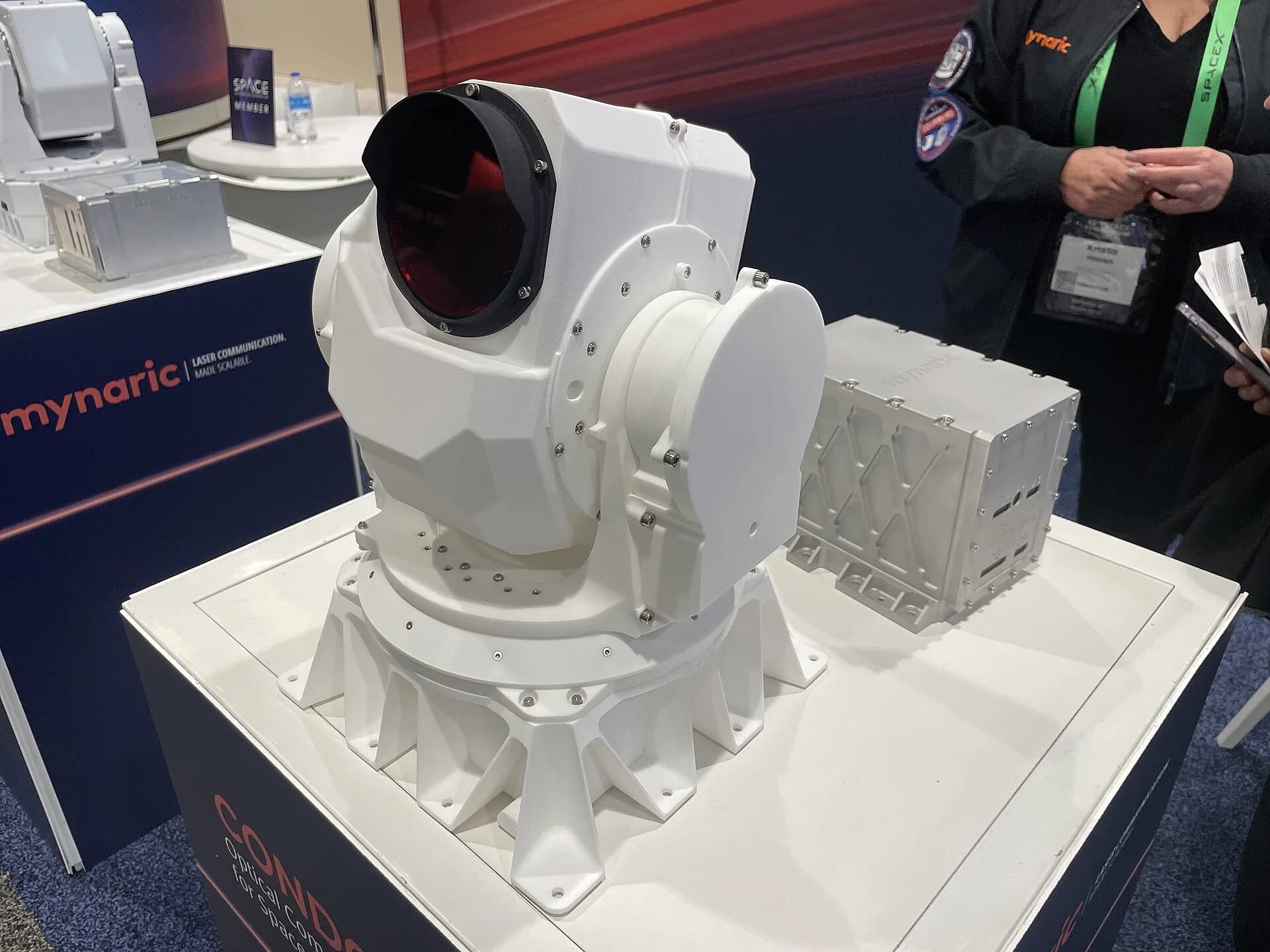
RF crosslinks (Iridium's 23 GHz K-band, the 60 GHz oxygen-shielded designs) require ITU coordination like any other radio link. Optical crosslinks do not: the ITU Radio Regulations define radio waves as electromagnetic waves below 3,000 GHz, and a 1550 nm laser sits at ≈193,000 GHz — two orders of magnitude outside the regime.^[9] No filing, no coordination queue, no EPFD arithmetic, no milestone clock. Starlink's mesh carries traffic thousands of kilometers before touching a gateway; Kepler is building a dedicated optical relay layer, with its first ten-satellite tranche launched in January 2026;^[17] the US Space Development Agency standardized optical terminals across its tranches. Every gigabit moved by laser is a gigabit that never enters the spectrum ledger. For communications constellations this is an efficiency; for compute constellations, as Section 5 argues, it is an escape route.
4.4 TT&C: small, absolute, non-negotiable
Telemetry, tracking and command needs kilohertz-to-megahertz, but it must work when everything else fails — tumbling spacecraft, broken pointing, safe mode. That means RF (S-band and Ka dominate), omnidirectional coverage, and licensed protection. Optical command links may eventually supplement it, but a robust, low-complexity, omnidirectional emergency-control path is an RF job for the foreseeable future — TT&C is the link class no operational constellation is likely to exit. Remember that; it becomes the residual regulatory hook for orbital compute.
4.5 Where orbit meets spectrum
Spectrum choices and orbit choices are one decision surface, not two — the point our orbital companion piece establishes from the physics side (Orbit Is Architecture). Three couplings matter most:
- Altitude sets EPFD exposure. The equivalent-power-flux-density limits in ITU Article 22 protect GEO networks from NGSO interference; compliance is a function of constellation geometry — altitude, satellite count, off-axis angles as seen from GEO arcs. Starlink's move to lower shells (475–550 km) improves latency and disposal and eases some interference geometry; OneWeb at 1,200 km runs different EPFD arithmetic with fewer, higher satellites.
- Inclination sets the coordination footprint. As the companion brief puts it, "inclination determines how many regulatory systems a constellation must confront" — a near-polar system's beams touch every administration on Earth, and each landing right is a separate negotiation. Spectrum rights without landing rights are stranded assets.
- Band sets the constellation size needed. L-band's forgiving link budget let Iridium serve the entire planet with 66 satellites; Ka-band consumer broadband at acceptable capacity density needs thousands. Inversely: a small filed count in Ku/Ka is a regional system no matter what the press release says.
5. Spectrum Architecture for Compute Constellations: The First Credible Exit from the RF Regime
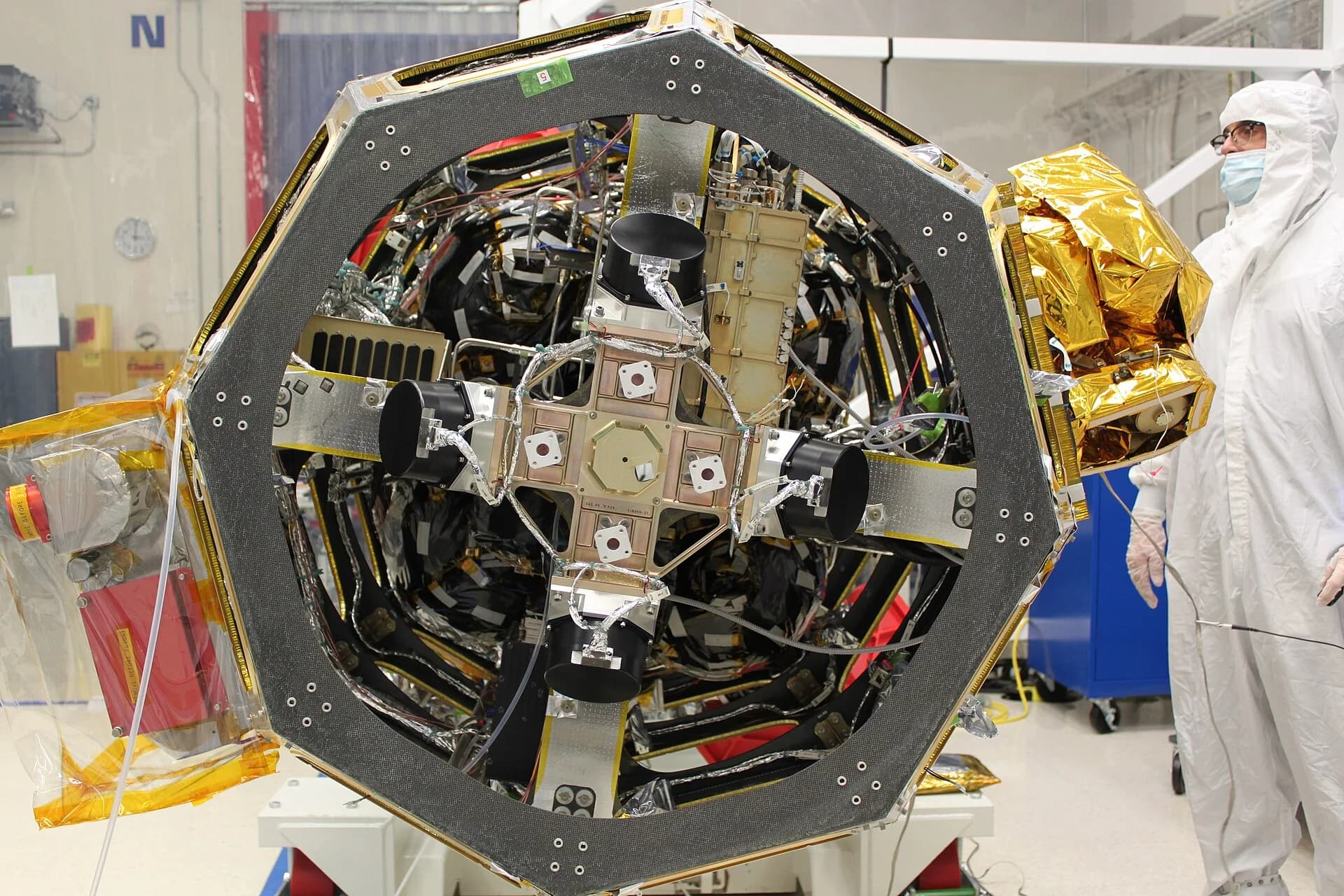
Now apply the four-link framework to a constellation whose product is not connectivity but computation — and watch three of the four layers change character.
5.1 Compute traffic is not comms traffic
A broadband constellation's traffic is symmetric-ish, continuous, and terminates at millions of dispersed consumer terminals — which is why it must live in user-link RF. A compute constellation's traffic profile is structurally different:
There is no consumer terminal anywhere in that table. Nothing in a compute constellation's core data plane requires spectrum that closes into a handheld device — which means nothing in it requires the scarce spectrum this article has been pricing. The scarcest asset class in the LEO economy is simply absent from the compute bill of materials.
5.2 The evidence: every serious compute program we can document is optical-first
The evidence base is honest to state: two accepted FCC filings, one purpose-built compute satellite in orbit, several demonstrations and roadmaps. But every disclosed architecture converges on optical-first internal networking.
- SpaceX's Orbital Data Center system — the largest constellation application ever accepted for filing (up to 1,000,000 satellites, 500–2,000 km, accepted by the FCC Space Bureau on February 4, 2026) — specifies optical inter-satellite links as the communications architecture, relaying through Starlink, with Ka-band retained primarily as TT&C backup.^[18]^[19] Read that carefully: the most spectrum-rich operator on Earth designed its compute layer to need almost no new spectrum.
- Blue Origin's Project Sunrise — accepted for filing on April 17, 2026 — requests up to 51,600 compute satellites in 500–1,800 km sun-synchronous orbits, with only Ka-band TT&C disclosed and data traffic routed optically through TeraWave or other mesh backhaul. It is a filing, not deployed hardware, and NASA and other parties have challenged its technical and orbital-safety detail.^[93]
- Starcloud, which put an NVIDIA H100 in orbit in November 2025 on the 60 kg Starcloud-1 and trained/queried models on orbit,^[20]^[21] describes optical links as the primary connectivity for its planned scale-up, with third-party RF backhaul as the supplement; reporting in early 2026 attributes to it a follow-on filing of extraordinary size (≈88,000 satellites — single-source, C-grade, treat as unconfirmed).^[22]
- Google's Project Suncatcher pairs TPUs with Planet-built satellites, has demonstrated 1.6 Tbps over a single free-space optical transceiver pair in ground testing, and envisions 81-satellite optically-meshed clusters flying in kilometer-scale formations, with prototypes targeted for 2027.^[23]
- China's Three-Body Computing Constellation (ADA Space + Zhejiang Lab) launched its first twelve satellites in May 2025 with 100 Gbps laser crosslinks as the headline interconnect, toward a claimed 2,800-satellite "Star-Compute" network.^[24]^[25]
- Kepler — nominally a relay company — attached NVIDIA compute to its optical tranche in 2026, positioning the optical network itself as the hosting layer for third-party compute.^[26]
Six different programs, three jurisdictions, one architecture: lasers inside, lasers down where possible, RF only where law and safety require it.
5.3 What the exit does — and does not — dissolve
What it dissolves. For sixty years, the ITU queue has been the moat: whoever coordinated spectrum first held rights that latecomers had to protect at their own cost. A data plane running at 193 THz never enters that queue. For the optical plane itself: no seven-year bring-into-use clock, no Resolution 35 milestones, no EPFD limits, no processing-round hierarchy, no administration shopping (the constellation's residual RF assignments — TT&C, fallback — still carry all of theirs). Space businesses have used optical links before — Earth-observation downlinks, deep-space experiments, military relays, and the optical-relay networks whose product is the link — but orbital compute is the first large-scale commercial space business selling something other than connectivity whose revenue-bearing data plane can run predominantly outside the RF regime. Be precise about what that means: a compute entrant in 2027 still faces SpaceX's advantages in launch cost, relay density, optical ground infrastructure and operations — but it escapes a disadvantage essentially every large-scale communications entrant of the modern regulatory era has faced: the RF priority queue. The moat represented by Iridium's coordinated L-band stack does not extend to compute.
What replaces it. The constraint migrates from law to weather, and from the ITU to national authorities:
- Cloud availability. An optical downlink is binary: cloud means zero link. Availability comes from geographic diversity of optical ground stations (OGS) — and OGS site portfolios, not spectrum filings, become the scarce complementary asset. A network needing 99.5% availability in the tropics may need several weather-decorrelated sites where a Ka gateway needed one — 4–6 in a representative scenario, though the count is architecture- and climate-dependent (author's inference from standard site-diversity modeling; the companion orbital brief's downlink-availability analysis applies directly).
- National laser and aviation rules. Free-space optical is unregulated as spectrum but regulated as light: laser-safety clearance, deconfliction with aviation authorities, and — more binding — the data plane still lands in a country, so data-sovereignty, lawful-intercept and gateway-licensing regimes apply in full. The chokepoint moves from "may you transmit?" to "may this data cross this border?" And a state does not need the ITU to enforce that question: it can regulate optical downlinks, ground stations and the data services offered into its jurisdiction even though the optical carrier itself sits outside the radio regime. Note also what the site economics do to the negotiation: achieving optical availability requires a larger portfolio of site-specific approvals than an equivalent RF gateway architecture, so the compute constellation trades one centralized ITU queue for many local aviation, laser-safety and security authorities, each holding a site-level veto. Lasers escape the ITU; they do not escape sovereignty.
- TT&C and fallback RF. The residual tether keeps compute constellations inside the ITU system at small scale — SpaceX's ODC Ka-band TT&C is still a filing, still coordinated.^[18] Small, but a hook regulators can pull.
The second-order effect nobody has priced. If compute traffic exits RF, the relative value of RF user-link spectrum concentrates further in the one segment that can never exit: links that terminate in mass-market human devices. Handsets cannot carry telescopes. D2D and mobile-band scarcity gets more valuable in an optical world, not less. The 2025–2026 transaction pattern — premiums clustered in L/S/cellular-adjacent bands while Ku/Ka changed hands with no visible spectrum premium — is consistent with this reading, though honesty requires the simpler attribution: the proximate driver of the L/S premium is D2D handset compatibility, not anyone pricing lasers. The exit thesis says that driver has further to run, not that buyers already model it.
Steelman the skeptic. The optical exit is real only if lasers deliver operational availability at scale, and today's evidence is tranche-one scale: Starlink's mesh works (but its downlinks remain RF), Kepler has ten satellites, Starcloud one, Suncatcher zero. Tropical OGS economics are unproven; adaptive optics and acquisition at scale are hard; and a compute constellation still needs market access for its ground segment, where states can simply say no. If optical ground segments stall, compute constellations will fall back on Ka/Q/V feeders — re-entering the queue near the back. The same trap operates in miniature wherever a service-level agreement binds: a compute service whose contracts require data to land in a specific jurisdiction, on time, through monsoon season, needs licensed RF fallback there — and that fallback link re-enters the coordination system its data plane escaped. The exit is real for weather-tolerant workloads and conditional for jurisdiction-bound, latency-bound ones. The exit is credible, not accomplished. Thresholds for judging it are in Section 11.
6. Filing Is Not Owning: The Rules That Discipline the Ledger
Everything in Sections 2–5 assumed spectrum rights behave like property. Legally, they are nothing of the sort: they are conditional administrative priorities, revocable for non-performance, held by states (not companies) under the ITU Radio Regulations, and sub-licensed downward. The discipline mechanisms are what separate an asset from a lottery ticket, so they deserve precision.
6.1 The ITU clock: seven years, then tranches
An NGSO system's frequency assignments must be brought into use within seven years of the ITU receiving the coordination request; miss it and the filing is suppressed — deleted, with the priority date lost. Crucially, under RR No. 11.44C, bringing an NGSO frequency assignment into use requires only one satellite with the capability to transmit in the assigned band, deployed into one of the notified orbital planes and maintained there for 90 continuous days. That single-satellite mechanism is what made spectrum warehousing nearly free — file for 10,000, launch one, and preserve the priority date for the relevant notified assignments across a much larger system (subject, now, to the milestone rules below).
WRC-19 closed most of that gap with Resolution 35 (since refined at WRC-23): after the seven-year bring-into-use point, an NGSO system in the specified FSS/MSS bands must have deployed 10% of the filed constellation within 2 years, 50% within 5 years, and 100% within 7 years — a 14-year total runway — with recorded assignments reduced pro-rata to the count actually deployed at each missed milestone.^[27]^[28]^[29] In the covered bands, Res. 35 converts a binary cliff into a haircut schedule: you no longer lose the filing outright, you lose the unbuilt fraction of it (other defects — lapsed bring-into-use, unpaid cost recovery — can still suppress assignments entirely). Filings are still options, but options with margin calls.
Add Resolution 49 due diligence (manufacturing and launch contracts must be disclosed) and the associated ITU cost-recovery fees, and the carrying cost of paper is no longer zero — merely trivial next to the option value.
6.2 Article 22: the incumbents' shield
ITU Article 22's EPFD limits cap the aggregate power any NGSO system may lay across GEO networks' receivers — the hard-won 1997–2000 settlement that made NGSO broadband legal at all without destroying the GEO industry. WRC-23 fought over reopening those limits (GEO operators wanted them tightened against megaconstellations; NGSO operators wanted headroom) and settled on a hard compromise: limits unchanged, studies authorized toward WRC-27, explicitly without regulatory consequence at WRC-27 itself — kicking any real change to 2031.^[30] The FCC, meanwhile, moved unilaterally in April 2026 to modernize its own EPFD-verification framework.^[31] Position: the EPFD status quo structurally favors deployed NGSO incumbents — not because the limits confer priority (they are uniform per-system caps, not a queue), but because they are the fixed engineering targets today's flying hardware was designed to. A 2031-earliest change means no deployed system faces a mid-life redesign before then, while any future tightening would land hardest on constellations not yet built.
6.3 The FCC overlay: milestones with teeth, and the first big test
The FCC adds its own performance regime on top of the ITU's: NGSO licensees must deploy 50% of the constellation within 6 years of authorization and 100% within 9.^[32] In 2023 the Commission also settled inter-system discipline with its NGSO spectrum-sharing order: systems from a later processing round must protect earlier-round systems (demonstrating compatibility under a degraded-throughput methodology absent a coordination agreement), with that protection sunsetting ten years after the later round's first authorization.^[33]^[34] Translation into strategy: in the US, spectrum priority is a dated queue with a decay function — being early is worth ten years of someone else bearing the interference-avoidance cost.
The teeth were tested in June 2026, and the result deserves more attention than it got. Amazon's Gen1 authorization required 1,616 satellites — 50% of the constellation — by July 30, 2026. Amazon told the FCC it had launched 180 by end-January 2026 and projected roughly 700, about 21%, by the deadline.^[36] On June 5, 2026 the Space Bureau (Order DA 26-553) rejected a two-year extension and instead granted a surgical waiver: it waived the automatic-termination rule that would have capped the constellation at the deployed count, and it left the final milestone — all 3,232 satellites by July 30, 2029 — fully intact. The price was twofold. Amazon forfeits its surety bond to the US Treasury for missing the interim milestone. And every satellite launched after July 30, 2026 temporarily loses its 2020/2021 processing-round priority — coordinating as if it were a latest-round system — until March 30, 2028 or 50% deployment, whichever comes first (reducible to October 2027 if Amazon certifies the satellites are built and launches procured).^[36]^[37] The demotion compounds beyond the headline: during the reassignment window Amazon negotiates every Ka/V-band coordination effectively from the back of the applicable processing rounds — and if the FCC opens a new round in the interim, Amazon's post-deadline satellites are placed in that round. The regulator neither revoked (the nuclear option that would have stranded $10B+ of investment) nor forgave (which would have gutted the milestone regime's credibility). It repriced. Every well-capitalized future licensee now knows the FCC's revealed preference: for an operator visibly building, milestones convert into bond forfeitures and interference-priority haircuts, not death sentences — with no assurance a paper-only system would get the same treatment — which slightly raises the option value of aggressive filings by well-capitalized players, a second-order effect the Commission may come to regret.
The ITU's most revealing current test is no longer Rivada's 2023 waiver; the rights moved. Liechtenstein reassigned the high-priority 3ECOM-1/3 Ka-band filings to an Open Cosmos-led structure in January 2026 after Rivada lost the national authorization. Open Cosmos launched two satellites on January 22 to bring the filings back into use, then missed the June 10 deployment milestone and requested at least a one-year force-majeure extension after PSLV launch failures disrupted its manifest.^[94]^[95] Rivada says its OuterNET plan now rests on a separate German filing, but the public record cited here does not establish that filing's priority date or an equivalent 2026 deployment clock; the old Liechtenstein 300/600 schedule must not be attributed to Rivada.^[96] This is a tougher lesson than the earlier draft drew: international rights may receive waivers, but the notifying administration can still reassign the commercial authorization around them, and the next operator inherits the deadline problem.
6.4 What "owning" spectrum actually means
Assemble the stack and the property right dissolves into six conditional layers, each failable independently: (1) an ITU priority date held by a state; (2) bring-into-use status; (3) Res. 35 tranche compliance; (4) EPFD/PFD conformity; (5) national license conditions (FCC-style milestones, bonds, debris rules — the FCC's five-year post-mission disposal rule ties orbital behavior to license standing); (6) landing rights in every service country. Iridium's $8 billion price is the market value of holding all six layers, globally, simultaneously, for thirty years. That is what "rare" means in this industry — not the megahertz, but the completed stack.
7. The Governance Stack: From One-Country-One-Vote to Administration Shopping
7.1 The ITU layer: one country, one vote, every four years
The World Radiocommunication Conference rewrites the Radio Regulations treaty roughly every four years, one-country-one-vote — a structure in which Tuvalu's vote formally equals America's, and coalitions (Arab Spectrum Management Group, CEPT's 48 members, the Asia-Pacific Telecommunity, CITEL) do the real aggregation. WRC-23 (Dubai) delivered NGSO operators new ESIM (maritime/aero terminal) allocations and held the EPFD line;^[40]^[30] the WRC-27 cycle carries the studies that matter for this article's thesis — EPFD review groundwork, and the framework questions around space-based cellular (D2D) spectrum that today exists only through national improvisations like the FCC's SCS rules. An under-appreciated structural fact: the more the cutting edge migrates to national frameworks (SCS) and non-RF media (optical), the less the WRC floor decides — a slow devaluation of the one forum where small states have equal votes.
7.2 National regulators: where the queue is actually enforced
The FCC — whose dedicated Space Bureau (2023) now runs the world's de facto reference regime — matters disproportionately because US market access is commercially non-optional and because FCC processing rounds create the dated priority queue described above. Around it: Ofcom (licensing OneWeb and, through UK filings, its Gen2), France's ANFR/Arcep and Germany's BNetzA (Europe's key filing administrations), China's MIIT (which files Guowang and Qianfan with the ITU — Guowang's 12,992-satellite filing landed in September 2020^[41]), Japan's MIC, India's DoT/IN-SPACe/TRAI triangle, and Singapore's IMDA (Section 10). India is the live case study in national-layer friction: Starlink cleared its GMPCS license in June 2025 and IN-SPACe authorization in July 2025 — the third operator fully cleared, after OneWeb and Jio-SES — with TRAI recommending administrative spectrum assignment at 4% of adjusted gross revenue rather than auction;^[42] by June 2026, reporting indicated the final clearance and the satcom spectrum-pricing framework were frozen over security concerns.^[43] A constellation can hold perfect ITU paper and still wait years at a single national desk.
7.3 Administration shopping
Because ITU rights vest in administrations, operators shop for them — the maritime flag-of-convenience logic, applied to orbit, though the analogy should not be pushed to imply every small-state filing is evasion. The practice is old — Tonga famously claimed GEO slots in the early 1990s and leased them out via Tongasat; Pacific and micro-states including Papua New Guinea and the Isle of Man have filed and leased orbital resources for decades.^[44] The NGSO era industrialized it:
- SpaceX filed its original Starlink paperwork (STEAM) through Norway,^[45] and in 2023 filed a 29,988-satellite W-band system through Tonga^[46] — a paper-stage coordination request, not an operating grant: the strongest deployer on Earth using a Pacific micro-state to write a frontier-band option.
- Open Cosmos / ConnectedCosmos now operates the Liechtenstein 3ECOM-1/3 Ka-band filings; the national authorization was reassigned in January 2026.^[94]
- Rivada says OuterNET now relies on a separate German filing. Its previously cited Liechtenstein milestones no longer describe Rivada's current rights position.^[96]
- Rwanda filed for 327,320 satellites (the Cinnamon constellations) in 2021 — a filing that blindsided the African Union's own space bodies and single-handedly distorted global filed-satellite statistics.^[47] Established operators publicly attacked such "extreme" filings as gaming attempts.^[48]
- We could not verify the specific claim, circulated in some industry commentary, that Amazon routed Kuiper filings through Papua New Guinea; Kuiper/Leo's operative authorizations are FCC grants, and we treat the PNG claim as unsubstantiated.
Why shop? Speed, fee structures, political insulation, and vote-diversification at WRC. The cost: administrations of convenience have thin enforcement capacity, and a filing's credibility increasingly tracks its administration's. The ITU's milestone regime was, in large part, the system's immune response to exactly this behavior.
7.4 Coordination in practice: bilateral deals under the law's shadow
The formal system produces priorities; actual coexistence is negotiated operator-to-operator. The canonical episodes: the 2021 Starlink–OneWeb coordination fight (in-line interference events and a much-publicized conjunction dispute) that resolved into bilateral technical agreements; the ongoing Omnispace–SpaceX conflict, in which Omnispace claims SpaceX's 1990–1995 MHz D2D operations cause harmful interference to its 2 GHz S-band MSS rights and would scale into band-denial across large regions;^[49] and the quiet reality that Amazon, post-waiver, negotiates every Ka/V-band coordination for its post-deadline satellites from a demoted-priority position until at least late 2027.^[36]^[37] The pattern to internalize: coordination agreements are where filed priority converts into operational advantage — they are private, they typically travel with the licenses in a change of control, and they are precisely the assets that transfer in M&A. When Rocket Lab buys Iridium or SpaceX buys EchoStar's licenses, the bilateral coordination lattice is a large part of what is being bought.
8. The Player Map: Who Filed What, Who Flew What
The master table first, then the analysis. This is a July 3, 2026 snapshot. Counts distinguish operational spacecraft where operators disclose them; otherwise they report satellites launched or independently tracked in orbit and are marked approximate. The "filed/authorized" column deliberately mixes regulatory classes — FCC authorizations, headline ITU filings, and corporate targets are not equivalent instruments, and each row's discussion below says which is which. Where filed and deployed diverge by more than an order of magnitude, that divergence is the strategy, and Section 9 names it.
8.1 Master table — communications constellations
Supporting sources for the table: Starlink,^[10]^[11]^[12]^[15]^[46]^[84] Amazon Leo,^[16]^[35]^[36] Iridium,^[1]^[5] China programs,^[41]^[50]^[51]^[83]^[85]^[86] Tiantong,^[52]^[53] Telesat,^[54] IRIS²,^[55]^[56]^[57] Kinéis,^[58] AST,^[59]^[60]^[61]^[87] Globalstar/Amazon,^[62]^[63]^[64]^[90] Lynk/Omnispace/SES,^[65]^[66] Skylo/Viasat,^[67]^[68] Kepler,^[17]^[26] Rivada,^[38]^[39] OneWeb/Eutelsat,^[69]^[88] and O3b mPOWER.^[89]
Freshness additions for this July 3 audit: Telesat's current schedule,^[99] TeraWave,^[92] Open Cosmos and the reassigned Liechtenstein filings,^[94]^[95] Rivada's separate German position,^[96] and Rassvet.^[97]^[98]
8.2 The Western broadband cluster: priority compounding
Starlink is running the full spectrum playbook simultaneously, and no competitor is running more than half of it: (a) deploy faster than any milestone regime requires, converting shared Ku/Ka into dominant usable capacity through sheer occupancy and earlier-round priority; (b) acquire exclusive user-link scarcity where it cannot be built — the regulator-approved EchoStar transaction, whose final acquisition closing remains targeted for 2027;^[91] (c) write cheap options at the frontier through Tonga's W-band filing;^[46] and (d) exit the regime where possible through optical mesh and the ODC filing's Ka-as-TT&C-only architecture.^[18] Amazon Leo holds real Ka priority from the 2020 processing round and now V-band feeders,^[16] but the 2026 waiver-with-demotion means post-deadline satellites temporarily fly with latest-round interference standing and the unwaived 3,232-by-2029 final milestone remains.^[35]^[36]^[37] Telesat Lightspeed remains government-anchored and fully in development: the manufacturing order is 198 spacecraft, the first 156 now include military Ka-band, the first two production satellites are scheduled for December 2026, and commercial service has slipped to around the end of Q1 2028.^[99] OneWeb/Eutelsat retains first-mover Ku priority at 1,200 km: 654 satellites are in orbit, but Gen1 is aging and the newly ordered 440-satellite continuity/upgrade fleet does not erase the replacement burden.^[88] The capability has also been folded into IRIS²'s €10.6 billion, 290-satellite, service-in-2030 program.^[55]^[56] Blue Origin's newly announced TeraWave is the material paper-stage entrant the old draft omitted: 5,408 optically interconnected LEO/MEO satellites, Q/V-band access up to a claimed 144 Gbps and optical MEO links up to a claimed 6 Tbps, with deployment targeted from Q4 2027.^[92] It belongs in the map, but not yet beside deployed networks.
8.3 The D2D/MSS cluster: where the money went
Every major 2025–2026 spectrum transaction happened in this cluster, and the consolidation map is stark. SpaceX has a regulator-approved path to an exclusive US S-band position, with licenses held in a transaction trust pending final acquisition closing.^[91] Amazon is buying Globalstar — L/S-band MSS with global authorizations, the Band n53 terrestrial overlay, and the Apple emergency-services relationship — at $90 per share, a reported ≈$11.6 billion.^[62]^[63]^[82] AST SpaceMobile assembled its position by lease-and-partner: usage rights to up to 45 MHz of Ligado's North American L-band for ≈$550 million plus ≈$80 million/year for 80 years (a structure that saved Ligado's creditors and gave AST spectrum control without an ITU queue^[60]^[61]), low-band SCS partnerships with AT&T, Verizon and FirstNet, and — as of April 2026 — FCC commercial authority for a 248-satellite constellation with V-band/45.5–47 GHz feeders.^[59] Lynk and Omnispace announced a merger to combine Lynk's SCS operating experience with Omnispace's global 2 GHz S-band priority, with SES as strategic partner and MEO relay layer;^[65]^[66] the combined entity's core asset is exactly the S-band position SpaceX's D2D operations are accused of degrading^[49] — making the merger, in effect, a consolidated legal position as much as a network. Viasat/Inmarsat monetizes L-band conservatively through the Skylo service layer ("no-capex market discovery," in its own words^[67]^[68]). The standards layer binds all of it: 3GPP's NTN track (Rel-17 transparent, Rel-19 — frozen December 2025 — adding regenerative payloads, full onboard gNBs, and Ku-band NTN^[71]^[72]) is what makes MSS spectrum addressable by billions of unmodified handsets, which is the entire reason this cluster repriced. Rel-19's regenerative architecture raises the stakes a further notch: an operator that owns exclusive handset-compatible spectrum can now run the base station itself on orbit, shifting radio-access control from the terrestrial partner to the satellite operator. That reduces — it does not eliminate — the MNO's role: market access, subscriber relationships and lawful-intercept obligations still run through national carriers and regulators, and terrestrial operators can and will use domestic interference rulemakings to defend their ground networks. But in that world, owned spectrum beats leased spectrum decisively — which is what makes SpaceX's S-band purchase strategic rather than financial, and helps explain why rights-led platforms commanded eleven-figure transaction values despite modest deployed fleets. Our earlier piece on direct-to-device in APAC maps the regional demand side.
Position: in D2D, the scarce input is not satellites — AST has nine BlueBird spacecraft launched or in orbit plus the BlueWalker 3 prototype after losing BlueBird 7; because BlueBird 8–10 only launched on June 17, this article does not count all nine as operational without a commissioning disclosure. Lynk has only a handful of commercial towers.^[87] Both have achieved billion-dollar-scale market or transaction valuations in which spectrum access is the central strategic input. The scarce input is handset-compatible spectrum with priority, and after eighteen months of consolidation essentially all of it in the West sits with four camps: SpaceX, Amazon(+Globalstar+Apple), AST(+Ligado), Lynk-Omnispace(+SES). The window for assembling a clean, global, handset-compatible D2D spectrum position from scratch in the West is effectively closed; what remains open is entry by lease, partnership or national-market license. And the service layer (Skylo's position) and non-US national markets stay contestable.
8.4 China: filings at scale, cadence as the constraint
China's two megaconstellations hold two of the largest real filings in the system — Guowang's 12,992 (headline filing September 2020; computing the clocks against that date puts bring-into-use at ≈2027 and Res. 35 tranches at ≈2029/2032/2034, but the program's actual coordination-request receipt dates and sub-constellation structure are not public, so treat these as author inference with roughly a year of uncertainty either way) and Qianfan's >10,000 official long-term plan, widely described as ≈15,000. Against those claims, the July 3 snapshot is roughly 375–377 satellites launched or tracked in orbit: Qianfan reached exactly 200 after back-to-back 18-satellite launches on June 4 and 5, while Guowang's June 17 22nd-group launch brought independent estimates to roughly 175–177 because the official announcement did not disclose payload count.^[83]^[85]^[86] Qianfan still missed its own 648-by-end-2025 target by 448 satellites. But describing it as merely "resumed in April" now understates the change: six 2026 missions placed 92 satellites in orbit, including 36 within 19 hours in June.^[83] The constraint remains cadence — 92 satellites in half a year is acceleration, but still far below the thousands-per-year rate required for the full program. Band-wise, Guowang runs Ku user links with Ka gateways; Qianfan claims Ku plus Q/V. Honghu-3 adds another ≈10,000-satellite filing at paper stage.^[51] Meanwhile the D2D layer China actually operates is GEO: Tiantong-1's three S-band satellites (1980–2010 / 2170–2200 MHz), sold by China Telecom into Huawei and Honor flagship handsets since 2023 — the world's first mass-market smartphone satellite calling, years before Western D2D voice.^[52]^[53]
Position: treat Chinese filings as sovereign options with state-guaranteed exercise intent but genuinely uncertain exercise capacity. Unlike Rwanda's Cinnamon paper, Guowang and Qianfan have factories, launch campaigns and a state mandate; unlike Starlink, they lack the launch cadence to hit their own curves, and the 2027–2029 ITU milestone windows will force either a cadence breakthrough or visible pro-rata haircuts. The BRI export motion (Brazil, Malaysia, Kazakhstan and others in Qianfan's pipeline) is spectrum-plus-sovereignty packaging aimed at markets where Starlink is politically awkward — the subject of our China ecosystem and ASEAN connectivity pieces.
8.5 IoT and niche RF: small bands, honest businesses
Kinéis completed its 25-satellite UHF/Argos constellation in March 2025 — a rare example of filed = deployed = operating.^[58] Sateliot, OQ Technology, Myriota and Astrocast pursue narrowband IoT positions, increasingly standardized through 3GPP NTN rather than proprietary waveforms; none holds spectrum whose scarcity value exceeds its service value, which is precisely why this tier consolidates quietly rather than transacting at billions. Swarm — the VHF picosatellite network SpaceX acquired in 2021 — has been wound down as a standalone commercial service (reported; we could not fully re-verify terms this cycle). The lesson of this tier: in narrowband IoT, spectrum rarely dominates enterprise value — execution, device economics and distribution do.
8.6 The compute cluster: spectrum footprints of the post-spectrum players
For the full industrial mapping see our compute series (US–China–APAC overview, Western deep review, China mobilisation, Space Android, SpaceX AI1/IPO). Here, only the spectrum posture:
Note what is absent from this table: user-link spectrum. Not one compute player has filed for it, because not one needs it. The complementary scarce asset they all need — optical ground stations with weather diversity — has incumbents (space-agency optical stations, astronomy-adjacent sites, a handful of early commercial OGS networks) but no priority registry and no queue: nothing that converts being early into a defensible legal position the way an ITU filing does. Yet.
9. The Real Game: Warehousing, Options, and the M&A Repricing of Spectrum
9.1 Filings are options — price them like options
An ITU NGSO filing costs an administration's fees plus ITU cost-recovery charges — call it a low-six-figure initial carrying cost, before coordination studies, due-diligence obligations and a bring-into-use mission raise the price of keeping the option alive — against a strike price (actually building the constellation) in the billions and a payoff (spectrum repricing) now demonstrably in the tens of billions. The analogy has known limits — a filing is not freely tradable, its exercise probability is gated by national licensing and landing rights, and its "sale" usually requires selling the company around it — but the payoff asymmetry survives all of them. That payoff asymmetry, not engineering ambition, explains the filing statistics: Rwanda's 327,320 satellites, SpaceX's 29,988-satellite W-band system via Tonga, Honghu-3's ≈10,000, Starcloud's reported 88,000. The regulatory reforms of the last decade — Res. 35 tranches, Res. 49 due diligence, the FCC's bonds and milestones — are best understood as attempts to impose theta: to make the options decay. They half-succeeded. RR 11.44C's one-satellite/90-day bring-into-use rule still lets a filer cheaply preserve the priority date on its notified assignments, while the Amazon and Open Cosmos cases show two different enforcement paths: the FCC preserved authorization but imposed bond and priority costs; Liechtenstein reassigned the national right to use its filings, and the successor operator immediately inherited a deployment deadline it has already asked to extend.^[36]^[94]^[95]
So call the book honestly. Deployed and compounding: Starlink; OneWeb; Iridium; Kinéis; Tiantong; O3b mPOWER. Building against real deadlines: Amazon Leo, Telesat, AST, Guowang/Qianfan, Kepler and Open Cosmos — although Open Cosmos has only two satellites against a missed June milestone and a pending extension request.^[95] Optioning: TeraWave, SpaceX's W-band Tonga filing, Amazon's V-band tranche, Qianfan's Q/V claims and AST's 45 GHz feeders. Warehousing on observable evidence (a judgment of execution, not motive): Rwanda's Cinnamon filings and the long tail of multi-thousand-satellite filings from entities with no manufacturing or launch contracts on record; Honghu-3 sits here until hardware says otherwise. Rivada remains rights-heavy and deployment-light, but for a different reason than the old draft stated: zero satellites are visible and the company points to a German filing whose detailed clock is not established by the public record cited here; the former Liechtenstein schedule now belongs to Open Cosmos.^[94]^[96]
9.2 The transaction tape: spectrum as M&A currency
Twelve months rewrote the comparables. The table below is the chart-ready record — note it deliberately spans two transaction classes, pure license sales and spectrum-led whole-company acquisitions, and the whole-company deals carry no public value allocation (values as announced; "implied $/MHz-PoP" is the author's normalization at ≈330M US population where applicable):
MHz-PoP comparisons are directional, not like-for-like: the entries span different service classes, encumbrances, pairing structures and geographic rights.
Three readings of the tape. First, the premium sits where Section 3's physics-and-ecosystem framework said it should: every nine-to-eleven-figure deal is L-band, S-band or low/mid-band terrestrial — handset-compatible scarcity, amplified by the D2D commercial wave — while Ku/Ka positions transferred only as parts of whole companies at no visible spectrum premium. Second, EchoStar is the proof-of-concept for spectrum as a balance sheet: a company whose operating businesses were struggling announced roughly $42.6 billion of spectrum-sale consideration ($23B + $17B + $2.6B as announced; excluding the ≈$2 billion of interest support counted separately) for spectrum it had warehoused (and been investigated by the FCC for underusing) — the regulator's pressure catalyzed the monetization rather than confiscating the asset. Warehousing licensed, in-demand US spectrum, prosecuted, still paid out at billions per year of holding. Third, the buyers are not traditional terrestrial telcos: a rocket company, a rocket-and-cloud company, and an everything company — adjacent infrastructure players vertically integrating into spectrum and services. Spectrum has become the acquisition currency through which adjacent industries buy their way into space value chains — and equity-for-spectrum structures (EchoStar taking SpaceX stock, Ligado taking AST warrants) mean sellers are keeping upside exposure to the buyers' constellations. That is what people do when they believe the asset they just sold will be worth more inside the buyer.
9.3 The milestone calendar: where the book gets marked
Chart-ready, computed from the rules in Section 6 (ITU dates are author-computed from filing dates and Res. 35 and labeled inference; FCC/RRB dates are documentary):
9.4 The geopolitics: two systems, one register
The US–China spectrum race is usually narrated as a satellite-count race. The sharper frame is a priority-date race conducted inside a one-country-one-vote treaty body. The US position compounds through the FCC's processing-round machinery and SpaceX's deployment rate; the Chinese position compounds through MIIT's filing volume and the state's ability to guarantee exercise intent (if not yet cadence). Three structural observations:
- National-security spectrum is the quiet third ledger. X-band and protected military allocations sit outside commercial coordination entirely, and the US Space Development Agency's optical-terminal standardization is building a military data plane that — like the commercial compute plane — increasingly bypasses contested RF. Both systems are arriving at the same engineering conclusion: high-value internal traffic moves onto optical links wherever possible, leaving RF for access, control and fallback.
- Standards are spectrum by other means. 3GPP's NTN releases determine which bands billions of handsets can physically address;^[71]^[72] whoever's spectrum lands in the standard becomes addressable-market spectrum, and whoever's does not stays niche. China's Tiantong demonstrated the alternative playbook: skip the global standard, integrate vertically into national handset champions (Huawei, Honor), and build the installed base domestically first.^[52]
- Sovereignty constellations are spectrum-preservation vehicles. IRIS² keeps European NGSO rights alive under political protection;^[55]^[57] Guowang anchors Chinese Ku/Ka priority; even Rocket Lab-Iridium was framed partly as keeping a US-controlled, non-SpaceX global MSS system in trusted hands. When the business case wobbles, the spectrum case sustains the budget line. Analysts who model these programs on subscriber economics alone will keep predicting cancellations that never come.
The reclamation counterweight deserves its own line — stated precisely, because it is the easiest place to over-conclude. The C-band precedent^[73] established that when terrestrial demand outbids satellite use in the US, for licensed spectrum in actual use, the regulator will move the band but pays for accelerated clearing. The FCC's EchoStar inquiry established that visible underuse of licensed US spectrum invites forced monetization rather than confiscation. Neither precedent extends to the international layer: an ITU filing that misses bring-into-use or a Res. 35 tranche is suppressed with zero compensation, and a national license that lapses or is not renewed pays nothing. So the honest formulation is two-tier: for deployed, licensed, domestically valuable spectrum, US regulatory risk has so far behaved like a forced-sale covenant — compensated exit; for paper filings, the downside remains total, uncompensated loss. That asymmetry, not a universal compensation floor, is what shapes the game: it is exactly why the warehousing play concentrates in ITU filings whose carrying cost is near zero, and why the expensive game — actually deploying — clusters in jurisdictions whose regulators have demonstrated they pay.
10. What It Means for Asia-Pacific — and Singapore's Realistic Openings
The APAC translation of everything above: the region is where the two spectrum systems (FCC-anchored Western priority, MIIT-anchored Chinese capacity) will physically overlap, where tropical rain physics punishes exactly the bands the West's broadband constellations use, and where most national regulators have not yet built NGSO-era licensing machinery. India's freeze shows the cost of improvisation;^[43] Indonesia, the Philippines and Vietnam (see our country deep-dives) are each negotiating gateway and landing terms bilaterally with operators who hold all the technical information. That asymmetry is the opening.
Singapore's position, honestly stated: no launch, no constellation, a filing history that is thin and GEO-centred, and a domestic market too small to matter to any operator's business case. What it has: IMDA as a competent ITU notifying administration with published satellite network-filing and orbital-slot licensing frameworks (fee-transparent, credential-gated),^[76]^[77]^[78] a Singapore-headquartered regional Ka-band operator in Kacific serving Pacific universal-service markets,^[79] and — underrated — one of the world's few top-tier ground-segment vendors in ST Engineering iDirect, whose multi-orbit modem/hub platforms and waveform work now extend into Europe's protected-waveform program feeding IRIS².^[80]^[81] Realistic moves, one to three years, in descending order of conviction:
- Publish the NGSO playbook and sell certainty. IMDA already licenses satellite communication stations and slots; the upgrade is a published, timeline-bound regime for NGSO gateway licensing, ESIM authorization and D2D/SCS-style operations — among the first fully published, timeline-bound frameworks of its kind in ASEAN. Operators pay for regulatory certainty with gateway placement, NOC jobs and regional headquarters; Singapore's actual product has always been low process risk. An ASEAN-referenceable SCS framework would also position IMDA in the WRC-27 D2D debates far above Singapore's weight class.
- Own the coordination layer, not the spectrum. The NGSO era is generating operator-to-operator coordination agreements, interference disputes and (soon) compute-era data-landing negotiations at a rate the system's institutions weren't built for. A neutral, technically credible venue for coordination support, capacity-building for smaller APAC administrations, and dispute-resolution services is a policy and professional-services niche squarely in Singapore's institutional grain — the spectrum analogue of what the city already does in maritime and arbitration. (This is a policy observation, not a commercial pitch.)
- Be the operator of optical ground networks, not the site. Honesty first: equatorial Singapore's cloud cover and ≈2,300 mm annual rainfall make it one of the worst places on Earth to put an optical ground station. But Section 5's conclusion was that OGS portfolios — financed, scheduled, and operated as networks across weather-decorrelated sites in Australia, New Zealand and eastern Indonesia's dry belt (Nusa Tenggara, not the archipelago generally) — are the emerging scarce asset: early technical incumbents exist, but no registered priority regime does. Network operations, financing and the data-landing/exchange layer are headquarters functions. Singapore hosts the exchange; the telescopes live where the sky is clear. The same logic applies to orbital-compute data planes: a jurisdiction with credible data-governance law can be where space-processed data legally lands and clears, without a single antenna advantage.
- Ride the ground-segment consolidation. Multi-orbit, multi-operator networks make waveforms, virtualized hubs and orchestration software more valuable, not less — ST Engineering iDirect's lane. The adjacent build-out (optical terminals, OGS transceivers, timing) fits Singapore's photonics and precision-manufacturing base. This is the "sell shovels" conclusion of our orbital-compute APAC piece, applied to the link layer.
What Singapore should not attempt: a sovereign megaconstellation filing (the milestone regime now punishes exactly this), a spectrum-warehousing play through the IMDA (the reputational asset is worth more than any option premium), or subsidized OGS on the island (physics wins). The national positioning brief in our NSAS strategy piece reaches compatible conclusions from the policy side.
11. What to Watch
Five signals, dated, each with a stated read:
- Open Cosmos's extension request — and Rivada's German filing. Open Cosmos has asked for at least one more year after missing the June 10 milestone attached to the reassigned Liechtenstein filing; the RRB's response will show how far launch-provider force majeure can stretch Resolution 35.^[95] Separately, watch for a public German filing record or actual Rivada launch: until one appears, applying the old Liechtenstein clock to Rivada is factually wrong.^[96]
- Amazon Leo's cadence against two clocks. To restore full processing-round priority early, Amazon needs 1,616 satellites in orbit — from 396 deployed on July 2, that means another 1,220, unless the alternative certification route shortens the demotion.^[35]^[36] To hit the unwaived final milestone, it needs all 3,232 by July 30, 2029: roughly 79 additional satellites a month from the July 2026 base. Above that pace, the demotion was a speed bump; materially below it through 2027, expect a second, much harder waiver fight — and watch whether the Globalstar deal quietly becomes Amazon's real spectrum story.^[62]
- Chinese cadence vs. the 2027–2029 clocks. Guowang needs its first Res. 35 tranche (≈1,300) by roughly 2029 from an estimated 175–177 today; Qianfan has reached 200, with 92 launched in six missions during 2026, but still needs to prove that this acceleration can move from roughly hundreds per year toward the thousands required by the filed scale.^[83]^[85]^[86] A demonstrated reusable-launch cadence in 2027 changes this from haircut-watch to genuine two-system competition.
- The optical exit's proof points. SpaceX ODC or Blue Origin Sunrise moving from accepted filing to grant and hardware;^[18]^[93] TeraWave beginning deployment in Q4 2027;^[92] Suncatcher prototypes flying in 2027;^[23] and above all the first operational, multi-site optical ground network offering availability SLAs. That last item confirms the thesis of Section 5; its absence by ≈2028 means compute constellations fall back into the RF queue and this article's forward claim fails.
- The S-band endgame at the FCC. The Omnispace/Lynk-vs-SpaceX 2 GHz conflict, and any rulemaking on NGSO MSS sharing for D2D, decides whether the US D2D market is a SpaceX-owned band plan or a shared one.^[49]^[65] Watch also the closing (or contesting) of Rocket Lab–Iridium in mid-2027 — a topping bid from a hyperscaler would be the final confirmation that the market prices global L-band as strategic infrastructure.
The exit thesis fails if optical availability economics don't close (signal 4). The rights-stack thesis weakens if major transfers fail on regulatory grounds (Rocket Lab–Iridium, Amazon–Globalstar closings), if D2D sharing rules commoditize exclusive holdings (signal 5), if incumbent priority proves less commercially durable after the FCC's ten-year sunsets than current deal values imply, or if regulators shift from compensated reclamation to uncompensated use-it-or-lose-it enforcement (signals 1–2 are the leading indicators). Absent those, the direction stands: constellations depreciate, operating rights stacks compound, and the smartest players are either buying the scarcity or building the exit.
All data from public sources, including FCC and ITU documents, SEC filings, operator announcements, and independent reporting and tracking data cited in the References; figures are as of early July 2026 unless otherwise stated. Facts we could not independently verify are labeled in the text. Analysis represents the author's independent views and is not investment advice.
Sources99 entries with source notes and links
- Rocket Lab — Rocket Lab to Acquire Iridium in Historic Deal (PR Newswire, June 29, 2026)(prnewswire.com)
Deal announcement and strategic framing. A-grade source.
$54/share cash-and-stock structure. A-grade source.
- Yahoo Finance — Rocket Lab to acquire Iridium in $8bn cash and stock deal(finance.yahoo.com)
Enterprise value, bridge financing, mid-2027 close. B-grade source.
- Iridium — 2025 Results; 2026 Outlook (February 12, 2026)(investor.iridium.com)
FY2025 revenue and OEBITDA. A-grade source.
Subscribers, spectrum position, fleet status. A-grade source.
- Signal Identification Wiki — Iridium(sigidwiki.com)
L-band user frequencies and 23 GHz Ka crosslinks; community-maintained technical reference. C-grade source.
Rain-attenuation prediction methodology; author's illustrative fade values computed on this basis. A-grade source.
Oxygen absorption near 60 GHz. A-grade source.
- ITU — Radio Regulations(itu.int)
Treaty text; Article 1 limits "radio waves" to below 3,000 GHz, placing optical links outside the allocation regime; Articles 9/11/22 govern coordination, notification and EPFD. A-grade source.
- Jonathan McDowell — Starlink statistics (planet4589.org)(planet4589.org)
Live independent constellation tracking; paired with ref. 84 for the dated June 29, 2026 snapshot. B-grade source (independent expert data).
- FCC Space Bureau — DA 26-36 (January 2026)(docs.fcc.gov)
Additional 7,500 Gen2 Starlink satellites authorized. A-grade source.
- HighSpeedInternet — How Many Starlink Satellites Are in Orbit (June 2026)(highspeedinternet.com)
Secondary summary of Gen2 grant scope (Ku/Ka/V/E/W) and counts. B-grade source.
First national framework for satellite use of terrestrial mobile spectrum. A-grade source.
- FCC Space Bureau — DA 24-1193 (November 2024)(docs.fcc.gov)
SpaceX/T-Mobile SCS authorization in PCS G-block. A-grade source.
$17B AWS-4/H-block sale; 50 MHz exclusive US S-band; global MSS licenses. A-grade source.
- FCC grant — Amazon Kuiper/Leo V-band authorization (February 2026, document mirror)(cdn.geekwire.com)
Gen1 V-band frequencies and conditions. A-grade source.
Ten-satellite optical relay tranche. A-grade source (company).
- FCC Space Bureau — DA 26-113 (February 4, 2026)(docs.fcc.gov)
SpaceX Orbital Data Center application accepted for filing: up to 1,000,000 satellites, optical ISLs, Ka-band TT&C backup. A-grade source.
- SpaceNews — SpaceX files plans for million-satellite orbital data center constellation(spacenews.com)
Filing analysis. B-grade source.
- IEEE Spectrum — NVIDIA's H100 GPU Takes AI Processing to Space(spectrum.ieee.org)
Starcloud-1 mission and on-orbit compute. B-grade source.
- Starcloud — Starcloud-1 mission page(starcloud.com)
Company claims on on-orbit workloads and roadmap. A-grade source for company claims (labeled as such).
- Introl — Orbital Data Center Race 2026(introl.com)
Reports Starcloud's ≈88,000-satellite February 2026 filing; single-source, unconfirmed. C-grade source (flagged in text).
- Data Center Dynamics — Project Suncatcher: Google to launch TPUs into orbit with Planet Labs(datacenterdynamics.com)
Architecture, 1.6 Tbps FSO lab result, 2027 prototypes. B-grade source.
Three-Body Computing Constellation first launch, laser ISL specs. B-grade source.
- China in Space — ADA Space Eyes Launching 2,800 AI Satellites(china-in-space.com)
Star-Compute program scale. B-grade source.
Compute attached to the optical relay layer. A-grade source (company).
- ITU — ITU Members agree to new milestones for non-geostationary satellite deployment (2020)(itu.int)
Official summary of the WRC-19 milestone regime. A-grade source.
10%/50%/100% tranches at years 2/5/7 after the regulatory period; pro-rata reduction. A-grade source.
- SpaceNews — ITU sets milestones for megaconstellations(spacenews.com)
14-year total runway and proportional limitation. B-grade source.
EPFD limits retained; studies toward WRC-27 without regulatory consequence. B-grade source.
- Via Satellite — FCC Updates EPFD Framework that Covers GEO/NGSO Spectrum Sharing (April 30, 2026)(satellitetoday.com)
US-side EPFD modernization. B-grade source.
3,236 authorization; half-by-2026 / full-by-2029 milestones. B-grade source.
- FCC — Report and Order FCC 23-29, Revising Spectrum Sharing Rules for NGSO FSS Systems (2023)(docs.fcc.gov)
Inter-round protection with ten-year sunset; degraded-throughput methodology. A-grade source.
- Federal Register — NGSO FSS spectrum sharing rules (June 20, 2023)(federalregister.gov)
Codified rule text. A-grade source.
- Amazon — Amazon Leo mission updates(aboutamazon.com)
Official launch ledger: 14 missions and 396 satellites deployed as of July 2, 2026; commissioning follows deployment. A-grade source.
Waiver of automatic termination; surety-bond forfeiture; temporary priority reassignment of post-July-2026 satellites until March 30, 2028 or 50% deployment; final 3,232-satellite milestone (July 30, 2029) retained; 180 launched / ≈700 projected figures from the application record. A-grade source.
- Space Daily — analysis of the Kuiper waiver's spectrum penalty(spacedaily.com)
Coordination-leverage implications. B-grade source.
- Via Satellite — ITU Waives Rivada Constellation Deadline (July 2023)(satellitetoday.com)
Historical record of the former Rivada/Liechtenstein schedule; superseded for current operator attribution by refs. 94–96. B-grade source.
- Payload — Rivada to Fly Outernet Demo Mission in 2026(payloadspace.com)
Demo-mission plan against 2026 obligations. B-grade source.
WRC-23 ESIM and NGSO outcomes (operator perspective, labeled). B-grade source.
Guowang September 2020 filing, 12,992 satellites, sub-constellation structure. A-grade source.
- MediaNama — Starlink Receives GMPCS Permit for Satellite Services in India (June 2025)(medianama.com)
Indian licensing sequence; TRAI administrative-assignment recommendation. B-grade source.
- MediaNama — India Reportedly Freezes Starlink Clearance Over Security Concerns (June 2026)(medianama.com)
2026 freeze and stalled spectrum-pricing framework. B-grade source.
- GlobaLex (NYU) — "Paper Satellites" and the Free Use of Outer Space(nyulawglobal.org)
Tonga/Tongasat history; small-state filing-and-leasing practice. B-grade source (academic).
- Space Intel Report — US, Norway duck issue of illicit Starlink use in Iran(spaceintelreport.com)
Confirms Norway as Starlink's ITU notifying administration (STEAM filings). B-grade source.
- Space Intel Report — SpaceX files 29,988-satellite W-band network, using Kingdom of Tonga as regulatory home(spaceintelreport.com)
W-band option filing via Tonga. B-grade source.
- Space Intel Report — Rwanda submits ITU filing for constellation of 327,320 satellites(spaceintelreport.com)
Cinnamon-217/937 filings. B-grade source.
Industry response to filing inflation. B-grade source.
- Communications Daily — SpaceX's SCS Testing Causing Harmful Interference: Omnispace(communicationsdaily.com)
2 GHz S-band interference dispute. B-grade source.
- SpaceNews — China conducts pair of Long March launches for Thousand Sails and Guowang megaconstellations(spacenews.com)
2026 counts, 2025 pause and failure reports, ramp plans. B-grade source.
Band plans, Honghu-3 filing, deployment schedules. B-grade source.
- Fierce Network — Huawei's Mate 60 Pro phone uses 3 GEO satellites from China Telecom(fierce-network.com)
Tiantong S-band frequencies and operator structure. B-grade source.
Handset-satellite integration (state media; used for factual launch/service claims only). B-grade source.
Historical schedule; superseded by Telesat's March 2026 production-satellite update in ref. 99. B-grade source.
- European Commission — IRIS²: concession contract awarded to SpaceRISE consortium(digital-strategy.ec.europa.eu)
290 satellites, multi-orbit, 2030 service. A-grade source.
€10.6B program structure. A-grade source.
- Quilty Space — Why Europe's IRIS² Constellation is in Trouble(quiltyspace.com)
Independent program-risk analysis. B-grade source.
Constellation completion, March 2025. A-grade source.
- FCC Space Bureau — DA 26-391 (April 2026)(docs.fcc.gov)
AST SpaceMobile 248-satellite authorization; low-band SCS; V-band and 45.5–47 GHz feeders. A-grade source.
Up to 45 MHz L-band usage rights; ≈$550M plus long-term payments; penny warrants. A-grade source.
- Via Satellite — Viasat, Ligado, and AST SpaceMobile Reach Spectrum Deal in Bankruptcy Case (June 2025)(satellitetoday.com)
Deal mechanics; $535M to Viasat-Inmarsat. B-grade source.
- Amazon — Amazon to acquire Globalstar and expand Amazon Leo satellite network (April 14, 2026)(aboutamazon.com)
$90.00/share cash-or-stock (cash capped at 40%); MSS spectrum licenses with global authorizations; Apple services agreement; close expected 2027. A-grade source.
- Globalstar — Band n53 product page(globalstar.com)
2483.5–2495 MHz terrestrial authority. A-grade source (company).
- Globalstar — Expanded Operational Frequencies / HIBLEO-XL bring-into-use (September 2025)(investors.globalstar.com)
Expanded MSS and feeder-link filings. A-grade source (company).
- SpaceNews — Lynk Global and Omnispace to merge in race for direct-to-device satellite spectrum(spacenews.com)
Merger rationale; 2 GHz S-band consolidation. B-grade source.
Investment and MEO relay integration. A-grade source (company).
- Skylo newsroom / Space Intel Report — Viasat: 'market discovery' with Skylo, Ligado on direct-to-cell(skylo.tech)
Viasat/Ligado/Skylo L-band D2D posture. B-grade source.
Skylo's carrier integrations. B-grade source.
- CircleID — Western LEO Satellite Internet Update: OneWeb, Telesat, Amazon Project Kuiper and IRIS²(circleid.com)
OneWeb Gen1/Gen2 status. B-grade source.
- SpaceNews — EchoStar sells more spectrum in $2.6 billion deal for bigger SpaceX stake (November 2025)(spacenews.com)
Second EchoStar–SpaceX tranche. B-grade source.
Rel-19 freeze (December 2025), NTN scope. A-grade source.
- Ericsson — 5G Non-Terrestrial Networks in 3GPP Rel-19(ericsson.com)
Regenerative payload (full onboard gNB) decision; Ku-band NTN. B-grade source.
- SpaceNews — FCC's $9.7 billion C-band incentive hinging on Intelsat and SES participation(spacenews.com)
Accelerated relocation payments: Intelsat $4.87B, SES $3.97B. B-grade source.
- Via Satellite — C-Band Auction Sets Record, Grossing $81B(satellitetoday.com)
Auction 107 proceeds. B-grade source.
≈$23B for 50 MHz of 600 MHz + 3.45 GHz. A-grade source.
- IMDA — Guidelines on Satellite Network Filing(imda.gov.sg)
Singapore's ITU notifying-administration process. A-grade source.
Credential requirements for Singapore-filed systems. A-grade source.
- NSAS / space.gov.sg — IMDA Spectrum Requirements(space.gov.sg)
IMDA's role for Singapore space operators. A-grade source.
- ITU Regional Radiocommunication Seminar (Asia-Pacific 2021) — Kacific satellite systems presentation(itu.int)
Kacific's Ka-band regional model and regulatory navigation. A-grade source.
- ST Engineering iDirect — Intuition next-gen capabilities at SATELLITE 2025 (PR Newswire)(prnewswire.com)
Multi-orbit ground platform and waveform portfolio. A-grade source (company).
- ST Engineering iDirect — European Protected Waveform Consortium Phase 2 (PR Newswire)(prnewswire.com)
€65M EPW program feeding IRIS²/GovSatCom. A-grade source (company).
Reported ≈$11.6B transaction value for the $90/share offer. B-grade source.
- Shanghai Songjiang District Government — Qianfan Constellation reaches 200 satellites in orbit(english.songjiang.gov.cn)
Confirms two 18-satellite launches on June 4–5, 200 satellites in orbit, and 92 satellites deployed across six 2026 missions. A-grade local-government source.
June 29, 2026 launch; cites Jonathan McDowell tracking at more than 10,700 active Starlink satellites. B-grade source.
Official confirmation of the June 17 Guowang launch; payload count not disclosed. A-grade source.
- Space Launching — Space Cycle Observation, June 15–21, 2026(spacelaunching.org)
Independent mission/catalogue reconciliation estimates Guowang at 177 after the June 17 launch; other trackers report 175, so the article uses a 175–177 range. B-grade source.
- AST SpaceMobile — Our Journey(ast-science.com)
Official launch record for BlueBirds 1–6 and 8–10; BlueBird 8–10 launched June 17, 2026. A-grade source.
- Eutelsat — Responsible Space(eutelsat.com)
Official OneWeb Gen1 count of 654 satellites at 1,200 km; January 2026 procurement separately confirms 440 continuity/upgrade satellites ordered. A-grade source.
- Via Satellite — Two Satellites in SES’s O3b mPOWER MEO Constellation Come Online(satellitetoday.com)
Ten of thirteen mPOWER satellites launched and operational; final three scheduled for H2 2026. B-grade source.
- Globalstar — Who We Are(globalstar.com)
Official Walker-24 operational configuration and planned expansion to Walker-32 in 2026. A-grade source.
FCC-approved licenses transferred into a transaction trust; final acquisition closing and consideration remain targeted for November 30, 2027. A-grade source.
- Blue Origin — Blue Origin Introduces TeraWave (January 21, 2026)(blueorigin.com)
Company-announced 5,408-satellite LEO/MEO architecture, Q/V and optical capacities, and Q4 2027 deployment target. A-grade company source; forward claims remain unverified.
Accepts Blue Origin's Project Sunrise application for filing: up to 51,600 compute satellites, 500–1,800 km SSO, with Ka-band TT&C. A-grade source.
Official reassignment to the Open Cosmos-led structure. A-grade source.
- Space Intel Report — Open Cosmos asks ITU to extend deadline for broadband constellation (June 22, 2026)(spaceintelreport.com)
Two satellites launched; June 10 milestone missed; at least one-year force-majeure extension requested. B-grade source.
- Advanced Television — Open Cosmos wins Liechtenstein frequencies (January 15, 2026)(advanced-television.com)
Reports that Rivada lost the Liechtenstein authorization and points to a separate German filing. B-grade source.
- Bureau 1440 — official program timeline(1440.space)
Confirms six demonstration satellites and the March 23, 2026 launch of the first sixteen production-constellation spacecraft. A-grade company source.
Reports company confirmation that one of the sixteen production satellites reentered, leaving fifteen plus six experimental spacecraft. B-grade source.
Initial 156 satellites receive Mil-Ka; first two production satellites scheduled for December 2026. Telesat's 2026 reporting separately targets commercial service around the end of Q1 2028. A-grade source.
Continue reading
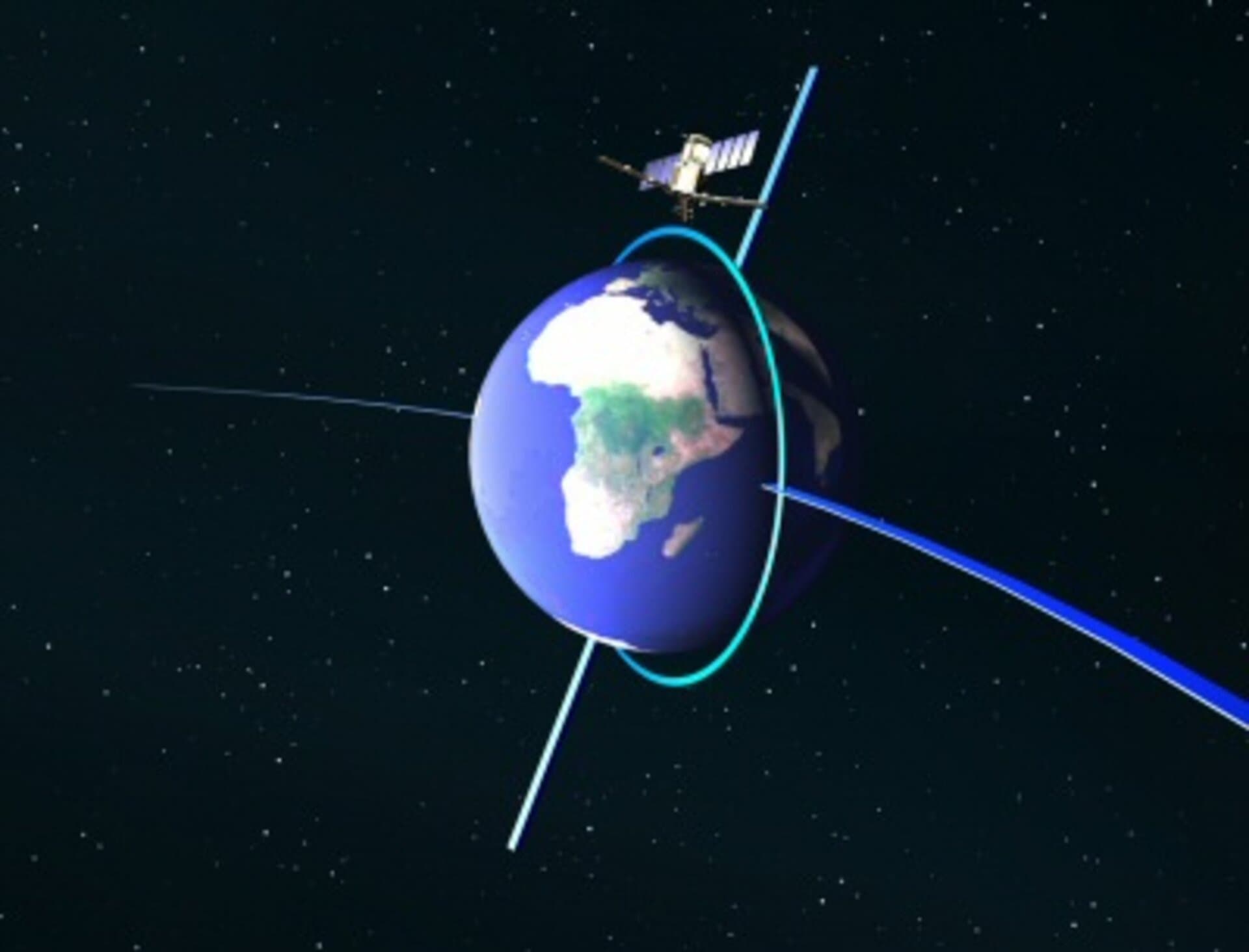
6 Jun 2026 · 31 min read
Orbit Is Architecture: Why Orbital Compute Is First an Orbit-Design Problem
Orbit choice sets the limits of orbital compute: illumination, heat rejection, radiation, downlink, lifetime, and regulation change across LEO, MEO, GEO, and SSO.
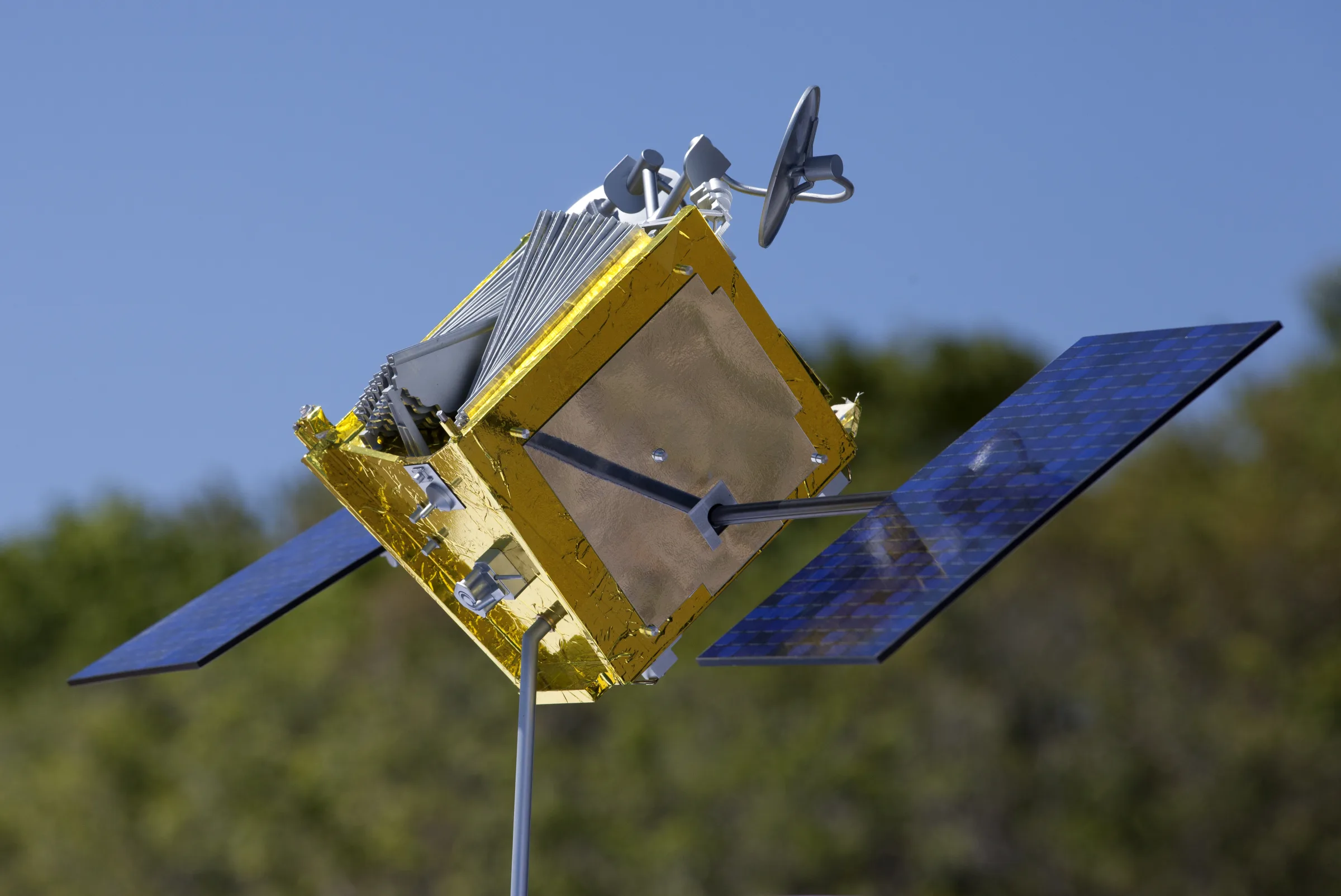
30 Apr 2026 · 41 min read
April 2026 and the Structural Shift in LEO Constellations: Spectrum Now Matters More Than Satellite Count
BlueBird 7, Starlink's 10 million users, Amazon Leo, and China's buildup show that LEO competition has shifted from satellite count to spectrum, MNO access, and monetization.
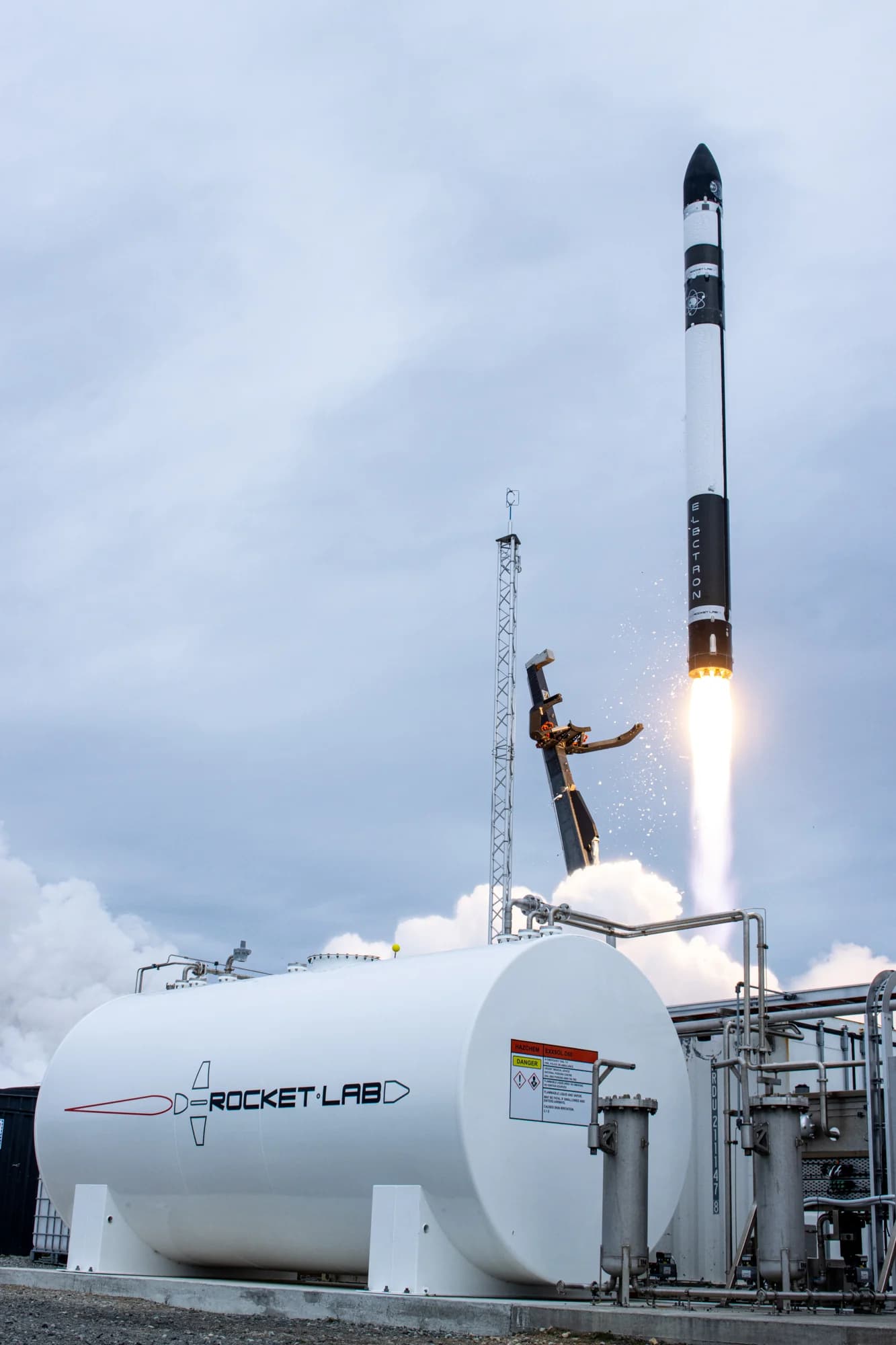
20 Apr 2026 · 22 min read
Rocket Lab in 2026: Vertical Integration, Defense Scale, and the Neutron Inflection Point
Rocket Lab is now a vertically integrated space-systems prime; its upside depends on defense execution, satellite scale, and whether Neutron converts promise into cadence.